Ask the internet whether AI trading works and you'll get two answers. One camp says bots print money while you sleep. The other says it's all a scam. The truth sits in the boring middle, which is exactly where a beginner should start.
Does AI Trading Work? What Beginners Should Know Before Trusting a Bot
Two camps say bots either print money or scam everyone. The truth is boring and specific: it depends on the strategy, the data, and whether a human is still paying attention.
9 min read
Explore Finelo AI trading bots
See how AI bots scan market data, explain setups in plain language, and let you review each practice trade before approving it.
Want to learn more?
See how AI bots scan market data, explain setups in plain language, and let you review each practice trade before approving it.
Try AI botsExplore Finelo's 28-day challenges
Turn learning into a daily habit with guided challenge paths.
So, does AI trading work? The honest answer is that it depends, and mostly on things that have little to do with the word "AI." AI can genuinely help with analysis and automation. It cannot guarantee profit, predict the market, or remove risk. Whether a given tool "works" comes down to its strategy, its data, the market it runs in, and whether a human is still paying attention.
This guide is written like a skeptical friend who understands the tech: no hype, no doom, just what AI can and can't do for a beginner, and how to tell a useful tool from an expensive one.
Short answer: AI can help, but it cannot remove market risk
Here's the balanced verdict, up front. AI can process market data, summarize information, flag patterns, and automate rule execution far faster than a person. That's real, and it's useful. What it can't do is know the future or make a risky market safe.
That automation of rules is really algorithmic trading with a friendlier name: software following instructions. When those instructions run without you clicking anything, it becomes automated trading, which is genuinely powerful and, as we'll see, exactly where the risk quietly creeps in.
AI can help you analyze and automate, but it cannot guarantee an outcome. And to the more pointed question, "can AI trading make you money," the answer no responsible source will dodge is that no tool can promise profit. Some AI-assisted approaches help some people trade more systematically. Others lose money efficiently. The AI label doesn't decide which.
Hold onto that framing for the rest of this article: AI changes how decisions are made, not whether markets are uncertain.
Where AI can be useful in trading education
Give AI credit where it's due. As a learning and analysis aid, it's genuinely helpful, especially for beginners who feel lost.
- Analysis summaries. AI can condense a wall of numbers or a long news item into something readable, so you understand the gist faster.
- Chart explanation. It can walk you through what a pattern is and why traders watch it, turning jargon into plain language.
- Scenario generation. Ask "what could happen here, and what would I watch for," and AI can lay out possibilities to think through. Note the word possibilities, not predictions.
- Journaling support. It can help you review a practice trade by asking what your plan was and whether you followed it.
All four uses have something in common: the human stays in charge. AI is doing the explaining and organizing, while you keep the deciding. Used that way, machine learning tools are a study partner, not an oracle. That distinction is the whole difference between AI that helps and AI that hurts.
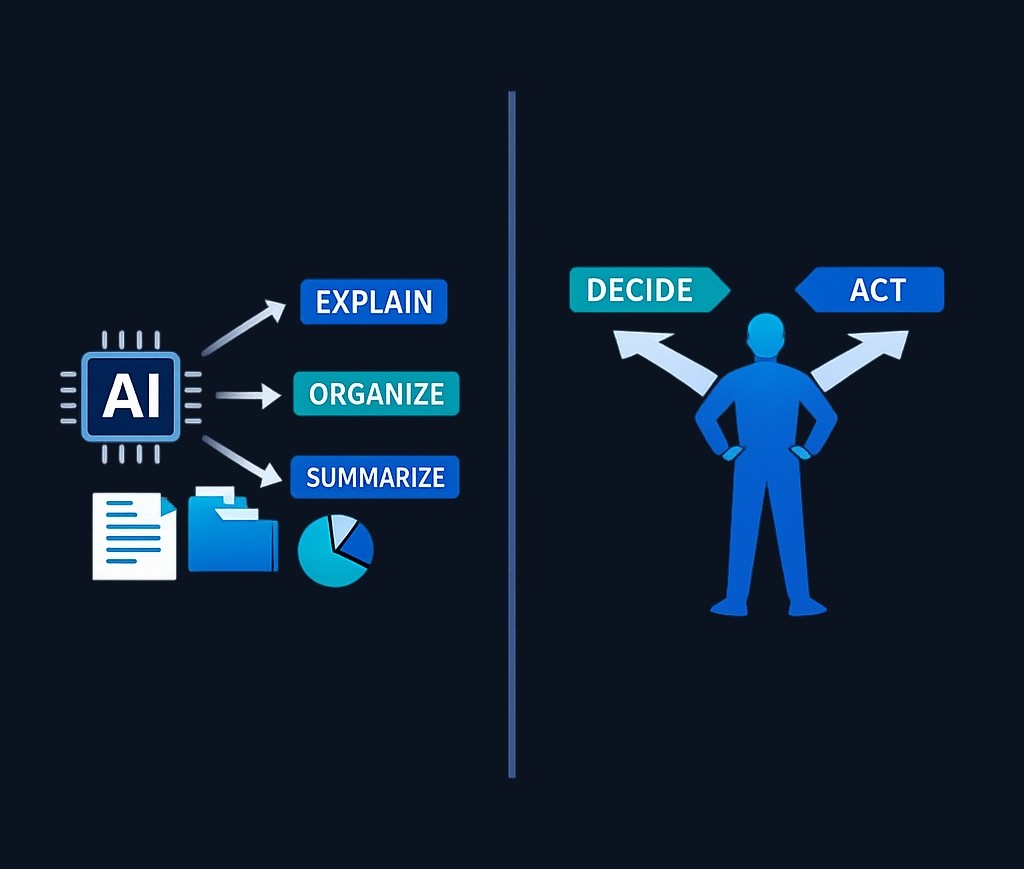
For example, a beginner stuck on why a chart "looks bearish" can ask an AI to explain the pattern, name the levels involved, and describe what would change the picture, then go check that reasoning themselves. That's AI earning its keep: it speeds up understanding without ever making the call for you.
Where AI trading claims often go wrong
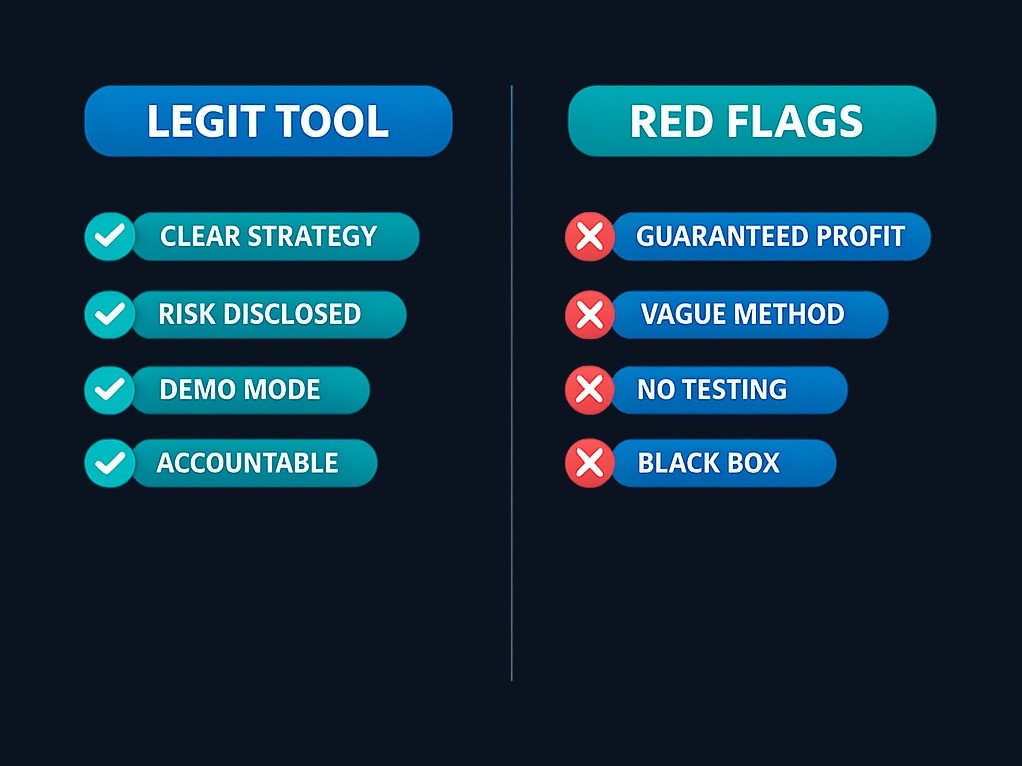
Now the skeptical part, because this is where beginners lose money. Most bad outcomes don't start with a bad market. They start with a claim that was never true.
| Claim to distrust | Why it's a red flag |
|---|---|
| "Guaranteed returns" | Markets are uncertain, so honest tools never promise profit |
| "95% or 100% win rate" | Real strategies lose regularly, so a perfect win rate is cherry-picked or fake |
| "Our AI predicts the market" | No model knows the future, so prediction claims oversell what AI does |
| A flawless backtest, no live proof | Results fitted to the past often fail forward |
| No mention of risk or losses | Honest tools explain how they lose, not only how they win |
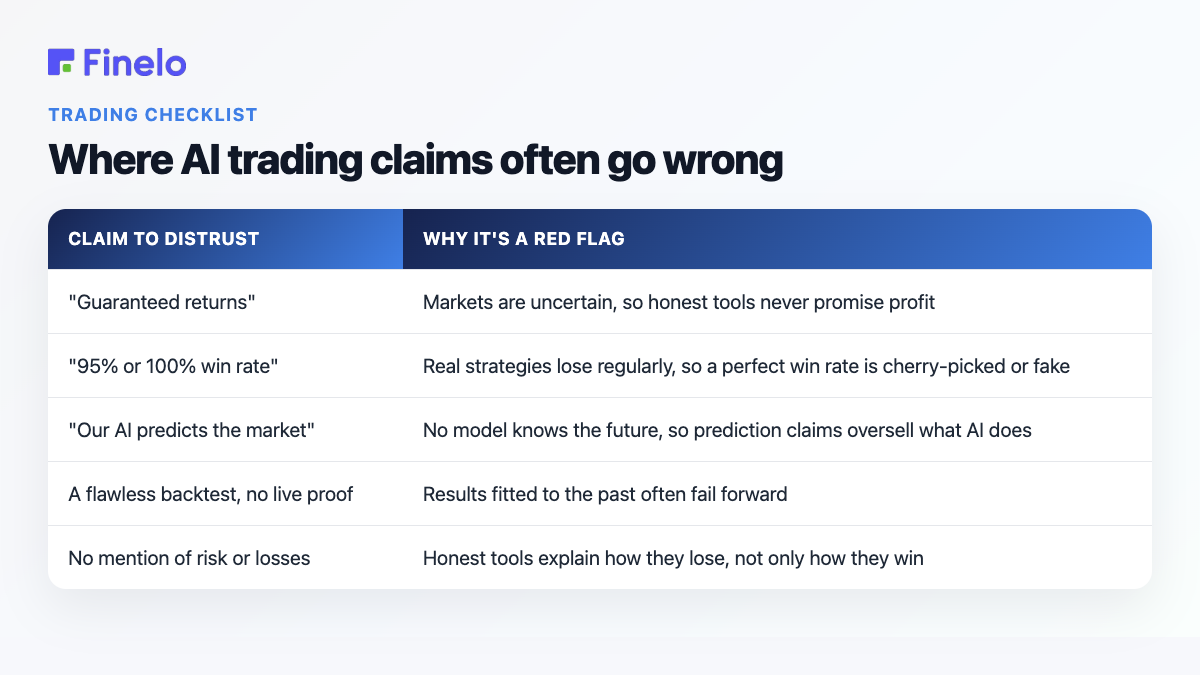
This is also the honest answer to "how accurate is AI trading" and "AI trading accuracy" in general: accuracy is situational, unstable, and easy to fake in a screenshot. When a pitch leads with performance claims and AI trading returns instead of a clear strategy and a risk discussion, treat it as marketing. And when it promises the impossible, you've likely found an AI trading scam, not a tool. Those are the scam red flags worth memorizing. Be wary, too, of any system pushing automatic buy/sell signals as sure things: genuine AI trading signals are suggestions to evaluate, never orders that come with a guarantee attached.
This is why regulators talk about it so plainly. Putting "AI" on a trading bot doesn't turn it into a money machine, and fraudsters reach for "AI" precisely because it sounds sophisticated. The skepticism you see on forums isn't cynicism, it's pattern recognition from people who got burned first.
Explore Finelo AI trading bots
See how AI bots scan market data, explain setups in plain language, and let you review each practice trade before approving it.
Why backtests and live results can differ
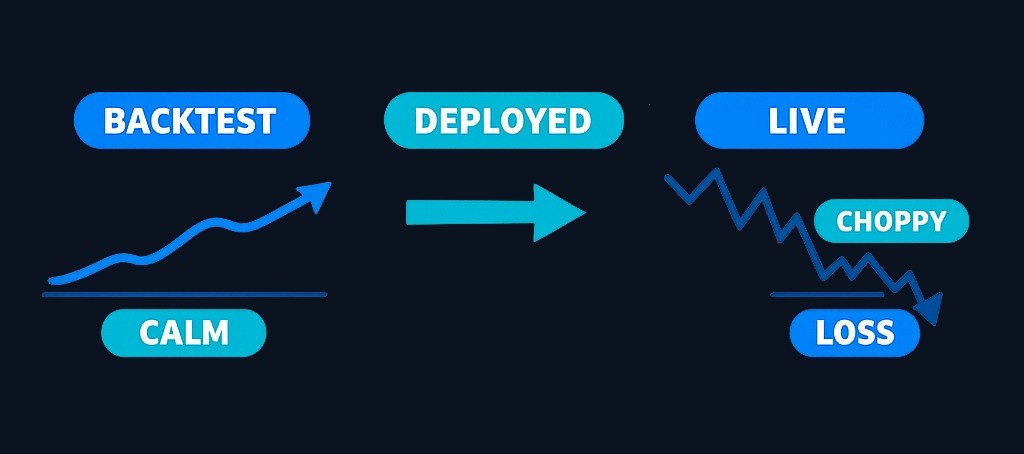
Here's the single most important idea for judging any AI trading tool: a great backtest is not proof.
Backtesting runs a strategy against historical data to see how it would have performed. It's useful, but it flatters. A model tuned until it looks perfect on the past is often overfitting: it has memorized old noise instead of learning a durable edge. That gap shows up the moment it meets live trading. Several things pull backtest and reality apart:
- Changing markets. Conditions shift, and a strategy that fit one regime drifts out of sync. This is model drift meeting new market conditions and volatility.
- Costs. Real fees, spreads, and slippage eat into returns that a clean backtest ignored.
- Execution. A price the model assumed it could get isn't always the price it fills at.
- The human factor. Live systems need monitoring. A bot left unwatched during a shock can turn a small problem into a drawdown nobody caught in time.
A concrete, hypothetical version: a bot backtests beautifully across two calm years, so it looks unbeatable. Deployed live into a choppier market, the same logic keeps applying a rule the market has stopped rewarding, and the losses stack up while it stays perfectly, obediently confident. The backtest wasn't a lie. It just answered a different question than "will this work tomorrow." This is why demo testing an idea forward, with data quality you trust, matters as much as any historical result.
Questions to ask before trusting an AI trading bot
You don't need to be an engineer to evaluate a tool. You need five honest questions and the discipline to walk away if the answers are vague. This gets to the practical core of the question "are AI trading bots legit," and to understanding the AI trading bot risks you're taking on.
| Question | What a good answer looks like |
|---|---|
| What is the strategy? | Explainable in plain language, not a "secret" |
| How was it tested? | Both backtesting and forward demo testing, with limits admitted |
| What risk controls exist? | Position limits, stop rules, and risk controls for drawdowns |
| Who monitors it? | A human, with human oversight and a plan for when it misbehaves |
| What's disclosed? | Risks and losses, not only wins |
The theme tying these together is accountability. If a tool is a black box whose maker won't explain the logic, can't show honest testing, and takes no responsibility when it's wrong, that's your answer, whatever the marketing says. For a deeper look at how these bots actually work under the hood, our guide to AI trading bots for beginners breaks down the mechanics and the failure points.
The question worth asking isn't "do AI trading bots work" in the abstract. It's "does this one do something I understand, tested in a way I trust, with someone accountable when it breaks?"
A safer beginner workflow: learn, simulate, review
If AI is going to help you, this is the order that keeps you safe rather than sorry.
- Learn. Use AI to explain concepts, charts, and vocabulary until they make sense. Understanding first, tools second.
- Simulate. Take what you learned into a simulator and practice with virtual funds, where a mistake costs a note in your journal instead of real money. The Finelo trading simulator pairs that practice with short lessons and a review habit.
- Review. Afterwards, use AI to help you review your decisions: what was the plan, did you follow it, what would you change next time.
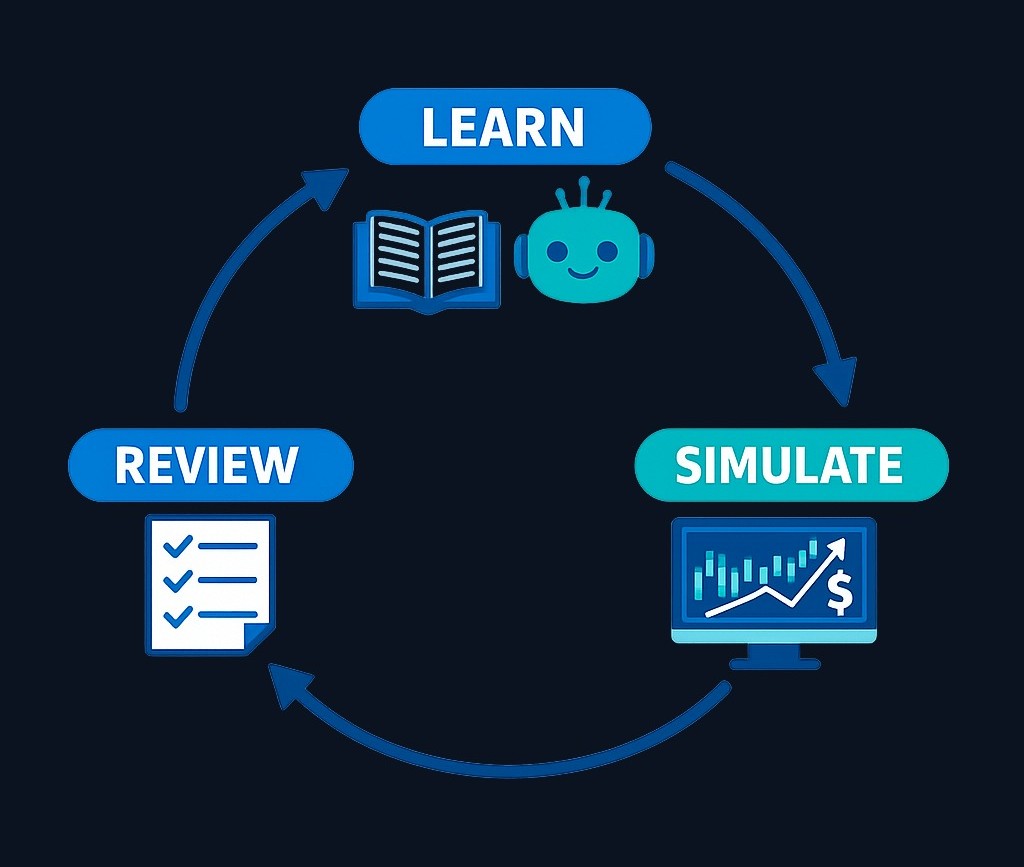
The point of this loop is that you build judgment before you ever consider automation. A beginner who understands strategy, risk, and their own habits can evaluate an AI tool sensibly. A beginner who skips to "just let the bot trade" is the exact person the scams are built for.
None of this means you should avoid AI. It means you should earn the right to use it well. Someone who can read a chart, size a position, and admit when a plan failed will get real value from an AI study tool. The same tool handed to someone chasing a shortcut just helps them get hurt faster.
How Finelo approaches AI-assisted learning
This is the lane Finelo builds for, and it's a deliberately conservative one. Rather than selling a bot with an "on" switch, Finelo AI is positioned as AI-assisted learning: a way to understand charts, talk through scenarios, and review your practice, while you stay the decision-maker.
Even Finelo's AI trading bots approach is educational, built to make automated logic visible and understandable rather than to run your money unattended. The reframe at the heart of it is simple. The useful question was never "does AI trading work" in general. It's "what exactly is this AI doing, how was it tested, what risk controls surround it, and who is responsible when it's wrong."
If you want to learn AI-assisted analysis without outsourcing your judgment, explore Finelo AI as a study tool, not a shortcut.
Finelo is an educational product, not a brokerage. Brokerage connection availability depends on your region. The simulator uses virtual funds and real market data, and final trading and investing decisions are yours, made through your own brokerage account when you choose to act. This article is for education and is not financial advice.
Frequently asked questions
Does AI trading actually work?
It can support real work, like analyzing data and automating rules, but "works" is the wrong yes-or-no question. Whether an AI tool produces good outcomes depends on its strategy, its data quality, current market conditions, the risk controls around it, and whether a human is monitoring it. AI changes how decisions are executed; it does not remove market uncertainty or guarantee results.
Can AI trading make money?
No tool can guarantee profit, and any that claims to is a red flag. Some people use AI-assisted approaches to trade more systematically, and some lose money doing it. Be especially cautious with promises of predictable returns or high win rates, because real markets produce losses regularly, and no model can reliably know what happens next.
Are AI trading bots risky?
Yes. The risks include strategy failure when markets change, poor data quality, overfitting that looks great in testing and fails live, security issues, and overreliance on a system you don't monitor. Automation can also repeat a mistake quickly and at scale. Understanding those risks, and keeping human oversight, matters far more than any advertised win rate.
How should beginners evaluate AI trading tools?
Ask four things: what does the tool actually do, how was it tested, what risks does it disclose, and can you practice with virtual funds before risking real money. Clear, plain-language answers are a good sign. Vague strategies, guaranteed-return promises, and no discussion of losses are reasons to walk away, no matter how advanced the "AI" sounds.
AI TradingTrading BotsBeginnerRisk Management
Explore Finelo AI trading bots
See how AI bots scan market data, explain setups in plain language, and let you review each practice trade before approving it.
About the author
Finelo Team
The Finelo Team creates practical investing and trading education designed to help beginners learn faster with structured challenges, simulator practice, and bite-sized lessons.
Keep reading — Related articles
AI Trading
ChatGPT for Stock Trading: What It Can and Can't Do
ChatGPT can help you learn stocks, summarize filings, and draft research prompts — but it cannot trade for you, predict prices, or be trusted blindly on numbers. Here's an honest beginner guide to using it as a research assistant.
Finelo Team
AI Trading
New in Finelo: AI Trading Bots That Find Setups for You
Finelo's newest feature — AI bots that scan real market data around the clock, explain every setup in plain language, and wait for your approval. Here's what's new and how to try it.
Finelo Team
AI Trading
How Do AI Trading Bots Work? A Beginner’s Guide
Follow an AI trading bot from incoming data to a proposed action, approval and execution. Learn what to check about testing, permissions and costs.
Finelo Team