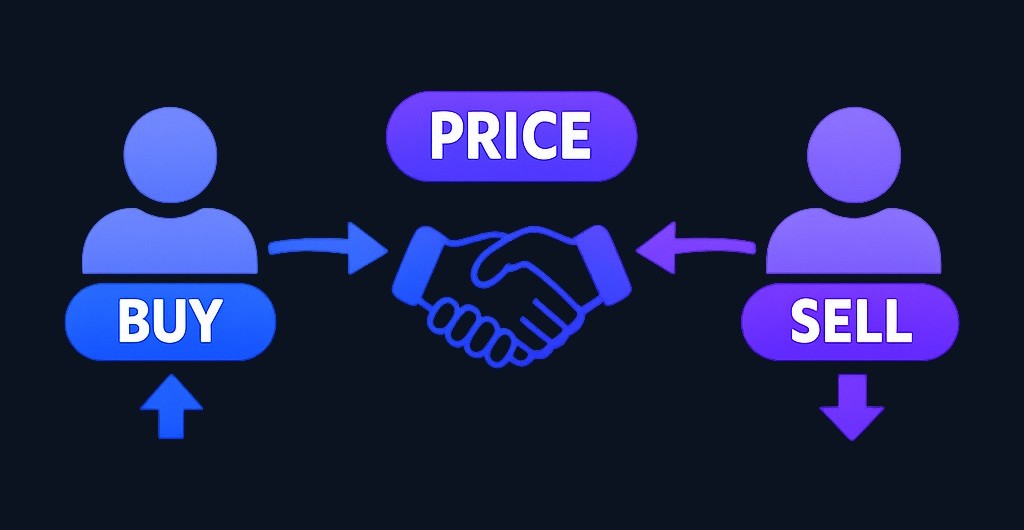
Trading is the process of buying and selling financial instruments such as stocks, bonds, commodities, and currencies with the goal of making a profit. It is a fundamental component of financial markets and is driven by supply and demand dynamics. Traders range from individuals managing personal portfolios to institutional investors executing large-scale transactions. Understanding the basics of trading is crucial for anyone looking to participate in financial markets.
Introduction to Trading

This article introduces the fundamentals of trading, market concepts, and risk management principles for financial market success.
6 min read
Practice trading with Finelo
Practice in a simulator, learn with bite-sized lessons, and build confidence before risking real money.
Want to learn more?
Practice in a simulator, learn with bite-sized lessons, and build confidence before risking real money.
Explore FineloExplore Finelo's 28-day challenges
Turn learning into a daily habit with guided challenge paths.
Types of Trading
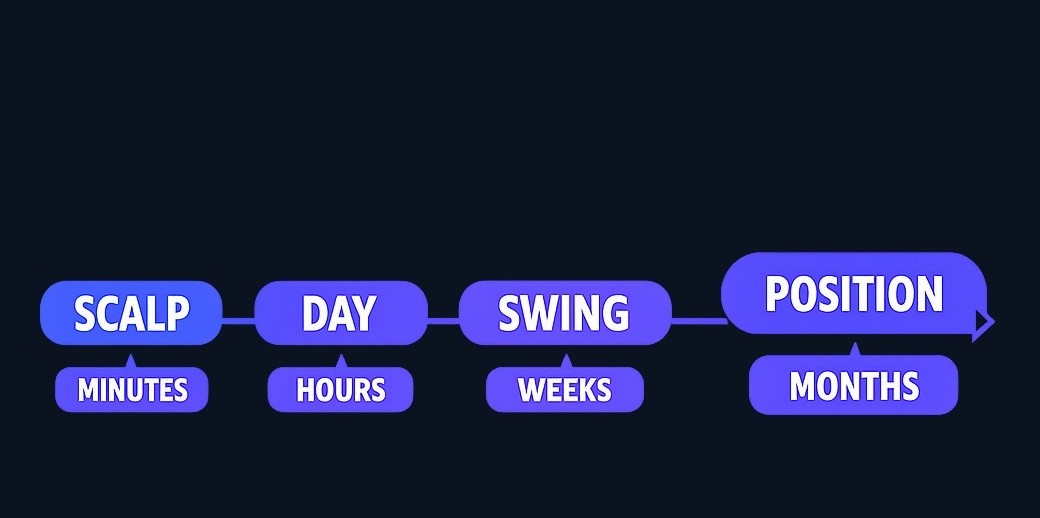
There are several primary types of trading, each with distinct strategies and timeframes. Day trading involves buying and selling securities within the same day, relying on short-term price movements. Swing trading focuses on capturing gains over days or weeks. Position trading takes a long-term approach, holding assets for months or even years based on fundamental analysis. Scalping is an aggressive strategy that involves making multiple trades within minutes to exploit small price fluctuations.
Key Market Concepts
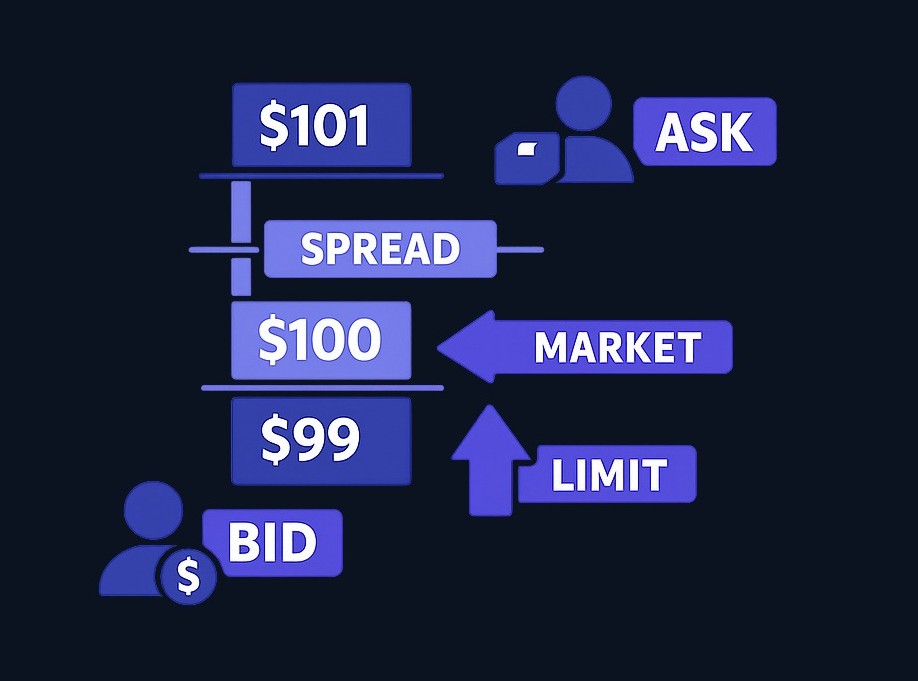
Successful trading requires familiarity with essential market concepts. Liquidity refers to how easily an asset can be bought or sold without affecting its price. Volatility measures the degree of price fluctuations and impacts potential risk and reward. The bid-ask spread represents the difference between the highest price a buyer is willing to pay and the lowest price a seller is willing to accept. Market orders execute trades immediately at the current price, while limit orders specify a desired price for buying or selling.
Practice trading with Finelo
Practice in a simulator, learn with bite-sized lessons, and build confidence before risking real money.
Risk Management in Trading
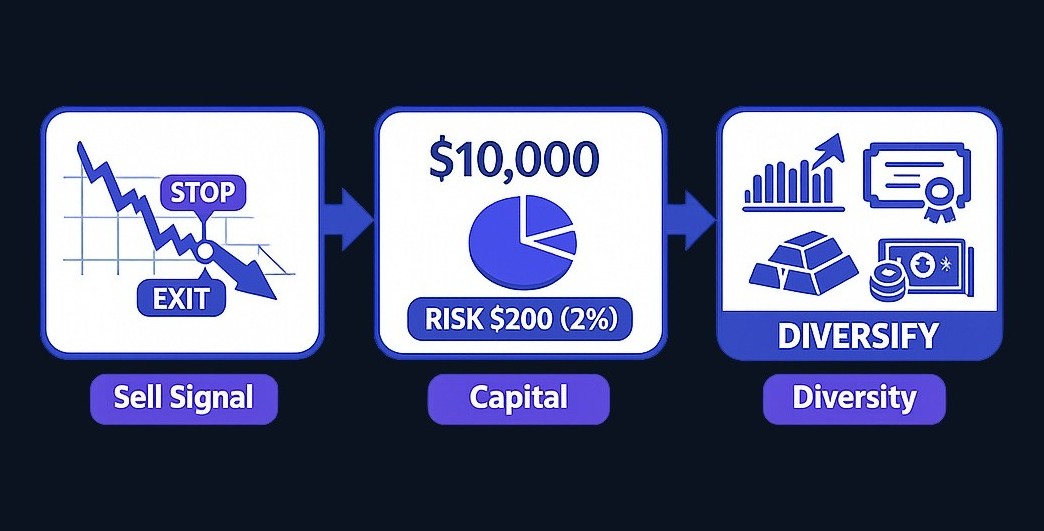
Risk management is critical to long-term trading success. One key principle is diversification, which involves spreading investments across different assets to reduce exposure to any single market movement. Setting stop-loss orders limits potential losses by automatically selling a security at a predetermined price. Position sizing ensures that no single trade risks a disproportionately large portion of the capital. Emotional control is also essential, as impulsive decisions driven by fear or greed can lead to significant losses. Implementing strict risk management strategies helps traders maintain discipline and protect their capital.
Conclusion
Trading is a complex but rewarding activity that requires knowledge, discipline, and a strategic approach. Understanding different trading styles, key market concepts, and effective risk management techniques is essential for success. While potential profits can be substantial, trading also carries inherent risks. New traders should focus on education, practice with simulated accounts, and develop a well-defined strategy before committing real capital. With careful planning and continuous learning, traders can navigate financial markets with confidence and improve their chances of long-term profitability.
Frequently asked questions
What is the difference between trading and investing?
Trading typically involves buying and selling financial instruments over shorter timeframes to profit from price movements, while investing usually takes a longer-term approach based on fundamental value and growth over time.
What is the most important risk management principle in trading?
Diversification and position sizing are key — spreading investments across different assets and never risking a disproportionately large portion of capital on a single trade helps protect against significant losses.
TradingFinancial Literacy
Practice trading with Finelo
Practice in a simulator, learn with bite-sized lessons, and build confidence before risking real money.
About the author
Finelo Team
The Finelo Team creates practical investing and trading education designed to help beginners learn faster with structured challenges, simulator practice, and bite-sized lessons.
Keep reading — Related articles

Trading
Understanding Walk Forward Analysis in Trading
Brief educational note: this article is educational — not investment advice — and trading involves the risk of loss.
Finelo Team
Trading
VWAP vs Moving Average: Formulas, Uses, and Limits
VWAP weights price by recorded volume over a defined period, while a moving average summarizes a sequence of prices over a rolling lookback.
Finelo Team
Trading
Volume Profile vs Market Profile: What Each Chart Measures
Volume Profile groups traded volume by price level.
Finelo Team