A paper trading app lets you place simulated stock, options, or futures trades with virtual money. You get real-time market data and the same order types you'd use in a live account. Zero real cash is at risk. Several strong options are free to start: thinkorswim paperMoney from Schwab, TradeZero's paper trading, and TradingView's built-in simulator.
Explore the Best Free Paper Trading Apps for Beginners
A paper trading app lets you place simulated stock, options, or futures trades with virtual money. You get real-time market data and the same order types you'd use in a live account. Zero real cash is at risk. Several…
7 min read
Practice trading with Finelo
Practice in a simulator, learn with bite-sized lessons, and build confidence before risking real money.
Want to learn more?
Practice in a simulator, learn with bite-sized lessons, and build confidence before risking real money.
Explore FineloExplore Finelo's 28-day challenges
Turn learning into a daily habit with guided challenge paths.
This page is for anyone comparing free paper trading apps before committing real money. That includes beginners building confidence and experienced traders testing a new strategy. Check the feature list, compare the apps in the table below, then follow the setup steps to open your first practice account.
Benefits of Using a Paper Trading App
Paper trading removes the one thing that stops most beginners from starting: fear of losing real money. Place your first trade. Misread a chart. Overreact to a news story. The only cost is a lesson learned. thinkorswim paperMoney gives users access to many of the same products, tools, and features they'd have during live trading, so the practice actually carries over.
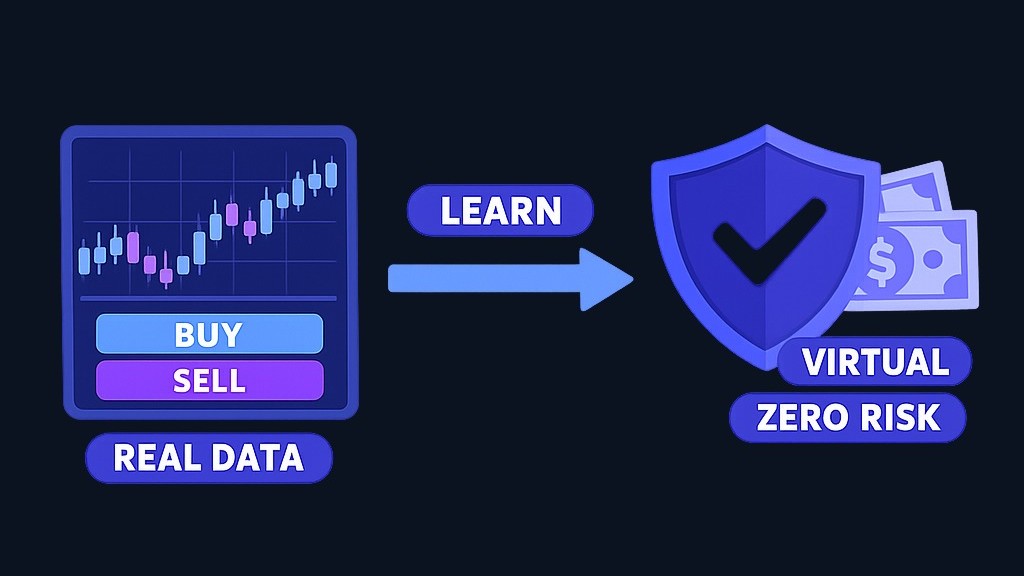
That realism is the real value. A beginner can learn what an order type does before risking a dollar on it. An experienced trader can stress-test a new strategy across a volatile week without touching their account balance. TradingView's paper trading is available everywhere, for everyone, with no deposit or real money required. That makes it a low-friction way to test an idea the same day you think of it.
The honest limit: paper trading removes financial risk, but not the need for discipline. Simulated performance does not ensure success in a live environment. A strategy that looks great with pretend money can fall apart once real emotions and real losses enter the picture.
Key Features to Look for in a Paper Trading App
Prioritize platforms that offer realistic market simulations with real-time data and a variety of order types. A simulator built on delayed or simplified pricing teaches bad habits. Beyond that baseline, look for:
- Real-time or near-real-time market data. TradeZero's paper trading includes free real-time NASDAQ Basic market data, not a delayed feed.
- Advanced charting and analysis tools. Robust charting, technical indicators, and comprehensive portfolio tracking help you judge a trade the way you would with real money.
- A realistic range of order types. Look for limit and market orders, plus depth-of-market and order-ticket views so you can practice reading the order book, not just clicking buy.
- Built-in educational resources. Schwab lists educational resources as part of what makes practicing effective, not just a bare trading screen.
- A consistent path to live trading. thinkorswim paperMoney keeps the same interface and features between paper and live accounts. That's designed to shorten the learning curve when you switch.
Top Free Paper Trading Apps Reviewed
| App | Virtual funds / access | Standout features | Cost after trial |
|---|---|---|---|
| thinkorswim paperMoney | $100,000 virtual buying power | Equities, options, futures, forex; scanning, charting, chat rooms | Free with a Schwab account |
| TradeZero | $1,000,000 in virtual funds, free for 30 days | Real-time NASDAQ Basic data, 80+ indicators, Level 2 depth, simulated short selling | Free 30 days, then requires a live account funded to at least $250 |
| TradingView | No stated limit; connect and start | Stocks, forex, crypto, futures; order ticket, depth of market, chart trading, Pine Script | Free, no deposit required |
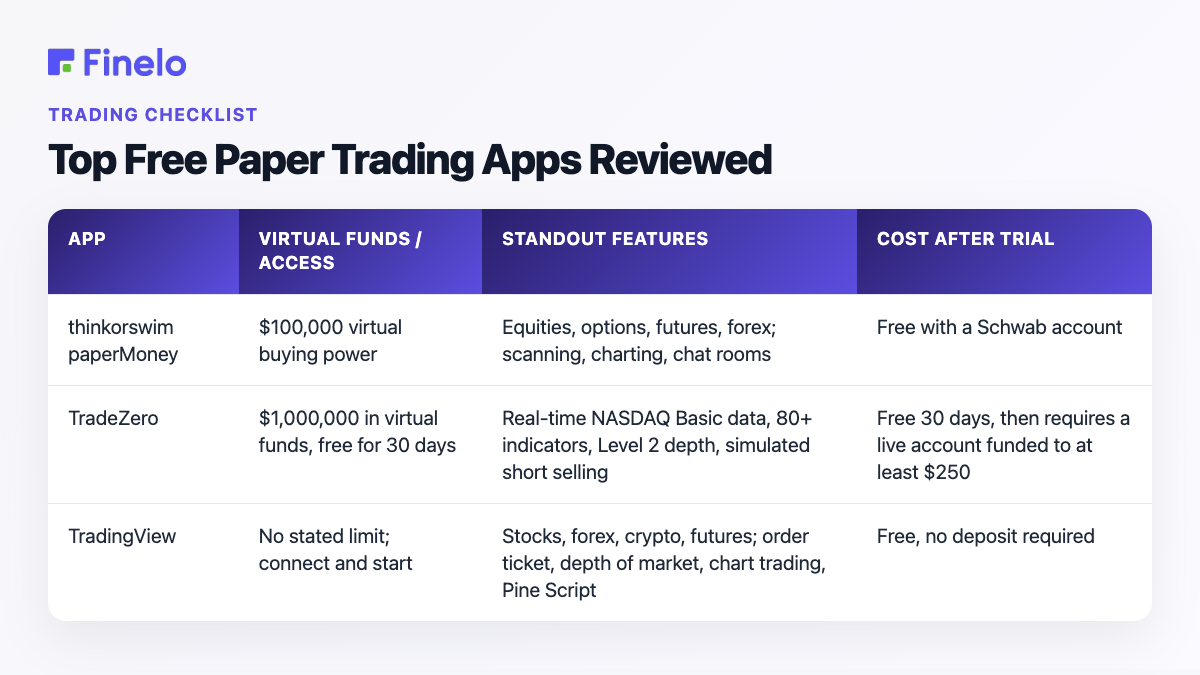
thinkorswim and TradeZero both suit a trader who wants their paper account to graduate into the same live platform later. TradingView suits anyone who wants a free, no-strings simulator across the widest range of assets, with no account required to start.
How to Set Up Your Paper Trading Account
Setup takes a few minutes on any of these platforms. Two examples:
TradingView: go to Supercharts, click the "Trade" button in the top-right corner, then select "Paper Trading" and click "Connect". No deposit or broker account is needed.
TradeZero: sign up for a paper trading account, receive $1,000,000 in virtual funds, and start practicing with simulated money immediately.
thinkorswim paperMoney needs one extra step: access to paperMoney requires a Schwab account. That's more setup than TradingView's no-account approach, but it pays off if you plan to move to live trading on the same platform later.
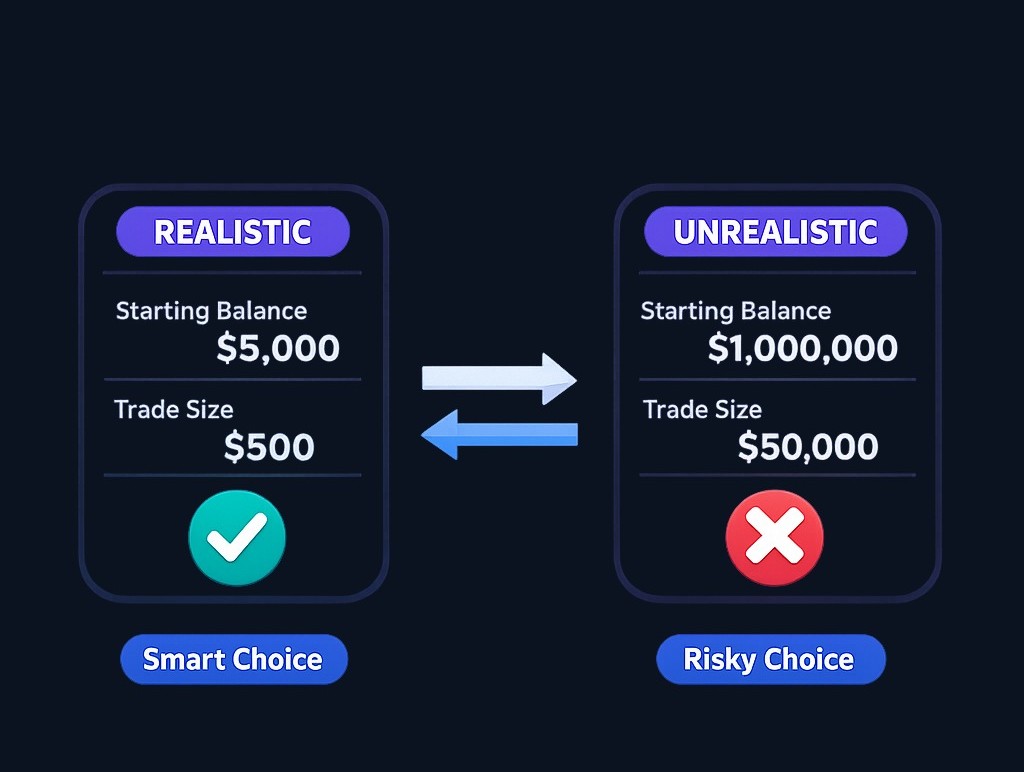
Whichever app you pick, treat the first session like a real account. Set a starting balance you'd realistically trade with. Place your first order the same way you'd place it with real money — deliberately, not just to see what the button does.
Practice trading with Finelo
Practice in a simulator, learn with bite-sized lessons, and build confidence before risking real money.
Common Mistakes to Avoid When Paper Trading
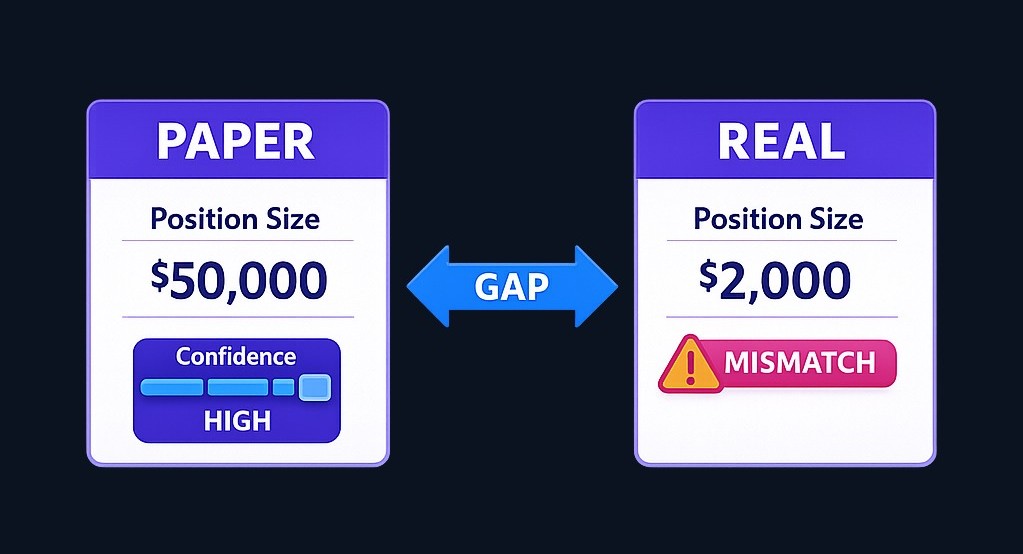
- Trading unrealistic size. Placing a simulated $50,000 position when you'd really trade $2,000 teaches you nothing about position sizing.
- Ignoring costs and slippage. Real trades involve spreads and, on some platforms, commissions. A simulator that fills every order instantly at your exact price can make a strategy look better than it is.
- Testing only calm markets. A strategy that works in a quiet week can fail in a volatile one. Paper trade through a rough earnings season or a rate-decision day on purpose, not just easy conditions.
- Skipping a written record. Track why you entered and exited each simulated trade. Without notes, you can't tell whether a good result was skill or luck.
- Forgetting it isn't emotionally real. Simulated performance does not ensure success in a live environment. Losing pretend money doesn't feel like losing real money. Expect your live results to test your discipline in a way paper trading can't fully simulate.
Transitioning from Paper Trading to Real Trading
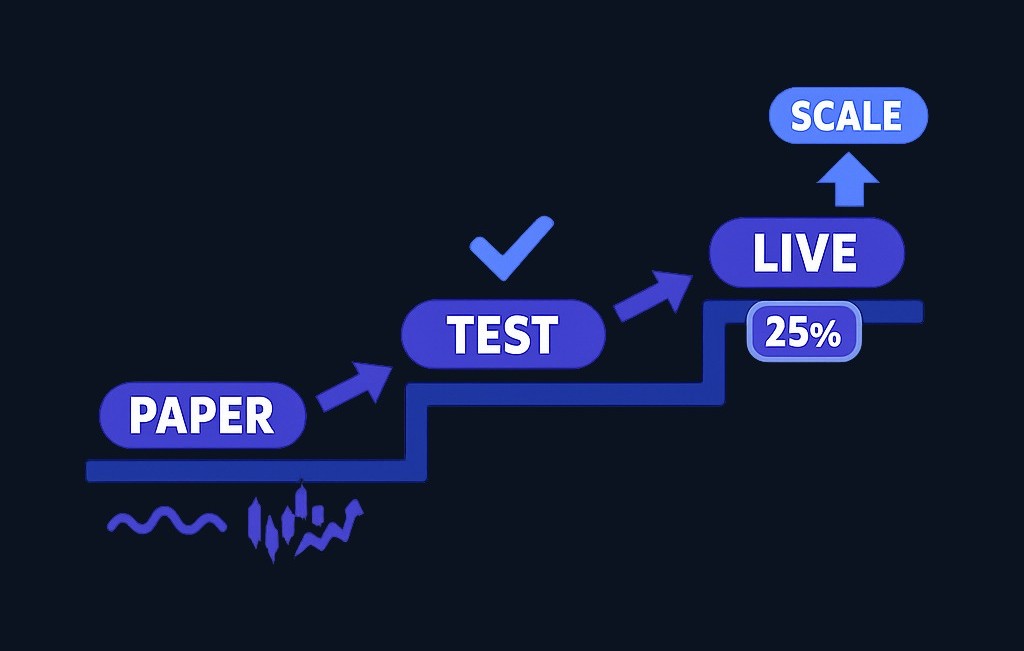
Schwab's own guidance is practical, not just marketing language: build a strategy with clear rules, practice managing risk, and run it across more than one kind of market before trusting it with real money. Only move to live trading once that groundwork is done. The platform also notes that paper trading stays available for further practice even after you go live, so switching isn't a one-way door.
A practical benchmark: don't move to a live account until your simulated strategy has survived several different market conditions, not just one good week. Some platforms build the transition in structurally. TradeZero ties continued paper trading access to a funded live account with at least $250. The free trial period doubles as a nudge toward opening the real account once you're ready.
Start small once you do go live. Trade a fraction of the size you practiced with. Confirm your simulated edge holds up with real money on the line before you scale up.
Is Finelo a Trustworthy Source for This Comparison?
Finelo is a financial education platform, not a broker, and it doesn't operate any of the apps reviewed above. Every specific figure in this article — virtual fund amounts, feature lists, account requirements — is linked directly to the provider's own official page, so you can verify it yourself rather than take our word for it.
This page doesn't rank apps by paid placement, and it doesn't claim one app is objectively "best" for every trader. Features, pricing, and account requirements change, so check each provider's current terms before you sign up. If your goal is building broader investing knowledge alongside practicing trades, that's the kind of education Finelo focuses on — not brokerage services or personalized advice.
Conclusion and Next Steps
Free paper trading apps let you learn the mechanics of trading and stress-test a strategy without risking a dollar. Pick a platform that matches your future plans. Choose TradeZero or thinkorswim if you want to graduate into the same live platform. Choose TradingView if you want a no-account simulator across more asset types.
Whichever you choose, this is practice, not a guarantee of future results. Real trading carries real risk, and no simulation can promise a specific outcome. If you want to build the underlying investing knowledge before you trade with real money, Finelo's Wealth Growth Quiz matches you with a learning path suited to your level.
Frequently asked questions
Is paper trading really risk-free?
Financially, yes — no real money is on the line. But simulated performance does not ensure success in a live [environment](https://www.schwab.com/trading/thinkorswim/paper-trading). Treat a good paper trading record as a starting point, not a guarantee.
How long can I use a paper trading account?
It depends on the app. TradeZero offers 30 days free, then requires a live account funded to at least $250 to keep [access](https://tradezero.com/en-us/free-paper-trading). TradingView's paper trading has no stated time limit and needs no [deposit](https://www.tradingview.com/support/solutions/43000516466-paper-trading-main-functionality/).
Is there a cost associated with paper trading?
The apps above are free to start. Some, like thinkorswim paperMoney, require a funded brokerage account to access the [feature](https://www.schwab.com/trading/thinkorswim/paper-trading) at all.
What types of assets can I trade in paper trading?
It varies by platform. TradingView covers stocks, forex, crypto, and [futures](https://www.tradingview.com/support/solutions/43000516466-paper-trading-main-functionality/). thinkorswim paperMoney covers equities, options, futures, and [forex](https://www.schwab.com/trading/thinkorswim/paper-trading). TradeZero focuses on stocks, options, and [ETFs](https://tradezero.com/en-us/free-paper-trading).
TradingBeginnerPractice TradingMarkets
Practice trading with Finelo
Practice in a simulator, learn with bite-sized lessons, and build confidence before risking real money.
About the author
Finelo Team
The Finelo Team creates practical investing and trading education designed to help beginners learn faster with structured challenges, simulator practice, and bite-sized lessons.
Keep reading — Related articles
Trading
Understanding Walk Forward Analysis in Trading
Brief educational note: this article is educational — not investment advice — and trading involves the risk of loss.
Finelo Team
Trading
VWAP vs Moving Average: Formulas, Uses, and Limits
VWAP weights price by recorded volume over a defined period, while a moving average summarizes a sequence of prices over a rolling lookback.
Finelo Team
Trading
Volume Profile vs Market Profile: What Each Chart Measures
Volume Profile groups traded volume by price level.
Finelo Team