A stock borrow fee is the cost a short seller pays to borrow shares before selling them. It is quoted as an annualized percentage of the borrowed position's value and accrues daily for as long as the position stays open. Easy-to-borrow stocks cost little; scarce, heavily shorted stocks can cost far more.
Stock Borrow Fee: What It Costs to Short a Stock
Learn what a stock borrow fee is, how it is calculated and charged, what makes a stock hard to borrow, and how borrow costs change a short-selling plan.
8 min read
Practice trading with Finelo
Practice in a simulator, learn with bite-sized lessons, and build confidence before risking real money.
Want to learn more?
Practice in a simulator, learn with bite-sized lessons, and build confidence before risking real money.
Explore FineloExplore Finelo's 28-day challenges
Turn learning into a daily habit with guided challenge paths.
This page is for traders and curious investors who want to understand the real cost side of short selling before trying it. If you have ever seen "hard to borrow" or a surprising interest charge on a brokerage statement, this explains where that number comes from. Read the mechanics, run the worked example, and use the decision framework before you commit to any short position. Everything here is educational, not financial advice.
What a stock borrow fee is
When you short a stock, you sell shares you do not own. To deliver those shares to the buyer, your broker first has to borrow them from someone who does own them. That loan is not free. The share owner, usually a large institution, lends the shares out in exchange for a fee, a practice regulators describe in the SEC's securities lending overview. Lenders include mutual funds, ETFs, pension funds, and brokers lending their own or customers' shares.
The borrow fee, sometimes called the borrow rate or stock loan fee, is how that cost reaches you. Your broker passes it through to your account, typically as a daily charge against the value of the shares you have borrowed. You pay it whether your short trade wins or loses.
Why borrow fees exist: how short selling works
The fee makes more sense once the full loop is visible. As the SEC describes it in its short sales overview, a short sale is the sale of a security the seller does not own. The seller borrows the security, usually through a broker-dealer, delivers it to the buyer, and later closes the position by purchasing equivalent shares on the open market and returning them to the lender.
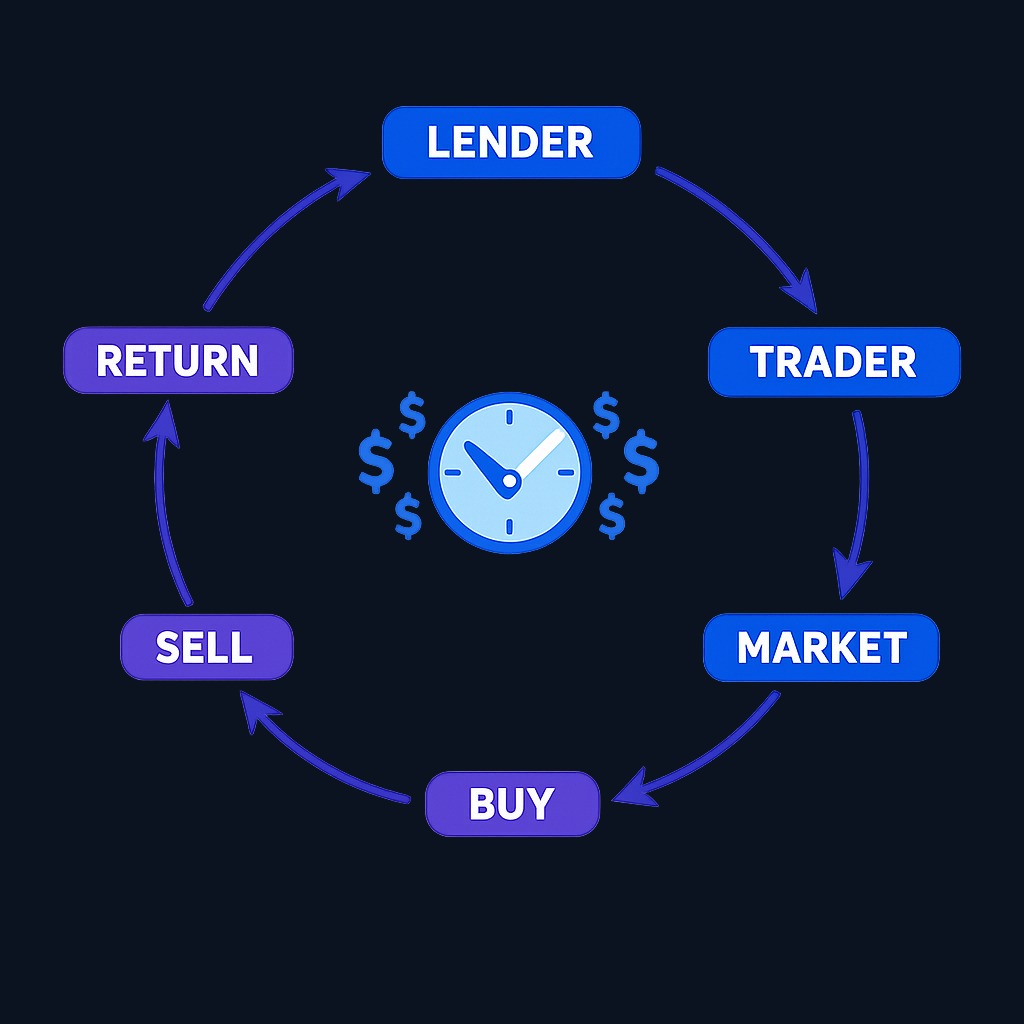
Every day between the borrow and the return, someone else's property is on loan to you. The lender wants compensation for giving up the shares, for taking on counterparty risk, and for losing the chance to lend them to someone else. Supply and demand set the price of that loan. When plenty of shares are available, the fee stays low. When many short sellers chase a small pool of lendable shares, the fee climbs.
How borrow fees are quoted and charged
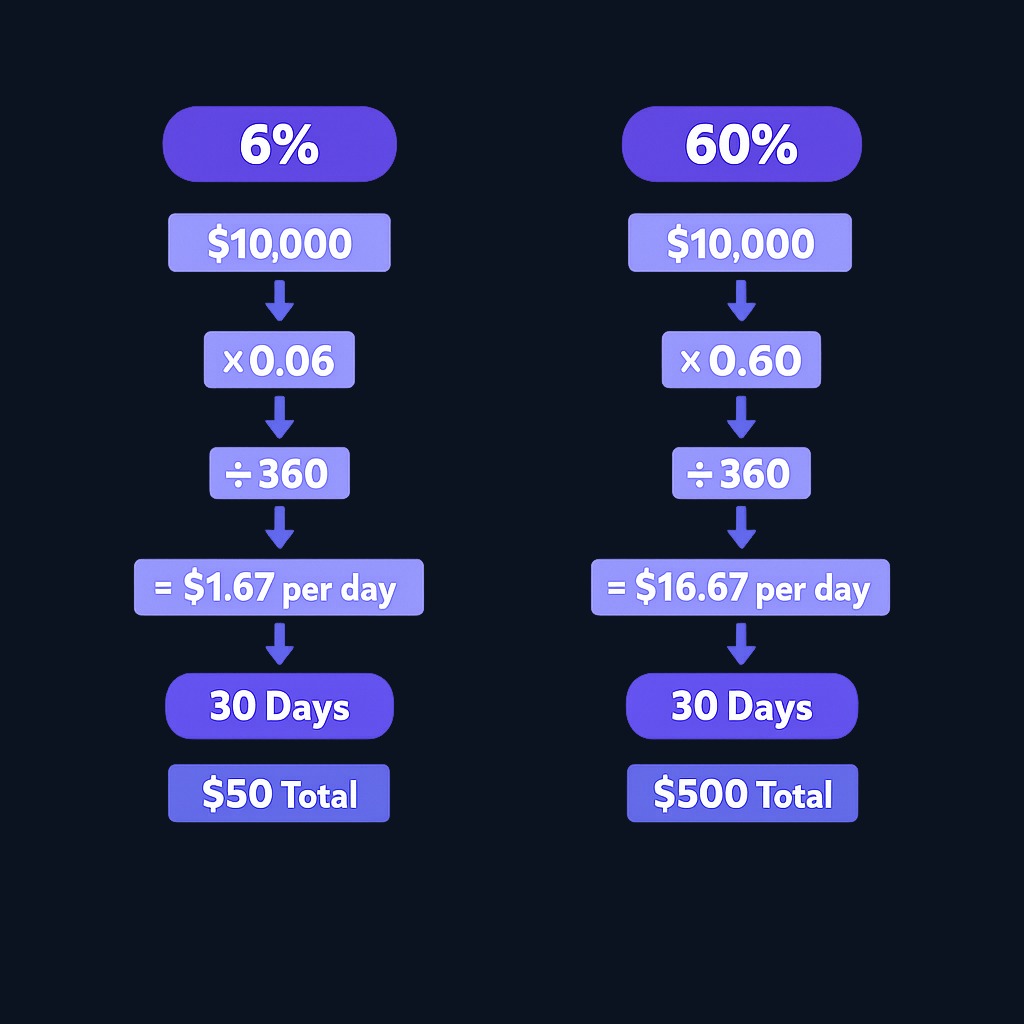
Borrow fees are quoted as an annualized rate but charged in daily slices. The basic math looks like this:
- Take the market value of the borrowed shares, often based on the closing price.
- Multiply by the annualized borrow rate.
- Divide by 360 or 365, depending on the broker's convention.
- That result is the charge for one day.
Here is a hypothetical illustration. Suppose you short 200 shares of a stock at $50, a $10,000 position, and the borrow rate is 6% annualized. One day costs roughly $10,000 x 0.06 / 360, or about $1.67. Hold for a month and you have paid around $50. If the rate were 60% instead, that same month would cost around $500, five percent of the whole position, before the stock even moves.
Two caveats matter. First, the rate is not fixed: it can change daily with lending supply and demand, so the fee you start with is not the fee you are promised. Second, the charge is based on the position's current value, so a rising stock price increases both your paper loss and your daily fee.
What makes a stock hard to borrow
Lendable supply and short-selling demand divide the market into two broad groups:
| Feature | General collateral (easy to borrow) | Hard to borrow |
|---|---|---|
| Lendable supply | Plentiful | Scarce |
| Typical borrow cost | Low, often a small fraction of a percent | Elevated, sometimes extreme |
| Who ends up here | Large, widely held companies | Small caps, IPOs, heavily shorted names |
| Rate stability | Relatively stable | Can spike quickly |
| Recall risk | Lower | Higher |
Stocks become hard to borrow when short demand is intense, when the float is small, when many holders keep shares in accounts that do not lend, or around events like IPO lockup expirations and merger arbitrage situations. Popular "battleground" stocks with high short interest are the classic case: everyone wants to borrow the same limited shares, and the fee auctions itself upward.
Practice trading with Finelo
Practice in a simulator, learn with bite-sized lessons, and build confidence before risking real money.
A worked example of borrow costs eating a trade
Imagine a trader who believes a $20 stock will fall 15% within three months. The thesis is right: the stock drifts down to $17. On 500 shares, that is a $1,500 gross gain.
Now add the borrow fee. If the stock was hard to borrow at 40% annualized, the daily cost on a $10,000 position starts around $11 and shrinks slowly as the price falls. Over roughly 90 days, total borrow costs land near $950. The "successful" trade nets only about $550 before commissions, and a two-week delay in the decline would have pushed it close to breakeven. At a 2% borrow rate, the same trade would have cost under $50 to carry.
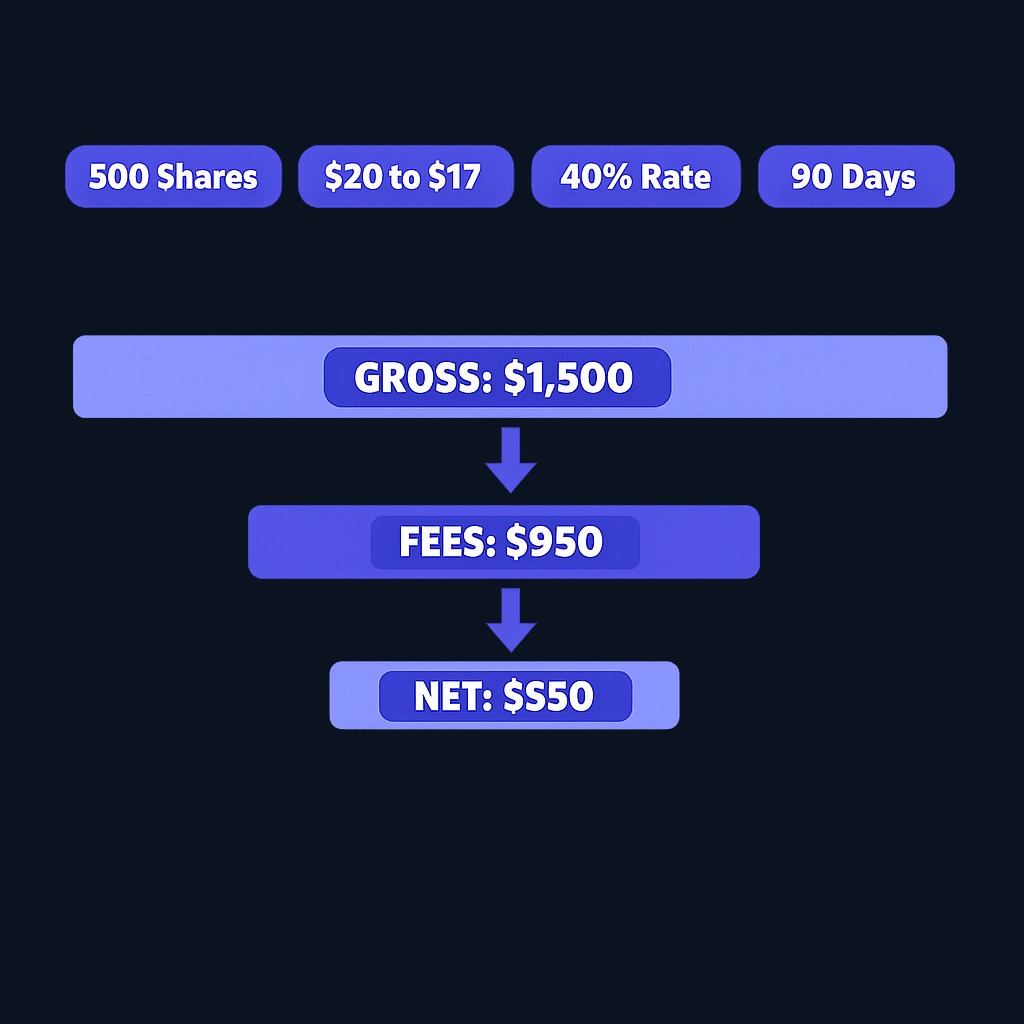
The lesson: the borrow fee converts time into money. A correct thesis that arrives late can still lose, because the meter runs every day the position stays open.
Where to find borrow fee information
Most brokers that support short selling show a borrow rate or hard-to-borrow indicator on the order screen or in the margin section of the platform, and many publish lists of shortable securities. Ask your broker where the current rate appears and how often it updates, since conventions differ.
Market-wide transparency is also improving. FINRA rules now require reporting of securities loans, including the lending fee or rebate rate on covered securities loans, which supports published loan-level data over time. For most individual traders, though, the broker's quoted rate for your specific account remains the practical number to check.
What to know before deciding
Before any short trade, check these points:
- The current borrow rate and its trend. A rate that doubled last week tells you demand is surging.
- Your expected holding period. Multiply the daily cost by your realistic timeline, not your best case.
- Recall risk. A lender can call shares back; your broker may close your position at a bad moment.
- Rate-change risk. Today's fee is not locked in and can spike while you hold.
- Margin requirements and interest. Borrow fees stack on top of margin rules and any margin interest.
- Unlimited loss potential. A short position loses more the higher the stock climbs, with no cap.
Short selling with a high borrow fee is a race between your thesis and the meter. Treat the fee as a core input, not a footnote.
Decision framework: does the borrow fee kill the trade?
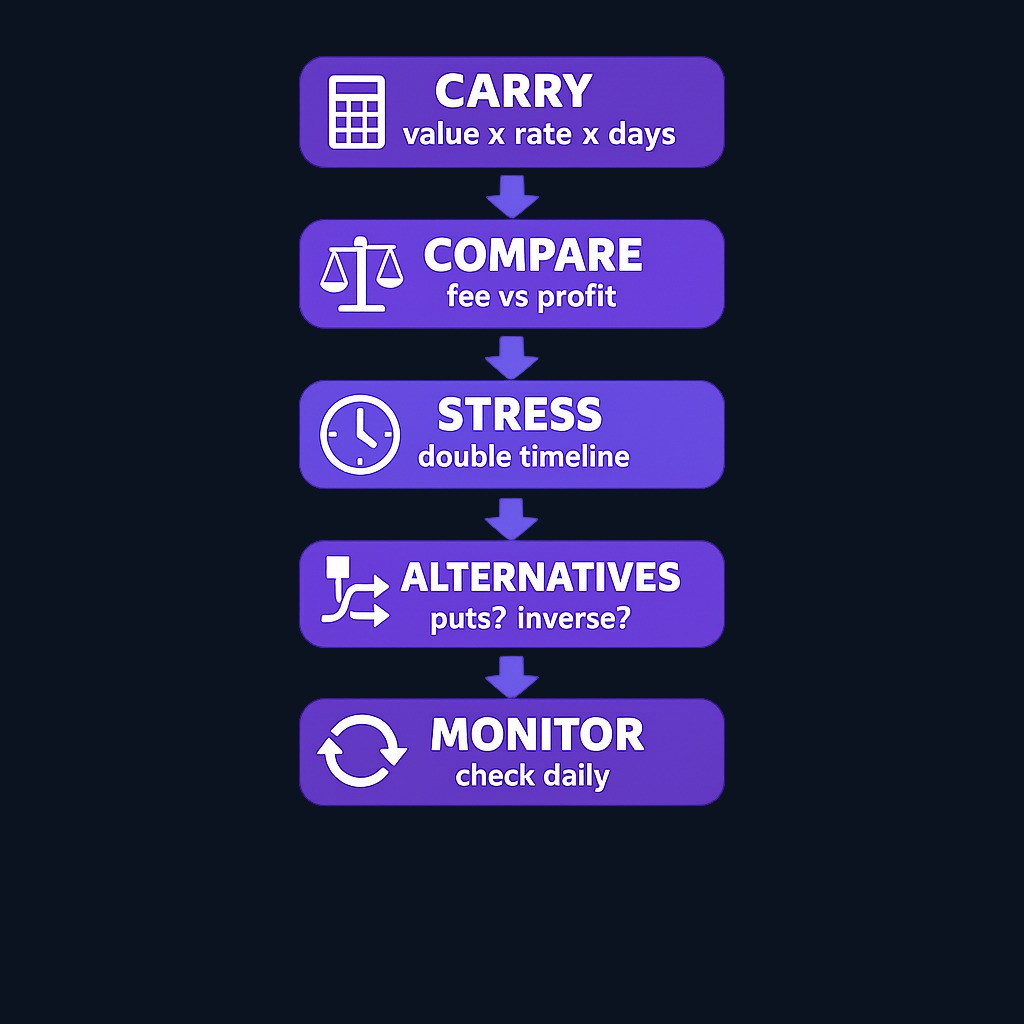
- Estimate total carry. Position value x annualized rate x expected days held / 360. Write the number down.
- Compare to expected profit. If carry consumes more than a quarter to a third of your target gain, the edge is thin.
- Stress the timeline. Double your expected holding period. If the trade only works when you are fast, the fee owns the trade.
- Check alternatives. Put options or inverse ETFs have their own costs and risks, but they cap losses and avoid daily borrow accrual; compare total cost honestly.
- Re-check daily. If the rate jumps materially, re-run the math instead of anchoring to your entry assumptions.
Conclusion and next steps
The stock borrow fee is the rental price of the shares behind every short sale: annualized in the quote, daily in the charge, and driven by how scarce the shares are. Low fees barely dent a trade; high fees can consume a correct thesis entirely. Before shorting, compute the carry over a realistic timeline, compare it to your expected gain, and monitor the rate while the position is open.
Next steps: practice the daily-cost calculation on two or three stocks your broker labels easy and hard to borrow, and compare the numbers. If you want structured practice with trading concepts like this, Finelo teaches market mechanics for beginners step by step.
Frequently asked questions
Who receives the stock borrow fee?
The lender of the shares, typically institutions such as funds, and intermediaries including the broker arranging the loan. Regulators note that lending income comes from borrower fees and from reinvesting cash collateral, per the SEC's securities lending glossary. Your broker's share of the fee varies by firm.
Do I pay a borrow fee on every short sale?
Generally yes, though on easy-to-borrow stocks the rate can be so low that the daily cost is negligible. Hard-to-borrow names are where fees become a major cost. Your broker's platform shows the applicable rate; confirm before placing the order.
Can the borrow fee change while my position is open?
Yes. Borrow rates float with lending supply and demand and are commonly reset daily. A position that cost little to carry last month can become expensive overnight if short demand surges, so recheck the rate regularly while the position is open.
Is a stock borrow fee the same as margin interest?
No. Margin interest is what you pay to borrow cash from your broker. The stock borrow fee is what you pay to borrow shares for a short sale. A short position in a margin account can involve both, so read each line of your statement separately.
stockborrowfeecostsshort
Practice trading with Finelo
Practice in a simulator, learn with bite-sized lessons, and build confidence before risking real money.
About the author
Finelo Team
The Finelo Team creates practical investing and trading education designed to help beginners learn faster with structured challenges, simulator practice, and bite-sized lessons.
Keep reading — Related articles

Trading
Understanding Walk Forward Analysis in Trading
Brief educational note: this article is educational — not investment advice — and trading involves the risk of loss.
Finelo Team
Trading
VWAP vs Moving Average: Formulas, Uses, and Limits
VWAP weights price by recorded volume over a defined period, while a moving average summarizes a sequence of prices over a rolling lookback.
Finelo Team

Trading
Volume Profile vs Market Profile: What Each Chart Measures
Volume Profile groups traded volume by price level.
Finelo Team