The Bank of Japan raised its policy-rate target on September 18, but the yen did not deliver the simple response a textbook might suggest.
BOJ Raises Its Policy Rate to 1.25%: What the Decision Means for the Yen
The BOJ raised its overnight policy-rate target to around 1.25%. Learn why the yen can still weaken after a rate increase and what the decision says.
7 min read
Practice trading with Finelo
Practice in a simulator, learn with bite-sized lessons, and build confidence before risking real money.
Want to learn more?
Practice in a simulator, learn with bite-sized lessons, and build confidence before risking real money.
Explore FineloExplore Finelo's 28-day challenges
Turn learning into a daily habit with guided challenge paths.
The BOJ Policy Board voted 7–2 to encourage the uncollateralized overnight call rate to remain at around 1.25%. The new guideline takes effect on September 24. The Bank also set the rate on its complementary deposit facility at 1.25% and the basic loan rate at 1.5%.
Market reporting described the yen weakening after the announcement. That may seem backward: higher interest rates are often associated with a stronger currency. The apparent contradiction illustrates one of the most important rules in market analysis—prices react to new information relative to expectations, not to headlines in isolation.
Information check: The policy decision and inflation figures in this article were reviewed on September 18, 2026. Currency prices move continuously. This is an educational explanation, not a forecast or recommendation to trade the yen.
What the BOJ actually decided
The official statement contains four points that matter:
- The target for the uncollateralized overnight call rate increased to around 1.25%.
- The vote was 7–2, rather than unanimous.
- The new operating guideline and related rates become effective on September 24.
- The BOJ said it expects to continue adjusting the degree of monetary accommodation in response to economic activity, prices, and financial conditions.
The statement did not promise a fixed timetable for the next move. It said the timing and pace would depend on whether the Bank's economic outlook is being realized and on risks including oil prices, global AI-related demand, and foreign-exchange developments.
That conditional language matters because currency markets are forward-looking. A current rate increase may be less important than what traders infer about the next six or twelve months.
Why did the BOJ raise rates with inflation below 2%?
Japan's Statistics Bureau released August inflation data on the same day as the policy decision:
- Headline CPI increased 1.9% from a year earlier.
- CPI excluding fresh food increased 1.7%.
- CPI excluding fresh food and energy increased 1.9%.
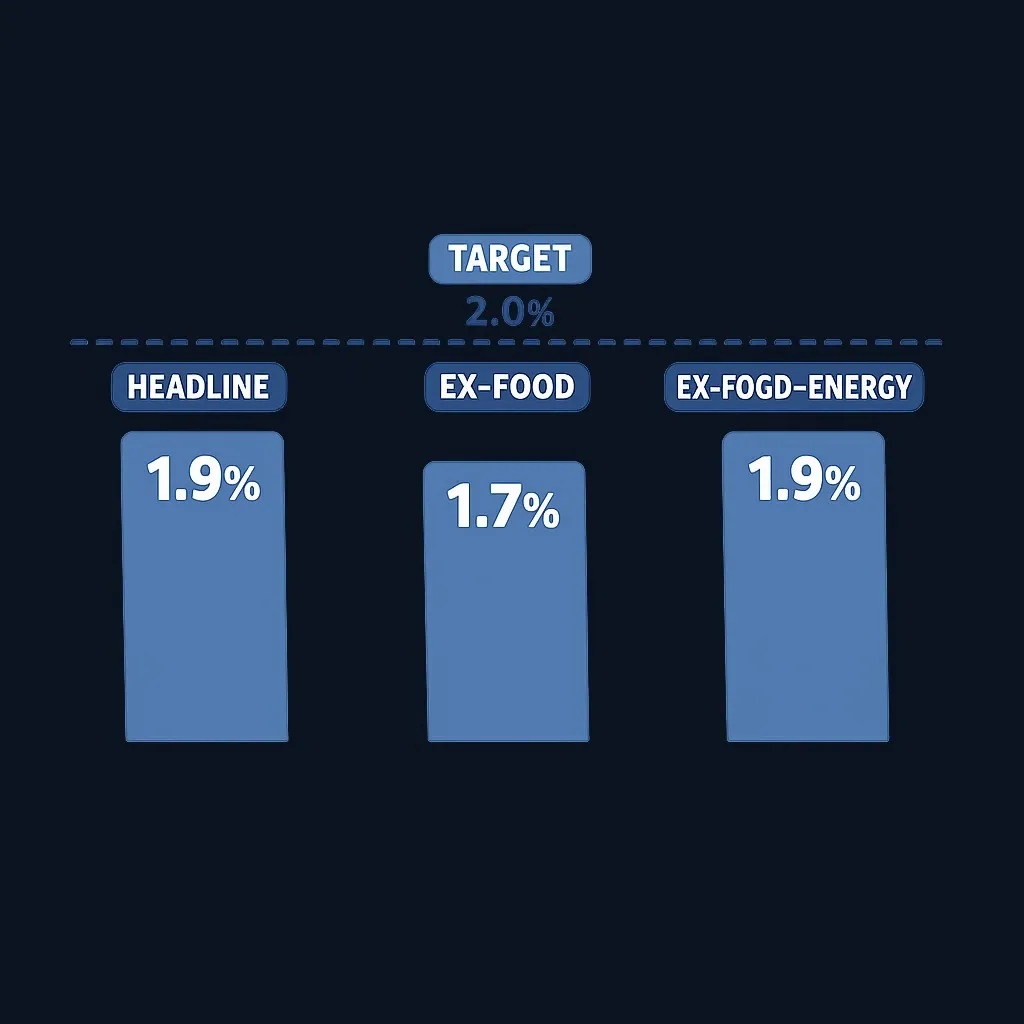
Those readings were below the BOJ's 2% price-stability target. The Bank nevertheless emphasized underlying inflation, wage-to-price transmission, higher import costs, and rising medium- to long-term inflation expectations.
In its policy statement, the BOJ said CPI excluding fresh food had recently been in a 1.5%–2.0% range, while underlying inflation was approaching 2%. It also warned of a risk that underlying inflation could move above the target as firms became more willing to raise wages and prices.
This explains the disagreement inside the board. One dissenter argued that inflation excluding fresh food was recently below 2% and that economic conditions were not necessarily strong. The other said economic and price developments had not accelerated enough to justify a hike at this meeting.
Why can the yen fall after a rate increase?
Several mechanisms can produce that reaction.
1. The decision may already have been priced in
If market participants largely expected a 1.25% target, they may have bought yen before the announcement. Once the expected event occurs, some positions can be closed. The news is hawkish in isolation but not more hawkish than the market had anticipated.
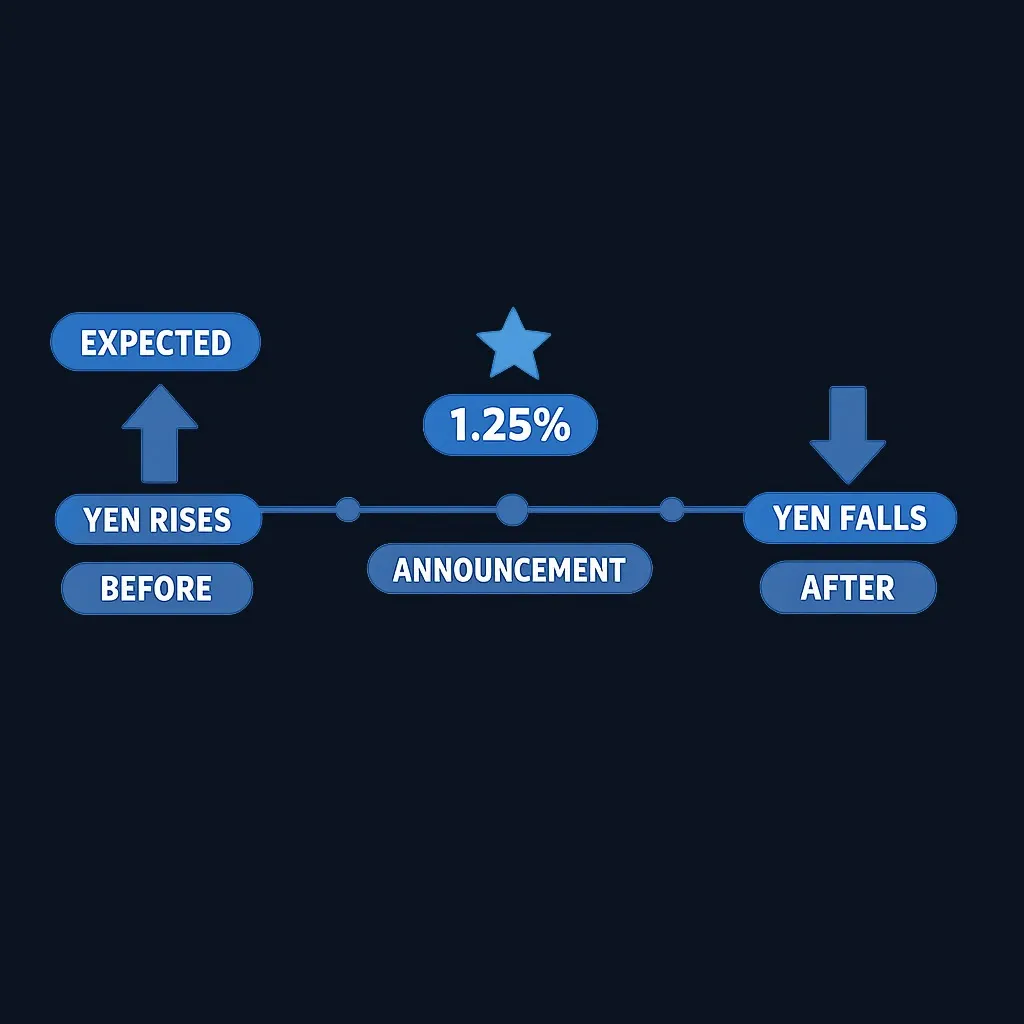
2. The future path can matter more than today's rate
A currency reflects expected returns over time. Traders compare Japan's prospective rates with rates in the United States and other economies—not just today's BOJ level. If the statement implies gradual or uncertain future tightening, the expected interest-rate gap may remain wide.
3. The vote can change expectations
Two members opposed the hike. Their dissents do not reverse the decision, but they show that support for further tightening is not automatic. Markets may interpret that split as a reason to reduce expectations for a rapid sequence of increases.
4. Nominal and real rates are different
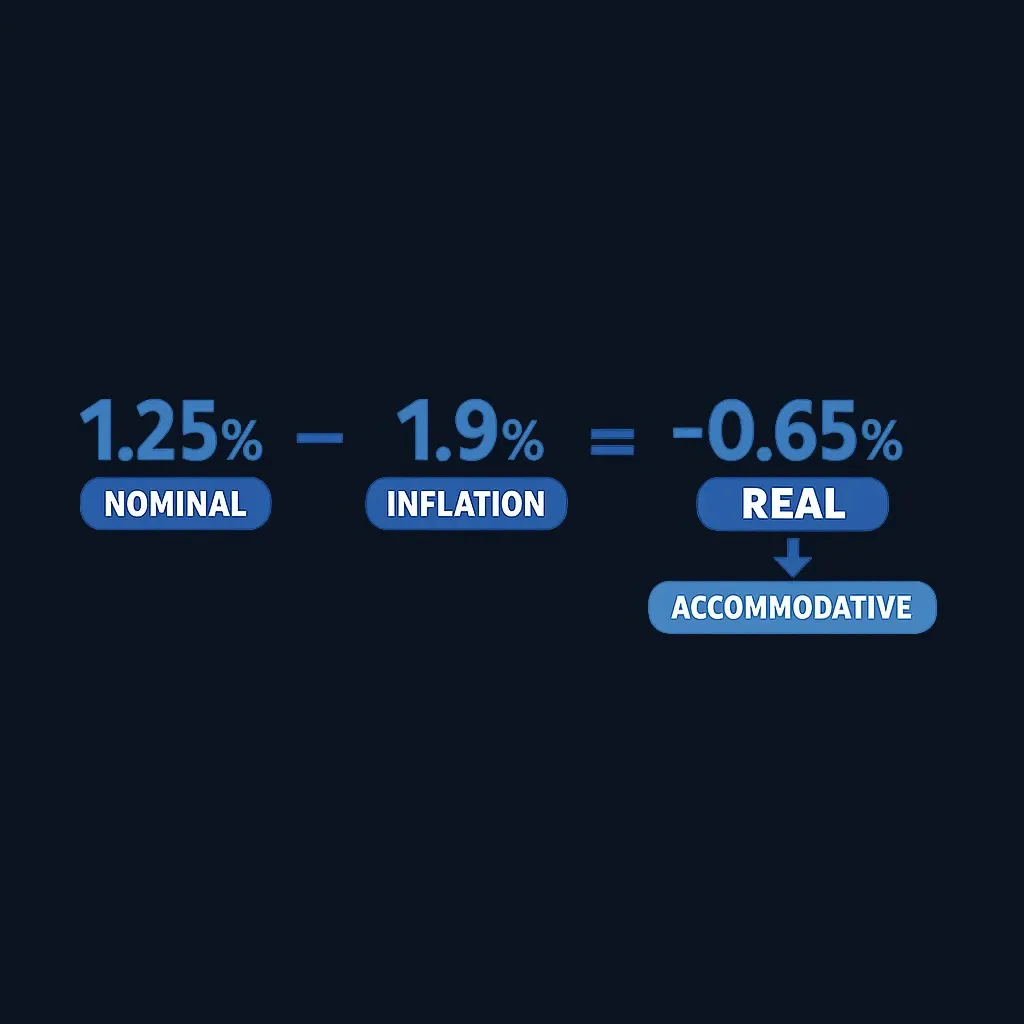
A nominal policy rate of 1.25% does not describe the full stance of policy. What matters for borrowers and savers is also the rate relative to inflation. The BOJ said real rates remained low, particularly at short and medium maturities, and described financial conditions as accommodative even after the change.
Practice trading with Finelo
Practice in a simulator, learn with bite-sized lessons, and build confidence before risking real money.
How to read USD/JPY correctly
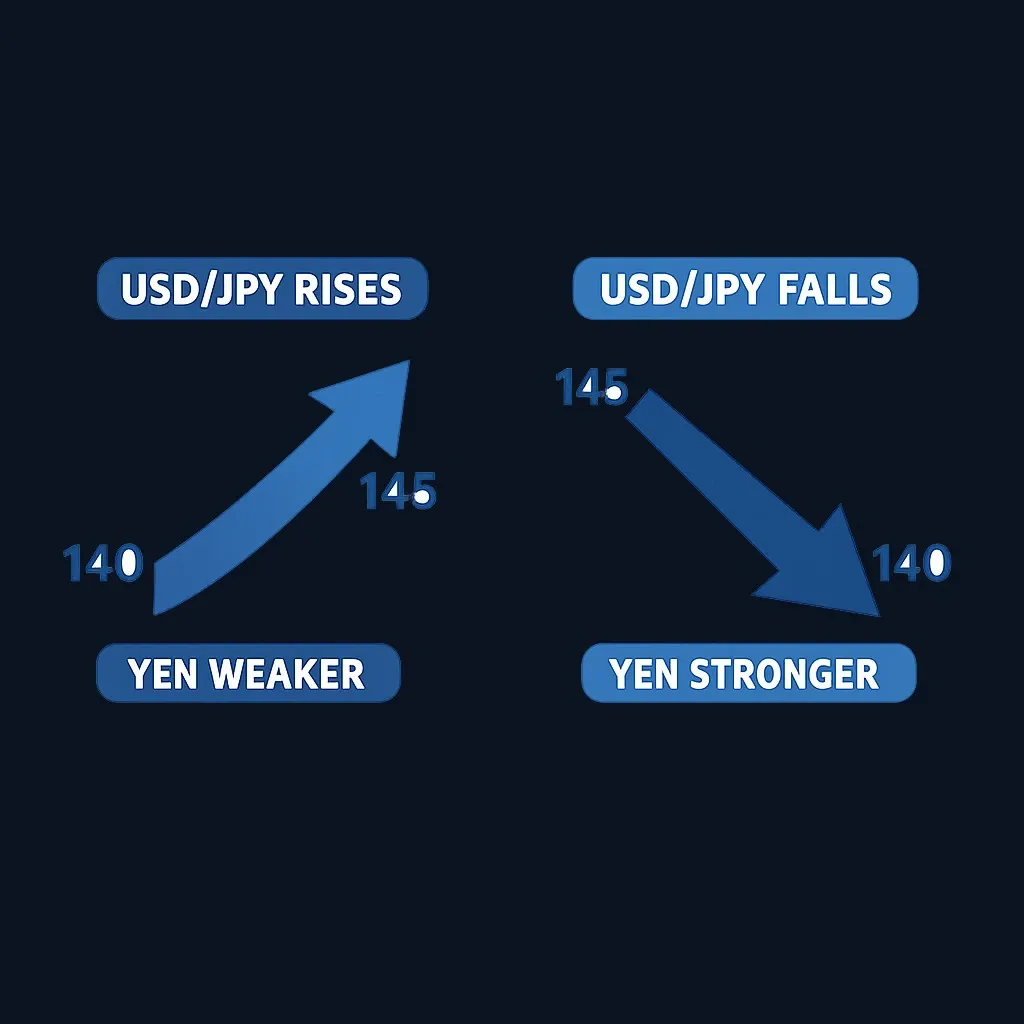
USD/JPY states how many yen buy one U.S. dollar.
- If USD/JPY rises, the dollar strengthened and the yen weakened.
- If USD/JPY falls, the yen strengthened and the dollar weakened.
The BOJ publishes daily foreign-exchange observations based on information from market participants. Its public series had been updated through September 17 when this article was prepared, so the September 18 post-decision move should be treated as an intraday market report until the official daily observation is available.
This timing distinction prevents a common sourcing error: presenting an intraday quote from a news service as if it were the BOJ's official daily rate.
What the decision may affect
BOJ policy can influence more than the currency.
Japanese government bonds: expectations for future short-term rates can shift yields across the curve, although long-term yields also reflect inflation, growth, and bond supply.
Banks and borrowers: higher short-term rates can improve returns on some bank assets while increasing financing costs for households and companies. The effect depends on how quickly deposit and loan rates adjust.
Import prices: a weaker yen raises the local-currency cost of dollar-priced imports, all else equal. The BOJ specifically identified the yen's earlier depreciation and high crude-oil prices as sources of price pressure.
International portfolios: a U.S. investor's return on a Japanese asset includes both the asset's local performance and the yen-dollar movement. Our currency-hedged ETF guide explains how that currency component can alter results.
The practical takeaway
The verified event is the BOJ's 7–2 decision to raise its overnight policy-rate target to around 1.25%, effective September 24.
The educational lesson is that “rate hike equals stronger currency” is an incomplete rule. Currency prices compare an actual decision with prior expectations and then look ahead to the probable path of policy. A widely expected hike accompanied by cautious guidance can therefore coincide with a weaker yen.
Finelo does not provide investment advice. This article is for informational and educational purposes only. Currency and bond markets are volatile, and no policy decision guarantees a particular market outcome.
Primary sources: Bank of Japan — September 18 policy decision, Bank of Japan — daily foreign-exchange rates, Statistics Bureau of Japan — August 2026 CPI
Secondary market-reaction reference: Yahoo Finance/Reuters — yen reaction to the BOJ decision
Frequently asked questions
What did the Bank of Japan decide in September 2026?
The BOJ voted 7–2 to guide the uncollateralized overnight call rate to around 1.25%. The new guideline is effective September 24, 2026.
Why can the yen weaken after the BOJ raises interest rates?
Currencies react to the difference between an announcement and what markets expected. If a hike was already priced in or the future policy path appears less aggressive than expected, the yen can weaken despite the higher rate.
Did every BOJ policy-board member support the increase?
No. Seven members supported the action and two dissented. Both dissenters preferred maintaining the previous guideline because they did not believe current economic and price conditions justified a hike.
Bank of JapanJapanese yenUSD/JPYinterest ratescentral banksinflation
Practice trading with Finelo
Practice in a simulator, learn with bite-sized lessons, and build confidence before risking real money.
About the author
Finelo Team
The Finelo Team creates practical investing and trading education designed to help beginners learn faster with structured challenges, simulator practice, and bite-sized lessons.
Keep reading — Related articles

News
U.S. Gas Prices Reach $4.46: What the Increase Means for Inflation and Household Costs
The EIA's U.S. all-grades gasoline average reached $4.455 per gallon. See what changed, why regions differ and how fuel prices affect inflation.
Finelo Team

News
China Sets a Stronger Yuan Fix at 6.7521: What It Means for USD/CNY
China set its September 18 yuan reference rate at 6.7521 per dollar. Learn how the official fixing differs from market rates and why the move matters.
Finelo Team

News
The September Effect Explained: What the Stock Market Data Really Says
September has delivered the S&P 500's weakest average monthly return since 1928, but the result is not a reliable trading signal. Here is how to read the seasonality data.
Finelo Team