Day trading for beginners means learning how to buy and sell securities within the same trading day, usually aiming to profit from short-term price moves rather than long-term ownership. That simple definition hides a difficult reality: day trading is fast, emotionally demanding, and risky, especially when beginners trade with real money before they have a tested process. A safer starting path is to learn market mechanics, practice with a simulated account, choose a platform you understand, define risk before every trade, and avoid borrowed money. Day trading should be treated as a skill-building activity first—not a shortcut to income.
Day Trading for Beginners: Strategies, Risks, and Tips
Day trading for beginners means learning how to buy and sell securities within the same trading day, usually aiming to profit from short-term price moves rather than long-term ownership.
12 min read
Practice trading with Finelo
Practice in a simulator, learn with bite-sized lessons, and build confidence before risking real money.
Want to learn more?
Practice in a simulator, learn with bite-sized lessons, and build confidence before risking real money.
Explore FineloExplore Finelo's 28-day challenges
Turn learning into a daily habit with guided challenge paths.
Introduction to Day Trading
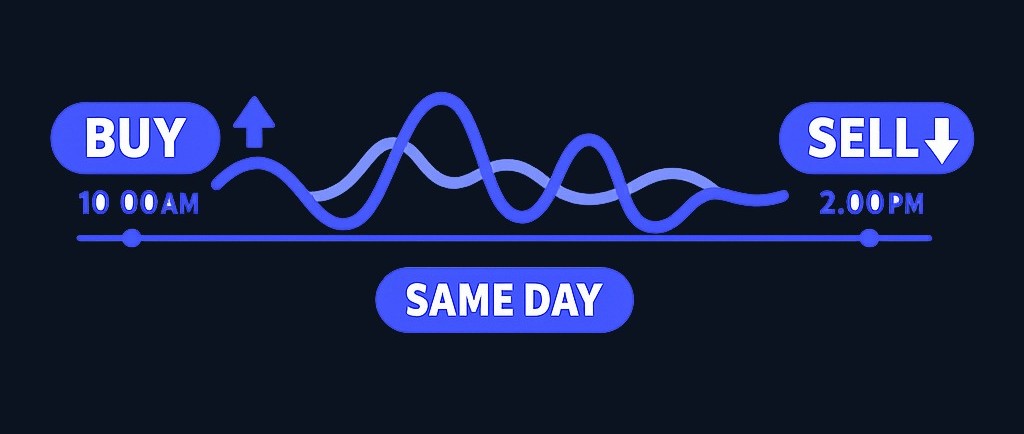
Day trading is the practice of opening and closing trades during the same trading day, typically to capture short-term changes in price. U.S. News frames day trading as intraday buying and selling intended to capture brief price changes, while cautioning that the reality is less glamorous than the definition suggests U.S. News.
Beginners are often drawn to day trading because it feels active and measurable. You can see charts move in real time, test ideas quickly, and receive immediate feedback on whether your trade plan worked. That feedback loop can be useful for learning, but it can also encourage overconfidence. A few winning trades do not prove that a strategy is reliable, and a few losing trades do not automatically mean a strategy is useless.
The key mindset shift is this: beginners should not ask, “How can I make money today?” first. A better starting question is, “Can I follow a clear process, control losses, and review my decisions honestly?” Day trading is less about predicting every move and more about managing uncertainty.
Understanding the Risks of Day Trading
The main risk in day trading is not just that a trade can lose money. It is that losses can happen quickly, repeatedly, and under emotional pressure. Beginners often underestimate how hard it is to make decisions when prices move fast and real money is involved.
Common risks include:
- Market risk: Prices can move against your position immediately after entry.
- Execution risk: A trade may fill at a different price than expected, especially in fast-moving conditions.
- Overtrading risk: Frequent trading can lead to impulsive decisions and unnecessary costs.
- Leverage and margin risk: Borrowed money can magnify losses. U.S. News cites the view that margin rates should be irrelevant for beginners because financing day trades with borrowed money is already a serious mistake U.S. News.
- Psychological risk: Fear, greed, frustration, and the desire to “win back” losses can damage decision-making.
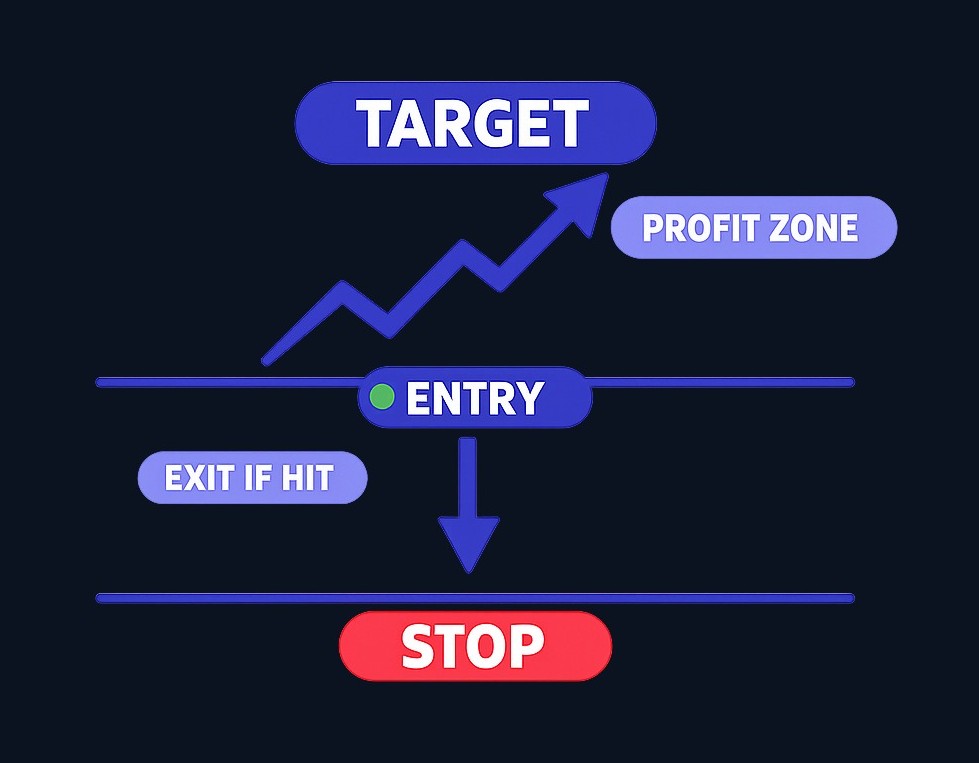
A beginner-friendly risk rule is to decide the maximum acceptable loss before entering any trade. For example, imagine a trader has a practice account and decides that a trade idea is invalid if the price falls below a specific support level. The trader writes down the entry, the invalidation point, and the reason for the trade before clicking buy. If the invalidation point is reached, the trade is closed according to plan. The goal is not to be right every time; the goal is to avoid turning one small loss into a large one.
Risk management also includes knowing when not to trade. If you are tired, distracted, angry, or trading only because you feel you “should,” stepping away may be the best decision.
Essential Tools and Platforms for Day Trading
A beginner does not need the most complex platform available. The better question is whether the platform helps you learn, practice, and control risk without adding confusion.
Look for tools that support these needs:
| Need | Why it matters | Beginner-friendly decision point |
|---|---|---|
| Simulated or paper trading | Lets you practice without risking real money | Use it to test order entry, chart reading, and trade journaling before going live |
| Clear charts | Helps you identify price levels, trends, and volatility | Avoid cluttering charts with too many indicators at once |
| Simple order entry | Reduces mistakes when placing trades | Practice market, limit, and stop-style order workflows before using real funds |
| Transparent costs | Trading costs can affect frequent strategies | Understand fees and costs before choosing a platform |
| Education and support | Beginners need explanations, not just tools | Prefer platforms that make learning easier, not just trading faster |
| Reliability and usability | Confusing layouts can lead to errors | Choose a platform you can navigate calmly under pressure |
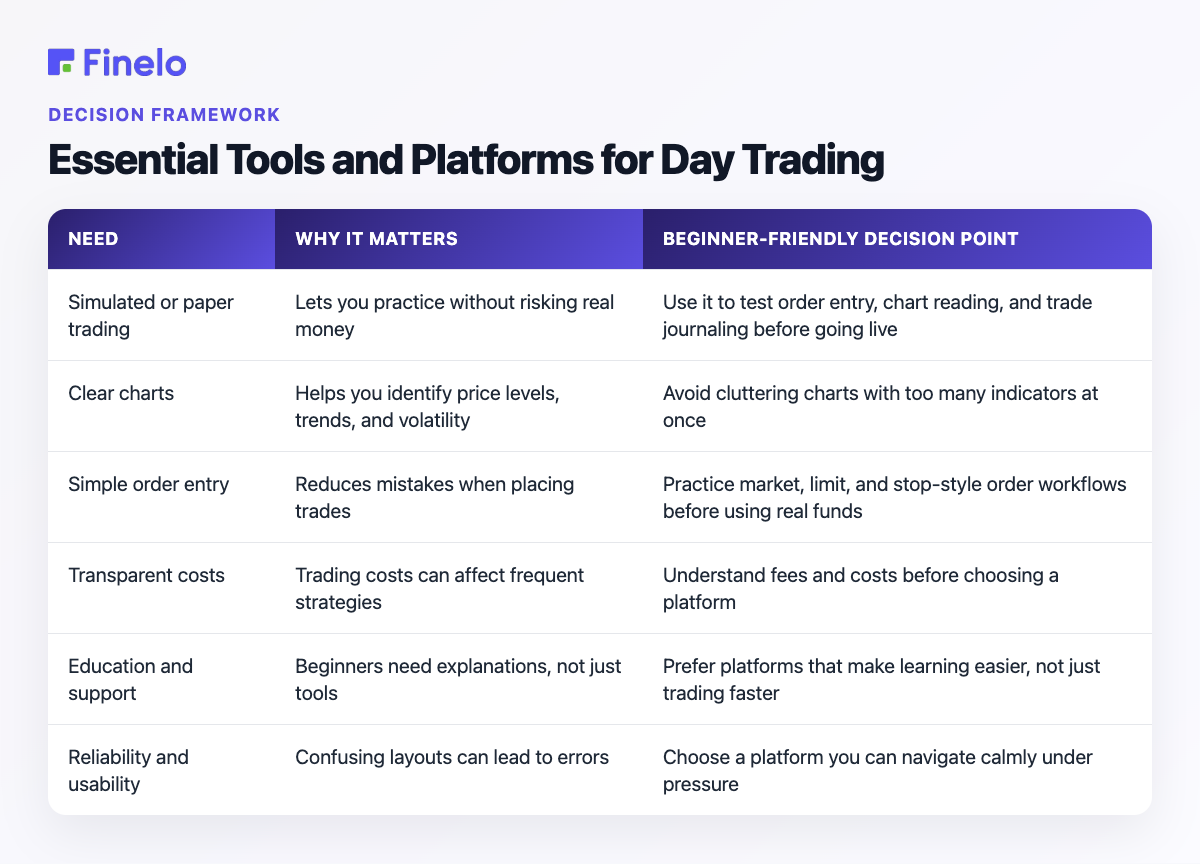
Several well-known platforms are commonly discussed for beginner day traders. A U.S. News roundup includes Charles Schwab thinkorswim, Fidelity Trader+, Power E*Trade, Webull, and Interactive Brokers among possible platforms for newer traders, alongside a broader warning to learn the risks before using real capital U.S. News. That list should not be treated as a universal recommendation. The right choice depends on your experience level, market of interest, preferred device, and need for practice tools.
Before funding an account, test whether you can answer these questions:
- Can I place and cancel orders confidently?
- Can I find my open positions and account balances quickly?
- Do I understand the costs that may apply to my trades?
- Can I practice without using real money?
- Can I review past trades and export or record notes?
If the answer to any of these is no, spend more time learning the platform before trading live.
Developing a Day Trading Strategy
A day trading strategy is a repeatable plan for deciding what to trade, when to enter, when to exit, and how much to risk. Beginners often jump straight to indicators, but a strategy needs more than chart signals. It needs a complete decision framework.
Use this simple framework:
- Market condition: Is the price trending, ranging, or moving unpredictably?
- Setup: What specific pattern or condition would justify a trade?
- Entry: What must happen before you enter?
- Risk point: Where is the trade idea invalid?
- Target or exit plan: Where will you take profit, reduce risk, or exit?
- Review: Did you follow the plan, and what can be improved?
Here are three beginner-friendly strategy concepts to study in a simulated environment.
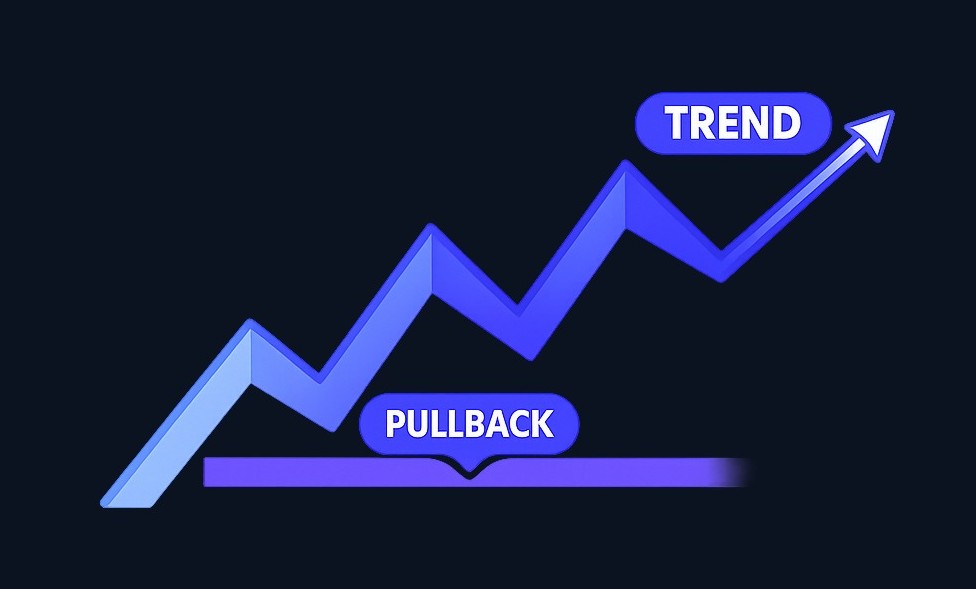
Trend pullback
In a trend pullback strategy, the trader looks for a market that is moving in one direction, waits for a temporary pullback, and then looks for signs that the trend may continue. For example, if a stock has been making higher highs and higher lows, a beginner might mark the prior support area and wait to see whether price stabilizes there before considering a trade.
The caveat: not every pullback resumes the trend. Some are the start of a reversal. That is why the invalidation point matters.
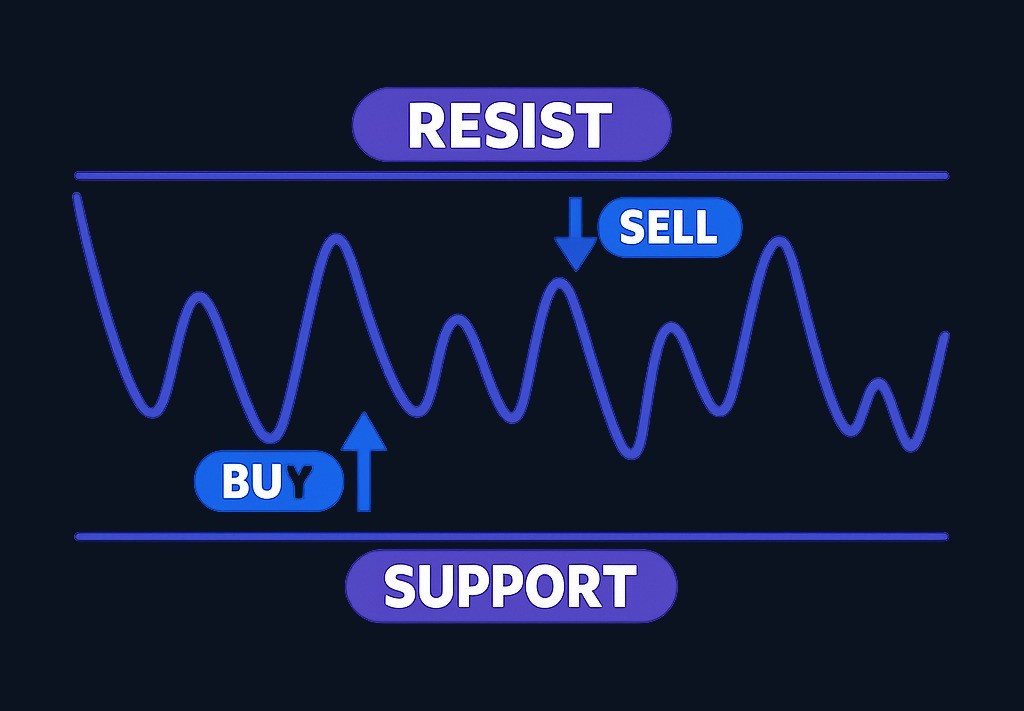
Range trading
In a range, price moves between a rough support area and resistance area. A beginner might study how price behaves near the bottom and top of that range, looking for a controlled entry near support and an exit before resistance.
The caveat: ranges eventually break. A trader who assumes support will always hold can be caught in a sharp move. Range strategies need clear exit rules.
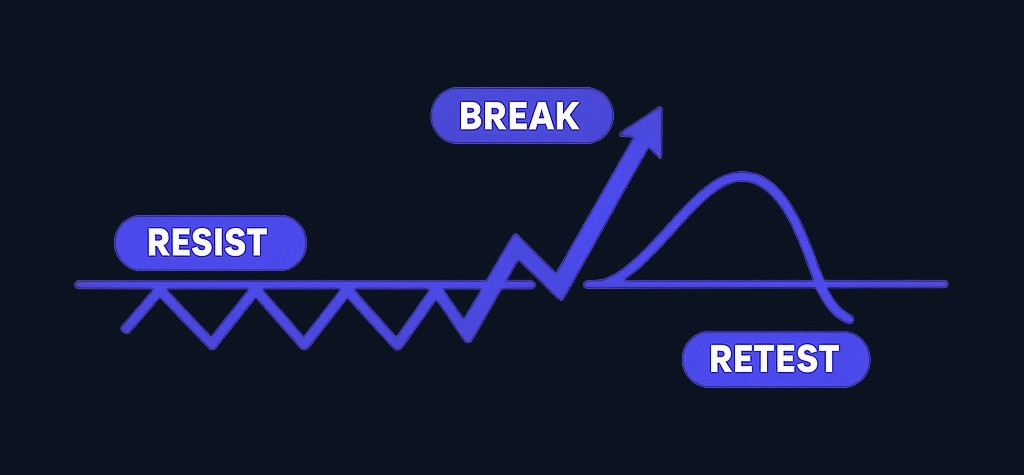
Breakout and retest
A breakout happens when price moves beyond a prior level. Beginners often chase breakouts immediately, which can lead to poor entries. A more patient version is to wait for a breakout, then watch whether the price retests the level and holds.
The caveat: breakouts can fail. If price breaks out and quickly falls back into the prior range, the original idea may no longer be valid.
A useful beginner goal is to test one strategy at a time. If you change the setup every day, you will not know whether the strategy is improving or whether you are simply reacting emotionally.
Practice trading with Finelo
Practice in a simulator, learn with bite-sized lessons, and build confidence before risking real money.
Common Mistakes to Avoid in Day Trading
Most beginner mistakes come from trading without enough structure. The problem is not always a lack of intelligence; it is often a lack of rules.
Trading too large too soon
Beginners may risk too much because they want results quickly. This makes every price movement feel urgent. Smaller position sizes, or simulated trading at first, make it easier to focus on process instead of panic.
Using borrowed money
Margin can make losses larger and more stressful. For beginners, the safer educational stance is to avoid financing day trades with borrowed money, especially before you have a tested process and a full understanding of the risks U.S. News.
Chasing fast moves
A fast-rising price can create fear of missing out. Beginners may enter late, without a clear stop or exit plan. A better rule is: if the trade no longer offers a clear risk point, skip it.
Adding to losing trades without a plan
Buying more simply because a position is down can turn a manageable loss into a major one. Adding to a trade should only happen if it was part of the original plan, not as an emotional reaction.
Relying on too many indicators
Indicators can help organize information, but too many can create conflicting signals. Beginners are usually better served by understanding price levels, trend, volume context, and risk before building complex chart layouts.
Skipping the trade journal
A trading journal is where learning compounds. Record the setup, entry, exit, risk, result, and emotional state. Over time, patterns appear: maybe you lose more when trading after a big win, or maybe you perform better when you wait for confirmation. Without a journal, those lessons are easy to miss.
Beginner Scenarios: What Success and Failure Can Look Like
Because outcomes vary and no trade result is guaranteed, the following are educational scenarios rather than promises or real trader profiles.
Scenario 1: The disciplined beginner
A beginner chooses one setup: a trend pullback. For three weeks, they practice in a paper trading account. They only take trades that match written criteria: trend direction, pullback area, entry trigger, invalidation point, and planned exit.
Some trades win. Some lose. But the trader learns that their best trades happen when they wait for price to come to a predefined level instead of chasing. Their “success” is not measured by a dramatic profit claim. It is measured by improved consistency, fewer impulsive entries, and a clearer understanding of when their setup does not apply.
The lesson: early success in day trading is process discipline, not just account growth.
Scenario 2: The reactive beginner
Another beginner watches a stock move quickly and enters because it “looks strong.” There is no planned exit. When the price drops, they hold because they do not want to accept the loss. Then they add more, hoping for a rebound. The trade becomes larger than intended, and the emotional pressure makes it harder to think clearly.
The lesson: the biggest failure was not being wrong about direction. It was entering without a defined risk point and then changing decisions under stress.
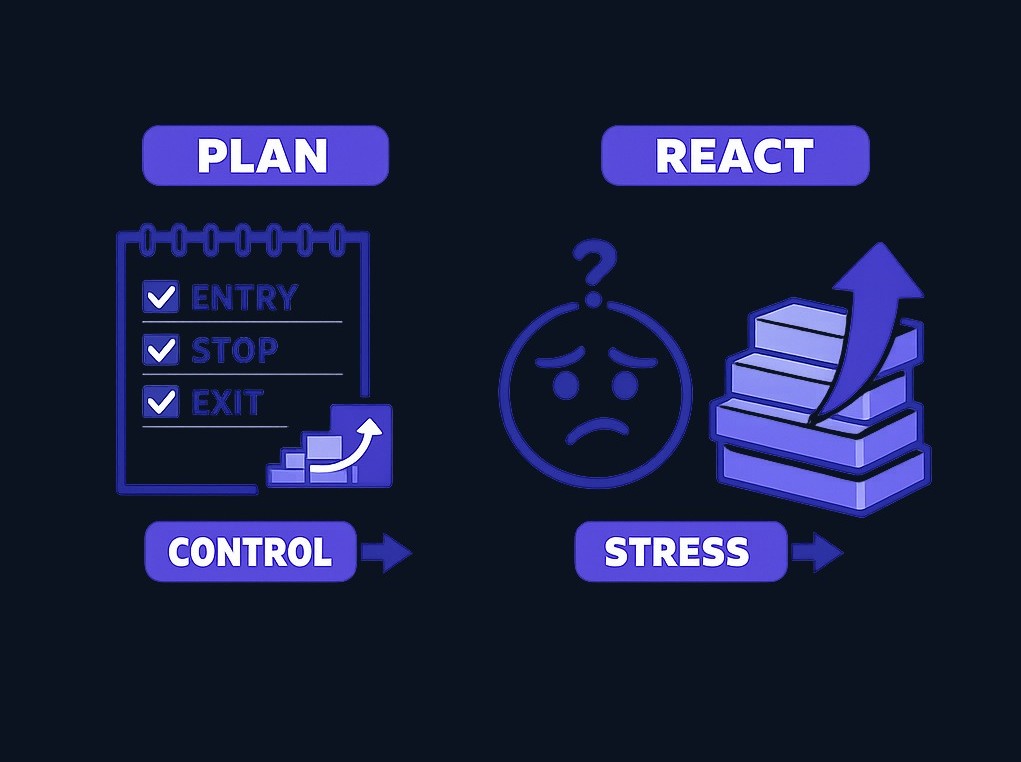
These two scenarios show why a trading plan matters. A beginner cannot control the market, but they can control preparation, position size, entry criteria, and review.
Practical Next Steps for Beginners
If you are new to day trading, move in stages instead of rushing into live trades.
Use this checklist:
- Learn the basic mechanics of orders, bid-ask spreads, charts, and position sizing.
- Choose one market and one strategy concept to study first.
- Practice in a simulated account before risking real money.
- Write down your entry, exit, and invalidation point before every trade.
- Avoid borrowed money while learning.
- Keep a trade journal and review it weekly.
- Stop trading when emotions start driving decisions.
- Treat education, risk control, and consistency as the first goals.
If you want structured investing and trading education before placing real trades, you can explore Finelo’s learning resources, including the AI Trader Challenge. Keep any educational tool in perspective: it can support learning, but it cannot remove market risk or guarantee outcomes.
FAQs on Day Trading for Beginners
How much money do I need to start day trading?
There is no single right amount for every beginner. The better starting point is to use money you can afford to risk, understand platform costs, and practice first with simulated trading. If losing a small trade would cause stress or affect essential expenses, you are not ready to trade live.
How can I practice day trading without losing money?
Use paper trading or a simulated account if your platform offers it. Practice placing orders, setting exits, reading charts, and journaling trades. The goal is to build repeatable habits before real money adds emotional pressure.
What is the best day trading strategy for beginners?
The best beginner strategy is usually the one you can define, test, and follow consistently. Trend pullbacks, range trading, and breakout-retest setups are common concepts to study, but none is automatically profitable. Pick one, write rules, practice it, and review results before adding complexity.
Is day trading suitable for everyone?
No. Day trading requires time, emotional control, risk tolerance, and a willingness to accept losses. Many beginners may be better served by long-term investing education before attempting active trading. Day trading should be approached cautiously and educationally, not as guaranteed income.
day trading for beginnerstradingtrading education
Practice trading with Finelo
Practice in a simulator, learn with bite-sized lessons, and build confidence before risking real money.
About the author
Finelo Team
The Finelo Team creates practical investing and trading education designed to help beginners learn faster with structured challenges, simulator practice, and bite-sized lessons.
Keep reading — Related articles

Trading
Options Wheel Strategy: How It Works and Its Risks
The phrase "wheel strategy options" describes a repeatable income approach: sell cash‑secured puts until assigned, buy the stock when assigned, then sell covered calls on the shares to collect more premium and define exit points. This cycle — sell puts → buy stock on assignment → sell covered…
Finelo Team
Trading
Volume Profile Trading: How It Works and Its Limitations
Volume profile trading maps how much volume traded at each price level during a chosen period, revealing levels where the market accepted or rejected price. Traders use the Point of Control (the single price with the highest traded volume), value areas, and volume nodes to identify likely support/resistance…
Finelo Team
Trading
What is Unusual Options Activity and Why Does It Matter?
Unusual options activity (UOA) is a sudden, outsized spike in options trades — volume or open interest — relative to a contract’s recent norms. Traders watch UOA because large, concentrated options orders can signal informed or institutional positioning that sometimes precedes significant stock moves. Example: a single large…
Finelo Team