You can learn what the buttons do in an afternoon. Learning to use them well takes a lot longer.
How Long Does It Take to Learn Trading? A Realistic Beginner Timeline

You can learn the words in a week; judgment takes months. A realistic, stage-by-stage timeline for learning to trade — the first week, the first month, and beyond — with no shortcut promises.
8 min read
Practice trading with Finelo
Practice in a simulator, learn with bite-sized lessons, and build confidence before risking real money.
Want to learn more?
Practice in a simulator, learn with bite-sized lessons, and build confidence before risking real money.
Explore FineloExplore Finelo's 28-day challenges
Turn learning into a daily habit with guided challenge paths.
The gap is the honest answer to how long does it take to learn trading, and most timelines online sit at one of two unhelpful extremes: a course promising you'll be "trading like a pro in 30 days," or a forum reply that just shrugs and says "years." Neither helps you plan.
This guide does something more useful. It breaks learning into realistic stages — what you can pick up in the first week, the first month, and the first several months — so you know what to practice next instead of chasing a finish line that keeps moving. No shortcut promises, and no pretending it's harder than it is.
Here's the short answer: learning trading happens in stages
So, how long does it take to learn trading? A week or two to get through the beginner phase and learn the words, then months, sometimes years, to build judgment. The bottleneck isn't information; it's practice. A simple learning plan beats any promised shortcut.
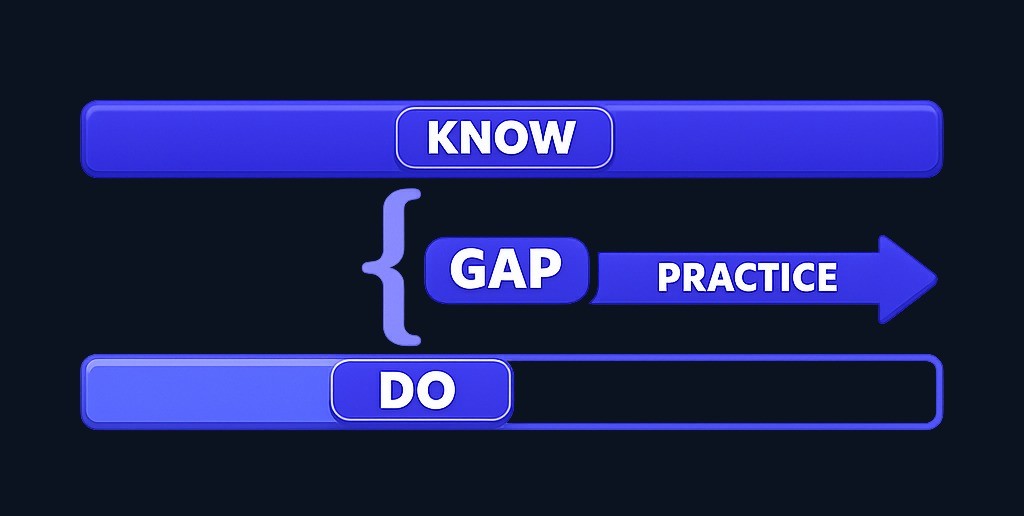
The vocabulary and mechanics of trading can be learned in a week or two. The judgment, knowing when not to trade, sizing a position, staying calm when a position moves against you, takes months of practice, and arguably never stops developing.
The trading timeline isn't a single number; it's a curve. Early progress feels fast because the basics are concrete. Then the trading learning curve flattens, because the hard part isn't information, it's consistency. Setting realistic expectations up front is the single best thing a beginner can do.
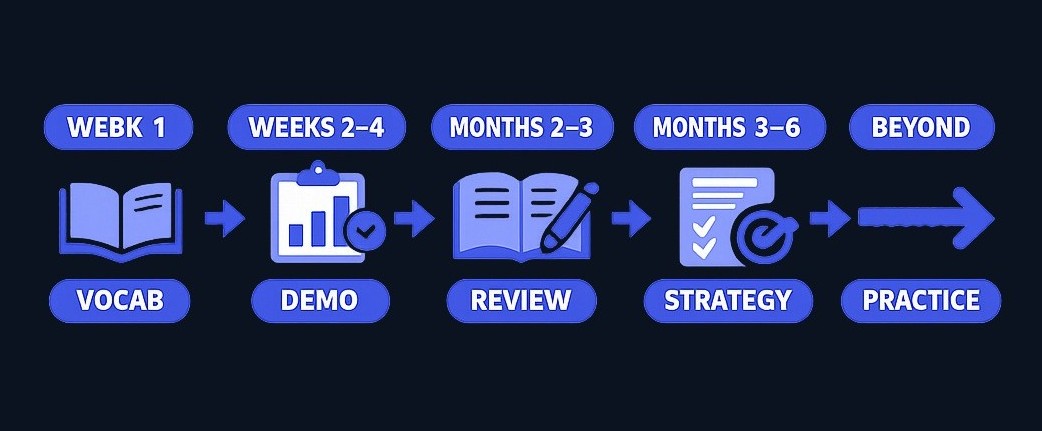
A rough map of the stages looks like this:
| Stage | Rough time | What you're building |
|---|---|---|
| Vocabulary and basics | First week or two | Terms, order types, how markets work |
| Simulated decisions | Weeks 2–4 | Practice trades, risk basics |
| Review and patterns | Months 2–3 | Journaling, spotting your own mistakes |
| Strategy testing and consistency | Months 3–6+ | Testing ideas, steadier decisions |
Times are rough and vary a lot from person to person. Treat them as a sequence, not a deadline.
The first week: vocabulary and market basics
The fastest wins come first. In your first week, the goal is fluency in the language, not profits.
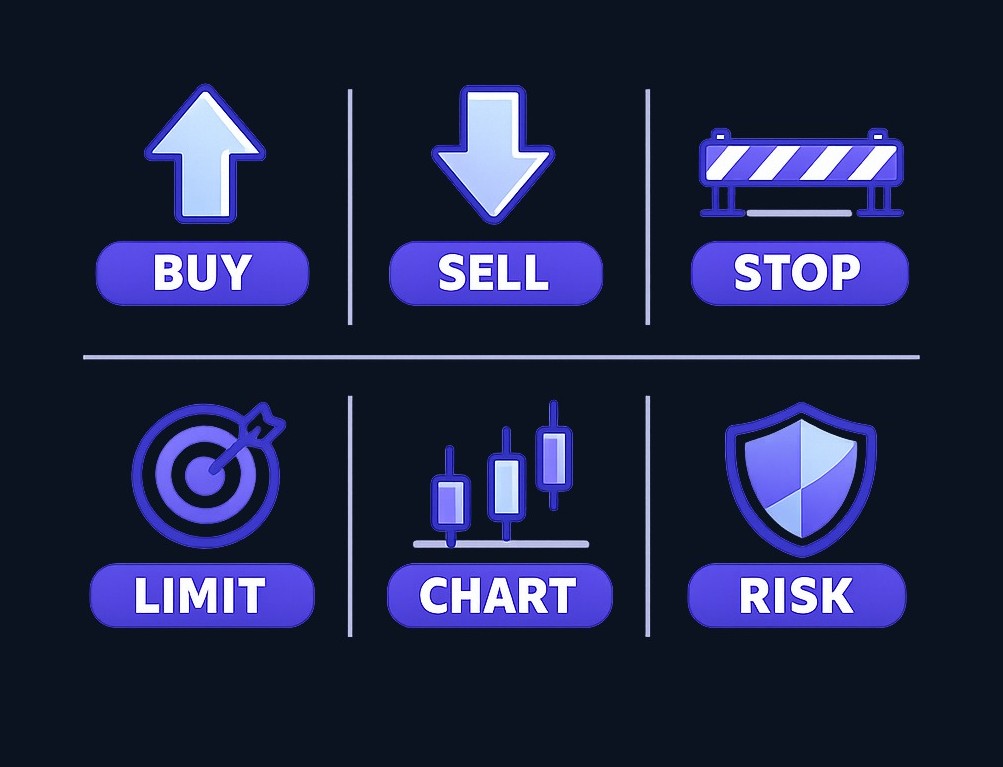
Focus on market basics and trading vocabulary: what a market order and a limit order do, what a stop is, how an asset's price is quoted, and when markets are open. Add some light chart reading and a first look at technical analysis basics, enough to tell an uptrend from a downtrend, plus the core risk words like position sizing and stop-loss. This is the bulk of how to learn trading for beginners: a vocabulary you can actually use, learned in the order you'll need it.
You won't be good yet. You'll just stop feeling lost, which is exactly what week one is for.
Weeks 2–4: simulated decisions and risk basics
Once the words make sense, start making decisions where being wrong is free. This is where a simulator earns its place: you practice with virtual funds, so the cost of a mistake is a note in your journal, not real money.
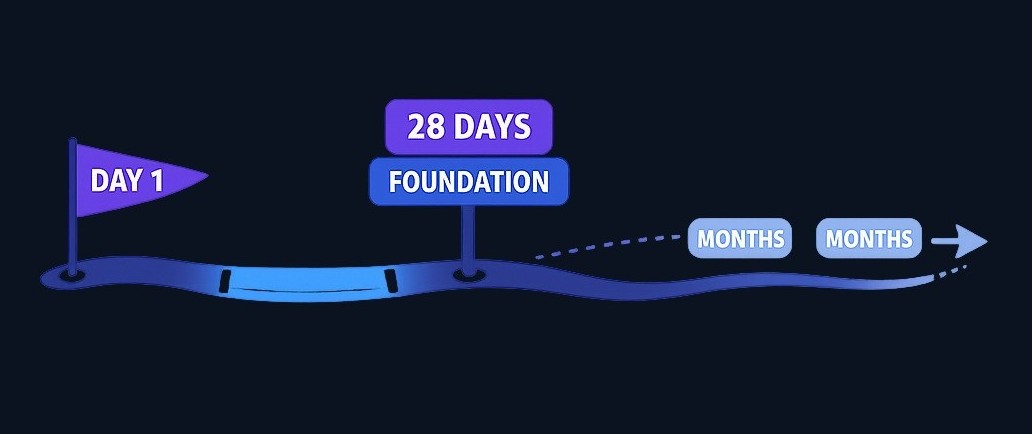
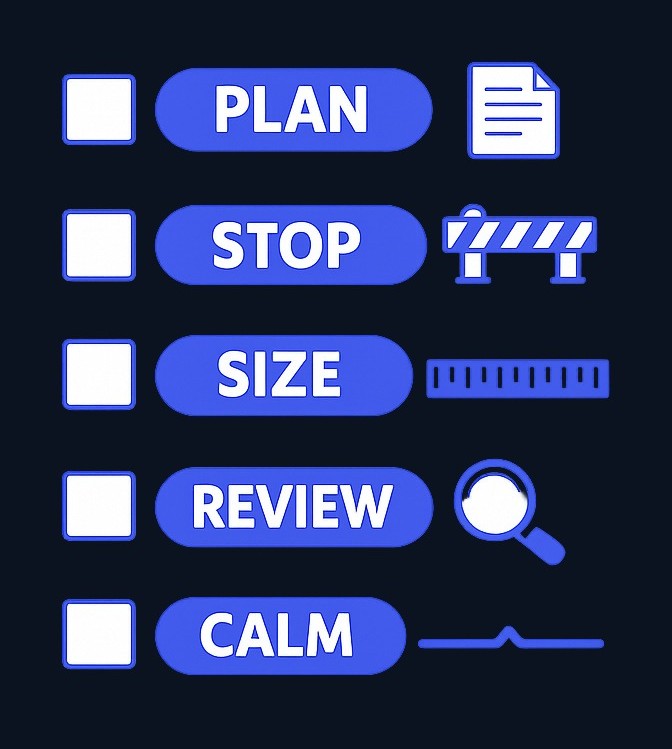
In weeks two through four, practice paper trading or demo trading with a clear plan. One skill at a time, a stop and a size set before each trade, and a short review after. This is also a natural point for a structured start. A four-week program like Finelo's 28-day challenge sequences the concepts so you're not guessing what to practice next; the Trading Challenge pairs short lessons with virtual-funds practice in the Finelo trading simulator.
A fair question here is "can you learn trading in 30 days?" You can learn the basics and build a real practice routine in that time. What you can't do is compress judgment and consistency into a month. Finishing a 28-day sprint is a starting line, not a signal you're ready to trade real money.
Months 2–3: review, patterns, and emotional discipline
This is where most of the real learning happens, and where most people quit because it's less exciting than week one.
By now you have trades to look back on. Keep a trading journal and make the review process a habit: read your trades weekly and look for patterns. You'll notice you exit winners too early, or move a stop when you shouldn't, or trade when you're bored. That's trading psychology showing up on the page, and naming a pattern is the first step to breaking it.
The skill being built here is emotional discipline: following your own rules when a trade is going against you. It's slower and quieter than learning vocabulary, and it's the difference between knowing what to do and actually doing it. Consistency, not cleverness, is the goal.
Practice trading with Finelo
Practice in a simulator, learn with bite-sized lessons, and build confidence before risking real money.
Months 3–6 and beyond: strategy testing and consistency
After a few months of practice and review, beginners often start testing ideas more deliberately. This is the strategy testing phase: forming a simple approach, then checking how it holds up.
Two educational tools fit here. Backtesting runs a set of rules against historical data to see how they would have behaved. Continued demo trading tests the same ideas forward, in current market conditions, without real money. Neither predicts the future; both are ways to learn whether an idea is worth more practice. This is also why "how long does it take to learn day trading" tends to have a longer answer. Faster-paced styles demand more reps before decisions feel steady.
There's no certificate at the end of this stage, which is the point. "How long to become a trader" depends on how consistently you practice and review, not on a fixed number of weeks. Some people build steady habits in months; others take much longer, and that's normal.
What slows beginners down
The hard part isn't learning trading, it is avoiding the usual traps. These are what stretch a few months into a frustrating few years:
- No plan. Practicing without a goal for each session turns reps into noise.
- Too many strategies. Jumping between approaches every week means never learning any of them.
- No risk rules. Skipping size and stops is how a learning account blows up before the lessons land.
- Chasing quick money. Trading to get rich fast is the fastest way to learn nothing slowly.
- Social media hype. Screenshots of wins, "secret strategy" pitches, and inflated profitability claims set a distorted clock. Most of what you see online is marketing, not a timeline.
Notice the theme: what slows people down usually isn't the difficulty of the material. It's impatience with the process.
What to learn before real-money decisions
Before real money ever enters the picture, a beginner should be able to check off a short list.
| Before real money | Can you honestly say yes? |
|---|---|
| Orders | I can place and exit a trade without fumbling the order ticket |
| Risk | I set a size and a stop before entering, every time |
| Journal | I keep a journal and actually review it |
| Restraint | I can take the no-trade decision when nothing fits my plan |
| Uncertainty | I accept that no setup is a sure thing |
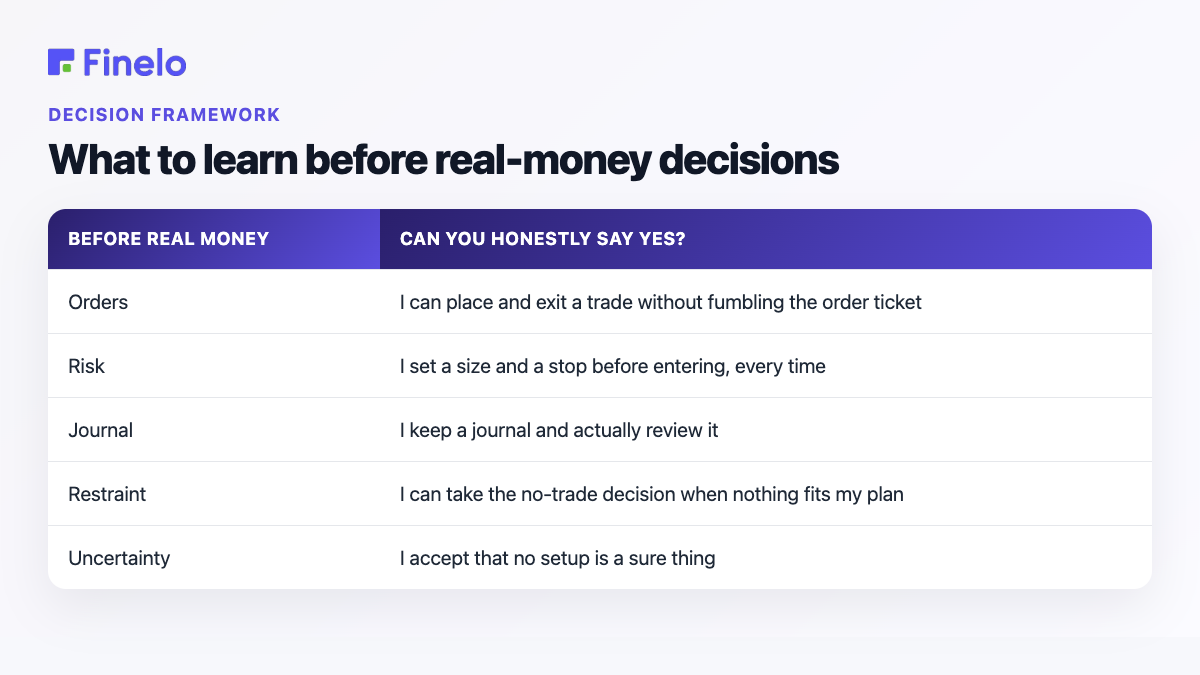
If any row is a "no," that's simply what to practice next. The risk row is worth the most attention and our guide to risk management in trading goes deeper on size, stops, and loss limits.
How a 28-day trading challenge can help
If the timeline feels open-ended, that's because it is. A structured program helps by turning "learn trading someday" into "practice this today."
That's the role of the Trading Challenge: a first structured learning sprint that sequences fundamentals, has you practice them with virtual funds, and builds the review habit across 28 days, one concept at a time. The broader Finelo Challenges extend the same staged approach to other topics. Think of it as a strong first month, not the whole journey. It's a foundation, not a finish line, and finishing it doesn't mean you're ready to trade real money, it means you've built a base to keep learning from.
You can learn the words quickly, but judgment, discipline, and consistency are earned over time. The goal isn't to learn trading fast. It's to learn it in a way that lasts.
Finelo is an educational product, not a brokerage. Brokerage connection availability depends on your region. The simulator uses virtual funds and real market data, and final trading and investing decisions are yours, made through your own brokerage account when you choose to act. This article is for education and is not financial advice.
Frequently asked questions
Can you learn trading in 30 days?
You can learn the basics and build a solid practice routine in 30 days including a vocabulary, order types, risk concepts, and a journaling habit. What you can't do is reach mastery or profit readiness in that window. Treat a month as a strong start that builds a foundation, not as a finish line or a green light for real-money trading.
Is trading hard to learn?
The concepts aren't especially hard; you can learn them step by step. What's harder is the rest: staying consistent, following your own risk rules, and managing emotions when a trade moves against you. Most beginners find the knowledge comes quickly and the discipline takes much longer, which is the part worth budgeting time for.
What should beginners learn first?
Start with basic market terms and order types, then risk management, then a journaling and review habit, all practiced in a simulator with virtual funds. Learning in that order — vocabulary, risk, practice, review — builds a foundation you can keep adding to, instead of jumping straight to strategies you can't yet evaluate.
Should beginners practice before real trading?
Practicing with virtual funds first can help you build mechanics and review habits with no money at stake. A simulator lets you rehearse orders, sizing, and exits, and a journal lets you learn from each decision. It isn't the same as real-money pressure, but it's a low-stress way to prepare before any real money is involved.
TradingBeginner Guide
Practice trading with Finelo
Practice in a simulator, learn with bite-sized lessons, and build confidence before risking real money.
About the author
Finelo Team
The Finelo Team creates practical investing and trading education designed to help beginners learn faster with structured challenges, simulator practice, and bite-sized lessons.
Keep reading — Related articles

Trading
Understanding Walk Forward Analysis in Trading
Brief educational note: this article is educational — not investment advice — and trading involves the risk of loss.
Finelo Team
Trading
VWAP vs Moving Average: Formulas, Uses, and Limits
VWAP weights price by recorded volume over a defined period, while a moving average summarizes a sequence of prices over a rolling lookback.
Finelo Team

Trading
Volume Profile vs Market Profile: What Each Chart Measures
Volume Profile groups traded volume by price level.
Finelo Team