For U.S. readers: This article discusses U.S. rules and financial products. State rules and individual eligibility may differ.
Why Is My FICO Score Higher Than My Credit Score?
Brief educational note: this article is educational, not financial or investment advice; investing and credit decisions involve risk and possible loss.
9 min read
Practice trading with Finelo
Practice in a simulator, learn with bite-sized lessons, and build confidence before risking real money.
Want to learn more?
Practice in a simulator, learn with bite-sized lessons, and build confidence before risking real money.
Explore FineloExplore Finelo's 28-day challenges
Turn learning into a daily habit with guided challenge paths.
Quick answer
Your FICO score can be higher than the “credit score” shown by a free app because different scoring systems and different bureau data sets produce different numbers. Most lenders rely on the FICO model, while consumer tools often show alternate models or single-bureau snapshots that may lag or weigh facts differently (FTC). Finelo provides financial education, not financial or investment advice.
Brief educational note: this article is educational, not financial or investment advice; investing and credit decisions involve risk and possible loss.
What to know before deciding
This page is for people who see two different credit numbers and want to understand why, whether to act, and which score matters for a loan decision. A few basic facts to keep in mind:
- A credit report is the underlying record of accounts, balances, and payment history; a credit score is a numeric summary derived from that report (CFPB).
- Different scoring systems exist; they use the same types of information but calculate risk differently. That means two scores from the same reports can diverge (FTC).
- Lenders usually tell you which score they used when you get a credit decision adverse to you; many lenders and mortgage underwriters prefer FICO (FTC).
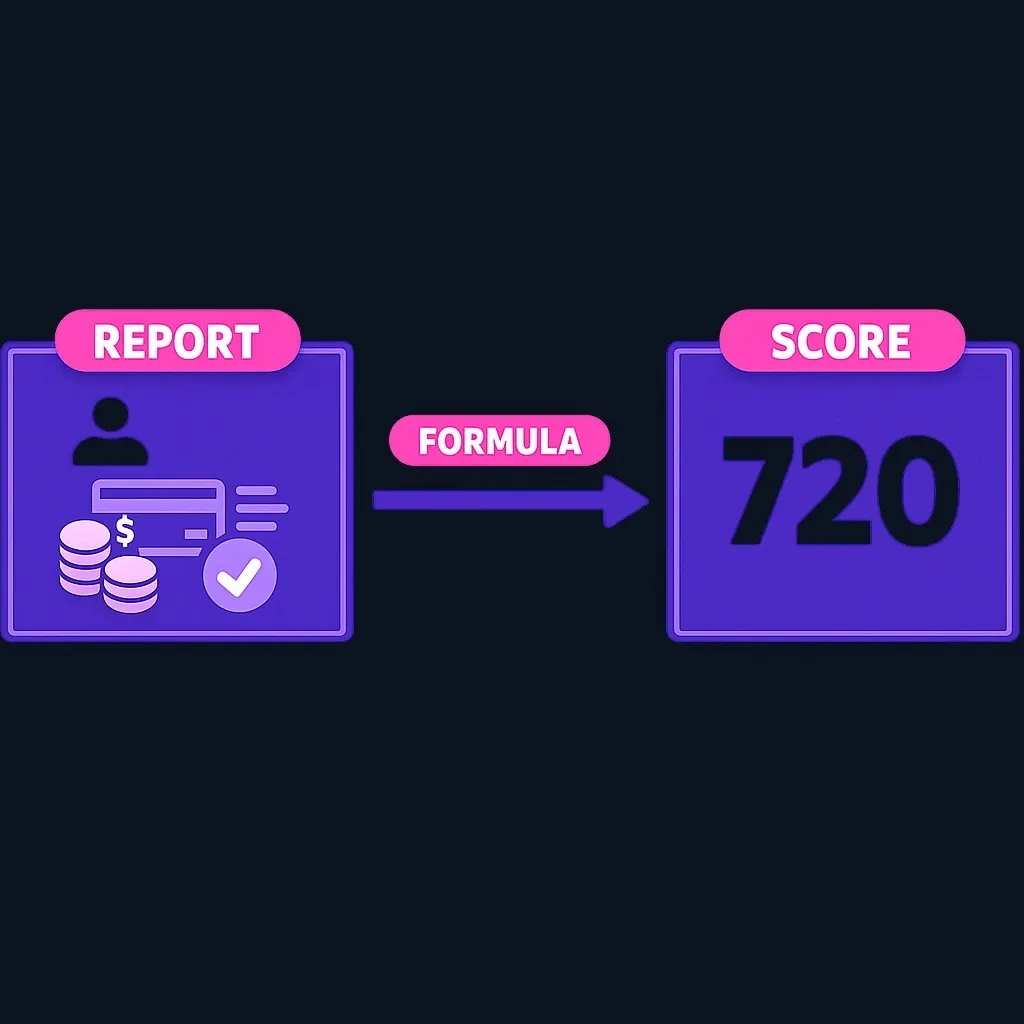
After reading this article you will be able to: (1) explain the main reasons for a higher FICO than consumer-facing score, (2) check the reports and models involved, and (3) use a short checklist to prioritize actions.
Decision framework
- Identify the context (what are you trying to do?). If you’re shopping for a mortgage or auto loan, prioritize the score lenders will use; for general credit health, monitor both consumer tools and official scores. The FTC notes most lenders use FICO, so treat FICO as the primary guide for lender decisions (FTC).
- Confirm the data source. Ask whether the score you’re viewing is one bureau’s snapshot or a model (and which one). Single-bureau snapshots are more likely to differ.
- Triage by size and cause of the gap:
- Small gap (a few points): usually not urgent — may reflect rounding, timing, or model differences.
- Large gap (many tens of points): investigate for reporting errors, recent negative items, or identity-mix issues.
- Take corrective action by priority: correct reporting errors first, then address current balances or overdue items. Use the checklist below to act efficiently.
Quick checklist to reconcile scores
- Collect the full credit reports from the three major bureaus (Equifax, Experian, TransUnion).
- Compare recent reporting dates and note any late payments, recent inquiries, or big balance changes.
- Ask the lender which score/model/bureau they used for a recent decision.
- File disputes for clear errors with the bureau(s) showing the problem.
- Re-check scores after the next reporting cycle.
Practical example (how to use the framework)
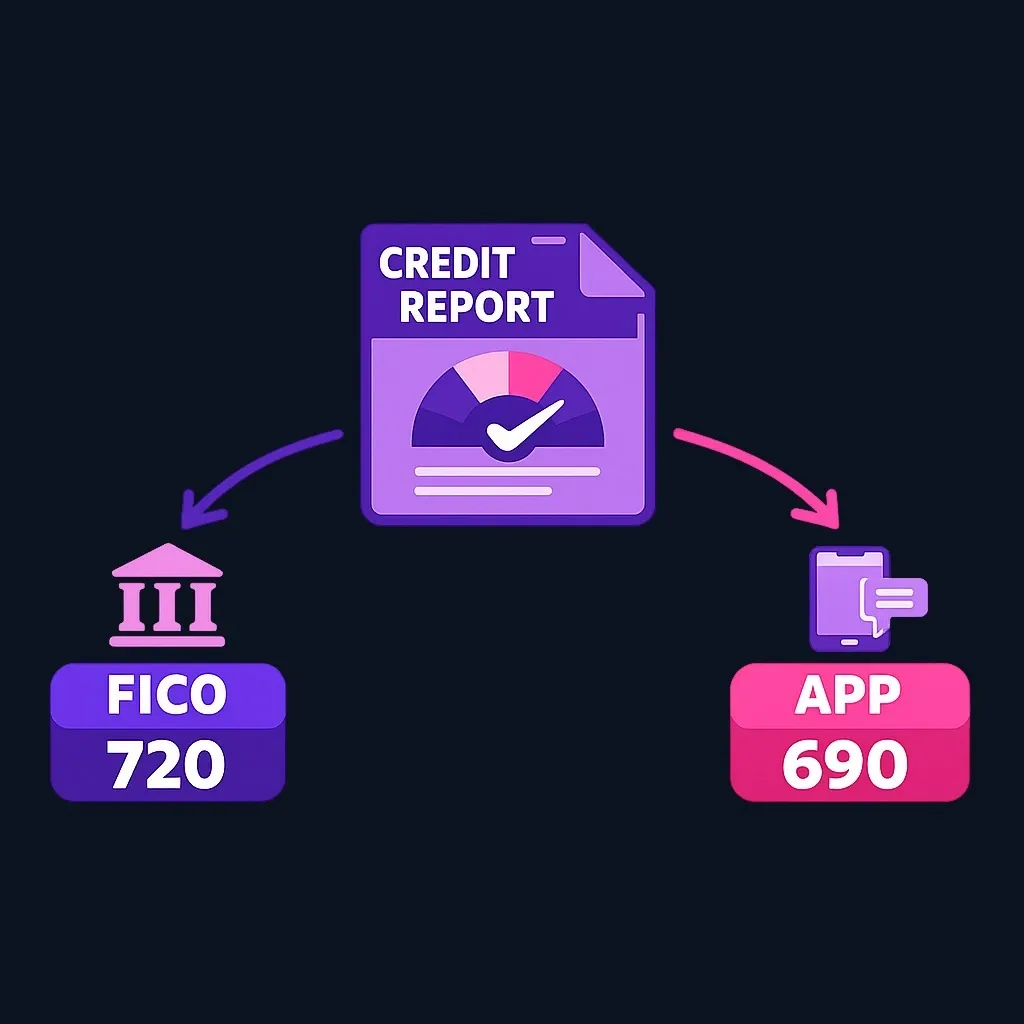
- You see FICO 720 on a lender pre-approval but a 690 on a free app. Use the framework: ask which FICO version and bureau the lender used; pull reports to check for new negative items the consumer app hasn’t yet recorded; if nothing explains the gap, dispute suspicious entries. The FTC explains that different models calculate scores differently and lenders tend to use FICO for underwriting (FTC).
What is a FICO Score?
The FICO score is a widely used risk score derived from your credit report. The FICO system is the scoring model that most lenders rely on to assess credit risk, as noted by consumer-protection authorities (FTC). FICO calculates a numeric value from information in your credit report — account history, balances, and other factors — and lenders may use one of several FICO versions or a bureau-specific FICO score when making decisions.
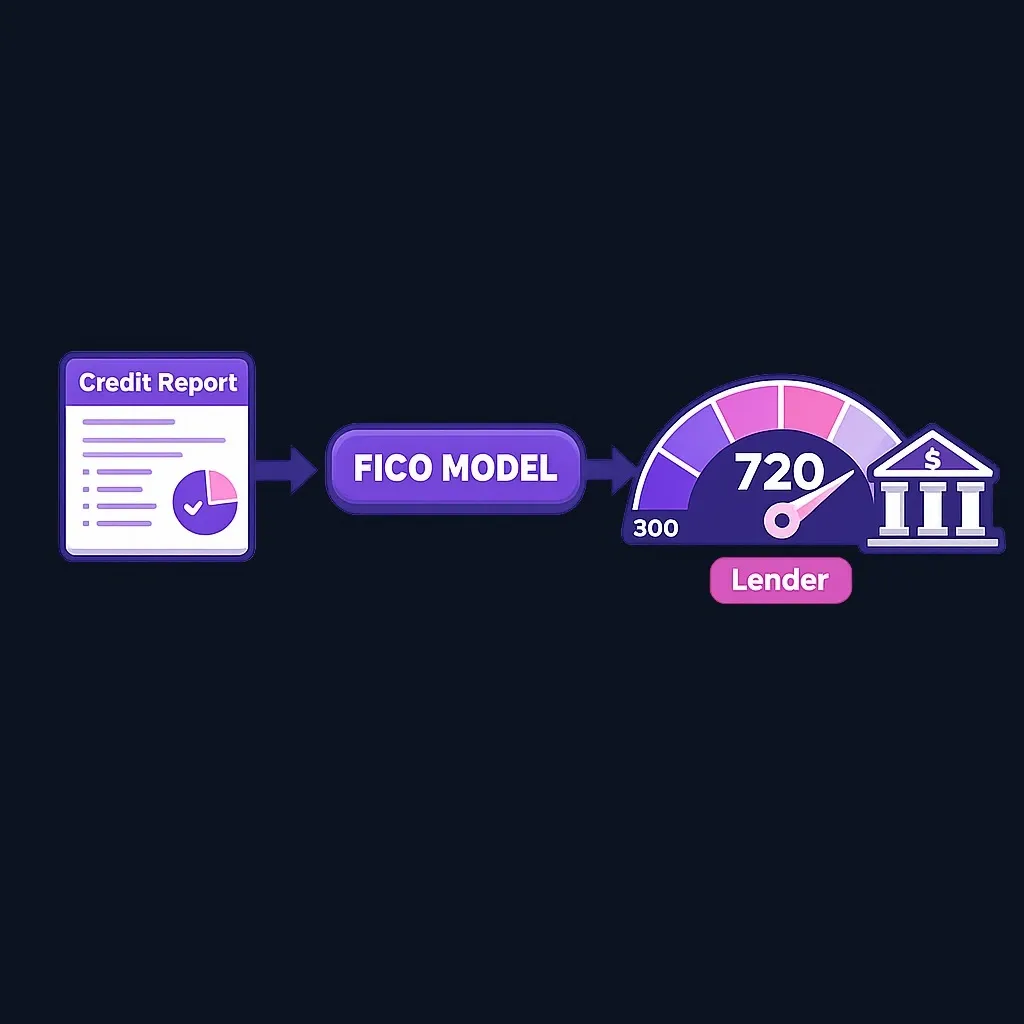
Practical note: when preparing for a major credit event (mortgage, large loan), ask lenders which FICO version and which bureau they will use. That helps you target fixes to the report that matters for that lender.
Practice trading with Finelo
Practice in a simulator, learn with bite-sized lessons, and build confidence before risking real money.
What is a Credit Score?
“Credit score” is a generic term for any numeric model that summarizes the information in a credit report. Multiple scoring systems exist and they can include proprietary models (FICO), consumer-facing scores, and alternative models offered by credit bureaus or third-party apps. The CFPB explains the difference between a credit report (the raw file) and a credit score (the calculated number) so you understand that errors in the report feed into any score you see (CFPB).
Because the label “credit score” doesn’t identify the model or the bureau, always check which model (e.g., FICO, VantageScore, or a proprietary product) produced the number you’re looking at.
Key Differences Between FICO and Credit Scores
Below is a compact comparison that clarifies the most useful differences you’ll encounter. Where appropriate, official sources are cited.
| Topic | FICO (common lender choice) | “Credit score” / consumer scores (generic) |
|---|---|---|
| Who commonly uses it | Widely used by lenders in underwriting decisions (FTC) | Varies by provider; many consumer apps and bureaus present alternate models |
| Source data | Calculated from your credit report (accounts, balances, payment history) | Also calculated from credit reports — the distinction is the scoring formula (CFPB) |
| How much it varies | Depends on FICO version and bureau pulled; lenders may use different FICO versions | Varies more widely because “credit score” can mean different models or single-bureau snapshots (FTC) |
| Visibility to consumers | Some retail services sell or display FICO; lenders normally compute FICO at application | Many free tools show their chosen score; those may not match lender-used scores |
Check current lender disclosures and your reports to learn which specific score matters for your situation. The FTC confirms scoring systems differ, and that mismatch is a main reason two scores diverge (FTC).
Factors Influencing Score Discrepancies
Several common causes explain why FICO may be higher than an app’s credit score. These causes are practical and investigable.
- Different scoring models
- Models compute risk from the same report data but use different formulas and versions. That alone can create a meaningful gap. The FTC highlights that scoring systems calculate scores in different ways (FTC).
- Different bureau data
- Each bureau may have slightly different account information. A payment that’s on-time at one bureau but late at another will push scores in opposite directions.
- Reporting timing and lags
- Consumer apps may pull older snapshots or refresh less often than the bureau a lender queries. That timing gap can make a public app’s score lag behind a lender’s FICO number.
- Single-bureau vs multi-bureau pulls
- Some consumer scores show a single-bureau result; a lender may use a different bureau or a blended/tri-bureau approach.
- Data or identity issues
- Mix-ups (someone else’s account on your file) or fraud can create surprising differences; these require prompt dispute and remediation.
Worked example 1 — reporting lag
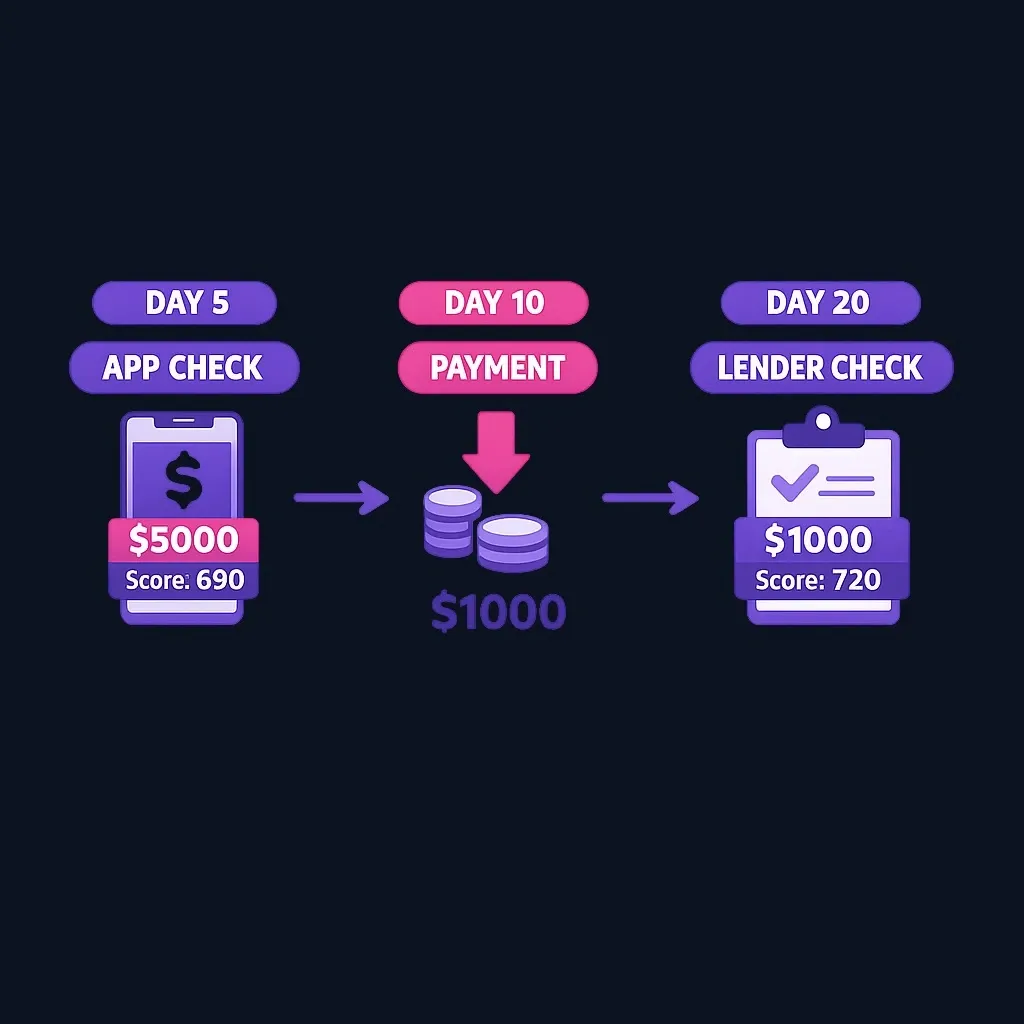
- Scenario: You paid a large credit-card balance but the free app still shows the pre-payment balance because it refreshed earlier in the month. A lender pulling FICO after the payment posts sees the lower balance and a higher score. This is a timing mismatch rather than an error.
Worked example 2 — single-bureau snapshot
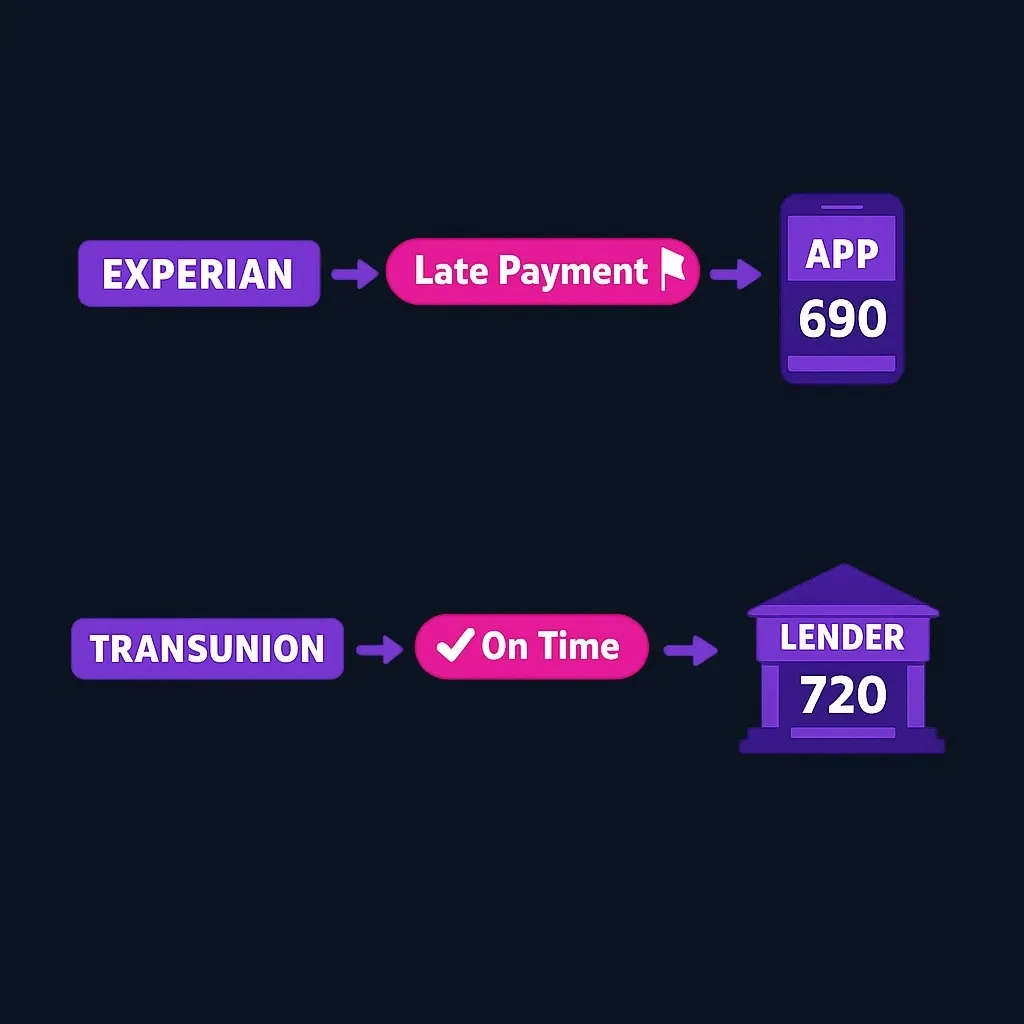
- Scenario: A consumer app reads Experian only and shows a lower number because a late payment is recorded there. Your lender pulled TransUnion, which hasn’t recorded the late payment — so FICO is higher. Comparing the actual reports resolves the difference.
What to check first
- Compare the full credit reports from each bureau and note the dates on which items were reported. Look for late payments, high balances, or unfamiliar accounts. If you find an incorrect item, file a dispute with the bureau that shows the error.
FAQ
What causes my FICO score to be higher than my credit score?
Usually model differences (different scoring formulas) and bureau/data timing explain higher FICO vs. a consumer score. The FTC emphasizes that scoring systems calculate scores differently, so a lender’s FICO and a free app’s score can diverge (FTC).
How can I check which scoring model a lender uses?
Ask the lender directly or check the adverse-action statement if you received one — lenders typically disclose the score model and bureau used when a decision is unfavorable. For proactive clarity, request which bureau and which score version they will reference before applying.
What should I do if my scores differ significantly?
Get the full credit reports from all three bureaus, compare reported items and dates, then dispute any incorrect information with the bureau showing the error. If reports are accurate, prioritize fixes that will matter to your lender (for many lenders, that means focusing on the FICO-relevant report and items) — remember to confirm which score the lender uses (FTC).
Who is this page for?
This page is for consumers who notice different credit numbers across apps, reports, or lender notices and want a practical way to understand which number matters and how to reconcile discrepancies.
Conclusion: Making Sense of Your Credit Health
A higher FICO than a consumer “credit score” usually reflects model or data differences, not magic. Start by confirming which score and bureau matter for your immediate goal, inspect the corresponding credit report for errors or recent changes, and prioritize disputes or balance changes accordingly. The CFPB and FTC explain that credit reports feed scores and that scoring systems differ, so comparing reports and asking lenders which model they use are the most direct ways to resolve surprises (, FTC).
If you want a structured next step, use the checklist in the Decision framework to gather reports, identify discrepancies, and contact the relevant bureau or lender.
Financial LiteracyFinancial Education
Practice trading with Finelo
Practice in a simulator, learn with bite-sized lessons, and build confidence before risking real money.
About the author
Finelo Team
The Finelo Team creates practical investing and trading education designed to help beginners learn faster with structured challenges, simulator practice, and bite-sized lessons.
Keep reading — Related articles

Financial Literacy
Mercury Books Review 2026: Is It Worth It for Startups?
Mercury Books brings double-entry accounting into Mercury. Review its $35 pricing, reports, AI features, integrations, and migration limits.
Finelo Team
Financial Literacy
Why is My FICO Score Lower Than My Credit Score?
Example takeaway: seeing a higher score in a bank app doesn’t guarantee lenders will see the same FICO number at application time; lenders often pull a specific FICO version from a specific bureau.
Finelo Team
Financial Literacy
Which States Have Inheritance Tax? A Detailed Overview
Key practical distinctions to note:
Finelo Team


