For U.S. readers: This article discusses U.S. rules and financial products. State rules and individual eligibility may differ.
Will My Employer Know If I Take a 401(k) Loan?
Who this page is for: readers new to 401(k) loans who want a practical, privacy‑focused explanation — what your employer can see, how to limit visibility, and the financial tradeoffs to weigh.
11 min read
Practice investing with Finelo
Build practical investing skills with guided lessons, simulator practice, and structured challenges.
Want to learn more?
Build practical investing skills with guided lessons, simulator practice, and structured challenges.
Explore FineloExplore Finelo's 28-day challenges
Turn learning into a daily habit with guided challenge paths.
Quick answer
Short answer: yes — a 401(k) loan is a transaction inside your employer‑sponsored retirement plan, so it is recorded in the plan’s records and accessible to whoever administers the plan (HR, payroll, or an outside recordkeeper). Finelo provides financial education, not financial or investment advice. For IRS guidance on loans from a 401(k) plan and the tax treatment of unpaid loans, see the IRS page on loans from your 401(k) plan: Considering a loan from your 401(k) plan?.
Who this page is for: readers new to 401(k) loans who want a practical, privacy‑focused explanation — what your employer can see, how to limit visibility, and the financial tradeoffs to weigh.
What is a 401(k) Loan?
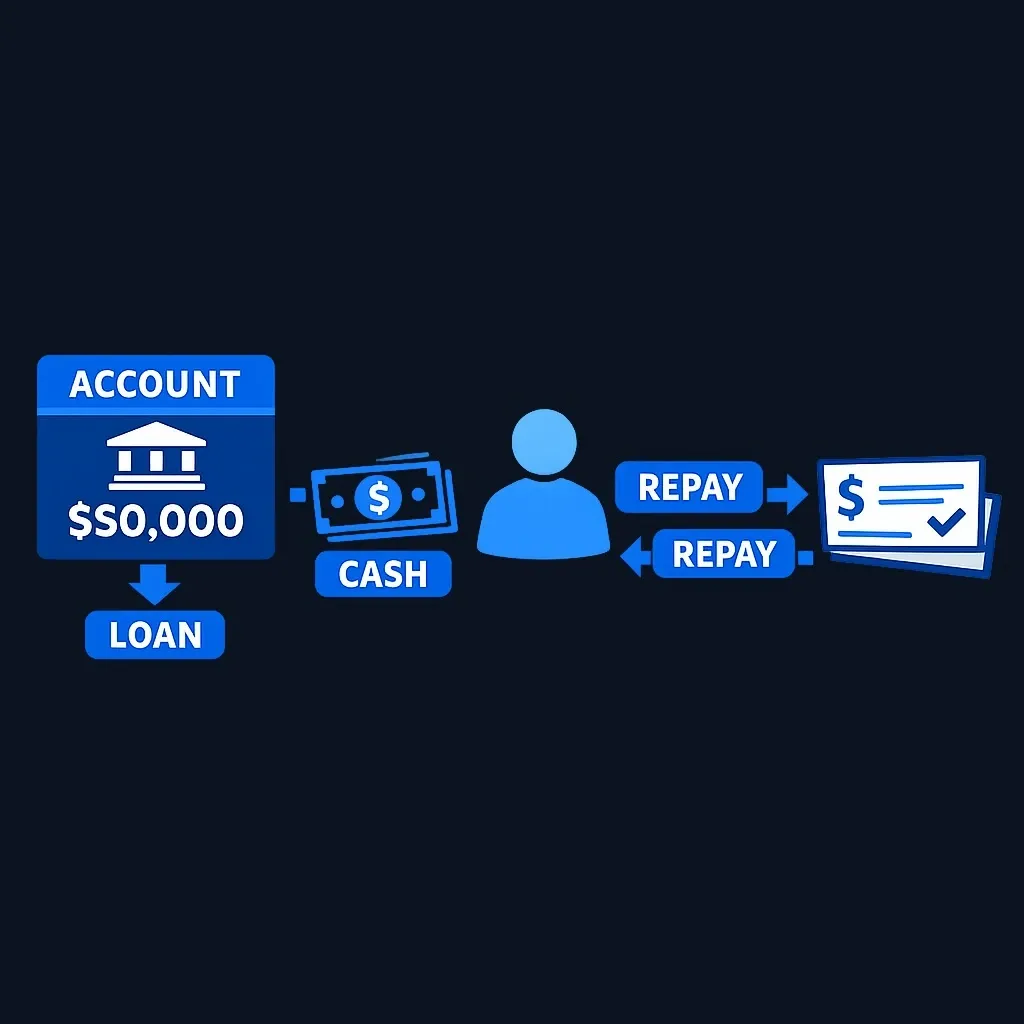
A 401(k) loan lets you borrow cash from your own balance inside an employer‑sponsored retirement plan and repay it back into that account over time. Plans vary: whether loans are permitted, the maximum you can borrow, repayment methods, and timelines are set by your plan document. The IRS recommends weighing retirement and tax consequences before borrowing from a retirement plan; see the IRS guidance for specifics: Considering a loan from your 401(k) plan?.
How the mechanics typically work
- You request the loan through the method your plan prescribes (online portal, paper form, or HR/benefits team).
- The plan issues funds by reducing your account balance by the loan amount and creates a loan record.
- You repay principal and interest according to the schedule defined by the plan; repayment is often via payroll deduction but can sometimes be arranged otherwise.
- If the loan isn’t repaid according to plan rules, the unpaid balance may be treated as a distribution and subject to tax rules; see the IRS guidance: Considering a loan from your 401(k) plan?.
Illustrative example
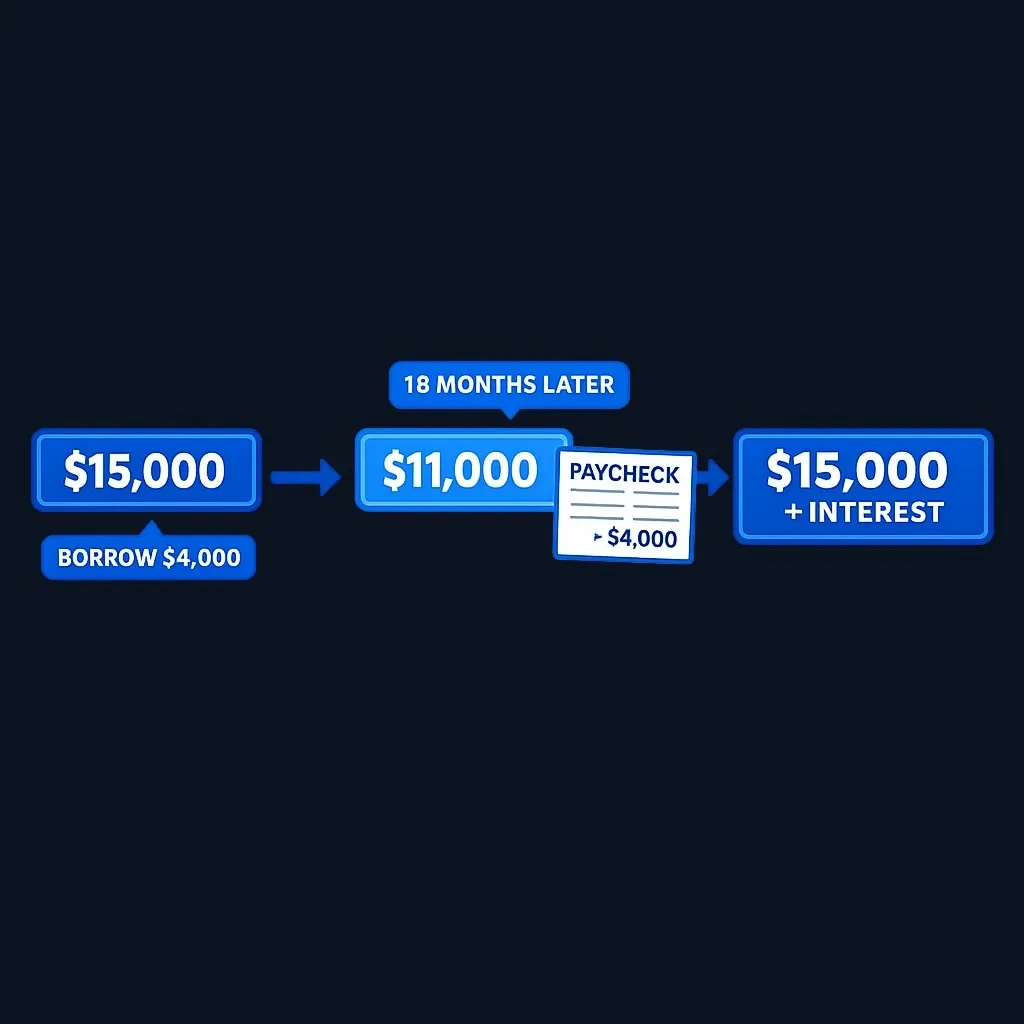
Jamie needs $4,000 for car repairs. Her plan allows loans. She applies through the plan portal, the administrator issues the funds from her account, and payroll starts a labeled deduction to repay the loan over 18 months. This example is illustrative — check your plan for exact procedures.
Will My Employer Know About My 401(k) Loan?
Direct answer: yes — because the loan is created and tracked within your employer’s plan, the plan’s administrators will have a record that you have a loan and the repayment terms. Exactly who inside the employer sees those records depends on how administration and payroll are organized at your workplace.
Two common scenarios
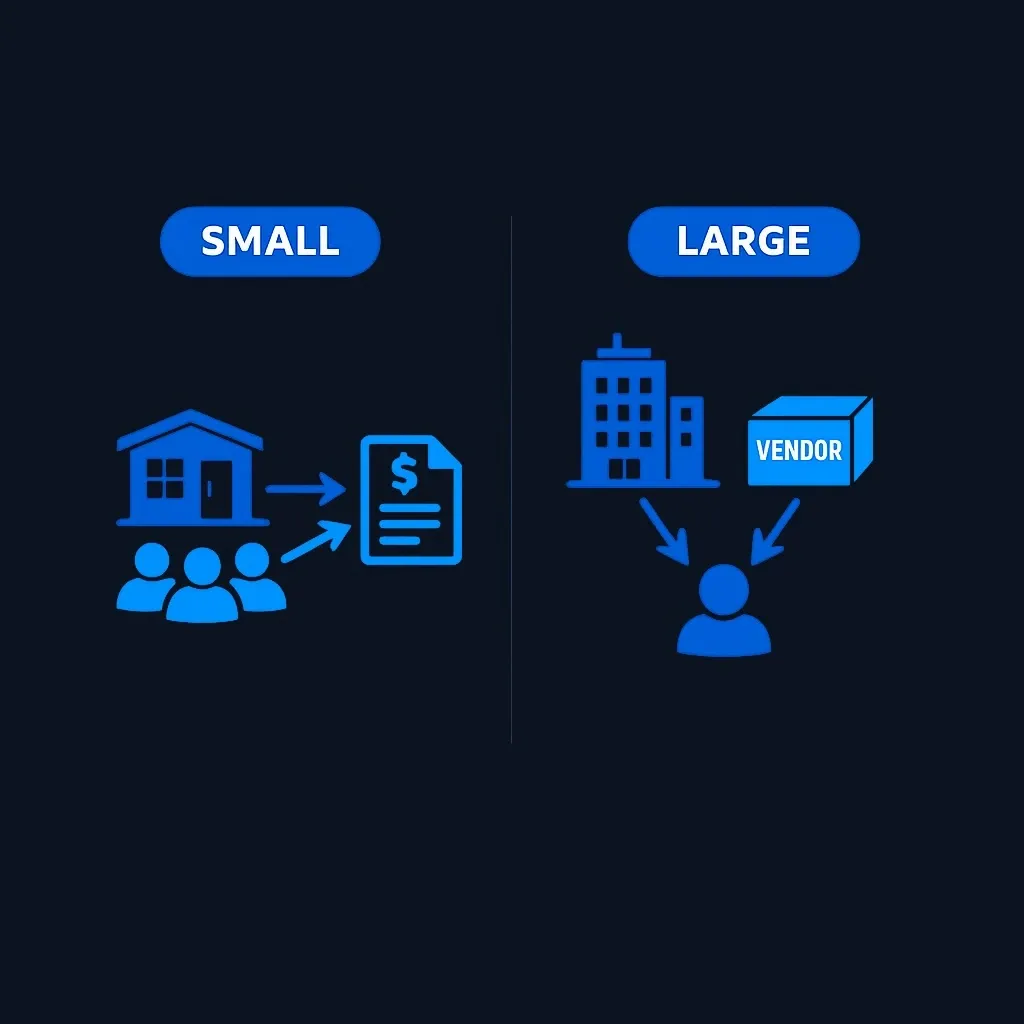
- Outsourced recordkeeper: a third‑party vendor holds detailed loan records and typically communicates only the repayment instruction to payroll. Payroll and the vendor will see loan-related data, while most managers and coworkers do not.
- In‑house administration at a small employer: a small HR or payroll team may directly handle loans and thus have broader visibility into who has a loan and the outstanding balance.
Actionable step: before you apply, ask your plan administrator or HR:
- Does the plan permit loans and, if so, what documentation is created?
- Will repayments appear on my pay stub and, if so, exactly how will they be labeled?
- Which internal roles or external vendors can view loan records?
- Can I repay outside of payroll to limit pay‑stub visibility?
For tax and distribution consequences of an unpaid loan, consult the IRS guidance: Considering a loan from your 401(k) plan?.
Who Has Access to My Loan Information?
Access is driven by plan administration and the employer’s operational setup. The list below describes common parties that typically handle plan records; treat it as practical guidance to use when you ask HR about your specific plan.
Common parties with access
- Plan recordkeeper or plan administrator (internal or outsourced) — maintains loan records and tracks repayments.
- Payroll staff — if repayments are collected via payroll deduction, payroll systems and staff will see deduction amounts and labels.
- HR/benefits team — supports employees with applications, approvals, and compliance questions.
What the plan record usually shows
Typical plan records will include:
- That a loan exists and the outstanding principal balance.
- The repayment schedule and payment history as tracked by the plan.
- Dates and amounts of deductions if payroll processes repayments.
What plan records normally do not include: your private reason for taking the loan, unless you volunteer it.
Small employer vs. large employer: practical caveats
- Small employer: fewer staff manage benefits, so a larger share of coworkers or managers could gain visibility into your loan if they handle payroll/benefits.
- Large employer: outsourcing to a recordkeeper often narrows internal access to a defined payroll or benefits team, reducing broader visibility.
Checklist to bring to HR (quick table)
| What to ask | Why it matters |
|---|---|
| Does the plan permit loans? | You can only borrow if the plan allows it. |
| Who approves and processes loans (in‑house or vendor)? | Identifies which people or vendors will access records. |
| Will repayments appear on my pay stub and how will they be labeled? | Determines how visible repayments are to others. |
| Can repayments be processed outside payroll? | Affects pay‑stub visibility and privacy. |
| How are outstanding loans handled if I change jobs? | Explains possible tax or acceleration consequences; see the IRS for tax rules. (IRS guidance) |
Use that checklist to get written, plan‑specific answers before applying.
Privacy Concerns and Employer Policies
Privacy handling varies by employer and by whether plan administration is outsourced. If confidentiality is important to you, ask for written answers and get exact wording for any payroll labeling.
Practical steps to protect privacy
- Request the company’s benefits privacy or data‑access policy in writing.
- Ask whether repayments can be processed outside payroll if you want less visibility on your pay stub.
- Ask whether managers receive individual benefit reports or only aggregate summaries.
Example script to HR: “Can you tell me whether my 401(k) loan repayment will show on my pay stub, how it will be labeled, which staff can access the loan record, and whether I can repay outside payroll?”
Practice investing with Finelo
Build practical investing skills with guided lessons, simulator practice, and structured challenges.
Pros and Cons of Taking a 401(k) Loan
Below is an educational summary of common tradeoffs. Confirm plan specifics and consult a professional if your situation requires personalized guidance.
Pros
- Speed and simplicity: borrowing your own money can be faster than applying for new credit.
- Interest paid typically goes back into your retirement account rather than to an outside lender.
Cons and key costs
- Opportunity cost: the borrowed funds are removed from investments and miss market returns while outstanding.
- Repayment obligation: scheduled repayments reduce take‑home pay until the loan is repaid.
- Job‑change risk: some plans accelerate repayment or treat unpaid balances as distributions if you leave; unpaid balances may have tax consequences — see the IRS guidance: Considering a loan from your 401(k) plan?.
Two illustrative case studies (hypothetical)
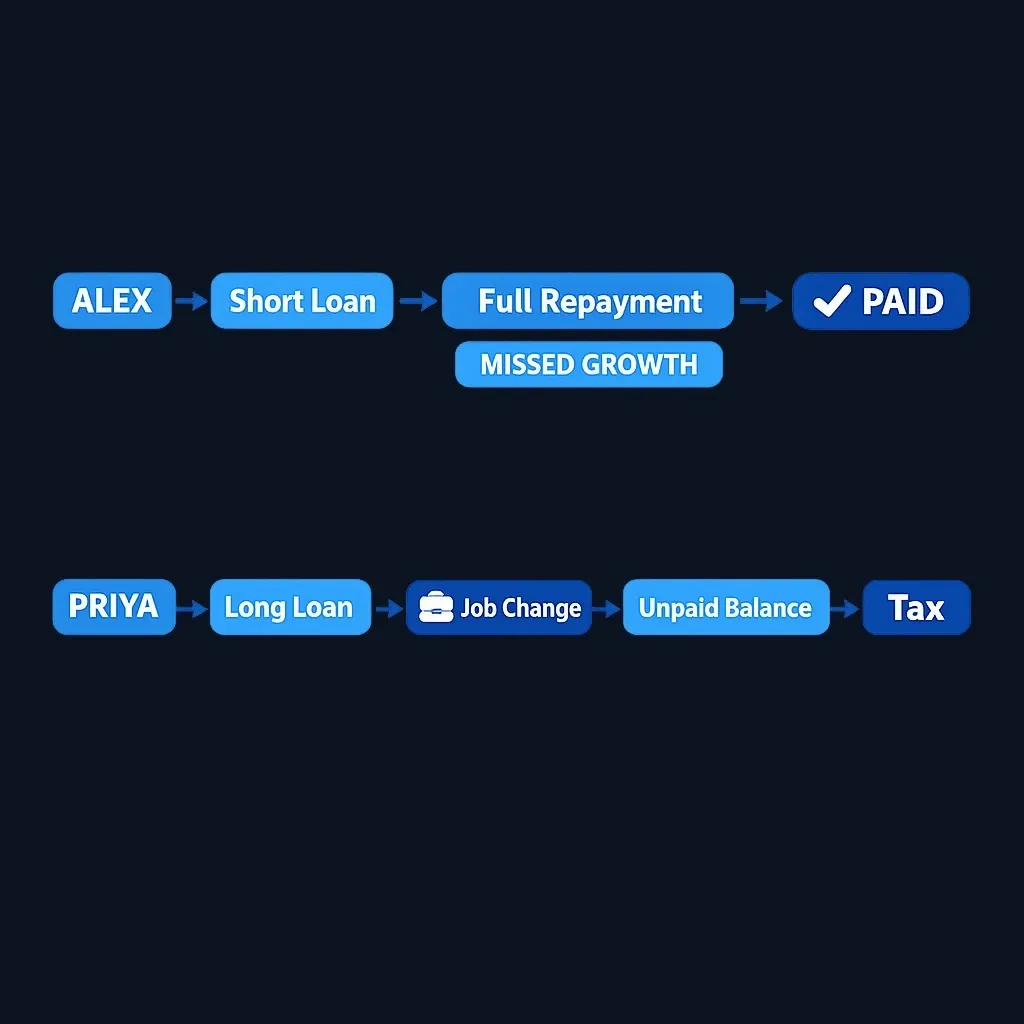
- Case A — Short emergency: Alex borrows a modest sum, repays quickly, and avoids high‑interest credit‑card debt. The main cost is missed market gains while the balance was out of the account.
- Case B — Job change: Priya had a multi‑year loan and left her employer before full repayment; the unpaid balance was treated as a distribution, which created a taxable event for that year. (These are illustrative scenarios, not predictions.)
What Happens If I Default on My Loan?
Consequences depend on the plan document and tax rules. A common administrative outcome is that an unpaid loan balance is treated as a distribution, which may trigger ordinary income tax on the outstanding amount and, if applicable, an early‑withdrawal penalty. For IRS details on tax treatment of unpaid loans and distributions, see: Considering a loan from your 401(k) plan?.
Practical steps to reduce default risk
- Confirm how and when payroll deductions start and how they’re applied.
- Ask how the plan treats outstanding balances if you leave the employer or are terminated.
- Keep a short‑term emergency buffer so scheduled payments are less likely to be interrupted.
What to know before deciding
Educational reminder: this content is educational and not financial or investment advice. Borrowing from retirement accounts can affect taxes and long‑term retirement outcomes.
Must‑do checks before you apply:
- Confirm whether your plan permits loans and get maximums and repayment timelines from the plan document.
- Ask whether repayments will appear on your pay stub and how they’ll be labeled.
- Learn the plan’s rules for outstanding loans if you change employment.
- Consider opportunity cost: those dollars will miss market exposure and may affect employer match timing or vesting in some plans.
Practical example: Sam asked HR and learned the repayment would appear on his pay stub as a labeled “401(k) loan repayment” and that only payroll and the benefits team could access detailed loan records. That specificity let him decide whether to proceed.
Decision framework
Use this three‑step checklist to evaluate whether a 401(k) loan is the right option for your situation. Fill it in with your plan’s specific answers.
Step 1 — Define the need and compare alternatives
- Exact purpose and amount?
- Alternatives: emergency savings, personal loans, home‑equity sources, 0% credit promotions, or family loans. Compare interest rates, fees, speed, effect on credit, and tax consequences.
Step 2 — Confirm plan rules and visibility
- Is borrowing allowed under your plan document?
- Who processes loans and repayments (internal HR/payroll or an external recordkeeper)?
- Will repayments show on your pay stub? Can you make payments outside payroll?
Step 3 — Evaluate financial tradeoffs
- Estimate opportunity cost: what might the borrowed dollars earn if left invested?
- Check repayment length, monthly cash‑flow impact, and whether leaving the employer accelerates repayment or triggers distribution treatment (see IRS guidance: Considering a loan from your 401(k) plan?).
- If you anticipate a job change soon, factor that risk strongly into your decision.
Quick scoring method (educational)
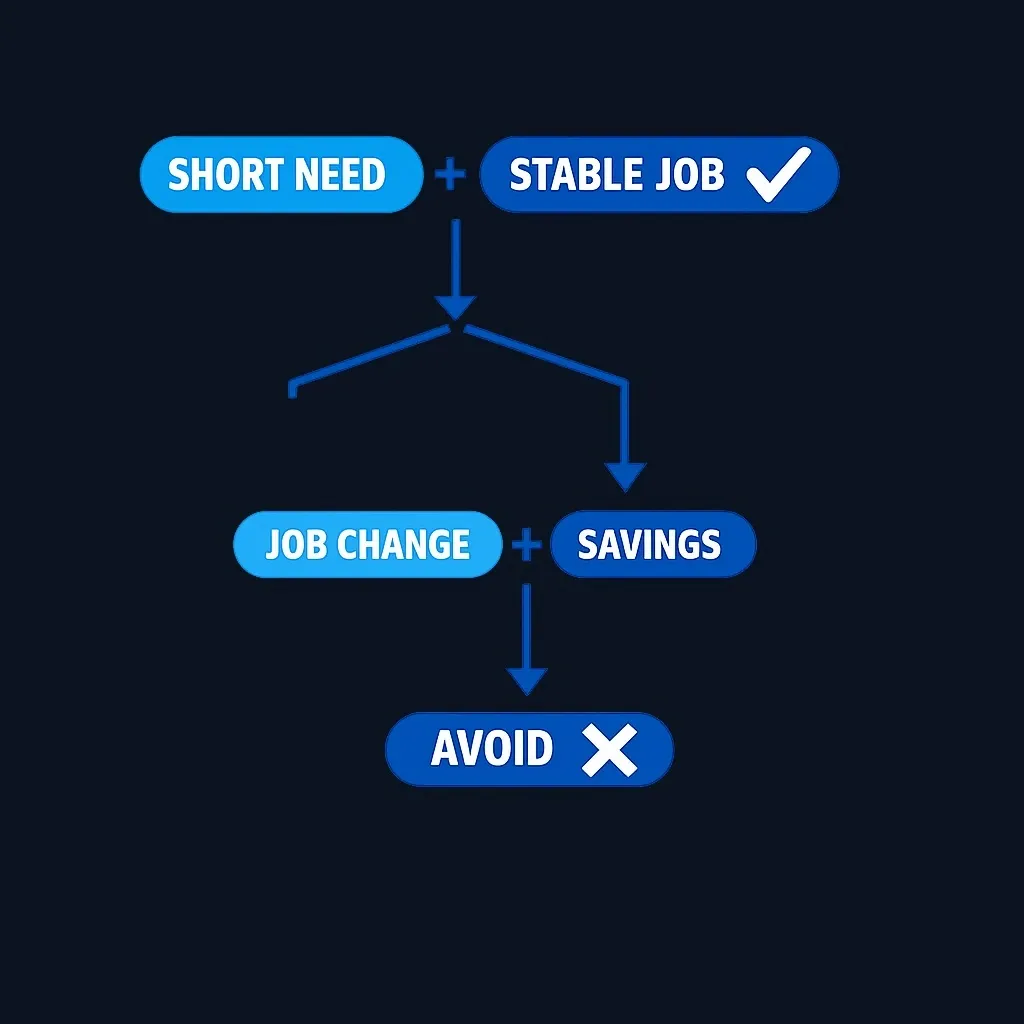
- If the need is short‑term (≤ 12 months), you have stable employment, and alternatives are expensive, a 401(k) loan can be reasonable.
- If you expect a job change soon, have usable savings, or if alternatives have low cost, the loan’s job‑change risk and opportunity cost often weigh against borrowing.
FAQ
Can my employer see my 401(k) balance?
Employers or plan administrators typically have access to plan account records that show account balances and loan status for administration and compliance purposes. Ask your plan administrator which internal roles and vendors have access and whether managers receive individual reports.
Do I need to provide a reason for taking a loan?
Plan procedures vary. Many plans do not require you to state a reason in the plan record; any personal reason you give to HR or benefits staff is voluntary. Confirm your plan’s application requirements before you apply.
What happens if I change jobs while I have a loan?
Many plans have rules about outstanding loans at termination; some accelerate repayment or allow a short window to repay. If the balance is not repaid, it may be treated as a distribution and could be taxable; see the IRS guidance: Considering a loan from your 401(k) plan?.
How does an unpaid loan affect taxes?
If a loan is treated as a distribution under plan rules, the unpaid portion is generally taxable income to you for the year and may be subject to an additional early‑withdrawal penalty if applicable; see the IRS for the tax treatment of unpaid loans and distributions: Considering a loan from your 401(k) plan?.
Conclusion
Key takeaways: a 401(k) loan is recorded in your employer‑sponsored plan and is visible to whoever administers that plan; the exact set of people who can see the loan depends on whether the employer uses an outside recordkeeper, and whether repayments go through payroll. Before you borrow, get written answers from HR or the plan administrator about plan permission, pay‑stub labeling, repayment methods, and the plan’s treatment of outstanding loans if you change jobs. Check tax implications and distribution rules on the IRS site: Considering a loan from your 401(k) plan?.
Next step: use the comparison questions in this article, review the Summary Plan Description, and ask the plan administrator who processes loan requests and which employer personnel can access the information. Finelo cannot confirm a specific employer's internal workflow.
InvestingFinancial Education
Practice investing with Finelo
Build practical investing skills with guided lessons, simulator practice, and structured challenges.
About the author
Finelo Team
The Finelo Team creates practical investing and trading education designed to help beginners learn faster with structured challenges, simulator practice, and bite-sized lessons.
Keep reading — Related articles

Investing
Yield to Call vs Yield to Maturity: Assumptions and Bond Risks
Yield to call (YTC) estimates a bond's yield if the issuer redeems it on an eligible call date; yield to maturity (YTM) estimates yield if it remains outstanding to final maturity.
Finelo Team

Investing
What Medical Expenses Qualify for a 401(k) Hardship Withdrawal?
Before you decide, confirm three things with your plan administrator:
Finelo Team
Investing
Treasury Bills vs CDs: Rates, Taxes, Liquidity, and Risk
T‑bills are short‑term U.S. government securities sold at a discount and redeemed at face value; CDs are bank or credit‑union time deposits that pay a stated interest rate for a set term TreasuryDirect — FDIC.
Finelo Team