For U.S. readers: This article discusses U.S. rules and financial products. State rules and individual eligibility may differ.
Treasury Bills vs CDs: Rates, Taxes, Liquidity, and Risk
T‑bills are short‑term U.S. government securities sold at a discount and redeemed at face value; CDs are bank or credit‑union time deposits that pay a stated interest rate for a set term TreasuryDirect — FDIC.
11 min read
Practice investing with Finelo
Build practical investing skills with guided lessons, simulator practice, and structured challenges.
Want to learn more?
Build practical investing skills with guided lessons, simulator practice, and structured challenges.
Explore FineloExplore Finelo's 28-day challenges
Turn learning into a daily habit with guided challenge paths.
T‑bills are short‑term U.S. government securities sold at a discount and redeemed at face value; CDs are bank or credit‑union time deposits that pay a stated interest rate for a set term TreasuryDirect — FDIC. Finelo provides financial education, not financial or investment advice. Investing can involve loss. Verify current yields and terms on issuer sites before acting.
Quick comparison answer
T‑bills: federal debt with maturities from four weeks up to 52 weeks, sold at a discount and redeemed at par; they trade in active markets and are generally used for short‑term liquidity and capital preservation. CDs: bank or credit‑union time deposits that lock funds for a stated term in exchange for a quoted interest rate; many CDs impose early‑withdrawal penalties but qualify for FDIC/NCUA deposit insurance within standard limits. Short practical answer: T-bills and CDs solve similar short-term savings needs through different structures. Compare the same term, access rules, after-tax yield, deposit-insurance status, and consequences of exiting early before deciding which structure fits the purpose of the money.
Side-by-side comparison table
| Feature | Treasury Bills (T‑bills) | Certificates of Deposit (CDs) |
|---|---|---|
| Issuer / backing | Issued by the U.S. Treasury; federal backing (short‑term marketable debt). | Issued by banks / credit unions; qualifying deposits protected by FDIC or NCUA insurance up to standard limits. |
| Typical maturities | Short: 4 weeks to 52 weeks (one year). | Broad: commonly a few months to several years; product terms vary by institution. |
| How returns are paid | Zero‑coupon: bought at a discount; return = redemption price − purchase price at maturity. | Fixed interest rate paid periodically or at maturity depending on the CD’s terms. |
| Liquidity / early access | Tradable on a secondary market; sale proceeds depend on market yields at sale time. | Often locked until maturity; early‑withdrawal penalties usually apply and reduce returns. |
| Safety / counterparty risk | Backed by U.S. government credit (very low credit risk). | Principal protection via FDIC/NCUA insurance for qualifying deposits up to standard limits. |
| Tax treatment | Treasury interest is subject to federal income tax but generally exempt from state and local income taxes; verify the current rule for your circumstances IRS Publication 550. | CD interest is generally taxable interest; state treatment depends on applicable law. |
Rates are intentionally omitted because market yields and bank offers change frequently. Compare live quotes for the same term and date.
What are Treasury Bills?
Treasury bills are short‑term marketable securities sold by the U.S. Treasury for maturities typically ranging from four weeks up to 52 weeks. They are issued at a discount and mature at face value; you earn the difference between purchase price and redemption amount. Because they are obligations of the U.S. government, they are commonly used as very low‑credit‑risk cash equivalents. T‑bills can be purchased directly at auction or through brokers, and they trade in active secondary markets so an investor can sell prior to maturity, subject to market price changes.

Practical takeaway: for short horizons where backing by federal credit and easy market access matter, T‑bills are a simple, highly liquid option. Check auction dates, settlement rules, and trading mechanics on TreasuryDirect if you plan to buy directly.
What are Certificates of Deposit (CDs)?
A certificate of deposit is a time deposit from a bank or credit union that pays a fixed interest rate for a specified term in exchange for locking your funds for that period. Typical CD maturities run from a few months to several years, though terms vary by institution. In many cases, CDs pay interest periodically (monthly, quarterly, or annually) or at maturity. A major advantage of retail CDs is deposit insurance: qualifying balances at FDIC‑insured banks or NCUA‑insured credit unions are protected up to standard limits, which protects principal against bank failure.
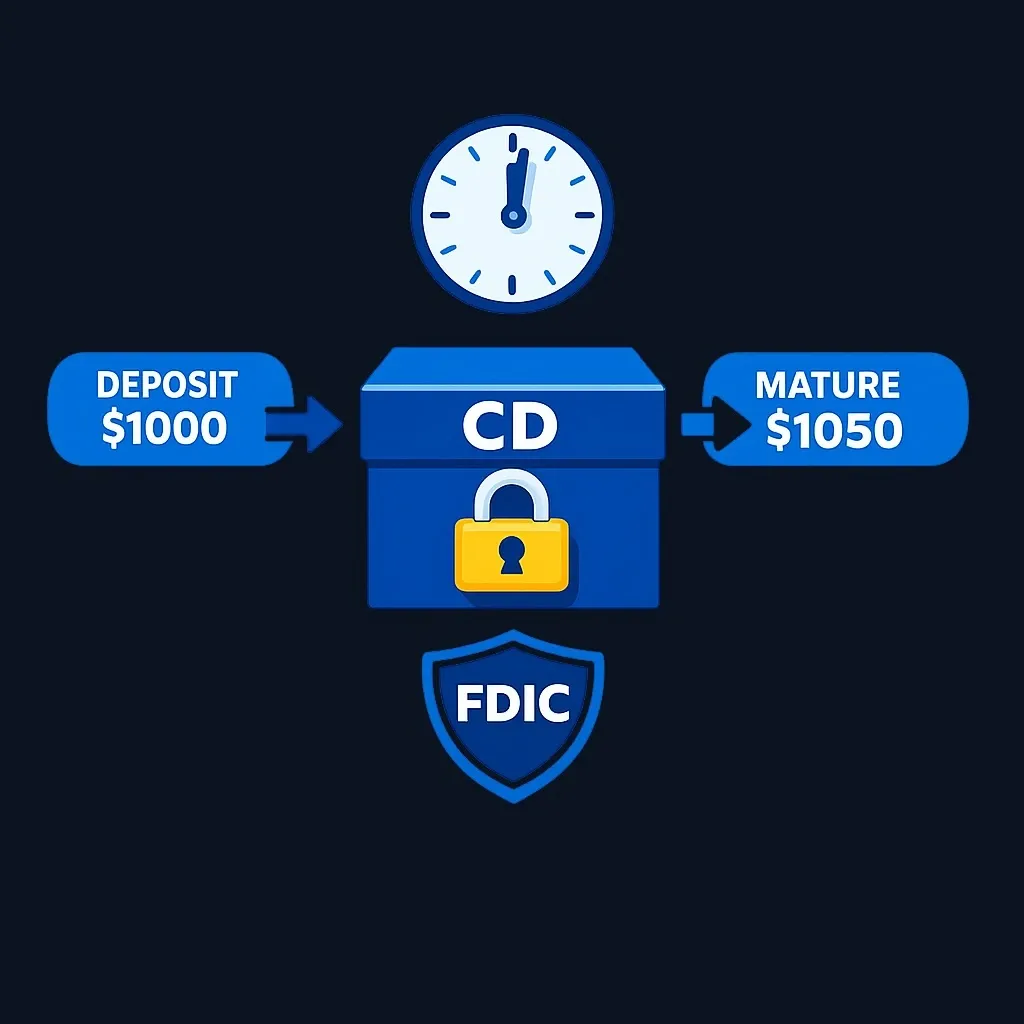
Practical takeaway: CDs suit investors who want a guaranteed rate if they can hold until maturity and who prefer deposit insurance on qualifying balances.
Key Differences Between Treasury Bills and CDs
Term and payout structure
- T‑bills are zero‑coupon instruments sold at a discount and pay at maturity; they do not make periodic coupon payments.
- CDs pay a stated interest rate during the term or at maturity depending on the product.
Liquidity and early access
- T‑bills trade in the secondary market and can be sold before maturity; sale proceeds reflect current market yields and price movements.
- CDs commonly impose early‑withdrawal penalties that will reduce your return if you redeem before maturity; penalties and rules vary by issuer.
Safety and counterparty
- Treasuries carry backing of U.S. government credit and are considered very low credit risk.
- CDs are deposit liabilities of banks/credit unions. Qualifying deposits are insured by FDIC/NCUA to standard limits; check your institution and ownership category for coverage rules.
Tax treatment
- Interest from U.S. Treasury securities is subject to federal income tax but generally exempt from state and local income taxes; confirm current treatment for your circumstances.
- CD interest is generally taxable interest. Review current federal guidance and applicable state rules.
Nominal yields and effective returns
- Either product can show the higher quoted yield on a given day. Compare live quotes captured at the same time, then account for taxes, liquidity, and any early-withdrawal or transaction costs.
Worked comparison method
- Record the current T-bill investment rate and CD annual percentage yield for comparable terms on the same date. Estimate the dollar return using the issuer's stated methodology, then compare after-tax results and the cost of accessing the money early. Do not mix a stale quote from one product with a current quote from the other.

Practical takeaway: match term, simulate after‑tax returns, and account for withdrawal rules before deciding.
Practice investing with Finelo
Build practical investing skills with guided lessons, simulator practice, and structured challenges.
Decision criteria
Rank these criteria against your objectives to pick between options.
- Liquidity and timing needs — If you may need the cash before maturity, favor instruments you can access with little cost. T‑bills have an active secondary market; CDs often charge penalties for early withdrawal.
- Deposit insurance vs. government backing — If FDIC/NCUA insurance for deposit balances is essential, CDs at insured institutions provide that coverage; Treasuries are backed by federal credit instead.
- Taxes — If state or local income taxes materially affect after-tax yield, include the different treatment described in current IRS and state guidance.
- Yield vs. flexibility — Compare same-term yields net of expected taxes and any expected penalty or transaction costs if early access is possible. A small nominal advantage can disappear after adjustments.
- Complexity and counterparty structure — Beware brokered or specialty CDs that add fees, holding nuances, or limited liquidity. Read prospectuses and confirmations and confirm how deposit insurance applies.
Simple decision framework: list your top three priorities (liquidity, insurance, taxes). If liquidity tops your list, favor Treasury bills; if insured principal and holding to maturity are most important, favor CDs.
When to choose each option
When to choose Treasury Bills
- You need a federally backed, short‑term place to park cash with the option to sell in the market before maturity.
- State and local tax treatment of Treasury interest materially affects the after-tax comparison.
- You prefer market liquidity and accept potential price variability if sold early.
When to choose CDs
- Your priority is deposit insurance on qualifying balances and you plan to hold to maturity.
- You want a predictable stated rate and a known payout schedule for budgeting a specific future expense.
- You prefer to avoid trading‑market exposure and accept the lockup in exchange for a fixed return.
Practical scenarios
- Emergency fund for near‑term needs: favor T‑bills for liquidity unless you require FDIC coverage for that cash.
- Money set aside for a known purchase or tuition payment exactly N months away: a CD that matches the date can deliver certainty if you can tolerate the lockup.
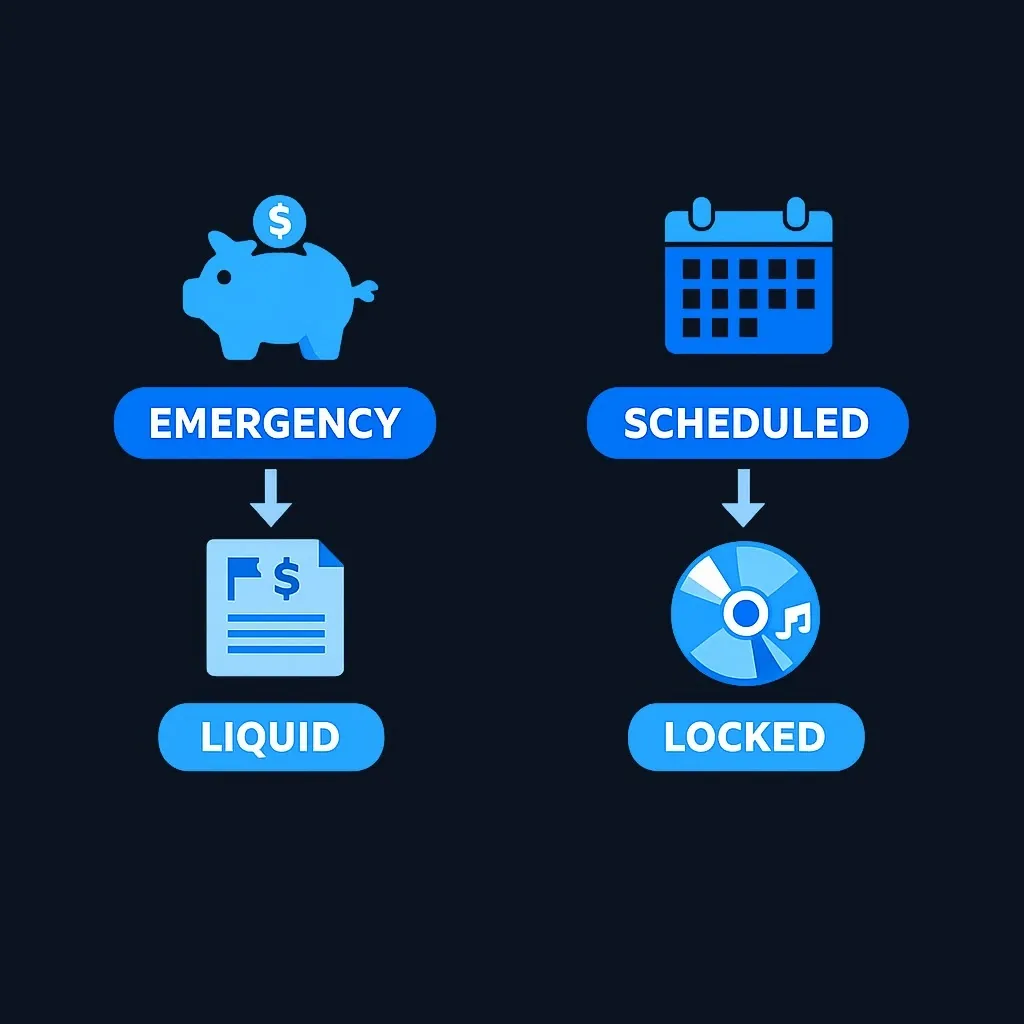
Decision Table: Treasury Bills vs CDs
Use this checklist for a quick pick.
| Priority question | If yes → prefer | Why |
|---|---|---|
| Do you need to access funds quickly with minimal process? | Treasury bills | Tradable in secondary market; sale price varies with rates. |
| Do you require FDIC/NCUA deposit insurance for your balance? | CDs | Retail deposits at participating institutions are insured to standard limits. |
| Do state/local tax differences matter materially? | Compare after-tax results | Treasury interest is generally exempt from state and local income taxes, while CD interest follows the applicable rules for taxable interest. |
| Do you want predictable periodic income and will hold to maturity? | CDs | CDs provide stated interest and known payout timing. |
| Are you comfortable with secondary‑market price risk and prefer flexibility? | Treasury bills | You accept market price variability in exchange for liquidity. |
Use the table as a starting rule‑of‑thumb. For any actual trade, calculate after‑tax returns and examine the specific product’s fine print.
Tradeoffs and caveats
- Early‑withdrawal penalties: CDs commonly apply penalties that can erode interest and principal if you redeem early. Read the penalty schedule before buying.
- Secondary‑market risk: Selling a T‑bill before maturity can produce gains or losses depending on prevailing yields; this is not a guarantee of value.
- Tax impacts: different tax treatment can reverse a small nominal yield difference. Use current federal and state rules when calculating after-tax results.
- Insurance limits and ownership categories: FDIC/NCUA coverage is per depositor, per insured institution, per ownership category. Large balances may need to be spread across institutions or titling categories to remain fully insured.
- Marketing complexity: High advertised CD yields can be tied to brokered CDs, early‑withdrawal restrictions, or other tradeoffs. Verify how the product is held and insured with the issuer or broker.
Common mistakes and quick fixes
- Mistake: Comparing nominal rates only. Fix: compute after‑tax and after‑penalty returns for your marginal tax rate and likely liquidity scenario.
- Mistake: Assuming all CDs are equally insured. Fix: confirm how the CD is held (retail vs. brokered) and check FDIC/NCUA coverage rules with the institution.
- Mistake: Buying a T‑bill without understanding auction or settlement mechanics. Fix: read TreasuryDirect’s buying and settlement guidance if you plan to purchase at auction.
Frequently Asked Questions
What are the main differences between CDs and Treasury bills?
The main differences are issuer type, payout structure, liquidity, and deposit protection. T‑bills are U.S. government securities sold at a discount with maturities up to 52 weeks and trade on secondary markets. CDs are bank or credit‑union time deposits with fixed interest rates and deposit insurance for qualifying balances.
How do I choose between Treasury bills and CDs?
Rank your priorities: liquidity, insurance, taxes, and yield. If liquidity and market access are essential, favor T‑bills; if deposit insurance and a fixed payout are most important, favor CDs. Run same‑term after‑tax math before committing.
What happens if I need to access my money before maturity?
T‑bills can be sold before maturity in the secondary market; proceeds will depend on market yields at the time. CDs typically impose early‑withdrawal penalties that reduce returns; penalty terms vary by issuer.
Are CD and Treasury interest taxed differently?
Treasury interest is subject to federal income tax but generally exempt from state and local income taxes. CD interest is generally taxable interest, with state treatment determined under applicable law. Confirm current treatment rather than assuming the same after-tax result for every taxpayer.
Conclusion and Next Steps
Summary: Treasury bills offer short‑term federal backing and market liquidity; CDs offer insured principal and predictable rates if held to maturity. Which is right depends on your liquidity needs, insurance preference, tax situation, and willingness to lock funds. Before you act, verify current rates and terms with the issuer and run after‑tax, after‑penalty scenarios for the same term using your marginal tax rate.
Next step (one action): compare current published rates and product terms at reputable issuer pages and then run a side‑by‑side after‑tax calculation for your most likely horizon. For background and tools, visit Finelo to continue learning: Finelo Blog.
InvestingFinancial Education
Practice investing with Finelo
Build practical investing skills with guided lessons, simulator practice, and structured challenges.
About the author
Finelo Team
The Finelo Team creates practical investing and trading education designed to help beginners learn faster with structured challenges, simulator practice, and bite-sized lessons.
Keep reading — Related articles

Investing
Yield to Call vs Yield to Maturity: Assumptions and Bond Risks
Yield to call (YTC) estimates a bond's yield if the issuer redeems it on an eligible call date; yield to maturity (YTM) estimates yield if it remains outstanding to final maturity.
Finelo Team

Investing
Will My Employer Know If I Take a 401(k) Loan?
Who this page is for: readers new to 401(k) loans who want a practical, privacy‑focused explanation — what your employer can see, how to limit visibility, and the financial tradeoffs to weigh.
Finelo Team

Investing
What Medical Expenses Qualify for a 401(k) Hardship Withdrawal?
Before you decide, confirm three things with your plan administrator:
Finelo Team


