Last editorial review: September 28, 2026
Single-life vs. joint-life annuity

Compare income for one lifetime with continued payments to a survivor, using equal premiums and matching guarantee terms.
11 min read
Practice investing with Finelo
Build practical investing skills with guided lessons, simulator practice, and structured challenges.
Want to learn more?
Build practical investing skills with guided lessons, simulator practice, and structured challenges.
Explore FineloExplore Finelo's 28-day challenges
Turn learning into a daily habit with guided challenge paths.
A single-life annuity generally bases lifetime payments on one person. A joint-life annuity can continue payments while either of two covered people is alive, under the selected survivor terms. The choice affects both income today and income after the first death.
Compare quotes with the same premium, start date, and additional features.
Compare the payout
| Feature | Single life | Joint life |
|---|---|---|
| Lifetime coverage | One covered life | Two covered lives under the contract |
| Initial payment | Often higher on otherwise comparable terms | Often lower because payments may last longer |
| After the first death | Usually stops unless added protection applies | Continues at the selected survivor percentage |
| Main concern | Income for a dependent survivor | Lower initial income and contract restrictions |
The IRS annuity overview explains the basic product. A period-certain or refund feature can change what happens after death; “single life” alone does not describe every contract detail.
Choose the survivor percentage deliberately
A 50% survivor option is not the same as a 100% survivor option. If a hypothetical payment falls from $2,000 to $1,000 after one death, check whether the survivor can still cover housing, healthcare, and other bills. Household costs rarely fall by exactly half.

Also review inflation protection, access to principal, and beneficiary provisions. Insurer-backed promises depend on the insurer's ability to meet its obligations.
Pension elections need a separate check
Workplace pensions may require a qualified joint-and-survivor form or spousal consent to waive it. See the IRS joint-and-survivor guidance. A retail annuity quote does not establish the election rights in your pension plan.
List the income each person would receive after the other's death, including Social Security, pensions, and investments. Compare the contracts against those needs. Because payout elections can be difficult or impossible to reverse, resolve survivor-income questions before payments begin.
Practice investing with Finelo
Build practical investing skills with guided lessons, simulator practice, and structured challenges.
Calculate the survivor's income after either first death
Do the calculation twice: once with each person surviving. Social Security, pensions, and other income may change differently in the two scenarios. Housing costs and other essentials may remain substantial even when the household has one person, so halving today's spending is usually too crude for the comparison.
For a quoted joint-and-survivor option, identify whose death triggers a payment change and what percentage remains. Read the contract rather than inferring the answer from “joint life.” Compare any period-certain or refund feature separately because it can change both the initial income and what happens after death.
Keep accessible reserves outside the income election
An income annuity or pension election can provide regular payments while limiting access to a lump sum. Consider how emergency expenses, major repairs, or a move would be funded. Choosing a higher monthly payment does not necessarily solve a future need for substantial cash at one time.
For a retail annuity, review the insurer and contractual guarantees. For a pension, review the plan's election rules and protections. The labels may sound similar, but the transaction, available options, and ability to change an election are not identical. Obtain written payment amounts and deadlines before comparing them.
A useful decision balances current income with the consequences that are difficult to reverse. The option should remain workable if one person lives much longer than expected, rather than depending on a single assumed lifespan for both people.
Definition and mechanics
A single life annuity (also called a straight life annuity) provides a guaranteed series of payments to one person for that person’s lifetime. The payments typically stop when that annuitant dies. The IRS describes life annuities as a series of payments, usually monthly, made for life.

Typical benefits
- Predictable lifetime income from a principal sum (for example, from a retirement account or lump sum purchase).
- Because the insurer only covers one life, a single life annuity generally produces higher periodic payments than an equivalent joint annuity (payments vary by product and provider; compare equal premiums and the same guarantee features).
Practical takeaway: a single life annuity is most attractive when maximizing guaranteed income for one person matters more than preserving payments for others after death.
Definition and mechanics
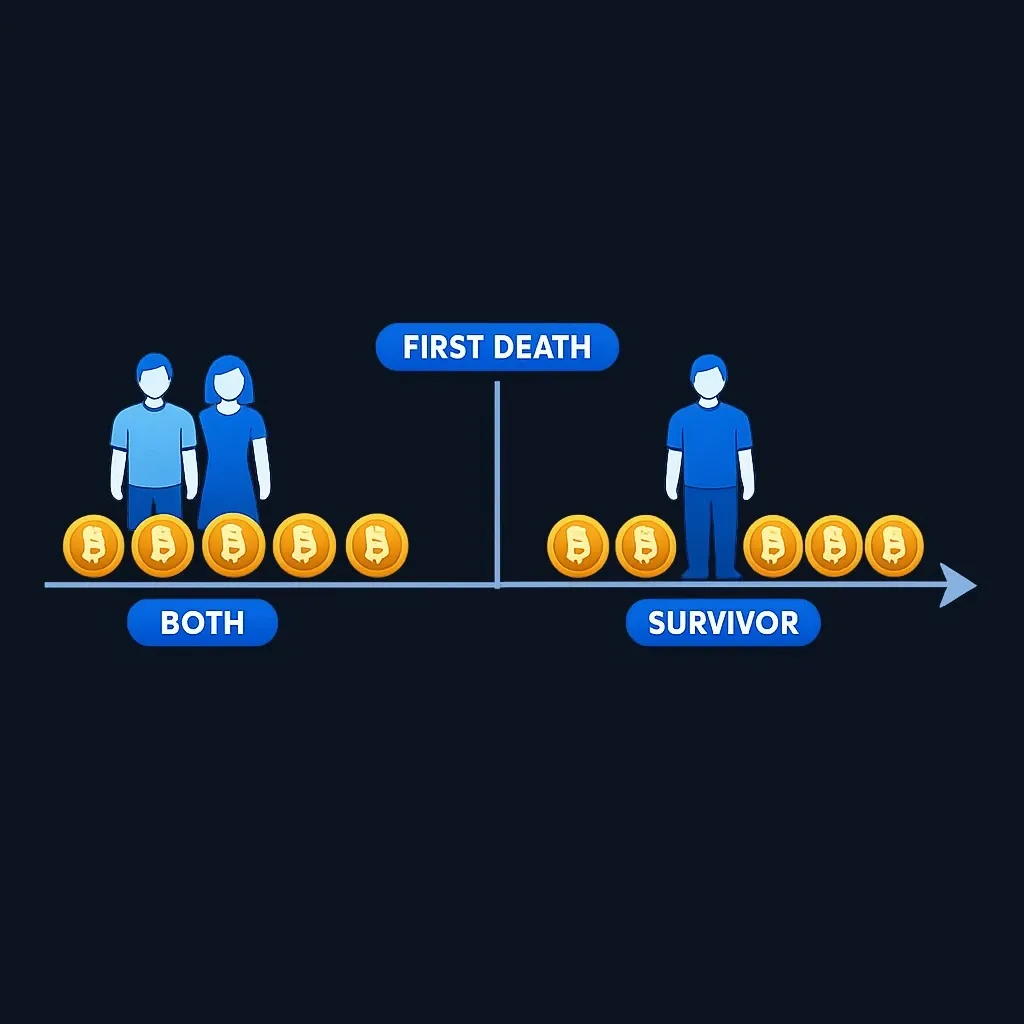
A joint life annuity (often sold as a joint-and-survivor annuity) pays an income while the first annuitant is alive and continues, in whole or in part, to a designated survivor (commonly a spouse) after the first annuitant’s death. The IRS describes qualified joint-and-survivor annuities as life annuities that provide a survivor annuity over the life of the participant’s surviving spouse (or another person treated as a surviving spouse under a qualified domestic relations order) following the participant’s death.
Common structures
- Full survivor benefit (100%): the survivor receives the same payment as the original annuitant.
- Partial survivor benefit (e.g. 50%, 66.7%): survivor receives a reduced percentage after the first death.
- Immediate versus deferred start, and fixed versus inflation-adjusted payment options, are common — product features and availability vary by provider.
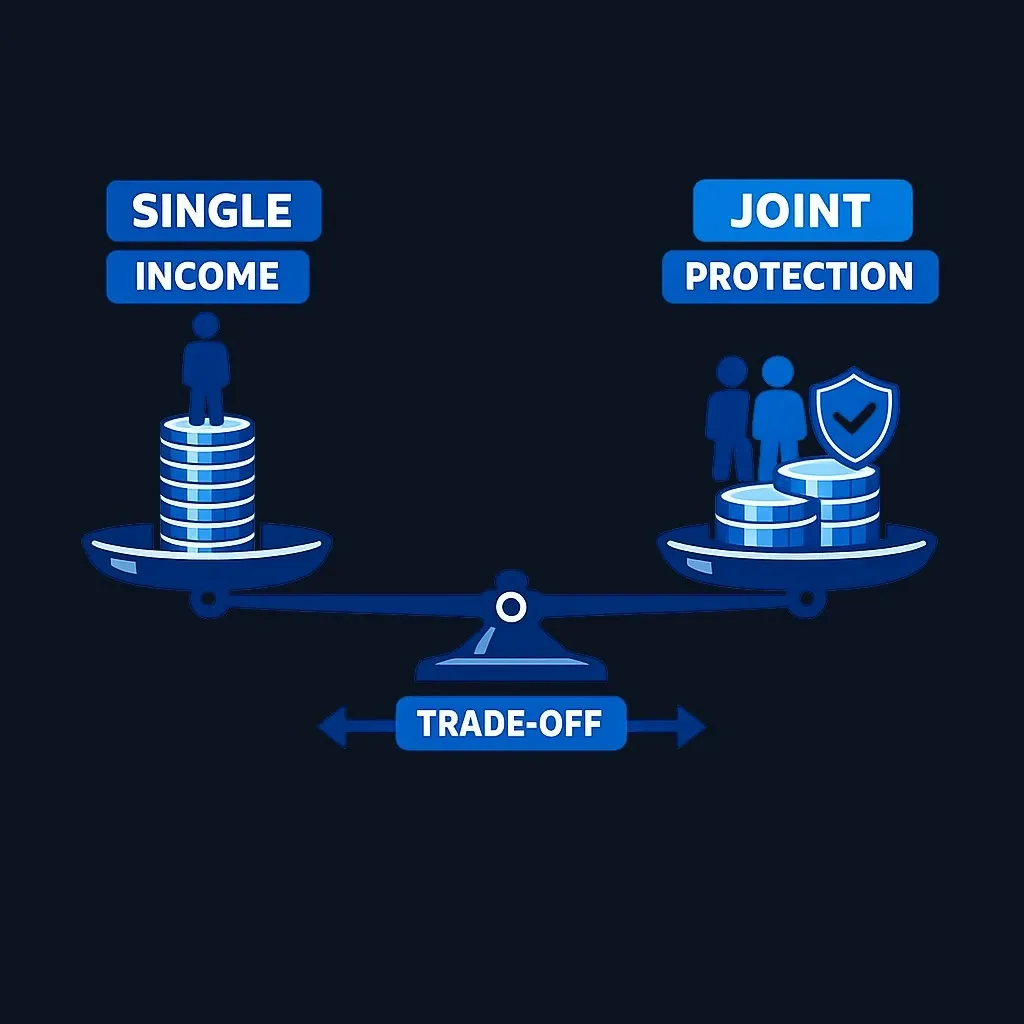
Practical takeaway: joint annuities trade some initial income for the security of continuing guaranteed payments to a survivor.
Key Differences Between Single Life and Joint Life Annuities
Payment structure and longevity risk
- A lifetime payout transfers the risk of funding that promised income for an uncertain lifespan to the insurer. Insurer payment capacity, inflation, and expenses beyond the payment still matter.
- Joint life annuities spread longevity risk across two lives and provide continuity after the first death, reducing the survivor’s exposure to losing income.
The FINRA retirement-income guide explains single-life, joint-and-survivor, and period-certain payout choices.
Income level tradeoff
Because insurers price for the expected duration and likelihood of payments, joint annuities tend to offer lower initial payments per dollar of purchase compared with single life products. This is a structural trade: more survivor protection equals lower immediate income.
Estate and liquidity effects
Both annuity types typically convert a lump sum into an income stream, which reduces the lump sum available to leave in an estate unless you add features such as guaranteed-period riders or cash-value options.
Customization and riders
Many annuity contracts allow you to pick survivor percentages (50%, 66.7%, 100%), choose inflation adjustments, or add minimum-period guarantees; availability and pricing vary across insurers and products. Practical takeaway: focus your comparison on (1) how much monthly income you need now, (2) whether guaranteed survivor income is essential, and (3) what product riders (inflation protection, guaranteed periods, liquidity) you value enough to pay for.
How to compare your options
Use these specific criteria, in order, to choose between single and joint options. Each criterion includes the practical question to ask and how it should tilt your choice.
1) Primary objective: income level vs survivor protection (most important)
- Question: Is replacing your income for a surviving spouse or dependent essential?
- If yes → joint life annuity.
- If no → single life annuity.
2) Household resources and alternative protections
- Question: Do you or your household already have other survivor resources (pension survivor benefits, Social Security survivor benefits, savings, term life insurance)?
- If alternative survivor income exists → single life annuity may be acceptable.
- If not → joint life helps plug the gap.
3) Life expectancy and spouse age gap
- If the spouse is significantly younger, a joint annuity costs more (lower initial payments) because the survivor could collect for longer. If you want to maximize initial payments and the survivor is financially secure otherwise, single life can be preferable.
4) Inflation risk and desired purchasing power
- If preserving real purchasing power matters, look for inflation-adjusted options or cost-of-living riders; these may reduce initial income and can help with inflation, but a fixed annual increase may not match actual inflation and a linked feature can have limits. Compare rider costs from providers.
5) Liquidity, legacy, and estate planning goals
- If leaving a lump-sum legacy is a priority, consider alternatives (e.g. refund or period-certain features, life insurance, or retaining some capital) because annuitization often reduces estate assets.
6) Tax and plan rules
- The tax treatment and plan rules (if annuity is from a qualified retirement plan) can affect the available options and beneficiary rules. See IRS guidance on qualified joint-and-survivor annuities for plan-related rules.
Decision checklist (quick):
- Need survivor income? → Joint.
- No survivor need and want max income? → Single.
- Concerned about inflation? → Look for CPI or increasing options.
- Want legacy? → Consider partial annuitization or alternatives.
Hypothetical case A — Single retiree wanting higher lifetime income
Background: age 72, no spouse or dependents, moderate savings, wants dependable monthly cash flow to cover living expenses. Why single life fits: maximizing guaranteed monthly income is the priority and survivor income is not needed. Tradeoffs: little or no continuing payment for heirs; consider leaving an emergency reserve for unexpected needs.
Hypothetical case B — Married couple prioritizing survivor income
Background: ages 66 and 62, one spouse expects to outlive the other, couple values keeping a steady household income after the first death. Why joint life fits: joint-and-survivor annuity preserves income for the surviving spouse. Tradeoffs: lower initial payment; the couple should compare survivor percentage options (e.g. 50%, 100%) and assess whether other sources (Social Security survivor benefit, pension spousal survivorship) already provide sufficient coverage. Practical tip: run both scenarios with real provider quotes or a licensed adviser. Compare the monthly income difference and test whether the survivor's budget would be adequate if the higher-income single option were chosen instead.
Common tradeoffs
- Income vs. survivor protection: higher current income (single) vs. ongoing survivor income (joint).
- Flexibility vs. guarantee: annuitization trades away liquidity for guarantees; riders can restore features at cost.
- Inflation exposure: fixed annuities lose purchasing power over time unless you add indexation or inflation protection.
Mistakes people make (and how to avoid them)
- Mistake: buying an annuity without checking survivor benefits from other sources. Fix: map expected Social Security/pension survivor benefits before selecting a product.
- Mistake: ignoring inflation. Fix: price inflation-indexing riders and test scenarios where inflation erodes income.
- Mistake: annuitizing the entire nest egg. Fix: consider partial annuitization so you keep liquidity and legacy options.
Product and regulatory caveats
- Contract terms vary widely by insurer and by whether the annuity comes from a qualified plan or a private purchase. For plan-sponsored annuities, the plan’s QJSA rules can dictate survivor options.
- Always review contract language on death benefits, guaranteed periods, commutation options, and rider costs. Ask providers to show the projected payment schedules both before and after the first death.
Decision Framework: Choosing the Right Annuity for Your Needs
Use this simple four-step framework to reach a defensible choice.
- Define primary goal: maximize income now, guarantee survivor income, preserve legacy, or protect against inflation.
- Inventory other sources: list Social Security survivor benefits, pensions, life insurance, savings. If survivor needs are already met, favor single options.
- Get quotes: request immediate quotes for (a) single life; (b) joint life with 50%, 66.7%, and 100% survivor options; (c) variants with a 10- or 15-year guaranteed period or inflation adjustment. Compare net monthly incomes and rider costs.
- Stress test: model scenarios—early death, long survivor life, hypothetical 3%–4% inflation (not a forecast), and medical expenses—to see which choice preserves required income across outcomes.
Illustrative example (hypothetical): Compare the actual single-life payment, joint-life payment while both people are alive, and payment to the survivor. If a joint option reduces the initial payment, test whether the remaining household income still covers current needs and the survivor’s later needs. Practical note: these are illustrative calculations. Obtain live provider quotes for firm comparisons.
What are the pros and cons of single life annuities?
Pros: larger periodic payments for the annuitant’s lifetime; simple structure. Cons: payments stop at death unless you add guaranteed-period riders or survivor options.
How does a joint life annuity work?
A joint life (joint-and-survivor) annuity pays the annuitant during their life and continues an agreed survivor benefit to the named survivor after the first death; the IRS describes qualified joint-and-survivor annuity rules for certain retirement plans.
Can I switch from a single life to a joint life annuity later?
Do not assume you can change the payout after annuitization begins. Any right to change, commute, or end payments must be provided by the contract or plan; buying a separate policy does not reverse an existing election. Resolve the survivor choice and any cancellation window before committing.
How are annuity payments taxed?
Tax treatment depends on the source of funds (qualified retirement plan vs. after-tax savings) and product type. For plan-specific rules and how qualified annuities are handled, see IRS guidance on annuities and qualified joint-and-survivor annuities. Consider consulting a tax professional for your situation.
For a workplace pension election, compare Pension survivor benefit vs. life insurance.
This guide covers U.S. rules. Finelo provides financial education, not personalized financial, investment, tax, or legal advice.
InvestingU.S. GuideFinancial Education
Practice investing with Finelo
Build practical investing skills with guided lessons, simulator practice, and structured challenges.
About the author
Finelo Team
The Finelo Team creates practical investing and trading education designed to help beginners learn faster with structured challenges, simulator practice, and bite-sized lessons.
Keep reading — Related articles

Investing
Tax-gain harvesting vs. tax-loss harvesting
Compare realizing investment gains with realizing losses, including holding periods, wash sales, offsets, and portfolio tradeoffs.
Finelo Team

Investing
Stable value fund vs. money market fund
Compare investment structure, contract protections, transfer restrictions, net yields, and access inside a retirement account.
Finelo Team

Investing
Should you stop contributing to a 401(k) to pay off debt?
Balance required bills, debt interest, employer matching, vesting, and take-home pay before reducing retirement contributions.
Finelo Team