Last editorial review: September 28, 2026
Should you stop contributing to a 401(k) to pay off debt?
Balance required bills, debt interest, employer matching, vesting, and take-home pay before reducing retirement contributions.
10 min read
Practice investing with Finelo
Build practical investing skills with guided lessons, simulator practice, and structured challenges.
Want to learn more?
Build practical investing skills with guided lessons, simulator practice, and structured challenges.
Explore FineloExplore Finelo's 28-day challenges
Turn learning into a daily habit with guided challenge paths.
The answer depends on the debt's cost, your cash flow, and the employer match. Keeping enough contributions to receive an available match can be valuable, but essential bills and a workable debt-payment plan come first.
Reducing future contributions is also different from withdrawing money already in the account. A withdrawal has separate tax and retirement consequences.
Put the decisions in order
- Cover essential expenses and required debt payments.
- Keep a realistic cash buffer so the next expense does not create more debt.
- Understand the employer match and vesting rules.
- Compare extra retirement contributions with accelerated debt repayment.

Your own contributions are always fully vested, while employer contributions may vest over time. IRS vesting guidance explains the distinction. Read the summary plan description and matching provisions described in the IRS plan-document guide; the actual formula and schedule belong to your plan.
Compare a known cost with uncertain returns
Paying down high-interest debt reduces a contractual borrowing cost. Investment returns are uncertain. At the same time, giving up employer contributions can have a meaningful cost, especially when you expect to keep the vested match.
Check whether matching is calculated each pay period and whether the plan offers a year-end true-up. Stopping and restarting contributions can affect the amount received. Do not assume you can recover every missed match later.
Put a dollar amount on the match
Imagine a plan that contributes 50 cents for every dollar you contribute, up to 6% of eligible pay. On $50,000 of eligible annual pay, contributing $3,000 would produce a $1,500 employer contribution under that hypothetical formula. Contributing less may leave some of that match unearned. Your ability to keep it depends on vesting and the plan’s terms.
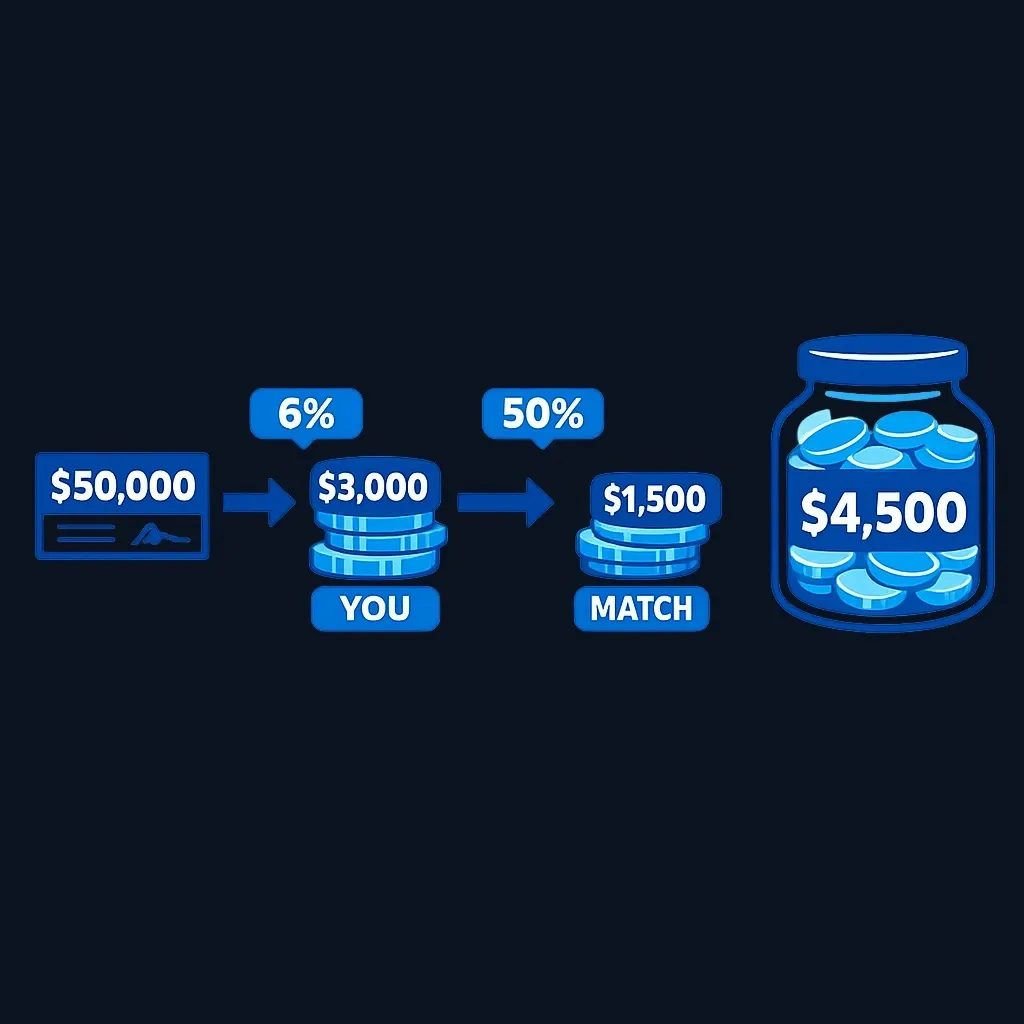
Now compare an extra contribution above that threshold with paying down a credit card charging 24% APR. The extra contribution receives no further match in this example, while reducing the card balance cuts the amount exposed to that borrowing rate. This is why “keep the match” and “maximize the account” are separate decisions. It still does not justify missing rent or required debt payments to earn a match.

Estimate the take-home-pay change
Reducing a pre-tax contribution by $100 does not usually increase take-home pay by the full $100, because withholding can rise. Use a payroll estimate rather than building a debt plan around the gross contribution amount.
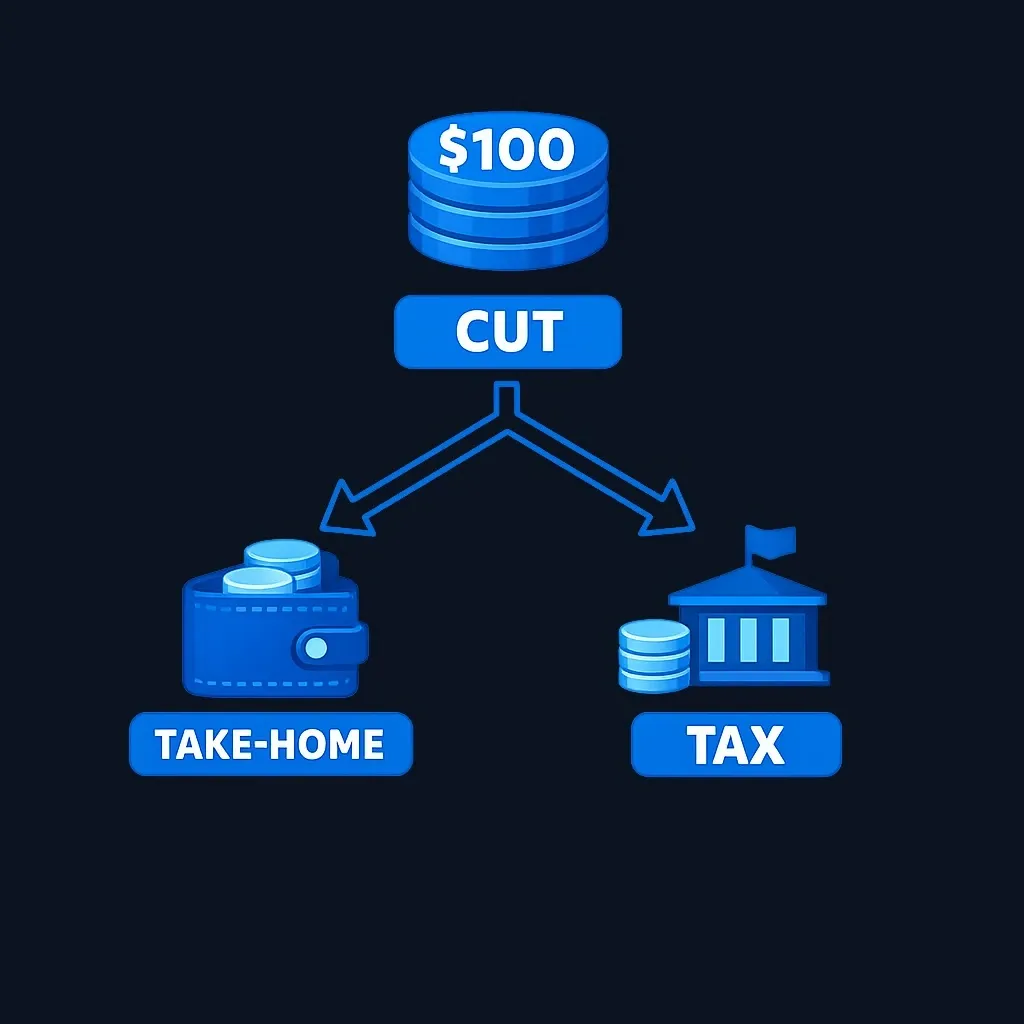
For a hypothetical household with expensive card debt, a temporary reduction above the matching threshold may free cash for repayment. If essential bills are already in arrears, a broader budget or hardship plan may be needed.
If you pause or reduce contributions, set a specific review date and repayment milestone for restarting. The goal is to remove the debt pressure without letting a short-term adjustment become an indefinite stop to retirement saving.
Put essential cash flow ahead of a percentage rule
First determine whether housing, food, utilities, insurance, and required debt payments can be met. A contribution strategy that forces recurring expensive borrowing can fail even when the retirement plan has an attractive match. Conversely, stopping contributions without changing the source of the debt may leave both the debt and the savings problem unresolved.
Next read the match formula and vesting rules. The benefit of contributing depends on how the employer contribution is calculated and whether you will keep it. Also ask whether the plan has a year-end true-up. A temporary pause can have a different result in a plan that reconciles the annual match than in one that only matches individual payroll periods.
Practice investing with Finelo
Build practical investing skills with guided lessons, simulator practice, and structured challenges.
Compare the effect on take-home pay correctly
Reducing a pre-tax contribution does not usually increase take-home pay by the full contribution amount because taxable wages can rise. A change to Roth contributions has a different current-tax effect. Use a payroll estimate so the debt-payment plan is based on the additional cash that will actually arrive.
Debt costs and investment returns are also different kinds of numbers. Interest avoided by repaying a debt under its terms can be more predictable than a future investment return. An employer match is a separate benefit from market growth. Keep those components distinct instead of comparing one headline percentage with another.
Give a temporary pause an endpoint
Write down the target debt balance, the expected monthly payment, and the date for reviewing contributions. If the freed cash goes toward unrelated spending, the pause has not served its purpose. Automating the planned debt payment can make the tradeoff visible.
When the targeted debt is repaid or the crisis ends, revisit the contribution election promptly. You can restore or increase saving in stages while rebuilding accessible reserves. A clear restart condition is more useful than an indefinite intention to contribute again when finances feel easier.
Understanding 401(k) Contributions and Employer Matches
A 401(k) is a workplace retirement account funded by your payroll contributions; many plans also include employer contributions or matches. The plan’s design (pre-tax vs. Roth, match formula, and vesting schedule) determines the immediate tax and employer-match consequences of changing contributions.
Why employer matches matter
Employer matching contributions are additional compensation that increases your retirement balance beyond what you personally deposit. Before pausing contributions, find two plan details: the match threshold (how much you must defer to receive the match) and the vesting schedule (how long you must stay to keep employer contributions). Capturing the match is usually financially sensible because it increases the effective return on the dollars you contribute. Practical takeaway: review your plan document or benefits portal to confirm the exact percentage or formula your employer uses and whether you’re vested. That knowledge helps you weigh the match against essential expenses, required payments, and debt costs.
Evaluating Your Debt: Types and Interest Rates
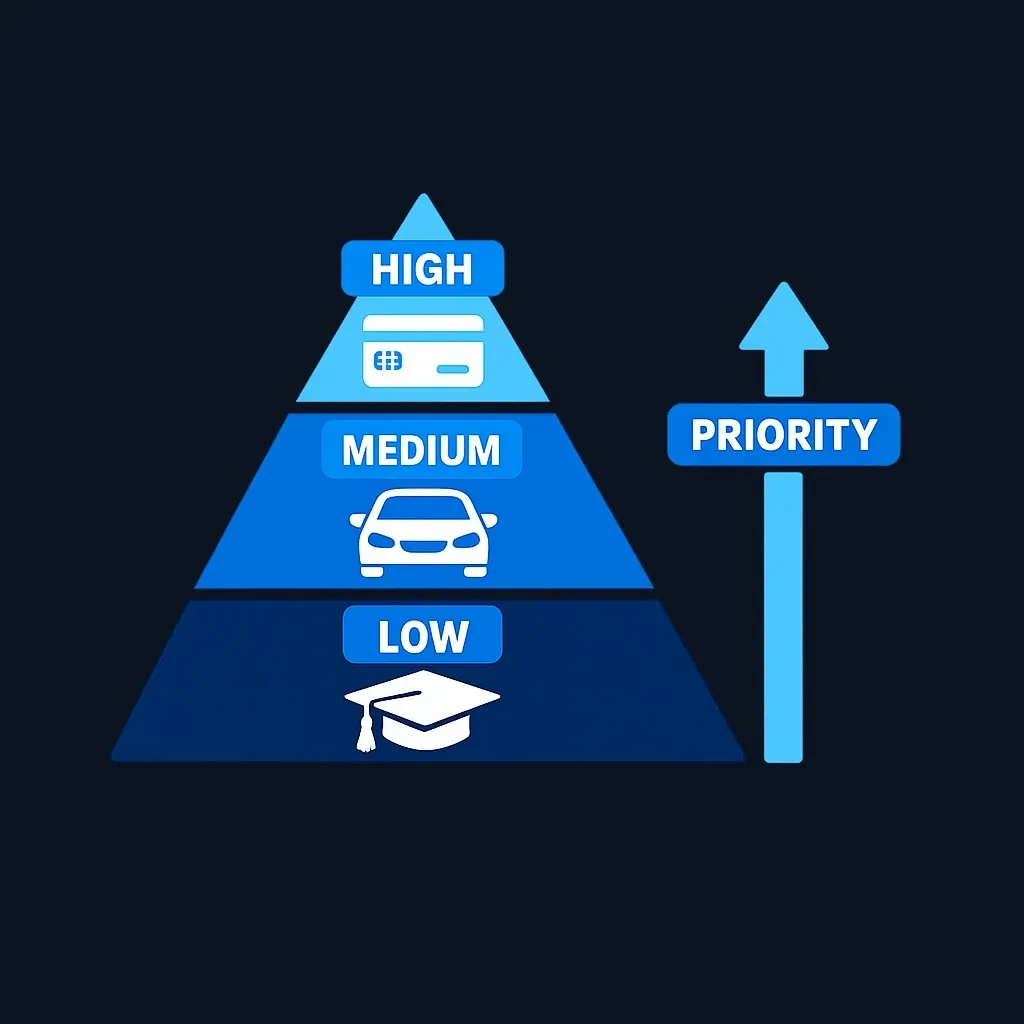
Not all debt should be treated the same. After covering required payments and essential expenses, use the debt’s interest cost, repayment terms, and consequences of nonpayment to set priorities.
Common debt priorities
- High-interest unsecured debt (credit cards): Often the highest priority because high rates compound quickly.
- Medium-rate loans (personal loans, auto loans): Consider remaining term and any prepayment penalties; refinancing can change priority.
- Low-rate or tax-advantaged debt (some student loans): These may be lower priority, especially if income-driven repayment or forgiveness options exist.
Compare predictable debt costs with uncertain returns
Interest avoided on debt is different from a projected investment return. Use the debt's actual terms, including fees and any promotional-rate expiry. Then consider investment risk, taxes, and the money that would remain available for emergencies.
Treat employer matching contributions separately from market performance. A match is not an annual investment yield, and vesting rules can affect how much you retain. If essentials and required payments are covered, the match may be a strong reason to preserve some contributions while directing other money toward expensive debt.
Avoid a single formula that says to borrow or invest whenever an assumed return exceeds a loan rate. Investment outcomes can disappoint while the debt payment remains due. A workable budget and a realistic reserve belong in the comparison.
Strategies for Balancing Debt Repayment and Retirement Savings
Below are practical, adaptable strategies you can use immediately.
Checklist: quick decision steps
| If you have this condition | Do this |
|---|---|
| Employer match exists | If essentials and required payments are covered, consider preserving the match while targeting expensive debt. |
| Carry high-interest credit card debt | Accelerate payments on that debt even if you reduce discretionary contributions. |
| Short-term cash crunch (3–6 months) | Consider a temporary, defined reduction (not indefinite stop) and plan to restore contributions afterward. |
| Low-cost, income-driven student loans | Keep contributing (at least to the match) while making regular loan payments unless other priorities exist. |
Practical tactics
- Capture the match as a baseline. It’s often the most compelling reason to keep contributing.
- Use the avalanche method (highest interest first) for interest efficiency, or the snowball method (smallest balance first) for motivation — both work if you stick to them.
- Temporarily reduce, don’t stop: reduce contributions for a defined time and document when you’ll restore them.
- Preserve a small emergency fund (1–3 months of essentials) so you don’t trigger new high-interest borrowing while paying down debt.
- Apply one-off cash (bonuses, tax refunds) to either debt or retirement per a written rule so windfalls don’t get spent impulsively.
- After clearing high-cost debt, implement a staged catch-up plan to rebuild retirement contributions—e.g. increase deferrals by 1 percentage point at each raise. Practical takeaway: balance preserving employer match, eliminating the most expensive debt, and maintaining liquidity. A defined, reversible plan beats an open-ended stop.
Hypothetical decisions on 401(k) contributions
These hypothetical scenarios illustrate possible choices; they are not documented customer cases. Use your own balances, interest rates, minimum payments, cash reserves, and employer-match rules to test these scenarios.
Scenario A — Keep match, attack high-rate debt
Choice: Reduce nonessential contributions to the minimum needed to secure the employer match; direct extra cash to high-interest credit cards until paid off. Intended result: preserve the available match while reducing expensive debt. The payoff date depends on the balance, interest, and payments.
Scenario B — Short temporary pause for a specific crisis
Choice: Pause contributions for a defined 3–6 month window during a medical or job-transition expense, with a written plan to restore contributions and recapture missed increases after the period. Intended result: improve near-term cash flow and give the pause an endpoint. Check whether the additional take-home pay actually covers the shortfall.
Scenario C — Continue saving when debt is low cost
Choice: Maintain contributions above the match while making standard payments on low-interest student loans that qualify for income-driven options. Tradeoff: money remains invested while scheduled debt payments continue. Investment growth and any future loan forgiveness are not guaranteed.
How to simulate these for yourself
- Choose your years to retirement, expected growth g, and debt interest rates.
- Compare the same monthly budget under each option. Test more than one investment-return assumption, including a period with losses, and use the actual debt-payment schedule.
- Add employer match amounts (if any) to the contribution side to reflect the real tradeoff.
Practical takeaway: the best path depends on your debt mix, match availability, time horizon, and personal tolerance for risk and liquidity constraints.
What are the pros and cons of stopping 401(k) contributions?
Pros: more cash to accelerate debt payoff and boost short-term liquidity. Cons: lost compounding, possible employer match dollars, and slower retirement progress. Often the balanced step is to preserve any employer match while attacking high-interest debt.
How should I decide whether to prioritize debt repayment or retirement savings?
Start with essential bills, required payments, and accessible reserves. Then compare actual debt costs, the match you would keep under vesting rules, and uncertain investment outcomes. Preserving the match can be valuable, but it should not force missed essential payments.
Can I borrow from my 401(k) to pay off debt?
Some plans permit 401(k) loans, but rules, repayment terms, and consequences vary by plan. Check your plan documents before borrowing; consider alternatives because loans can reduce retirement balances and create tax or repayment risks if you leave your job.
How do I rebuild retirement savings after paying off debt?
Create a staged ramp: restore contributions to the match first, then increase deferrals regularly (for example, after raises) until you reach your target. Rebuilding habit and automating increases helps recover lost progress.
Taking out existing savings is a different decision; compare 401(k) hardship withdrawal vs. loan: what changes for your savings.
This guide covers U.S. rules. Finelo provides financial education, not personalized financial, investment, tax, or legal advice.
InvestingU.S. GuideFinancial Education
Practice investing with Finelo
Build practical investing skills with guided lessons, simulator practice, and structured challenges.
About the author
Finelo Team
The Finelo Team creates practical investing and trading education designed to help beginners learn faster with structured challenges, simulator practice, and bite-sized lessons.
Keep reading — Related articles
Investing
Tax-gain harvesting vs. tax-loss harvesting
Compare realizing investment gains with realizing losses, including holding periods, wash sales, offsets, and portfolio tradeoffs.
Finelo Team

Investing
Stable value fund vs. money market fund
Compare investment structure, contract protections, transfer restrictions, net yields, and access inside a retirement account.
Finelo Team

Investing
Single-life vs. joint-life annuity
Compare income for one lifetime with continued payments to a survivor, using equal premiums and matching guarantee terms.
Finelo Team