Last editorial review: September 28, 2026
Pension survivor benefit vs. life insurance
Compare a continuing survivor pension with an insurance death benefit, including longevity, underwriting, premiums, and coverage risk.
8 min read
Practice investing with Finelo
Build practical investing skills with guided lessons, simulator practice, and structured challenges.
Want to learn more?
Build practical investing skills with guided lessons, simulator practice, and structured challenges.
Explore FineloExplore Finelo's 28-day challenges
Turn learning into a daily habit with guided challenge paths.
A pension survivor option can continue income to a spouse after the pension recipient dies. Life insurance pays a benefit under an insurance contract. They can address the same household need, but a lump sum and a lifetime income stream are not directly interchangeable.
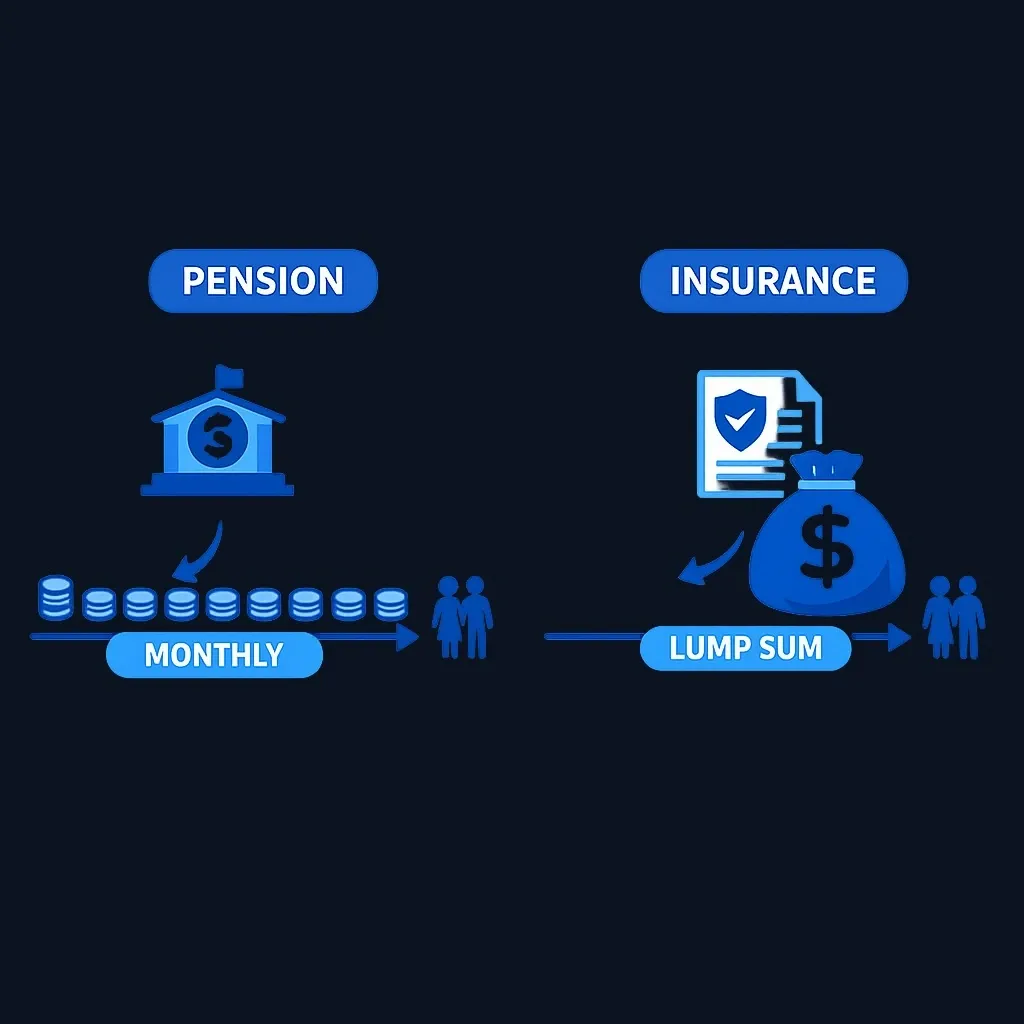
Compare the surviving household's expenses over time, not just its first year after a death.
What changes?
| Feature | Pension survivor option | Life insurance |
|---|---|---|
| Payment | Usually recurring income under the election | Usually a death-benefit lump sum, with settlement options |
| Cost | Often a lower pension while both are alive | Premiums and contract costs |
| Duration | Defined by the pension election | Depends on policy type and continued coverage |
| Main risk to evaluate | Election restrictions and inflation | Expiration, lapse, underwriting, and managing proceeds |
The IRS joint-and-survivor annuity guidance describes protections and spousal-consent rules for applicable plans. Ask your plan which rules and deadlines apply.
Compare an income need with an income solution
If a spouse needs an additional $2,000 a month after your death, a $24,000 insurance payment covers only one year before considering other resources. It is not equivalent to $2,000 monthly for life.
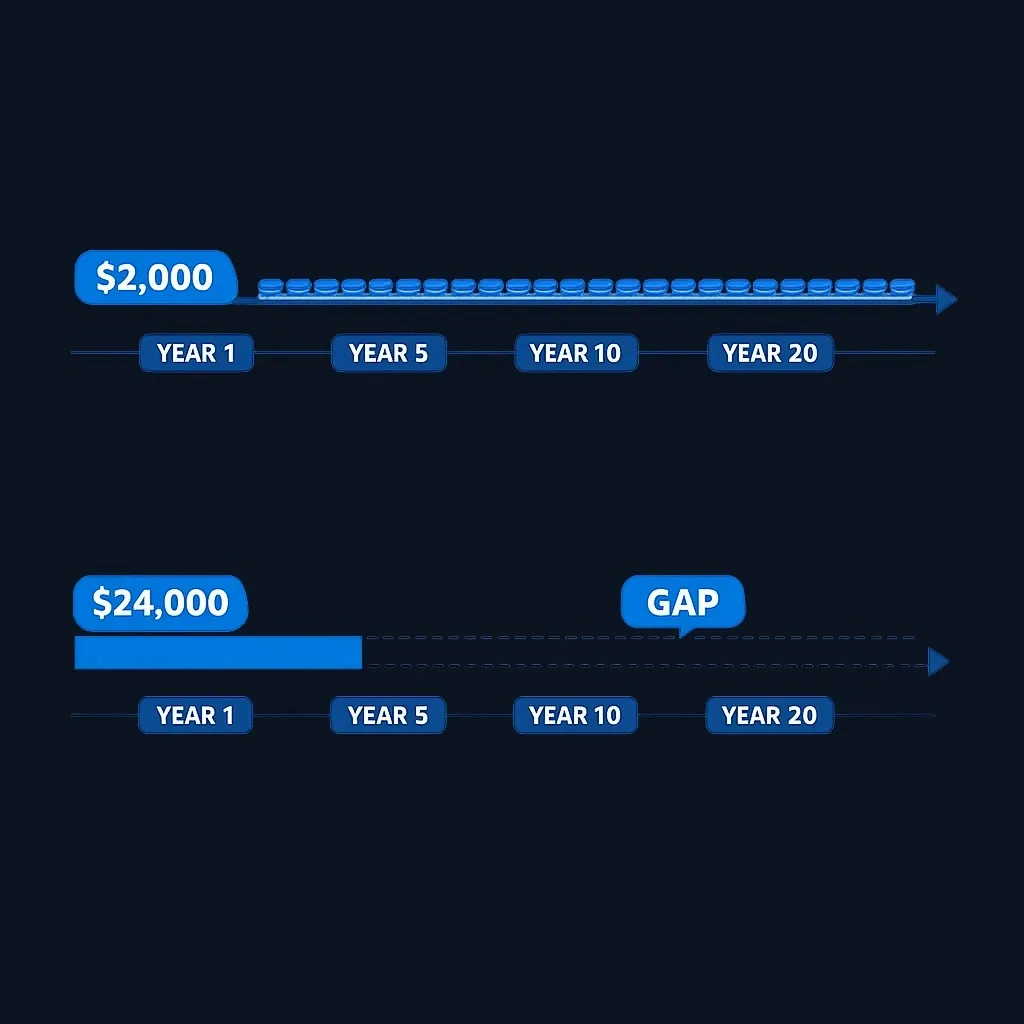
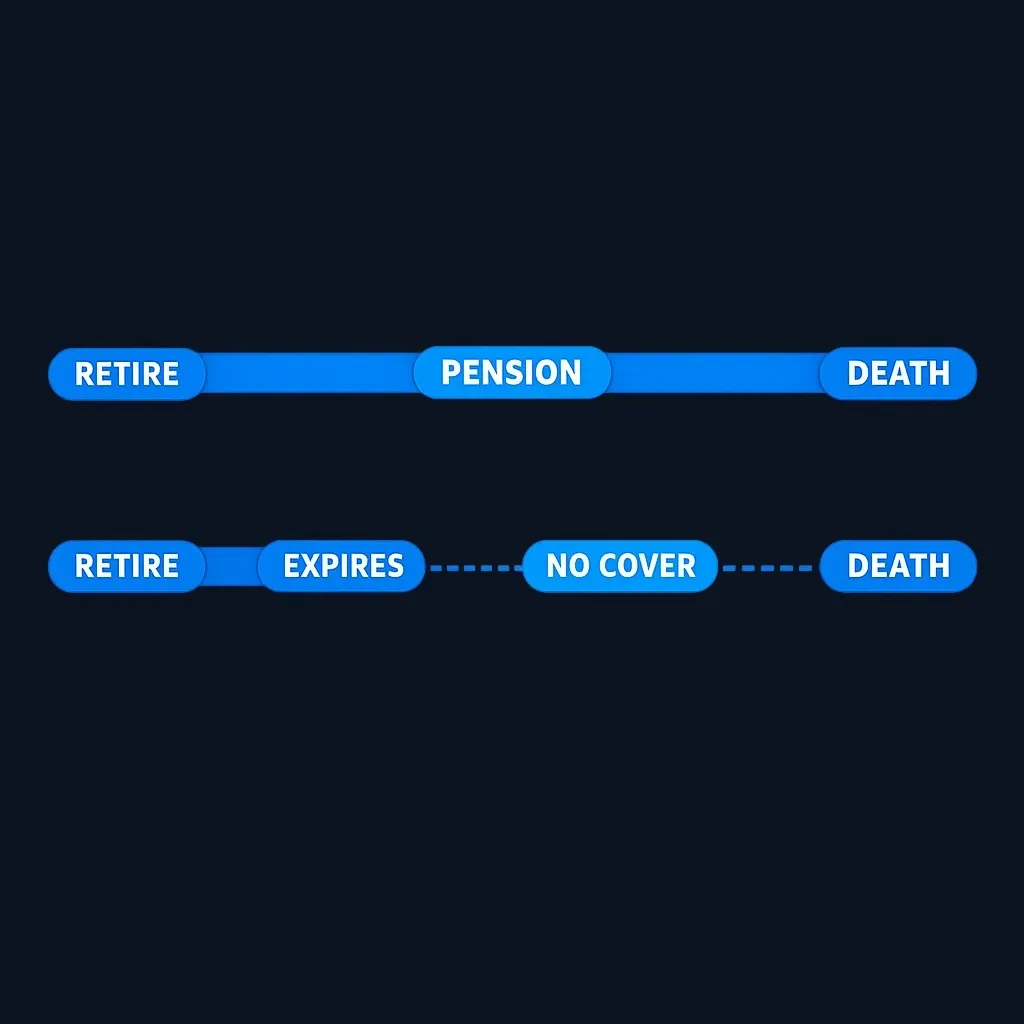
Model how long insurance proceeds might last after taxes, investment changes, inflation, and withdrawals. Also test what happens if a term policy expires before the insured person dies. These scenarios matter especially when declining the pension survivor option is difficult or impossible to reverse.
Check both contracts before choosing
Request pension estimates for each survivor percentage and written information about changes after retirement. Obtain insurance underwriting and a confirmed premium before relying on a replacement policy. The Texas life-insurance guide explains policy types and limitations.
Consider existing savings, both partners' Social Security benefits, debts, and future care needs. Some households use both tools. The goal is dependable survivor support, with costs and limitations that both partners understand.
Compare a lifetime income stream with a lump sum fairly
A survivor pension and life insurance solve overlapping but different problems. A pension may provide recurring income under the elected terms. Insurance may provide a lump sum after the insured person's death while the policy is in force. The first year's pension amount is therefore not an economically equivalent insurance benefit.
Suppose a hypothetical survivor pension pays $2,000 per month. That is $24,000 in the first year, and it may continue for many years under the plan's rules. A $24,000 insurance payment covers only that first year's nominal amount if spent at the same pace. Comparing the two requires assumptions about duration, investment returns, inflation, taxes, and how the survivor will manage the money.
An insurance illustration should use an actual offer for the person to be insured. Health underwriting, premium duration, policy term, and the possibility of coverage expiring before death matter. An estimate based on ideal health or a short term cannot replace a pension election intended to protect a spouse throughout retirement.
Map the survivor's household budget
List income that continues after the first death and expenses that remain. Housing, taxes, insurance, and many utilities may not fall by half. Some retirement income can stop or change. The goal is to identify the survivor's ongoing gap rather than assuming the current couple's budget simply divides in two.
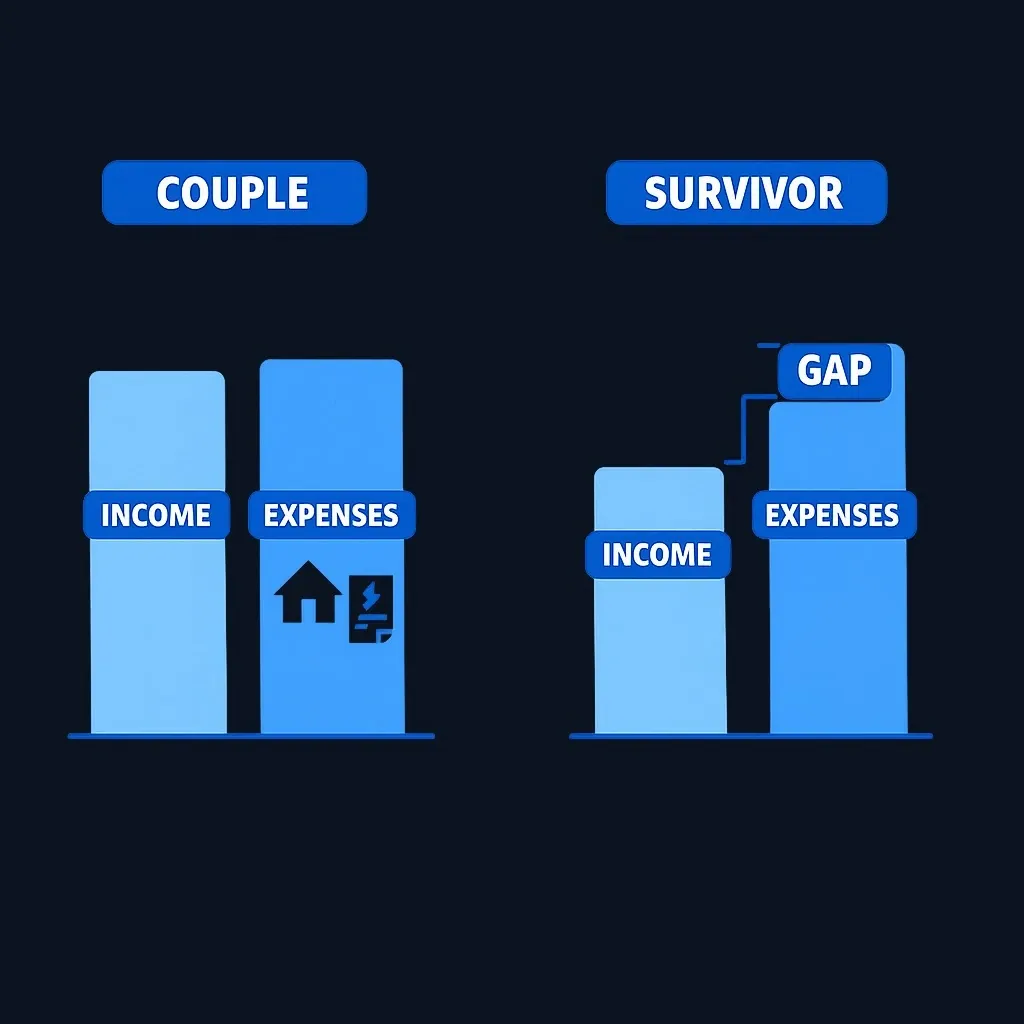
Then identify any separate lump-sum needs, such as a debt payoff or transition expense. Those may justify insurance even when a survivor pension is retained. Conversely, sufficient assets and other continuing income may affect how much protection is needed. Evaluate the pension and insurance as parts of the same household plan.
Practice investing with Finelo
Build practical investing skills with guided lessons, simulator practice, and structured challenges.
Confirm the election before it becomes binding
Ask the pension administrator for written benefit amounts for each available survivor percentage and any guarantee-period option. Confirm spouse-consent requirements, election deadlines, and whether the decision can be changed after payments start. The names of options and the consequences of remarriage or a beneficiary's death vary by plan.
If comparing an insurance-based strategy, have the policy issued and its terms reviewed before assuming coverage will be available. A pending application or verbal estimate is not a substitute for an in-force contract. The plan should still be affordable if premiums continue longer than expected or investment results disappoint.
How to compare your options
This checklist helps you weigh which option fits your objectives. Use it as a practical filter rather than a prescriptive rule.
- Income stability vs. flexibility: If your highest priority is preserving a portion of a recurring pension payment for a spouse, prioritize the survivor benefit option. If you want a flexible death benefit for multiple heirs or obligations, consider life insurance.
- Portability needs: An individually owned life policy can usually continue through job or residence changes if its terms are met. A vested pension does not ordinarily disappear merely because you move or change jobs; ask about vesting and survivor rights before using portability as a deciding factor.
- Insurability and timing: If you have health issues that would make new life insurance expensive or unavailable, keeping a survivor election tied to an existing pension may be advantageous.
- Beneficiary complexity: Life insurance can name multiple beneficiaries; installment settlement options or a trust may shape payment timing, subject to their terms. In contrast, pension survivor elections are constrained by plan rules and typical spouse-first ordering.
- Cost visibility and budget: Compare the incremental cost to your pension benefit (check plan materials) versus premiums for insurance. Costs behave differently over time; run multi-year projections.
- Inflation and COLA exposure: Some pension survivor arrangements include cost-of-living adjustments; others do not. Verify whether the survivor election preserves inflation protection in plan documents.
When to choose each option
Scenario A — Prioritize lifetime income for a spouse
- You want the surviving spouse to retain a predictable portion of your retirement income without applying for a separate policy. A pension survivor benefit (when available) is purpose-built for that outcome; confirm plan specifics with your administrator.
Scenario B — Prioritize portability, estate liquidity, or multiple beneficiaries
- You want proceeds for a mortgage, children, or estate expenses in addition to any ongoing survivor income. Life insurance often better fits these aims because a policy can name multiple beneficiaries and is generally portable.
Tradeoffs and caveats
Every choice has tradeoffs — list and understand them before you decide.
- Irrevocability and elections: Many pension survivor elections are final once you lock them in at retirement. Confirm whether, and under what conditions, you can change elections later with your plan administrator.
- Insurability after retirement: If you delay buying life insurance until retirement, you may face higher premiums or medical disqualification. If insurability is a concern now, compare the expected cost of coverage today versus the value of the survivor election.
- Coverage gaps and multiple aims: Survivor benefits usually cover spouse continuation of pension payments; they may not provide funds for debts, education, or multiple beneficiaries. Life insurance can be sized and directed to cover those additional needs.
- Taxes and estate effects: Tax and estate outcomes differ by jurisdiction, plan, and policy. Expect differences, and ask a tax professional or plan administrator about your particular situation.
- Administrative delay and claims process: Survivor benefits are administered by the pension plan or a guarantor; life insurance claims are handled by an insurer. Processing times, documentation, and appeals procedures vary. Review both parties’ procedures for claims and appeals.
Common mistake and fix
- Mistake: assuming a pension survivor option and a life policy are interchangeable. Fix: write a one-page comparison of desired outcomes (income stream vs. lump-sum, portability, beneficiary flexibility) and map each option to those outcomes before deciding.
Review the cost in the household budget
The reduction in the retiree's pension under a survivor election is an ongoing tradeoff for the elected protection. Insurance premiums may follow a different schedule and can continue even when the household's income changes. Put both costs into the same year-by-year budget.
If insurance is intended to replace a survivor election, test what happens if coverage lapses or the insured outlives a term policy. The plan should not depend on the insured person being able to obtain replacement coverage after the original term ends, particularly if age or health has changed.
What is the difference between survivor benefits and life insurance?
A pension survivor benefit is an entitlement or election within a pension plan that provides payments per plan rules to a surviving spouse; life insurance is a contract that pays a death benefit to named beneficiaries and is used in long-term financial planning.
How do I find out what my pension’s survivor options are?
Check your plan’s summary plan description or contact the plan administrator. Official plan documents list eligible survivors, available elections, and any conditions or timelines for election or changes.
Can I have both a survivor benefit and life insurance?
Yes — a household can combine a pension survivor election with separate life insurance to cover different needs (for example, ongoing income plus a lump-sum to pay debts). Confirm whether plan rules or insurer terms create interactions, and model combined costs and benefits.
How do health and age affect the choice?
Health and age affect your ability to buy affordable life insurance; pension survivor elections do not require underwriting but depend on plan eligibility and timing. If insurability is a risk, factor that into your decision and verify plan rules.
The household-income question also appears in Single-life vs. joint-life annuity.
This guide covers U.S. rules. Finelo provides financial education, not personalized financial, investment, tax, or legal advice.
InvestingU.S. GuideFinancial Education
Practice investing with Finelo
Build practical investing skills with guided lessons, simulator practice, and structured challenges.
About the author
Finelo Team
The Finelo Team creates practical investing and trading education designed to help beginners learn faster with structured challenges, simulator practice, and bite-sized lessons.
Keep reading — Related articles

Investing
Tax-gain harvesting vs. tax-loss harvesting
Compare realizing investment gains with realizing losses, including holding periods, wash sales, offsets, and portfolio tradeoffs.
Finelo Team

Investing
Stable value fund vs. money market fund
Compare investment structure, contract protections, transfer restrictions, net yields, and access inside a retirement account.
Finelo Team

Investing
Single-life vs. joint-life annuity
Compare income for one lifetime with continued payments to a survivor, using equal premiums and matching guarantee terms.
Finelo Team


