Last editorial review: September 28, 2026
QLAC pros and cons: income later, less flexibility now
Weigh later-life income against reduced access to savings, with the 2026 premium limit, eligible accounts, and a reserve example.
11 min read
Practice investing with Finelo
Build practical investing skills with guided lessons, simulator practice, and structured challenges.
Want to learn more?
Build practical investing skills with guided lessons, simulator practice, and structured challenges.
Explore FineloExplore Finelo's 28-day challenges
Turn learning into a daily habit with guided challenge paths.
A qualifying longevity annuity contract, or QLAC, uses eligible retirement money to buy income that starts later in life. It can help address the risk of outliving other savings, but it commits money that may no longer be available for emergencies or other uses.
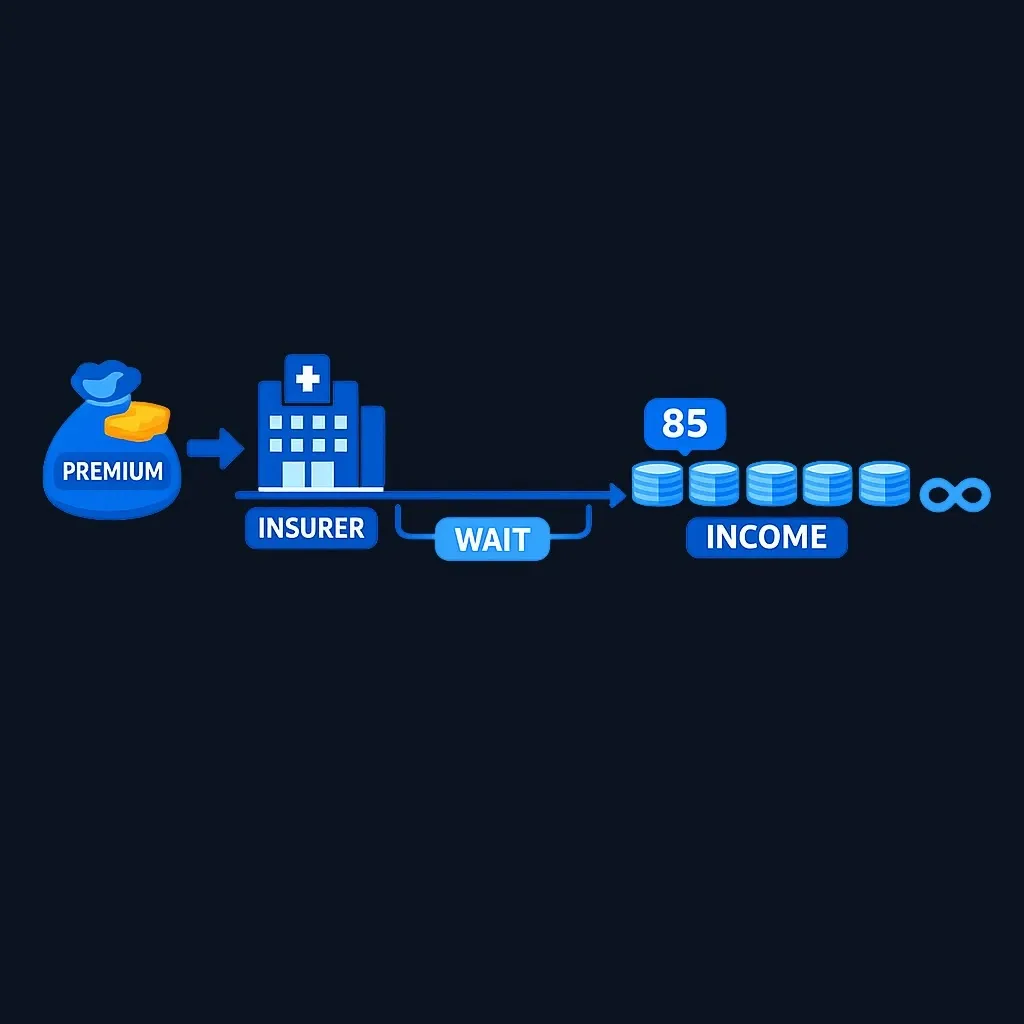
Treat it as an insurance decision within a retirement plan, not as a savings account with a better rate.
What you gain and give up
| Potential benefit | Tradeoff |
|---|---|
| Contractual income later in retirement | Reduced access to the premium paid |
| Less uncertainty about very-late-life income | Inflation may reduce purchasing power |
| Special treatment in RMD calculations before payments begin | Future payments can still be taxable |
| Survivor options may be available | Added protection can reduce the income quoted |
The IRS QLAC instructions describe qualifying conditions, including the requirement to begin payments no later than the first day of the month after your 85th birthday. For 2026, the total premium limit is $210,000, according to IRS Notice 2025-67. Apply the limit across your QLAC contracts, not separately to each purchase. The former 25% account-balance restriction was repealed; the dollar limit still matters.
Which accounts can hold a QLAC?
A qualifying contract can be purchased through eligible traditional IRAs and certain employer arrangements, including qualified plans, 403(b) plans, and governmental 457(b) plans. A Roth IRA is excluded. Availability also depends on whether the plan or account provider offers the contract; the tax rules do not require every provider to sell one. The IRS Form 1098-Q instructions set out the eligible arrangements.
The RMD treatment applies while the qualifying contract is waiting to begin income. It does not make the future income tax-free or remove the need to take required distributions from other applicable savings.
Understand what “guaranteed” means
Payments depend on the insurer's ability to meet its obligations and the contract terms. A QLAC does not have the same protection as an insured bank deposit. Ask about state guaranty arrangements without assuming unlimited protection.
If you die before income begins, what remains for beneficiaries depends on the selected death-benefit provisions. Compare an income-only quote with any return-of-premium or survivor feature on equal terms.
Test the rest of your plan first
Map the income needed before the start date and keep adequate liquid reserves. Include Social Security, pensions, healthcare costs, and other essential expenses. A QLAC cannot cover an emergency if the contract does not allow access to the committed money.
For a hypothetical retiree with $600,000 of retirement savings, committing $100,000 to a QLAC leaves $500,000 outside the contract before fees or market changes. If income starts in 15 years, those remaining assets and other income must support the intervening years. The $100,000 premium is not an emergency reserve. This is an allocation example, not a payout quote.
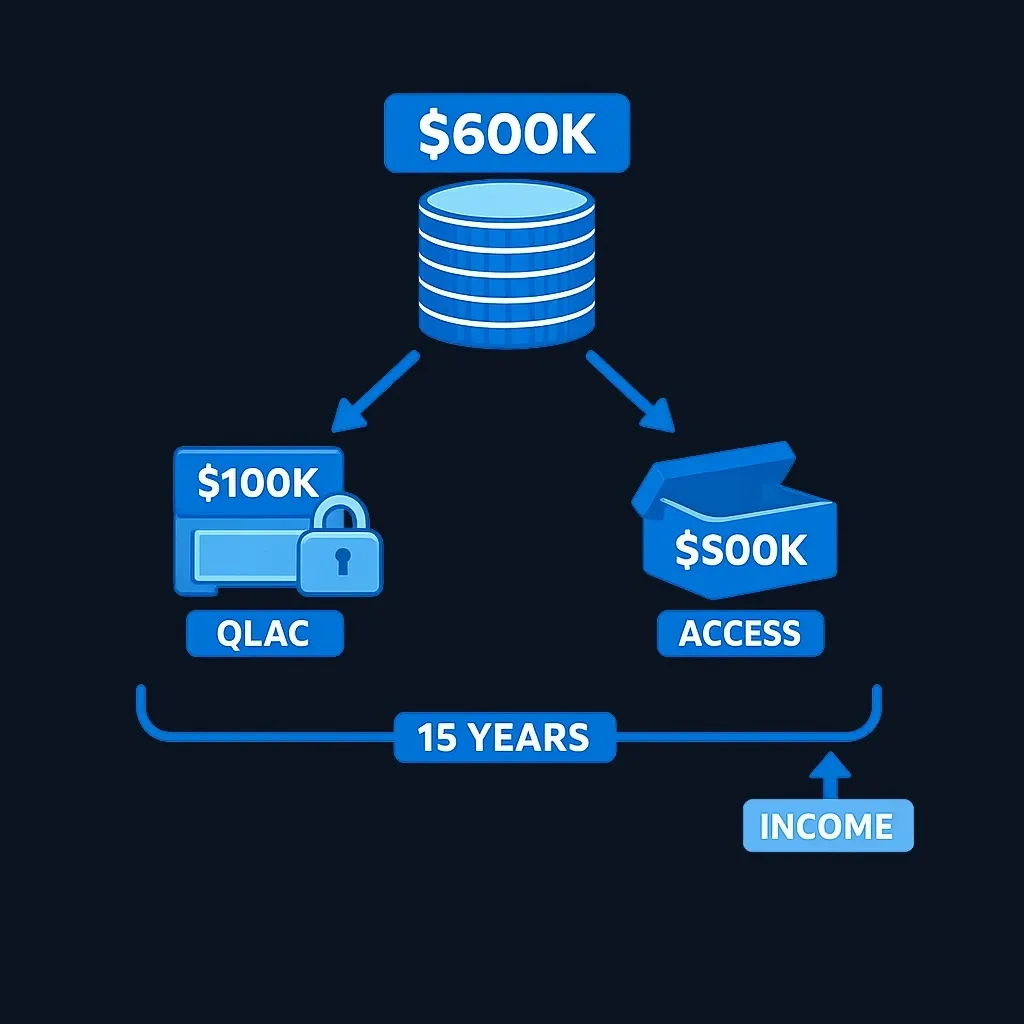
Request written quotes for the same premium, start age, and survivor benefits. Compare guaranteed payments and restrictions, then check whether later-life income protection is worth the flexibility you give up today.
Decide what spending the later income would cover
Begin with a retirement-income timeline. List income already expected from Social Security, pensions, and other sources, then identify the spending gap in later life. A QLAC may address part of that gap; it does not need to fund every possible expense or replace the rest of the investment portfolio.
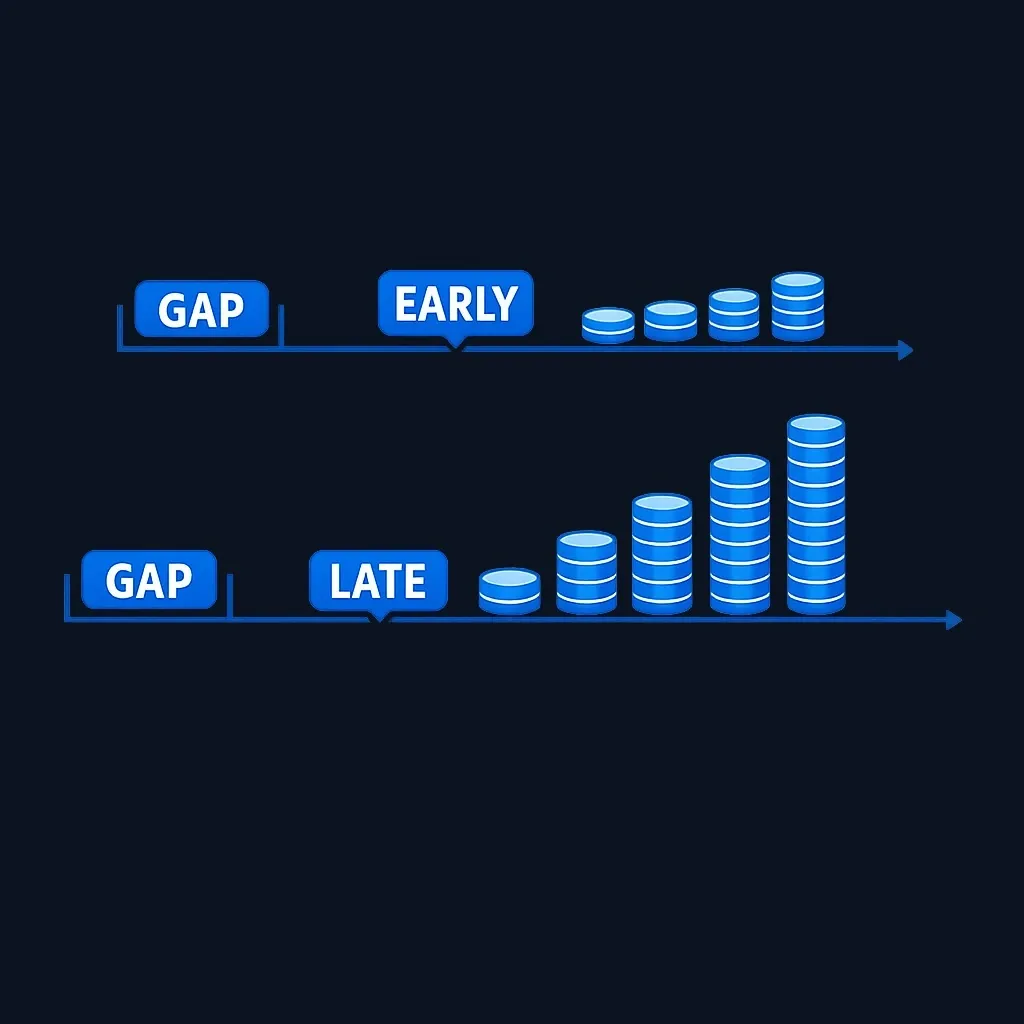
The start date is central to the tradeoff. Deferring income leaves a longer period that must be supported from other assets or income. Compare the later payment with the cash you give up today and the reserves needed before payments begin. A larger quoted future payment is not automatically more useful if the waiting period leaves the household short of accessible money.
Practice investing with Finelo
Build practical investing skills with guided lessons, simulator practice, and structured challenges.
Test survivor and inflation outcomes
Ask for the exact result if the owner dies before income starts and after payments have begun. Compare any permitted survivor or return-of-premium provision using written quotes. A contract bought mainly for personal late-life income can have a different family outcome from one designed with a spouse's needs in mind.
A fixed dollar payment also needs an inflation check. Consider what the payment might buy after many years of rising costs. This is a planning scenario, not an inflation forecast. Keep some flexibility elsewhere in the retirement plan for costs that do not remain fixed.
Finally, distinguish insurer-backed payments from deposit insurance or a government benefit. Review the issuing insurer and the contract's guarantees. The premium limits and tax treatment establish whether the contract qualifies; they do not make every offered contract suitable or every illustrated result guaranteed.
Pros of QLACs
Predictable lifetime income
- A central benefit is an income stream that starts at a chosen later age and continues for life. For many people, this reduces longevity risk — the danger of outliving other assets — by creating a baseline of guaranteed cash flow.
A later-life income baseline
- A QLAC can establish income for later life, helping you plan withdrawals from other assets. It does not protect those assets from an early market decline or pay current bills during the deferral period. Keep a separate plan for spending before the income starts.
Potential tax-timing benefits
- Using qualified retirement funds to buy deferred lifetime income can affect when taxable distributions occur. Recent IRS guidance notes ongoing regulatory updates, including inflation adjustments to dollar limitations on premiums for QLACs, so the tax-treatment and limit rules can change over time.
Customizable start date
- Many contracts let you choose a deferred start date (for example, beginning at an older age). That choice helps match income to later-life needs. It does not eliminate the need for accessible reserves during the waiting period or after payments begin.
Psychological and budgeting benefits
- Knowing a portion of your future expenses is covered by guaranteed payments can reduce stress and simplify lifetime budgeting decisions.
Estate and survivor options (contract dependent)
- Insurers often offer optional riders that alter death-benefit treatment or provide a survivor income stream. These options can protect a spouse or other beneficiary, though they usually reduce the amount of guaranteed income or increase cost.
Practical tip: Treat a QLAC as longevity insurance, not as your only retirement income strategy. Use it to cover essential recurring costs (housing, basic living) while leaving growth assets for discretionary spending and legacy goals.
Cons of QLACs
Illiquidity and limited access to principal
- Once you buy a QLAC, the funds used are typically exchanged for future payments; you generally cannot withdraw that principal later. That tradeoff reduces flexibility for unexpected expenses, large healthcare bills, or changing life plans.
Low upside and no market participation
- Because QLACs provide fixed or contractually determined payments, they forgo equity upside. If markets perform well, the opportunity cost may be material compared with remaining invested in growth assets.
Inflation risk
- Unless you purchase cost-of-living protection, fixed payments can lose purchasing power over decades. Some riders offer inflation adjustments, but these typically reduce the initial payment amount.
Irreversibility and limited exchangeability
- QLACs are designed to be long-term commitments. Do not assume you can recover the premium by paying a surrender charge. Qualifying contracts have strict access restrictions; confirm any initial cancellation right and later changes before buying.
Contract terms require careful comparison
- Ask for the guaranteed payment, all disclosed charges, available benefits, and restrictions in writing. Compare contracts with the same start date and survivor protection, and review the issuing insurer’s financial strength.
Impact on heirs and legacy goals
- If you die before payments begin or early into the payout period, the contract’s death benefit (if any) may be limited compared with leaving invested assets to heirs.
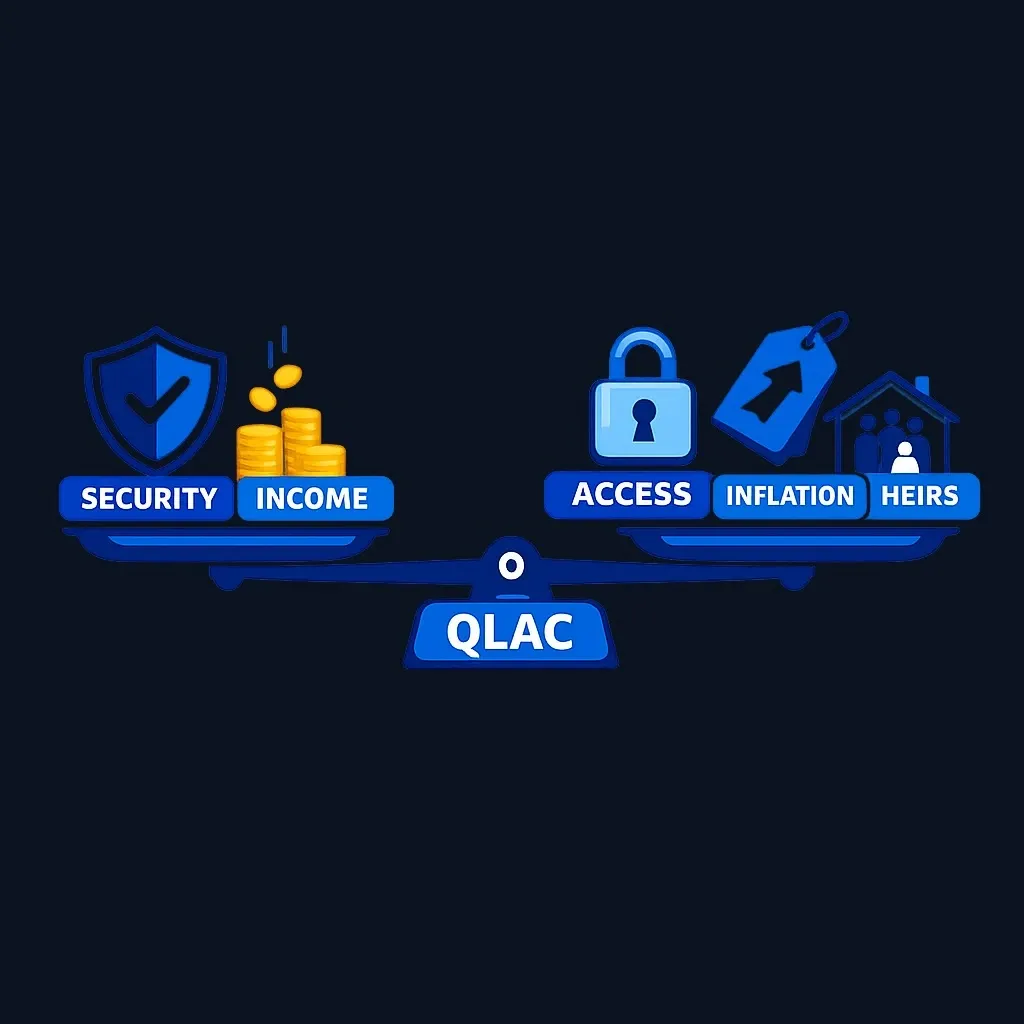
Common mistake: Treating a QLAC as a “savings bucket” you can tap at will. Because of the illiquid nature, avoid funding essential near-term needs with money used to buy a QLAC.
How QLACs Work
Funding
- QLACs are typically purchased with money from qualified retirement accounts. The buyer gives the insurer a premium in exchange for a promise of income beginning at a specific deferred age.
Deferred start date and payout schedule
- You choose when payments begin and the permitted lifetime-income and survivor structure. Some contracts allow survivor guarantees or joint life options.
Payment structure
- Payments may be fixed or include limited riders (such as cost-of-living adjustments). The insurer prices the payout based on the buyer’s age at the start date, the deferral length, and selected riders.
Death benefits and survivor options
- Permitted death-benefit and survivor provisions depend on the qualifying contract. Ask the insurer to identify them rather than assuming every feature of an ordinary annuity is available in a QLAC.
Practical example (qualitative)
- Scenario: A retiree expects to need steady income late in life but wants flexibility earlier. They could leave a portion of their account invested for near-term needs and buy a deferred income contract to begin at an advanced age. The contract converts a slice of retirement savings into predictable lifetime income while preserving liquid assets for unplanned costs.
Key considerations when evaluating contract terms
- Start age: A later start may produce a larger quoted payment for the same premium and benefits, but requires a longer wait. Compare actual quotes.
- Payout type: Survivor protection generally reduces the initial payment on otherwise comparable quotes. Check the actual single-life and joint-life amounts offered.
- Benefit options: Compare only options permitted in the qualifying contract, and check how each changes the income amount and payments after death.
- Insurer strength: The guarantee is as good as the issuing company. Review credit ratings and insurer reputation.
Caveat: Exact payout amounts, availability of riders, and contract rules vary by insurer and over time. Confirm specifics with the insurer and review contract disclosures.
Investment Limits and Regulations
Regulatory context
- The IRS has issued instructions that reference QLACs and notes changes to rules that affect them, including annual inflation adjustments to dollar limits on premiums and other related regulations. Those adjustments mean the permissible premium limits and related rules may change each year.
What to watch for
- The dollar premium limit applies across your QLAC contracts. The former 25% account-balance limit no longer applies to new purchases. Check the applicable year’s dollar limit before buying or adding premiums.
Practical action
- Before using retirement funds to buy a QLAC, confirm current limit rules with your plan administrator and read the IRS instructions or plan documentation that address QLAC-specific reporting and limits.
Considerations Before Purchasing a QLAC
Decision framework: six questions to answer
- What essential expenses do I need covered for life?
- If your goal is to secure rent/mortgage and basic living costs for life, a QLAC can target that predictable share.
- How much liquid emergency reserve do I have?
- Keep enough accessible savings for near-term shocks; do not fund those needs with money you would use to buy a QLAC.
- Do I have other sources of guaranteed income?
- Social Security, pensions, and other annuities interact with a QLAC’s role; think of how the QLAC complements these streams.
- What is my health and longevity outlook?
- QLACs are more valuable if you expect a longer lifespan; health issues and family history matter.
- How important is flexibility and legacy transfer?
- If leaving a larger estate is a priority, the reduced inheritance potential of a QLAC is a significant tradeoff.
- Am I comfortable with inflation risk?
- If inflation protection is essential, plan for the costs of that rider or for alternative hedges.
Sizing guidance (qualitative)
- Treat the QLAC premium as the price of longevity insurance: consider covering part of later-life essentials without sacrificing flexibility or emergency reserves.
Common mistakes and how to avoid them
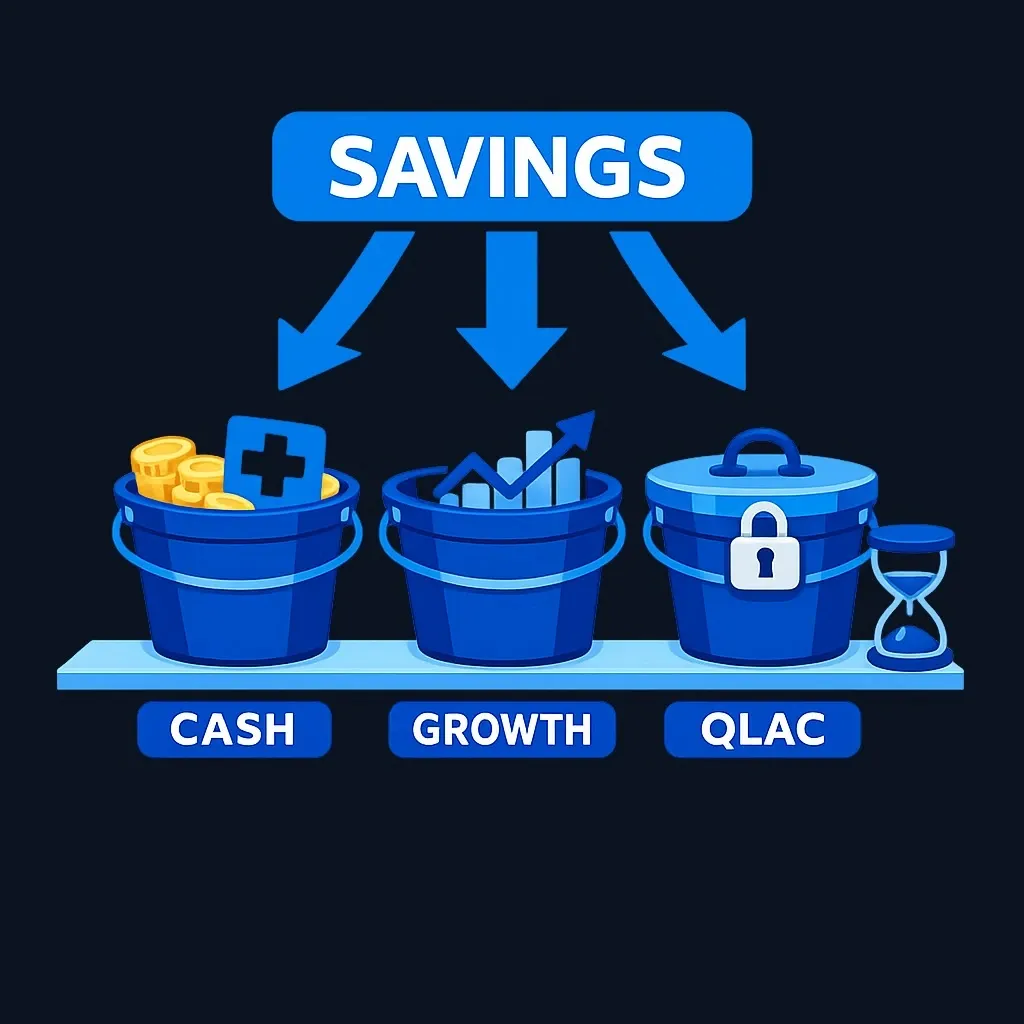
- Mistake: Funding a QLAC with all leftover retirement savings. Fix: Maintain distinct buckets for emergencies, growth, and longevity insurance.
- Mistake: Overlooking the insurer’s credit quality. Fix: Check ratings and company financials before committing.
- Mistake: Ignoring inflation exposure. Fix: Decide whether to pay for inflation protection or plan for supplemental inflation hedges.
What is a QLAC?
A QLAC is a deferred income contract designed to begin payments at a later age and provide lifetime income. It’s typically purchased with retirement account funds to create a scheduled income stream for the later years of retirement.
How does a QLAC affect required minimum distributions (RMDs)?
Before annuity payments begin, the qualifying contract’s value is excluded from the account balance used to calculate RMDs. Other applicable RMDs remain due, and future QLAC payments can be taxable. This is tax deferral, not an exemption from income tax.
Can I change my mind after purchasing a QLAC?
Review the initial cancellation period before buying. IRS rules permit a rescission right lasting no more than 90 days without disqualifying the contract; that does not promise every buyer a 90-day cancellation period. After the required beginning date, ordinary cash-surrender rights are prohibited. Treat the premium as a long-term commitment.
What happens to my QLAC if I die before payments start?
Death benefit provisions vary by contract. Some QLACs return a portion of premium or provide a beneficiary payout, while others may forfeit remaining value; check the specific contract terms and available rider options.
When reviewing survivor protection in an annuity quote, compare Single-life vs. joint-life annuity.
This guide covers U.S. rules. Finelo provides financial education, not personalized financial, investment, tax, or legal advice.
InvestingU.S. GuideFinancial Education
Practice investing with Finelo
Build practical investing skills with guided lessons, simulator practice, and structured challenges.
About the author
Finelo Team
The Finelo Team creates practical investing and trading education designed to help beginners learn faster with structured challenges, simulator practice, and bite-sized lessons.
Keep reading — Related articles
Investing
Tax-gain harvesting vs. tax-loss harvesting
Compare realizing investment gains with realizing losses, including holding periods, wash sales, offsets, and portfolio tradeoffs.
Finelo Team

Investing
Stable value fund vs. money market fund
Compare investment structure, contract protections, transfer restrictions, net yields, and access inside a retirement account.
Finelo Team

Investing
Single-life vs. joint-life annuity
Compare income for one lifetime with continued payments to a survivor, using equal premiums and matching guarantee terms.
Finelo Team