Last editorial review: September 28, 2026
Roth conversion before or after retirement?
Compare conversion years by total tax cost, Social Security taxation, Medicare premiums, withdrawal needs, and Roth timing rules.
11 min read
Practice investing with Finelo
Build practical investing skills with guided lessons, simulator practice, and structured challenges.
Want to learn more?
Build practical investing skills with guided lessons, simulator practice, and structured challenges.
Explore FineloExplore Finelo's 28-day challenges
Turn learning into a daily habit with guided challenge paths.
The useful question is which year lets you convert at an acceptable total tax cost. Retirement can create lower-income years, but it can also bring Social Security, required withdrawals, and other income. Your retirement date alone does not settle the decision.
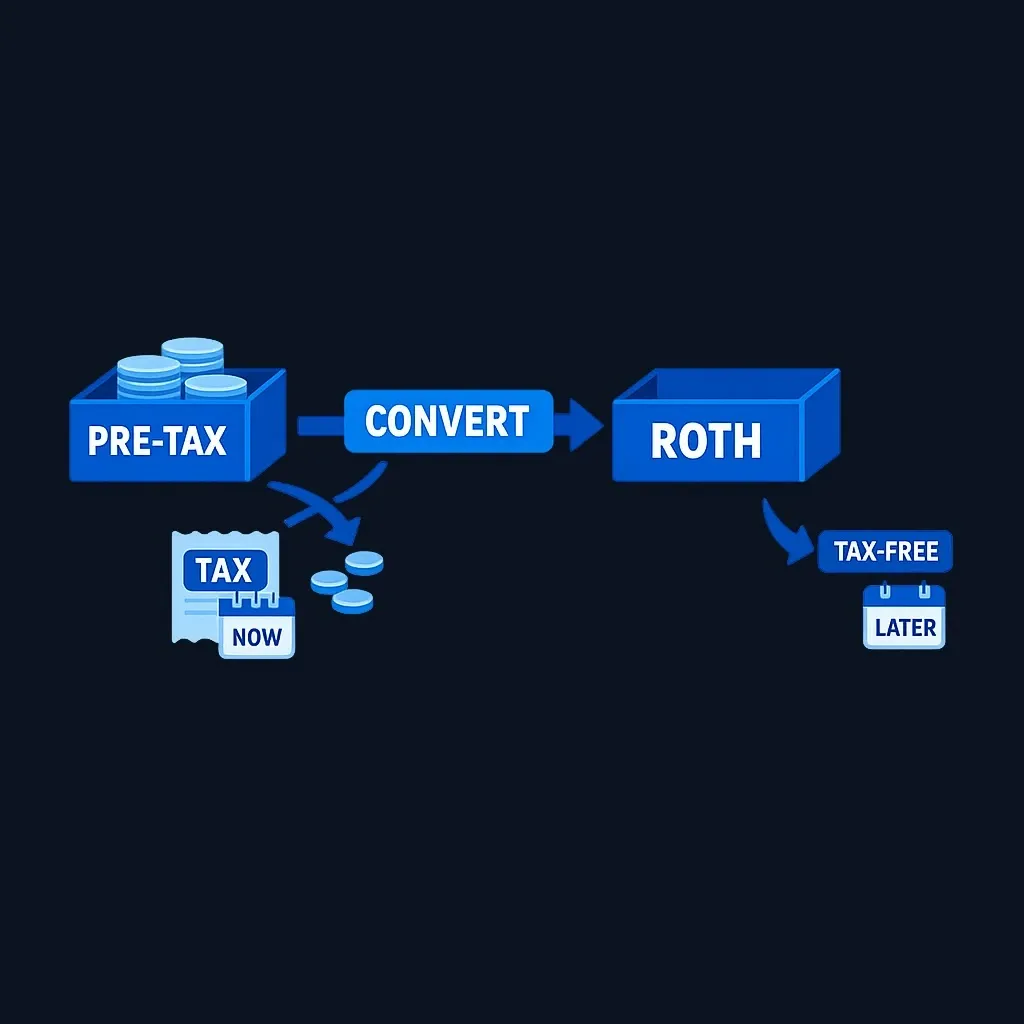
A Roth conversion moves eligible retirement money into a Roth account. The taxable portion is generally included in income for the conversion year.
Compare the years, not just the labels
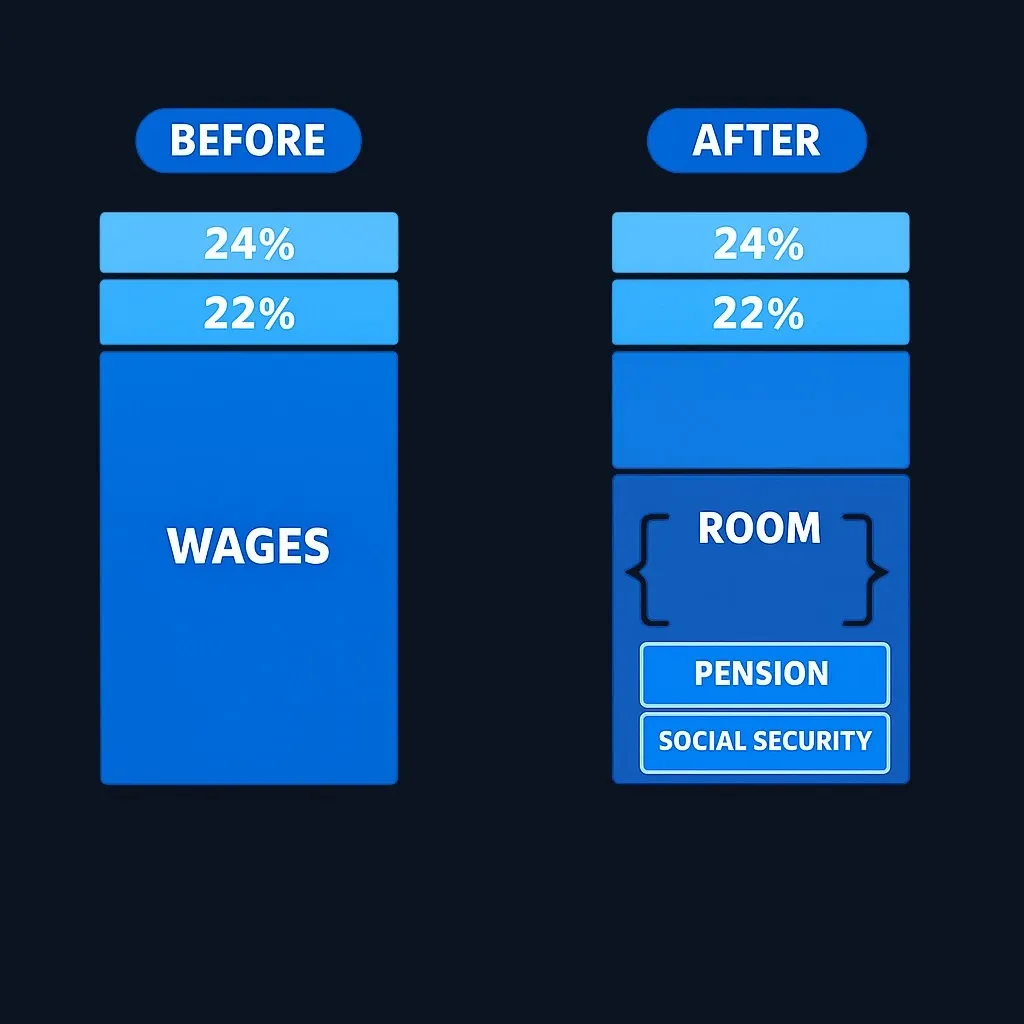
| Before retirement | After retirement |
|---|---|
| Earnings may already fill lower tax brackets | Employment income may fall |
| A temporary low-income year may create room | Pension, Social Security, and withdrawals can fill that room |
| Outside cash may be available for tax | Tax payments may compete with living expenses |
The IRS IRA guidance explains conversions and nondeductible contribution treatment. A conversion is not constrained by the annual contribution limit in the same way as a new IRA contribution. Existing pre-tax IRA balances can affect the taxable share under pro-rata rules.
Include costs outside the tax bracket
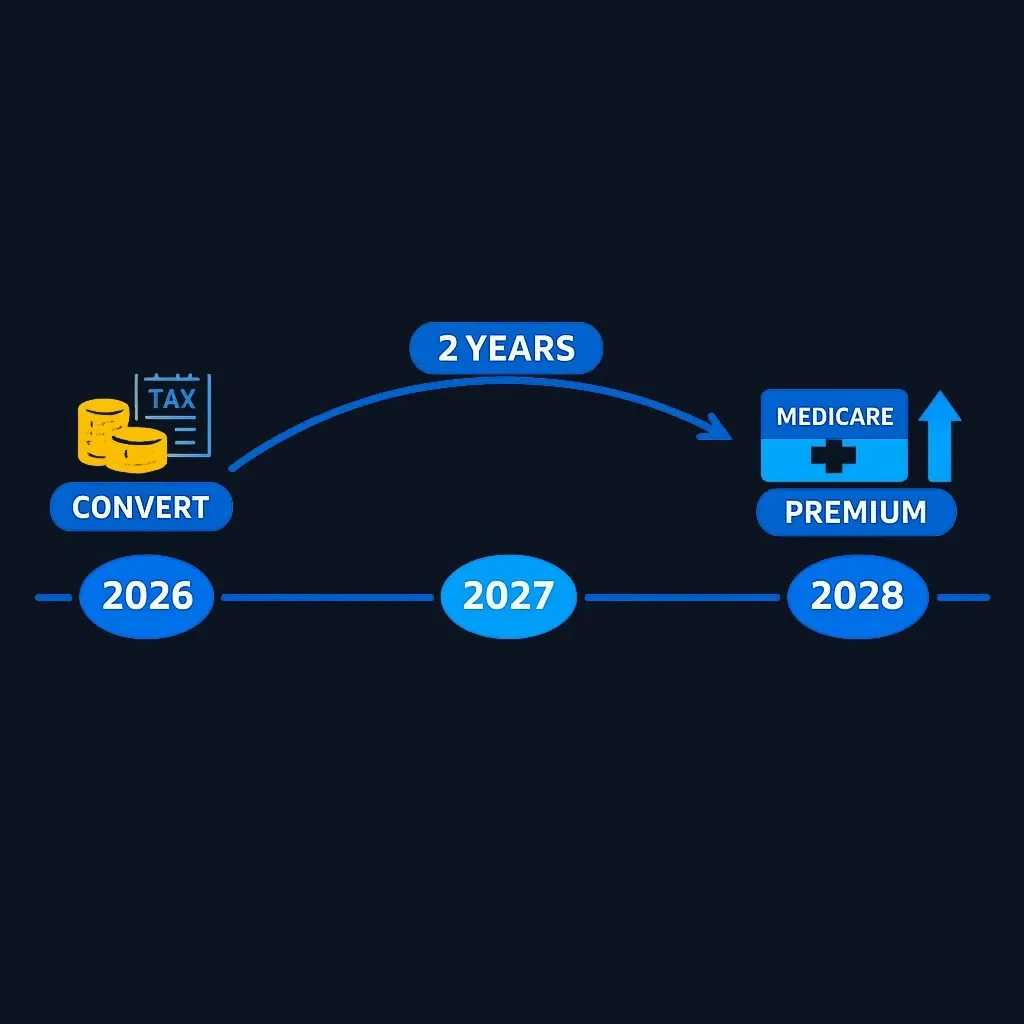
A taxable conversion can increase the part of Social Security subject to tax in the same tax year; IRS Publication 915 explains the benefits calculation. Medicare income-related premiums usually look further back: SSA’s 2026 premium guidance generally uses 2024 tax-return income.
That two-year lookback means a taxable conversion in 2026 can affect 2028 Medicare premiums under the usual process. The 2028 thresholds are a future-year variable, not a figure to guess today. Compare the conversion-year tax and the later premium exposure separately.
If required minimum distributions apply, the required amount cannot be converted. IRS Publication 590-B describes two distinct five-year tests. Qualified Roth IRA earnings withdrawals generally require the five-tax-year period beginning with the first contribution year plus age 59½ or another qualifying condition. Separately, each conversion has its own five-tax-year period relevant to the additional tax on early withdrawals of taxable converted amounts. Exceptions, including age 59½, can matter for that second test. Waiting five years after one conversion does not automatically make every withdrawal tax-free.
Test a partial conversion
A hypothetical retiree might compare no conversion with several smaller conversion amounts rather than converting an entire IRA at once. Each scenario should include the tax bill, the source of cash to pay it, and the effect on future withdrawals.
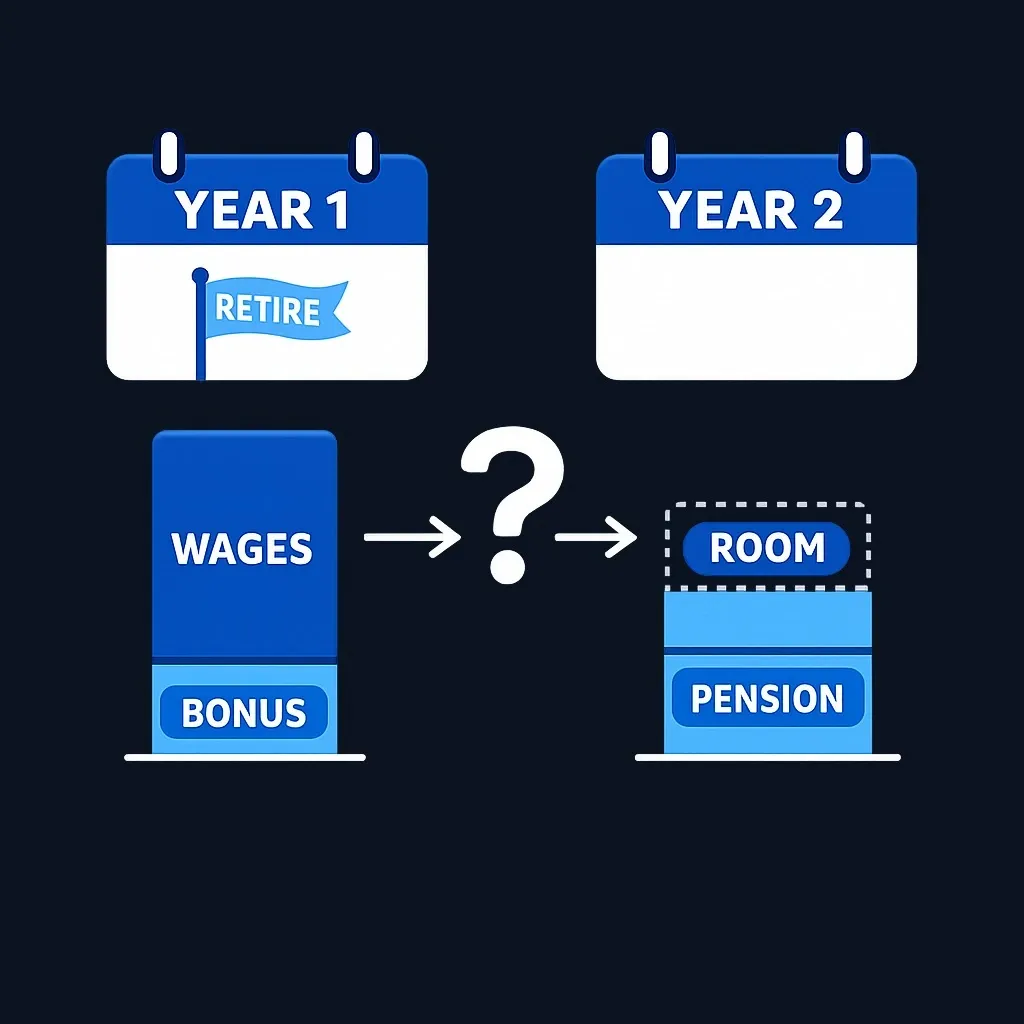
For example, someone retiring halfway through the year may still have substantial wages on that year’s return. Waiting until the next full calendar year could reduce taxable income before conversion, but a pension starting then could offset the reduction. Put both years on paper before assuming “after retirement” means a lower bracket.
Post-2017 Roth conversions cannot be undone through recharacterization. That makes estimates and timing important.
Gather expected income, deductions, account tax basis, and future withdrawal needs. Model the years before acting, then confirm processing deadlines with the custodian. A conversion is useful only if its expected long-term benefit justifies the current cost and reduced flexibility.
Compare calendar years rather than the retirement label
Retirement changes income, but it does not guarantee a low-tax year. The year you stop work might include salary, unused-leave payments, a bonus, a pension start, or a large capital gain. A later year might include Social Security and required distributions. Put the expected sources on a year-by-year timeline before selecting a conversion date.
A useful comparison starts with a no-conversion projection. Then add a proposed conversion amount and calculate the incremental tax and income-related effects. The relevant cost is the change caused by those additional dollars, not simply the tax bracket printed at the top of a planning worksheet.
Keep the investment comparison fair
Tax-deferred money can also grow before it is withdrawn. More years of Roth growth are not, by themselves, proof that converting earlier creates more after-tax wealth. Use the same investment-return assumptions and compare what happens to money used to pay the conversion tax outside the account as well.
For example, if paying the tax consumes a large cash reserve, include the loss of that liquidity in the decision. If the tax must come from retirement assets, examine how much actually reaches the Roth and whether another distribution consequence applies. A conversion that appears attractive on a future-balance chart can still be a poor fit for current cash needs.
Practice investing with Finelo
Build practical investing skills with guided lessons, simulator practice, and structured challenges.
Make partial conversions measurable
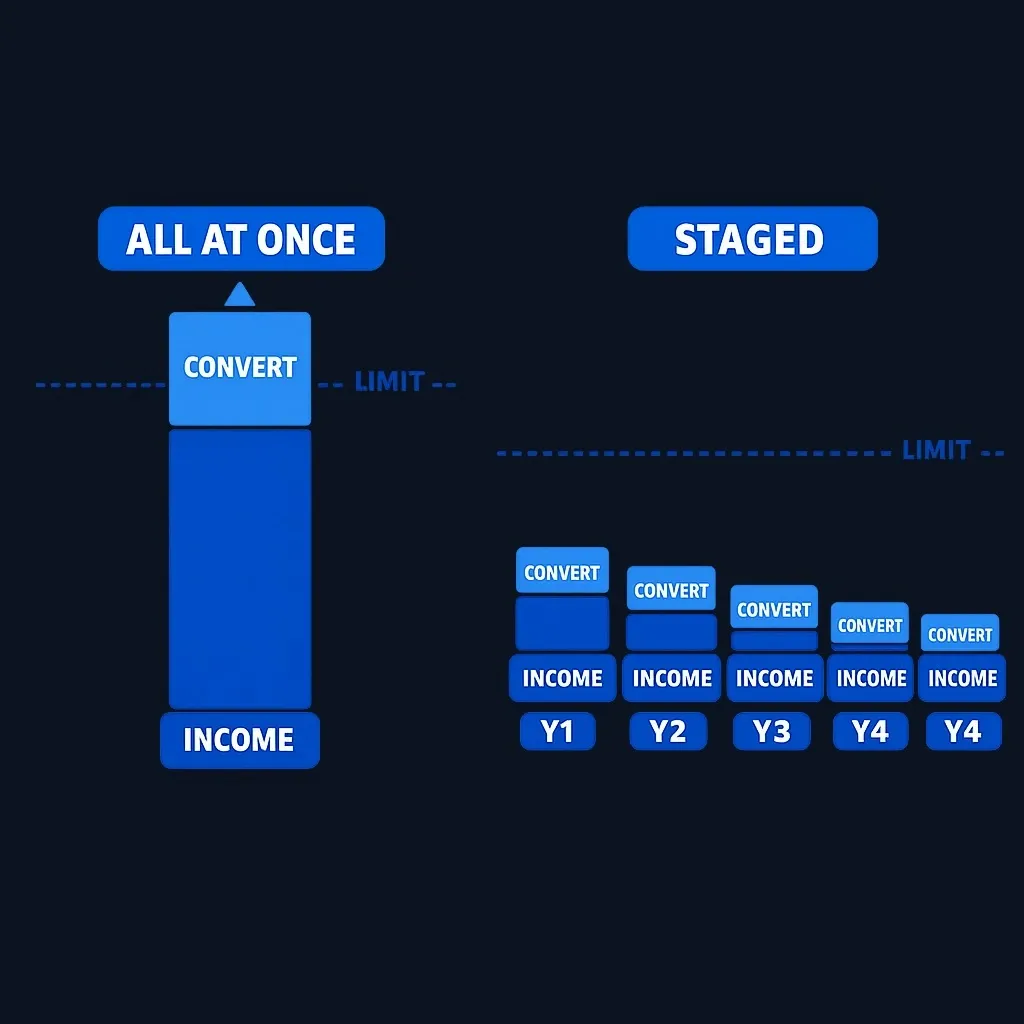
There is no requirement to convert the whole account to evaluate the strategy. Model a smaller amount, then check whether another increment reaches a tax or benefit threshold. Revisit the projection when actual income becomes clearer, and leave time for custodian processing before the relevant year-end deadline.
Document the account sources, any nondeductible basis, conversion confirmations, and tax-payment plan. The decision should be traceable to a set of assumptions you can review later. That is more useful than a rule that all conversions should happen either before or after retirement.
What is a Roth Conversion?
A Roth conversion is the taxable transfer of retirement assets from a pre-tax account into a Roth IRA. Key mechanics and tax effects:
- Taxable event: The portion of the conversion representing pre-tax contributions and earnings is usually taxed as ordinary income in the year of the conversion. A large conversion can raise your taxable income and push part of it into a higher tax bracket.
- Timing flexibility: Conversions can be done while you are working or after you retire; important timing items include RMD rules, benefit start dates, and other life events.
- Long-term effect: After a conversion, qualified distributions from the Roth are tax-free, and Roth IRAs generally do not require the original owner to take lifetime RMDs, which may reduce future mandatory taxable withdrawals.
Core tradeoff: you pay taxes now in exchange for tax-free withdrawals later. The right choice depends on expected future tax rates, how long investments will grow inside the Roth, and interactions with RMDs and means-tested benefits. Concrete decision point: if you expect your marginal tax rate to be higher in retirement, converting now often makes sense. If you expect materially lower rates in retirement, delaying conversions can be cheaper.
Key Considerations for Timing Your Conversion
Make decisions by weighing several interacting factors; no single item usually decides the timing.
Factors to evaluate
- Current versus expected future marginal tax rate. The central comparison when deciding to convert.
- Bracket effects and smoothing — large conversions may push you into higher tax brackets. Splitting conversions across years can control that effect.
- RMD interactions — if RMDs apply, satisfy the RMD separately before converting eligible remaining money; the RMD itself cannot be converted.
- Time horizon. Time matters, but more years alone do not establish a conversion advantage; compare tax rates, the tax-payment, and equivalent investment assumptions.
- Income-sensitive program effects. Conversion income can change Medicare premiums, Social Security taxation, and other means-tested costs; model those impacts.
- Estate priorities. Roth balances can simplify beneficiary tax planning because qualified distributions to heirs are typically tax-free.
Build a comparison using actual amounts for each candidate year:
- Estimate income and deductions before conversion.
- Add the proposed taxable conversion and calculate the extra tax.
- Check Social Security taxation and later Medicare premium exposure.
- Identify how the tax will be paid and what cash reserve remains.
- Compare future withdrawals using the same investment assumptions.
These factors should not receive equal numerical scores. One large tax or cash-flow effect can outweigh several smaller preferences.
Compact comparison table
| Decision factor | Convert before retirement | Convert after retirement |
|---|---|---|
| Tax comparison | Model the incremental cost in the actual working year | Model pensions, benefits, RMDs, and other income in each retirement year |
| Investment assumptions | Use the same return assumptions and account for money used to pay tax | Compare equivalent after-tax outcomes, not just years in the Roth |
| RMD interaction | Reduces future RMD base if converted before RMDs begin | Must take RMD first in conversion year |
| Bracket management | May need staging to avoid spikes | Can use low-income years to convert at lower cost |
| Flexibility | Tax diversification sooner | More information before locking in taxes |
Use the table to organize the comparison, then calculate the tax and cash-flow effects. The table is not a prediction that either timing choice will win.
Tax Implications of Roth Conversions
Taxes determine the economic outcome of a conversion. Understand these core implications:
- Ordinary income now: The taxable portion of a conversion is generally treated as ordinary income in the conversion year, increasing your reported taxable income and potentially moving you into a higher tax bracket.
- Bracket management: Some taxpayers split conversions across multiple years to avoid large spikes in taxable income and to stay within desired brackets.
- RMD rule: If you are required to take an RMD, satisfy the RMD separately and convert only eligible remaining money; the RMD itself cannot be converted.
- Tax diversification benefit: A converted Roth provides tax-free access to later qualified distributions and adds flexibility to manage taxable income across retirement years.
- Modeling recommendation: Build year-by-year tax scenarios comparing staged conversions now versus conversions after retirement. Track taxable income, conversion taxes due, and projected taxes in retirement to compare cumulative tax outcomes.
Practical modeling note: run scenarios that show how a conversion changes marginal tax rate, overall tax paid across the retirement phase, and impacts on income-sensitive programs. The numerical outcome depends on your exact income path and filing status.
Strategies for Managing Tax Implications
Practical strategies help limit tax friction and improve predictability:
- Partial, multi-year conversions: Spread a planned conversion across several years so each year’s taxable income stays within preferred tax brackets.
- Target low-income windows: Schedule conversions in years with unusually low taxable income—between jobs, early retirement years before benefits start, or after one-time losses—to reduce the marginal tax on the conversion.
- Coordinate with RMD timing: If you will be subject to RMDs, satisfy the RMD separately before converting eligible remaining funds. Do not include the RMD in the conversion.
- Use outside funds to pay conversion taxes: Paying conversion taxes from non-retirement assets leaves retirement balances intact to grow tax-free inside the Roth. If you must use retirement funds, model the lost growth and any penalties carefully.
- Withholding and estimated tax planning: Anticipate the conversion tax and adjust withholding or estimated tax payments during the conversion year so you avoid underpayment penalties.
Implementation checklist
- Decide target total to convert and the time window for staging conversions.
- Run a year-by-year tax projection with and without conversions.
- Confirm you can pay the conversion tax from non-retirement assets or budget for withholding/estimated payments.
- Revisit the plan annually and update it based on changes in income, rates, or benefit start dates.
Common Mistakes to Avoid
Avoid these frequent pitfalls when planning conversions:
- Ignoring bracket effects: Converting a large sum in one year can push income into higher brackets and increase total taxes. Stage conversions to manage bracket impacts.
- Treating RMDs as convertible: If RMDs apply, you must take the RMD for the year; you cannot convert an RMD to a Roth to skip the distribution requirement.
- Failing to plan for program interactions: A conversion can raise income and affect Medicare premiums, taxation of Social Security, and other income-tested benefits. Model those effects before executing large conversions.
- Poor tax payment planning: Not arranging to pay the conversion taxes can cause cash-flow strain or force withdrawals that reduce retirement balances. Arrange withholding or estimated tax payments in the conversion year.
- Skipping professional review for complex cases: Roth decisions interact with estate plans, trusts, and state tax rules; consult a tax pro when those elements matter.
One final operational caution from IRS guidance: treat timing and compliance carefully when planning conversions, and account for life events that change the retirement tax picture.
What is a Roth conversion?
A Roth conversion moves assets from a pre-tax retirement account into a Roth IRA. The taxable portion of the conversion is generally included as ordinary income for the conversion year; later qualified Roth withdrawals are tax-free.
Will I owe taxes on my conversion?
You generally owe income tax on pre-tax amounts converted. The taxable portion of the conversion is typically treated as ordinary income in the year you convert, which can raise your reported taxable income and potentially move you into a higher tax bracket.
Can I convert amounts in a year when I must take RMDs?
Yes, but satisfy the RMD separately and convert only eligible remaining funds. An RMD cannot itself be converted or rolled over.
How do conversions affect tax brackets and planning?
Conversions count as taxable income in the conversion year and can push you into higher marginal tax brackets. Many people spread conversions over several years to avoid large bracket jumps and to take advantage of lower-income years.
Practical next steps
- Use the comparison in "Key Considerations" to identify the amounts and assumptions to model.
- Run a year-by-year tax projection comparing staged conversions now versus conversions after retirement.
- Confirm the tax-payment method and custodian processing deadline before authorizing the conversion.
One natural next step: review your tax projection with a CPA or qualified financial planner before executing large conversions.
Before making the transaction, distinguish Roth IRA recharacterization vs. conversion.
This guide covers U.S. rules. Finelo provides financial education, not personalized financial, investment, tax, or legal advice.
InvestingU.S. GuideFinancial Education
Practice investing with Finelo
Build practical investing skills with guided lessons, simulator practice, and structured challenges.
About the author
Finelo Team
The Finelo Team creates practical investing and trading education designed to help beginners learn faster with structured challenges, simulator practice, and bite-sized lessons.
Keep reading — Related articles
Investing
Tax-gain harvesting vs. tax-loss harvesting
Compare realizing investment gains with realizing losses, including holding periods, wash sales, offsets, and portfolio tradeoffs.
Finelo Team

Investing
Stable value fund vs. money market fund
Compare investment structure, contract protections, transfer restrictions, net yields, and access inside a retirement account.
Finelo Team
Investing
Single-life vs. joint-life annuity
Compare income for one lifetime with continued payments to a survivor, using equal premiums and matching guarantee terms.
Finelo Team