Last editorial review: September 28, 2026
Is buying back pension years worth it?

Compare the buyback price with the actual pension increase, survivor benefits, tax treatment, and alternatives for the money.
10 min read
Practice investing with Finelo
Build practical investing skills with guided lessons, simulator practice, and structured challenges.
Want to learn more?
Build practical investing skills with guided lessons, simulator practice, and structured challenges.
Explore FineloExplore Finelo's 28-day challenges
Turn learning into a daily habit with guided challenge paths.
Buying service credit can increase a pension or restore benefits from earlier work, but the result depends on your pension plan. A redeposit of withdrawn contributions is not the same transaction as purchasing other eligible service.
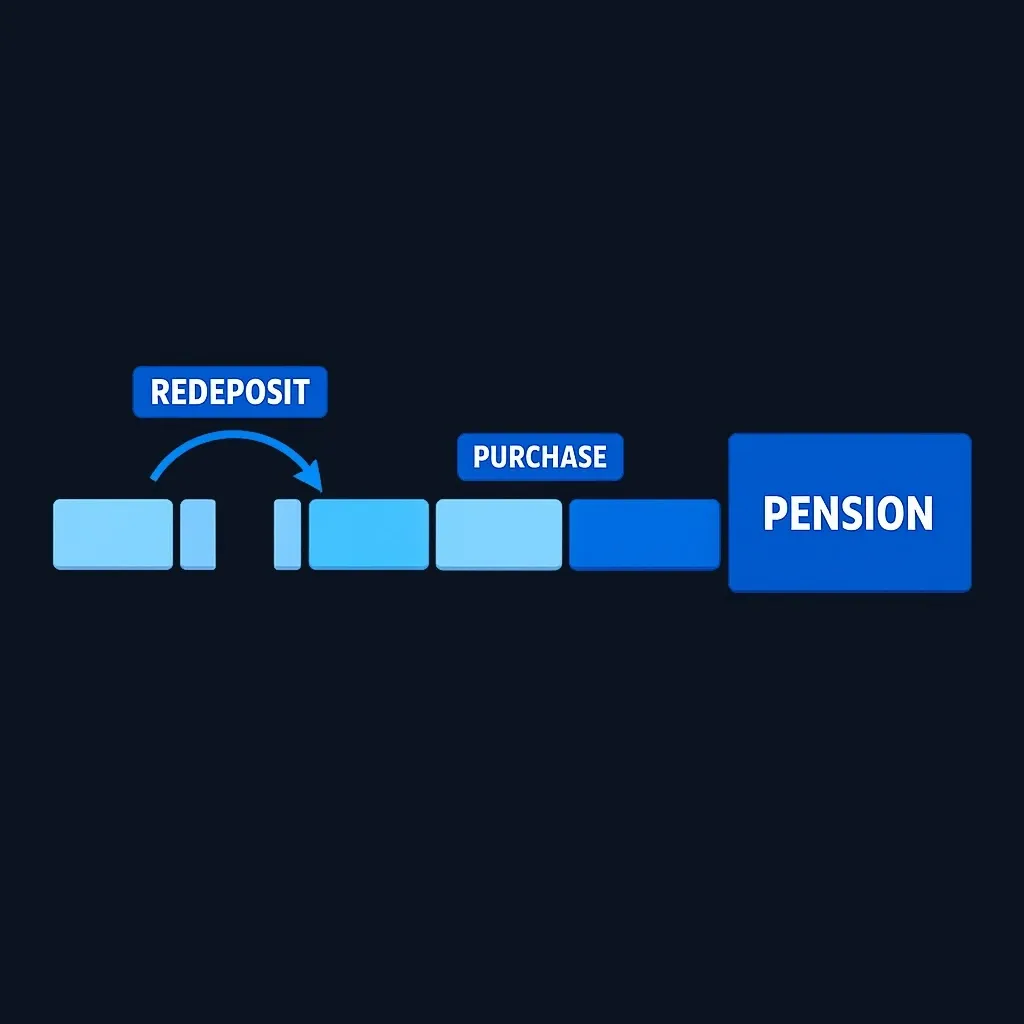
Ask the plan for a personalized before-and-after estimate before moving retirement money or using savings.
What to compare
| Question | Why it matters |
|---|---|
| What service is eligible? | Plans restrict which periods can be purchased |
| What does it change? | Credit may affect the benefit, retirement eligibility, or both |
| What is the full cost? | Interest, payment method, and deadlines can matter |
| What happens to survivors? | A higher pension may interact with the payout election |
| Can the decision be reversed? | Refund and cancellation rights are plan-specific |
The CalPERS redeposit explanation is an example for that system. Its rules should not be treated as rules for another public or private pension.
Use a simple break-even carefully
Suppose a plan quotes $24,000 to increase a pension by $200 a month. Dividing the cost by $2,400 a year gives a simple ten-year break-even after payments begin.
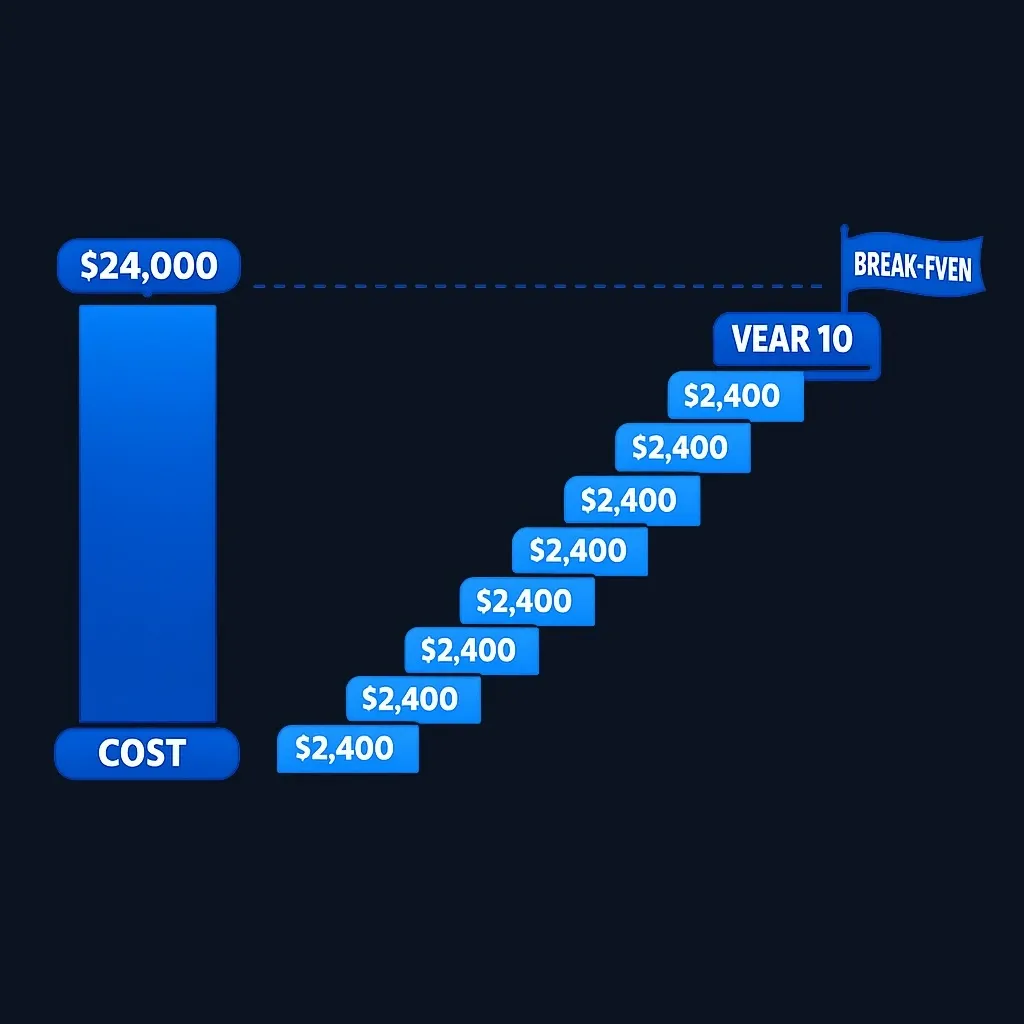
That hypothetical calculation ignores taxes, the time until retirement, cost-of-living adjustments, survivor payments, investment alternatives, and the value of retaining access to the cash. It is a starting point, not a verdict.
Confirm the less obvious conditions
Will you remain employed long enough to qualify for the projected benefit? Does purchased service count toward vesting or only the benefit formula? Is the estimate based on your expected retirement date and salary? What happens if you leave, become disabled, or die sooner?
Compare the purchase with keeping the money available or saving through another retirement account. If using a rollover, have both administrators confirm eligibility and processing. The plan's written estimate and governing documents should drive the decision; a general article cannot price your buyback.
Ask for estimates with and without the purchase
A service-credit quote should show more than a price. Request projected benefits at the same retirement date with and without the purchase, using the same salary and survivor-election assumptions. Also ask whether the added credit affects eligibility for retirement or only the amount paid after you qualify. Those are different benefits.
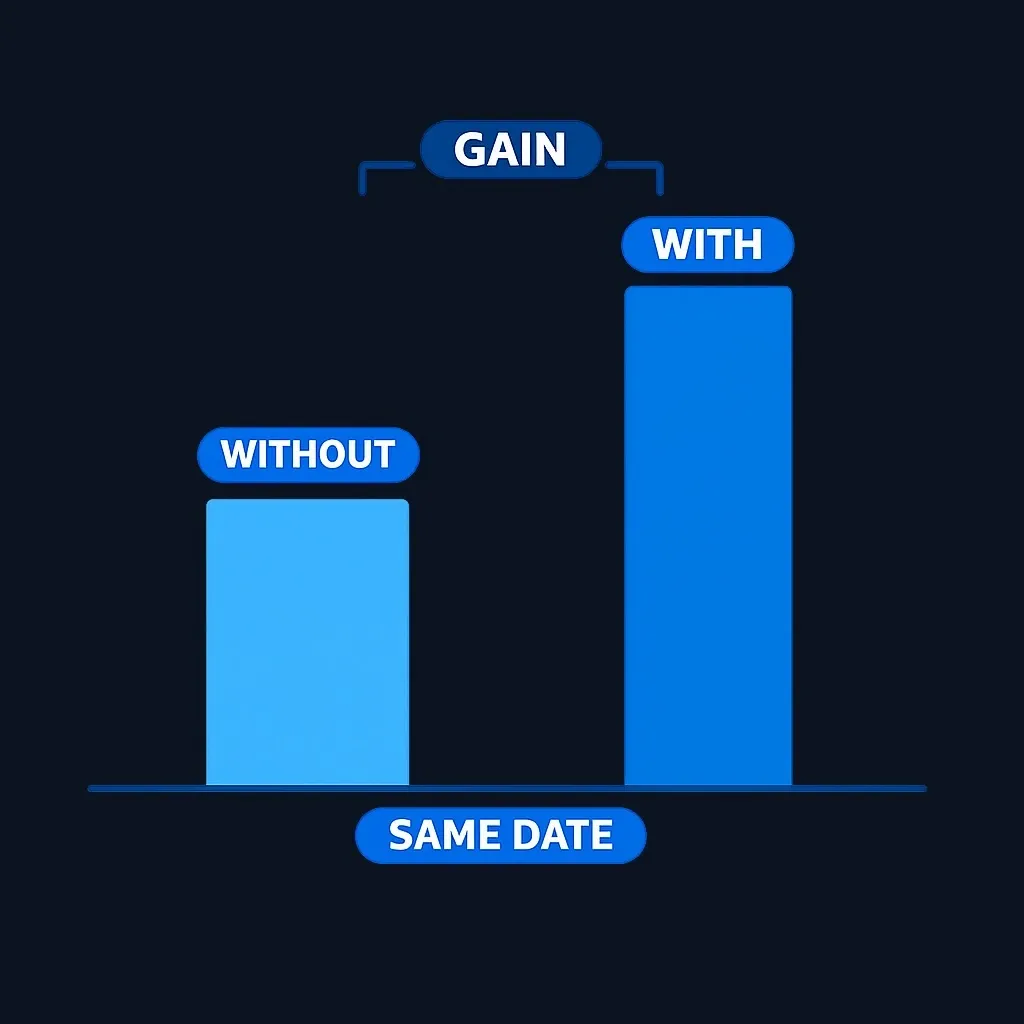
A simple hypothetical illustrates the first calculation. If a purchase costs $20,000 and raises the annual pension by $2,000, the undiscounted cash break-even is ten years of those additional payments. That does not establish whether the purchase is worthwhile. Taxes, the start date, cost-of-living adjustments, survivor benefits, alternative uses of the money, and the possibility of leaving the plan can change the result.
Check the quote's expiration date. A delay, salary change, or different retirement date may change the price or benefit. Preserve the written estimate and ask which assumptions are fixed and which can change before the purchase is completed.
Compare the purchase with your need for accessible savings. More future pension income can be valuable, but it cannot necessarily pay a bill before retirement. The decision should fit both the retirement-income plan and the household's current reserves.
Who Should Consider Buying Back Pension Years?
If you match one or more of the bullets below, a buyback deserves serious consideration:
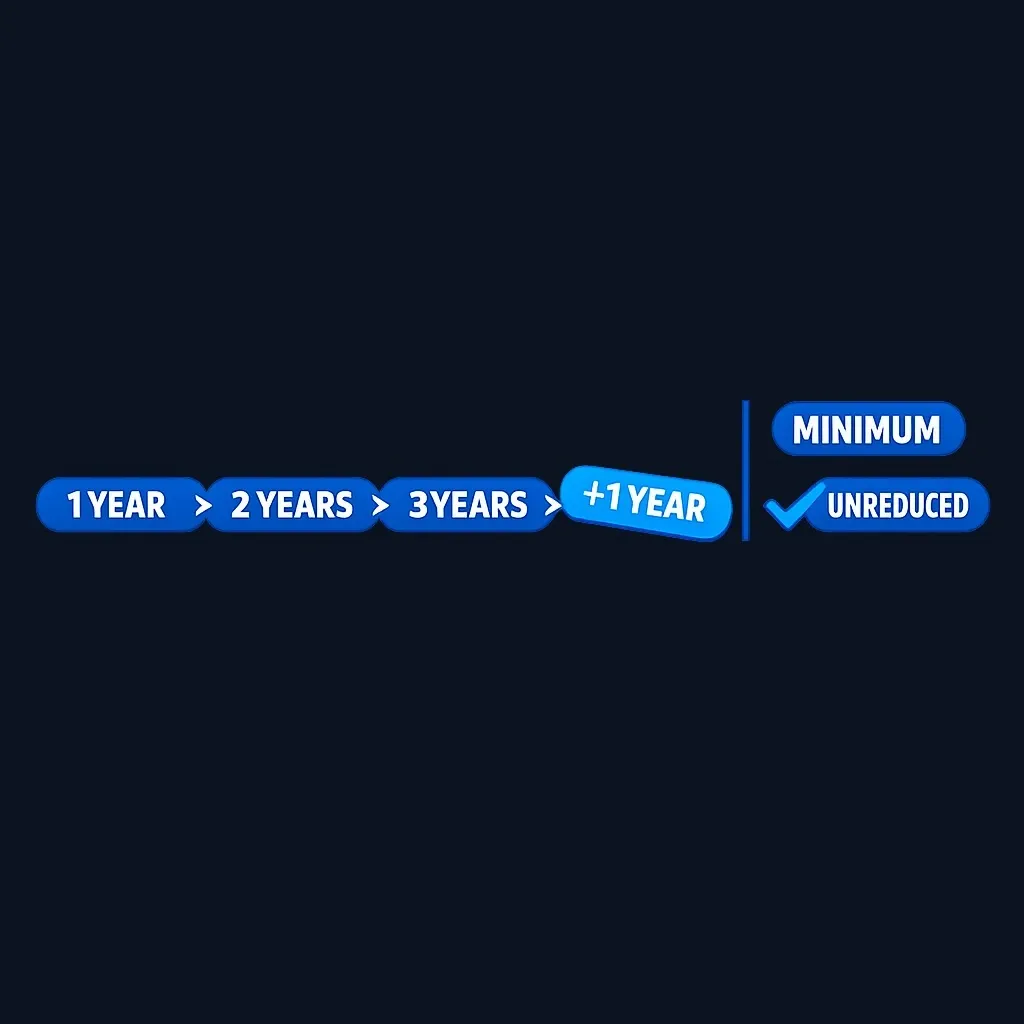
- You are short of the plan’s minimum service to qualify for an unreduced pension or particular survivor benefits.
- Your pension formula is strongly linked to years of service (for example, final-salary or career-average plans where each year materially raises guaranteed income).
- You previously cashed in contributions and now expect to return to pensionable employment or to remain in the plan long enough to benefit.
- You prefer income under the plan’s benefit and cost-of-living provisions in retirement over taking equivalent amounts into personal savings.
- You have stable cash flow and can either fund the buyback or accept payroll deductions without compromising emergency savings.
Practical takeaway: ask your pension administrator how an extra year of service changes your projected pension. If the marginal increase to guaranteed retirement income meaningfully improves your plan (for example, allows earlier retirement or preserves survivor benefits), a buyback may be worth the cost.
Practice investing with Finelo
Build practical investing skills with guided lessons, simulator practice, and structured challenges.
The Financial Implications of Buying Back Pension Years
Key factors that determine value
- Incremental pension increase: how much extra annual pension each bought year will add under your plan’s formula.
- Cost and payment options: lump-sum purchase vs payroll deductions, and whether interest or actuarial adjustments apply.
- Timing and duration: distinguish the wait before pension payments start from the number of years you may receive the increase. A longer payment period improves simple cost recovery, while a longer wait delays it.
- Opportunity cost: money used to buy back years cannot be invested elsewhere (for example, in other retirement accounts, savings, or debt reduction).
- Plan features: indexation, survivor benefits, early retirement penalties and revaluation rules all change the effective value of bought years.
How to run a qualitative breakeven check
- Get an official price quote from your pension administrator for the buyback and the explicit change in projected pension (ask for both gross and net figures where provided).
- Ask how the quote changes with different payment methods and whether the figure is guaranteed or re-costed after a time.
- Compare the quoted annual pension increase against what you could reasonably expect by investing the same money privately (taking into account risk, fees and lack of guaranteed income).
Decision framework (simple)
- If the buyback secures eligibility or restores lost survivor benefits → lean toward buying back.
- If the buyback only modestly increases pension and you have more flexible alternatives (accessible savings or investments) → compare after-tax outcomes and liquidity needs.
- If you expect to leave employment → ask what benefit you retain, when it becomes payable, and whether the purchase will be completed. Do not assume that changing jobs requires transferring the benefit.
Checklist table to clarify the choice
| Consideration | Why it matters | What to ask your pension admin |
|---|---|---|
| Incremental annual pension | Determines cashflow benefit | “How much will my annual pension increase per bought year?” |
| Cost and payment options | Affects affordability and tax timing | “What is the lump-sum price? Can I pay by payroll? Any interest?” |
| Income start date and duration | Both the waiting period and years of payments affect value | “When would the increase start, and when would it recover the purchase cost?” |
| Survivors/early retirement rules | May change non-financial value | “Does buying back years improve survivor benefits or early-retirement terms?” |
| Tax treatment | Alters effective cost | “Is there tax relief on payments and how is it applied?” |
| Leaving employment | Retained benefits and transfer rules are plan-specific | “What benefit will I retain if I leave, and when can I receive it?” |
Comparing buyback vs other retirement saving
- Buyback: may increase promised plan income or improve eligibility and survivor benefits, depending on the specific purchase and plan rules.
- Other retirement savings: offer flexibility and control, but may not provide comparable lifetime income or cost-of-living provisions. Which approach fits depends on how much you value guaranteed income, how long you expect to keep the plan membership, and your alternatives for tax-advantaged saving.
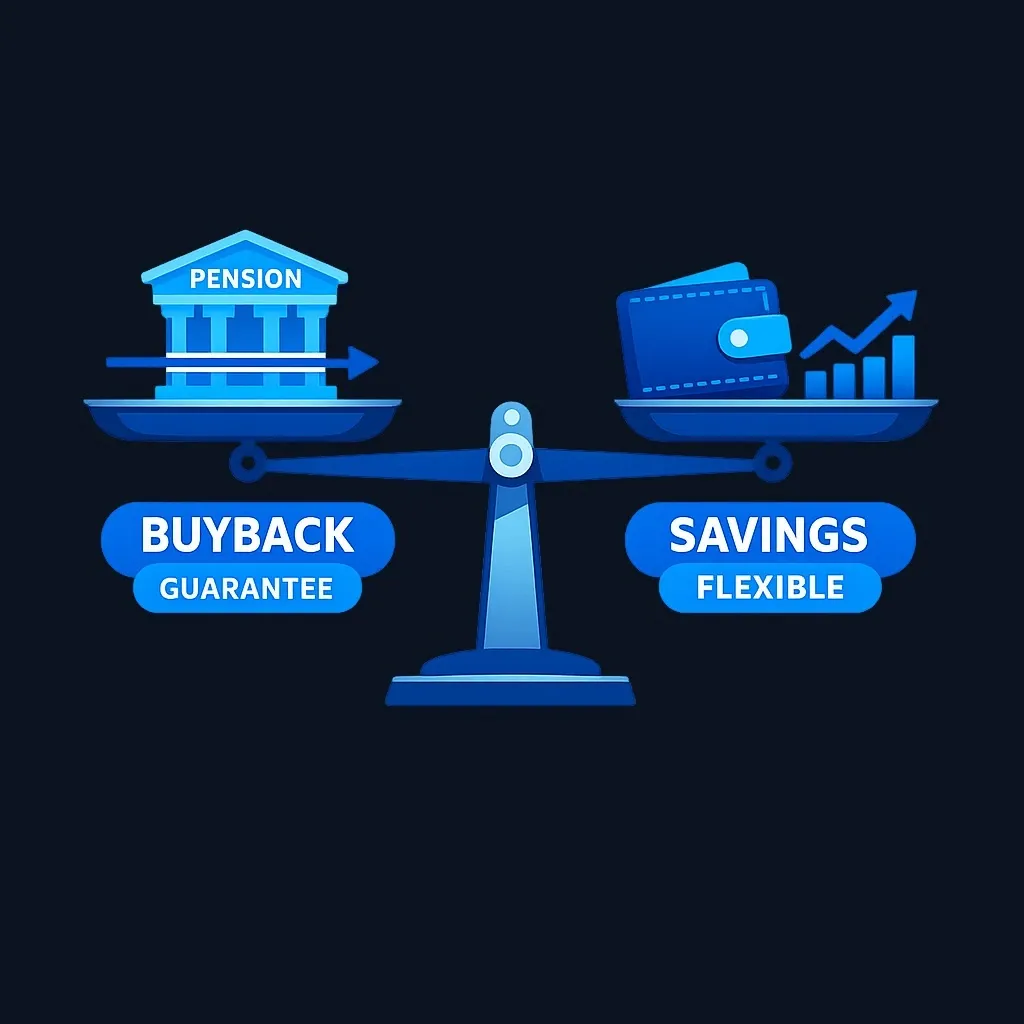
Practical tip: always obtain a formal, written quote showing the effect on your projected pension. Then compare that to realistic projections for alternative investments or additional contributions to personal retirement accounts.
Confirm how the purchase is funded
Ask which payment methods the plan accepts and how each is treated for tax purposes. A payroll arrangement, personal after-tax payment, or permitted transfer from another retirement account can have different consequences. Do not assume that paying the quoted price automatically creates a tax deduction.
Have the plan identify any deadline, interest charge, installment option, and effect of leaving employment before the purchase is complete. Compare the cash cost and benefit under the same payment method. If a retirement-account transfer is available, confirm that it is eligible and properly processed rather than taking a personal withdrawal and hoping to replace it later.
Eligibility Criteria for Buying Back Pension Years
Eligibility rules vary by plan. Common conditions to check with your administrator:
- You must be a current (or in some cases former) member with retained entitlement; some plans only allow buybacks while you remain a member.
- If you previously took a refund of contributions, certain public plans permit redepositing to restore service credit; for example, CalPERS permits eligible members to restore withdrawn credit through a redeposit. Returning active members and certain other eligible groups can qualify; taking a refund alone does not establish eligibility.
- Some plans exclude particular types of past service (temporary contracts, very early service) or limit buybacks to a fixed historical window.
- Plans may set deadlines or re-costing rules for a quoted price; ask whether a quote is time-limited.
Steps to confirm eligibility
- Contact your pension administrator or HR and request a formal buyback policy and a personalized quote.
- Ask specifically whether previously refunded contributions are eligible for redeposit and what documentation is needed.
- If you have worked under more than one pension system, ask whether any reciprocal or transfer arrangement applies, and compare that with retaining separate benefits.
Common Pitfalls and Risks
Buying back pension years can be beneficial, but common mistakes reduce value or create regret later.
Top pitfalls
- Assuming buyback is always cheaper than private saving. The opportunity cost and tax effects can make private saving preferable for some people.
- Not confirming the quote’s validity period or re-costing rules. Quotes that re-cost can become more expensive if delayed.
- Ignoring the effect of leaving employment. Ask which purchased benefits you retain and whether incomplete payments change the result. Recognition by another system is a separate question.
- Overlooking impact on other benefits. In some plans, service length affects survivor benefits or eligibility for early retirement. Verify the particular effect instead of assuming every benefit changes.
- Using emergency funds or taking high-interest borrowing to pay for a buyback. Loss of liquidity is a real risk.
How to avoid these mistakes
- Get all promises in writing and request example illustrations of benefit changes.
- Keep an emergency fund separate. Avoid using high-cost debt to fund buybacks.
- Ask how your spouse or nominated survivors are affected by the buyback.
- If unsure, compare the buyback’s projected impact to conservative private investment projections and to increasing regular pensionable contributions.
Hypothetical pension decisions
Below are three hypothetical scenarios to show how outcomes can differ. These are hypothetical examples for teaching purposes only.
Scenario A — Restoring refunded service
- Background: Former member who took a refund years ago but later returned to pensionable employment.
- Outcome: Buying back the refunded service restored eligibility for a spouse’s survivor pension, which was the main driver for proceeding. The decision prioritized security for dependants over maximizing flexible savings.
Scenario B — Nearing eligibility threshold
- Background: An employee with one year short of the plan’s minimum service for an unreduced pension.
- Outcome: A buyback that bridges the gap allowed earlier unreduced retirement and avoided an early-retirement reduction under that hypothetical plan’s rules. The individual judged the guaranteed annual income increase worth the cost given their planned retirement age.
Scenario C — Flexible saver opts out
- Background: A mid-career member with significant other retirement account contributions and high liquidity needs.
- Outcome: They kept money needed soon in accessible savings and used a separate retirement account for long-term investing. Retirement accounts have their own withdrawal and tax restrictions, so extra contributions alone would not solve an immediate cash-access need.
How to use these stories
- Match your facts to a scenario: need for survivor benefits, reaching eligibility, or preference for flexibility.
- If your situation is a mix, seek a formal quote and compare net outcomes before deciding.
Before choosing pension benefits, also compare Pension survivor benefit vs. life insurance.
This guide covers U.S. rules. Finelo provides financial education, not personalized financial, investment, tax, or legal advice.
InvestingU.S. GuideFinancial Education
Practice investing with Finelo
Build practical investing skills with guided lessons, simulator practice, and structured challenges.
About the author
Finelo Team
The Finelo Team creates practical investing and trading education designed to help beginners learn faster with structured challenges, simulator practice, and bite-sized lessons.
Keep reading — Related articles
Investing
Tax-gain harvesting vs. tax-loss harvesting
Compare realizing investment gains with realizing losses, including holding periods, wash sales, offsets, and portfolio tradeoffs.
Finelo Team

Investing
Stable value fund vs. money market fund
Compare investment structure, contract protections, transfer restrictions, net yields, and access inside a retirement account.
Finelo Team
Investing
Single-life vs. joint-life annuity
Compare income for one lifetime with continued payments to a survivor, using equal premiums and matching guarantee terms.
Finelo Team


