If you are asking what happens to a 401k when you leave a job, the short answer is this: your account usually stays in place until you choose what to do next. You may be able to leave it in the old plan, roll it into a new employer plan, roll it into an IRA, or cash it out. The right next step is to find your vested balance, compare fees and rules, then contact the plan administrator before moving money.
What Happens to Your 401(k) When You Leave a Job?
If you are asking what happens to a 401k when you leave a job, the short answer is this: your account usually stays in place until you choose what to do next. You may be able to leave it in the old plan, roll it into a…
8 min read
Practice trading with Finelo
Practice in a simulator, learn with bite-sized lessons, and build confidence before risking real money.
Want to learn more?
Practice in a simulator, learn with bite-sized lessons, and build confidence before risking real money.
Explore FineloExplore Finelo's 28-day challenges
Turn learning into a daily habit with guided challenge paths.
This page is for someone who has quit, been laid off, retired, changed employers, or found an old workplace retirement account. It explains your main choices, the tradeoffs to check, and the questions to ask before you act. It is educational, not personalized financial advice.
Clear Answer and Recommended Next Step
Your 401(k) is tied to your former employer's plan, but the money does not automatically vanish when your job ends. You need to review the account and decide whether keeping it, moving it, or withdrawing it fits your situation.
Start with three quick actions:
- Confirm your vested balance.
- Download the plan's rollover, withdrawal, and fee information.
- Check whether your new employer plan, if you have one, accepts rollovers.
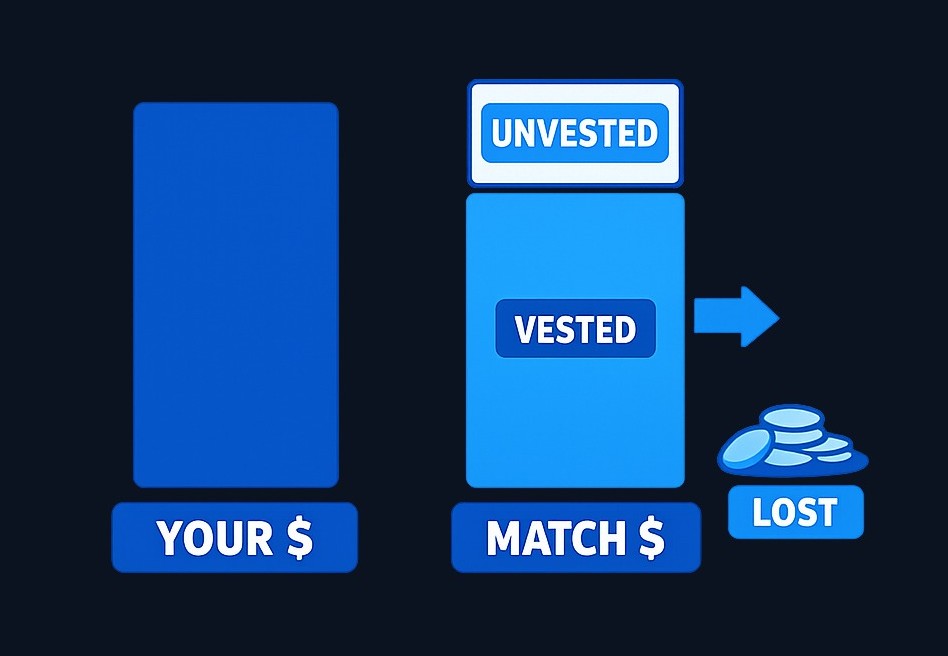
The phrase "vested balance" matters. Vesting means ownership. Your own contributions are generally treated differently from employer contributions, but employer matching or profit-sharing money may follow a vesting schedule. If you leave before becoming fully vested, you may not keep every employer contribution shown in earlier statements.
Before choosing, gather your most recent statement, plan instructions, investment menu, fee details, loan information if applicable, and your new employer plan details if available. If you have tax, legal, or plan-specific questions, use qualified guidance.
Your 401(k) Options After Leaving a Job
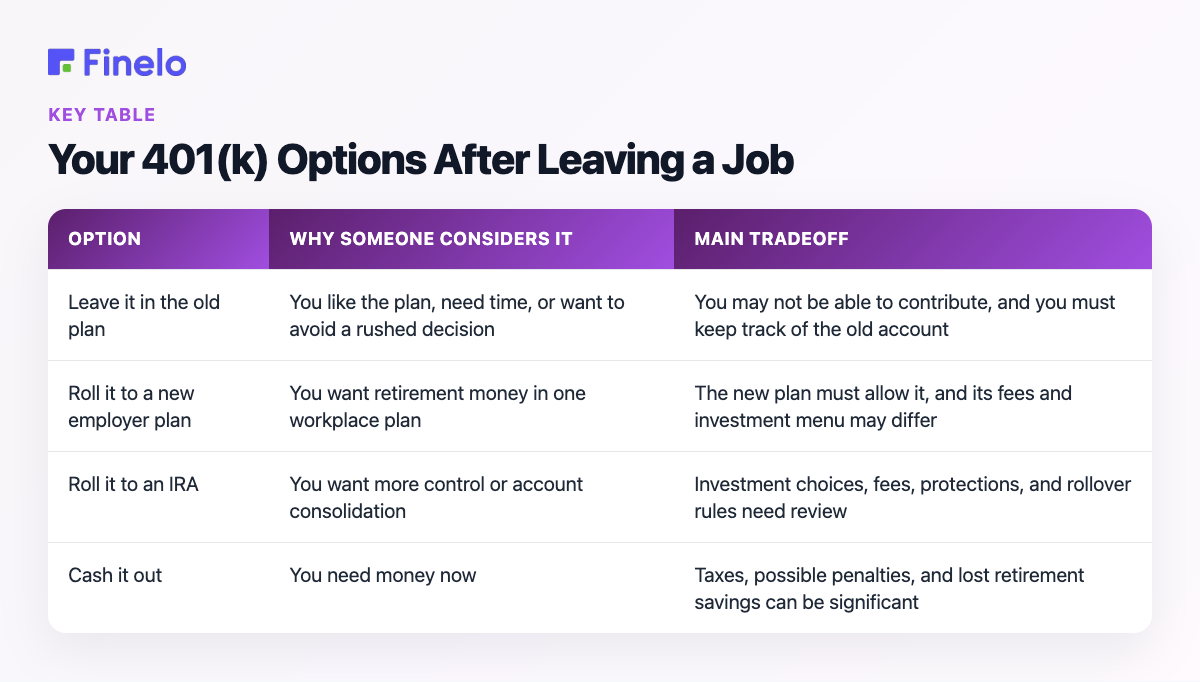
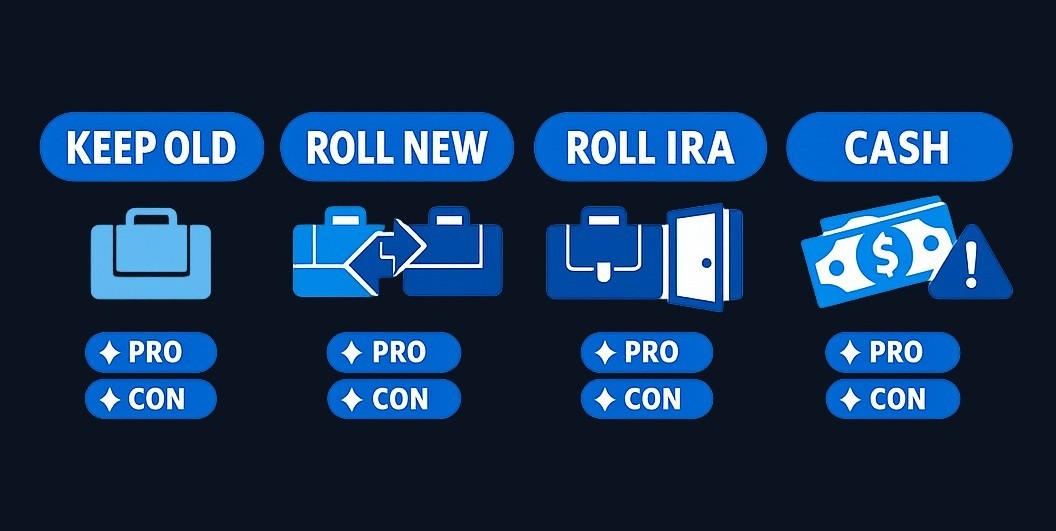
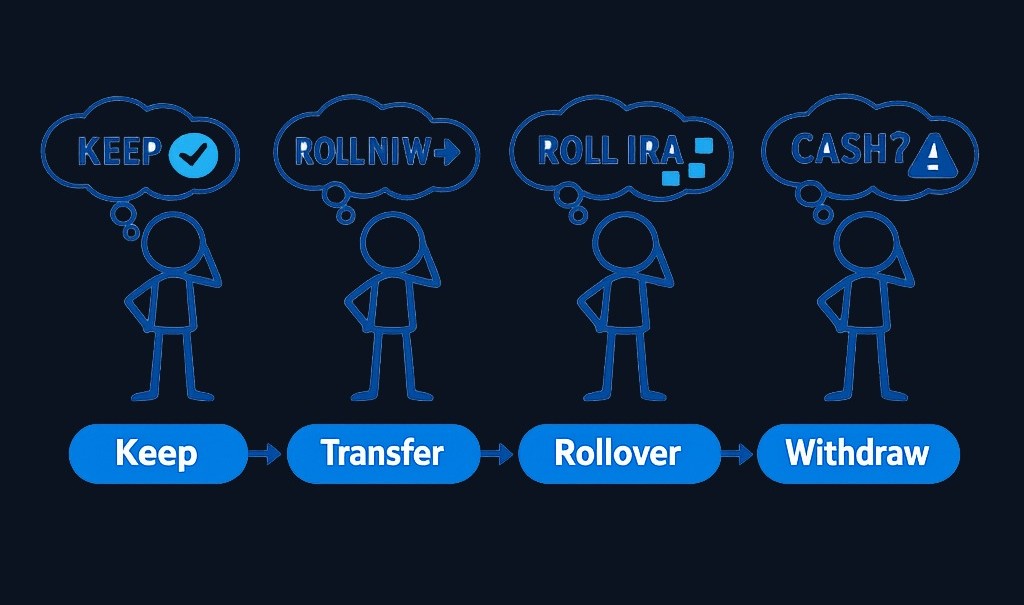
Most people compare four broad choices: keep the money in the former employer plan, roll it to a new employer plan, roll it to an IRA, or cash it out. Each option has benefits and drawbacks.
| Option | Why someone considers it | Main tradeoff |
|---|---|---|
| Leave it in the old plan | You like the plan, need time, or want to avoid a rushed decision | You may not be able to contribute, and you must keep track of the old account |
| Roll it to a new employer plan | You want retirement money in one workplace plan | The new plan must allow it, and its fees and investment menu may differ |
| Roll it to an IRA | You want more control or account consolidation | Investment choices, fees, protections, and rollover rules need review |
| Cash it out | You need money now | Taxes, possible penalties, and lost retirement savings can be significant |
Leaving money in the old plan may be reasonable if the plan has useful investment options, clear fees, and strong account tools. The risk is neglect. People move, change emails, lose login access, and forget to review old accounts.
Rolling into a new employer plan may simplify tracking. It can keep retirement savings inside a workplace plan structure, but the new plan's rules matter. Check whether it accepts rollovers, what investment options it offers, and what fees apply.
Rolling into an IRA can give more control and a wider investment menu. That flexibility can help or hurt. More choices are only useful if you understand them. Compare fees, investment options, account services, and tax treatment before moving money.
Cashing out is usually the option that deserves the most caution. It may solve a short-term cash need, but it can reduce retirement savings and may create tax consequences. If you are under financial stress after leaving a job, compare emergency options carefully before treating retirement money as ordinary cash.
How to Roll Over a 401(k)
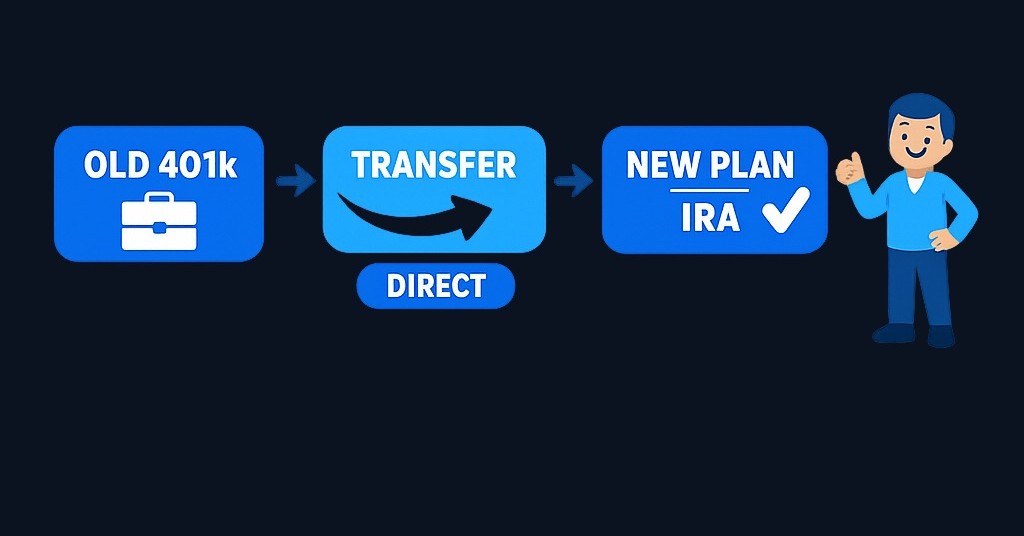
A rollover means moving retirement money from one eligible account to another. The cleanest process is usually one where the money moves directly between providers, but the exact steps depend on the old plan, the receiving account, and account type.
Use this practical workflow:
- Decide where the money may go: new employer plan or IRA.
- Confirm the receiving account can accept the rollover.
- Check whether the money is pre-tax, Roth, after-tax, or a mix.
- Ask the old plan for rollover instructions.
- Request a direct rollover when available.
- Track the transfer until the receiving account shows the funds.
- Choose investments after the money arrives.
- Save confirmations and tax forms.
The account type matters. Pre-tax 401(k) money, Roth 401(k) money, and after-tax money may need different handling. Do not assume every dollar in the account has the same tax character. If the statement separates money sources, read that section closely.
Also check whether you have a 401(k) loan. Leaving a job can change how a plan handles outstanding loans. The timing and consequences depend on plan rules, so contact the plan administrator before you make other moves.
If you are unsure, slow down and ask the old plan and the receiving provider to explain the process in writing. A rollover is not just a button click. It is a transfer with tax and account-record consequences.
Practice trading with Finelo
Practice in a simulator, learn with bite-sized lessons, and build confidence before risking real money.
Taxes, Fees, Vesting, and Account Details
The same 401(k) balance can lead to different outcomes depending on taxes, fees, vesting, and plan rules.
Fees matter because they affect the long-term cost of staying or moving. Compare plan administration fees, fund expense ratios, advisory or management fees, account maintenance fees, trading or transaction costs, and IRA provider fees if rolling out. Do not compare only investment names. A low-cost old plan may be worth keeping for a while. A high-cost old plan may make consolidation more attractive.
Taxes are the most important area to verify before action. Cashing out, rolling pre-tax money, converting money to a Roth account, withdrawing from an account, or mishandling a rollover can all have tax consequences. State taxes may also matter depending on where you live.
If you have heard of special early-withdrawal exceptions, including rules sometimes discussed around leaving a job later in your career, do not assume they apply automatically. They can depend on age, timing, plan type, and the specific account. Ask the plan administrator or a qualified tax professional before relying on any exception.
Small balances may also be handled differently by plan rules. Instead of guessing from a general article, read your plan notice and contact the administrator. The key question is not only "How much is in the account?" but "What does this plan allow or require for my vested balance?"
Learning Tools and Planning Support
Choosing what to do with an old 401(k) is partly an account decision and partly an education decision. You need to understand basic investing terms, plan fees, asset allocation, tax tradeoffs, and the difference between short-term cash pressure and long-term retirement goals.
A useful learning experience should help you answer practical questions:
- What investments do I currently own?
- How much risk am I taking?
- What fees am I paying?
- What happens if I leave the account where it is?
- What changes if I roll it over?
- What tax questions do I need answered before acting?
Finelo describes itself as an educational platform for trading, investing, and finance learning. That distinction matters here. Education can help you understand the vocabulary and compare options, but it should not replace official plan documents, tax guidance, or advice from a qualified professional.
If you use a course, app, or planning platform, look for plain explanations of account types, diversification, fees, and risk. Avoid any tool that pushes urgency or treats a rollover as automatically better without comparing your actual plan options.
Real-Life Scenarios and Decision Checklist
Imagine someone leaving a job with a 401(k) they like. The plan has clear fees, familiar investments, and good online access. They do not have a new employer plan yet. In that case, leaving the money temporarily may give them breathing room while they compare options. The key is to update contact information and set a review reminder.
Now imagine someone starting a new job with a strong workplace retirement plan. They want fewer accounts to manage. Rolling the old 401(k) into the new plan may make tracking easier if the new plan accepts rollovers and its investment options and fees make sense.
Consider someone who wants more investment control. An IRA may offer more flexibility, but more flexibility also creates more responsibility. This person should compare provider fees, investment choices, account protections, and tax handling before moving money.
Finally, imagine someone tempted to cash out after a job loss. The money may feel like a lifeline. Sometimes people face real emergencies, but cashing out retirement savings can create taxes and reduce future retirement resources. Before taking that step, they should compare other cash-flow options, understand the full tax impact, and avoid acting from panic.
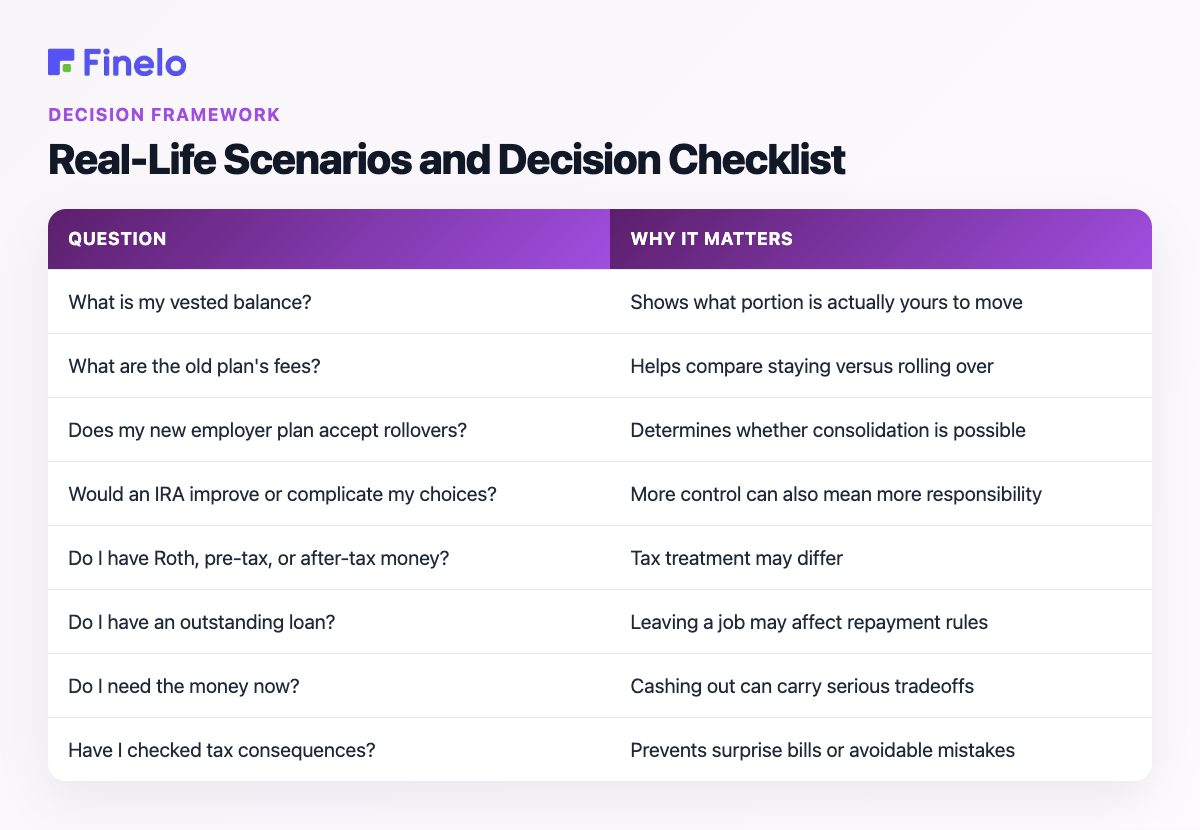
Before deciding, run through this checklist:
| Question | Why it matters |
|---|---|
| What is my vested balance? | Shows what portion is actually yours to move |
| What are the old plan's fees? | Helps compare staying versus rolling over |
| Does my new employer plan accept rollovers? | Determines whether consolidation is possible |
| Would an IRA improve or complicate my choices? | More control can also mean more responsibility |
| Do I have Roth, pre-tax, or after-tax money? | Tax treatment may differ |
| Do I have an outstanding loan? | Leaving a job may affect repayment rules |
| Do I need the money now? | Cashing out can carry serious tradeoffs |
| Have I checked tax consequences? | Prevents surprise bills or avoidable mistakes |
Your next step is to collect the documents, compare the four options, and contact the old plan administrator before making a transfer. Ask for written instructions, verify account types, and keep every confirmation. If you are not ready to decide, update your contact information, save the login, and set a date to review it.
Final Takeaway
When you leave a job, your 401(k) becomes a decision point. You can often keep it, move it to a new employer plan, roll it to an IRA, or cash it out. The smart move is the one that fits your fees, account rules, tax situation, vesting, and long-term retirement plan.
Take the decision in order: find the account, confirm the vested balance, compare options, check taxes and fees, then act carefully. If anything is unclear, ask for written instructions before moving the money.
Frequently asked questions
What are my options for my 401(k) after leaving a job?
The main options are to leave it in the old plan, roll it into a new employer plan, roll it into an IRA, or cash it out. Plan rules, fees, taxes, vesting, and account type affect which choice makes sense.
What happens to employer contributions when I leave?
Employer contributions may depend on the plan's vesting schedule. Check your vested balance. That number is more useful than the stated account balance when you are deciding what can move with you.
Are there penalties for cashing out a 401(k)?
There may be taxes and possible penalties depending on your age, account type, distribution type, and plan rules. Verify the impact before cashing out, especially if the decision is being made under job-loss stress.
How long do I have to decide what to do?
The timing depends on the plan, balance, and distribution rules. Do not assume you can wait forever, and do not assume you must act immediately. Read the plan notice and contact the administrator if the deadline is unclear.
Financial LiteracyBeginnerRetirementPersonal Finance
Practice trading with Finelo
Practice in a simulator, learn with bite-sized lessons, and build confidence before risking real money.
About the author
Finelo Team
The Finelo Team creates practical investing and trading education designed to help beginners learn faster with structured challenges, simulator practice, and bite-sized lessons.
Keep reading — Related articles

Financial Literacy
Mercury Books Review 2026: Is It Worth It for Startups?
Mercury Books brings double-entry accounting into Mercury. Review its $35 pricing, reports, AI features, integrations, and migration limits.
Finelo Team

Financial Literacy
Why is My FICO Score Lower Than My Credit Score?
Example takeaway: seeing a higher score in a bank app doesn’t guarantee lenders will see the same FICO number at application time; lenders often pull a specific FICO version from a specific bureau.
Finelo Team

Financial Literacy
Why Is My FICO Score Higher Than My Credit Score?
Brief educational note: this article is educational, not financial or investment advice; investing and credit decisions involve risk and possible loss.
Finelo Team


