Slippage in trading is the gap between the price you expected when placing a trade and the price at which it is ultimately executed. The U.S. Securities and Exchange Commission describes price slippage as the difference between a transaction’s quoted price and its final execution price. SEC staff statement Slippage can work against you or in your favor, and it is a trading-cost and risk-management issue—not a prediction of where a market will go.
What is Slippage in Trading?
Slippage in trading is the gap between the price you expected when placing a trade and the price at which it is ultimately executed. The U.S. Securities and Exchange Commission describes price slippage as the…
7 min read
Practice trading with Finelo
Practice in a simulator, learn with bite-sized lessons, and build confidence before risking real money.
Want to learn more?
Practice in a simulator, learn with bite-sized lessons, and build confidence before risking real money.
Explore FineloExplore Finelo's 28-day challenges
Turn learning into a daily habit with guided challenge paths.
This guide is for anyone learning how orders are filled, especially before using orders that prioritize speed over a particular price.
How slippage happens
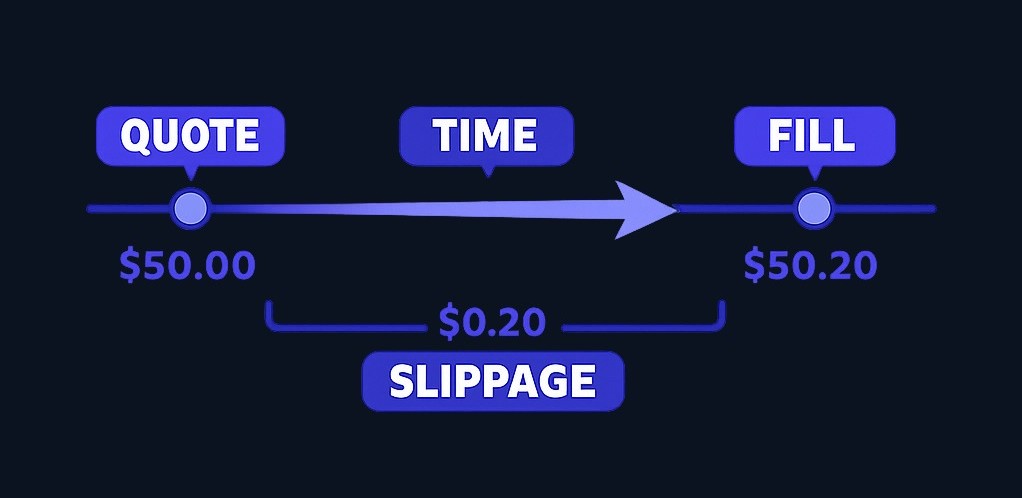
The price visible when you decide to trade is a snapshot. Between submitting an order and completing it, available orders at that price may be taken, cancelled, or replaced. If your order then matches with the next available price, the execution can differ from the quote you saw.
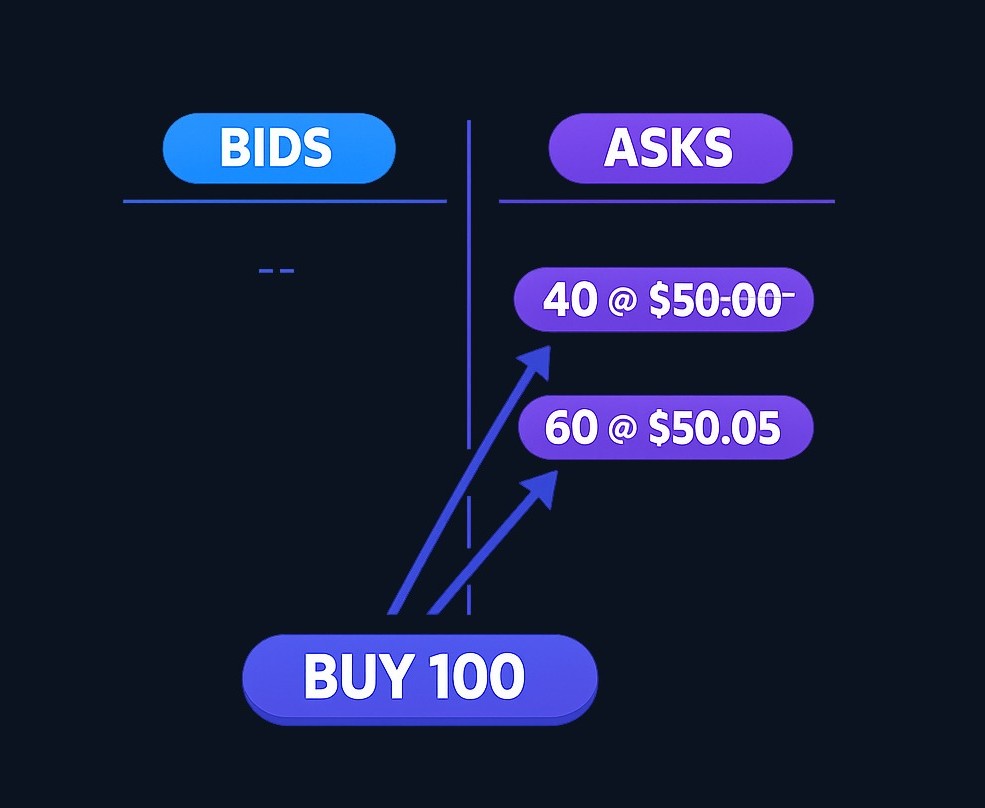
Think of a buy order in a queue. If the offered price is $50.00 when you press buy but the available shares at that price are gone before your order reaches the market, some or all of the order might fill at a higher price. For a sell order, the reverse can happen: an execution below the expected price is unfavorable to the seller.
Slippage is distinct from a trading fee. A fee is a separately stated charge; slippage is a difference in execution price. Both can affect the all-in result of a trade, so it is useful to review them separately.
Common conditions that can increase the chance of slippage
Slippage is not a fixed setting and no market condition guarantees an outcome. It becomes more relevant when there is little room for an order to be filled at one price or when prices are changing quickly.
| Condition | What may be happening | Why it matters for an order |
|---|---|---|
| Fast price movement | Quotes change quickly | The displayed price can change before execution. |
| Limited liquidity | Fewer orders are available near the current price | A larger order may need to reach more than one price level. |
| Large order relative to available interest | The order consumes available orders at the best price | Different portions can receive different execution prices. |
| A market gap or major event | A new price range forms after information or trading conditions change | A previously observed price may no longer be available. |
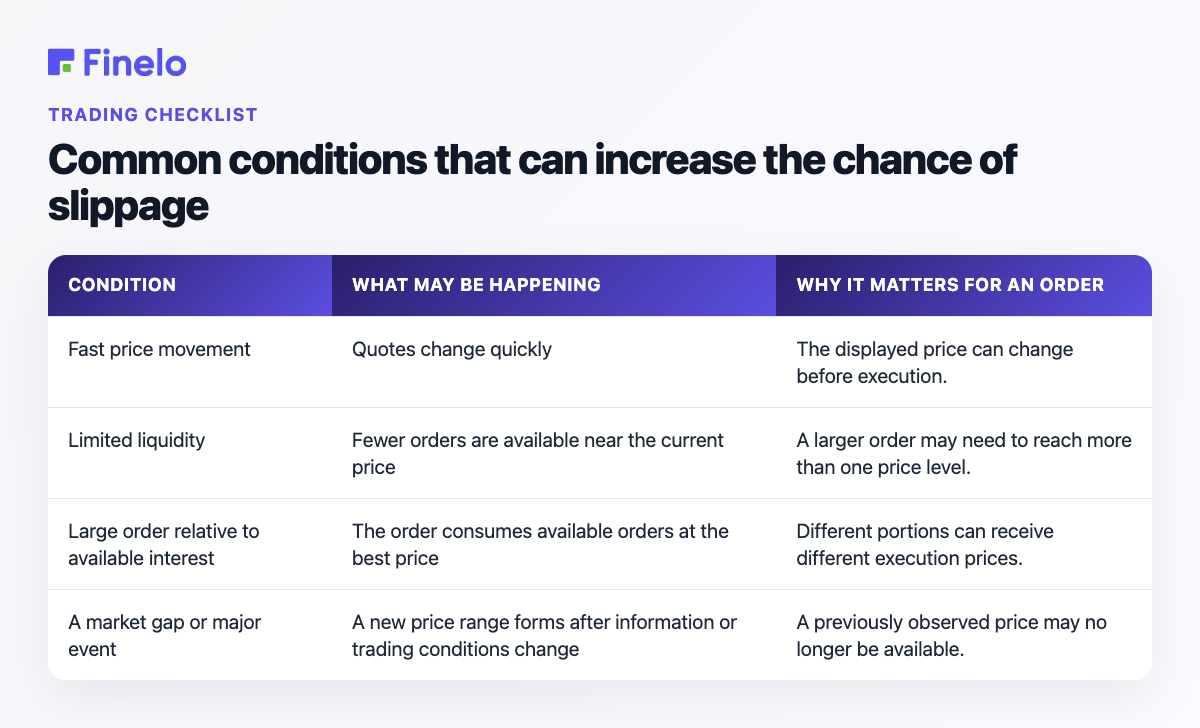
These conditions can overlap. For example, a thinly traded market that suddenly moves can leave fewer prices available for an order that needs immediate execution.
Positive and negative slippage
Slippage simply measures a difference; it is not automatically bad.
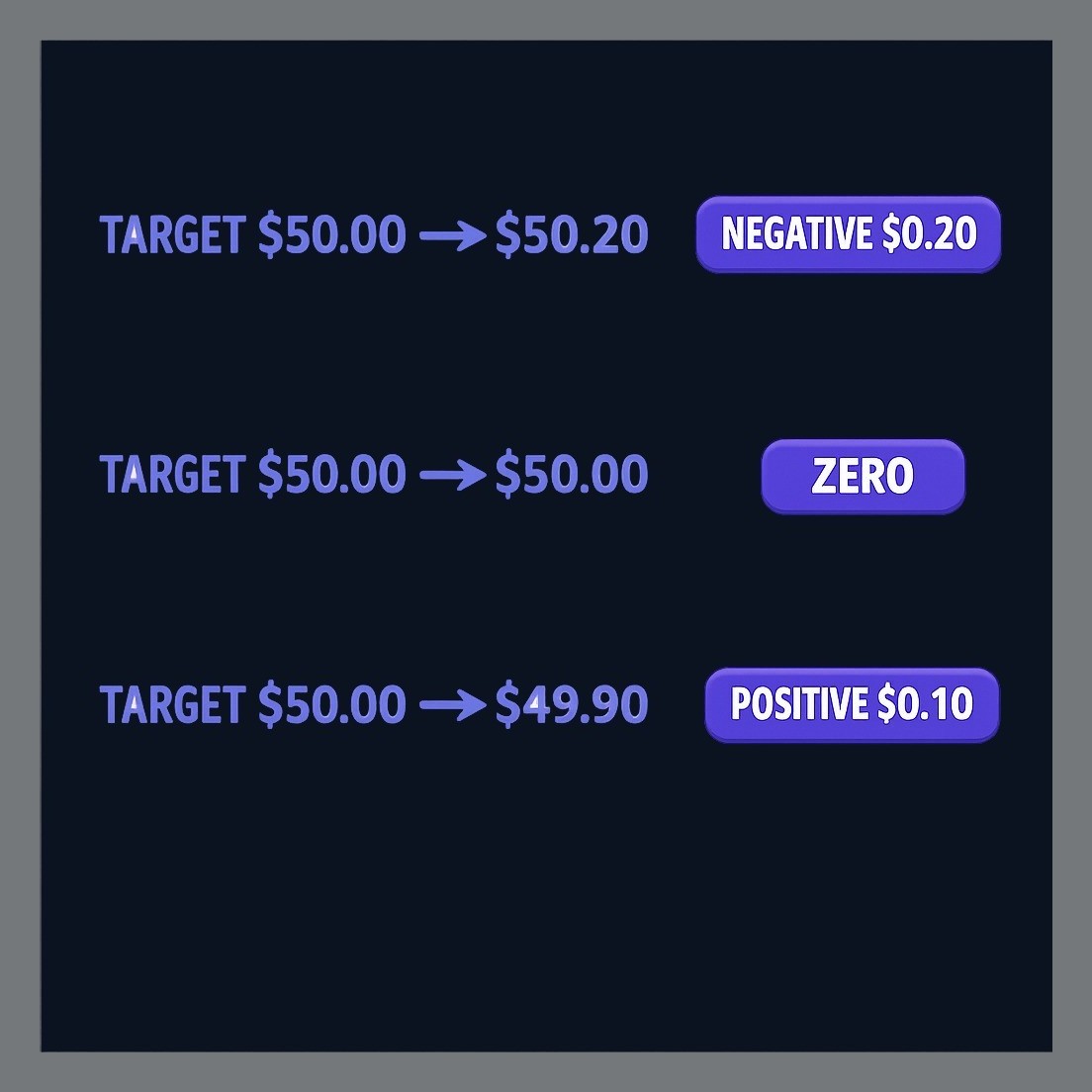
- Negative slippage means an execution is worse than expected: a buy fills higher than anticipated, or a sell fills lower.
- Positive slippage means an execution is better than expected: a buy fills lower, or a sell fills higher.
- No slippage means the expected and execution prices are the same for the part of the order being measured.
For a buy order expected at $50.00, a fill at $50.20 represents $0.20 of negative slippage per unit. A fill at $49.90 represents $0.10 of positive slippage per unit. The arithmetic is simple, but the meaning depends on order direction: always compare the fill with the price you actually expected for that buy or sell.
What it can mean for a trading plan
Slippage changes the price at which a position begins or ends. That can make an entry cost more than planned or reduce proceeds from an exit. A plan that only works at one exact price leaves little room for execution differences, fees, and changing market conditions.
It can also complicate orders that are only partly filled. One portion may execute at one price and the remainder at another, producing an average fill price. Before judging a trade, check the order details: filled quantity, average execution price, any unfilled quantity, and separate charges.
Avoid treating a single fill as proof that a venue or strategy is always good or bad. Execution can depend on the instrument, order size, order type, timing, and conditions at that moment. Comparing like-for-like order records over time is more useful than drawing conclusions from one trade.
Practice trading with Finelo
Practice in a simulator, learn with bite-sized lessons, and build confidence before risking real money.
Market orders, limit orders, and the trade-off
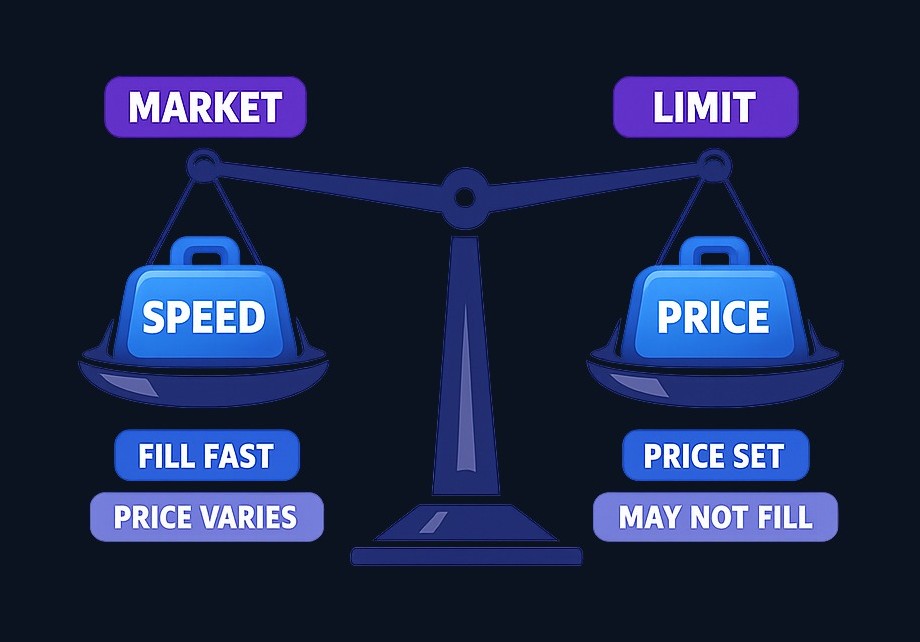
Order types generally ask you to choose between urgency and price control. The exact choices and behavior depend on the broker or trading venue, so read its order disclosures before placing a live trade.
| If your main priority is… | A question to ask | Practical trade-off |
|---|---|---|
| Getting an order into the market promptly | Am I willing to accept the available execution price? | Faster execution may provide less control over the final price. |
| Controlling the worst acceptable price | What price would make this trade unacceptable? | The order may not fill if the market never reaches that price. |
| Managing a larger order | Can I reduce urgency or reassess size? | Smaller or less urgent execution may reduce pressure on available prices, but may also leave part of the order unfilled. |
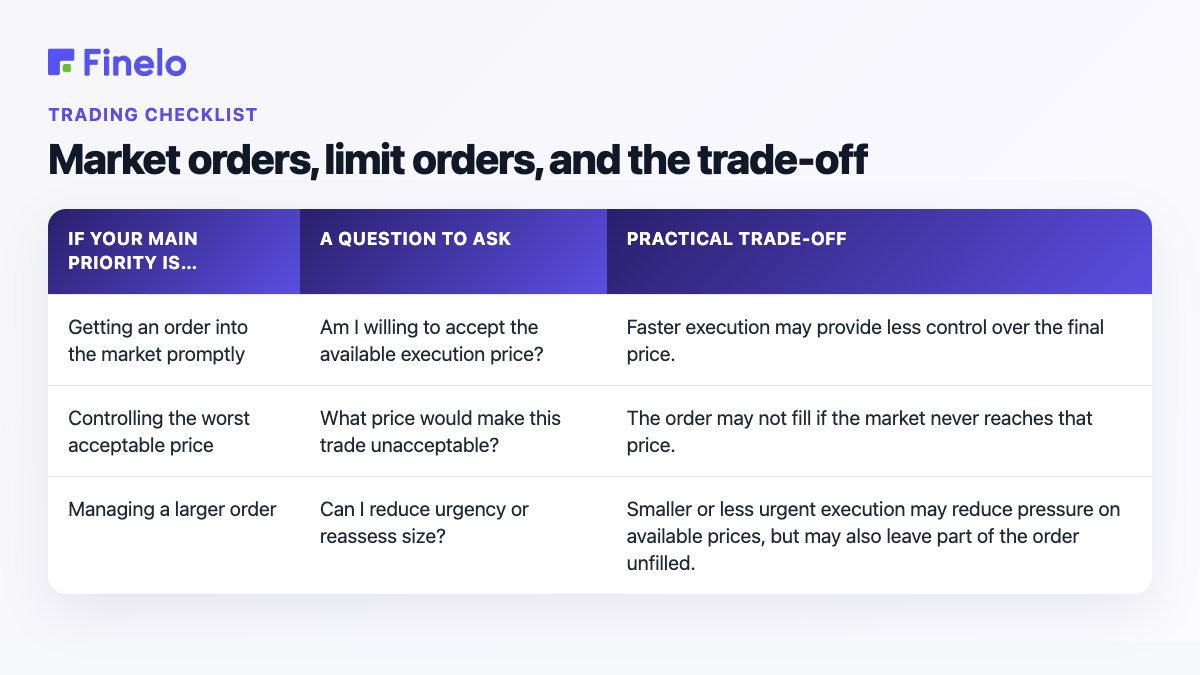
A limit price is not a promise that an order will execute. It is a price condition. That distinction is important: avoiding an unfavorable execution price can mean missing a trade altogether.
A practical framework for setting a slippage tolerance
Some trading interfaces use a “slippage tolerance” setting, particularly for transactions where a quoted price can change before confirmation. It is a guardrail, not a forecast. A tolerance that is too tight can prevent completion; one that is too wide can allow a price difference you would not accept.
Use this checklist before setting any threshold:
- Define the maximum price difference you could accept for this specific trade.
- Consider the order’s size relative to the market or pool you are using.
- Check whether the price is moving quickly and whether the quote is still meaningful.
- Read how the specific venue applies its tolerance, including whether it rejects, delays, partially fills, or re-quotes an order.
- If you cannot explain the potential execution result, reduce complexity or wait until you can.
The appropriate choice is personal to the trade, your risk limits, and the rules of the venue. It is not a universal percentage to copy from another trader.
Worked scenarios: stocks and crypto transactions
Here are two simplified illustrations, not records of actual market events.
Stock order: You submit an order to buy 100 shares after seeing an offer of $25.00. Only 40 shares are available at that price when the order arrives; the remaining 60 execute at $25.05. Your average fill is above $25.00. The lesson is to look at the full execution report rather than only the quote seen before submission.
Crypto transaction: An interface shows an estimated swap price, but the final transaction is confirmed at a different price. The difference between the quoted and final price is slippage under the SEC’s description. SEC staff statement Before approving, review the displayed price impact, any tolerance control, network-related costs, and what happens if the allowed threshold is exceeded.
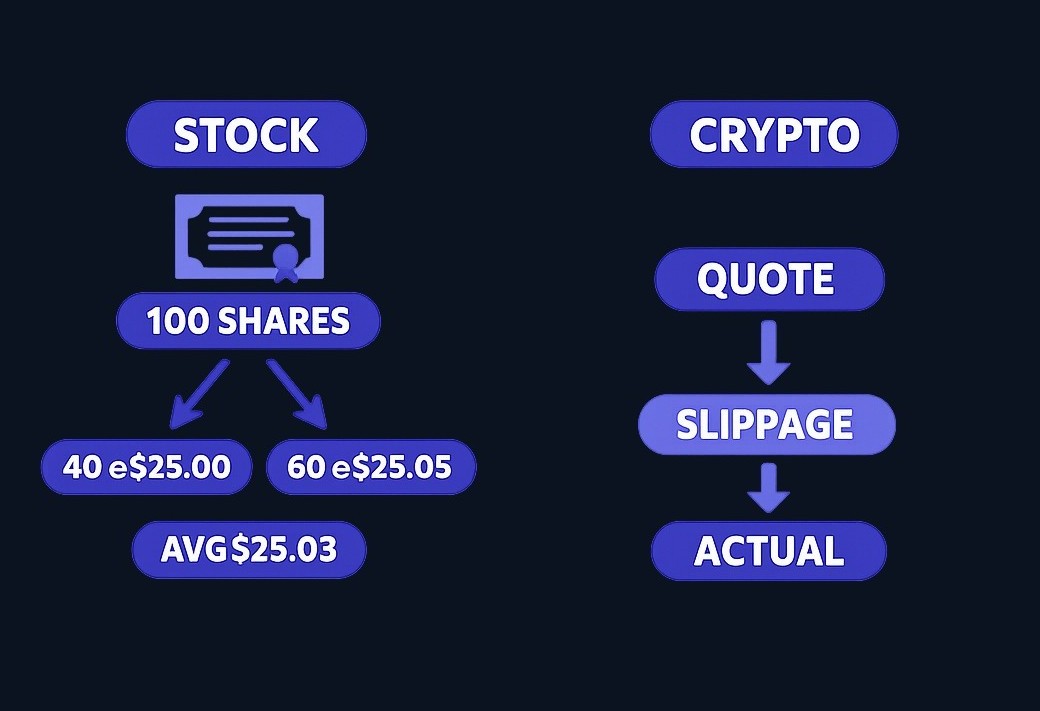
The mechanics vary by asset and venue, but the habit is the same: know the execution condition, then review the actual result.
How to reduce avoidable surprises
You cannot remove all slippage, but you can make it easier to recognize and manage.
- Decide in advance whether speed or a price boundary matters more for the trade.
- Use the order type and instructions you understand; do not assume two platforms label or process an order identically.
- Check order size, available liquidity, and current price movement before submitting.
- Review confirmations and keep a simple record of expected versus average execution price.
- Treat unusually different fills as a reason to read the venue’s execution information and reassess the order—not as a reason to chase the market.
The bottom line
Slippage is the difference between a quoted or expected price and the final execution price. It can be positive or negative, and it is most useful as a reminder to connect an order’s price, size, urgency, and execution conditions before trading. Start by practising the calculation with small, hypothetical examples and by reading your broker’s or venue’s order rules. Educational resources such as Finelo can help you build the vocabulary to assess market mechanics, but they do not replace checking whether a specific trade fits your own risk limits.
Frequently asked questions
What is slippage in trading?
Slippage is the gap between the price you expected when placing a trade and the price at which it is ultimately executed. It can work against you (negative) or in your favor (positive), and it is a trading-cost and risk-management issue—not a prediction of where a market will go.
What causes slippage?
Slippage becomes more likely when prices move quickly, liquidity is thin, an order is large relative to available interest, or a market gap forms after news or trading-condition changes. The displayed quote is a snapshot; by the time the order matches, that price may no longer be available.
What is the difference between positive and negative slippage?
Negative slippage means a worse fill than expected: a buy higher than anticipated, or a sell lower. Positive slippage means a better fill: a buy lower, or a sell higher. No slippage means the expected and execution prices match for the part of the order being measured.
How can traders reduce slippage surprises?
Decide in advance whether speed or a price boundary matters more, use order types you understand, check size and liquidity before submitting, and review expected versus average execution price afterward. You cannot remove all slippage, but you can make it easier to recognize and manage.
TradingBeginnerOrder ExecutionMarkets
Practice trading with Finelo
Practice in a simulator, learn with bite-sized lessons, and build confidence before risking real money.
About the author
Finelo Team
The Finelo Team creates practical investing and trading education designed to help beginners learn faster with structured challenges, simulator practice, and bite-sized lessons.
Keep reading — Related articles

Trading
What Is SPAN Margin: Learn the Concept & Risk Controls
SPAN margin is an exchange-level, risk-based margin framework that calculates required collateral for futures and options by assessing portfolio risk across prescribed market scenarios rather than using a flat per‑contract rate.
Finelo Team
Trading
What Is Portfolio Margin: Learn the Concept & Risk Controls
Portfolio margin is a risk-based method that applies scenario analysis to eligible positions in an approved margin account.
Finelo Team
Trading
What Is NQ in Trading: Learn the Concept & Risk Controls
In trading, NQ is the ticker symbol for the E-mini Nasdaq-100 futures contract, listed on CME Group's exchange.
Finelo Team