Pre-market trading is buying and selling eligible securities before the regular stock market session opens. In the U.S., this commonly refers to activity before the 9:30 a.m. ET market open, with some sessions beginning as early as 4:00 a.m. ET depending on the exchange and brokerage access. (tastylive.com) It can help traders react to overnight news, earnings, analyst updates, or global market moves before the regular session begins. However, it also carries added risk because trading activity is often more limited, not every security may be available, and brokerage rules can differ. (tastylive.com)
A Complete Guide to Pre-Market Trading
Pre-market trading is buying and selling eligible securities before the regular stock market session opens. In the U.S., this commonly refers to activity before the 9:30 a.m.
12 min read
Practice trading with Finelo
Practice in a simulator, learn with bite-sized lessons, and build confidence before risking real money.
Want to learn more?
Practice in a simulator, learn with bite-sized lessons, and build confidence before risking real money.
Explore FineloExplore Finelo's 28-day challenges
Turn learning into a daily habit with guided challenge paths.
What Is Pre-Market Trading?
Pre-market trading is part of the broader “extended-hours” market. Instead of waiting for the regular session, traders can place orders before the opening bell if their brokerage supports it and the security is eligible.
The main appeal is timing. A company may report earnings before the market opens, a major economic report may be released early in the morning, or overseas markets may move sharply overnight. Pre-market trading gives some participants a way to respond before regular-hours liquidity arrives.
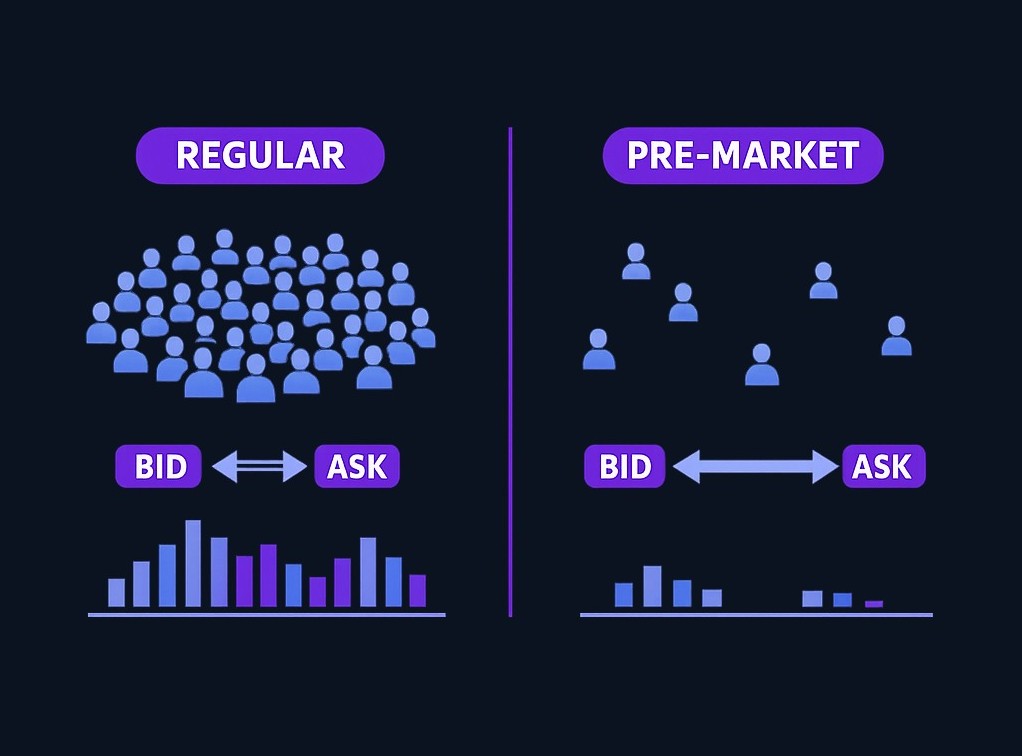
That does not mean pre-market prices are always a reliable preview of the day. Because fewer participants may be active, a stock can move on a small number of orders. A pre-market quote can indicate early interest, but the regular open may still change quickly once more buyers and sellers enter the market.
A simple way to think about it:
- Regular session: more participants, typically more liquidity, more visible price discovery.
- Pre-market session: earlier access, but thinner trading and potentially wider price gaps.
- Decision point: use pre-market trading only when the reason for acting early is stronger than the added execution risk.
Pre-Market Trading Hours
Pre-market hours vary by exchange and brokerage. For U.S. stocks, the regular market opens at 9:30 a.m. ET. Some extended pre-market sessions may begin earlier in the morning, and individual brokerage firms can set their own access rules. (tastylive.com)
| Venue or session | Commonly cited pre-market window | Practical caveat |
|---|---|---|
| Nasdaq extended pre-market | Generally 4:00 a.m. ET to 9:30 a.m. ET (tastylive.com) | Your brokerage may not provide access to the full window. |
| NYSE extended pre-market | Typically 4:00 a.m. ET to 9:30 a.m. ET (tastylive.com) | Availability can vary by security and broker. |
| NYSE Early Trading Session | 7:00 a.m. ET to 9:30 a.m. ET (tastylive.com) | This is a shorter session within the broader pre-market period. |
Before trading, check two things inside your brokerage account: the actual hours available to you and which order types are accepted during those hours. The exchange window and your personal account access may not be identical, and trading hours can change over time. (tastylive.com)
Benefits of Pre-Market Trading
Pre-market trading can be useful, but its benefits depend on your goal and experience level.
Faster reaction to news
If a company releases earnings at 7:00 a.m. ET, waiting until 9:30 a.m. ET may mean entering after the first major price adjustment. Pre-market access can let traders respond earlier. That matters most for people who already have a plan for the security, understand the news, and know what price would make the trade unattractive.
Early read on market sentiment
Pre-market price action can show how some participants are reacting before the regular session. For example, if a stock closed at $50 and trades near $56 after a strong earnings report, that move suggests early buyers are willing to pay more. But it is still only an early signal, not a guarantee of where the stock will open or close.
Flexibility for active traders
Some traders cannot monitor the market during regular hours. Pre-market trading may give them another window to adjust positions. This flexibility is most useful when paired with clear order rules and position-size limits, rather than rushed decisions.
Risks Involved in Pre-Market Trading
The same features that make pre-market trading attractive can also make it risky.
Lower liquidity
Participation is usually thinner outside regular market hours, and brokers may offer only a subset of securities in those sessions. (tastylive.com) Lower liquidity can make it harder to buy or sell at a desired price. It can also mean a quote changes quickly when a relatively small order enters the market.
Wider price gaps
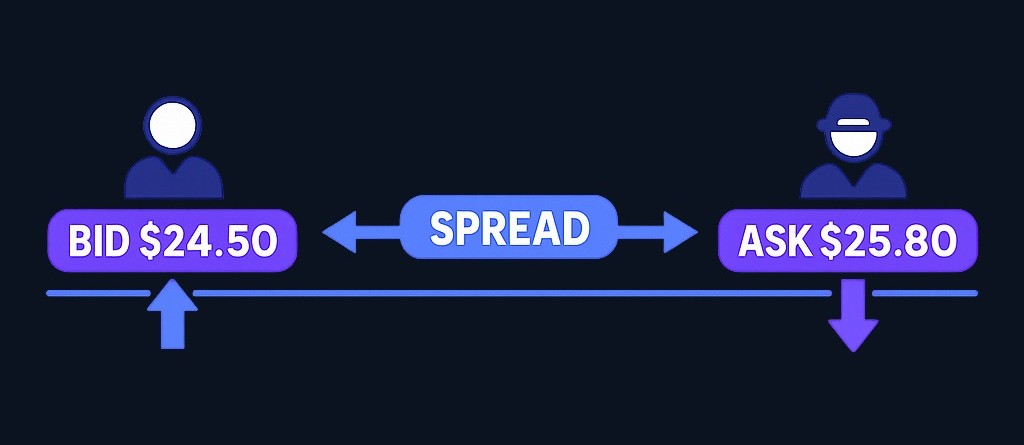
When there are fewer buyers and sellers, the difference between what buyers are willing to pay and sellers are willing to accept can be larger. That gap matters because the “last traded price” may not be the price you can actually get.
Volatility around news
Pre-market moves often happen around earnings, economic reports, analyst actions, or major headlines. Those events can create fast price changes before the broader market has fully processed the information.
Broker and security limitations
Brokerage firms often have their own policies for pre-market access. (tastylive.com) Some securities may not trade, some order types may be restricted, and some platforms may show limited data compared with the regular session. If you assume regular-hours rules apply, you may be surprised by what your order can or cannot do.
How to Participate in Pre-Market Trading
Pre-market trading starts with your brokerage, not the exchange headline hours.
Use this checklist before placing an order:
- Confirm your account has extended-hours access. Look for a setting, agreement, or trading-session selector in your brokerage platform.
- Check the actual hours available to you. Nasdaq and NYSE extended sessions may begin as early as 4:00 a.m. ET, but brokerage access can differ. (tastylive.com)
- Confirm the stock is eligible. Some securities may not be available during extended or pre-market sessions. (tastylive.com)
- Review accepted order types. Many traders prefer orders that specify a price limit during thin markets because they define the maximum purchase price or minimum sale price they are willing to accept.
- Look at the bid, ask, and recent trades. Do not rely only on the last price.
- Decide your invalidation point before entering. Know what would make the trade no longer worth taking.
- Use smaller size if you are learning. Pre-market price movement can be less forgiving than regular-hours trading.
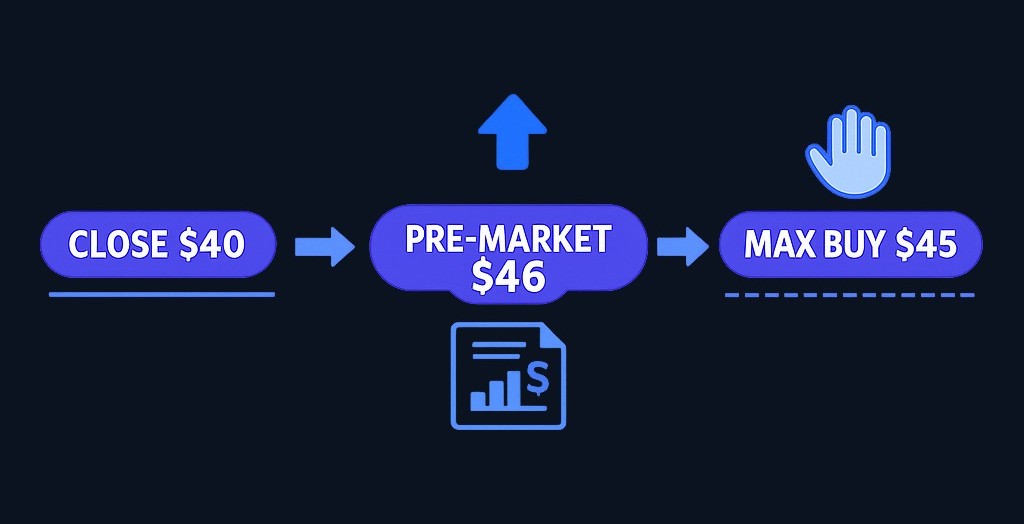
A practical example: suppose a stock closed at $40, reports earnings before the open, and begins trading around $46 pre-market. A trader who wants exposure might decide in advance, “I am only interested if I can buy at $45 or lower, and I will not chase if the spread is too wide.” That framework does not guarantee a good result, but it prevents the common mistake of reacting to a headline without a price plan.
Practice trading with Finelo
Practice in a simulator, learn with bite-sized lessons, and build confidence before risking real money.
Strategies for Pre-Market Trading
The best pre-market strategies are less about prediction and more about discipline. Because conditions can be thinner and faster, your process matters more than your opinion.
1. Trade only when there is a clear catalyst
A catalyst is a reason the stock is moving: earnings, guidance, a regulatory update, a merger announcement, a macroeconomic report, or major sector news. Without a catalyst, pre-market movement may be harder to interpret.
Ask:
- What changed since the last close?
- Is the news company-specific or market-wide?
- Is the pre-market move large relative to the news?
- Am I reacting to information or just to price movement?
2. Compare price to the prior close and key levels
Pre-market traders often anchor around the prior close, previous day’s high and low, and obvious round-number levels. These are not magic lines, but they help organize decisions.
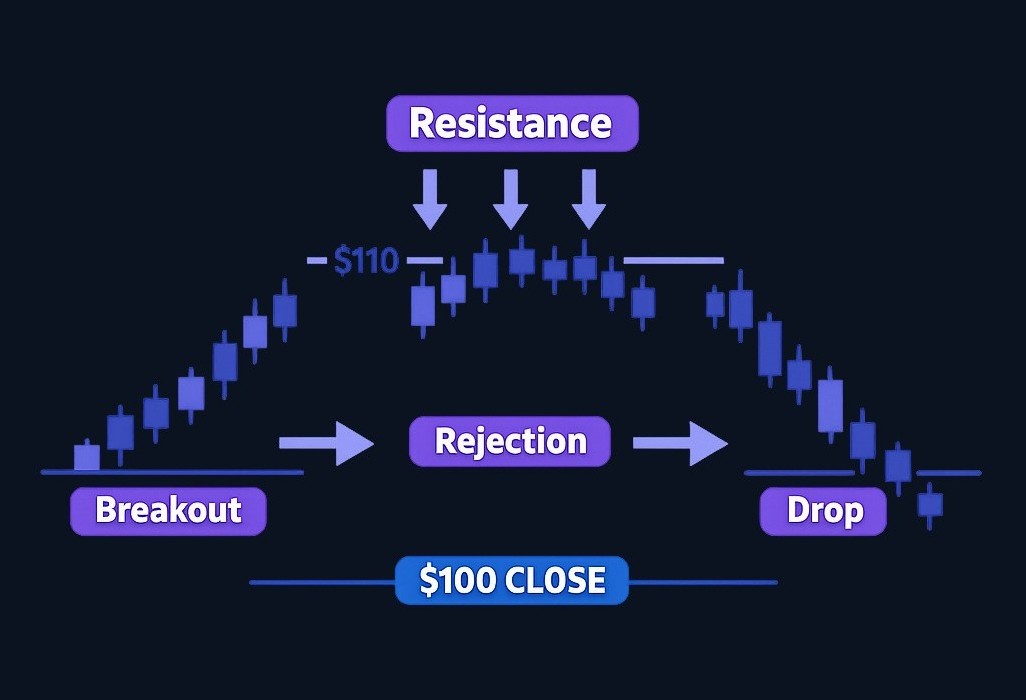
For example, if a stock closed at $100, trades at $108 pre-market, and then repeatedly fails to hold above $110, a trader might treat $110 as an area where sellers are active. Another trader might wait to see whether the regular session confirms that level with stronger volume.
3. Avoid chasing wide spreads
If the best bid is far below the best ask, the trade may be more expensive than it looks. A stock showing a last trade at $25 may not be realistically buyable near $25 if sellers are asking much higher. In that situation, waiting can be a strategy.
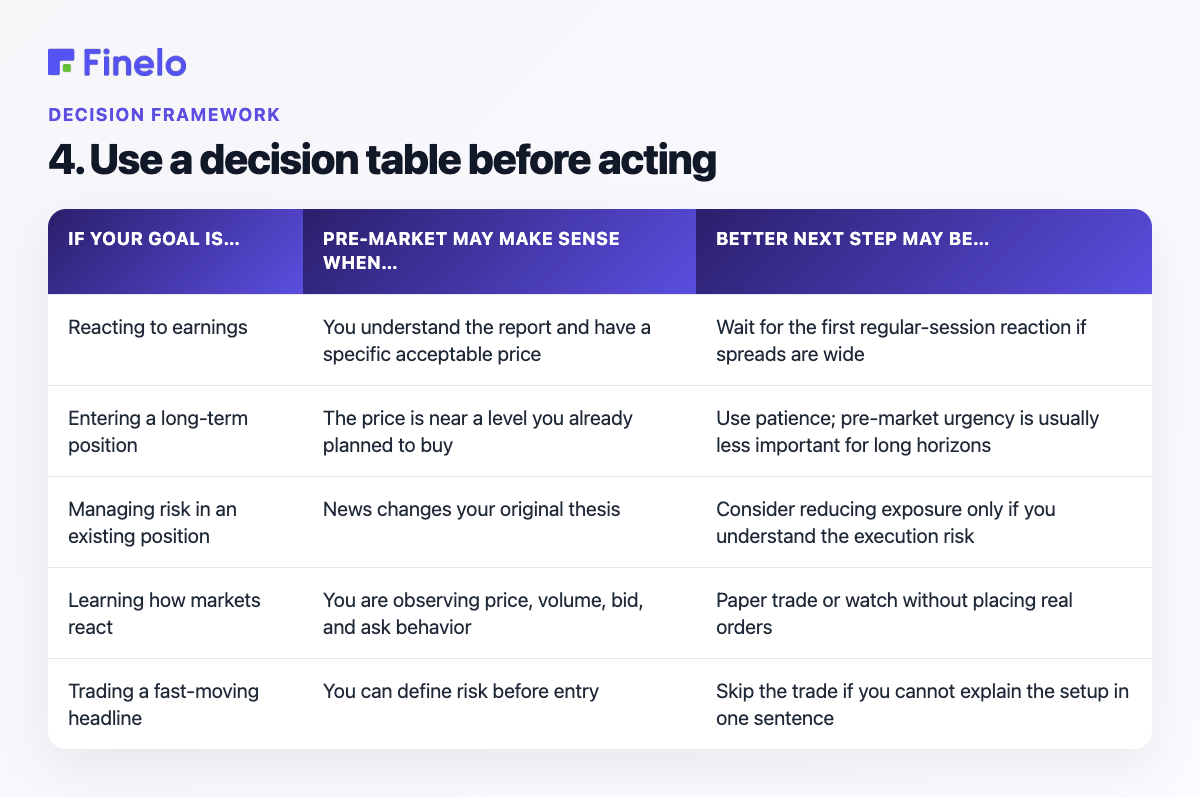
4. Use a decision table before acting
| If your goal is… | Pre-market may make sense when… | Better next step may be… |
|---|---|---|
| Reacting to earnings | You understand the report and have a specific acceptable price | Wait for the first regular-session reaction if spreads are wide |
| Entering a long-term position | The price is near a level you already planned to buy | Use patience; pre-market urgency is usually less important for long horizons |
| Managing risk in an existing position | News changes your original thesis | Consider reducing exposure only if you understand the execution risk |
| Learning how markets react | You are observing price, volume, bid, and ask behavior | Paper trade or watch without placing real orders |
| Trading a fast-moving headline | You can define risk before entry | Skip the trade if you cannot explain the setup in one sentence |
5. Decide order type before the market moves
During pre-market hours, consider whether an order that sets a specific acceptable price is more appropriate than an order focused only on immediate execution. The goal is not to eliminate risk; it is to avoid entering at a price you did not intend to accept.
Market Data and Analysis
Good pre-market analysis starts with separating signal from noise.
Watch the right data points
Focus on:
- Bid and ask: What buyers are offering versus what sellers want.
- Spread: How far apart the bid and ask are.
- Recent trade prices: Whether trades are happening near the bid, ask, or somewhere between.
- Pre-market volume: Whether the move is supported by meaningful activity or only a few prints.
- Catalyst quality: Whether the news is material or just attention-grabbing.
- Index futures and sector context: Whether the individual stock move aligns with broader market direction.
Index futures can help you understand the morning backdrop, but they are not a substitute for the actual quote in the stock you want to trade. A tech stock, for instance, may move differently from the broader market if it has company-specific news.
Use a simple pre-market review framework
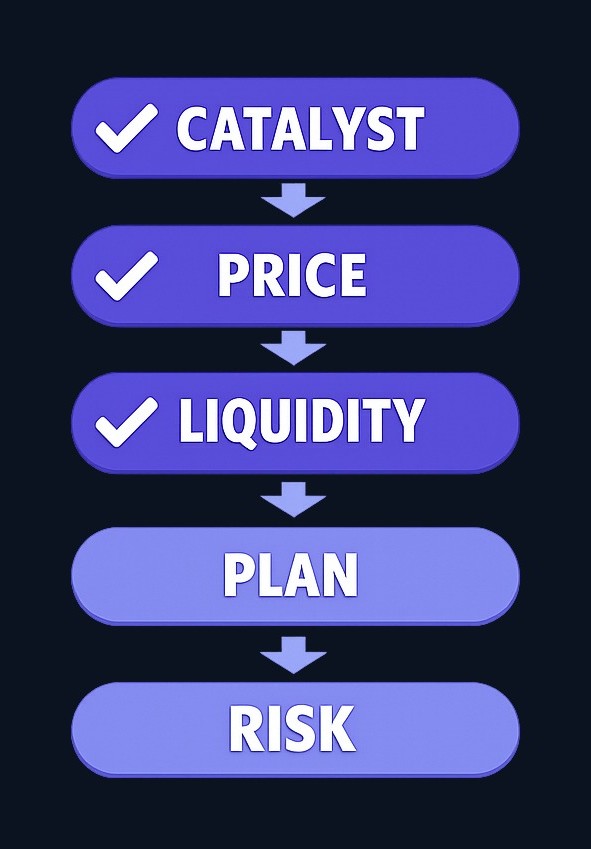
Before placing a trade, write one sentence for each item:
- Catalyst: “The stock is moving because…”
- Price context: “It closed at __ and is trading near __.”
- Liquidity check: “The spread is acceptable/unacceptable because…”
- Plan: “I will only trade if…”
- Risk control: “I will step away if…”
This short framework is useful because it slows down the decision. If you cannot complete the five lines, you may not have enough information to trade.
How Pre-Market Trading Can Affect the Market Open
Pre-market trading can influence expectations before the regular session begins. If a stock trades sharply higher before 9:30 a.m. ET, regular-session traders will see that information when the market opens. That can affect opening orders, watchlists, and early momentum.
But pre-market trading does not “set” the regular open in a simple or guaranteed way. Once the regular session begins, more participants may enter, liquidity may change, and the price can move in either direction. A strong pre-market gain can continue, fade, or reverse.
A useful rule: treat pre-market action as context, not confirmation. It tells you where some traders were willing to transact before the open, but it does not prove what the broader market will do.
Frequently Asked Questions
Are all stocks available for pre-market trading?
No. Access depends on both the security and the broker, and the pre-market order book usually has fewer active participants than the regular session. (tastylive.com) Your brokerage may also restrict access by security, account type, order type, or trading session.
What types of orders should I use during pre-market trading?
Many traders prefer orders that specify the price they are willing to accept, especially when liquidity is thin. Before trading, confirm which order types your brokerage allows in pre-market sessions because brokerage policies can differ. (tastylive.com)
Is pre-market trading good for beginners?
It can be useful to observe, but beginners should be cautious about placing live trades. Pre-market conditions may involve lower activity, fewer available securities, and different broker rules than regular hours. (tastylive.com) Watching how prices react before the open can be a safer first step than trading immediately.
What is the best strategy for pre-market trading?
The most practical strategy is to trade only when there is a clear catalyst, check liquidity before entering, define your acceptable price, and avoid chasing moves with wide spreads. If the setup is unclear, waiting for the regular session is often a valid decision.
Conclusion and Next Steps
Pre-market trading gives traders a way to act before the regular market opens, often in response to overnight news or early-morning catalysts. Nasdaq extended pre-market trading is generally cited as 4:00 a.m. ET to 9:30 a.m. ET, while NYSE extended pre-market trading typically runs from 4:00 a.m. ET to 9:30 a.m. ET, with an Early Trading Session from 7:00 a.m. ET to 9:30 a.m. ET. (tastylive.com) Still, your actual access depends on your brokerage, eligible securities, and accepted order types. (tastylive.com)
Your next step is simple: before placing any pre-market trade, verify your broker’s rules, identify the catalyst, check the bid-ask spread, and write down the exact price you are willing to accept. If you are still building investing knowledge, you can explore educational resources from Finelo as part of a broader learning process.
pre market tradingtradingtrading education
Practice trading with Finelo
Practice in a simulator, learn with bite-sized lessons, and build confidence before risking real money.
About the author
Finelo Team
The Finelo Team creates practical investing and trading education designed to help beginners learn faster with structured challenges, simulator practice, and bite-sized lessons.
Keep reading — Related articles

Trading
Options Wheel Strategy: How It Works and Its Risks
The phrase "wheel strategy options" describes a repeatable income approach: sell cash‑secured puts until assigned, buy the stock when assigned, then sell covered calls on the shares to collect more premium and define exit points. This cycle — sell puts → buy stock on assignment → sell covered…
Finelo Team
Trading
Volume Profile Trading: How It Works and Its Limitations
Volume profile trading maps how much volume traded at each price level during a chosen period, revealing levels where the market accepted or rejected price. Traders use the Point of Control (the single price with the highest traded volume), value areas, and volume nodes to identify likely support/resistance…
Finelo Team
Trading
What is Unusual Options Activity and Why Does It Matter?
Unusual options activity (UOA) is a sudden, outsized spike in options trades — volume or open interest — relative to a contract’s recent norms. Traders watch UOA because large, concentrated options orders can signal informed or institutional positioning that sometimes precedes significant stock moves. Example: a single large…
Finelo Team