An American depositary receipt (ADR) is a negotiable certificate issued by a U.S. depositary bank that evidences American depositary shares (ADSs). Each ADS represents a specified number—or fraction—of a foreign issuer's underlying shares held by a custodian. ADR programs can make the foreign security tradable in U.S. dollars, either on an exchange or over the counter. The SEC's ADR investor bulletin explains the structure and its risks.
What You Need to Know About American Depositary Receipts (ADRs)
An American depositary receipt (ADR) is a negotiable certificate issued by a U.S. depositary bank that evidences American depositary shares (ADSs). Each ADS represents a specified number—or fraction—of a foreign issuer's…
8 min read
Practice investing with Finelo
Build practical investing skills with guided lessons, simulator practice, and structured challenges.
Want to learn more?
Build practical investing skills with guided lessons, simulator practice, and structured challenges.
Explore FineloExplore Finelo's 28-day challenges
Turn learning into a daily habit with guided challenge paths.
How American depositary receipts work
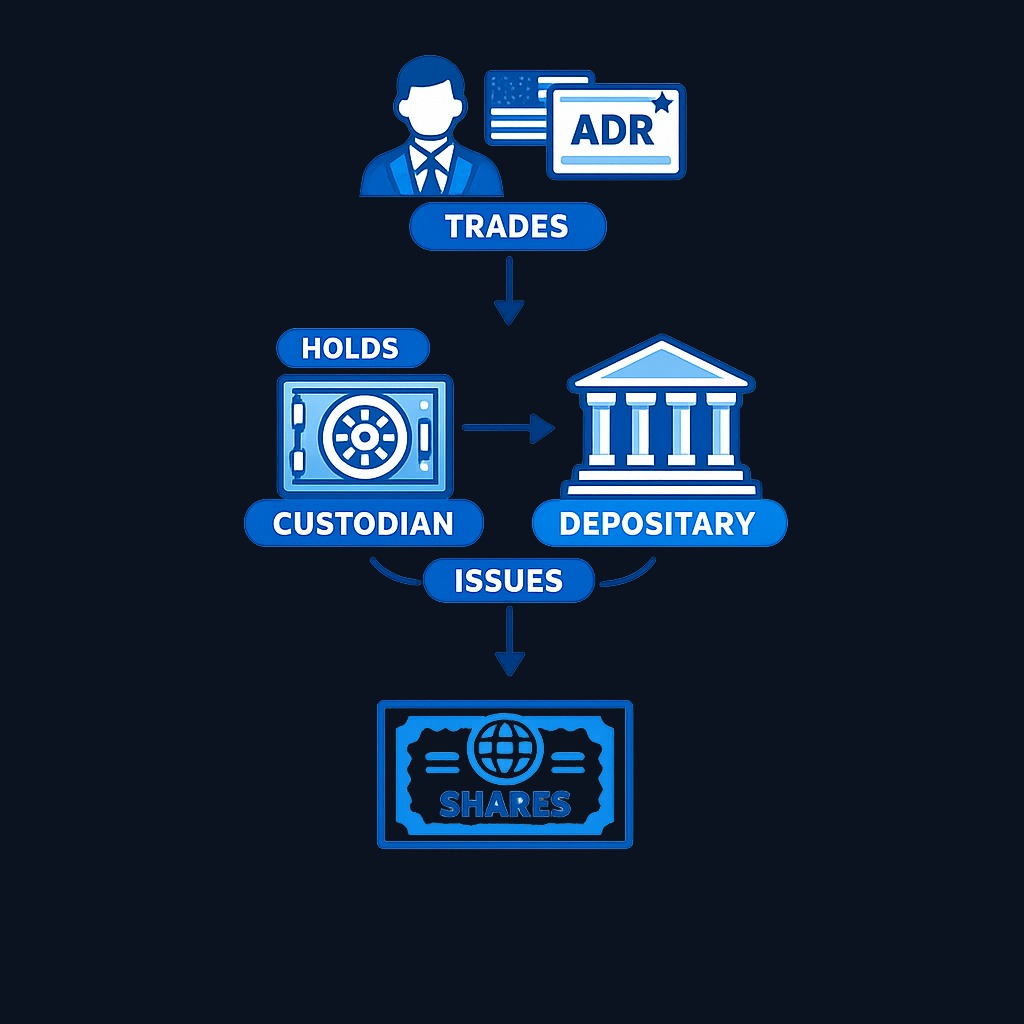
In a depositary program, the underlying foreign shares are held by a custodian for the depositary, which issues ADSs evidenced by ADRs. The deposit agreement states the ADS-to-underlying-share ratio, fees, voting process, distributions, and termination terms. Depending on the program, the ADSs trade on a U.S. exchange or over the counter.
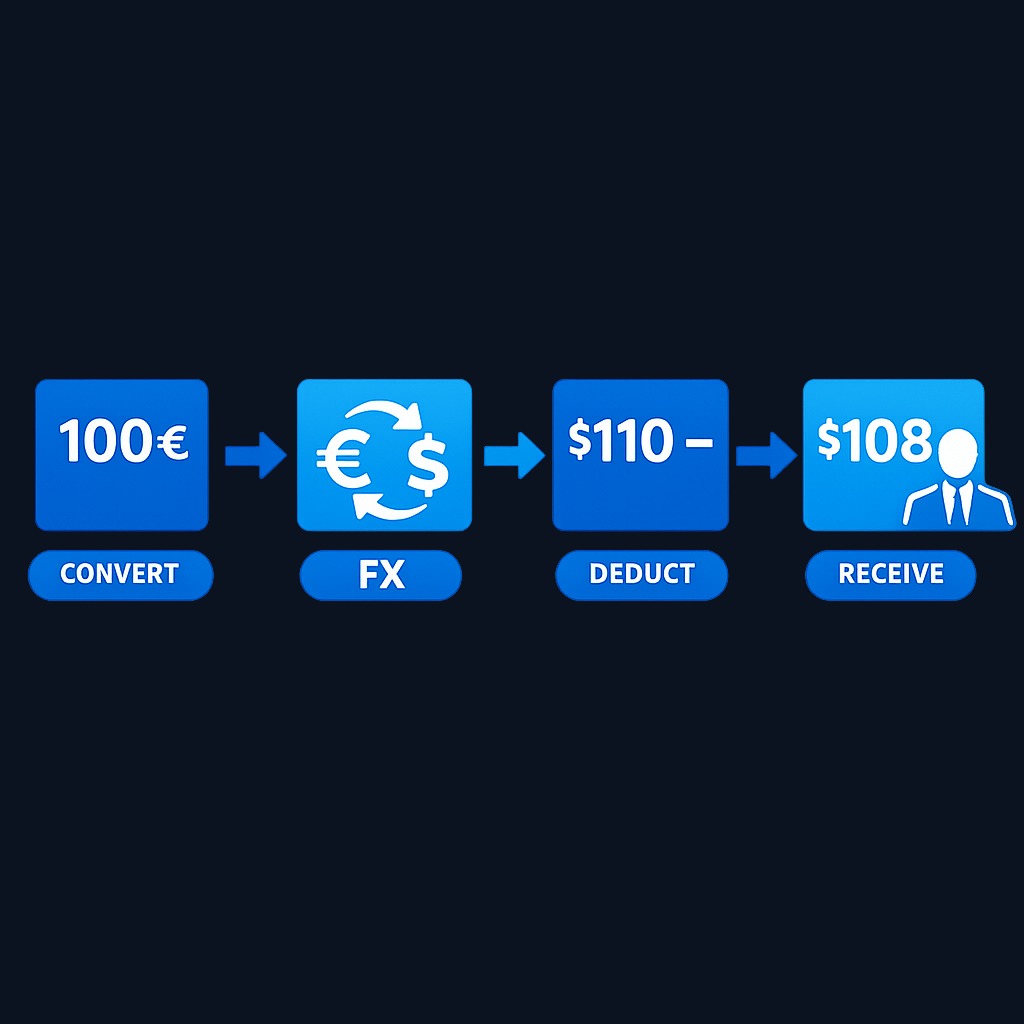
When the foreign company pays a dividend, the depositary bank converts it into U.S. dollars and passes it along to ADR holders, usually after subtracting a custody or processing fee. Prices of the ADR and the underlying home-market shares generally track each other closely, because professional traders arbitrage away large gaps. You buy and sell an ADR through the same brokerage account you already use, during regular U.S. trading hours.
A related term is American Depositary Share (ADS). The ADS is the U.S. depositary security representing an interest in the deposited foreign shares; it is not the underlying foreign ordinary share itself. The ADR is the physical or electronic certificate that evidences one or more ADSs. Market participants often use “ADR” loosely for the traded ADS.
Types of American depositary receipts
ADRs come in two broad categories and three levels, and the differences matter for what information you get as an investor.
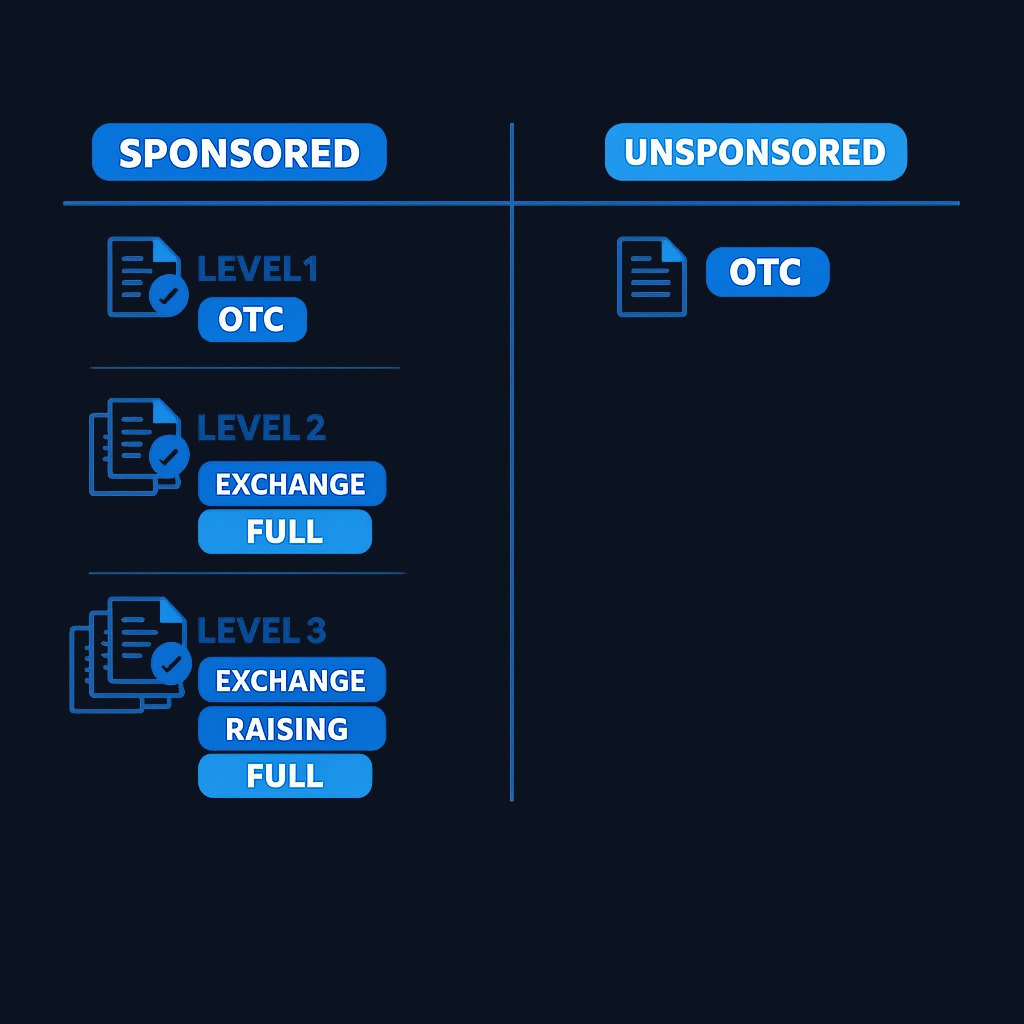
- Sponsored ADRs are created with the foreign company's cooperation. The company signs an agreement with one depositary bank and typically takes on reporting responsibilities.
- Unsponsored ADRs are created by banks without the company's direct participation. They trade over the counter, may have several banks issuing receipts for the same stock, and often come with thinner disclosure.
Sponsored programs are further split by level:
| Level | Where it trades | Reporting burden | What it means for you |
|---|---|---|---|
| Level I | Over the counter | Lightest; limited U.S. disclosure | Least transparency, wider spreads |
| Level II | U.S. exchanges (NYSE, Nasdaq) | Registers with the SEC and files annual reports | Exchange listing standards apply |
| Level III | U.S. exchanges, can raise capital | Fullest SEC reporting, including offerings | Most disclosure and liquidity |
Exchange-listed foreign issuers file an annual report on Form 20-F, which you can pull for free from the SEC's EDGAR database. Reading the 20-F is the closest equivalent to reading a U.S. company's 10-K.
Benefits of investing in ADRs
The appeal of ADRs is convenience with familiar plumbing:
- Dollar-denominated trading. You buy, sell, and receive dividends in U.S. dollars, with no foreign brokerage account or currency conversion on your side.
- Familiar market hours and settlement. ADRs trade during U.S. sessions through your existing broker, with U.S.-style settlement and account statements.
- Access to global names. Many of the world's largest companies outside the U.S. are available as ADRs, which broadens the menu for diversification beyond domestic stocks.
- Dividend handling done for you. The depositary bank collects the foreign dividend, converts the currency, and credits your account.
For a long-term investor who simply wants some non-U.S. exposure in single names, ADRs remove most of the operational friction of investing abroad.
Risks and considerations when investing in ADRs
ADRs carry every risk of the underlying business plus a few layers of their own:
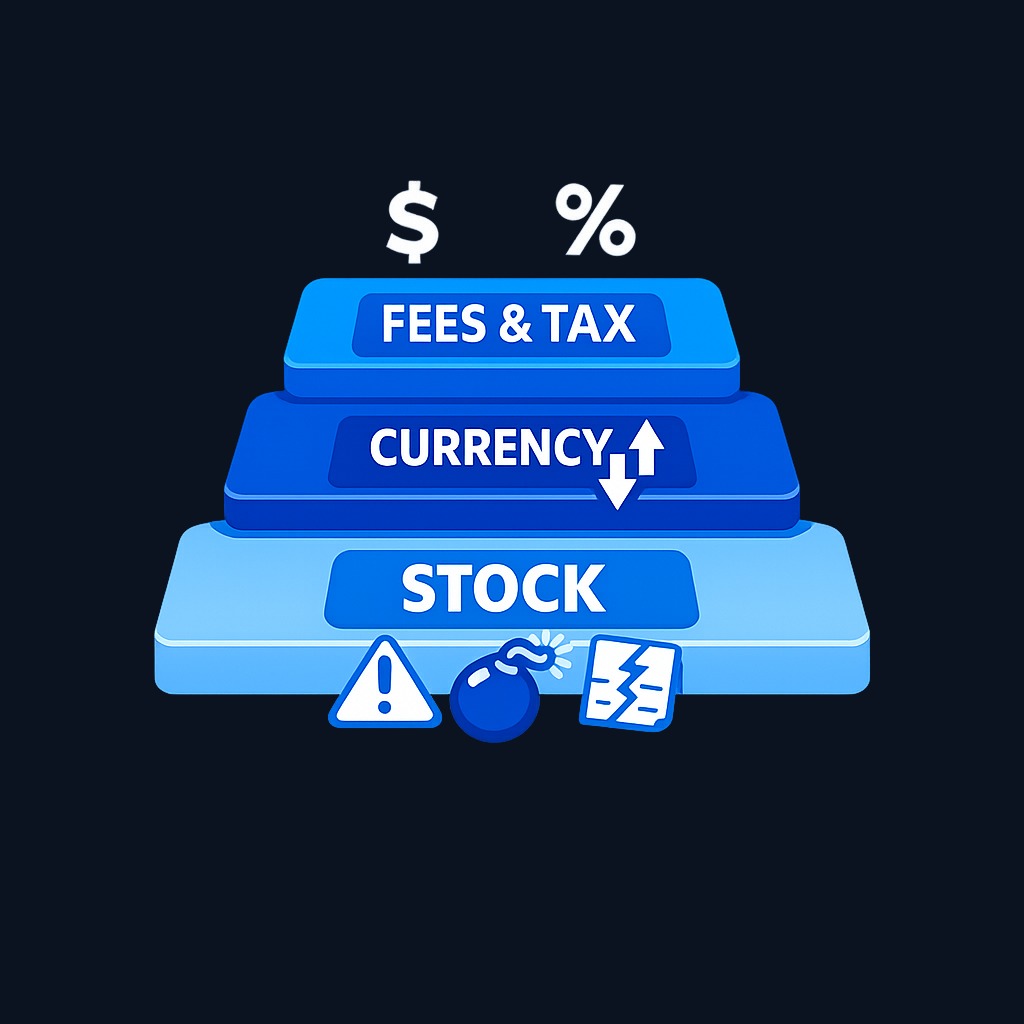
- Currency risk. Even though you trade in dollars, the underlying shares live in another currency. If that currency weakens against the dollar, your ADR's value and your dividend income can fall even when the stock is flat at home.
- Depositary fees. Banks commonly deduct a pass-through fee, often a few cents per share per year, from dividends or through your broker.
- Foreign dividend withholding tax. The home country may withhold tax before a distribution reaches the holder. A U.S. taxpayer may qualify for a foreign tax credit or deduction, but limits, treaty rates, account type, and documentation matter. See IRS Publication 514 and consult a tax professional for the specific program.
- Disclosure gaps. Unsponsored and Level I programs are not held to full SEC reporting, so financial information can be dated, less detailed, or presented under foreign accounting standards.
- Liquidity and delisting risk. Some ADRs trade thin volumes with wide spreads, and programs can be terminated, forcing holders to sell or convert to foreign shares.
- Political and regulatory risk. Sanctions, capital controls, or a regulatory dispute can disrupt an ADR program in ways that rarely affect a domestic stock.
Practice investing with Finelo
Build practical investing skills with guided lessons, simulator practice, and structured challenges.
How to buy and sell american depositary receipts
Start with the program rather than guessing from the ticker. Some U.S. OTC symbols ending in Y are depositary receipts, while symbols ending in F often identify foreign ordinary shares; these suffixes are conventions, not universal guarantees. Confirm the security type, CUSIP or ISIN, ADS ratio, sponsorship, program level, depositary, fees, and termination provisions through the broker, depositary directory, deposit agreement, and SEC filings before trading.
Selling works the same way in reverse. Keep two tax records in mind: the foreign withholding taken from each dividend and your cost basis in dollars. Both flow into your U.S. tax return.
What to know before deciding
Ask three questions before adding an ADR to your portfolio. First, does the specific company justify single-stock risk, or would a broad international fund achieve your goal with less effort? Second, is the program sponsored and exchange-listed, so you get full SEC-grade disclosure? Third, do the fee and withholding math still make the dividend yield attractive after deductions? If any answer is shaky, the position may not be worth the added complexity. Beginners often start with one or two large, liquid, Level II or III ADRs while they learn how currency moves and withholding affect real returns.
Decision framework: is an ADR the right vehicle for you?
| Your situation | Sensible route |
|---|---|
| Want broad international exposure with minimal work | An international index fund or ETF may serve better than single ADRs |
| Have conviction in one specific foreign company | A sponsored, exchange-listed ADR (Level II or III) |
| Comfortable with OTC markets and thinner disclosure | Level I or unsponsored ADRs, sized small |
| Want to avoid currency swings entirely | No ADR achieves this; currency risk is inherent |
Treat the table as a starting point, not advice. The right choice depends on your risk tolerance, time horizon, and how much research you can realistically maintain on a foreign issuer.
FAQ
What is an american depositary receipt in simple terms?
It is a U.S.-traded certificate, issued by a depositary bank, that represents shares of a foreign company. Owning the ADR gives you the economic exposure of the foreign stock while you trade in dollars on U.S. markets.
Do ADR holders get dividends?
Yes. The depositary bank collects dividends from the foreign company, converts them to dollars, deducts any program fee and foreign withholding tax, and credits the remainder to your brokerage account.
What is the difference between an ADR and an ADS?
The ADS is the U.S. depositary security representing an interest in underlying foreign shares held by a custodian. The ADR is the certificate evidencing one or more ADSs. “ADR” is often used informally for the traded ADS, but neither term means the underlying foreign ordinary share.
Are ADRs riskier than U.S. stocks?
They add layers of risk on top of normal stock risk: currency movements, foreign withholding taxes, potentially lighter disclosure, and program termination. Whether the total risk is higher depends on the company and program level.
Conclusion and next steps
ADRs are the practical bridge between U.S. brokerage accounts and foreign companies: dollar-denominated, dividend-forwarding, and tradable during regular U.S. hours. The trade-offs are currency exposure, program fees, withholding taxes, and disclosure that varies by level. If you decide to proceed, favor sponsored, exchange-listed programs, read the issuer's Form 20-F, and size the position so a bad currency year cannot derail your plan. Practice evaluating one real ADR end to end before committing money - the Finelo app's guided lessons and simulations are built for exactly that kind of hands-on learning.
InvestingFundamental AnalysisBeginner
Practice investing with Finelo
Build practical investing skills with guided lessons, simulator practice, and structured challenges.
About the author
Finelo Team
The Finelo Team creates practical investing and trading education designed to help beginners learn faster with structured challenges, simulator practice, and bite-sized lessons.
Keep reading — Related articles

Investing
Tax-gain harvesting vs. tax-loss harvesting
Compare realizing investment gains with realizing losses, including holding periods, wash sales, offsets, and portfolio tradeoffs.
Finelo Team

Investing
Stable value fund vs. money market fund
Compare investment structure, contract protections, transfer restrictions, net yields, and access inside a retirement account.
Finelo Team

Investing
Single-life vs. joint-life annuity
Compare income for one lifetime with continued payments to a survivor, using equal premiums and matching guarantee terms.
Finelo Team


