Introduction
The 2026 401(k) contribution limit is $24,500, up from $23,500 in 2025. Workers 50 and older can add an $8,000 catch-up contribution, for a total of $32,500. Workers aged 60 to 63 may qualify for a higher catch-up of $11,250.
The 2026 401(k) contribution limit is $24,500, up from $23,500 in 2025. Workers 50 and older can add an $8,000 catch-up contribution, for a total of $32,500. Workers aged 60 to 63 may qualify for a higher catch-up of…
Practice trading with Finelo
Practice in a simulator, learn with bite-sized lessons, and build confidence before risking real money.
Want to learn more?
Practice in a simulator, learn with bite-sized lessons, and build confidence before risking real money.
Explore FineloThe 2026 401(k) contribution limit is $24,500, up from $23,500 in 2025. Workers 50 and older can add an $8,000 catch-up contribution, for a total of $32,500. Workers aged 60 to 63 may qualify for a higher catch-up of $11,250.
Explore Finelo's 28-day challenges
Turn learning into a daily habit with guided challenge paths.
The same limits apply to 403(b) plans, governmental 457 plans, and the federal Thrift Savings Plan. Below: what changed, who qualifies for the bigger catch-ups, a new Roth rule that hits higher earners, and how to set your paycheck deferrals for the year.
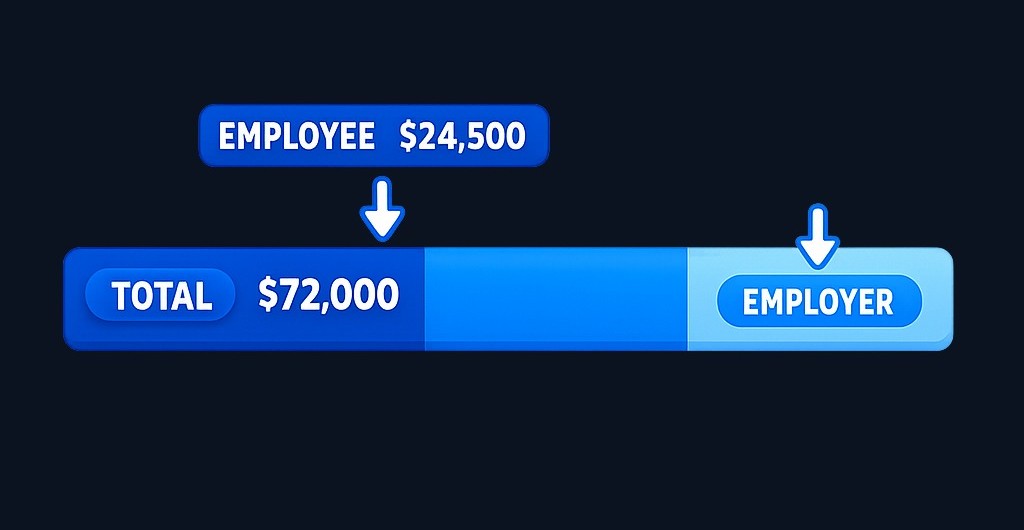
Two limits matter. The first is the elective deferral limit — the money you choose to send from your paycheck into the plan. That's $24,500 for 2026.
The second caps everything entering your account, including employer match and profit-sharing. That combined limit rises to $72,000 in 2026, up from $70,000 in 2025 — and it can reach $80,000 with catch-up contributions.
One more figure affects higher earners: plans can count up to $360,000 of compensation when calculating contributions in 2026.
A catch-up contribution is extra money the IRS lets you defer starting the year you turn 50. It sits on top of the standard limit and helps late starters close the gap.
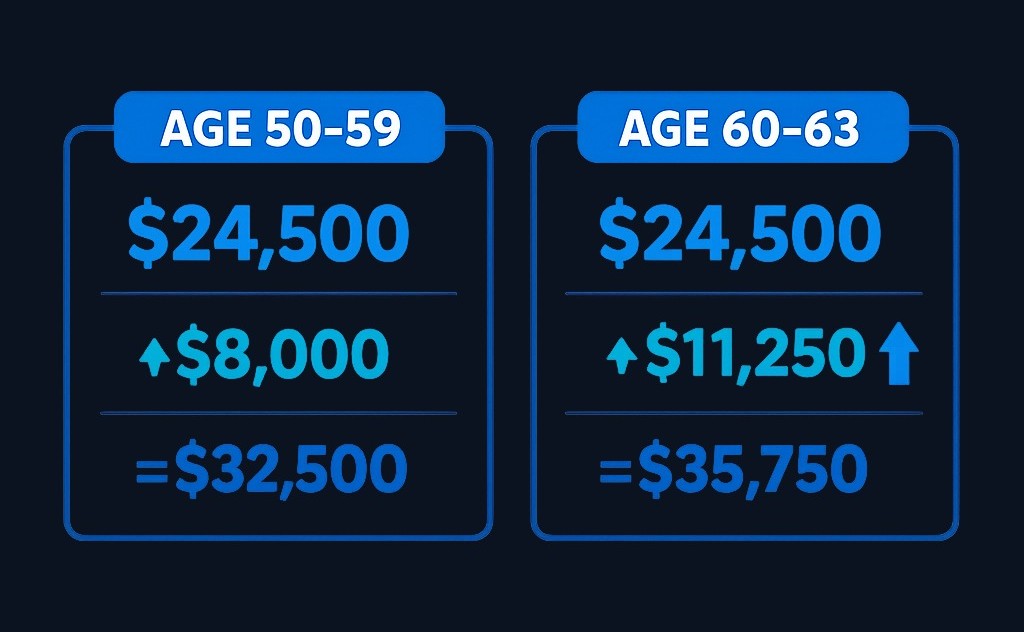
For 2026, the age-50 catch-up rises to $8,000, up from $7,500. That brings the combined maximum to $32,500.
The SECURE 2.0 law added a "super catch-up" for workers who are 60, 61, 62, or 63 at year-end: $11,250 instead of $8,000, for a possible total of $35,750. One caveat: plans choose whether to offer it. Ask your plan administrator before you budget around it.
Inflation adjustments have pushed the limits up steadily:
| Limit | 2024 | 2025 | 2026 |
|---|---|---|---|
| Employee deferral | $23,000 | $23,500 | $24,500 |
| Catch-up (50+) | $7,500 | $7,500 | $8,000 |
| Total incl. employer (section 415(c)) | $69,000 | $70,000 | $72,000 |
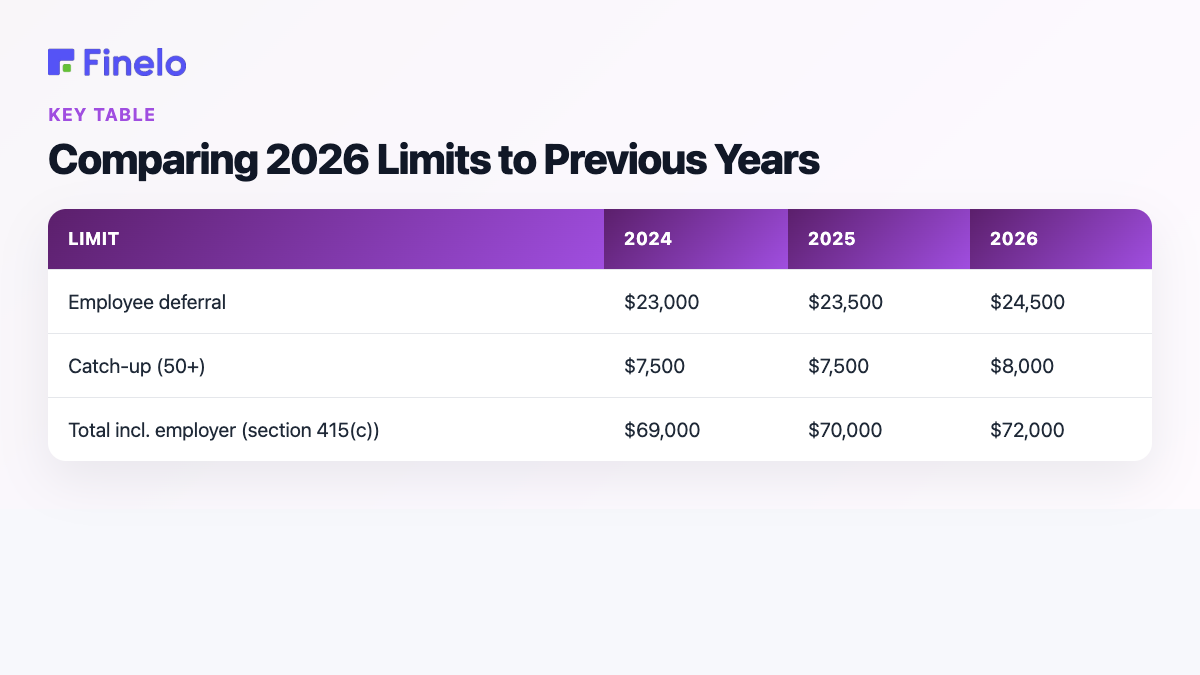
The $1,000 jump in the deferral limit — about 4.3% — is the largest in this stretch. It compounds: an extra $1,000 saved every year adds up meaningfully over two decades.
It also creates a trap. If you set a fixed dollar deferral in 2025 to hit the max, that same election leaves you $1,000 short in 2026. Update your election in January, not December.
Practice trading with Finelo
Practice in a simulator, learn with bite-sized lessons, and build confidence before risking real money.
You don't need to hit $24,500 to come out ahead. Match your target to your income:
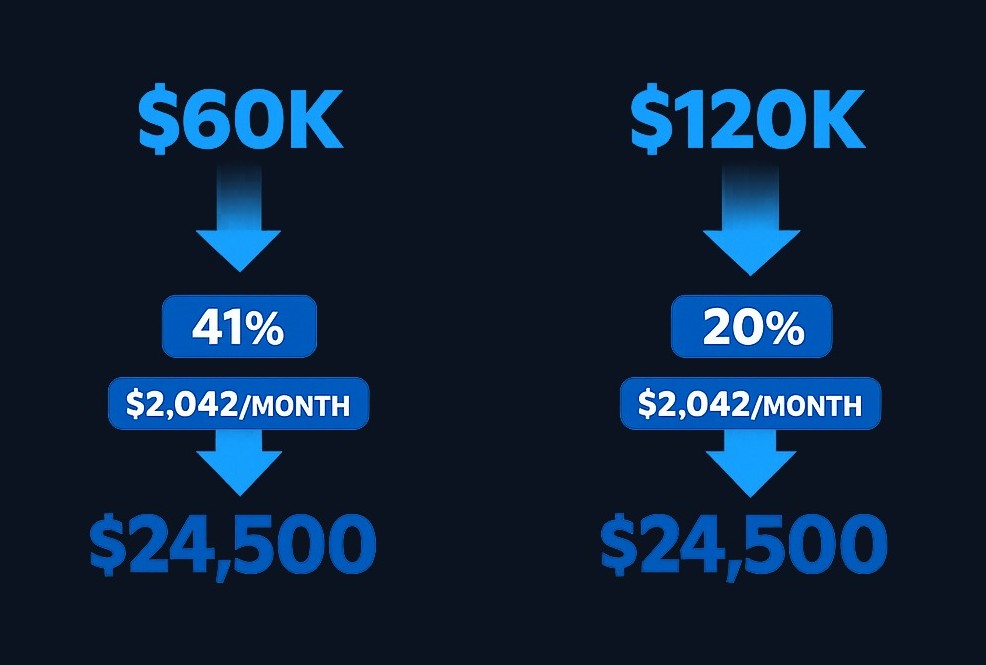
One warning for high earners who max out early: many plans match per paycheck. If you stop contributing in September, you may forfeit match dollars for October through December. Ask whether your plan offers a "true-up" — a year-end correction that restores missed match.
Starting in 2026, higher earners lose a choice. If your prior-year wages from your employer exceeded $150,000, your catch-up contributions must be made on a Roth basis — meaning after-tax.
This shifts when you pay tax, not necessarily how much. Pre-tax catch-ups cut this year's taxable income. Roth catch-ups don't, but qualified withdrawals in retirement come out tax-free. Losing the deduction on $8,000 of catch-ups raises your tax bill now — and may lower it later.
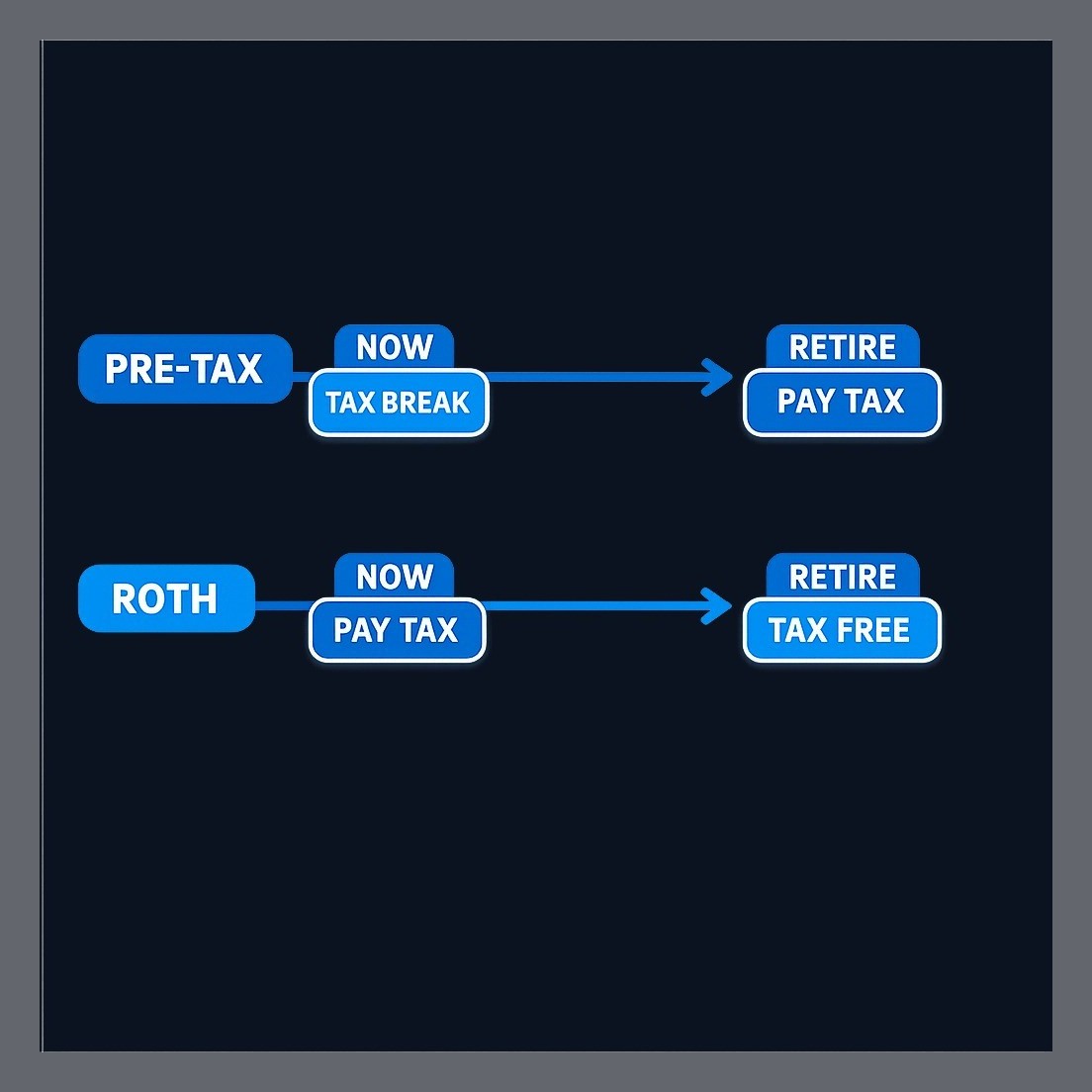
One practical risk: if your plan has no Roth option, affected employees may be unable to make catch-ups at all. Confirm with HR early in the year.
Before your first 2026 paycheck, do three things. Update any fixed-dollar election to reflect the new $24,500 cap. Ask whether your plan adopted the age-60-to-63 super catch-up. And if you earned over $150,000 in 2025, verify your plan supports Roth catch-ups.
This article is educational, not personalized financial advice — the right contribution level depends on your full financial picture.
If you're still building your investing foundations, Finelo's Wealth Growth Quiz can point you to a learning path that fits where you're starting from.
Practice trading with Finelo
Practice in a simulator, learn with bite-sized lessons, and build confidence before risking real money.
Finelo Team
The Finelo Team creates practical investing and trading education designed to help beginners learn faster with structured challenges, simulator practice, and bite-sized lessons.

Mercury Books brings double-entry accounting into Mercury. Review its $35 pricing, reports, AI features, integrations, and migration limits.

Example takeaway: seeing a higher score in a bank app doesn’t guarantee lenders will see the same FICO number at application time; lenders often pull a specific FICO version from a specific bureau.

Brief educational note: this article is educational, not financial or investment advice; investing and credit decisions involve risk and possible loss.
Take what sparked your curiosity and explore it through a guided, 28-day learning challenge.
Find your learning pathPractice trading with Finelo
Explore Finelo