For U.S. readers: This article discusses U.S. rules and financial products. State rules and individual eligibility may differ.
401(k) Hardship Withdrawals for Credit Card Debt: What You Should Know
Educational note: This article is educational and not financial or investment advice.
10 min read
Practice investing with Finelo
Build practical investing skills with guided lessons, simulator practice, and structured challenges.
Want to learn more?
Build practical investing skills with guided lessons, simulator practice, and structured challenges.
Explore FineloExplore Finelo's 28-day challenges
Turn learning into a daily habit with guided challenge paths.
Quick answer
If your goal is to pay down credit card debt, a 401(k) hardship withdrawal is not automatically available. Eligibility depends on the underlying immediate and heavy financial need, the plan's terms, and the amount necessary to meet that need—not simply on the fact that a card balance exists. Review the IRS guidance on hardship distributions. Finelo provides financial education, not financial, tax, or investment advice.
Introduction to 401(k) Hardship Withdrawals
A 401(k) hardship withdrawal lets some participants take money from a retirement account before typical distribution age because of an urgent financial need. The option and the permitted reasons depend on both IRS rules and your employer’s plan documents. Use this article to quickly assess whether your credit card balances might be covered, what documentation helps, and better options to consider instead.
What to know before deciding
Before you consider tapping retirement savings, remember three practical realities:
- A hardship withdrawal is governed by both the plan document and federal tax rules. Review the IRS guidance on hardship distributions, then request the plan's written policy from its administrator.
- Even if your plan permits a hardship distribution, the request must identify an immediate and heavy financial need covered by the plan. A credit-card statement alone does not establish that category.
- Withdrawing retirement money reduces long-term savings and can have tax and other consequences; treat it as a last resort and compare alternatives first.
Educational note: This article is educational and not financial or investment advice. Investing and withdrawing retirement savings can involve loss.
Understanding IRS guidelines for hardship withdrawals
The IRS frames hardship distributions as a way to permit withdrawals in cases of immediate and heavy financial need, but does not automatically let participants use retirement funds for ordinary consumer debt. The IRS guidance explains that many plans allow hardship withdrawals for certain qualifying events and warns participants to consider the consequences before taking a distribution.
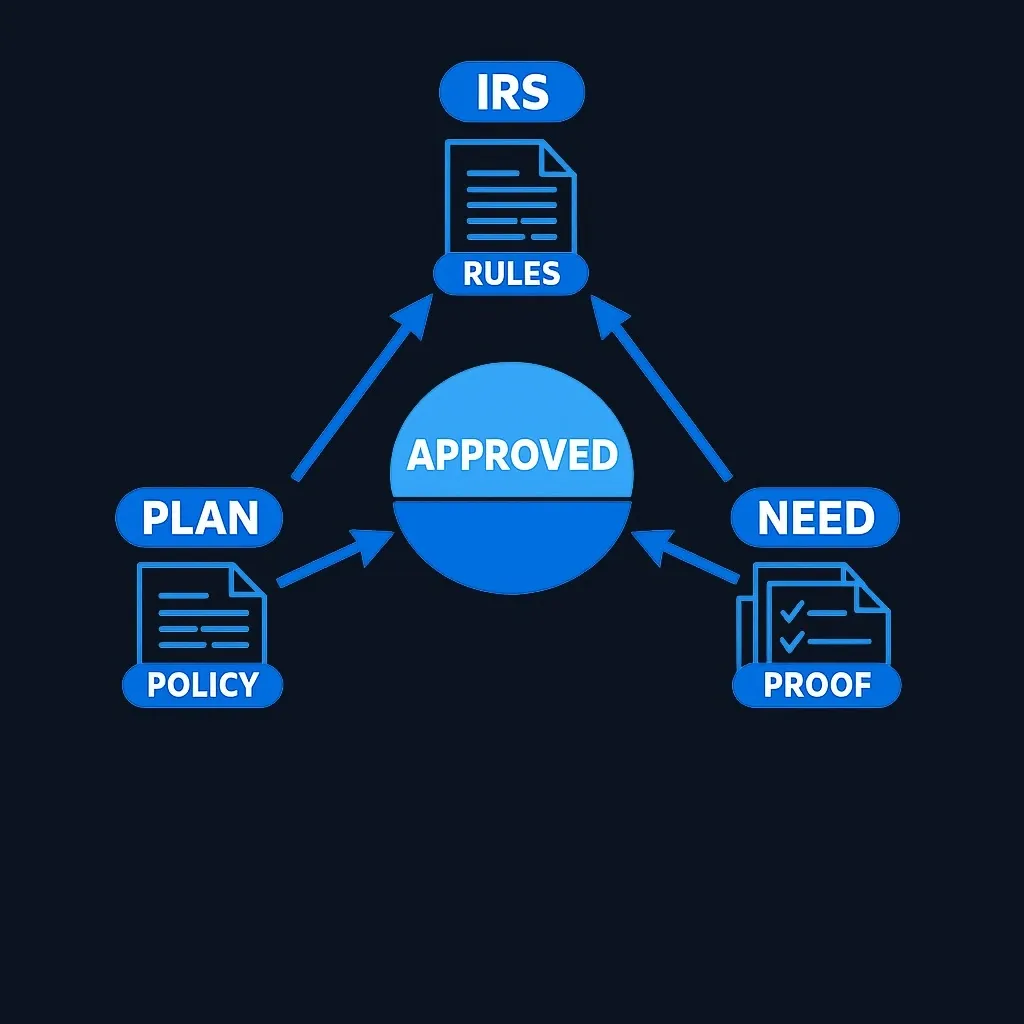
What this means in practice:
- Your plan document defines which hardships the plan will accept and the process to apply.
- The IRS guidance is used by plan sponsors when they write rules; employers can be stricter than IRS language.
- Because plan specifics vary, contact your plan administrator early to learn whether your situation could meet your plan’s standard for hardship.
Concrete next step: request your plan’s summary plan description or hardship-distribution policy, and flag the administrator for any documentation checklist they require.
Qualifying expenses for hardship withdrawals
Plans and the IRS limit hardship withdrawals to certain kinds of immediate needs. Rather than a universal list, treat qualifying expenses as categories that require clear documentation and a direct link to the need.
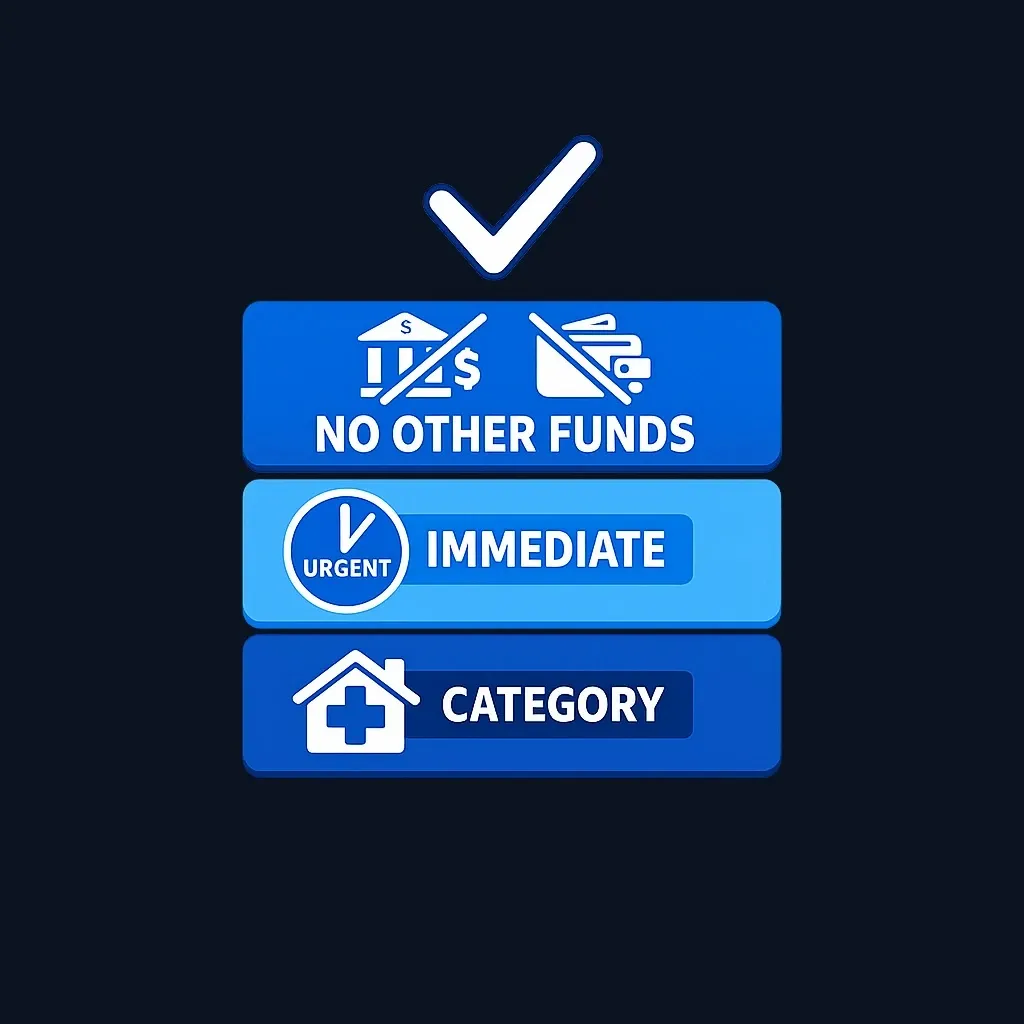
How to document a qualifying hardship (practical checklist)
- Identity of the need: an official bill, court notice, or estimate that shows the expense amount and urgency (for example, a past-due eviction notice or medical provider statement).
- Evidence of payment responsibility: bills in your name, invoices, or explanation-of-benefits showing you are responsible for the charge.
- The written representation required by the current hardship rules concerning reasonably available cash or liquid assets, plus any additional information the plan's current form requests.
- Itemized request: a cover letter explaining how the expense is immediate and why other sources are unavailable.
Example documentation scenarios (what to gather)
- Housing risk: eviction or foreclosure notice that lists the amount due and date.
- Medical emergency: medical bills, provider statements, and explanation of benefits showing out-of-pocket responsibility.
- Disaster-related loss: FEMA or local-authority paperwork showing damage and expenses.
Caveat: Do not assume that simply having a credit card balance is proof of a qualifying hardship. If the card balance exists because of a qualifying expense (for example, emergency medical bills charged to a card), the underlying expense and supporting documents are what matter.
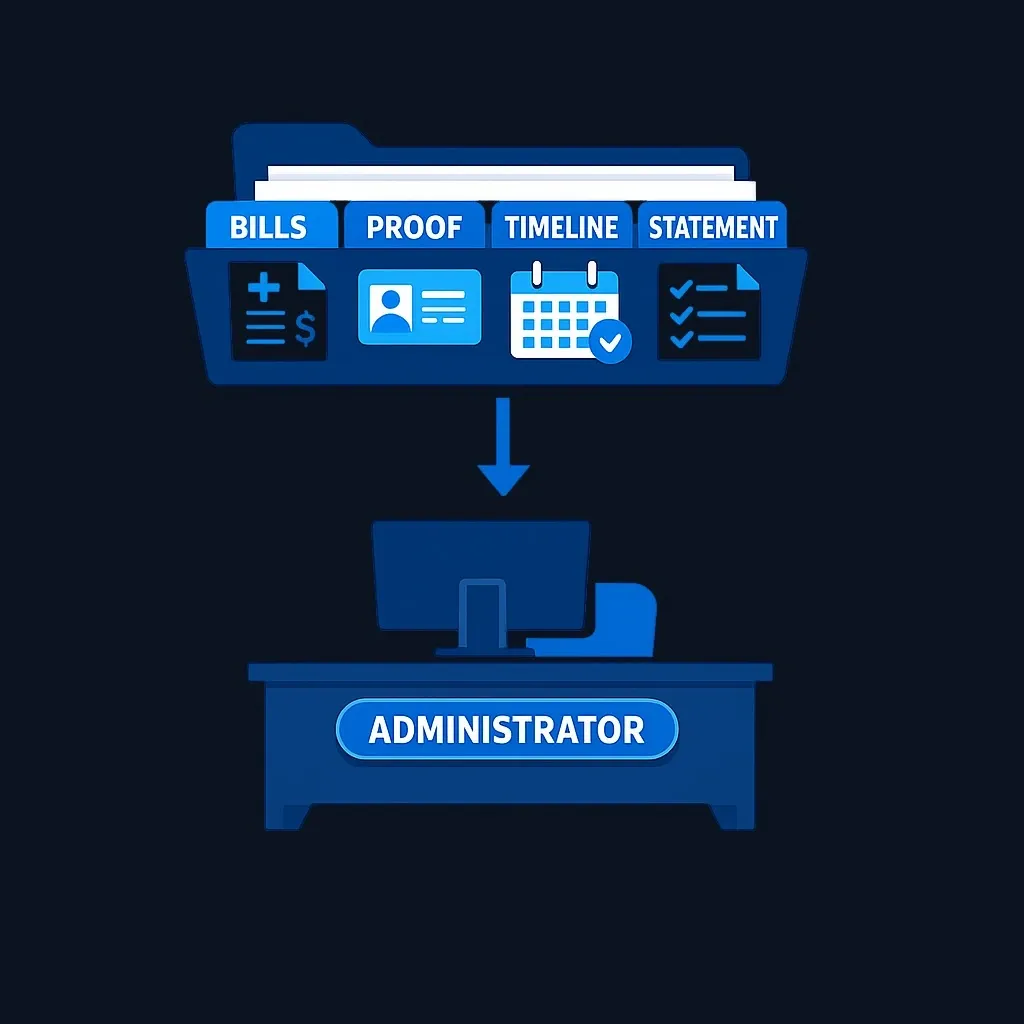
Practical tip: Assemble a single packet with bills, notices, account statements, and a short timeline explaining the need. That packet speeds review and strengthens your case.
Practice investing with Finelo
Build practical investing skills with guided lessons, simulator practice, and structured challenges.
Tax implications of hardship withdrawals
Hardship distributions affect taxes and retirement savings. Consult a tax professional for your situation; the IRS guidance explicitly asks participants to “consider the consequences” of a hardship distribution before taking one.
Key tax and long-term effects to weigh
- Tax treatment and reporting: distributions taken from a retirement account are subject to the plan’s distribution rules and tax reporting; review your plan’s guidance and IRS directions.
- Retirement depletion: withdrawing funds reduces the balance compounding for future retirement — this is a structural, long-term cost to your future income.
- Current federal rules do not permit a plan to impose the old six-month contribution suspension as a hardship condition. Check the current plan document rather than relying on pre-2020 descriptions.
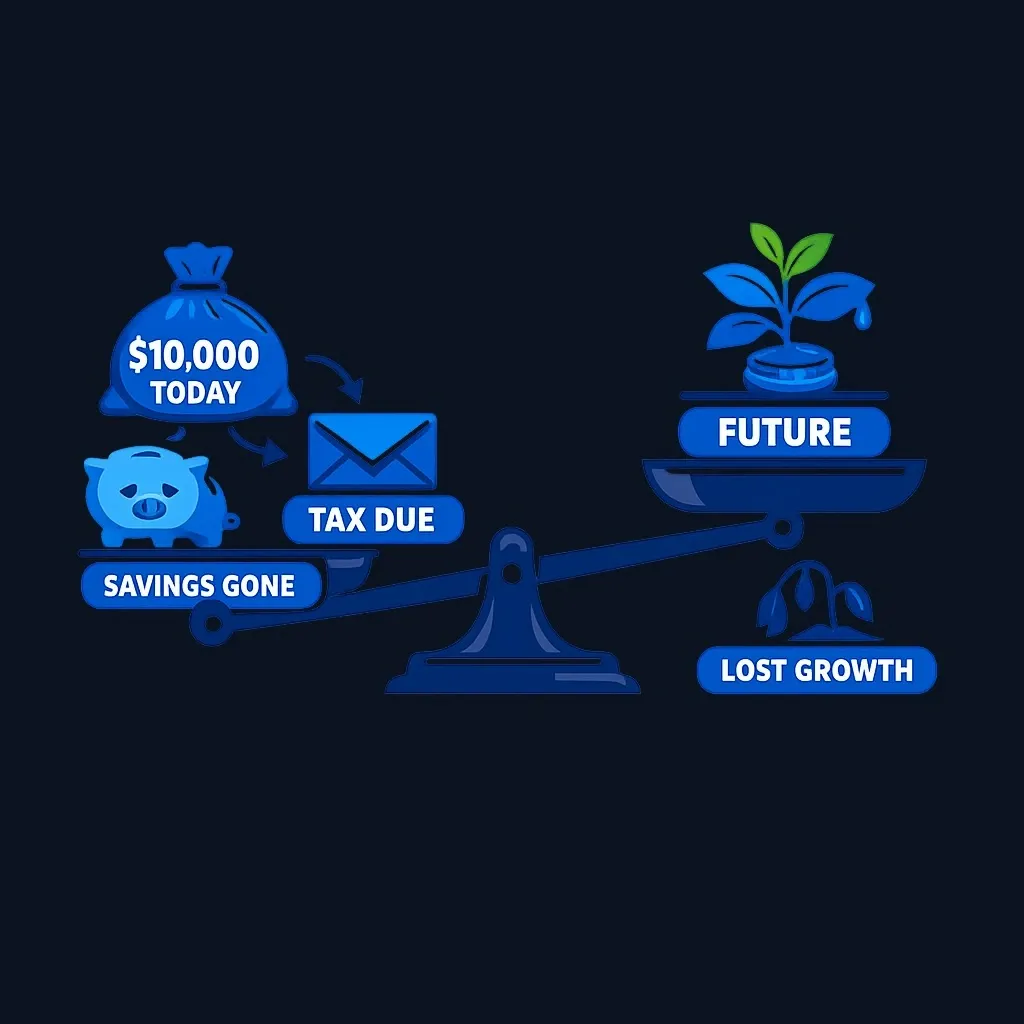
Decision caveat: Because tax rules and plan treatments can vary, use the IRS page above for the regulatory framing and get plan-specific answers from your administrator.
Alternatives to hardship withdrawals for managing credit card debt
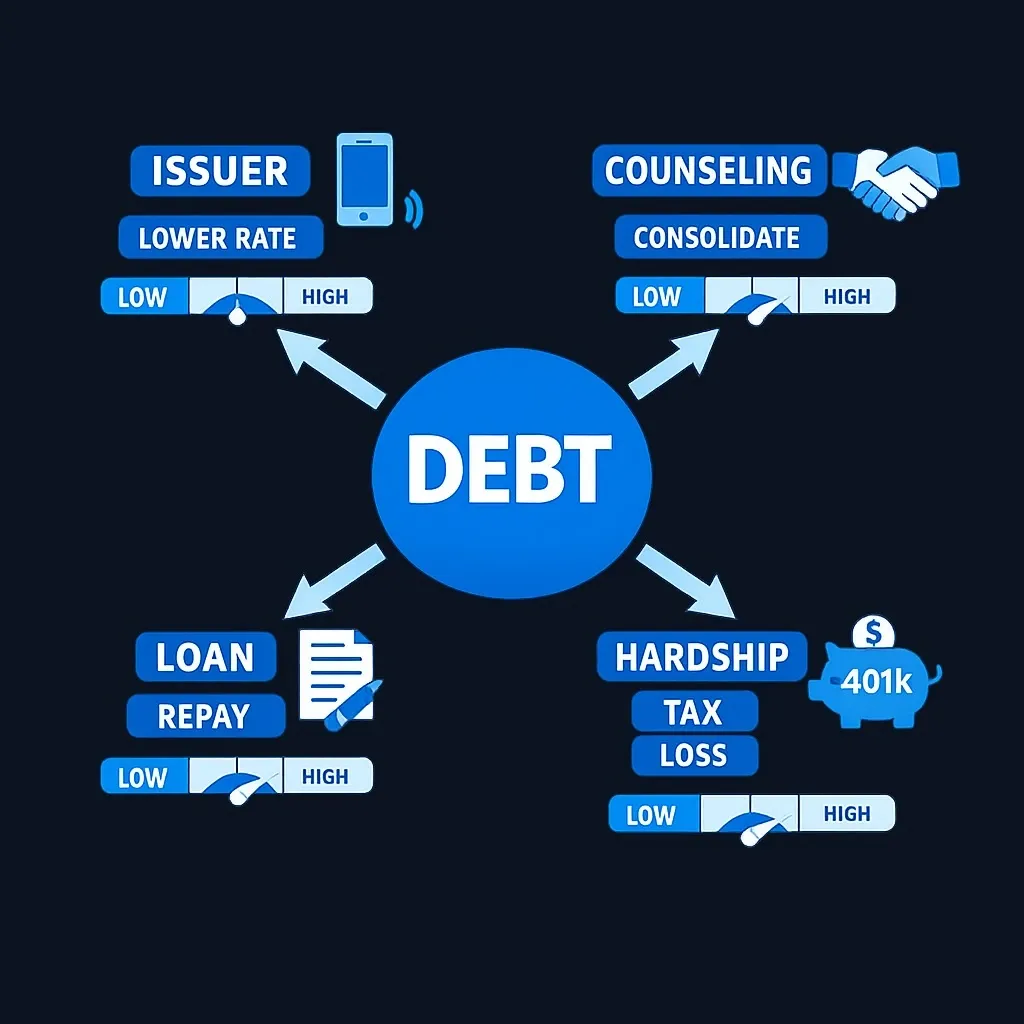
Tapping a retirement account is often costly relative to other strategies. Below is a compact comparison to help you evaluate alternatives without using precise numeric limits that depend on your plan and tax situation.
| Option | How it helps | When to prefer it |
|---|---|---|
| 401(k) hardship withdrawal | Provides immediate cash if plan and IRS reasons are met | Only when an eligible qualifying expense exists and no other source can meet it |
| 401(k) loan | Lets you borrow from your balance and repay to your account | If your plan offers loans and you can reliably repay; avoids immediate tax reporting (plan rules vary) |
| Debt management / consolidation | Lowers interest or monthly payment via negotiated terms | If you have steady income and want a structured repayment plan |
| Balance transfer to lower-rate card / 0% APR offer | Moves debt to a lower-cost temporary rate | If you can pay down balance before the promotional period ends |
| Negotiating with creditors / hardship programs | May lower payments or interest temporarily | When you can demonstrate hardship and need a short-term relief plan |
| Nonprofit credit counseling | May organize a debt-management plan after a budget review | When minimum payments are unaffordable and fees and creditor terms are verified |
Note: Whether a 401(k) loan or hardship withdrawal is available depends on your plan document. Loans and hardship distributions have different consequences; confirm plan specifics with your administrator.
Practical alternatives checklist
- Call your credit card issuer to ask about hardship programs or lower payments.
- Get a written estimate from a credit counselor about consolidation or repayment plans.
- Compare monthly cash-flow outcomes of each option for 12–36 months before deciding.
Hypothetical hardship-withdrawal scenarios
Below are hypothetical scenarios that illustrate typical tradeoffs. These are illustrative examples, not sourced case studies.
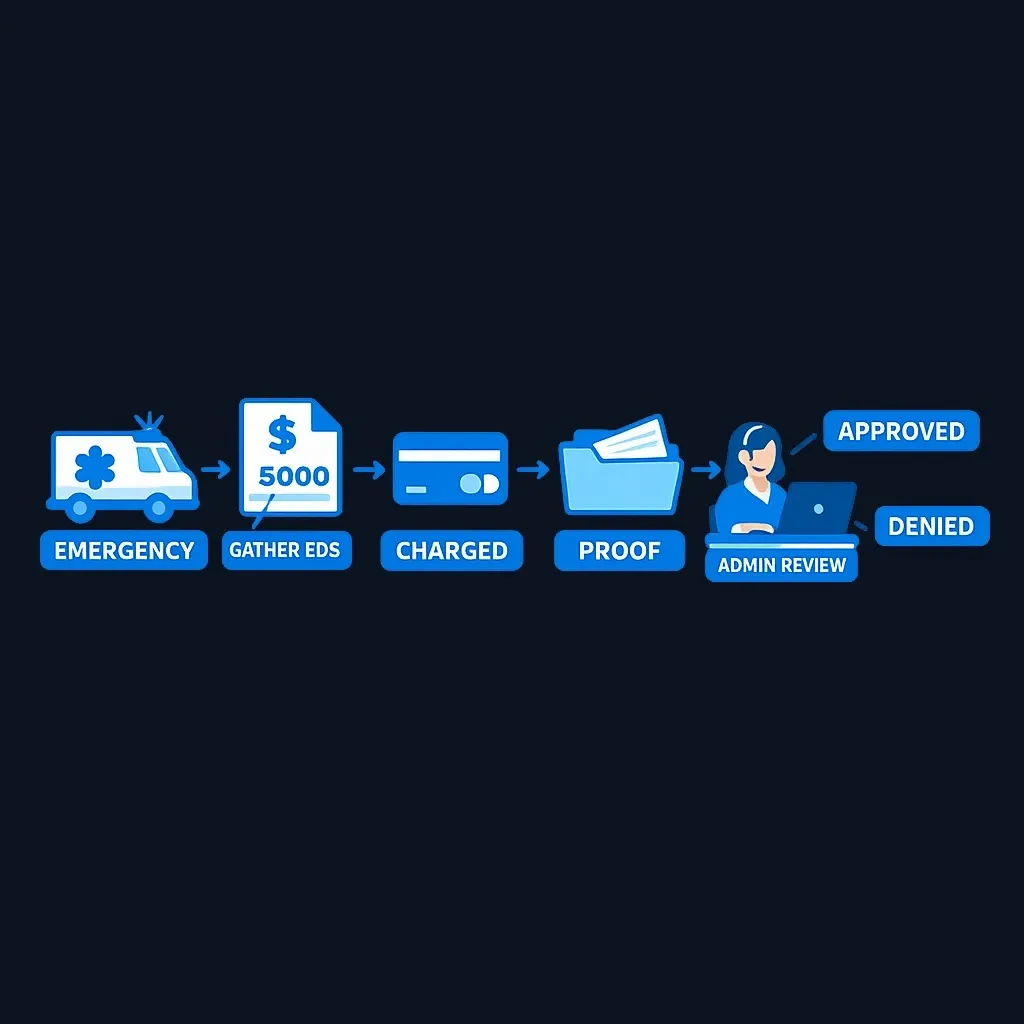
Scenario A — Emergency medical bills charged to credit cards
- Problem: A sudden medical bill was placed on a credit card, creating unaffordable monthly payments.
- Verification path: The person gathers the original provider bills and explanation of benefits, then asks whether the plan evaluates the underlying Section 213(d) medical expense when it has already been paid by card. The administrator—not the article—determines whether the plan permits a distribution and what amount is substantiated.
Scenario B — Long-standing credit card balances with high interest
- Problem: Large revolving balances from everyday spending and no qualifying underlying hardship.
- Verification path: Because routine card debt is not itself a listed safe-harbor category, the person asks the issuer about a hardship program and evaluates a reputable nonprofit credit counselor. No outcome is assumed.
Scenario C — Job loss and mixed obligations
- Problem: Job loss caused missed housing payments; credit cards were a secondary symptom.
- Verification path: The participant separates the credit-card balance from payments necessary to prevent eviction from the principal residence, then follows the plan's eviction substantiation process. Approval is not assumed.
Lesson: The underlying cause matters. Use targeted documentation that ties charges to qualifying expenses. If the credit-card balance is mainly consumer debt, explore alternatives first.
Decision framework
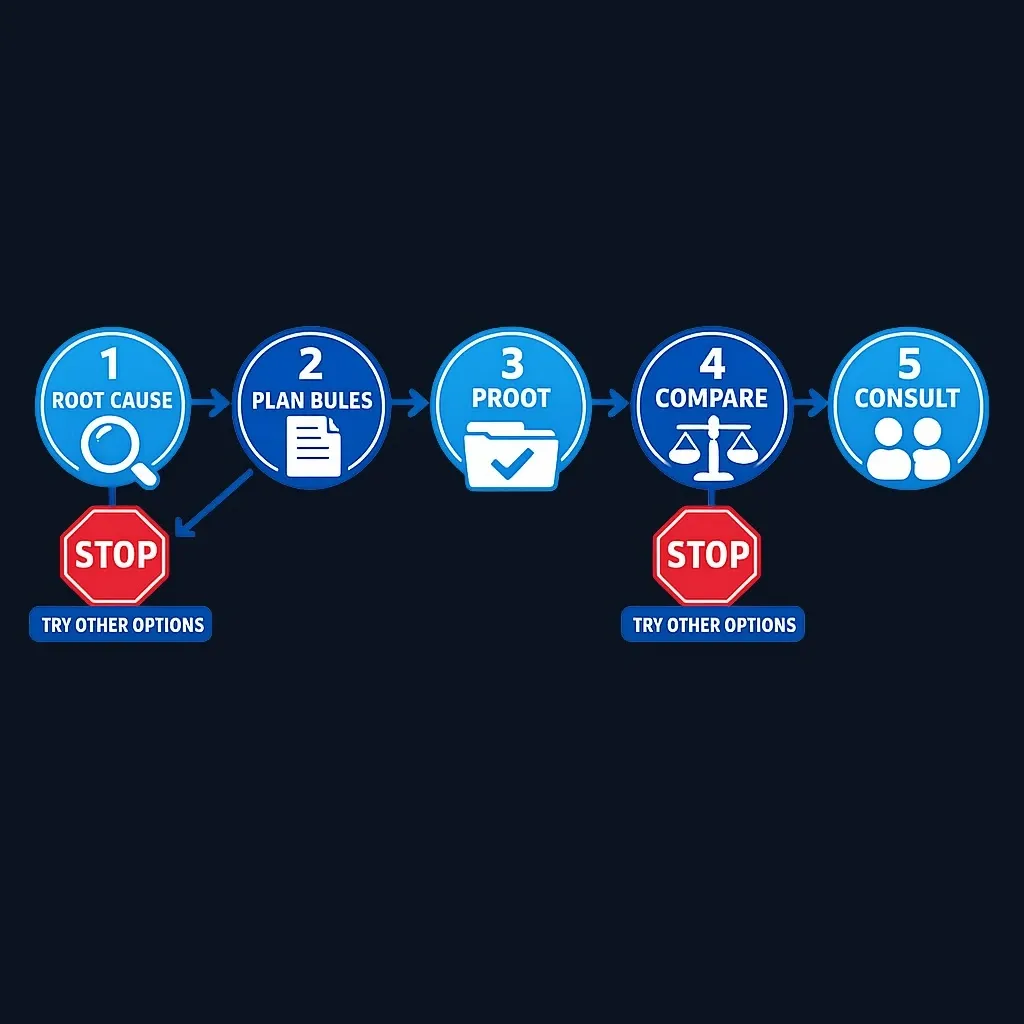
Use this step-by-step framework to decide whether to pursue a hardship withdrawal for credit card debt.
Step 1 — Identify the root cause
- Ask: Is the card balance a result of a qualifying immediate need (medical emergency, housing risk, disaster), or is it consumer debt from routine overspending?
Step 2 — Check plan rules
- Request your plan’s hardship policy and any administrator forms. Plans vary; employers set specific qualifying categories.
Step 3 — Assemble documentation
- Collect bills, notices, invoices, and account statements showing the expense amount, urgency, and why other resources are unavailable.
Step 4 — Compare alternatives
- Run a short scenario comparing monthly cost, long-term retirement impact, and tax consequences for: (a) hardship withdrawal, (b) 401(k) loan (if available), (c) consolidation or counseling.
Step 5 — Consult before you act
- Talk with your plan administrator and a tax or financial professional. If your plan denies the request, ask about the appeal process and next steps.
Quick decision checklist (yes/no)
- Does the expense match a category in the plan’s hardship policy?
- Can you document the immediate need and lack of other resources?
- Have you compared the withdrawal's taxes and permanent retirement impact with available alternatives? If the underlying expense is covered by the plan, contacting the plan administrator for a determination is the appropriate next step.
Frequently Asked Questions
What is a 401(k) hardship withdrawal?
A hardship withdrawal is a distribution allowed under certain 401(k) plans for participants who demonstrate an immediate and heavy financial need. The IRS advises participants and plan sponsors to consider the consequences before taking such distributions.
How do I know if I qualify for a hardship withdrawal?
Qualification depends on your plan’s hardship rules and the IRS framework; you must show the expense is immediate and heavy and that other resources are not reasonably available. Start by requesting your plan’s hardship-distribution policy and documentation checklist from your administrator.
Can I take a hardship withdrawal if I have credit card debt?
Whether credit card debt qualifies depends on the source of the charges. If the debt exists because of an underlying qualifying expense you can document, that underlying expense may form the basis of a hardship claim. If the balance is ordinary consumer debt, it is less likely to be accepted; confirm with your plan administrator.
What should I consider before taking a hardship withdrawal?
Consider tax treatment, long-term loss of retirement savings, whether you can access lower-cost alternatives, and the documentation required by your plan. Consult the plan administrator and a tax or financial professional before proceeding.
Conclusion and next steps
Summary: A 401k hardship withdrawal for credit card debt is not a simple shortcut; eligibility depends on plan rules and whether the underlying expense qualifies as an immediate and heavy financial need. Start by checking your plan document, assembling clear documentation, and weighing lower-cost alternatives.
Actionable next step: Request your plan’s hardship policy and documentation checklist from your plan administrator, and review options with a financial or tax professional. For more educational resources, visit the Finelo Blog: Finelo Blog.
InvestingFinancial Education
Practice investing with Finelo
Build practical investing skills with guided lessons, simulator practice, and structured challenges.
About the author
Finelo Team
The Finelo Team creates practical investing and trading education designed to help beginners learn faster with structured challenges, simulator practice, and bite-sized lessons.
Keep reading — Related articles

Investing
Yield to Call vs Yield to Maturity: Assumptions and Bond Risks
Yield to call (YTC) estimates a bond's yield if the issuer redeems it on an eligible call date; yield to maturity (YTM) estimates yield if it remains outstanding to final maturity.
Finelo Team

Investing
Will My Employer Know If I Take a 401(k) Loan?
Who this page is for: readers new to 401(k) loans who want a practical, privacy‑focused explanation — what your employer can see, how to limit visibility, and the financial tradeoffs to weigh.
Finelo Team
Investing
What Medical Expenses Qualify for a 401(k) Hardship Withdrawal?
Before you decide, confirm three things with your plan administrator:
Finelo Team


