Last editorial review: September 28, 2026
457(b) vs. Roth IRA: start with the type of 457(b)
Understand how governmental and nongovernmental 457(b) plans differ from Roth IRAs in taxes, access, and employer-related risk.
10 min read
Practice investing with Finelo
Build practical investing skills with guided lessons, simulator practice, and structured challenges.
Want to learn more?
Build practical investing skills with guided lessons, simulator practice, and structured challenges.
Explore FineloExplore Finelo's 28-day challenges
Turn learning into a daily habit with guided challenge paths.
A 457(b) is an employer retirement plan. A Roth IRA is an individual retirement account. You may be able to use both, so this is often a question of how to divide savings rather than which account must replace the other.
First check whether your 457(b) belongs to a government employer or a tax-exempt nongovernment employer. The rules and risks differ substantially.
The differences that matter
| Feature | 457(b) | Roth IRA |
|---|---|---|
| Access | Through an eligible employer | Opened individually, subject to contribution eligibility |
| Tax treatment | Often pre-tax; a governmental plan may offer Roth contributions | Contributions use after-tax money; qualified withdrawals are tax-free |
| Investment choice | Selected by the plan | Determined by your custodian and investments |
| Contributions | Separate plan limits and applicable catch-up rules | IRA limits, compensation requirements, and income restrictions |
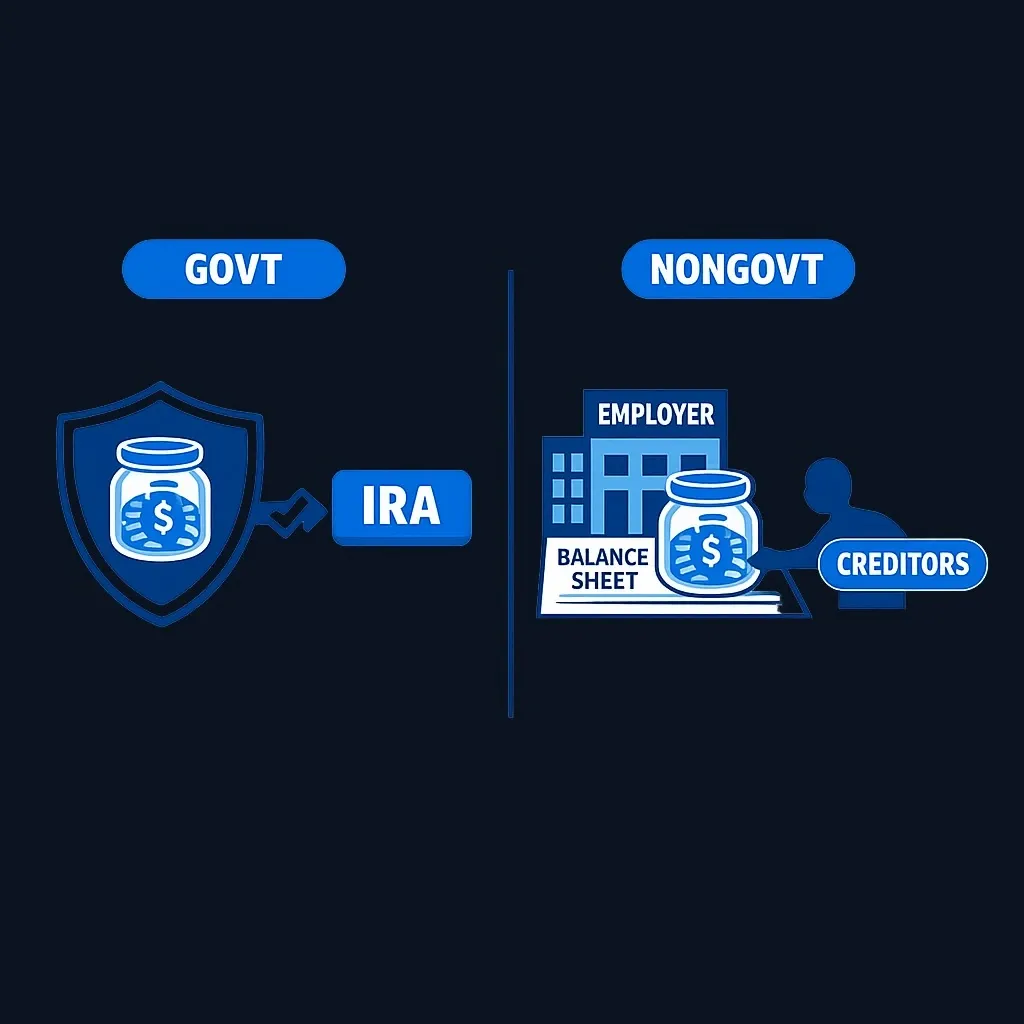
The IRS 457(b) overview covers the two plan categories. Its nongovernmental-plan guidance explains the employer-creditor exposure. With a nongovernmental 457(b), assets generally remain subject to the employer's general creditors, and IRA rollovers are generally unavailable. That is a different risk from an investment declining in value.
Access before retirement
Governmental 457(b) distributions generally are not subject to the 10% additional early-distribution tax that applies to many other retirement accounts, although money rolled in from other plan types can be treated differently. Income tax and the plan's distribution rules still matter. The IRS early-distribution guidance identifies the governmental 457(b) exception.
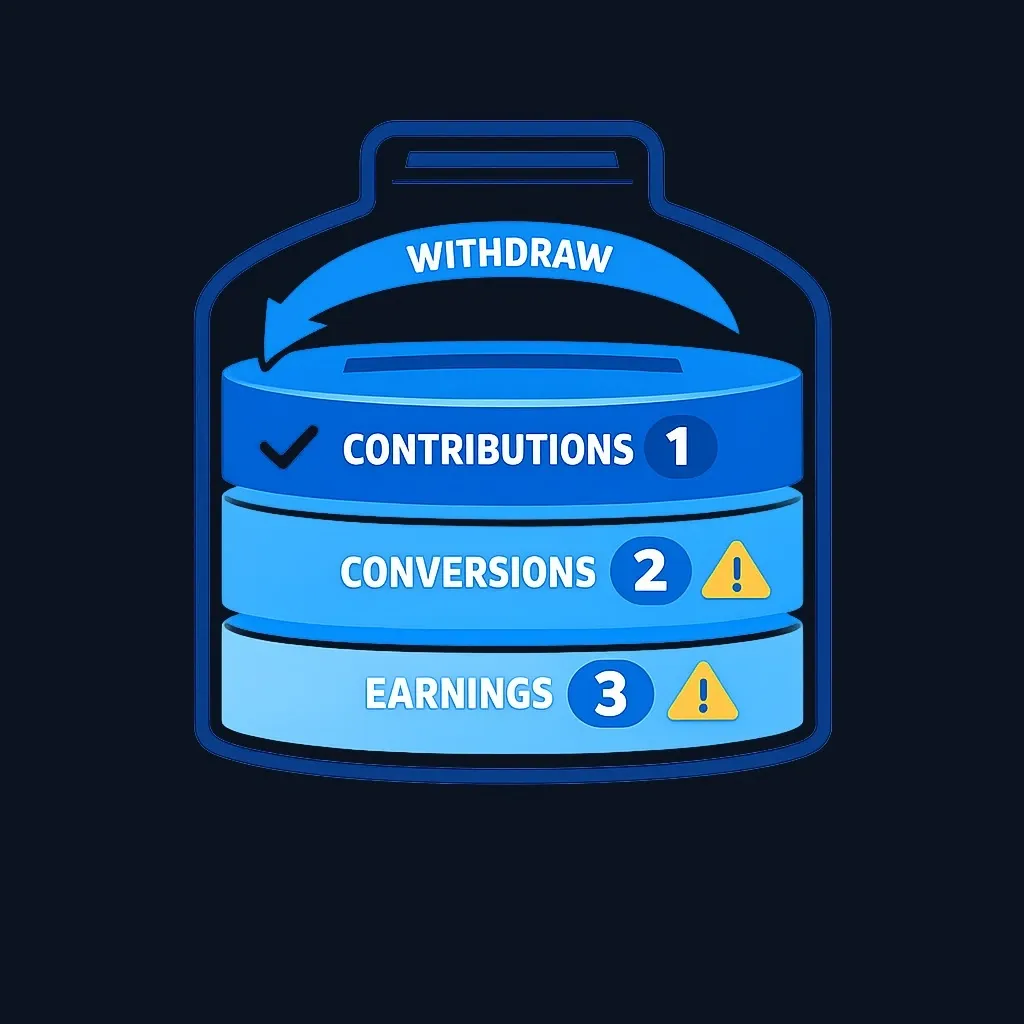
For a Roth IRA, regular contributions generally come out before conversions and earnings under ordering rules. Do not assume every withdrawal is tax-free simply because the account is called Roth. Earnings and converted amounts have additional conditions. See the ordering rules in IRS Publication 590-B and the IRS Roth IRA overview.
How to make the comparison useful
If your employer offers a contribution, understand how to qualify for it. Then compare tax treatment, fees, investments, access rules, and employer-related risk. A hypothetical saver expecting a higher future tax rate may value Roth treatment, but that does not determine which account has the better investments or access features.
Ask the administrator for the plan's legal type, payout rules, and rollover options. Check the current contribution limits for each account separately. A plan brochure that simply says “deferred compensation” is not enough to answer those questions.
Give each account a job in the retirement plan
The decision does not have to be all or nothing. A worker might use payroll deferrals for consistent saving and a Roth IRA for a separate pool of retirement assets with different tax treatment. That combination is useful only when contributions fit the household budget and each account's eligibility rules. Opening two accounts does not create twice as much money to save.
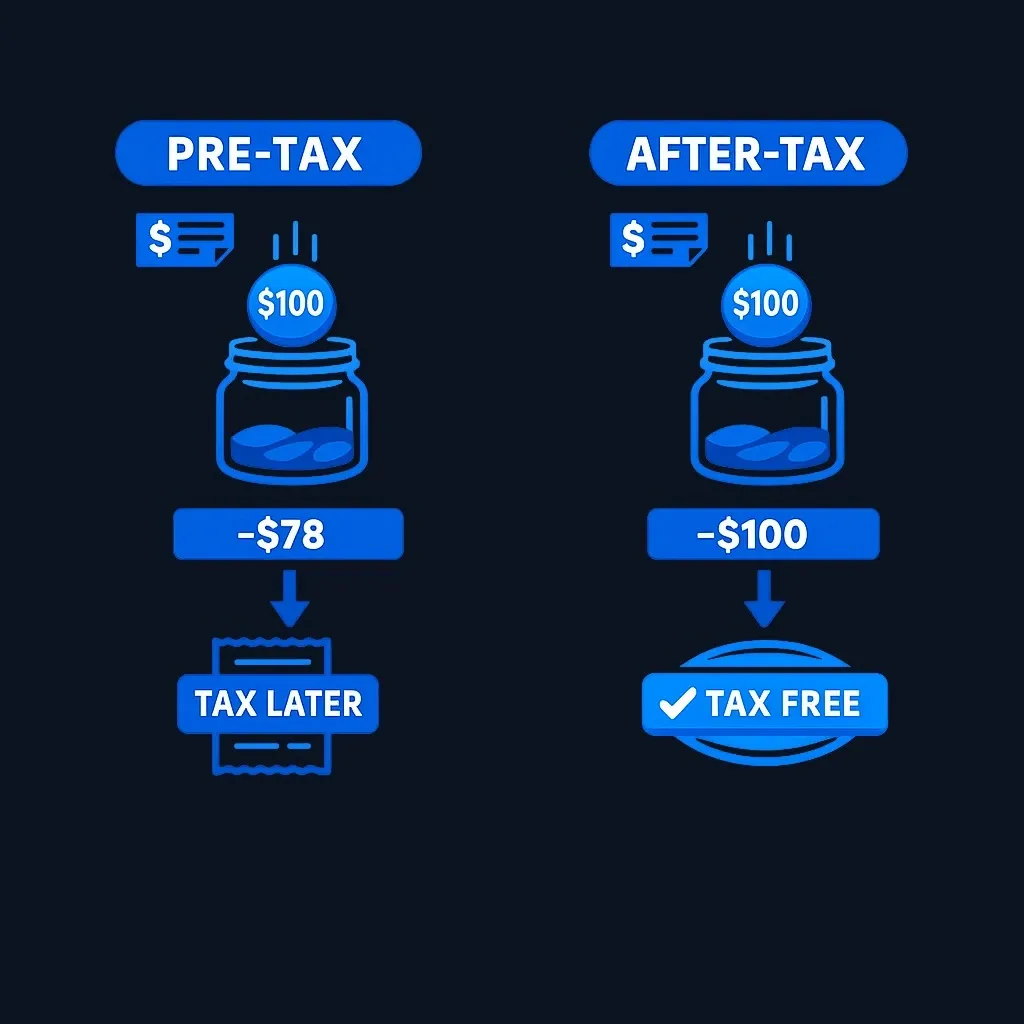
Compare the effect on take-home pay. A pre-tax contribution and an after-tax contribution of the same nominal amount have different current tax effects. Rather than judging them only by the statement balance, consider what you give up from today's spending and how distributions may be treated later. A governmental plan's designated Roth option, when offered, adds another choice; it is not itself a Roth IRA.
Investment risk comes from what you buy inside the account. A Roth IRA does not guarantee growth, and an employer plan does not make a risky investment safe. Review diversification, fees, and access to money across all accounts together. If retirement is approaching, also map which account might cover the first years of spending and which money can remain invested longer.
What is a 457(b) Plan?
A 457(b) is an employer-sponsored deferred-compensation retirement plan established under Internal Revenue Code section 457(b). Section 457(b) covers eligible plans; section 457(f) covers a different category of deferred compensation. Do not treat the two labels as interchangeable.
- Sponsorship and access: 457(b) plans are offered by qualifying employers (commonly state and local governments and some tax-exempt employers). Because they are employer plans, access depends on your employer offering the plan and its specific terms.
- Role in pay deferral: A 457(b) lets you set aside compensation under plan rules so payment (and the related tax consequence) is deferred until a later date. Read your plan documents for exact distribution and vesting rules.
- Variants: The IRS distinguishes eligible 457(b) plans from certain ineligible deferred arrangements under section 457(f) — the rules and tax treatment differ by plan type.
Caveat: Plan details (investment menus, distribution triggers, rollover options) vary by employer. Always check your plan’s written plan description and IRS guidance for the plan’s exact mechanics.
Practice investing with Finelo
Build practical investing skills with guided lessons, simulator practice, and structured challenges.
What is a Roth IRA?
A Roth Individual Retirement Account (Roth IRA) is an individually owned retirement account funded with after-tax dollars; contributions are not tax-deductible.
- Ownership and control: You open a Roth IRA with a financial institution and choose investments directly within the account.
- Tax character of contributions: Contributions to a Roth IRA are made with after-tax dollars (they are not deductible).
- Use case: Roth IRAs are commonly used to lock in after-tax funding for retirement inside an individually managed account. The account owner controls contributions, investments, and transfers.
Caveat: Roth IRA eligibility and allowable contributions depend on IRS rules and your income; check IRS guidance or a tax professional for your situation.
How to compare your options
Use these criteria to prioritize which account to open, keep, or fund first. Each criterion ties to practical actions you can check.
1. Access and availability
- Check whether your employer offers a 457(b) and read its plan documents. If no employer plan exists, a Roth IRA is an individual option.
2. Tax timing preference
- If you prefer after-tax ownership at the time of contribution, Roth IRA contributions are explicitly made with after-tax dollars.
- If you are evaluating deferred-compensation vehicles as part of employer benefits, read your 457(b) plan terms to understand when payouts and tax consequences occur.
3. Control and investment choices
- Roth IRAs are held at custodians you select and typically allow a broad range of investments.
- 457(b) investment menus vary by employer/recordkeeper; review plan investment options and fees in the plan’s documentation.
4. Portability and job changes
- Because 457(b) plans are employer plans, portability rules depend on the plan and IRS rollover rules; check the plan’s distribution and rollover provisions.
- Roth IRAs remain yours when you change jobs, subject to IRA transfer rules.
Practical next step: list your priorities in this order—(1) access, (2) tax timing preference. (3) investment control, (4) portability—and check the relevant plan documents or IRS guidance to confirm mechanical details.
When to choose each option
Below are scenario-based examples that show how the decision criteria apply. These are illustrative frameworks, not personalized advice. Scenario A — You have an employer 457(b) and want to set aside compensation through your workplace
- Why 457(b) might fit: Employer sponsorship makes enrollment and payroll deferral simple. Read your plan documents to confirm how distributions are handled and whether your plan permits rollovers on separation from service.
Scenario B — You want an individually controlled account and prefer after-tax contributions
- Why a Roth IRA might fit: Roth IRAs are individually opened and funded with after-tax dollars, giving you direct control over custodian and investments.
Scenario C — You want both employer plan access and individual control
- Hybrid approach: If you have access to both, you may use the employer plan for workplace deferrals while maintaining a Roth IRA for individually controlled, after-tax assets. Check plan rules and IRA eligibility before making transfers or rollovers.
Decision checklist
- Do you have a 457(b) available? If yes, obtain the written plan description and distribution rules.
- Do you want after-tax ownership and individual custody? Consider a Roth IRA.
- Do you need detailed numbers (contribution limits, income phase-outs, or catch-up rules)? Consult the IRS and plan documents for current-year limits and rules.
Before moving existing 457(b) money
Identify whether the plan is governmental or nongovernmental before requesting any transfer. Their rollover rights are fundamentally different. A governmental plan may permit an eligible rollover; a nongovernmental tax-exempt employer's 457(b) generally cannot be rolled into an IRA. An account-opening form does not establish that the outgoing payment is eligible.
With eligible governmental money, separate a move preserving pre-tax treatment from a Roth conversion. A conversion can create taxable income even when no money reaches your bank account. Request the plan's distribution notice and confirm how the receiving custodian will record the transaction.
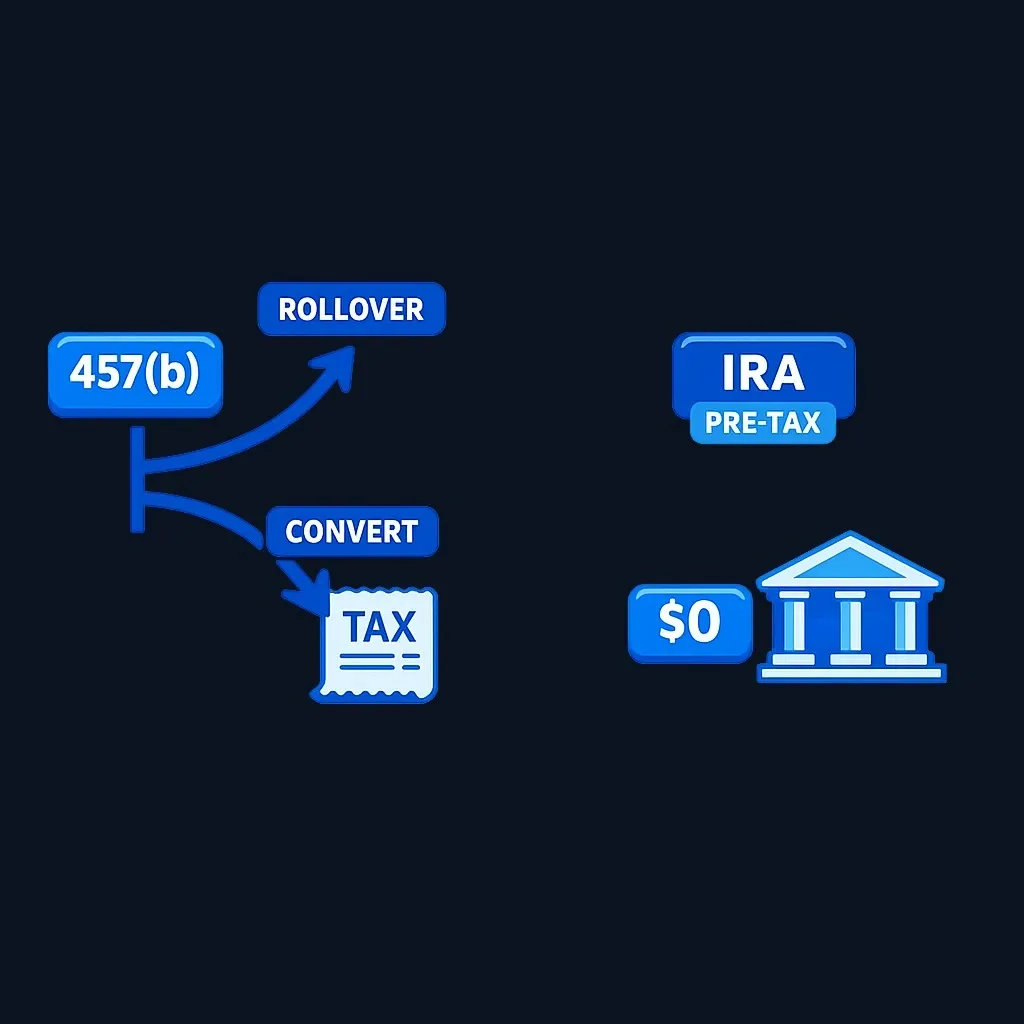
A rollover can also change access rules. Money left in a governmental 457(b) may have a different early-distribution result from money moved into an IRA. Review the source of the balance, including any money previously rolled into the plan, rather than assuming one access rule covers every dollar.
Keep copies of the instructions, account confirmations, and tax forms. If the move requires selling investments, decide how and when the receiving account will be invested. An administrative transfer and a decision to change investments are separate choices.
Tradeoffs and caveats
Common tradeoffs
- Employer plan features vs. individual control: 457(b) plans can provide automatic payroll deferrals and employer-level administration, while Roth IRAs give you custody and investment selection.
- Tax timing (what to verify): Roth IRA contributions are after-tax by definition. 457(b) plans are deferred-compensation vehicles under IRS rules. Read your plan’s tax-treatment language and consult IRS publications for how distributions are taxed.
Tax implications (what to check)
- For distributions, conversions, or rollovers. Confirm with IRS guidance and your plan administrator how the amounts will be reported to the IRS and whether withholding or taxable events apply.
- If considering an eligible rollover from a governmental 457(b) to a Roth IRA, document expected tax treatment before executing the rollover and ask for a written explanation from the plan administrator.
Common mistakes and fixes
- Mistake: Assuming all employer plans roll over to any IRA without limits. Fix: Confirm plan rollover rules and get written instructions from the plan administrator.
- Mistake: Treating Roth contributions and deferred-compensation contributions as identical. Fix: Remember Roth IRA contributions are after-tax by definition. Verify how plan contributions are treated under your employer plan and IRS rules.
Practical tip
- Before making large conversion or rollover decisions, ask your plan administrator for the written procedure and check IRS publications or a qualified tax professional for the tax-reporting outcome.
What is the main difference between a 457(b) and a Roth IRA?
The primary structural difference is that a 457(b) is an employer-sponsored deferred-compensation plan under IRS rules, while a Roth IRA is an individually owned account funded with after-tax dollars.
Who is eligible for a 457(b) plan?
Eligibility depends on whether your employer sponsors a 457(b) plan and the plan’s participant rules; common sponsors include qualifying governmental and certain tax-exempt employers — check your employer’s plan documents and the IRS overview for plan specifics.
Can I have both a 457(b) and a Roth IRA?
Having both is possible in many cases: a 457(b) is employer-provided and a Roth IRA is individually owned. Whether you should fund both depends on your goals, plan access, and tax considerations; verify plan rules and IRA eligibility before acting.
How do I check specific contribution limits, catch-up rules, or income phase-outs?
Contribution limits, catch-up provisions, and income-related eligibility change over time and are set by IRS guidance and annual notices. Consult official IRS publications, your plan documents, or a tax professional for current-year limits and rules. Final practical next step: collect your plan’s written plan description and recent statements, then compare those plan mechanics to Roth IRA custodial rules.
For another workplace-account transfer decision, compare 401(k) rollover to an IRA vs. a new employer's plan.
This guide covers U.S. rules. Finelo provides financial education, not personalized financial, investment, tax, or legal advice.
InvestingU.S. GuideFinancial Education
Practice investing with Finelo
Build practical investing skills with guided lessons, simulator practice, and structured challenges.
About the author
Finelo Team
The Finelo Team creates practical investing and trading education designed to help beginners learn faster with structured challenges, simulator practice, and bite-sized lessons.
Keep reading — Related articles
Investing
Tax-gain harvesting vs. tax-loss harvesting
Compare realizing investment gains with realizing losses, including holding periods, wash sales, offsets, and portfolio tradeoffs.
Finelo Team

Investing
Stable value fund vs. money market fund
Compare investment structure, contract protections, transfer restrictions, net yields, and access inside a retirement account.
Finelo Team
Investing
Single-life vs. joint-life annuity
Compare income for one lifetime with continued payments to a survivor, using equal premiums and matching guarantee terms.
Finelo Team


