Last editorial review: September 28, 2026
401(k) rollover to an IRA vs. a new employer's plan
Compare account costs, investment choices, early access, employer stock, and transfer rules before choosing a rollover destination.
11 min read
Practice investing with Finelo
Build practical investing skills with guided lessons, simulator practice, and structured challenges.
Want to learn more?
Build practical investing skills with guided lessons, simulator practice, and structured challenges.
Explore FineloExplore Finelo's 28-day challenges
Turn learning into a daily habit with guided challenge paths.
An IRA may give you a wider investment menu. A new employer's 401(k) may offer attractive fund fees, plan loans, and workplace retirement protections. Compare the actual accounts before moving money: neither destination is automatically cheaper or more flexible in every way.
You may also be able to leave the money in your former employer's plan. A rollover is an option, not a requirement in every situation.
What you gain and give up
| Feature | Rollover IRA | New employer's 401(k) |
|---|---|---|
| Investments | Often a broader selection | The plan's menu, sometimes with institutional pricing |
| Fees | Custodian, fund, trading, or advisory costs | Fund costs and any plan administration charges |
| Borrowing | IRA loans are not permitted | Loans may be available if the plan allows them |
| Acceptance | Receiving account must accept the assets | Employer plan must accept the rollover |
The IRS rollover guide explains eligible distributions, destinations, and transfer methods. A direct rollover generally avoids mandatory withholding on a payment made to you. Moving pre-tax money into a Roth account usually creates taxable income, even when the transfer is direct.
Look beyond the investment menu
Before transferring, check whether you would give up a useful early-withdrawal exception, change required minimum distribution treatment, or affect future Roth conversion calculations. Pre-tax IRA balances can matter when calculating the taxable portion of a conversion involving nondeductible IRA contributions. See IRS Publication 590-A for the IRA conversion rules.
Creditor protection also belongs in the comparison. The SEC’s rollover guidance specifically identifies protection from creditors and judgments as a factor. It does not establish that every IRA and employer plan has identical protection. If that protection matters to you, obtain a comparison for the account type and law that apply before transferring.
Two reasons to pause before moving everything
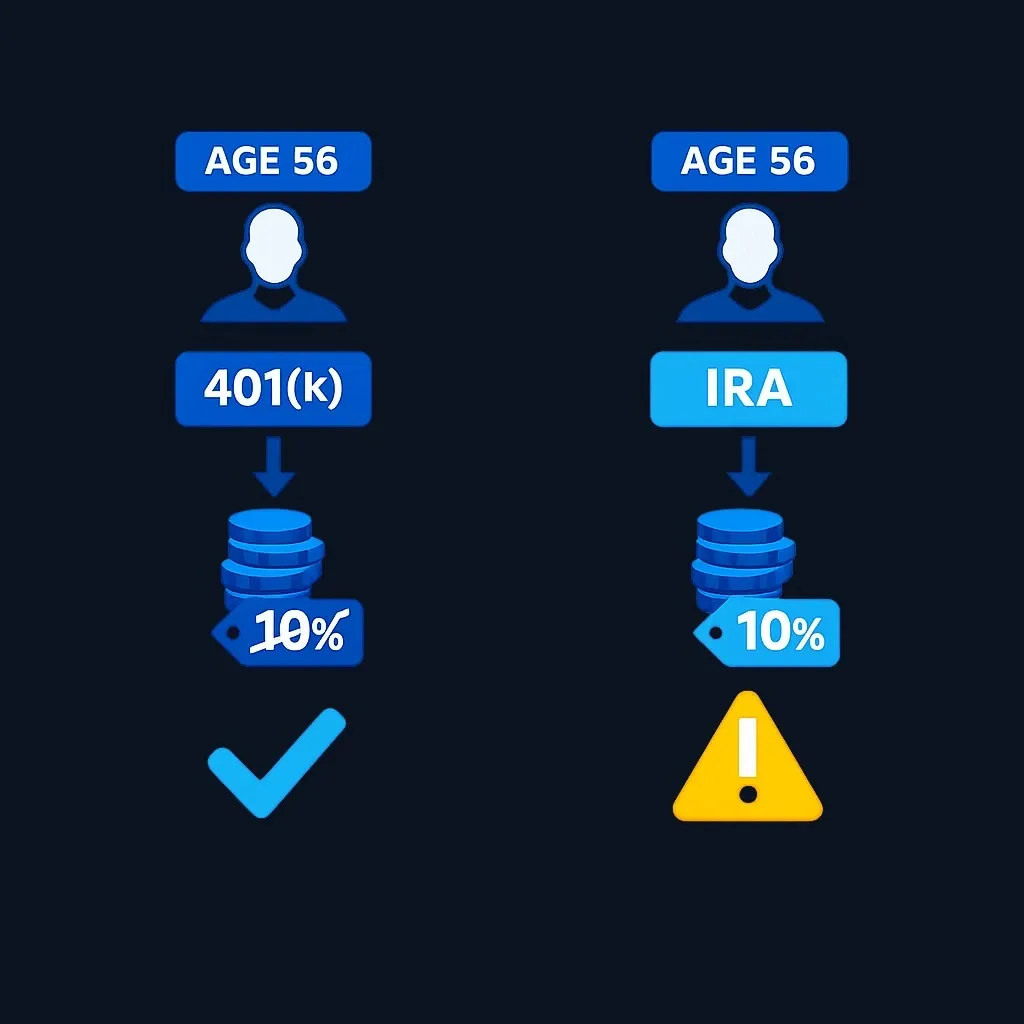
Access after leaving work. If you separate from that employer in or after the calendar year you turn 55, distributions from its qualified plan may qualify for an exception to the 10% additional early-distribution tax. That particular separation-from-service exception does not apply to IRA withdrawals. Ordinary income tax can still apply, and the plan must permit the distribution. The IRS exceptions table distinguishes employer plans from IRAs.
Employer shares. Appreciated company stock can qualify for special net unrealized appreciation, or NUA, treatment in an eligible distribution. Rolling those shares into an IRA can give up that treatment. IRS Publication 575 explains the conditions. This is a reason to calculate the alternatives before transferring the shares, not a reason to keep a concentrated investment indefinitely.
For example, someone leaving work at 56 who needs savings to bridge the next three years should compare withdrawal access alongside fees. A slightly cheaper IRA would not necessarily solve the near-term income need.
Put the costs side by side
Hypothetically, a 0.30 percentage-point annual cost difference on $100,000 starts at about $300 per year before balance changes. That is useful context, but it does not capture differences in services, investments, or withdrawal options.
Request the new plan's fee disclosure and investment list. Compare those with the IRA you would actually open, including any advisory fee. Then ask both providers how pre-tax, Roth, and after-tax amounts will be handled.
Confirm the receiving account and transfer instructions before initiating the rollover. Keep the distribution and receipt records for tax reporting, even if the transaction is not taxable.
Practice investing with Finelo
Build practical investing skills with guided lessons, simulator practice, and structured challenges.
Compare the investments you would actually own
A long investment menu is useful only if it improves the portfolio you intend to hold. Someone who wants a diversified target-date fund may find a workplace plan's limited menu entirely adequate. Someone who needs an investment unavailable in that plan may place more value on an IRA's wider selection. Start with the allocation and services you need, then compare accounts capable of providing them.
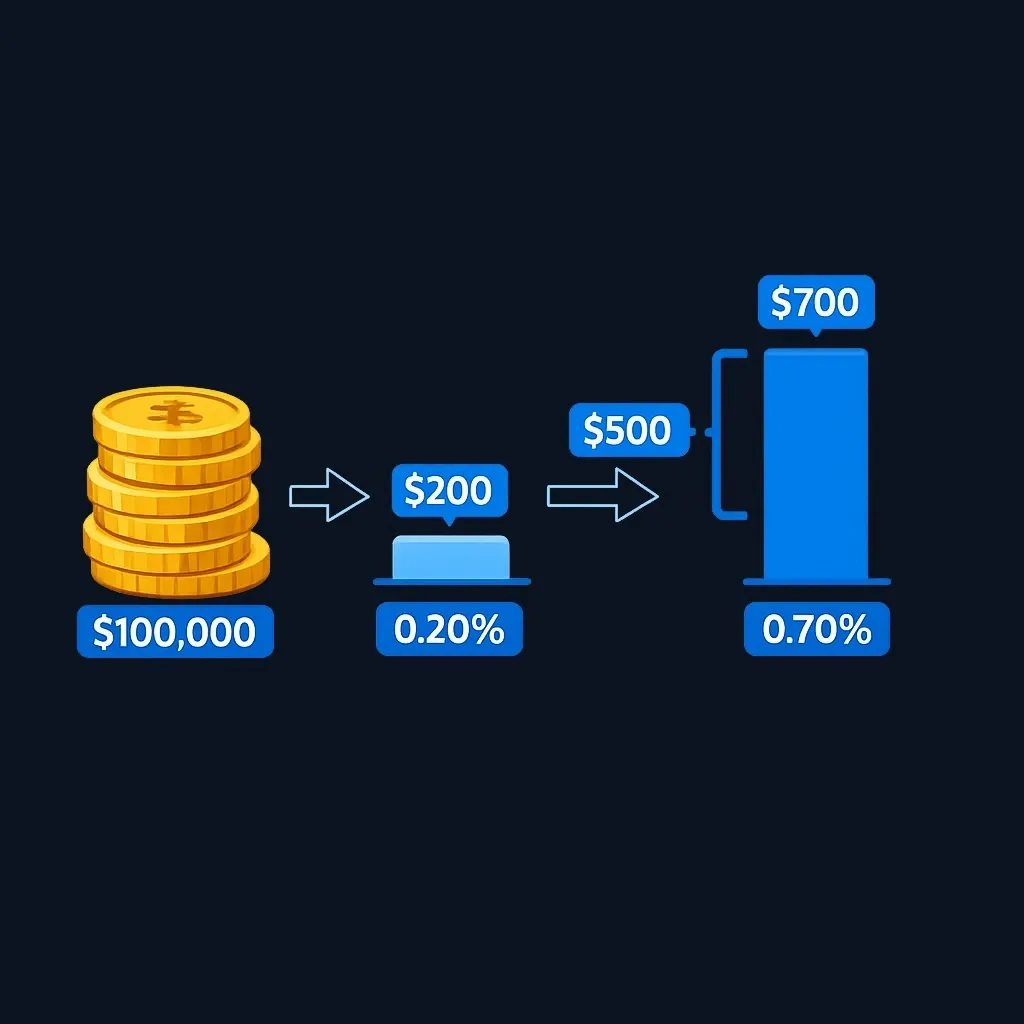
Put costs in dollars as well as percentages. In a hypothetical $100,000 account, a 0.20% annual asset-based charge is $200 at that balance; 0.70% is $700. That $500 difference is an initial annual comparison, not a projection of lifetime savings. Balances change, and the higher charge might include services that need their own evaluation. Include fund expenses, administration, advice, and any flat fees without counting the same charge twice.
Ask what happens to the money during the move. Some investments transfer in kind; others must be sold. Confirm where incoming cash will sit and who is responsible for investing it. A completed transfer can still leave a retirement account unintentionally in cash. Save the distribution statement, receiving-account confirmation, and tax forms so the account types and amounts can be reconciled later.
What is a 401(k) Rollover?
A 401(k) rollover moves eligible retirement savings from one qualified plan into another tax-advantaged account while preserving tax deferral when eligible pre-tax money moves to another eligible pre-tax account. Moving pre-tax money to a Roth account is a separate taxable conversion decision. The most common destinations are a rollover IRA or a new employer’s 401(k) plan. The IRS describes rollovers and gives worked examples of eligible rollovers and distributions, including how amounts move between plans and IRAs. Two practical rollover methods:
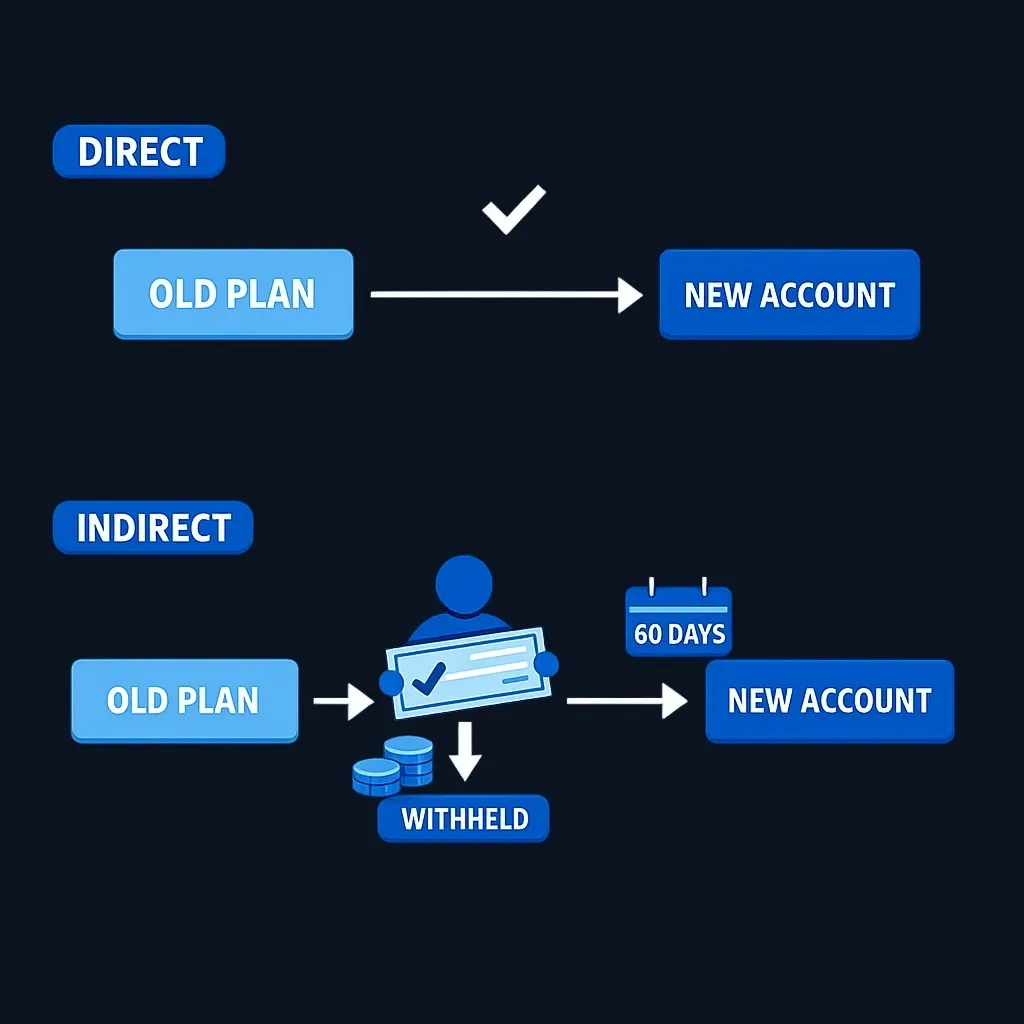
- Direct rollover — the old plan transfers funds directly to the receiving account. A direct rollover avoids mandatory withholding and reduces the chance of tax consequences. See IRS guidance for rules and examples.
- Indirect rollover. An eligible payment made to you generally has a 60-day rollover deadline. Mandatory withholding can mean you need other cash to roll over the full gross amount. A pre-tax-to-Roth conversion remains taxable even when completed on time.
Why this matters: the destination account determines your investment options, fees, plan features (like loans), and some legal protections. Many providers discuss these tradeoffs when describing rollover choices for people starting a new job or consolidating old plans.
How to compare your options
Use this checklist to turn features into a decision you can act on. Gather the facts from your former plan, your prospective new employer plan (ask HR or the plan administrator), and any IRA custodian you’re considering.
1. Investment choice and control
- Ask: Does the new plan offer the index funds, target-date funds, or specific mutual funds/ETFs you prefer?
- Why it matters: IRAs commonly allow access to many mutual funds and ETFs; 401(k) plans typically limit choices to a curated menu.
2. Fees and net cost (compare apples to apples)
- Ask: What are the plan’s administrative fees, and what are the expense ratios for target funds? What does the IRA custodian charge for trading or advisory services?
- How to compare: Focus on expense ratios and any plan-level administrative fees; small percentage differences compound over decades.
3. Access to plan features
- Loans: If you anticipate needing a loan, confirm whether the new plan allows loans; IRAs do not permit plan loans.
- Distribution options and services: Some plans provide managed allocation, advice, or special in-plan features.
4. Legal protections
- Creditor protection: Compare the legal protections of the specific plan and IRA, including the difference between bankruptcy and other creditor claims. Federal and state rules and exceptions can matter.
5. Special tax items (treat separately)
- Company stock: Employer stock can have special tax treatment. Moving it can change taxes; treat this as a separate planning decision and consult the plan documents and tax guidance.
- Roth conversion: Converting pre-tax assets to a Roth has tax consequences—check IRS guidance if considering a rollover to a Roth IRA.
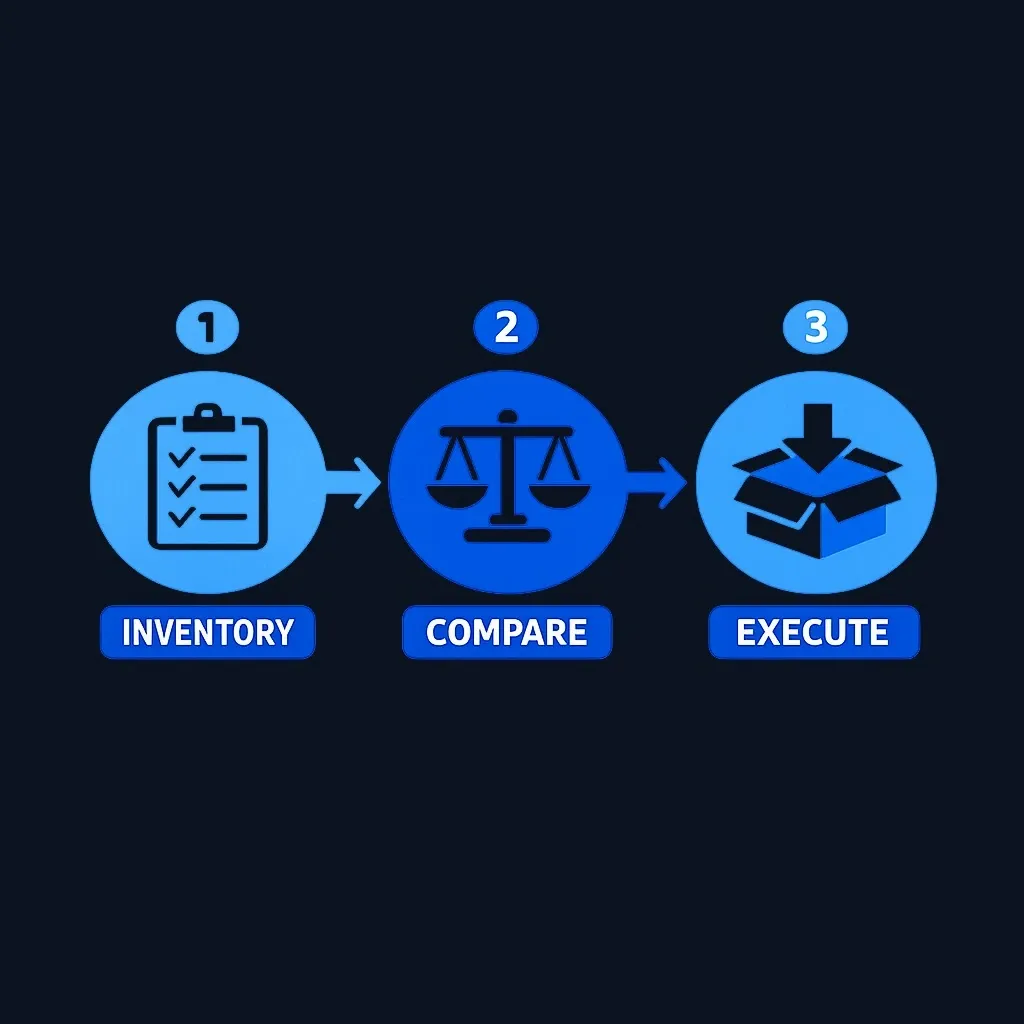
Worked decision framework (3 steps):
- Inventory — collect the new plan’s fund list, expense ratios, loan policy, rollover acceptance, and the old plan’s balance and asset types (note any employer stock).
- Compare — line up expense ratios and plan fees next to equivalent IRA fund fees and any custodian charges.
- Choose and execute — prefer a direct rollover (old plan → new account) to minimize withholding and tax risk. Confirm the receiving account accepts the transfer and monitor completion.
When to choose each option
Consider a rollover IRA when:
- You want to consolidate multiple old plans into a single account and gain access to a wider set of mutual funds and ETFs.
- You prefer managing investments outside of employer plans and may want to use a custodian or advisor with broad investment options.
Consider the new employer’s 401(k) when:
- You value staying inside workplace protections (typical federal creditor protection) or need the ability to take plan loans if the plan permits.
- The new plan offers low-cost institutional funds or better fee arrangements than the IRA options you can access.
Three brief case studies (illustrative):
- Case A — Samantha (prefers index ETFs): Her new employer plan offers only a few high-cost target-date funds. She prefers an IRA where she can buy low-cost ETFs and consolidate three old plans. Likely pick: rollover IRA.
- Case B — Marcus values a low-cost workplace investment menu and wants to consolidate accounts. He compares the new plan’s actual fees and services with an IRA; he does not assume every workplace plan has identical creditor protection.
- Case C. Lina (holds company stock with low basis): Company stock may have favorable tax treatment if handled as Net Unrealized Appreciation (NUA). This is a special case; she should consult plan documentation and tax guidance before moving the stock.
Tradeoffs and caveats
Tax timing, handling employer stock, and transfer method matter more than the label of the account.
- Tax and Roth conversions: Rolling pre-tax 401(k) money into a Roth IRA generally creates a current-year taxable event. Confirm tax treatment and timing with IRS guidance if considering conversion.
- Company stock special rules: Review the net unrealized appreciation rules before moving employer shares. A transfer can remove a potential tax treatment that cannot be recreated simply by buying the shares again in an IRA.
- Direct vs indirect rollovers: Use a direct rollover when possible. Indirect rollovers can trigger mandatory withholding and increase the risk of a taxable distribution if you miss the IRS deadline.
- Fees and hidden costs: Don’t assume one option is always cheaper. A new employer’s plan may have lower administrative or investment fees or could be more expensive; compare current fund expense ratios and any plan administrative fees before deciding.
- Loan rules and liquidity: IRAs do not permit plan loans. If you depend on loan access, verify the new plan’s loan policy before rolling.
- Leaving money in the old plan: If your former employer permits it, you can leave funds in the old plan and decide later. That preserves the current plan’s rules and features until you make a choice.
Practical checklist to avoid mistakes:
- Confirm the new plan accepts rollovers and request a copy of the summary plan description.
- Consider a direct rollover and provide the receiving account information to the old plan administrator.
- If company stock is involved, pause and review NUA rules or talk with a tax professional.
- Compare net costs (expense ratios + plan fees + custodian fees) for the funds you’ll actually use.
- Keep documentation of the transfer for your tax records.
What are the benefits of rolling over to an IRA?
An IRA often offers a broader investment menu and easier consolidation of multiple old plans into one account. Many investors use rollover IRAs to combine employer accounts and access a wider range of mutual funds and ETFs; check providers for exact investment availability.
What are the risks of rolling over to a new employer's plan?
Risks include limited investment choices and the possibility that plan fees are higher than comparable IRA options. If you hold employer stock, check whether it must be sold or whether moving it would affect a potential NUA strategy. Do not assume an otherwise eligible pre-tax rollover becomes taxable merely because the receiving account is a new employer’s plan.
How do fees compare between IRAs and 401(k)s?
Fees vary widely. Compare fund expense ratios and any administrative fees in the 401(k) plan against trading, advisory, or fund fees at IRA custodians. A new 401(k) may have lower administrative or investment fees or could be more expensive—compare actual plan documents and custodian fee schedules.
Can I roll over my 401(k) to a Roth IRA?
Yes, you can convert pre-tax 401(k) funds to a Roth IRA, but doing so generally creates a taxable event in the year of conversion. Confirm the tax rules and timing with IRS guidance and plan administrators before proceeding.
If the transfer would also change the money’s tax treatment, read our guide to Roth conversion before or after retirement.
This guide covers U.S. rules. Finelo provides financial education, not personalized financial, investment, tax, or legal advice.
InvestingU.S. GuideFinancial Education
Practice investing with Finelo
Build practical investing skills with guided lessons, simulator practice, and structured challenges.
About the author
Finelo Team
The Finelo Team creates practical investing and trading education designed to help beginners learn faster with structured challenges, simulator practice, and bite-sized lessons.
Keep reading — Related articles
Investing
Tax-gain harvesting vs. tax-loss harvesting
Compare realizing investment gains with realizing losses, including holding periods, wash sales, offsets, and portfolio tradeoffs.
Finelo Team

Investing
Stable value fund vs. money market fund
Compare investment structure, contract protections, transfer restrictions, net yields, and access inside a retirement account.
Finelo Team

Investing
Single-life vs. joint-life annuity
Compare income for one lifetime with continued payments to a survivor, using equal premiums and matching guarantee terms.
Finelo Team


