Last editorial review: September 28, 2026
HSA: spend now or save for retirement?
Balance current medical bills with future HSA use, including reimbursement records, Medicare contribution timing, and eligible premiums.
10 min read
Practice investing with Finelo
Build practical investing skills with guided lessons, simulator practice, and structured challenges.
Want to learn more?
Build practical investing skills with guided lessons, simulator practice, and structured challenges.
Explore FineloExplore Finelo's 28-day challenges
Turn learning into a daily habit with guided challenge paths.
Using an HSA for a qualified medical bill can protect your cash flow today. Paying the bill from other savings can leave the HSA invested for future healthcare costs. Neither approach is automatically better: start with your emergency reserve, debt costs, and ability to keep good records.
Saving an HSA balance while carrying expensive debt can undermine the benefit you are trying to preserve.
What the tax rules allow
Qualified medical withdrawals can be tax-free. If you pay a qualifying expense yourself, you may be able to reimburse it later, provided it was incurred after the HSA was established and was not reimbursed elsewhere or claimed as an itemized deduction. Keep evidence of the expense and payment. See IRS Publication 969.
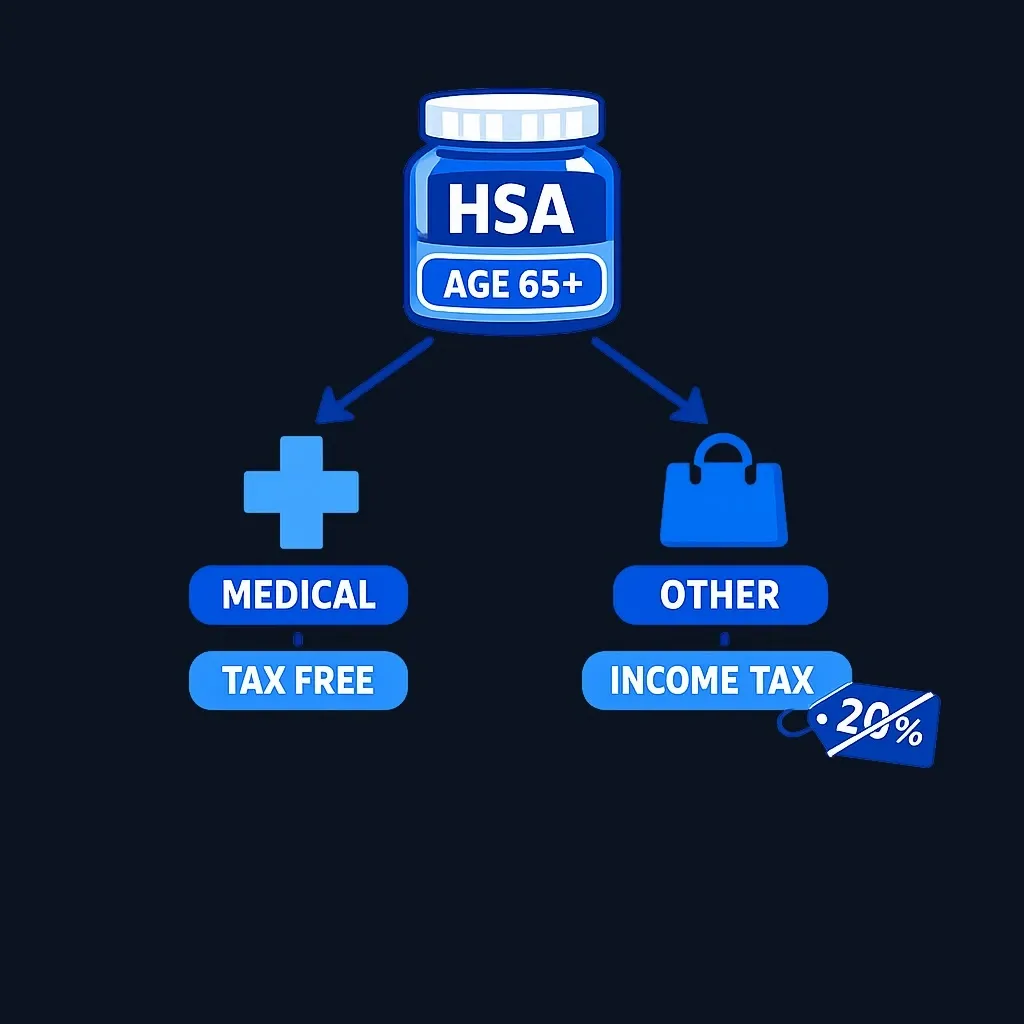
After age 65, nonmedical withdrawals generally avoid the additional 20% tax but remain subject to income tax. Qualified medical withdrawals retain their favorable treatment. Turning 65 does not make every HSA withdrawal tax-free.
Compare the two approaches
| Spend from the HSA now | Pay elsewhere and preserve the HSA |
|---|---|
| Keeps other cash available | Leaves more money for potential tax-advantaged growth |
| Can help avoid borrowing | Requires enough outside cash |
| Uses some future healthcare savings | Requires records for any later reimbursement |
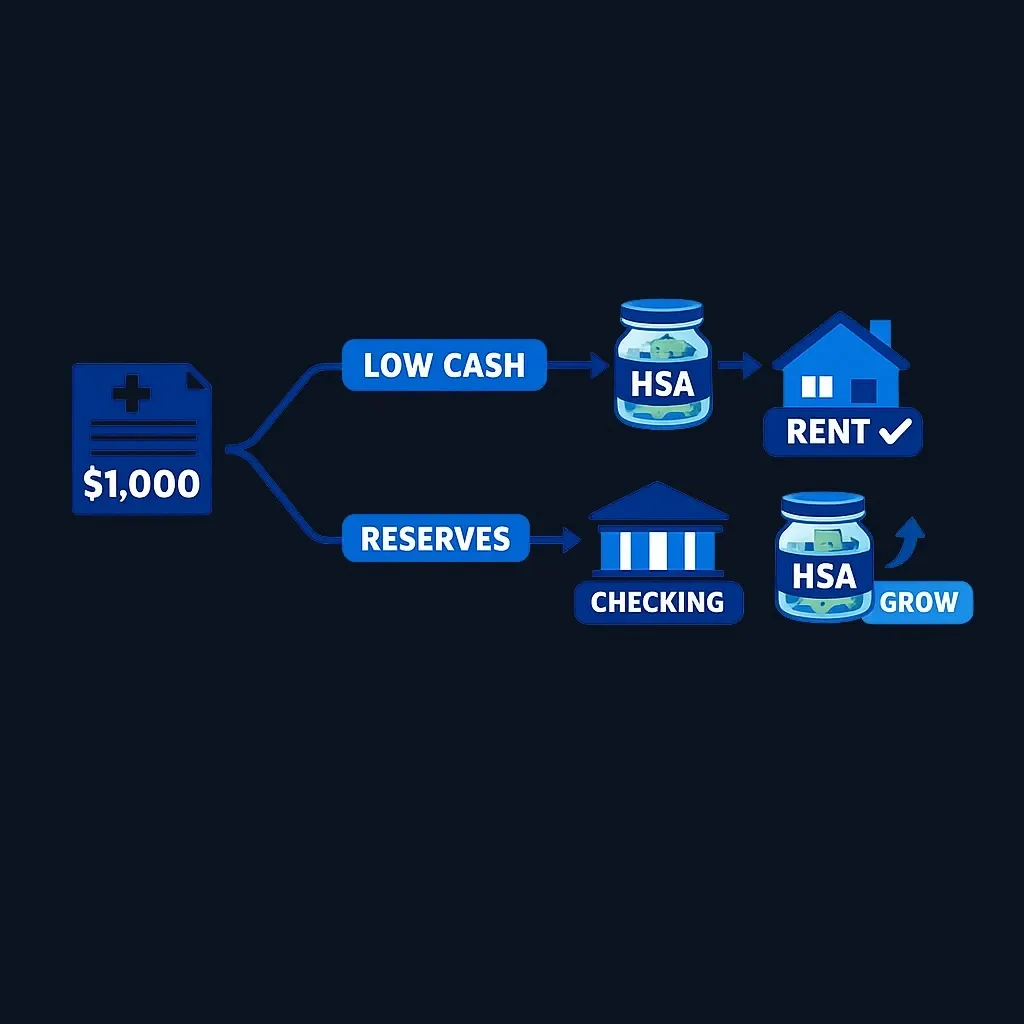
Suppose you face a $1,000 eligible bill. If paying it from checking would force you to borrow for rent, using the HSA may better protect your budget. If you have ample reserves, preserving the HSA is an option, but investment returns are uncertain.
Plan for both access and retirement
Keep money needed soon in an appropriate accessible holding; invested HSA funds can lose value. Review account fees and investment options.
What changes around Medicare enrollment?
Once you enroll in Medicare, your HSA contribution limit is zero for those enrolled months, including months covered retroactively. You can still use an existing HSA balance for eligible expenses. Enrollment stops eligibility to contribute; it does not require you to empty the account.
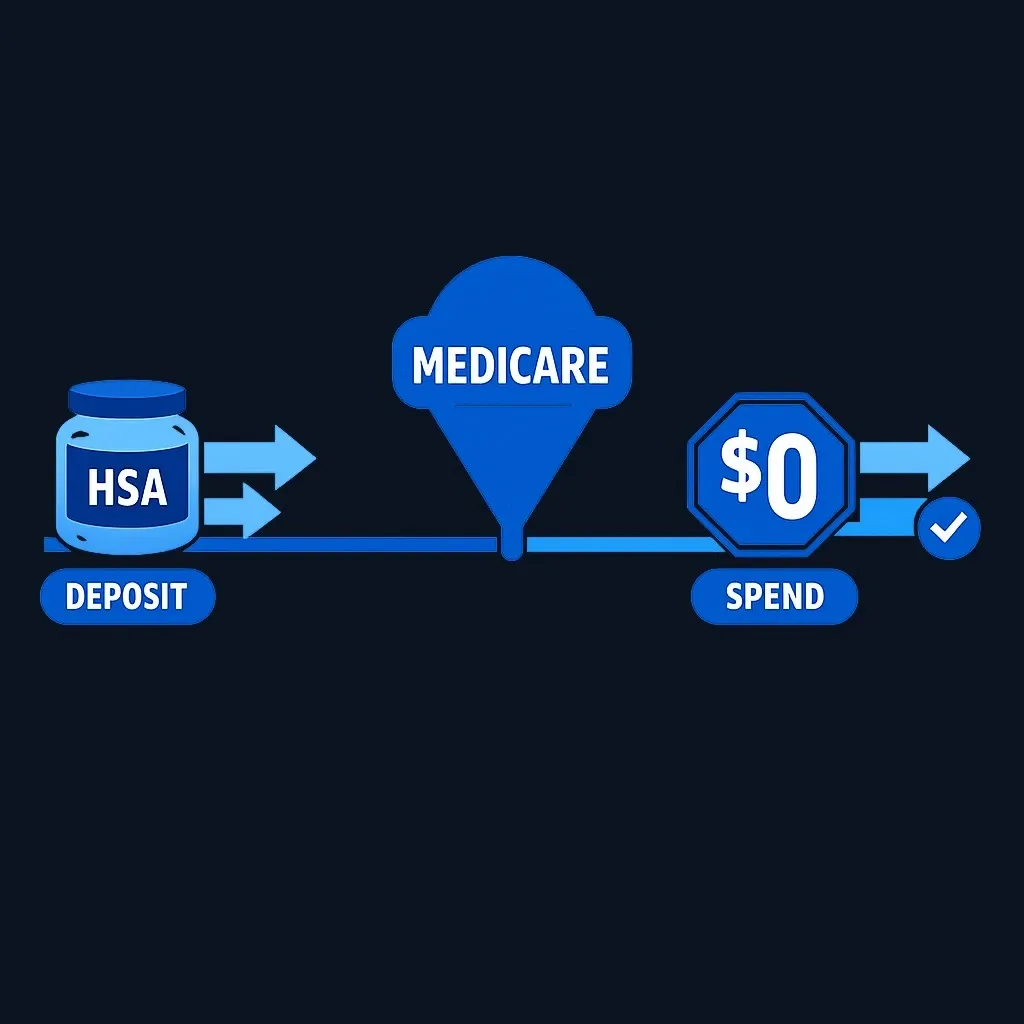
At age 65 or older, eligible Medicare and other healthcare premiums can generally be paid from the HSA tax-free, but Medigap premiums are excluded. If the HSA owner is under 65, a spouse’s Medicare premiums generally do not qualify under that age-based exception. These distinctions are in IRS Publication 969.
Before applying for Medicare after 65, confirm the coverage effective date and any retroactive months so payroll does not keep making ineligible contributions. Match contribution records to coverage months, not just to the date the card arrives.
Make the choice bill by bill
You do not need to commit to spending everything now or preserving every dollar. A household can use the HSA for a large bill, keep an accessible amount for the next deductible, and invest money intended for later years. Keep a simple record of each expense, the amount reimbursed, and the balance still eligible for reimbursement. That makes the strategy manageable when healthcare needs or cash flow change.
Practice investing with Finelo
Build practical investing skills with guided lessons, simulator practice, and structured challenges.
Decide which dollars can remain invested
An HSA can serve more than one time horizon. Money likely to cover this year's medical bills has a different job from money intended for later life. If the account offers investments, keeping near-term spending money accessible can reduce the need to sell during a market decline. Check account fees, cash requirements, and the available investments before assuming the full balance should be invested.
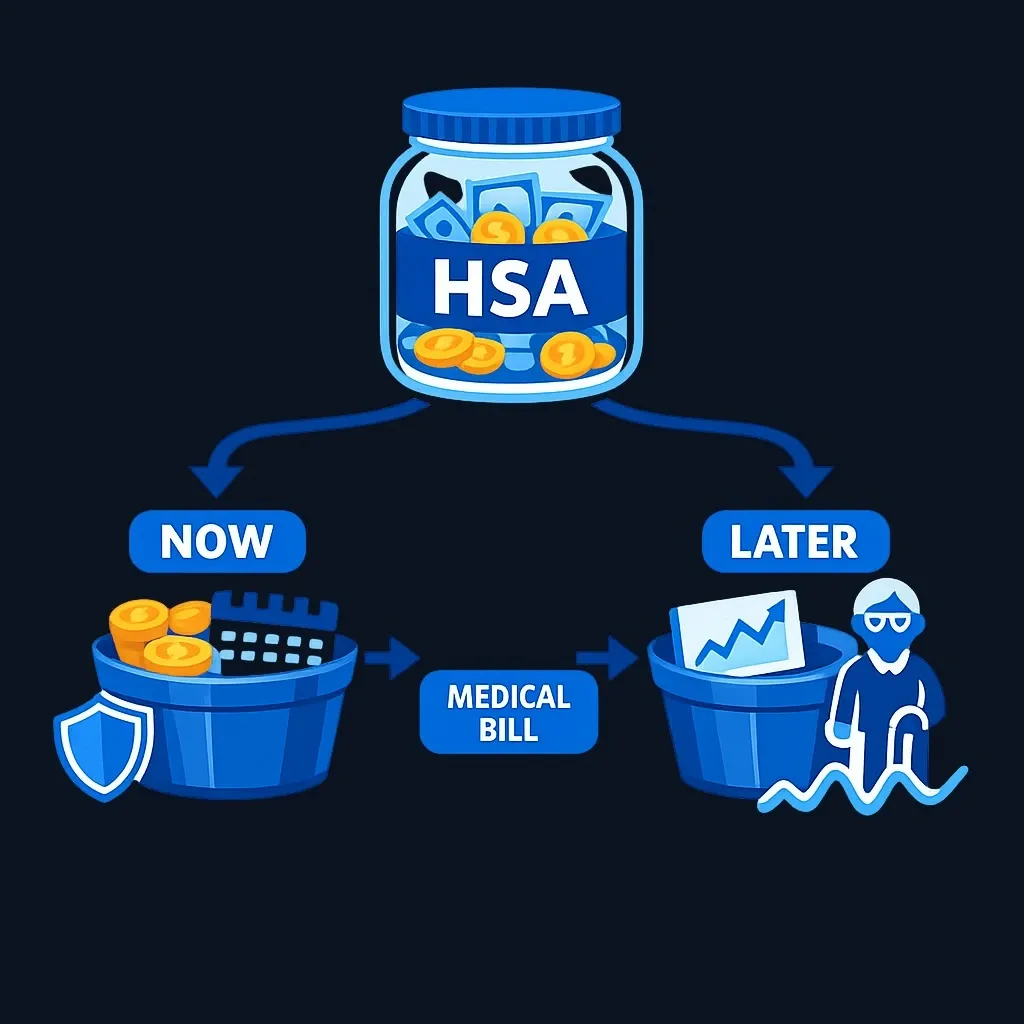
Paying today's bill from a separate bank account is useful only when that bank balance can comfortably support the expense. Suppose paying a $1,000 bill would leave too little for rent or an urgent car repair. Preserving the HSA while creating a new high-interest debt would change the economics of the strategy. The tax benefit does not eliminate the need for workable cash flow.
If you intend to reimburse yourself later for an eligible expense incurred after establishing the HSA, keep evidence that the expense qualified and was not already reimbursed or used for another tax benefit. Save the bill, payment record, date, and amount still unreimbursed. A folder of receipts without a reimbursement ledger can become confusing over many years.
Review that ledger when healthcare or family circumstances change. You may decide to use some accumulated eligible reimbursements for cash needs while leaving other assets invested. The account is a tool for qualified healthcare spending and saving, not a test of whether you can avoid touching it indefinitely.
Understanding HSAs and Their Benefits
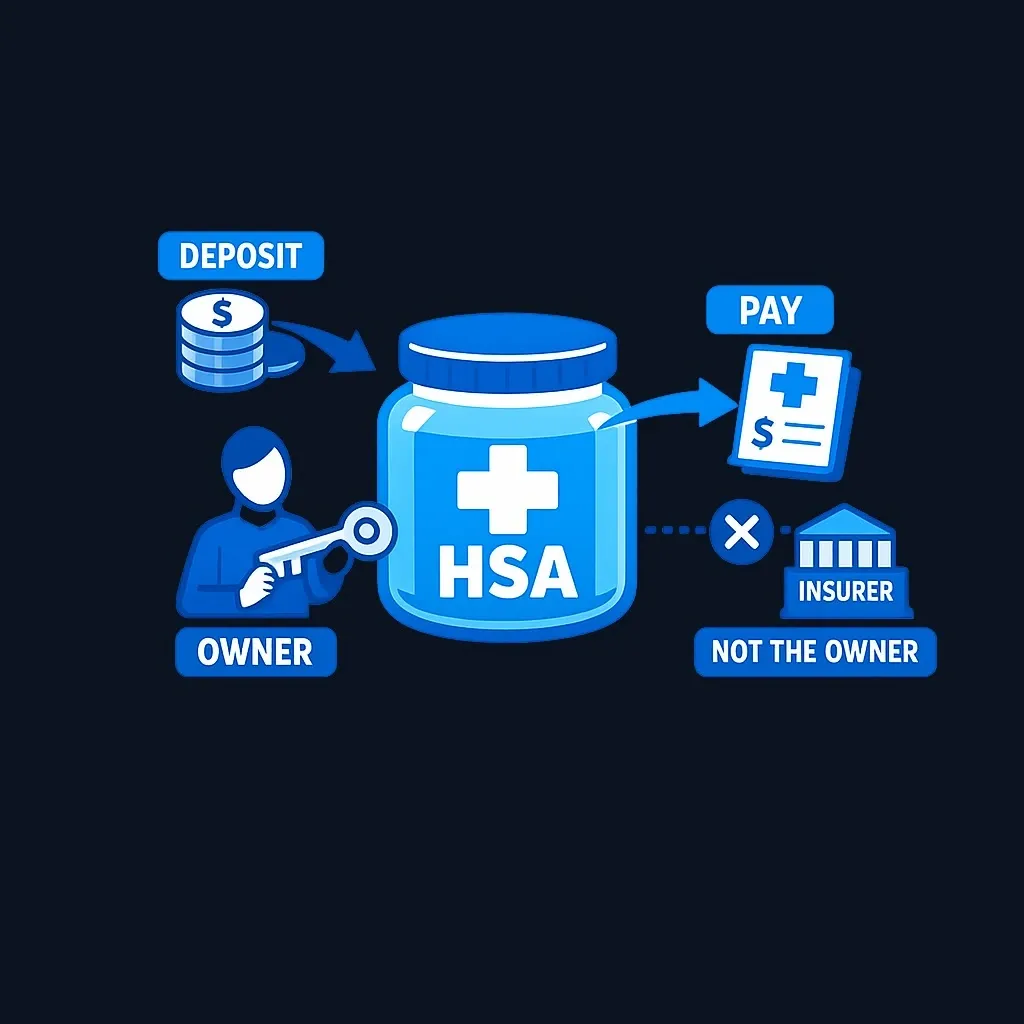
A Health Savings Account (HSA) is an individually owned tax-advantaged account. Eligibility to contribute generally requires qualifying health coverage and meeting the other HSA rules; you can retain and use an existing balance after contribution eligibility ends. HSAs are intended to pay or reimburse qualified medical expenses and are owned by the individual, not the insurer. For official program scope and related rules, see the IRS resource linked above.
Why HSAs matter
- They separate future healthcare costs from general savings, reducing the risk that a large medical bill will derail retirement planning.
- Because the account is individually owned and portable, it can follow you between jobs or into retirement under IRS rules.
What to expect tax-wise (high level)
- HSAs are structured by federal tax rules. Use the IRS guidance when you need confirmation of tax treatment, qualified expenses, and eligibility.
When to Spend Your HSA Funds
Spend from the HSA now when using the account preserves overall financial health or avoids higher costs elsewhere. Typical scenarios:
- You have an urgent medical bill and insufficient emergency cash.
- Paying with HSA prevents high-interest borrowing or liquidating long-term investments at a loss.
- The expense is qualified under IRS rules and you prefer to reduce current out-of-pocket costs rather than delay care. Confirm qualified expenses through official IRS guidance before paying.
Practical spending rules
- Keep receipts for expenses paid from the HSA and for qualified expenses paid out of pocket that you may reimburse later. Record each reimbursement so the same expense is not used twice.
- An expense already paid or reimbursed by the HSA cannot support another tax-free reimbursement. Later reimbursement applies to eligible, previously unreimbursed expenses incurred after the HSA was established, subject to IRS rules.
Worked example (conceptual)
- You have a $1,000 medical bill but $5,000 in emergency savings. Paying the bill from emergency savings preserves the HSA to grow tax-advantaged if you can comfortably absorb the expense today. If you lack emergency cash, using the HSA avoids credit card debt.
Decision checklist before spending now
-
Is the expense qualified, incurred after the HSA was established, and not already reimbursed or deducted? Check all of these conditions.
-
Do you have other cash that won’t disrupt emergency reserves? (Yes → consider paying cash.)
-
Would using the HSA now forgo a long-term tax benefit you value? (If yes, weigh alternatives.)
When to Save Your HSA Funds for Retirement
Why saving can win over time
- HSAs can serve as a dedicated tax-favored source for retirement healthcare spending because the account is individually owned and has rules set by the IRS. The linked IRS publication explains the account rules.
- If you can pay routine medical expenses out of pocket, leaving HSA funds invested allows tax-advantaged growth to cover larger future costs.
When saving makes sense
- You have an emergency fund and low-cost access to short-term cash.
- You expect healthcare costs to rise with age and prioritise preserving tax-advantaged capital.
- Your HSA provider offers low fees and investment options that match your horizon.
How to invest HSA funds (framework, not advice)
- Evaluate fees: lower account and fund fees compound into better net growth over decades.
- Match time horizon and risk tolerance: money needed soon should not depend on a stock-market recovery. Longer-term money can use a diversified allocation suited to the losses you could tolerate.
- Compare diversified, low-cost funds (index funds or ETFs) where available; avoid churn and excessive trading.
- Rebalance periodically to maintain your target allocation.
Practical steps to implement a save-for-retirement HSA strategy
- Confirm you can cover near-term medical costs without tapping the HSA.
- Keep a ledger of receipts if you plan to reimburse yourself later.
- Consider investing only the portion that can remain invested through market declines, after allowing for near-term bills and any provider cash requirements.
- Review provider fees and investment menus annually.
Risk considerations
- Investment values fluctuate; long-term growth is not guaranteed.
- Confirm all tax and qualified expense rules with the IRS if you intend to use HSA funds in retirement.
Comparative Analysis: HSA vs. Other Retirement Accounts
| Decision factor | HSA | IRA / 401(k) |
|---|---|---|
| Main use | Qualified healthcare expenses, now or later | General retirement saving |
| Contributions | Require HSA eligibility and compliance with limits | Depend on account and plan rules |
| Access | Qualified medical distributions can be tax-free | Traditional and Roth distribution rules differ |
| Investment choice | Depends on the HSA provider | Depends on custodian or employer plan |
The accounts serve different purposes. Evaluate the household budget, eligibility, and tax treatment before allocating contributions.
How to decide between using HSAs and other accounts
- Compare HSA saving with employer retirement benefits, debt costs, and accessible savings. An employer match can matter, but essential expenses and the ability to avoid expensive borrowing also belong in the decision.
- Keep the HSA as a dedicated medical-cost vehicle when healthcare is a material risk to retirement security.
- Use IRAs or 401(k)s for broader retirement income needs and situations where HSA-qualified expenses are unlikely to consume the balance.
Investing HSA vs. IRA tradeoffs
- Investment options: some HSA custodians offer limited menus; some offer broad brokerage windows. Compare provider offerings before deciding to treat an HSA primarily as an investment vehicle.
- Required minimum distributions (RMDs): HSA rules differ from IRAs. Consult IRS rules for the applicable requirements and timelines.
Checklist for comparing accounts
- Does the HSA provider allow investments and what are its fees?
- Is there an employer match or other incentive for retirement accounts?
- What portion of future healthcare costs do you expect to self-fund?
Common Mistakes to Avoid
1. Not keeping receipts
- Mistake: Losing evidence for expenses paid from the HSA or for unreimbursed expenses you intend to claim later.
- Fix: Keep bills, proof of payment, and a reimbursement ledger. Retain supporting records with the relevant tax records after reimbursement as well; claiming an expense is not a reason to discard its evidence.
2. Treating the HSA as short-term cash when you can afford to save
- Spending choice: Using the HSA for current qualified care is a valid purpose of the account. Compare preserving the balance with the effect on accessible savings and other obligations.
- Fix: If possible, pay small current expenses out of pocket to let HSA funds grow tax-advantaged.
3. Ignoring provider fees and investment menus
- Mistake: Holding a large HSA balance in an account with high fees or no investment options.
- Fix: Compare custodians and move invested balances to lower-cost funds if available.
4. Using HSA funds for non-qualified expenses without understanding consequences
- Mistake: Withdrawing for non-qualified items without verifying tax and penalty implications.
- Fix: Confirm qualified expenses via IRS resources before withdrawing for non-medical items.
What are the tax benefits of HSAs?
HSAs are governed by IRS rules that define eligible contributions and qualified medical withdrawals; consult the IRS for full details on tax treatment and program scope.
How can I use my HSA for retirement?
You can preserve and invest HSA funds to pay future medical costs in retirement; keep records of qualified expenses and confirm IRS rules that apply to long-term use.
What are the contribution limits for HSAs?
Contribution limits are set annually by tax authorities and can change. Verify current annual contribution limits on official IRS resources before planning.
What qualified expenses can I pay with my HSA?
Qualified medical expenses are defined by the IRS. Confirm the current list of eligible expenses and documentation requirements in IRS Publication 969.
Before changing coverage while employed, also consider Should you delay Medicare Part B if you are still working.
This guide covers U.S. rules. Finelo provides financial education, not personalized financial, investment, tax, or legal advice.
InvestingU.S. GuideFinancial Education
Practice investing with Finelo
Build practical investing skills with guided lessons, simulator practice, and structured challenges.
About the author
Finelo Team
The Finelo Team creates practical investing and trading education designed to help beginners learn faster with structured challenges, simulator practice, and bite-sized lessons.
Keep reading — Related articles

Investing
Tax-gain harvesting vs. tax-loss harvesting
Compare realizing investment gains with realizing losses, including holding periods, wash sales, offsets, and portfolio tradeoffs.
Finelo Team

Investing
Stable value fund vs. money market fund
Compare investment structure, contract protections, transfer restrictions, net yields, and access inside a retirement account.
Finelo Team

Investing
Single-life vs. joint-life annuity
Compare income for one lifetime with continued payments to a survivor, using equal premiums and matching guarantee terms.
Finelo Team


