Annuities can be worth it when you value predictable retirement income more than flexibility, low fees, or full market access. They are less attractive when you may need quick access to your money, dislike complex contracts, or want simple, low-cost investing. The decision depends on the contract, costs, income need, age, tax situation, and alternatives.
Are Annuities Worth It? A Comprehensive Analysis

Annuities can be worth it when you value predictable retirement income more than flexibility, low fees, or full market access. They are less attractive when you may need quick access to your money, dislike complex…
9 min read
Practice trading with Finelo
Practice in a simulator, learn with bite-sized lessons, and build confidence before risking real money.
Want to learn more?
Practice in a simulator, learn with bite-sized lessons, and build confidence before risking real money.
Explore FineloExplore Finelo's 28-day challenges
Turn learning into a daily habit with guided challenge paths.
The simplest way to evaluate an annuity is to ask what problem it solves. If the problem is "I want an income stream I cannot easily outlive," an annuity may deserve a closer look. If the problem is "I want growth, flexibility, and easy access," another tool may fit better.
What Are Annuities?
An annuity is a contract, usually issued by an insurance company, that converts money into future payments under the rules of that contract. You may pay a lump sum, make a series of payments, or use retirement savings to fund the contract. In exchange, the contract defines how and when payments may begin.
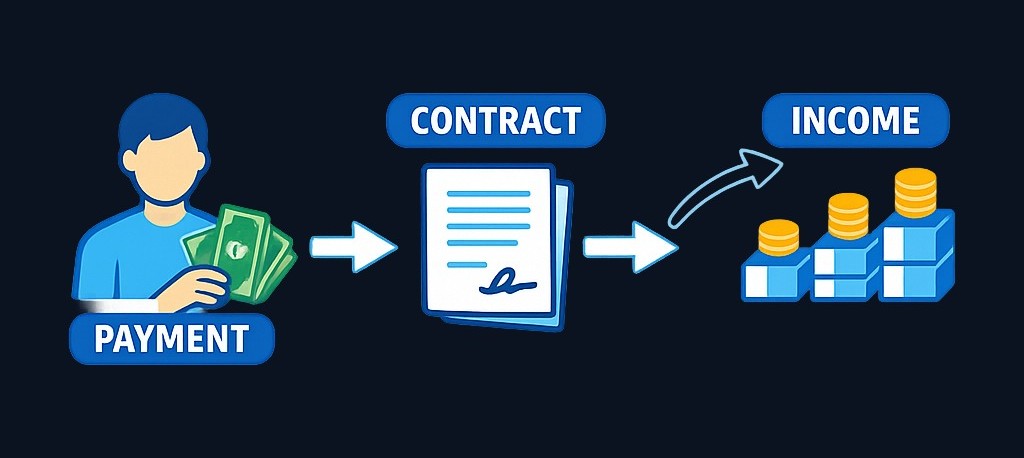
The key word is contract. An annuity is not just an investment account with a different label. It comes with terms about withdrawals, fees, surrender periods, riders, payment options, beneficiaries, and insurer obligations. A rider is an optional contract feature that can change benefits or costs.
Annuities are often discussed in retirement planning because they can turn savings into scheduled income. That can feel reassuring for someone worried about spending down assets too quickly. But the same structure can create tradeoffs. Money placed inside an annuity may be harder or more expensive to access, especially during early contract years.
So the first question is not "Are annuities good?" It is "What do I need this contract to do, and what am I giving up for that feature?"
Types of Annuities
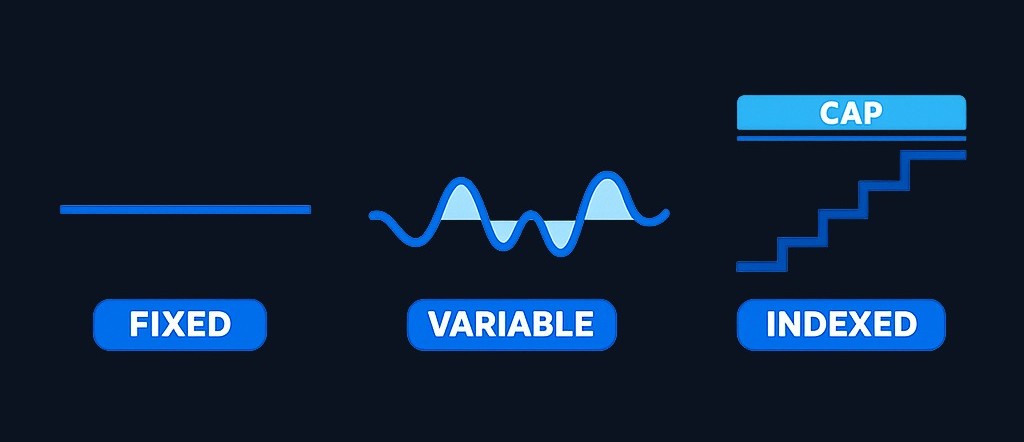
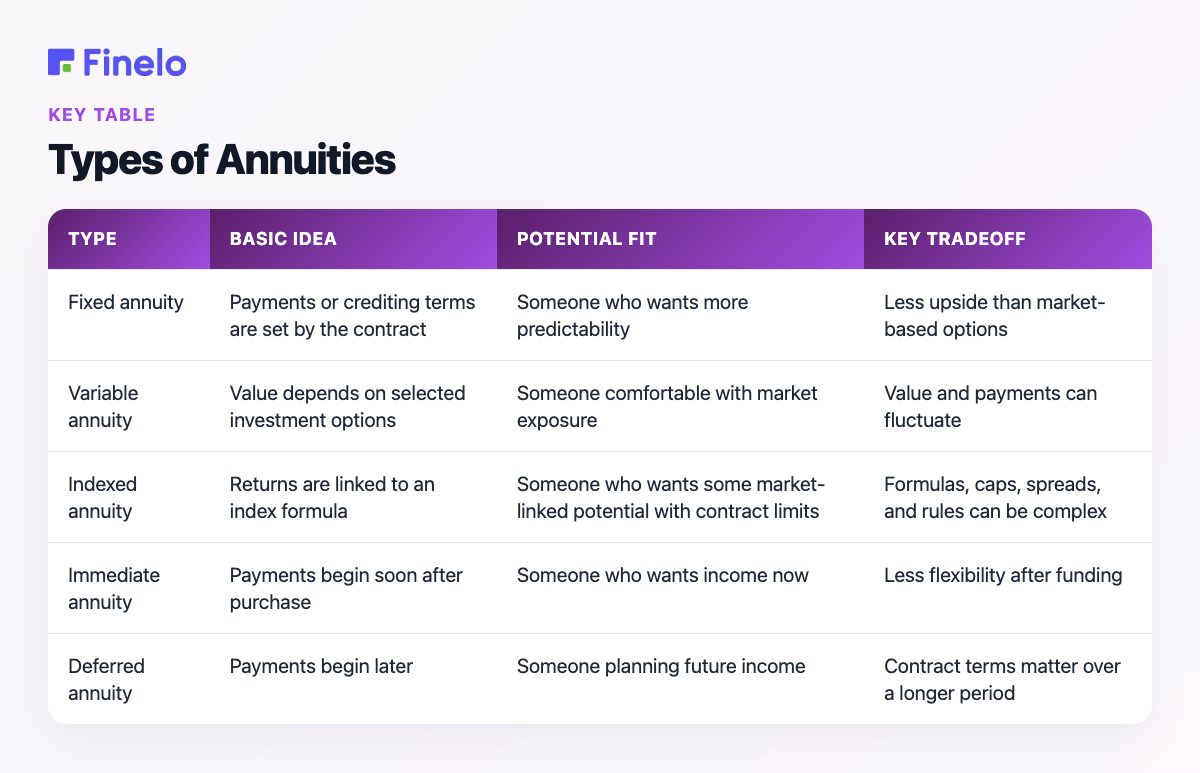
The main annuity types are fixed, variable, and indexed. Each handles risk and upside differently.
| Type | Basic idea | Potential fit | Key tradeoff |
|---|---|---|---|
| Fixed annuity | Payments or crediting terms are set by the contract | Someone who wants more predictability | Less upside than market-based options |
| Variable annuity | Value depends on selected investment options | Someone comfortable with market exposure | Value and payments can fluctuate |
| Indexed annuity | Returns are linked to an index formula | Someone who wants some market-linked potential with contract limits | Formulas, caps, spreads, and rules can be complex |
| Immediate annuity | Payments begin soon after purchase | Someone who wants income now | Less flexibility after funding |
| Deferred annuity | Payments begin later | Someone planning future income | Contract terms matter over a longer period |
A fixed annuity may appeal to someone who wants a more predictable income pattern. The tradeoff is that predictability often limits flexibility and upside.
A variable annuity may appeal to someone who wants market exposure inside an annuity structure. The tradeoff is complexity. Investment options, fees, riders, and market movement can all affect the final result.
An indexed annuity may sound like a middle ground, but it requires careful reading. Index-linked formulas can include caps, participation rates, spreads, and other limits. A beginner should not buy one unless they can explain how the crediting formula works in plain language.
Benefits of Annuities
The biggest benefit is income structure. Some people do not want to manage withdrawals from a portfolio year after year. An annuity can turn a portion of savings into scheduled payments, which may reduce the stress of deciding how much to take from investments.
Another benefit is behavior control. A contract with withdrawal limits can keep someone from spending retirement savings too quickly. That same feature is also a drawback, but for a person who values guardrails, it may be useful.
Annuities can also help separate retirement money by purpose. For example, someone might use one pool of assets for flexible spending, another for market growth, and an annuity for baseline income. This can make retirement planning easier to visualize.
Tax timing can be another reason annuities enter the conversation, but tax treatment depends on the contract, account type, owner, withdrawals, and local rules. Do not assume the tax result is favorable in your situation. Verify it before buying.
The practical benefit is not that an annuity is automatically better than investing. It is that an annuity may convert uncertainty into a more defined income arrangement. That has value for some people and little value for others.
Drawbacks of Annuities
The first drawback is complexity. Annuity contracts can be hard to compare because the important details sit in the fine print: fees, riders, surrender charges, withdrawal rules, payment formulas, and insurer terms. If you cannot explain the contract after reading it, pause.
The second drawback is cost. Annuities can include several layers of expenses. These may include contract fees, investment-related costs, rider charges, surrender charges, and advisor compensation. The exact costs vary by contract, so the only safe comparison is the actual fee schedule.
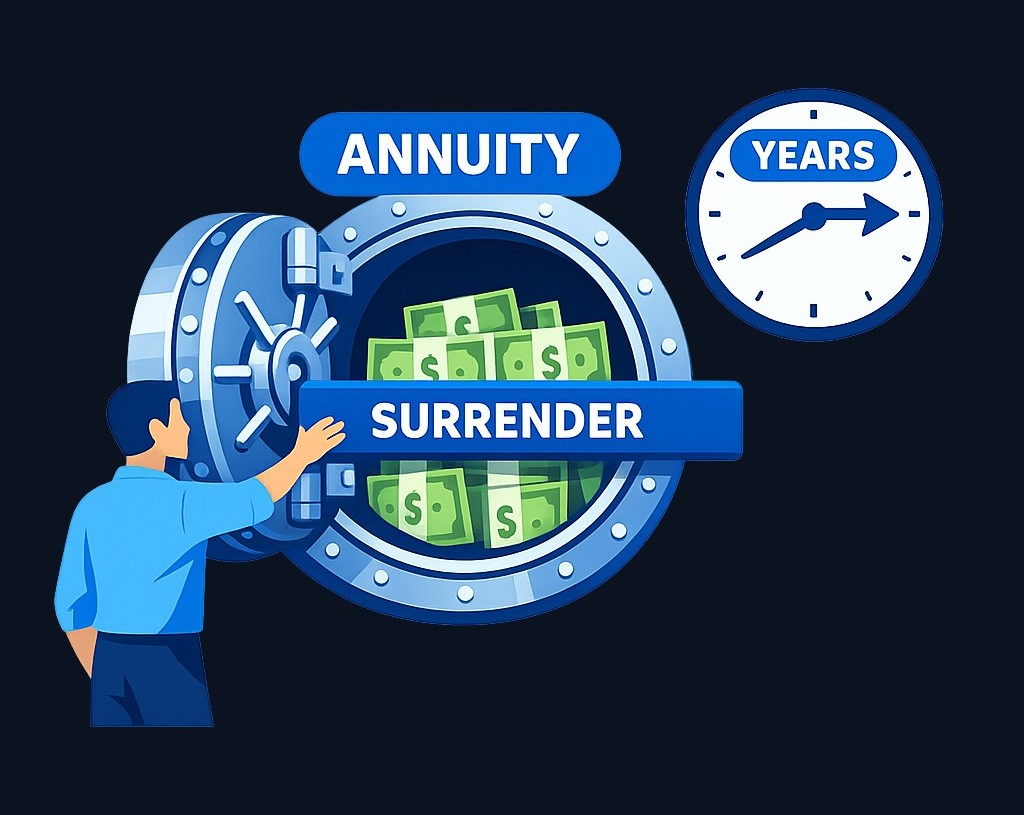
The third drawback is liquidity. Liquidity means how easily you can access money. Some annuities make early withdrawals expensive or limited. If you may need the money for emergencies, medical costs, housing changes, or family support, locking too much into an annuity can create stress.
The fourth drawback is inflation risk. A payment that feels adequate today may feel smaller later if living costs rise. Some contracts offer features intended to address this, but those features can affect starting payments, costs, or contract terms.
The fifth drawback is counterparty risk. Payments depend on the strength and claims-paying ability of the issuing insurance company. That does not mean every annuity is unsafe. It means the insurer matters, and buyers should review financial strength, state protections, and contract documents before committing.
Who Should Consider Annuities?
Annuities may be worth considering for someone who has covered near-term cash needs, understands the contract, and wants to turn part of retirement savings into a defined income stream. They may also suit someone who worries about managing withdrawals or outliving flexible assets.
They may be less suitable for someone who is still building emergency savings, has high-interest debt, needs full access to funds, or prefers simple investment accounts. They may also be a poor fit for someone who feels pressured to buy quickly or cannot get clear answers about fees.
Use this decision filter:
| If this sounds like you | What it suggests |
|---|---|
| "I want income predictability and can give up some flexibility." | An annuity may be worth reviewing |
| "I need easy access to my money." | Be cautious |
| "I do not understand the fees or surrender rules." | Do not proceed yet |
| "I want growth and low complexity." | Compare alternatives first |
| "I want a contract to cover one retirement need, not my whole plan." | A partial allocation may be more realistic |
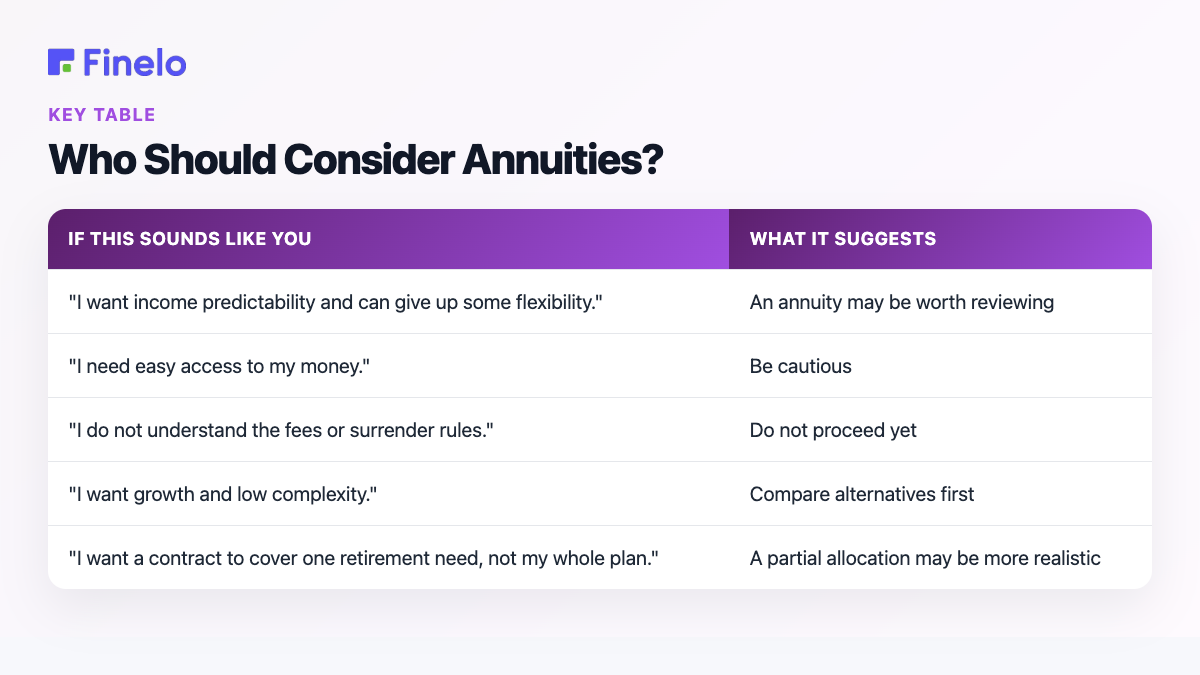
The most balanced approach is usually not "all annuity" or "no annuity." It is deciding whether a specific annuity solves a specific problem better than the alternatives.
Practice trading with Finelo
Practice in a simulator, learn with bite-sized lessons, and build confidence before risking real money.
Annuities vs. Mutual Funds, IRAs, and Other Options
Annuities are often compared with mutual funds, IRAs, brokerage accounts, CDs, bonds, and savings accounts. The comparison can get messy because these tools are not all the same category. An IRA is an account type. A mutual fund is an investment product. An annuity is a contract. A CD is a deposit product. Still, beginners compare them because each can play a role in retirement planning.
| Option | Main strength | Main limitation | Better fit when |
|---|---|---|---|
| Annuity | Structured income under contract terms | Less liquidity and more complexity | You want defined income from part of savings |
| Mutual funds | Diversified market exposure | Market value can fall | You want growth potential and flexibility |
| IRA | Tax-advantaged retirement account structure | Rules depend on account type | You want retirement saving with investment choice |
| Brokerage account | Flexible investing access | Taxable account treatment may apply | You want access and control |
| CDs or savings accounts | Simplicity and access, depending on terms | Limited growth potential | You want stability or short-term reserves |
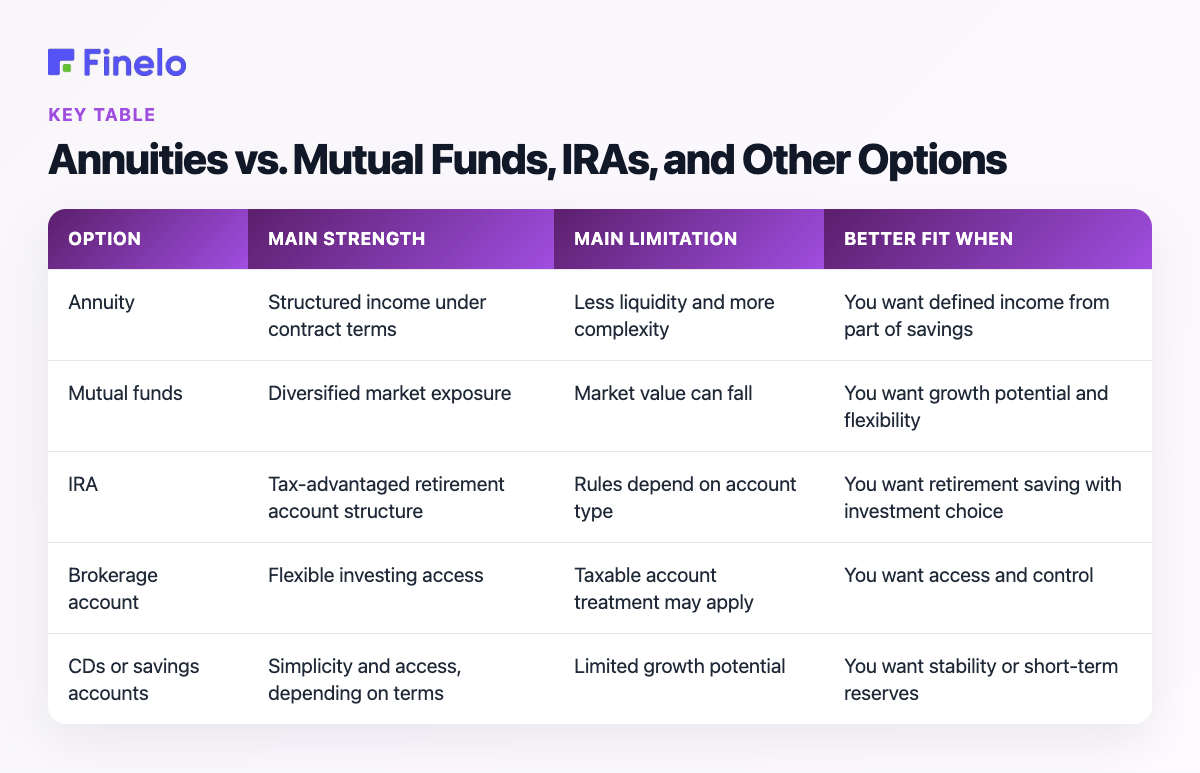
The key mistake is comparing only one feature. An annuity may look attractive if you focus only on income. A mutual fund may look attractive if you focus only on growth. A savings account may look attractive if you focus only on access. Real planning weighs all three: income, growth, and flexibility.
For many people, the question is allocation. How much should be flexible? How much should seek growth? How much should be structured for income? An annuity may fit only one part of that answer.

Tax Implications of Annuities
Taxes are one of the easiest areas to oversimplify. Annuities can have different tax treatment depending on whether they are held inside a retirement account, purchased with after-tax money, funded through an employer plan, or withdrawn in a particular way.
As a broad planning principle, do not buy an annuity only because someone says it has a tax benefit. Ask what type of money funds the contract, how earnings are treated, what happens when payments begin, what happens to withdrawals, and how beneficiaries may be affected.
Also ask whether the tax feature is valuable compared with alternatives. If you already use tax-advantaged retirement accounts, an annuity may not add the benefit you imagine. If you are buying outside those accounts, the timing of taxation may matter more.
This is an area where general education is not enough. Before buying, review the contract, talk with a qualified tax professional, and understand the tax treatment in your specific situation.
Real-World Style Scenarios
Imagine a retiree with enough emergency cash, no immediate need for a large lump sum, and anxiety about managing withdrawals. This person may use an annuity for part of retirement income while keeping other assets flexible. The annuity does not solve every problem, but it may reduce one source of stress.
Now imagine someone still working, with limited savings and uncertain housing plans. Locking money into a complex contract may create problems if life changes quickly. This person may need liquidity and simple savings before considering annuities.
Consider a couple comparing two contracts. One has a lower advertised rate but clearer fees. The other sounds more attractive but includes riders they do not understand. The clearer contract may be easier to evaluate, but they should still compare costs, insurer strength, withdrawal rules, and alternatives.
Finally, imagine someone who wants market growth but dislikes volatility. An indexed or variable annuity may sound appealing, but the person still needs to understand formulas, limits, fees, and downside rules. If the contract cannot be explained clearly, the right move is more learning.
Questions to Ask Before Buying
Before deciding whether an annuity is worth it, ask:
- What exact problem is this annuity solving?
- What fees apply, including rider and surrender costs?
- How long is the surrender period?
- How much money can I access if plans change?
- What income option am I choosing?
- What happens if I die earlier or live longer than expected?
- How financially strong is the insurer?
- What alternatives solve the same problem with less complexity?
- What tax treatment applies to my situation?
These questions are not meant to scare you away. They are meant to slow the decision down. A suitable annuity should still make sense after the details are visible.
Conclusion
Annuities are worth it only when the contract solves a real retirement-income problem at a cost and complexity level you understand. They are not a universal upgrade over mutual funds, IRAs, savings accounts, or a diversified portfolio.
Use the decision this way: define the problem, compare alternatives, read the contract, check fees, review liquidity, and get qualified guidance on taxes and suitability. Finelo describes itself as an educational platform for trading, investing, and finance learning, not a provider of financial advice. That boundary is useful here: learn the concepts first, then make annuity decisions with official contract documents and qualified professional support.
Frequently asked questions
Are annuities worth it for retirement?
They can be worth it for someone who wants a defined income stream and can accept lower liquidity. They may not be worth it for someone who needs flexibility, dislikes complex contracts, or has not compared fees and alternatives.
Can you lose money with annuities?
It depends on the contract type and how money is withdrawn. Some annuities expose the account value to market movement, and some contracts can reduce value through fees or early withdrawal charges. Read the contract before assuming how risk works.
Why do annuities have a bad reputation?
Many complaints come from complexity, high costs, surrender charges, and sales pressure. The product itself is not automatically bad, but a poorly understood or unsuitable contract can be a costly mistake.
What should I compare before buying an annuity?
Compare fees, surrender rules, payment options, insurer strength, tax treatment, liquidity, riders, and alternatives. If you cannot explain each item in plain language, keep asking questions before you commit.
Financial LiteracyBeginnerRetirementPersonal Finance
Practice trading with Finelo
Practice in a simulator, learn with bite-sized lessons, and build confidence before risking real money.
About the author
Finelo Team
The Finelo Team creates practical investing and trading education designed to help beginners learn faster with structured challenges, simulator practice, and bite-sized lessons.
Keep reading — Related articles

Financial Literacy
Mercury Books Review 2026: Is It Worth It for Startups?
Mercury Books brings double-entry accounting into Mercury. Review its $35 pricing, reports, AI features, integrations, and migration limits.
Finelo Team

Financial Literacy
Why is My FICO Score Lower Than My Credit Score?
Example takeaway: seeing a higher score in a bank app doesn’t guarantee lenders will see the same FICO number at application time; lenders often pull a specific FICO version from a specific bureau.
Finelo Team

Financial Literacy
Why Is My FICO Score Higher Than My Credit Score?
Brief educational note: this article is educational, not financial or investment advice; investing and credit decisions involve risk and possible loss.
Finelo Team