For U.S. readers: This article discusses U.S. rules and financial products. State rules and individual eligibility may differ.
Are Credit Unions Safer Than Banks? A Detailed Comparison
40–60 word direct answer: Both banks and credit unions provide federal deposit insurance and operate under regulatory oversight; the main safety difference comes from business models (member-owned vs.
7 min read
Practice trading with Finelo
Practice in a simulator, learn with bite-sized lessons, and build confidence before risking real money.
Want to learn more?
Practice in a simulator, learn with bite-sized lessons, and build confidence before risking real money.
Explore FineloExplore Finelo's 28-day challenges
Turn learning into a daily habit with guided challenge paths.
Quick answer
Short answer: Federally insured deposits at both credit unions and banks are protected, so your insured cash is effectively safe at either type of institution. Finelo provides financial education, not financial or investment advice.
40–60 word direct answer: Both banks and credit unions provide federal deposit insurance and operate under regulatory oversight; the main safety difference comes from business models (member-owned vs. shareholder-owned), which affect lending focus, fees, and service—not the basic protection for insured deposits. See the NCUA and FDIC consumer resources for details. NCUA · FDIC
What to know before deciding
This section defines each institution, highlights how structure affects behavior, and sets the criteria you’ll use to judge safety beyond insurance.
What is a credit union?
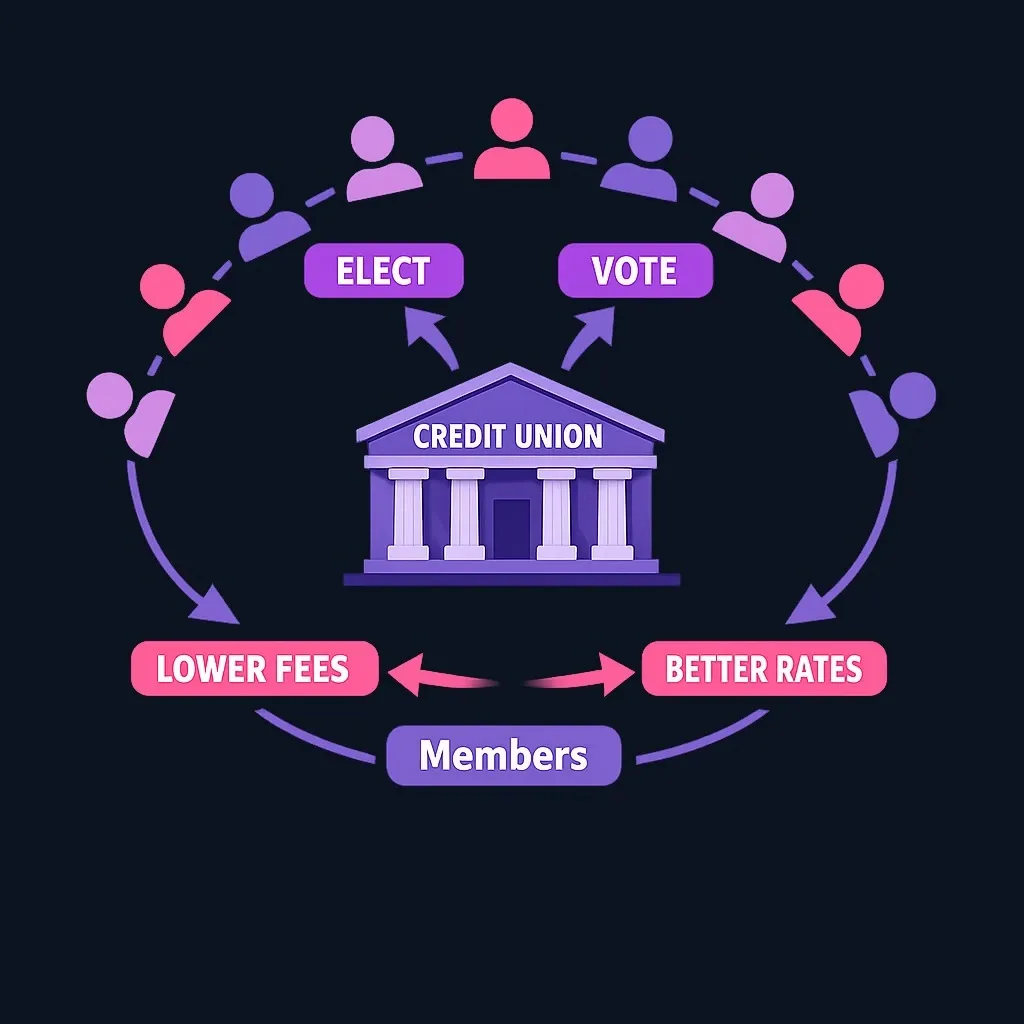
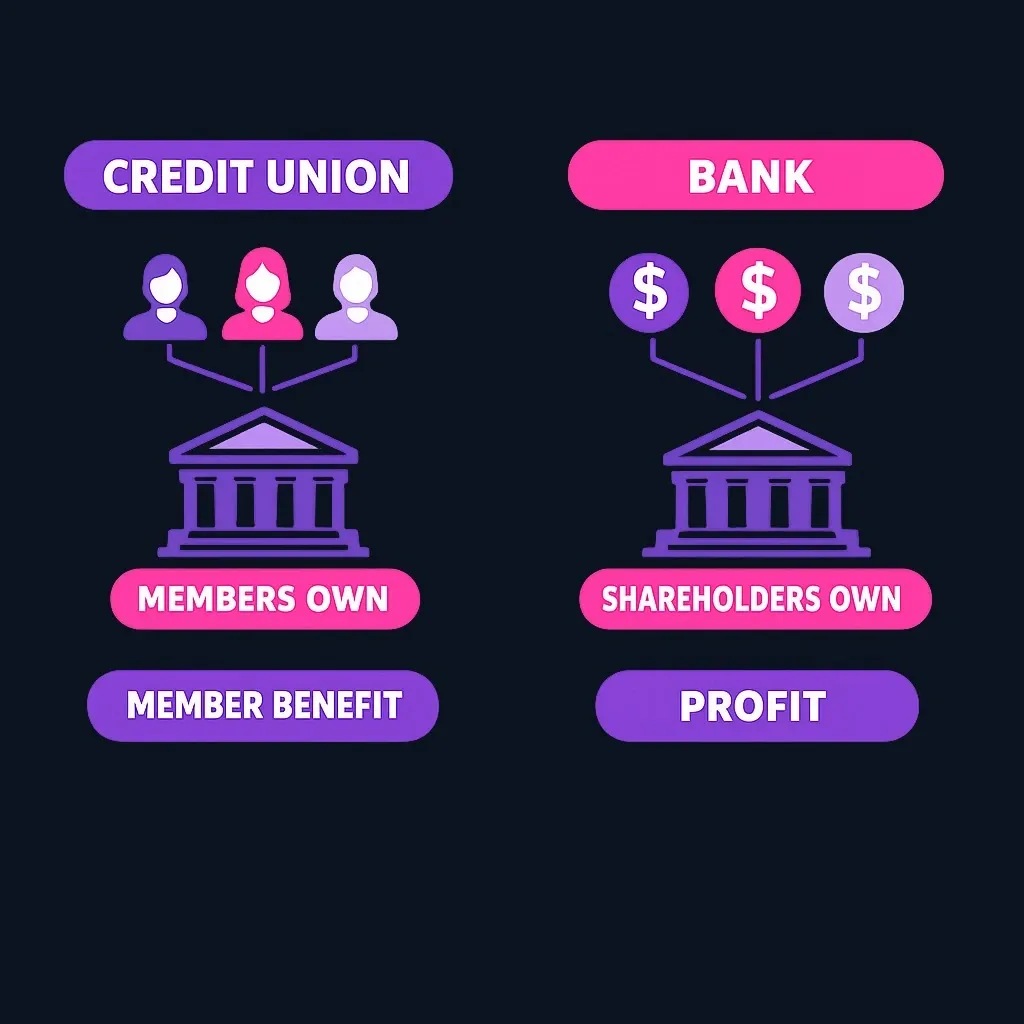
A credit union is a not-for-profit, member-owned financial cooperative that serves people who meet its membership rules. Members elect a board and often receive lower fees or better loan terms because the institution operates for members’ benefit. Decision-making tends to be local and relationship-driven.
What is a bank?
A bank is a for-profit institution owned by shareholders. Banks range from small community banks to national or global firms and often provide broader product lines, more branches, and larger technology teams. Their obligation to shareholders can influence risk appetite and growth strategies.
Educational note: This content is educational, not financial or investment advice; investing can involve loss. Example: Maria keeps daily checking with a local credit union because of lower fees and uses a large bank for nationwide ATM access. Both accounts can be insured, but the tradeoffs she evaluated were fees, convenience, and services—not deposit safety alone.
Insurance and Safety: NCUA vs. FDIC
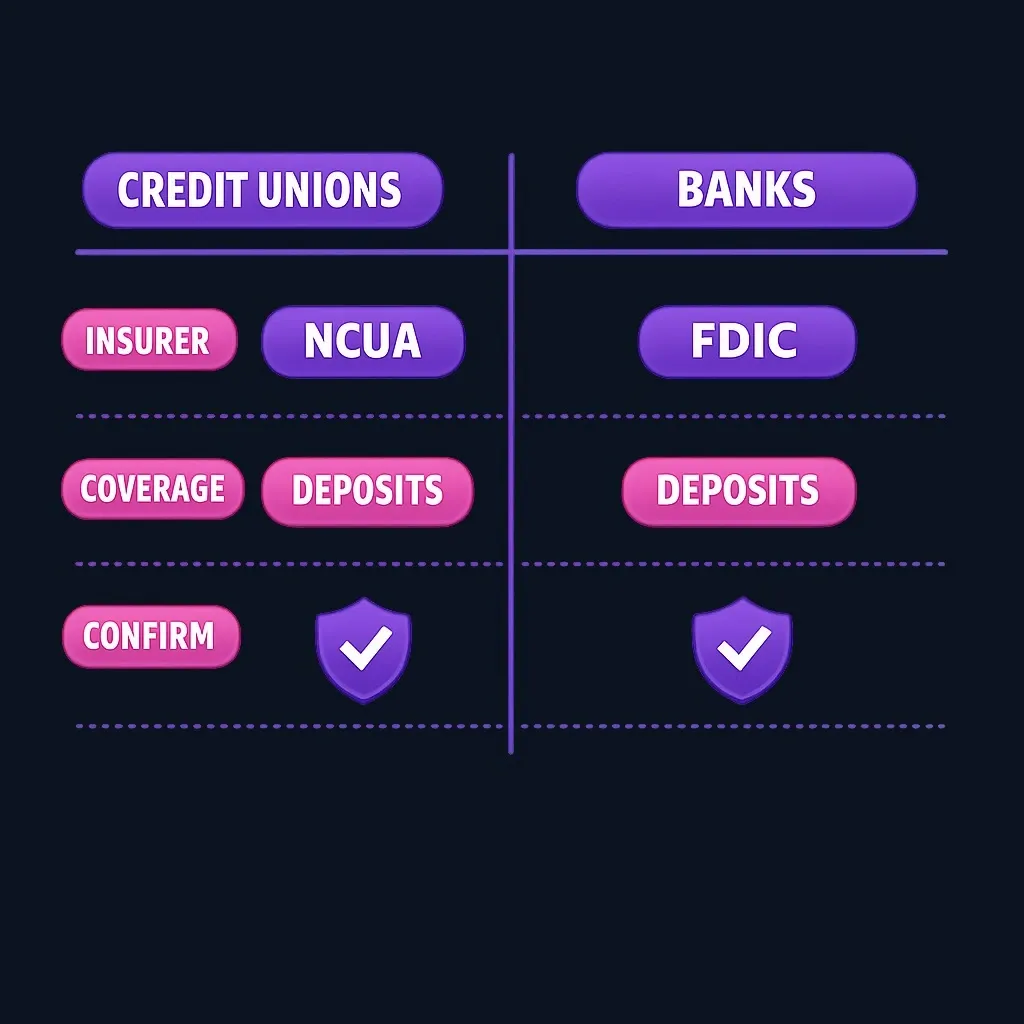
Both types of institutions participate in federal deposit-insurance systems. Credit unions use the National Credit Union Administration’s (NCUA) insurance program; banks use the Federal Deposit Insurance Corporation (FDIC). Confirm which insurer covers your account before relying on specific rules.
Comparison checklist
- Who provides insurance? — Credit unions: NCUA. Banks: FDIC.
- What accounts are typically covered? — Checking, savings and similar deposit accounts are the usual covered vehicles; coverage details depend on ownership categories.
- How to confirm coverage? — Ask the institution which regulator insures your accounts, then review that regulator’s consumer rules.
Insurance comparison table
| Insurer | Who is covered | Typical coverage note |
|---|---|---|
| NCUA (credit unions) | Depositors at federally insured credit unions | NCUA states deposits are insured up to at least $250,000 per individual depositor; review NCUA guidance for categories and limits. |
| FDIC (banks) | Depositors at FDIC-insured banks | FDIC provides deposit insurance and explanatory guides; check FDIC for current coverage rules by account ownership. |
Practical tip: Before opening accounts, ask “Which federal insurer covers this account?” and request written confirmation.
Risk Exposure: How credit unions and banks operate
Insurance protects deposits, but operational risk and business strategy affect broader safety for the institution and its borrowers.
How structure shapes risk
- Credit unions: Member-owned model often favors conservative, locally focused lending. That can reduce exposure to distant commercial shocks and support relationship-based underwriting.
- Banks: Shareholder pressure can increase appetite for scale, higher-yield investments, or securitized products; those choices can raise exposure to certain sectors.
How to evaluate an institution’s risk profile
- Lending focus: Ask whether lending concentrates in local consumer mortgages, small business loans, or commercial real estate.
- Transparency: Look for public reports on capital ratios and loan-loss reserves; community banks and credit unions typically publish high-level financials.
- Size and complexity: Larger, more complex institutions can carry operational and market risks unrelated to deposit insurance.
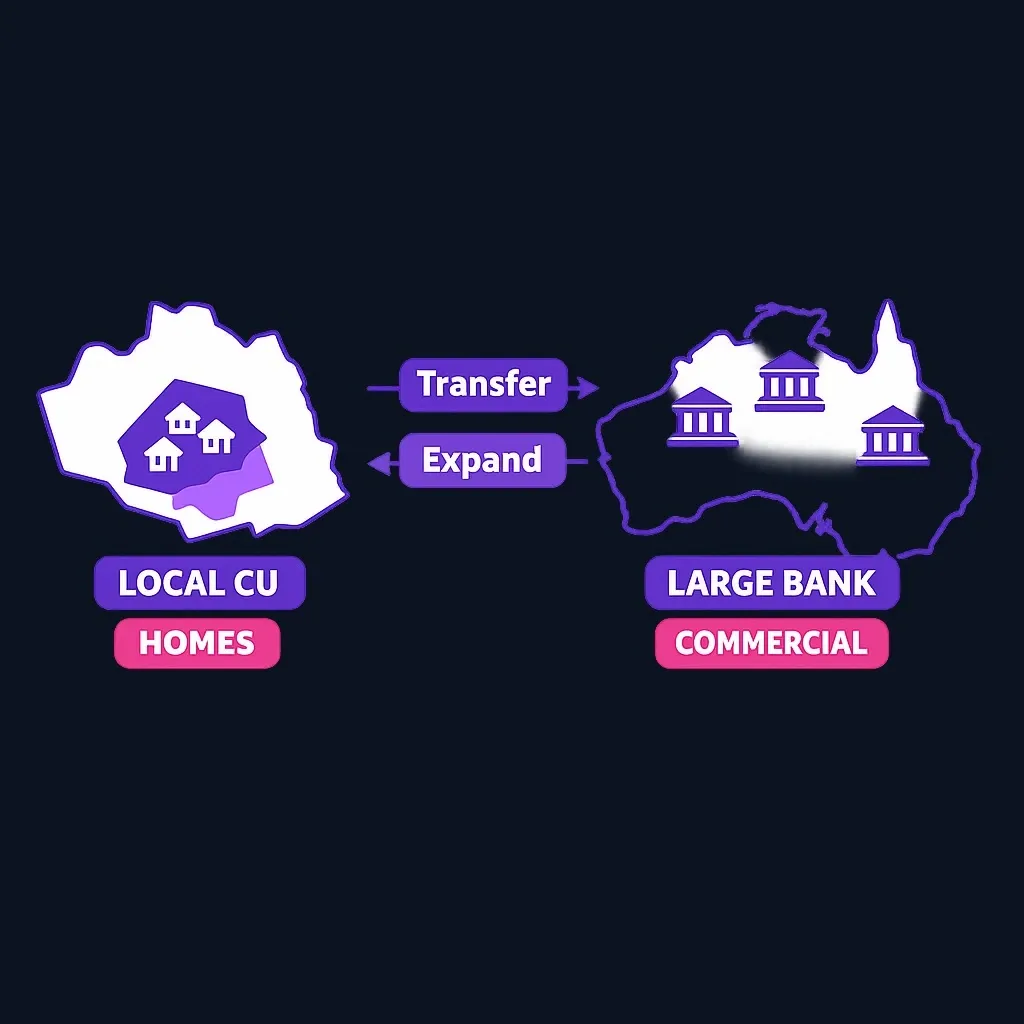
Illustrative example: A small credit union that emphasizes home loans in one county may better understand local job markets and adapt underwriting accordingly. A large bank with nationwide commercial real-estate loans may weather local slumps better but face sector-wide concentration risks.
Practice trading with Finelo
Practice in a simulator, learn with bite-sized lessons, and build confidence before risking real money.
Member Benefits: Personalized service and community focus
Beyond balance-sheet safety, day-to-day experience and lender behavior in stress matter to members.
Common member advantages
- Faster, relationship-driven service and more direct access to decision-makers.
- Fee and rate structures often designed to benefit members, though this varies by institution.
- Local reinvestment decisions that can lead to flexible borrower accommodations during community stress.
Vignette: After a plant closure, a local credit union may negotiate temporary loan relief for affected members it already knows. That accommodation can reduce hardship even though insured deposits remain protected in either institution. Practical tip: Call member service and describe a realistic problem (for example, a temporary missed loan payment). The tone and helpfulness of that response often reveal how the institution will act during stress.
Hypothetical institutional scenarios
These hypothetical examples illustrate possible service differences. They are not historical case studies or predictions about a particular institution.
Local-lender example: In a regional recession, a community credit union tightened new lending but worked with existing borrowers to restructure loans, prioritizing member retention and local recovery. Large-bank example: During sector stress, a large bank might reduce product offerings, close underused branches, or reallocate capital to meet regulatory ratios—actions that protect depositors and shareholders but reduce some consumer conveniences.
Key takeaway: Deposit insurance preserves insured cash balances, but borrower outcomes, service continuity, and local lending flexibility can diverge between institutions.
Decision framework
A compact checklist and worked example to help you choose where to hold deposits.
Checklist
- Confirm deposit insurance: Ask which federal regulator insures your accounts and get written confirmation.
- List required services: Mobile banking, ATM access, branch access, loan types, and overdraft policies.
- Compare costs and sample terms: Request fee schedules and a sample loan rate or account fee scenario.
- Evaluate stability signals: Find public disclosures on capitalization or ask the institution for high-level indicators.
- Test service quality: Call or visit and pose a realistic problem to gauge responsiveness.
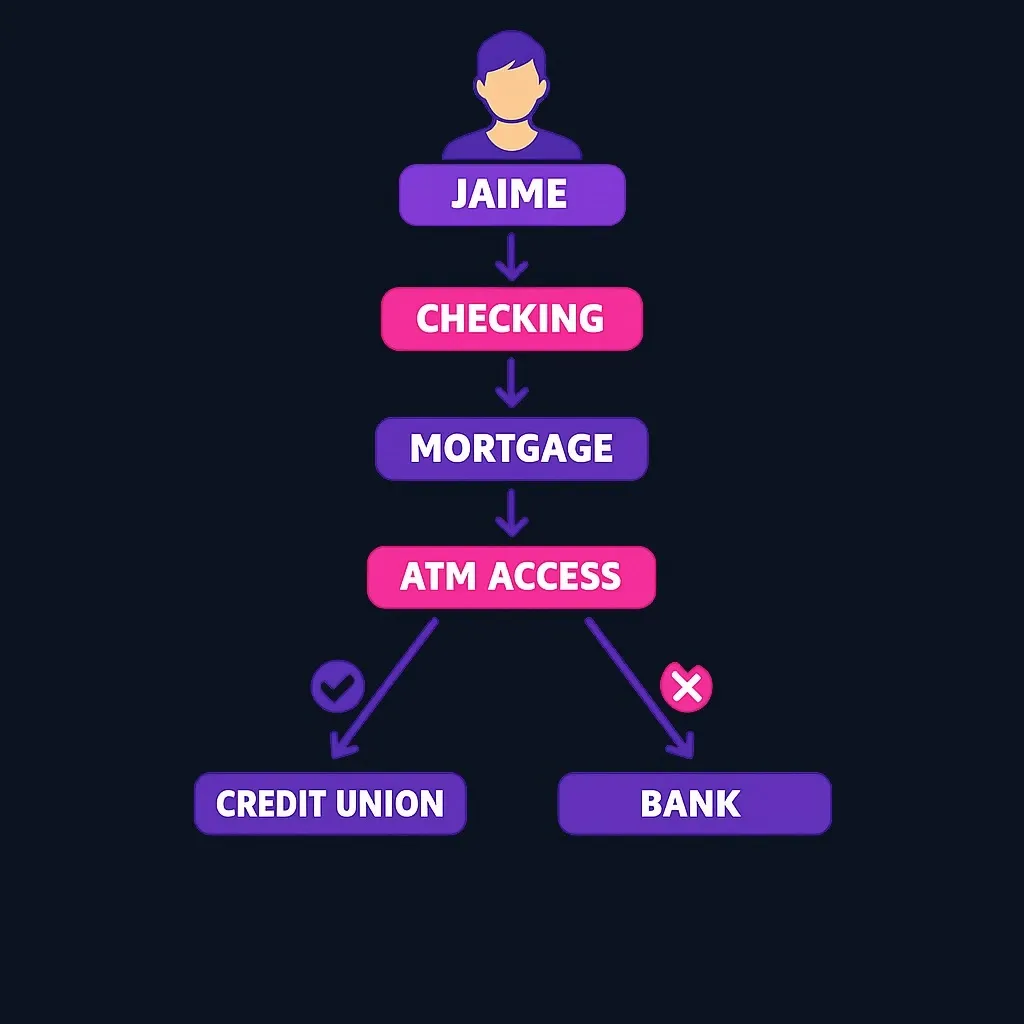
Hypothetical example: Jaime needs daily checking, a mortgage, and nationwide ATM access. She verifies deposit insurance, compares service and access features, and considers whether using more than one institution would meet different needs. This is an illustration, not a customer story or recommendation.
FAQ
Are credit unions insured?
Yes. Federally insured credit unions protect deposits under the NCUA insurance system; review the NCUA’s consumer guidance for ownership categories and limits.
How do credit unions differ from banks?
Credit unions are member-owned cooperatives that often prioritize member benefit and local lending. Banks are shareholder-owned and can emphasize scale and product breadth. Both types carry federal insurance for deposits—confirm specifics with the institution’s regulator.
What should I check to decide which is safer for me?
Check (1) deposit insurance coverage and written confirmation, (2) the institution’s lending and risk focus, (3) product and access needs (digital, ATM, branches), and (4) service responsiveness via a realistic inquiry.
Can I switch from a bank to a credit union easily?
Procedurally yes: confirm membership eligibility, open accounts, transfer funds, and update direct deposits and automatic payments. Use the Decision framework checklist above to compare service, fees, and access before moving.
Use the five decision steps above as the article's checklist. Finelo does not currently provide a separate downloadable worksheet for this page.
Financial LiteracyFinancial Education
Practice trading with Finelo
Practice in a simulator, learn with bite-sized lessons, and build confidence before risking real money.
About the author
Finelo Team
The Finelo Team creates practical investing and trading education designed to help beginners learn faster with structured challenges, simulator practice, and bite-sized lessons.
Keep reading — Related articles

Financial Literacy
Mercury Books Review 2026: Is It Worth It for Startups?
Mercury Books brings double-entry accounting into Mercury. Review its $35 pricing, reports, AI features, integrations, and migration limits.
Finelo Team

Financial Literacy
Why is My FICO Score Lower Than My Credit Score?
Example takeaway: seeing a higher score in a bank app doesn’t guarantee lenders will see the same FICO number at application time; lenders often pull a specific FICO version from a specific bureau.
Finelo Team
Financial Literacy
Why Is My FICO Score Higher Than My Credit Score?
Brief educational note: this article is educational, not financial or investment advice; investing and credit decisions involve risk and possible loss.
Finelo Team


