For U.S. readers: This article discusses U.S. rules and financial products. State rules and individual eligibility may differ.
Are Mortgage Points Tax Deductible? 2026 IRS Rules and Examples

Finelo provides general financial education, not tax, legal, investment, or individualized financial advice.
10 min read
Practice trading with Finelo
Practice in a simulator, learn with bite-sized lessons, and build confidence before risking real money.
Want to learn more?
Practice in a simulator, learn with bite-sized lessons, and build confidence before risking real money.
Explore FineloExplore Finelo's 28-day challenges
Turn learning into a daily habit with guided challenge paths.
Quick answer
Mortgage points may be deductible as home mortgage interest when they meet IRS requirements and the taxpayer itemizes on Schedule A. Whether they are deducted in full in the year paid or spread over the loan term depends on how the loan proceeds are used and whether all applicable tests are satisfied. The home-acquisition-debt limits can also restrict the deduction.
Finelo provides general financial education, not tax, legal, investment, or individualized financial advice. Use the publication for the tax year being filed and consider professional review for a refinance, second home, seller-paid points, or a mortgage near the debt limits.
If you paid points to lower your mortgage rate, you may be able to deduct those points as home mortgage interest in the year paid—primarily for points on a purchase of your main home—provided they meet IRS criteria and you itemize IRS Topic No. 504.
What Are Mortgage Points?
Mortgage points (often called "discount points" or simply "points") are prepaid interest you pay at closing to lower the interest rate on a mortgage. One point typically equals 1% of the loan amount; paying points reduces the lender’s rate in exchange for the upfront fee. The IRS treats qualifying points as prepaid home mortgage interest, which can be deductible if other tax rules are satisfied.
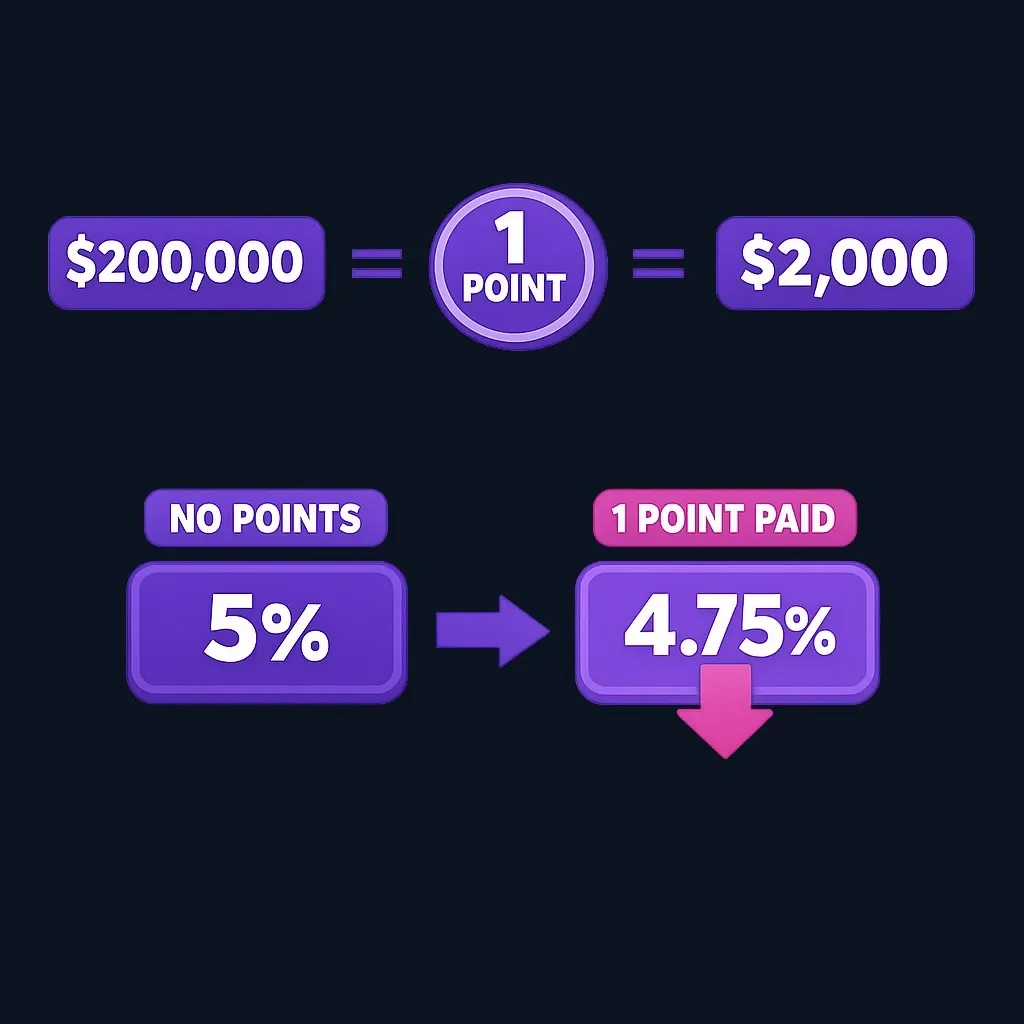
Why borrowers pay points
- To lower the monthly payment and total interest over the loan’s life.
- To buy down a rate when expecting to keep the home long enough to recoup the upfront cost.
A quick practical note: whether points are a good idea depends on how long you expect to keep the loan, the size of the rate reduction, and your tax situation.
Are Mortgage Points Tax Deductible?
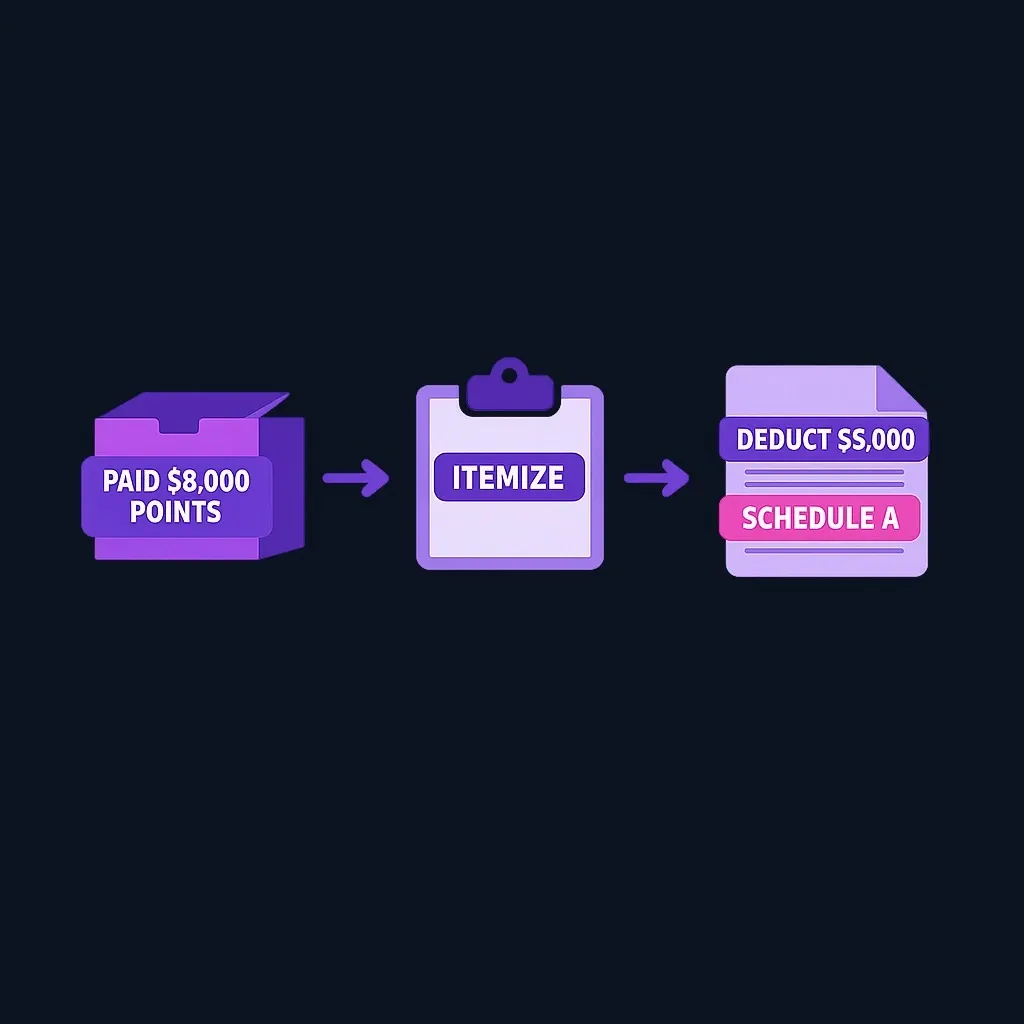
Short answer: sometimes. The IRS specifically allows deduction of points that qualify as home mortgage interest when you itemize deductions on Schedule A (Form 1040).
Key distinctions the IRS uses
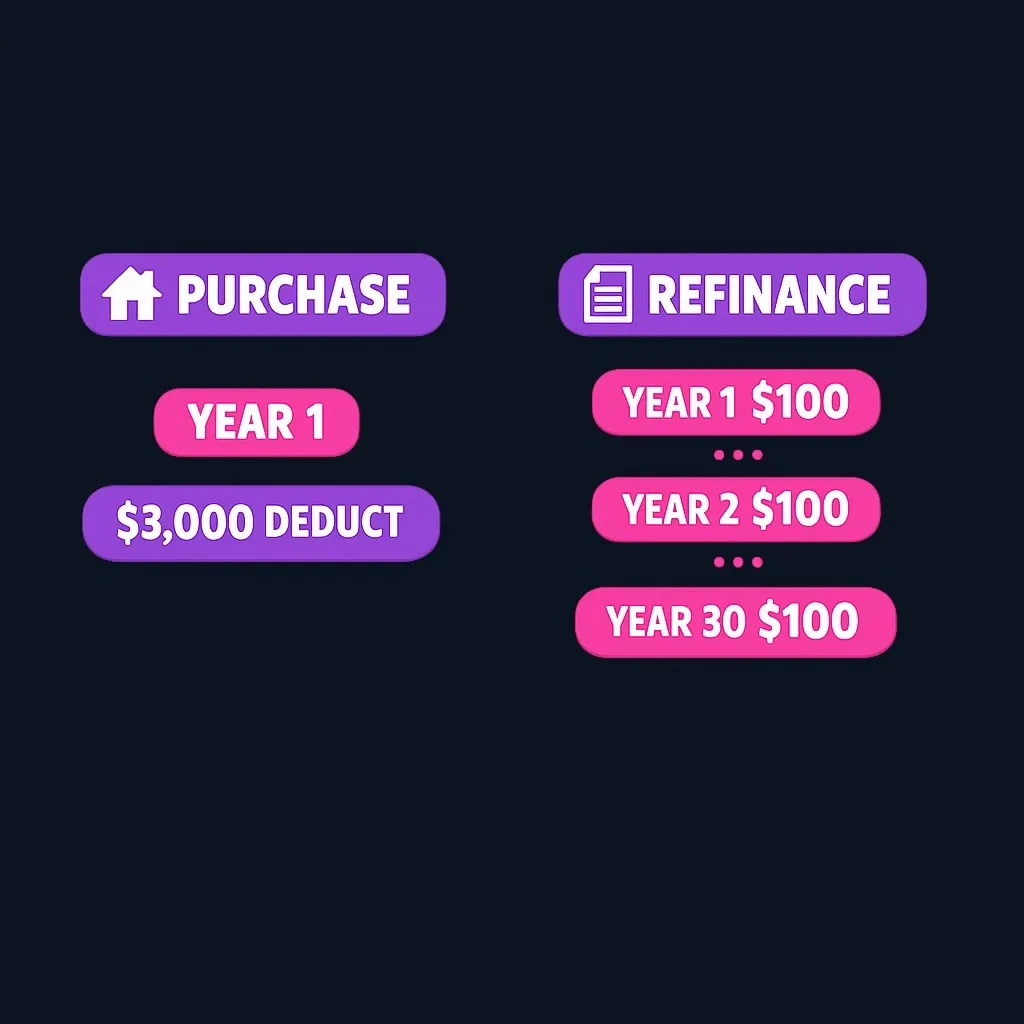
- Points paid on the purchase of your main home commonly qualify for a full deduction in the year paid if they meet the IRS tests. See the IRS guidance on deductible points.
- Points paid for a refinance usually must be deducted over the life of the loan (amortized), rather than all in the year paid.
- Seller-paid points and points paid for second homes have special rules and limits under the IRS guidance.
Example (illustrative only): If you paid $3,000 in qualifying points on a purchase of your primary home, and you itemize deductions, you could generally deduct the $3,000 as mortgage interest on Schedule A in the year you paid it — provided your situation meets the IRS tests.
Conditions for Deducting Mortgage Points
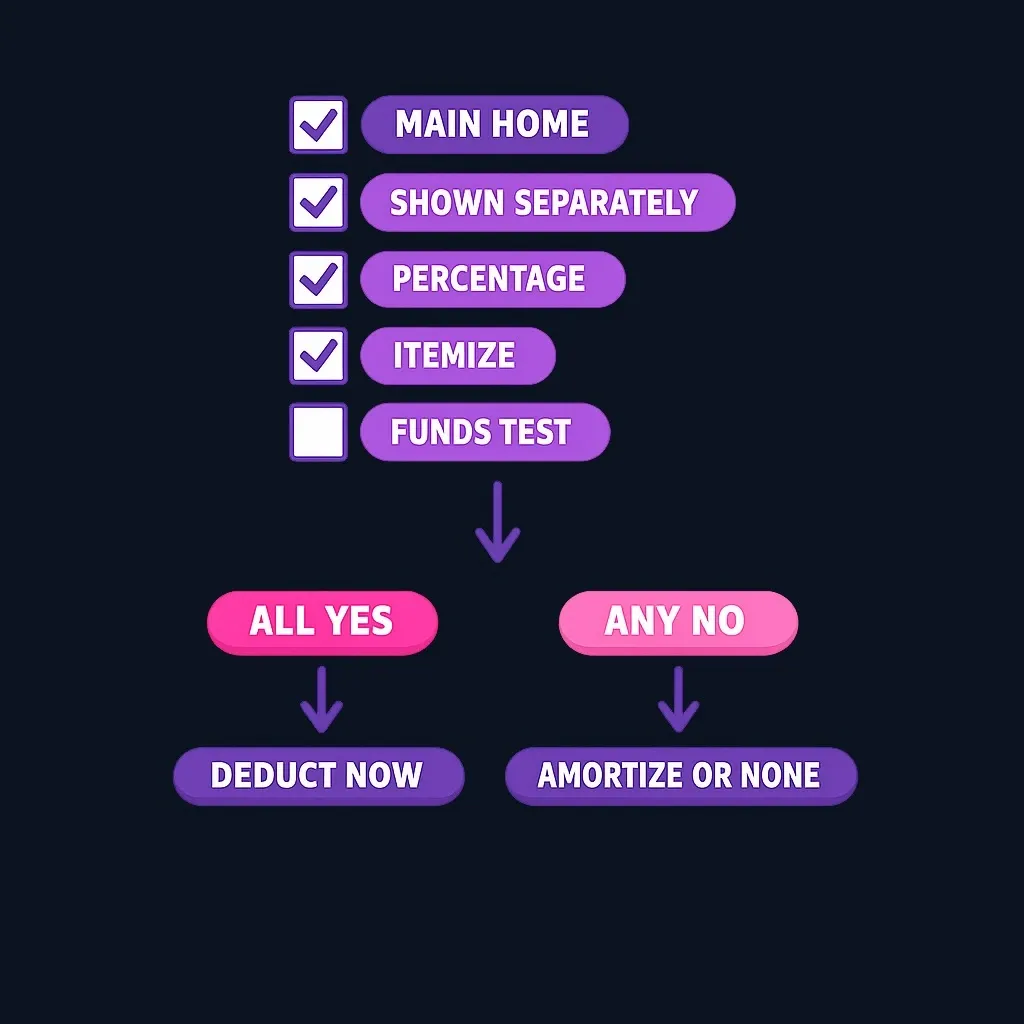
IRS Publication 936 lists nine tests for deducting purchase points in full in the year paid. In summary, all of the following must apply:
- The mortgage is secured by the taxpayer’s main home.
- Paying points is an established business practice in the area.
- The points are not more than the amount generally charged there.
- The taxpayer uses the cash method of accounting, as most individuals do.
- The points do not replace separately stated fees such as appraisal, inspection, title, attorney, or property-tax charges.
- Funds provided at or before closing, plus seller-paid points, are at least equal to the points charged; borrowed funds from the lender or mortgage broker do not satisfy this test.
- The loan is used to buy or build the taxpayer’s main home.
- The points are calculated as a percentage of the mortgage principal.
- The settlement statement clearly identifies the points as charged for the mortgage.
See IRS Publication 936 for the complete tests, exceptions, worksheets, and current debt limits.
Checklist to determine if your points likely qualify
- Was the loan used to buy or build your main home?
- Are the points shown separately on your closing statement as points?
- Were the points charged as a percentage of the loan principal?
- Did you itemize deductions on Schedule A in the year you paid the points?
- Did you provide enough non-lender-borrowed funds at or before closing to satisfy the funding test?
If you can check these boxes, the points are more likely to meet the IRS definition of deductible mortgage interest. See the IRS page for full tests and examples.
Limitations and Exceptions
Not all payments labeled "points" qualify as deductible interest. The IRS lists several common limitations and exceptions:
- Refinance loans: Points paid to refinance are generally deductible only over the life of the new loan (amortized) rather than all in the year paid.
- Points not tied to a purchase of the main home: Points on a second-home loan generally must be spread over the loan term. Points allocable to a loan used to substantially improve the main home may qualify for immediate treatment when the relevant IRS tests are met.
- Non-customary or service fees: Fees that are not customary points (for example, fees for appraisals, inspections, title searches, or attorney services) are not deductible as points.
- Standard deduction vs. itemizing: If you claim the standard deduction, you cannot also deduct points on Schedule A.
- Mortgage-debt limits: Even qualifying points can be limited when the mortgage exceeds the qualified-loan limit in Publication 936.
Because the rules include many small but important details, check the IRS guidance for examples and exceptions before claiming a deduction.
Practice trading with Finelo
Practice in a simulator, learn with bite-sized lessons, and build confidence before risking real money.
How to Report Mortgage Points on Your Tax Return
If your points qualify and you itemize, report them as part of your mortgage interest on Schedule A of Form 1040, as the IRS directs.
Step-by-step (overview)
- Confirm the points qualify under the IRS tests and that you itemize deductions.
- Gather closing documents showing the points paid and whether they were paid by you or another party (seller or lender). The settlement statement should itemize points.
- For purchase-point deductions that qualify in the year paid, include the total qualifying points with your deductible mortgage interest on Schedule A.
- For refinances, amortize the deductible portion of points over the life of the loan and claim the appropriate amount each year; keep documentation to show your allocation.
Record-keeping tips
- Keep the closing disclosure/settlement statement and any lender statements showing the points paid.
- If points were paid by the seller or builder, document who paid them; special rules may apply.
Always consult the IRS guidance and consider a tax preparer if your situation involves refinances, seller-paid points, or second-home issues.
What to know before deciding
This section collects the practical, decision-relevant items to check before paying or claiming points.
Educational note: This content is educational, not financial or investment advice. Tax rules change and your personal situation affects what you can deduct; consult a tax professional for personalized advice.
Practical considerations
- Itemizing requirement: Only taxpayers who itemize on Schedule A benefit from a points deduction in the year paid; otherwise, points may not be deductible that year.
- Break-even horizon: Calculate how long it will take for the monthly savings from a lower rate to offset the upfront cost of points; if you sell or refinance before the break-even point, the points may not be worthwhile. (This is a financial planning calculation; it does not change IRS rules.)
- Refinances and amortization: If you expect to refinance, remember that points on a refinance are usually deducted over time, which reduces immediate tax benefit.
- State taxes: Some states follow federal tax treatment; others differ. Check your state tax authority for local rules or consult a tax professional.
Documentation to collect at closing
- Settlement statement showing points as a separate line item.
- Lender or escrow statements showing how points were calculated.
- Copies of any seller-paid points arrangements or credits.
Decision framework
Use this quick decision framework to evaluate whether paying points makes sense for you (tax effects are one input, not the only one).
Step 1 — Confirm tax eligibility
- Will you itemize this year? If no, you won’t get the full immediate federal deduction for qualifying purchase points.
Step 2 — Cash and holding-period test
- Do you have the cash to pay points and plan to keep the home long enough to recover the upfront cost through monthly savings? If you expect to move or refinance soon, prepaid points are less attractive.
Step 3 — Compare after-tax cost carefully
- A deduction reduces taxable income; it is not a dollar-for-dollar credit. A rough estimate may multiply the amount actually deductible by an assumed marginal tax rate, but the real tax effect can differ because of deduction limits, itemizing thresholds, state rules, and other return items.
Step 4 — Check loan type and seller involvement
- For refinances, plan for amortization of points over the loan term.
- If the seller paid points, understand how that affects your deductible amount and obtain clear documentation.
Worked example (illustrative)
- Suppose a taxpayer pays $3,000 in points on a main-home purchase and satisfies every test for a current-year deduction. The $3,000 would reduce taxable income if the taxpayer itemizes; it would not reduce tax by $3,000. If the assumed marginal rate were 22%, a simple estimate of the federal tax reduction would be $660, before considering deduction limits or other return items. This hypothetical example is not a tax calculation for any reader.

FAQ
Are mortgage points tax deductible?
They can be. Points that meet the IRS criteria may be deductible as home mortgage interest if you itemize deductions on Schedule A.
How do I deduct points if I refinanced my mortgage?
Points paid to refinance a mortgage are generally deductible over the life of the loan (amortized), not all at once in the year paid; follow the IRS amortization guidance and keep documentation showing the loan term.
What documentation do I need to claim points on my tax return?
Keep the closing or settlement statement that identifies points paid, lender statements, and any documents showing who paid the points (you, the seller, or a third party) — use these when preparing Schedule A.
Can points paid by the seller be deducted by the buyer?
The IRS has rules for seller-paid points; whether and how they’re deductible depends on the arrangement and the tests in the IRS guidance. Document who paid the points and review the IRS details before claiming the deduction.
Conclusion and Next Steps
Key takeaways
- Mortgage points may be deductible as home mortgage interest, but only if they meet IRS tests and you itemize deductions.
- Points on purchases of your main home often qualify for a full deduction in the year paid; points on refinances are generally amortized over the loan term.
- Keep closing documents and consult a tax professional for complex cases like seller-paid points, second homes, or state tax differences.
For broader educational guides on mortgages and taxes, explore Finelo Blog.
Financial LiteracyFinancial Education
Practice trading with Finelo
Practice in a simulator, learn with bite-sized lessons, and build confidence before risking real money.
About the author
Finelo Team
The Finelo Team creates practical investing and trading education designed to help beginners learn faster with structured challenges, simulator practice, and bite-sized lessons.
Keep reading — Related articles

Financial Literacy
Mercury Books Review 2026: Is It Worth It for Startups?
Mercury Books brings double-entry accounting into Mercury. Review its $35 pricing, reports, AI features, integrations, and migration limits.
Finelo Team

Financial Literacy
Why is My FICO Score Lower Than My Credit Score?
Example takeaway: seeing a higher score in a bank app doesn’t guarantee lenders will see the same FICO number at application time; lenders often pull a specific FICO version from a specific bureau.
Finelo Team

Financial Literacy
Why Is My FICO Score Higher Than My Credit Score?
Brief educational note: this article is educational, not financial or investment advice; investing and credit decisions involve risk and possible loss.
Finelo Team