For U.S. readers: This article discusses U.S. rules and financial products. State rules and individual eligibility may differ.
Can Both Parents Claim Head of Household?

Educational note: This content is educational, not tax or legal advice.
8 min read
Practice trading with Finelo
Practice in a simulator, learn with bite-sized lessons, and build confidence before risking real money.
Want to learn more?
Practice in a simulator, learn with bite-sized lessons, and build confidence before risking real money.
Explore FineloExplore Finelo's 28-day challenges
Turn learning into a daily habit with guided challenge paths.
Quick answer
Yes — in limited situations two divorced or separated parents can each file as head of household in the same tax year, but only if each parent bases the claim on a different qualifying child and each meets the head-of-household tests: the child lived with that parent for more than half the year, and that parent paid more than half the cost of maintaining the home where the child lived Publication 501, IRS. Finelo provides financial education, not financial or investment advice.
What to know before deciding
What "head of household" means and why it matters
Head of household is a filing status that usually gives a larger standard deduction and more favorable tax brackets than filing as single. To use it, a taxpayer must have a qualifying person (commonly a dependent child), have paid more than half the cost of maintaining the home where that person lived, and the qualifying person must have lived with the taxpayer for more than half the year.

Educational note: This content is educational, not tax or legal advice. If custody, support, or residency facts are close or disputed, consult a qualified tax professional.
Key IRS tests, in plain language
- Qualifying person: usually a dependent child who meets relationship, residency, and support tests.
- Residency: the child must have lived with you for more than half the year to be the basis for head of household.
- Financial support (keeping up a home): you must have paid more than half the cost of maintaining the home where the qualifying child lived.
Who this page is for: parents who are divorced, separated, or living apart who need a clear, practical way to decide whether each can claim head of household.
Decision framework
Use this step-by-step framework to determine whether both parents can claim head of household in the same year.
Quick eligibility checklist
| Condition to check | What to verify | Source |
|---|---|---|
| Different qualifying child per parent | Each parent must be claiming a different child as the qualifying person for head of household | |
| Child's residence | For the child you claim, confirm they lived with you for more than half the year | |
| Cost of maintaining the home | You paid more than half the cost of maintaining the home where that child lived | |
| Conflicting claims | If both parents claim the same child, the IRS applies tiebreaker rules and may reject or audit one return |
Check every box before filing. If a box fails, you likely cannot claim head of household for that child.
Worked example — two children, two homes
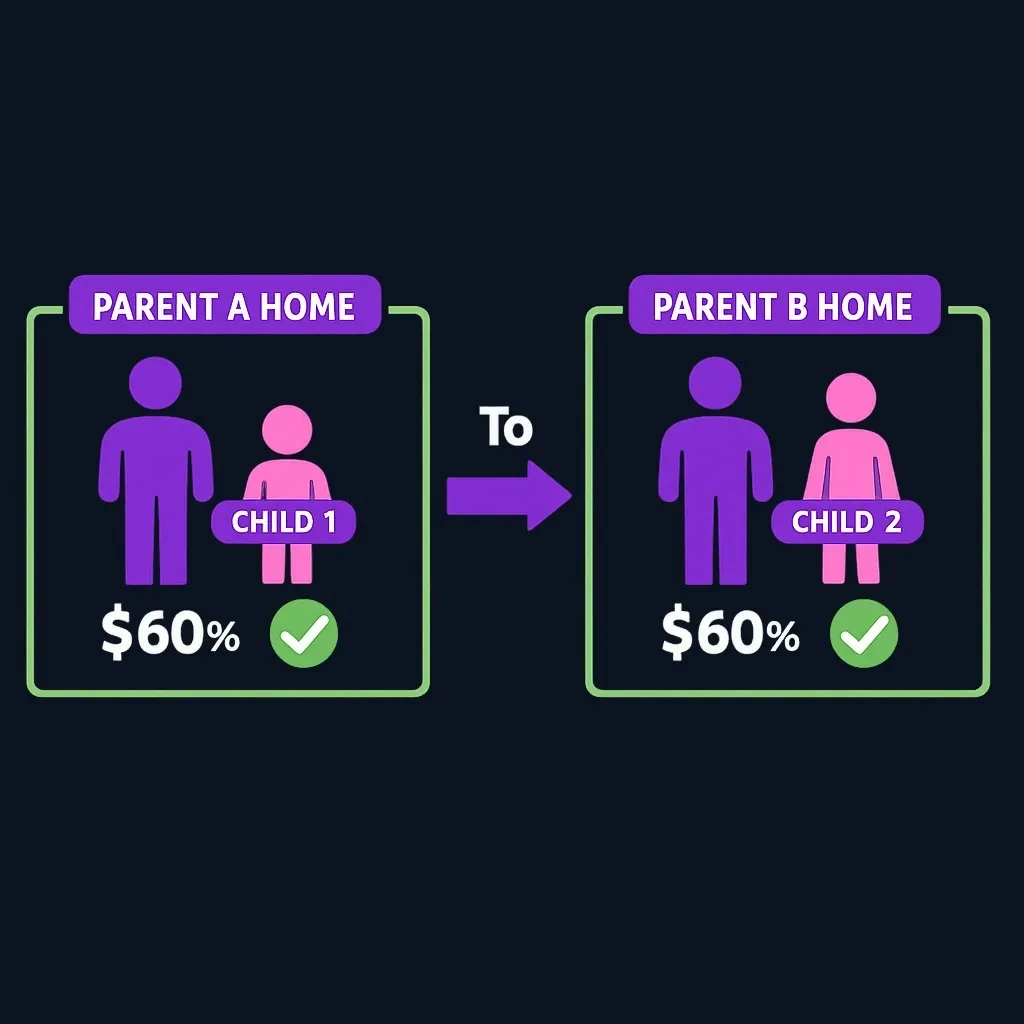
Parent A and Parent B are divorced with two children. The younger child lives with Parent A most of the year; the older child lives with Parent B most of the year. Each parent pays more than half the cost of maintaining their own household where their respective child lives. Under these facts, each parent can generally file as head of household for the child who lived with them more than half the year.
Shared single child: how to decide
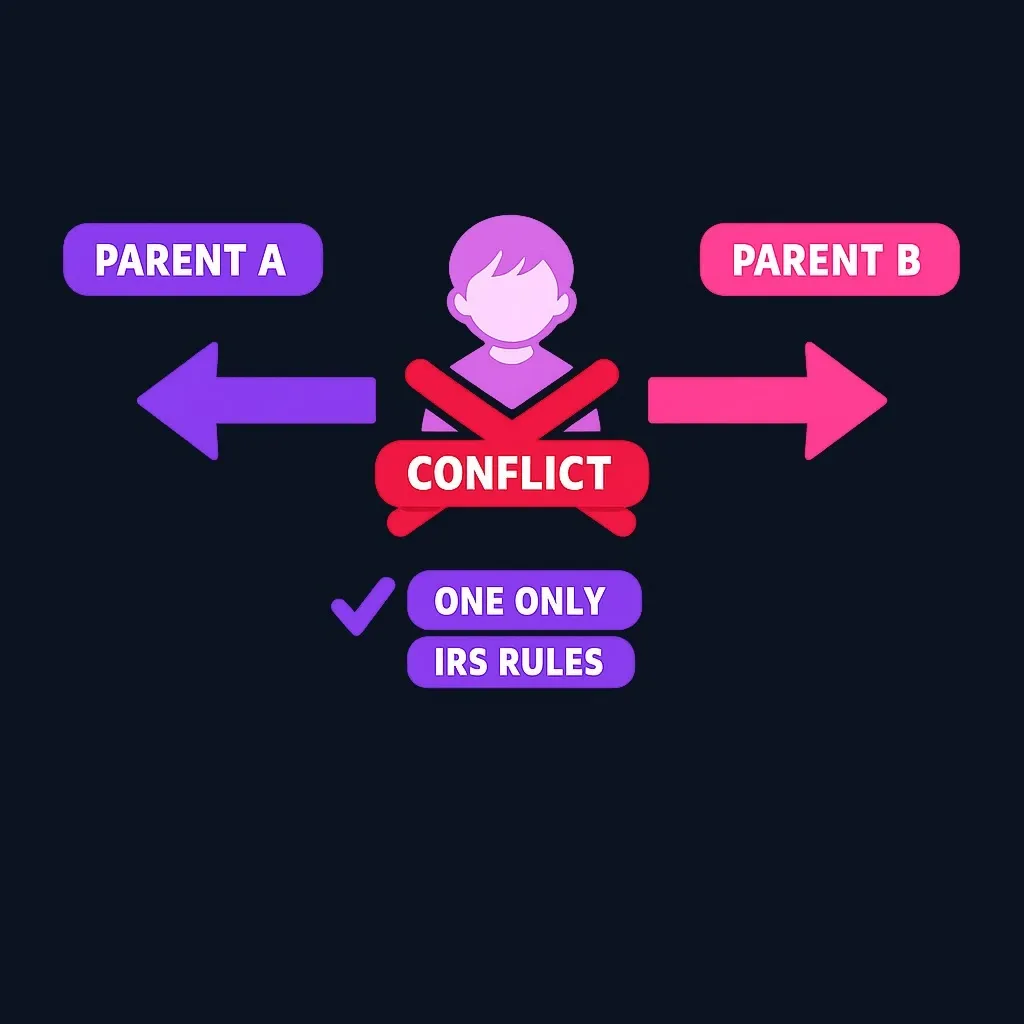
If parents share one child, only the parent who satisfies both the residency and support tests for that child may file head of household. If both parents file claiming the same child, the IRS uses tiebreaker rules (including where the child lived most during the year) to decide which return stands; filing order can affect which return the IRS accepts and can increase the chance of an audit.
How child support and household contributions affect the test
Child support payments are typically transfers between parents, not payments that count toward the payer’s cost of maintaining their own household. If child support effectively funds the recipient parent’s household, those payments can change which parent paid more than half the cost of maintaining the home. Document how support was used and how household expenses were paid before claiming head of household.
Form 8332 and releasing a claim
A custodial parent can sign Form 8332 to release the claim to certain dependency-related tax benefits to the noncustodial parent. Use Publication 501 as the baseline for filing-status and dependency rules and consult the Form 8332 instructions when parents agree to transfer dependency-related claims.
Practice trading with Finelo
Practice in a simulator, learn with bite-sized lessons, and build confidence before risking real money.
Practical mechanics and recordkeeping
Solid records reduce the chance of an IRS challenge. Below are realistic, usable practices.
Maintaining a child custody log (detailed example)
Keep a contemporaneous custody log that lists dates, nights, and supporting proof. A strong entry contains:
- Date range and number of nights the child stayed with you (e.g., "Mar 1–Mar 31: 18 nights").
- Reason for stay (regular schedule, holiday, school term).
- Proof documents (school attendance, medical visits, messages about pickup/drop-off).
- Household expenses tied to the child that month (groceries, prorated utilities) with amounts and receipts.
Example row:
- Period: 2026-03-01 to 2026-03-31 — Nights with parent: 18 — Proof: school attendance record — Expenses: $420 groceries; $60 utilities (prorated).

Keep original receipts, canceled checks, electronic statements, school or medical records, and any written custody agreements. A contemporaneous log plus supporting documents is far stronger than trying to reconstruct dates later.
Documentation to keep for an audit
- Custody calendar / log showing nights and dates.
- Receipts, canceled checks, or bank statements showing household payments.
- School, medical, or official records indicating the child’s primary residence.
- Signed Form 8332 or other written agreements about claiming the child. Retain these records for the period the IRS can examine returns; see Publication 501 for guidance on recordkeeping and audits.
Filing corrections and resolving disputes
If you learn you filed head of household in error, file an amended return (Form 1040‑X) to fix filing status or dependent claims; Publication 501 discusses amending returns in relevant contexts. If both parents file conflicting claims, the IRS will apply tiebreaker rules and may request documentation. Try to resolve disputes in writing; a written agreement reduces later friction.
Common mistakes and how to avoid them
- Not documenting residency: keep a contemporaneous custody log and supporting records.
- Misallocating shared expenses: track who actually paid each household cost and prorate shared items.
- Misreading child support effects: treat support as transfers and document how funds were used in the household.
- Forgetting or losing Form 8332: if a custodial parent agreed to release a claim, keep the signed form.
- Waiting to correct errors: file Form 1040‑X promptly when mistakes are found.
Avoiding these mistakes lowers the risk of IRS notices and simplifies dispute resolution.
FAQ
Can both parents claim head of household for the same child?
No — if both parents claim the same child as the qualifying person, the IRS will apply tiebreaker rules and may accept the return of one filer while rejecting or adjusting the other; expect increased scrutiny and possible audits.
What documentation should I keep to prove I qualify?
Keep a custody log, school and medical records showing where the child lived, receipts and canceled checks for household expenses, and any written agreements (including Form 8332). These items support your head-of-household claim if the IRS requests proof.
How does child support affect who can claim head of household?
Child support is usually a transfer between parents. Whether it affects head-of-household eligibility depends on who paid and how the funds were used to maintain the home. Track payments and household spending to show who paid more than half the cost of maintaining the home where the child lived.
What if we disagree about who can claim head of household?
Gather your documentation and try to reach a written agreement. If both taxpayers file conflicting claims, the IRS will use its rules to determine who is entitled to the filing status and may request supporting documents. Consult a tax professional if the dispute is unresolved or likely to lead to an IRS inquiry.
Next steps
- Work through the eligibility checklist above and build a custody log now rather than later.
- If custody, support, or residency facts are close, consult a tax professional.
- For the IRS’s official rules on dependents and filing status, read Publication 501 directly.
- Use the records checklist in this article and verify the current rules in IRS Publication 501. The Finelo Blog does not provide a substitute for IRS forms or individualized tax advice.
Financial LiteracyFinancial Education
Practice trading with Finelo
Practice in a simulator, learn with bite-sized lessons, and build confidence before risking real money.
About the author
Finelo Team
The Finelo Team creates practical investing and trading education designed to help beginners learn faster with structured challenges, simulator practice, and bite-sized lessons.
Keep reading — Related articles

Financial Literacy
Mercury Books Review 2026: Is It Worth It for Startups?
Mercury Books brings double-entry accounting into Mercury. Review its $35 pricing, reports, AI features, integrations, and migration limits.
Finelo Team

Financial Literacy
Why is My FICO Score Lower Than My Credit Score?
Example takeaway: seeing a higher score in a bank app doesn’t guarantee lenders will see the same FICO number at application time; lenders often pull a specific FICO version from a specific bureau.
Finelo Team

Financial Literacy
Why Is My FICO Score Higher Than My Credit Score?
Brief educational note: this article is educational, not financial or investment advice; investing and credit decisions involve risk and possible loss.
Finelo Team