Comparing a closed end fund vs etf comes down to structure: a closed-end fund issues a fixed number of shares that trade at prices above or below the value of its holdings, while an ETF continuously creates and redeems shares, keeping its market price close to the value of the assets inside.
Closed-End Funds vs ETFs: Understanding the Key Differences
Comparing a closed end fund vs etf comes down to structure: a closed-end fund issues a fixed number of shares that trade at prices above or below the value of its holdings, while an ETF continuously creates and redeems…
7 min read
Practice investing with Finelo
Build practical investing skills with guided lessons, simulator practice, and structured challenges.
Want to learn more?
Build practical investing skills with guided lessons, simulator practice, and structured challenges.
Explore FineloExplore Finelo's 28-day challenges
Turn learning into a daily habit with guided challenge paths.
That single structural difference drives almost everything else: pricing, liquidity, costs, income potential, and risk. This guide is for investors who understand the basics of funds and want to choose the right wrapper for their goals. It is educational content, not financial advice, so verify the details of any specific fund before you invest.
What is a closed-end fund?
A closed-end fund is a pooled investment vehicle that raises money once, through an initial public offering, and then lists a fixed number of shares on an exchange. After the IPO, the fund does not normally issue new shares or redeem existing ones. Investors who want in or out simply trade shares with other investors on the open market.
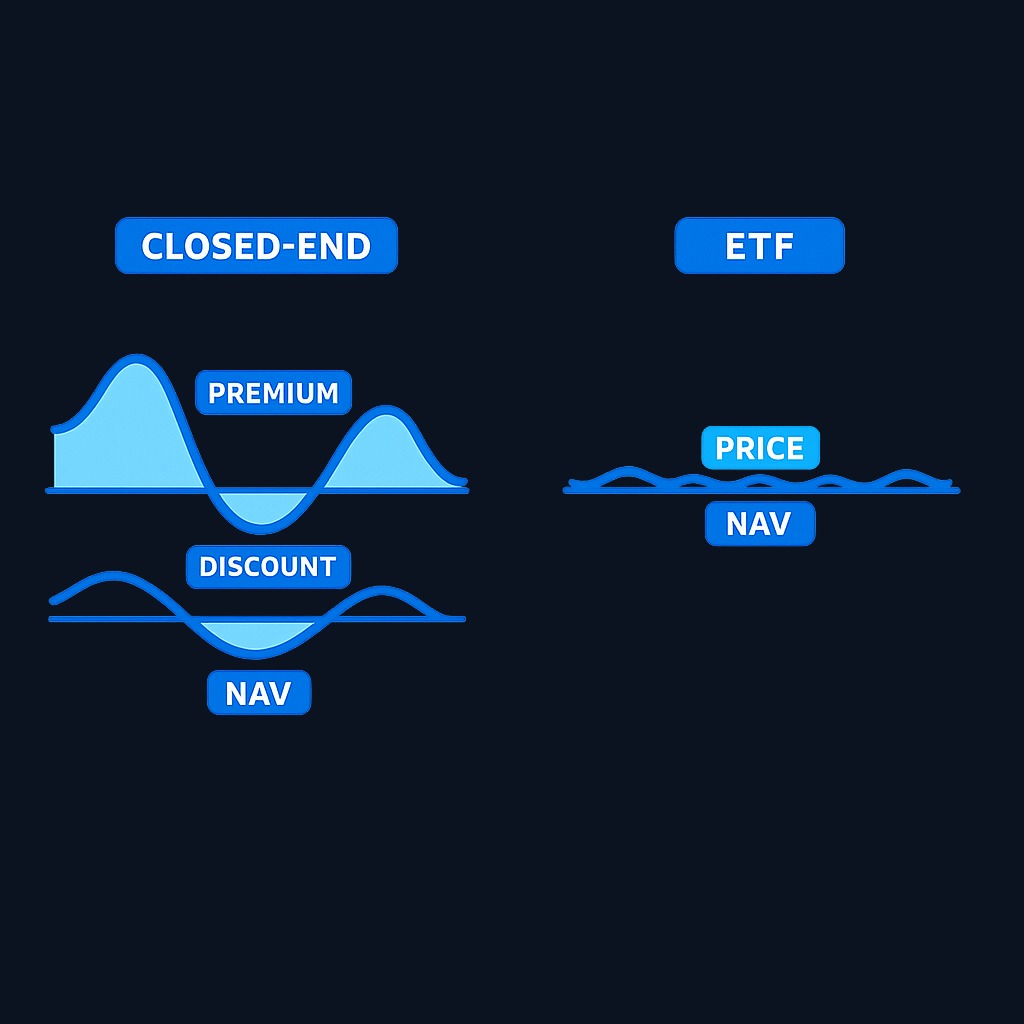
Because supply is fixed, the share price is set purely by supply and demand. It can drift well away from the fund's net asset value, or NAV, which is the per-share value of everything the fund owns. When the market price sits below NAV, the fund trades at a discount. When it sits above, it trades at a premium. Discounts and premiums are the defining feature of this structure, and experienced investors watch them closely.
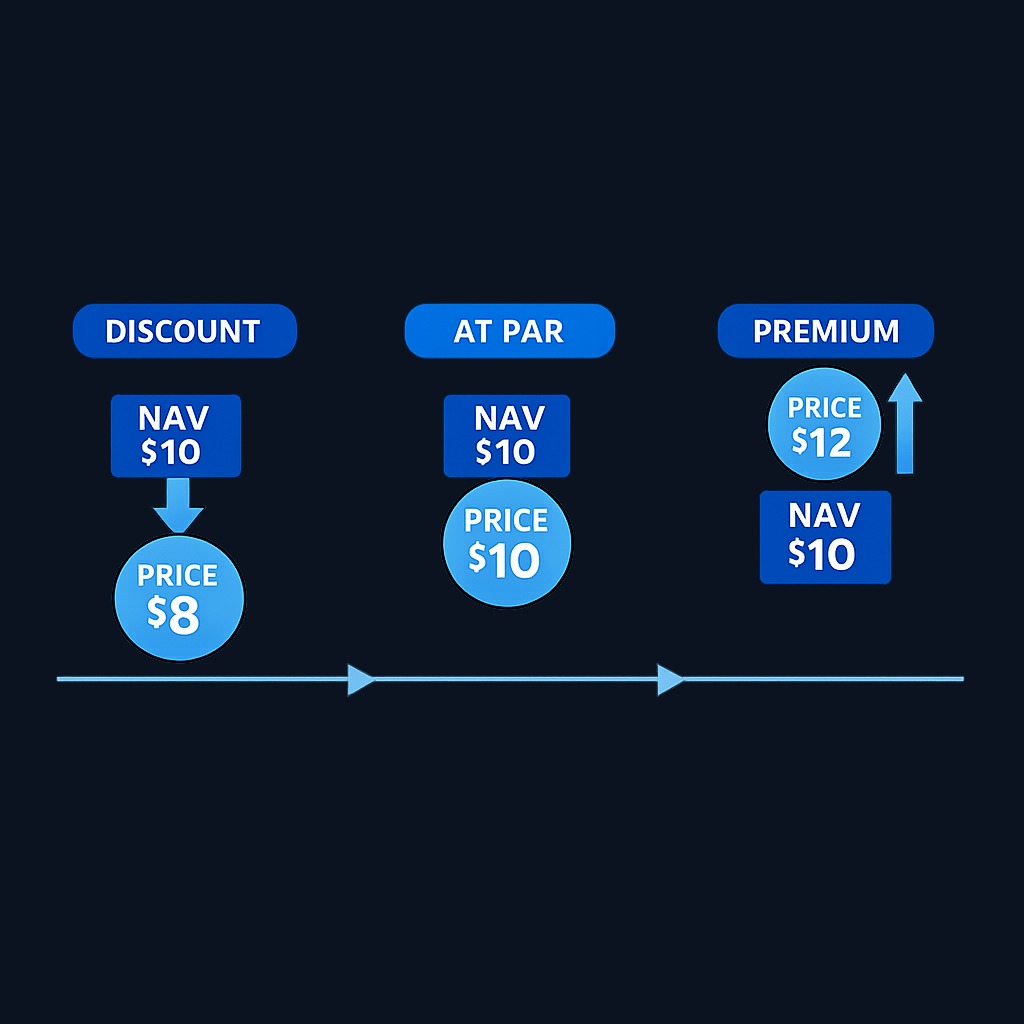
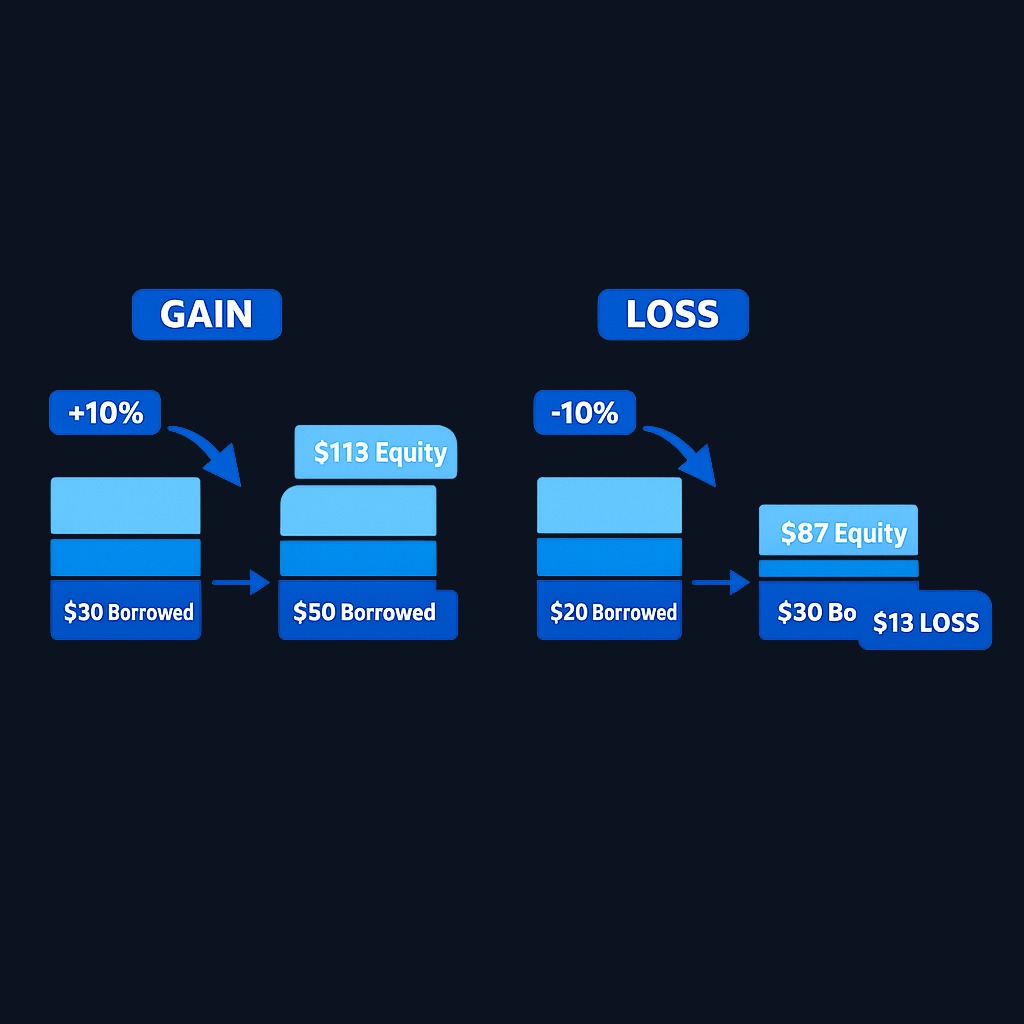
Closed-end funds also commonly use leverage, meaning they borrow money to buy more assets. Leverage can raise income and returns in good markets and deepen losses in bad ones.
What is an ETF?
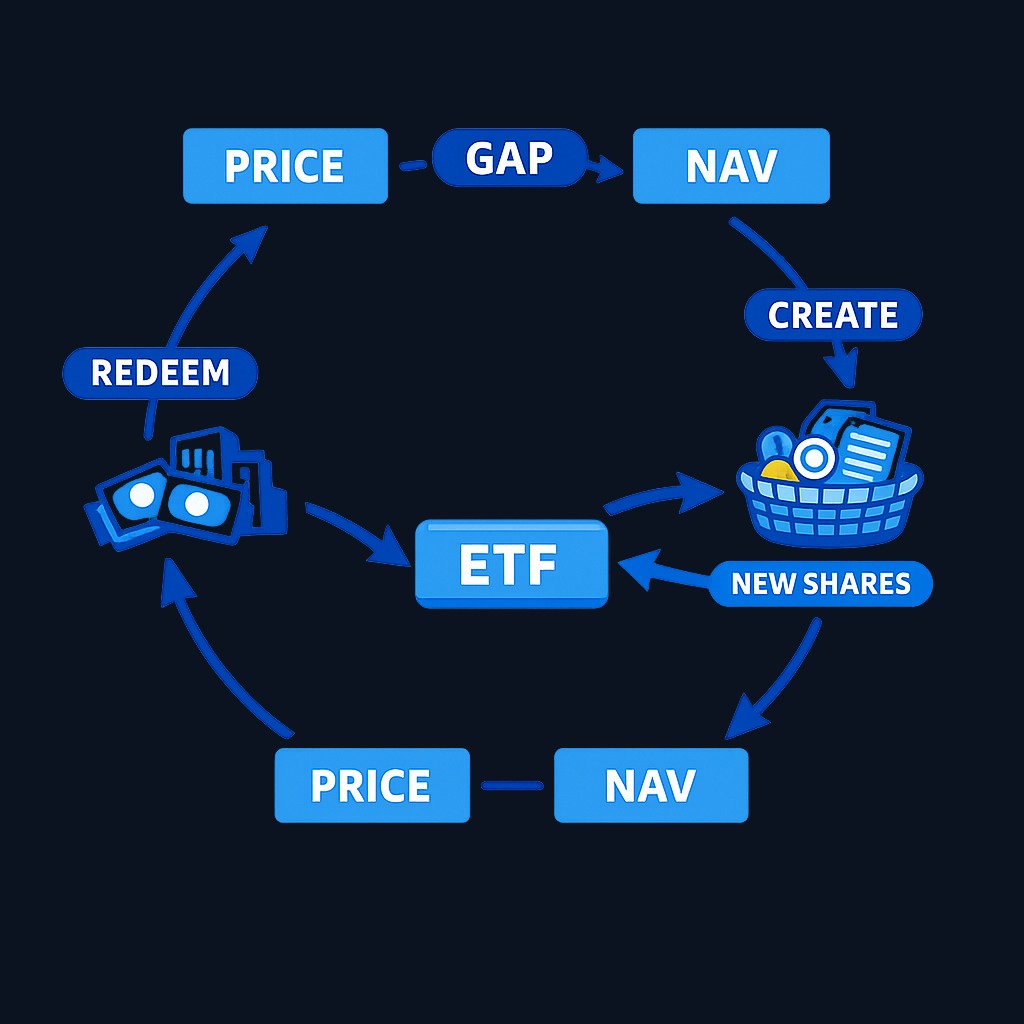
An exchange-traded fund, or ETF, also trades on an exchange all day like a stock. The difference is that an ETF's share count is open-ended. Large institutions called authorized participants can create new ETF shares by delivering a basket of the underlying assets to the fund, or redeem shares by taking the basket back.
This creation and redemption mechanism is the ETF's pressure valve. If the market price drifts above the value of the holdings, institutions create shares and sell them, pushing the price back down. If the price drifts below, they redeem shares, pushing it back up. As a result, an ETF's market price usually stays close to its NAV.
Most ETFs track an index passively, which tends to keep operating costs low, though actively managed ETFs also exist. ETFs generally do not use meaningful structural leverage in the way closed-end funds often do.
Key differences between closed-end funds and ETFs
The table below compresses the comparison into the dimensions that matter most:
| Dimension | Closed-end fund | ETF |
|---|---|---|
| Share supply | Fixed after IPO | Created and redeemed continuously |
| Price vs NAV | Often trades at a discount or premium | Usually stays close to NAV |
| Typical management style | Actively managed | Often passive index tracking |
| Use of leverage | Common | Rare in mainstream funds |
| Typical costs | Higher expense ratios on average | Often lower, especially for index products |
| Liquidity source | Other investors in the market | Market makers plus the creation mechanism |
| Income focus | Frequently emphasizes high distributions | Varies by product |
| Tax mechanics | Distributions can include varied components | Creation/redemption process tends to limit taxable events |
The pricing row deserves emphasis. With a closed-end fund, you can pay less than the underlying assets are worth, or more, and that gap can widen or narrow while you hold the fund. With an ETF, the price you pay generally reflects the value of what the fund owns at that moment.
Advantages and disadvantages of closed-end funds
The closed-end structure has real strengths. Because managers never face daily redemptions, they can hold less-liquid assets, stay fully invested, and take a long view without keeping cash on hand for exits. Discounts can also work in your favor: buying assets below their stated value gives patient investors an extra potential source of return if the discount narrows. Many closed-end funds are built for income and use leverage to support higher regular distributions.
The weaknesses mirror the strengths. Discounts can persist for years or get wider after you buy. Leverage cuts both ways and makes drawdowns deeper. Expense ratios tend to run higher than comparable ETFs, and borrowing costs add another layer. Trading volume in some funds is thin, so large orders can move the price. This is a structure that rewards research and punishes casual buying.
Practice investing with Finelo
Build practical investing skills with guided lessons, simulator practice, and structured challenges.
Advantages and disadvantages of ETFs
ETFs win on simplicity and cost. Index-tracking products in particular tend to carry low expense ratios, and the creation and redemption process keeps market prices honest, so you rarely need to think about premiums or discounts in normal conditions. The same mechanism tends to make ETFs tax-efficient, since the fund can move securities out through redemptions instead of selling them and passing gains to shareholders. Liquidity in major ETFs is deep, and you can trade any time the exchange is open.
The trade-offs: a passive ETF will never beat its index, and it holds everything in the benchmark, including the parts you might not want. In fast, stressed markets, an ETF's price can temporarily gap away from the value of its holdings, especially for funds that hold bonds or other less-liquid assets. Niche ETFs can also be thinly traded, with wider bid-ask spreads than their popular peers.
When to choose a closed-end fund vs an ETF
Think in terms of goals rather than labels:
- You want cheap, broad market exposure: a low-cost index ETF is usually the simpler fit.
- You prioritize regular income: closed-end funds are often designed around distributions, but examine how much of each payout is real investment income versus return of your own capital.
- You enjoy hunting for value: discounts on closed-end funds give research-driven investors something to analyze that ETFs rarely offer.
- You want to trade tactically: the tight pricing and deep liquidity of large ETFs suit frequent trading better.
- You dislike volatility: leveraged closed-end funds swing harder in both directions; unleveraged ETFs are typically steadier.
Many portfolios reasonably hold both: an ETF core for broad exposure, with selective closed-end positions for income or discount opportunities.
What to know before deciding
Before you buy either wrapper, check the details that separate a good fund from a bad one. Read the fund's official documents for its objective, expense ratio, and any leverage. For a closed-end fund, look up the current discount or premium and compare it to the fund's own history, since a "large" discount is only meaningful relative to where that fund normally trades. For an ETF, check the index it tracks, its tracking record, and its average bid-ask spread. Confirm distribution sources for income funds, and remember that a very high yield often signals either leverage or return of capital rather than free money.
Decision framework for investors
Use this quick sequence to structure the choice:
- Define the job. Core growth exposure, income, or a tactical position?
- Match the structure. Core and tactical jobs usually favor ETFs; income and discount-value jobs may favor closed-end funds.
- Screen the costs. Compare expense ratios, and for closed-end funds add borrowing costs from leverage.
- Check the price mechanism. For a closed-end fund, evaluate the discount versus its historical range. For an ETF, confirm it tracks its NAV tightly.
- Stress-test the risk. Ask how the fund behaved in past downturns, especially if it uses leverage.
- Size the position. Less-liquid or leveraged funds deserve smaller allocations than broad index products.
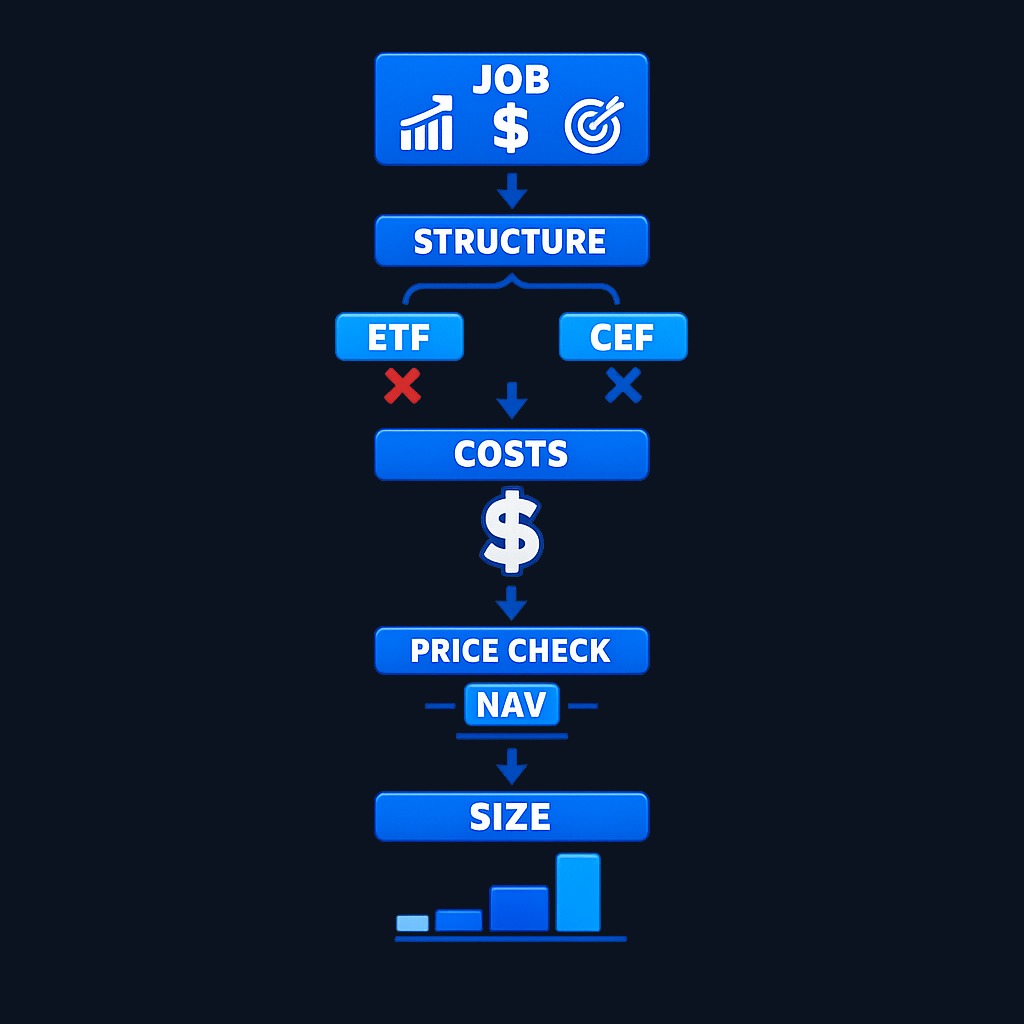
If a fund fails at any step, move on. There are many exchange-listed funds, and patience costs nothing.
Conclusion and next steps
The closed-end fund vs ETF decision is a structure decision. Fixed share supply gives closed-end funds their discounts, premiums, leverage, and income focus. Continuous creation and redemption gives ETFs tight pricing, low costs, and tax efficiency. Match the wrapper to the job, verify costs and risks in the official documents, and size positions to the fund's liquidity and leverage.
Next steps: pick one closed-end fund and one comparable ETF in the same asset class, then compare their expense ratios, pricing versus NAV, and five-year behavior. The exercise will teach you more than any summary.
Frequently asked questions
Are closed-end funds riskier than ETFs?
Often, yes. Many closed-end funds use leverage and can trade at widening discounts, which adds two layers of risk an index ETF does not have. That said, risk depends on the specific fund's assets and structure, so compare fund by fund rather than by category alone.
Why do closed-end funds trade at discounts?
Because the share count is fixed, price depends entirely on investor demand. Sentiment, distribution changes, leverage worries, or simple neglect can leave the market price below the value of the underlying holdings for long stretches.
Which is better for long-term investors?
Neither is universally better. A low-cost index ETF is the simpler long-term core for most people. A carefully chosen closed-end fund bought at an unusually wide discount can also serve long-term goals, especially for income, but it demands more monitoring.
Can an ETF trade at a premium or discount too?
Yes, briefly. The creation and redemption process usually pulls the price back toward NAV quickly, but in stressed or illiquid markets the gap can widen until arbitrage catches up.
closed-endfundsetfs
Practice investing with Finelo
Build practical investing skills with guided lessons, simulator practice, and structured challenges.
About the author
Finelo Team
The Finelo Team creates practical investing and trading education designed to help beginners learn faster with structured challenges, simulator practice, and bite-sized lessons.
Keep reading — Related articles
Investing
Tax-gain harvesting vs. tax-loss harvesting
Compare realizing investment gains with realizing losses, including holding periods, wash sales, offsets, and portfolio tradeoffs.
Finelo Team
Investing
Stable value fund vs. money market fund
Compare investment structure, contract protections, transfer restrictions, net yields, and access inside a retirement account.
Finelo Team

Investing
Single-life vs. joint-life annuity
Compare income for one lifetime with continued payments to a survivor, using equal premiums and matching guarantee terms.
Finelo Team