For U.S. readers: This article discusses U.S. rules and financial products. State rules and individual eligibility may differ.
Can You Send a Debt Validation Letter After 30 Days?

Yes.
9 min read
Practice trading with Finelo
Practice in a simulator, learn with bite-sized lessons, and build confidence before risking real money.
Want to learn more?
Practice in a simulator, learn with bite-sized lessons, and build confidence before risking real money.
Explore FineloExplore Finelo's 28-day challenges
Turn learning into a daily habit with guided challenge paths.
Quick answer
Yes. A consumer can dispute a debt or ask a collector for information after the 30-day validation period. The important limitation is that a late request does not automatically trigger the federal rule requiring the collector to pause collection until verification is sent.
The strongest federal pause generally applies when the collector receives a written dispute—or a written request for the original creditor's name and address—by the end date stated in the validation notice. After that date, a collector may choose to investigate or provide records, and other laws may still protect the consumer, but collection is not automatically suspended merely because a late letter was sent.
Finelo provides financial education, not legal, debt-settlement, financial, or investment advice. State law and the facts of a collection account can create additional rights or deadlines.
What the 30-day validation period means
A covered debt collector generally must provide validation information in the initial communication or within five days. The notice should identify the creditor and debt, show the amount and itemization required by current rules, and state the date on which the validation period ends.
The Consumer Financial Protection Bureau explains these requirements in its current answer on what information a debt collector must provide. The notice's end date is the practical deadline to use the federal validation-dispute pause.
If a collector receives a qualifying written dispute by that date, it generally must stop collecting the disputed debt or portion until it sends verification. If the consumer timely asks for the original creditor's name and address, the collector generally must provide that information before resuming collection.
Missing the date does not mean that the consumer admitted the debt, waived every defense, or lost the ability to report an error. It means the specific federal collection-pause mechanism may no longer apply to that request.
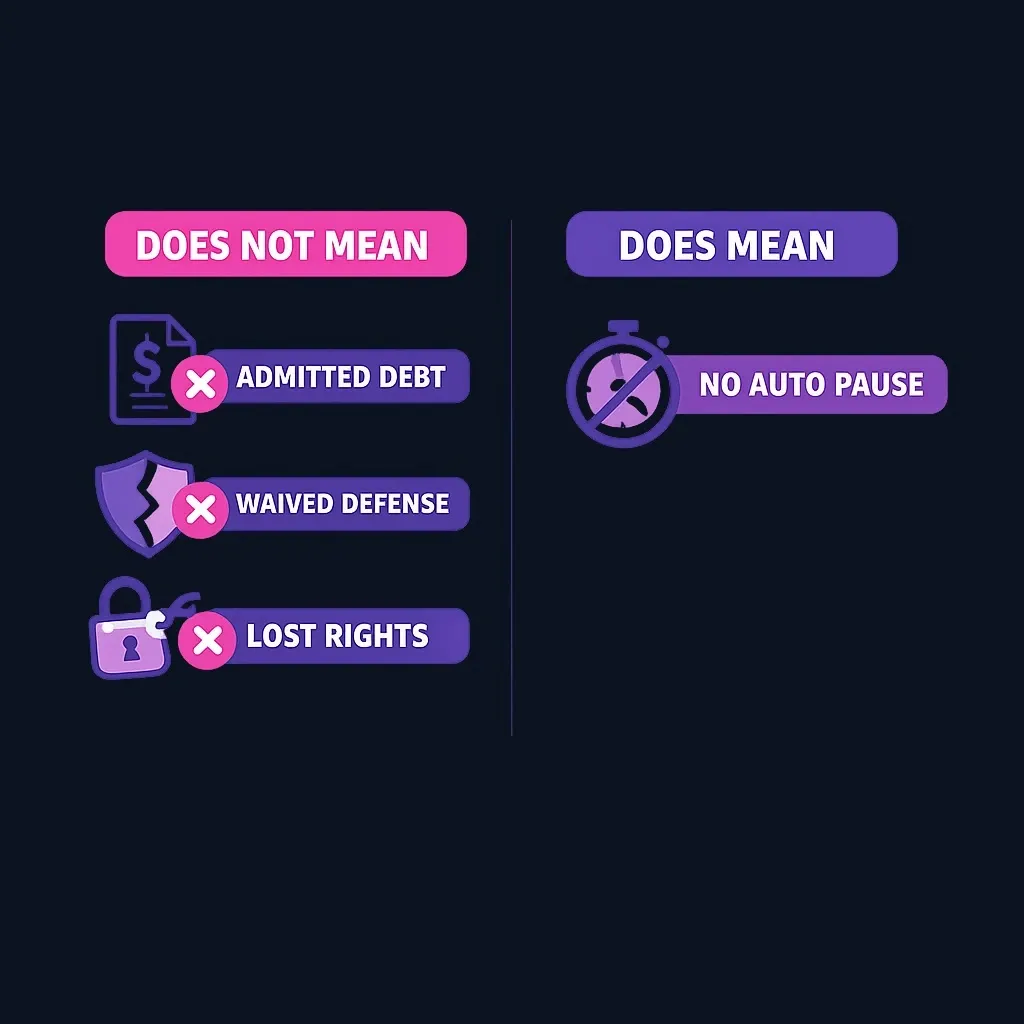
What a late validation letter can still accomplish
A focused letter sent after the validation period can still:
- tell the collector that the consumer disputes the account or amount;
- ask for the name and contact information of the original creditor;
- request an itemization and an explanation of fees, interest, payments, and credits;
- identify an identity-theft, mistaken-identity, insurance, payment, or balance problem;
- create a dated record of the consumer's position;
- request a preferred communication method; and
- support a separate credit-report dispute or regulatory complaint.
Federal law does not guarantee every document a consumer requests. A late letter should not promise that the collector must produce an original signed contract, a complete chain of title, or a particular set of account statements. The required response depends on the request, timing, collector, debt, and applicable law.
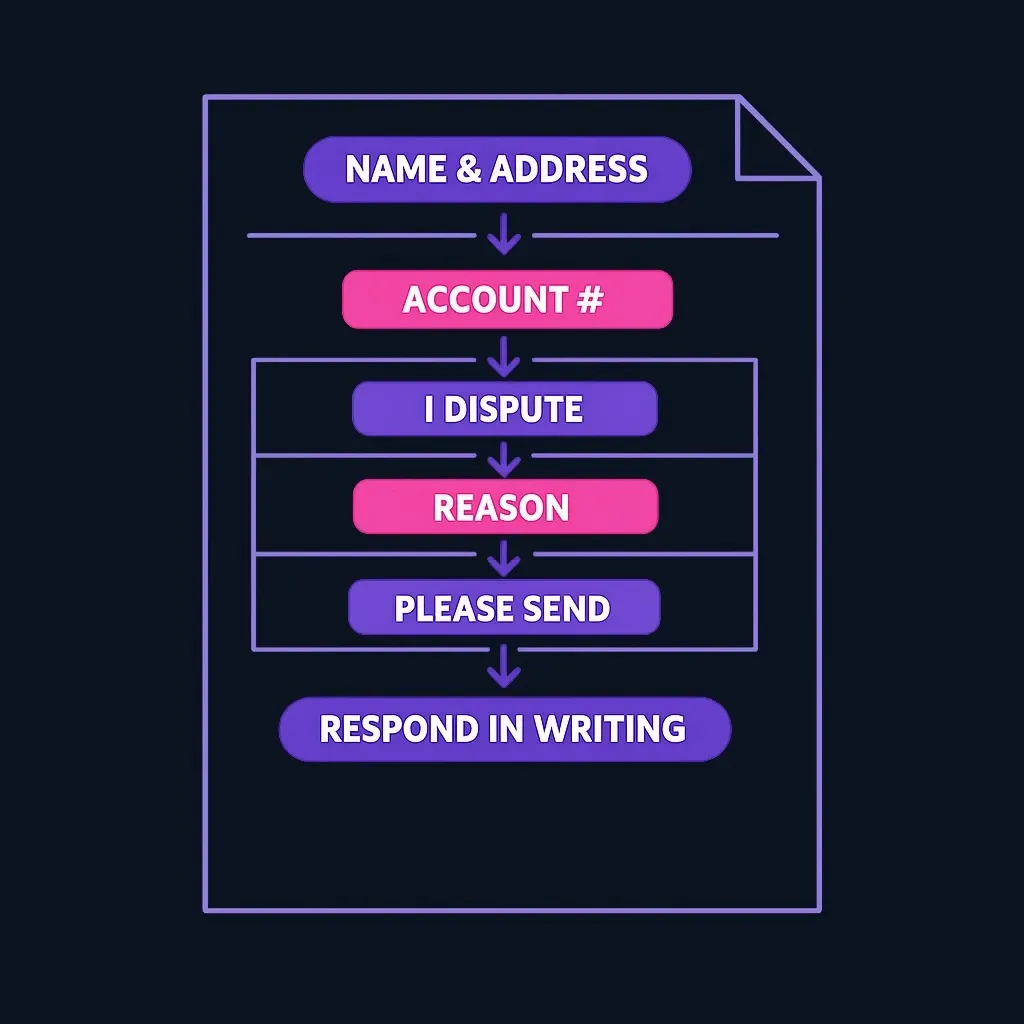
What to include in the letter
Keep the request specific and factual. A useful letter can include:
- The consumer's name and mailing address.
- The collector's account or reference number, without reproducing unnecessary sensitive information.
- A statement that the debt, amount, or ownership is disputed.
- The concrete reason for the dispute, if known—for example, “This account is not mine,” “The balance does not reflect my payment dated …,” or “Please identify the original creditor.”
- A request for information relevant to that issue, such as an itemized balance or records linking the consumer to the account.
- A request that the collector respond in writing.
- Copies, not originals, of supporting records with unrelated account numbers or identifiers redacted.
Do not send a full Social Security number, bank credentials, or payment-card number merely to ask for validation. Before disclosing personal information, confirm the collector through contact information independently obtained from an official website, statement, or original creditor. The CFPB provides a checklist for distinguishing a collector from a scam in its collector-verification guidance.
A practical late-dispute template
The following is an educational starting point, not a jurisdiction-specific legal form:
I am writing about account [reference number]. I dispute [the entire debt / the amount / ownership] because [brief factual reason, if known]. Please provide the name and address of the original creditor, an itemization of the current balance, and information reasonably connecting me to this account. Please mark the account as disputed where applicable and respond in writing at the address above. This letter is not an acknowledgment of liability or a promise to pay.
Add only requests relevant to the issue. A long list of documents copied from the internet can make the actual dispute harder to understand.
Practice trading with Finelo
Practice in a simulator, learn with bite-sized lessons, and build confidence before risking real money.
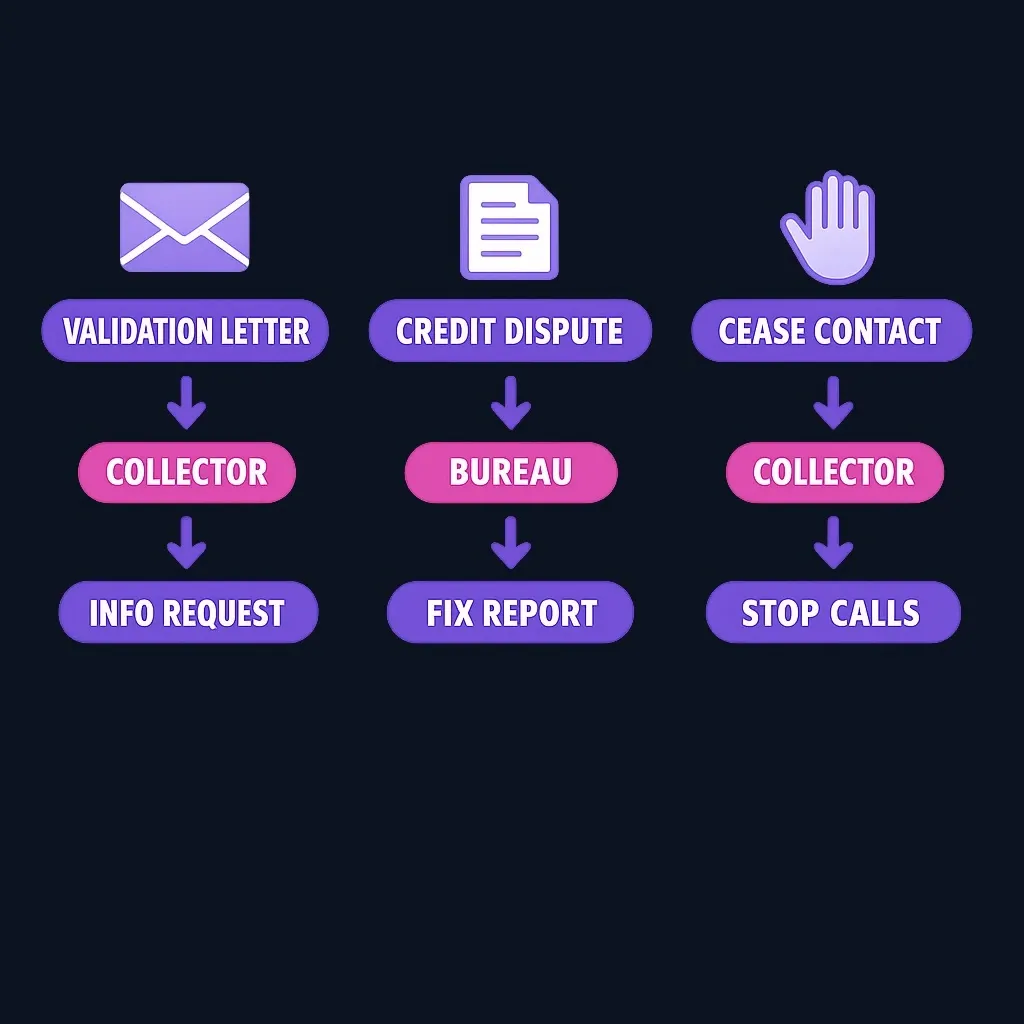
Validation, credit reporting, and contact requests are separate
Three different actions are often confused:
| Action | Main purpose | Key limitation |
|---|---|---|
| Debt-validation dispute | Challenges the collector's information and, when timely, can pause collection pending verification | A late dispute generally does not create the automatic federal pause |
| Credit-report dispute | Challenges inaccurate information on a consumer report | Must be sent to the reporting company and/or furnisher; it is not the same as validation |
| Cease-communication request | Tells a covered collector to stop most future contact | Does not erase the debt or necessarily prevent reporting or a lawsuit |
If the collection is reported inaccurately, use the CFPB's credit-report dispute process in addition to writing to the collector. Identify the exact reporting error and include documents supporting it.
A consumer can also send a written request for a covered debt collector to stop contacting them. The CFPB's cease-contact explanation notes that limited follow-up is still allowed, including confirmation that contact will stop or notice of a specific remedy. Stopping contact does not make the balance disappear.
What to do after sending the request
- Keep a complete copy of the letter and enclosures.
- Use a delivery method that creates a record of the date sent and received.
- Preserve the envelope and original validation notice.
- Review any response against original statements, payment records, court records, or information from the original creditor.
- Check credit reports for inaccurate balances, duplicate tradelines, or failure to reflect a dispute where required.
- Record calls, messages, and letters, following applicable state recording laws.
Do not assume that silence means the debt is invalid or forgiven. Likewise, do not assume that a brief collector response conclusively establishes liability. The legal sufficiency of verification can depend on the dispute and jurisdiction.
Special situations
Identity theft or mistaken identity
If the account resulted from identity theft, use IdentityTheft.gov to create a recovery plan. Credit-report blocking rights and identity-theft documentation are separate from the ordinary 30-day validation process.
A lawsuit or court papers
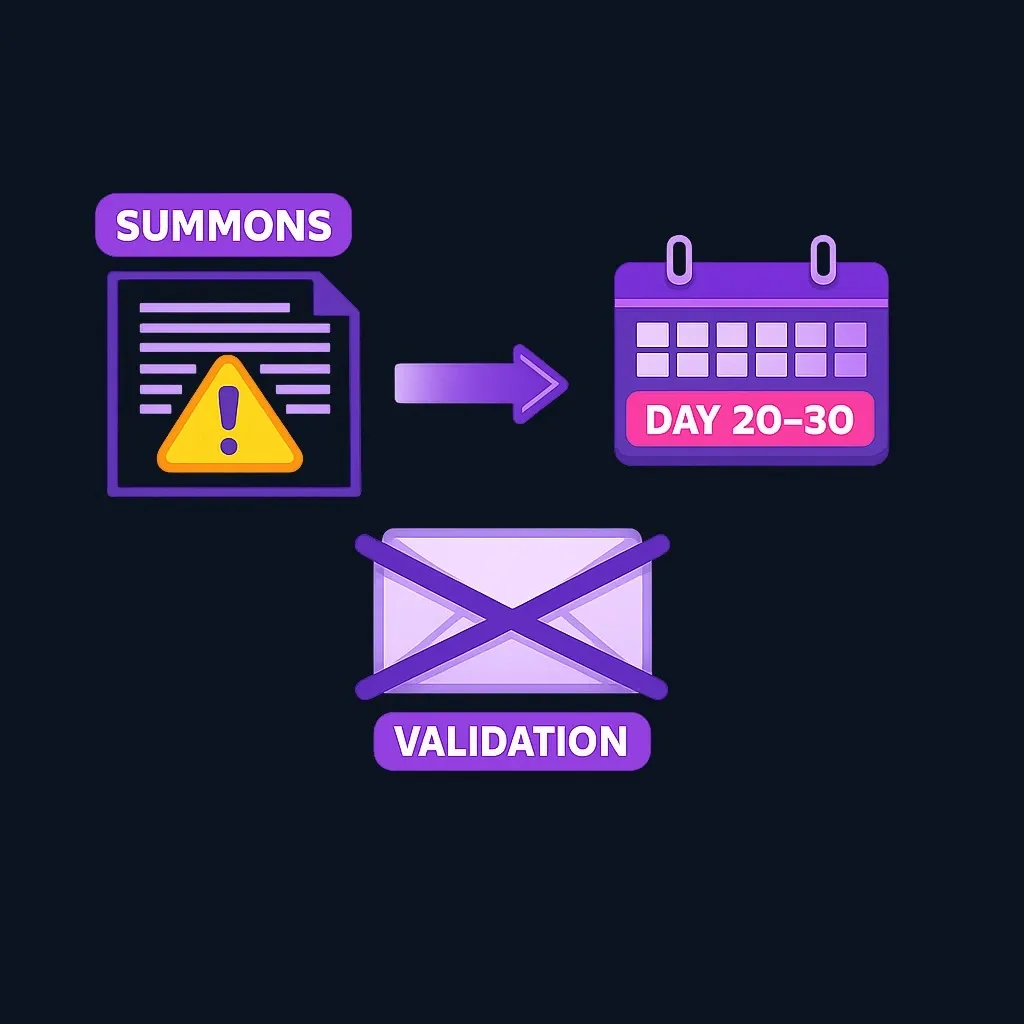
A validation letter does not extend a court deadline. If a summons, complaint, arbitration notice, or garnishment document arrives, follow the stated deadline and obtain legal help promptly. Ignoring the case can result in a default judgment even while the consumer is corresponding with a collector.
Debt beyond a statute of limitations
Time limits for filing a collection lawsuit vary by state and debt type. In some jurisdictions, a payment or written acknowledgment can affect limitation issues. Before agreeing to pay an old debt, verify the applicable law or consult a consumer-law attorney.
The collector contacts a represented consumer
If an attorney represents the consumer about the debt and the collector knows—or can readily learn—the attorney's contact information, federal contact restrictions may apply. Provide accurate attorney details rather than using a generic “lawyer only” statement when no representation exists.
Common mistakes to avoid
- Claiming a late dispute automatically stops collection. The federal pause is tied to a timely written request.
- Demanding documents the law does not universally require. Ask for information connected to the specific dispute.
- Sending sensitive identity documents to an unverified caller. Confirm the collector first and redact unrelated data.
- Treating a validation letter as a response to a lawsuit. Court deadlines operate independently.
- Assuming a cease-contact request cancels the debt. It limits communications but does not determine liability.
- Disputing accurate information without a factual basis. Focus on concrete errors, missing context, or a legitimate ownership or amount question.
FAQ
Can a collector continue collecting after a late dispute?
Generally, yes. A written dispute received after the validation-period deadline does not automatically require the collector to pause collection under the federal validation rule. Other federal or state restrictions may still apply.
Does missing the 30-day deadline mean I owe the debt?
No. Missing the validation deadline does not by itself establish liability or waive every defense. It mainly affects the automatic collection-pause protection tied to a timely written dispute.
Must a collector send the original signed contract?
Not in every case. Federal law does not create one universal document checklist for verification. The appropriate records depend on the dispute, the type of debt, and applicable law.
Can I ask the collector to contact me only in writing?
You can state that preference, but the legal effect depends on the request and law. A written cease-communication request has clearer federal consequences, subject to limited permitted responses; it does not erase the debt.
Where can I report a problem?
Consumers can submit complaints to the CFPB and report fraud to the FTC. A state attorney general or licensed consumer-law attorney may also be relevant.
Bottom line
A debt validation letter can still be useful after 30 days, but it should be framed as a documented late dispute or information request—not as a guaranteed way to stop collection. Separate the debt-validation issue from any credit-report dispute, contact restriction, identity-theft process, or court deadline, and keep evidence for each one.
For more educational material on consumer credit and debt, visit the Finelo Blog.
Financial LiteracyFinancial Education
Practice trading with Finelo
Practice in a simulator, learn with bite-sized lessons, and build confidence before risking real money.
About the author
Finelo Team
The Finelo Team creates practical investing and trading education designed to help beginners learn faster with structured challenges, simulator practice, and bite-sized lessons.
Keep reading — Related articles

Financial Literacy
Mercury Books Review 2026: Is It Worth It for Startups?
Mercury Books brings double-entry accounting into Mercury. Review its $35 pricing, reports, AI features, integrations, and migration limits.
Finelo Team

Financial Literacy
Why is My FICO Score Lower Than My Credit Score?
Example takeaway: seeing a higher score in a bank app doesn’t guarantee lenders will see the same FICO number at application time; lenders often pull a specific FICO version from a specific bureau.
Finelo Team
Financial Literacy
Why Is My FICO Score Higher Than My Credit Score?
Brief educational note: this article is educational, not financial or investment advice; investing and credit decisions involve risk and possible loss.
Finelo Team


