For U.S. readers: This article discusses U.S. rules and financial products. State rules and individual eligibility may differ.
Debt Validation Letter for Medical Bills: What to Request and When
When a third-party debt collector contacts you about a medical bill, the collector generally must provide validation information in the first communication or within five days.
7 min read
Practice trading with Finelo
Practice in a simulator, learn with bite-sized lessons, and build confidence before risking real money.
Want to learn more?
Practice in a simulator, learn with bite-sized lessons, and build confidence before risking real money.
Explore FineloExplore Finelo's 28-day challenges
Turn learning into a daily habit with guided challenge paths.
Quick answer
When a third-party debt collector contacts you about a medical bill, the collector generally must provide validation information in the first communication or within five days. The notice should identify the creditor, itemize the amount, state the current balance, and give an end date for a 30-day validation period.
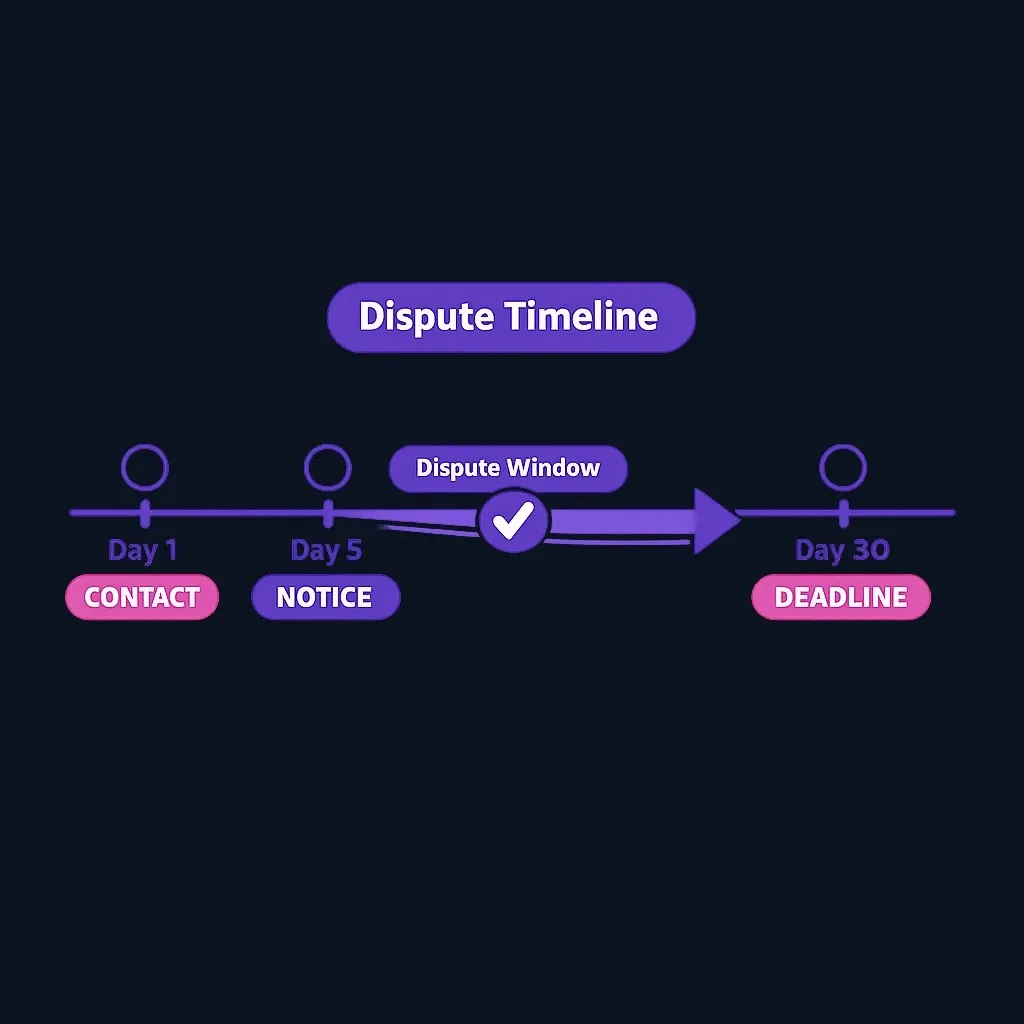
If you send a written dispute or request for the original creditor by that deadline, the collector generally must pause collection of the disputed amount until it sends verification or the required information. A request sent later can still be useful, but it does not automatically trigger the same federal collection pause. See the CFPB's validation-notice explanation.
Finelo provides general financial education, not legal, medical, insurance, credit, tax, or individualized financial advice. The federal rule applies to covered debt collectors; original providers, state law, litigation, and individual facts can create different rights.
First confirm who is contacting you
The federal Fair Debt Collection Practices Act and CFPB Debt Collection Rule primarily govern debt collectors, not every original medical provider collecting its own bill. Before sharing sensitive information, verify:
- collector name, company, address, phone number, and license number if the state licenses collectors;
- current creditor and original provider;
- account identifier, date of service, and itemized amount;
- whether the provider still owns the account or sold it; and
- the validation-period deadline shown on the notice.
The CFPB's current scam guidance recommends withholding sensitive financial information until the collector is verified (CFPB collector verification). Contact the provider through a number independently obtained from its official website or statement—not a number supplied by an unverified caller.
What the validation notice should contain
The CFPB says validation information generally includes:
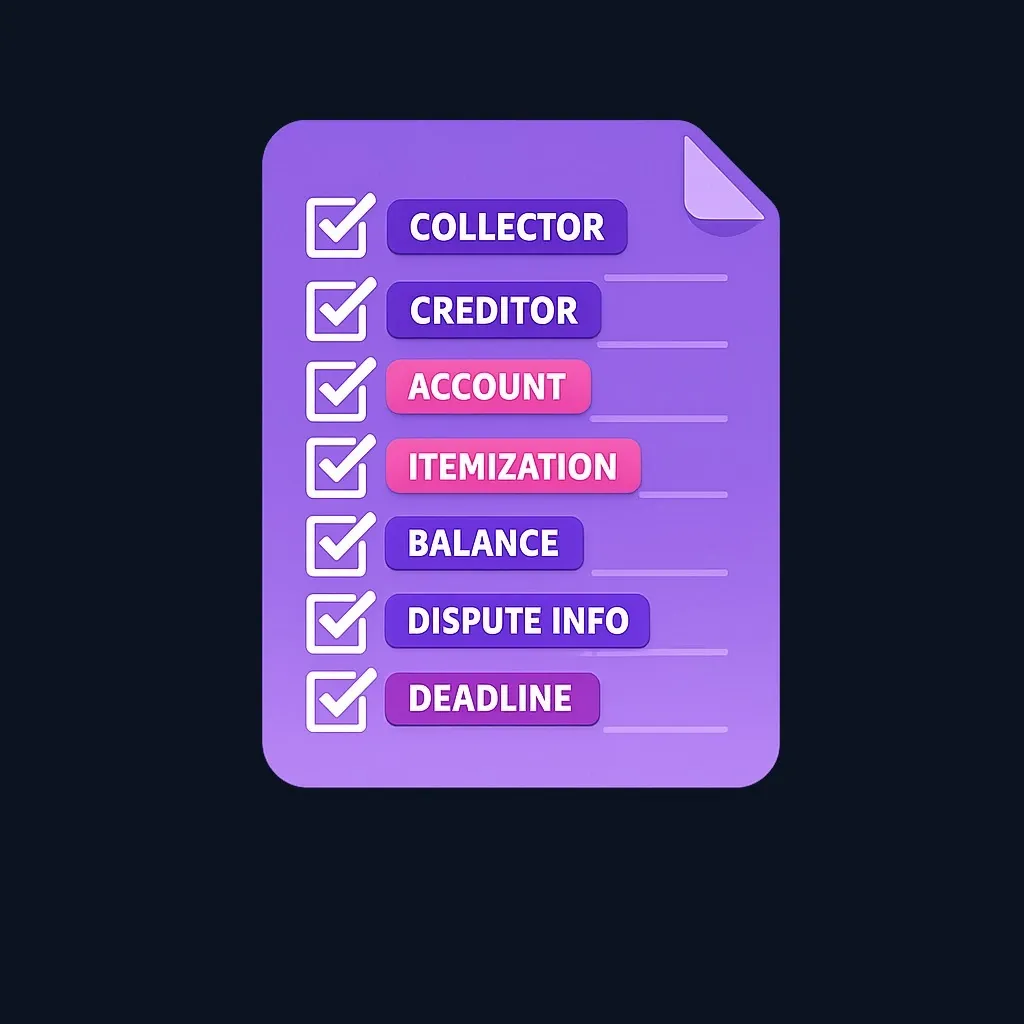
- a statement that the communication is from a debt collector;
- consumer and collector names and mailing information;
- the current creditor and potentially other listed creditors;
- an account number, if any;
- an itemization showing interest, fees, payments, and credits since a stated itemization date;
- the current amount; and
- instructions and a deadline for disputing or requesting original-creditor information.
If that information is missing, ask for a compliant validation notice and preserve the original communication.
What to put in a medical-debt dispute
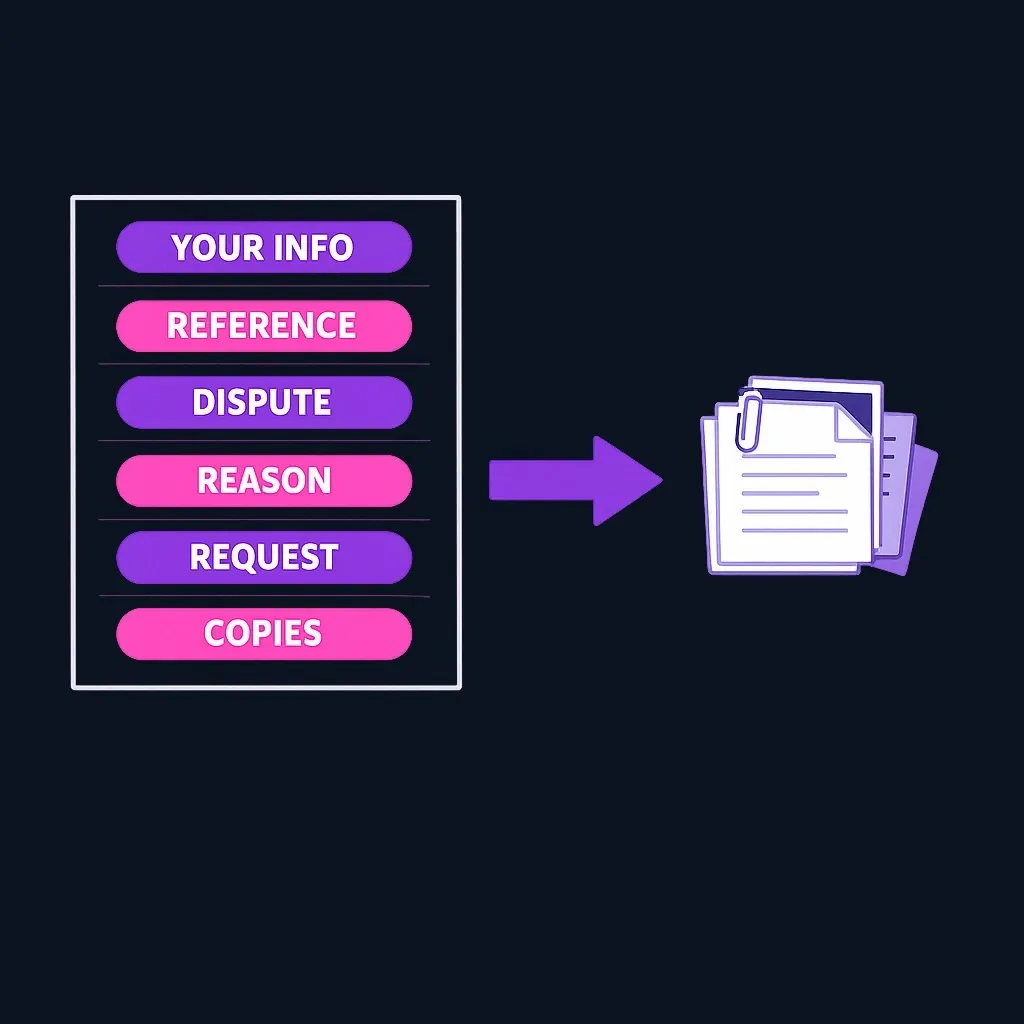
Keep the letter focused on the actual issue. Include:
- your name and mailing address;
- the collector's reference number without adding unnecessary personal identifiers;
- a statement that you dispute all or a specified part of the debt;
- the reason, if known—for example, wrong patient, duplicate charge, payment not credited, insurance adjustment missing, or amount above a lawful surprise-billing limit;
- a request for verification responsive to that issue;
- a request for the original creditor's name and address when relevant; and
- copies of supporting records, not originals.
Possible supporting records include an itemized provider bill, explanation of benefits, payment receipt, insurance appeal, financial-assistance approval, or provider correction. Limit medical detail to what is necessary to establish the billing issue.
Short adaptable example
I dispute [all / $___] of the account identified as [reference]. The amount appears inaccurate because [concise reason]. Please provide verification responsive to this dispute, including the itemization used to calculate the current amount and the name and address of the original creditor. Attached are copies of [documents]. Please communicate in writing at the address above.
This example is educational, not a legal form. The validation notice may include a tear-off response form or an electronic method that is easier to use.
How timing changes the legal effect
Within the validation period
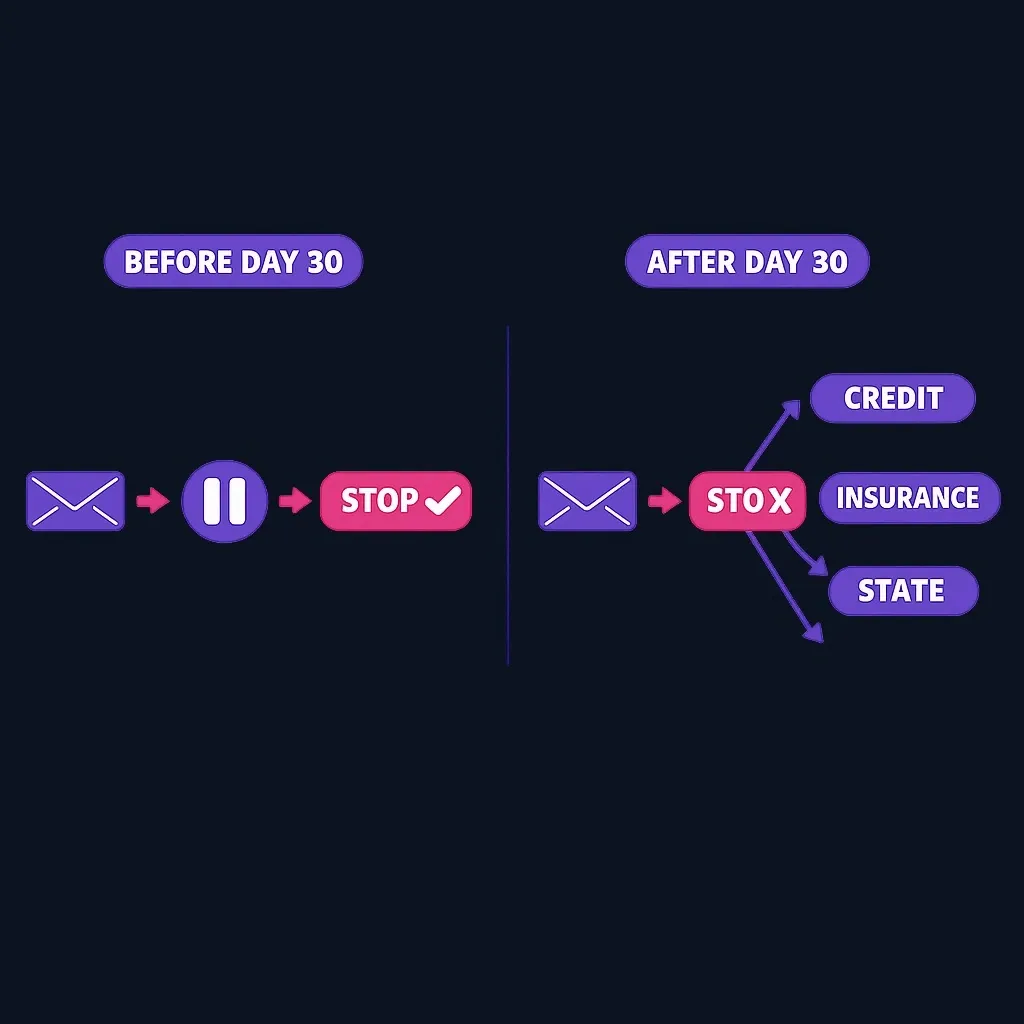
A written dispute sent on or before the notice's validation-period end date generally requires the debt collector to stop collecting the disputed debt until it sends verification or a copy of a judgment. A timely written request for the original creditor's name and address has a similar pause until the information is sent. The federal rule is stated in 12 C.F.R. § 1006.34.
After the validation period
You may still dispute, ask questions, challenge inaccurate credit reporting, pursue an insurance appeal, or invoke state rights. But the collector may not be federally required to stop collection merely because it received a late verification request. Do not tell readers that a late letter “forces” production of a signed contract or complete chain of title.
If a lawsuit has been filed
A letter to the collector does not replace an answer or extend a court deadline. Respond to the lawsuit by the stated date and seek legal aid or counsel promptly.
Practice trading with Finelo
Practice in a simulator, learn with bite-sized lessons, and build confidence before risking real money.
Medical-billing checks to run in parallel
A debt-collection dispute does not correct the provider or insurer record by itself. Also:
- request an itemized bill from the provider;
- compare it with every explanation of benefits;
- ask whether insurance was billed correctly and all appeals are exhausted;
- check provider financial assistance or charity-care eligibility;
- review No Surprises Act protections for qualifying out-of-network bills; and
- verify whether the account appears accurately on each credit report.
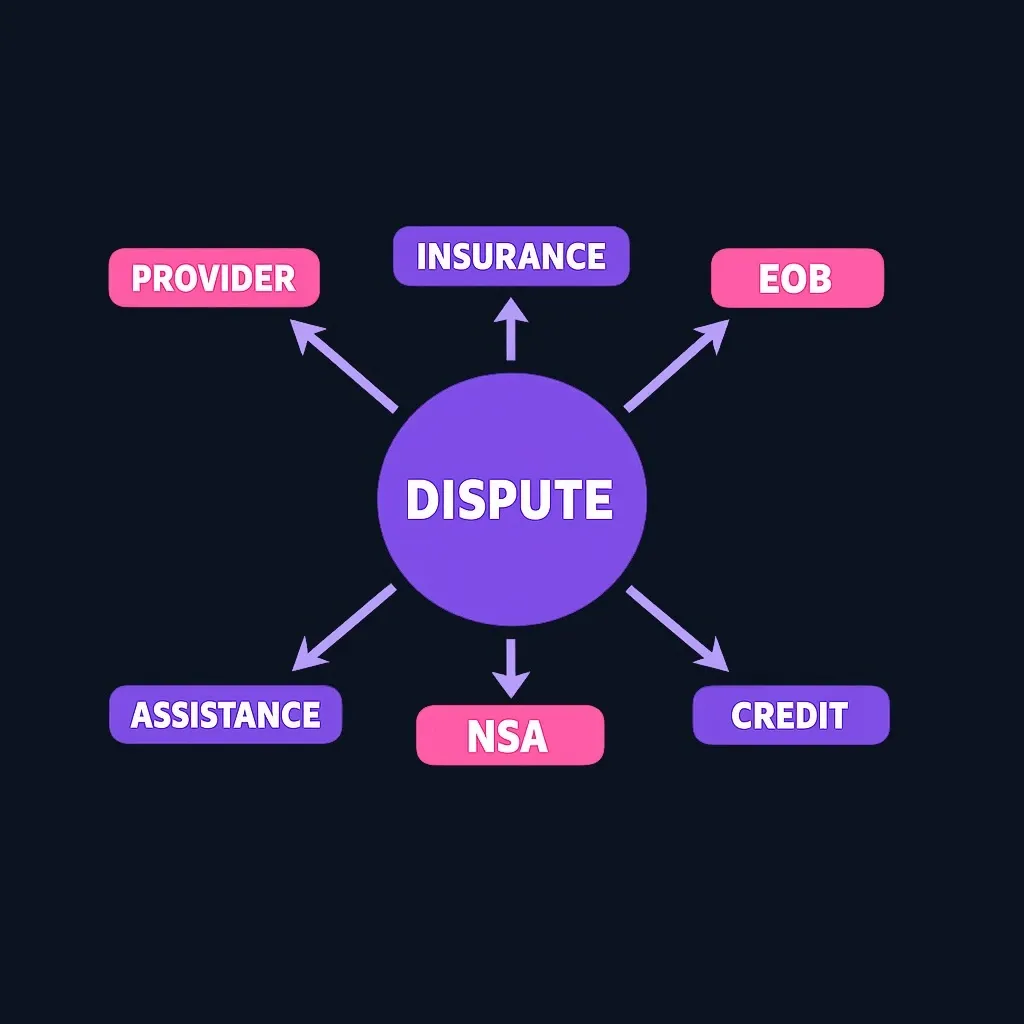
The CFPB explains that collecting or reporting a medical charge that exceeds the amount permitted by the No Surprises Act may violate federal law (CFPB medical-debt guidance).
Sending and documenting the request
- Use the response method listed on the validation notice.
- If mailing, use a trackable method and keep a complete copy.
- Preserve the notice, envelope, attachments, and delivery record.
- Keep a dated communication log.
- Redact unrelated account numbers, diagnoses, and full Social Security numbers.
- Calendar both the validation deadline and any separate insurance, complaint, or court deadline.
Certified mail can provide useful evidence, but federal law does not universally require that mailing method.
What verification may look like
Federal law does not guarantee every document a consumer asks for. The adequacy of verification depends on the dispute, applicable law, and facts. A response may contain the creditor name, account information, balance, judgment, or records connecting the consumer to the debt.
Review whether the response actually addresses the reason for the dispute. If insurance payment is missing, for example, a copy of the original bill may not resolve the amount question. Follow up with the provider, insurer, bureau, regulator, or counsel as appropriate.
Common mistakes
- Calling every information request “validation.” Distinguish the collector's required notice from a consumer's dispute and verification request.
- Missing the notice deadline. A later dispute may remain useful, but it may not trigger the federal pause.
- Demanding a specific document as though it is universally required. Ask for information tied to the issue without promising a legal entitlement to a signed contract or complete assignment file.
- Admitting or paying before checking dates and records. A payment or acknowledgment can have state-law consequences in some cases.
- Ignoring insurance and provider records. The collector may not be able to correct the underlying coding or claim-processing error.
- Sending excessive health information. Provide the minimum evidence needed.
- Ignoring court papers. Administrative disputes do not stop litigation deadlines.
FAQ
Is there a special federal validation rule only for medical debt?
No. The general federal debt-collection validation framework applies to covered consumer debts, while medical billing, insurance, privacy, and surprise-billing rules create additional issues.
Must a collector send the original signed contract?
Not in every case. The collector must provide a compliant validation notice and, after a qualifying timely dispute, verification responsive under applicable law. The required proof is not a universal document checklist.
Can I send a dispute after 30 days?
Yes, but the automatic federal collection pause tied to a timely written dispute may not apply. Other federal and state credit-reporting, billing, and collection rights may still be available.
Can I tell a collector to stop contacting me?
Federal law permits a written cease-communication request to a covered debt collector, subject to limited permitted responses. That request does not erase the debt, prevent credit reporting, or necessarily stop a lawsuit. See the CFPB contact guidance.
Bottom line
Use the validation notice and its deadline, dispute the specific medical-billing issue in writing, and gather provider and insurer records in parallel. A timely written dispute can require a covered collector to pause collection until it responds; a late or generic letter does not automatically force a document production or erase a valid debt.
Financial LiteracyFinancial Education
Practice trading with Finelo
Practice in a simulator, learn with bite-sized lessons, and build confidence before risking real money.
About the author
Finelo Team
The Finelo Team creates practical investing and trading education designed to help beginners learn faster with structured challenges, simulator practice, and bite-sized lessons.
Keep reading — Related articles

Financial Literacy
Mercury Books Review 2026: Is It Worth It for Startups?
Mercury Books brings double-entry accounting into Mercury. Review its $35 pricing, reports, AI features, integrations, and migration limits.
Finelo Team

Financial Literacy
Why is My FICO Score Lower Than My Credit Score?
Example takeaway: seeing a higher score in a bank app doesn’t guarantee lenders will see the same FICO number at application time; lenders often pull a specific FICO version from a specific bureau.
Finelo Team

Financial Literacy
Why Is My FICO Score Higher Than My Credit Score?
Brief educational note: this article is educational, not financial or investment advice; investing and credit decisions involve risk and possible loss.
Finelo Team