For U.S. readers: This article discusses U.S. rules and financial products. State rules and individual eligibility may differ.
Does a Credit Freeze Prevent Soft Inquiries?
Usually, no.
8 min read
Practice trading with Finelo
Practice in a simulator, learn with bite-sized lessons, and build confidence before risking real money.
Want to learn more?
Practice in a simulator, learn with bite-sized lessons, and build confidence before risking real money.
Explore FineloExplore Finelo's 28-day challenges
Turn learning into a daily habit with guided challenge paths.
Quick answer
Usually, no. A security freeze primarily prevents prospective creditors from accessing a credit file to evaluate a new application. It does not block every use of the file, and it generally does not prevent a person from reviewing their own report, an existing creditor from reviewing an account, or certain noncredit uses that federal law does not require the freeze to cover.
That distinction matters because “soft inquiry” describes how an inquiry is displayed and scored, while a security freeze controls access for particular purposes. A freeze is not a universal switch that disables every soft inquiry.
Finelo provides financial education, not legal, credit-repair, financial, or investment advice. Verify the purpose of a planned credit check with the requesting organization and the relevant credit reporting company.
What a credit freeze actually does
A security freeze restricts prospective creditors from accessing a credit file. Because a lender ordinarily needs that file to assess a new application, a freeze can make it harder for an identity thief to open new credit in someone else's name. It is free to place and remove a freeze at Equifax, Experian, and TransUnion, but each company must be contacted separately.
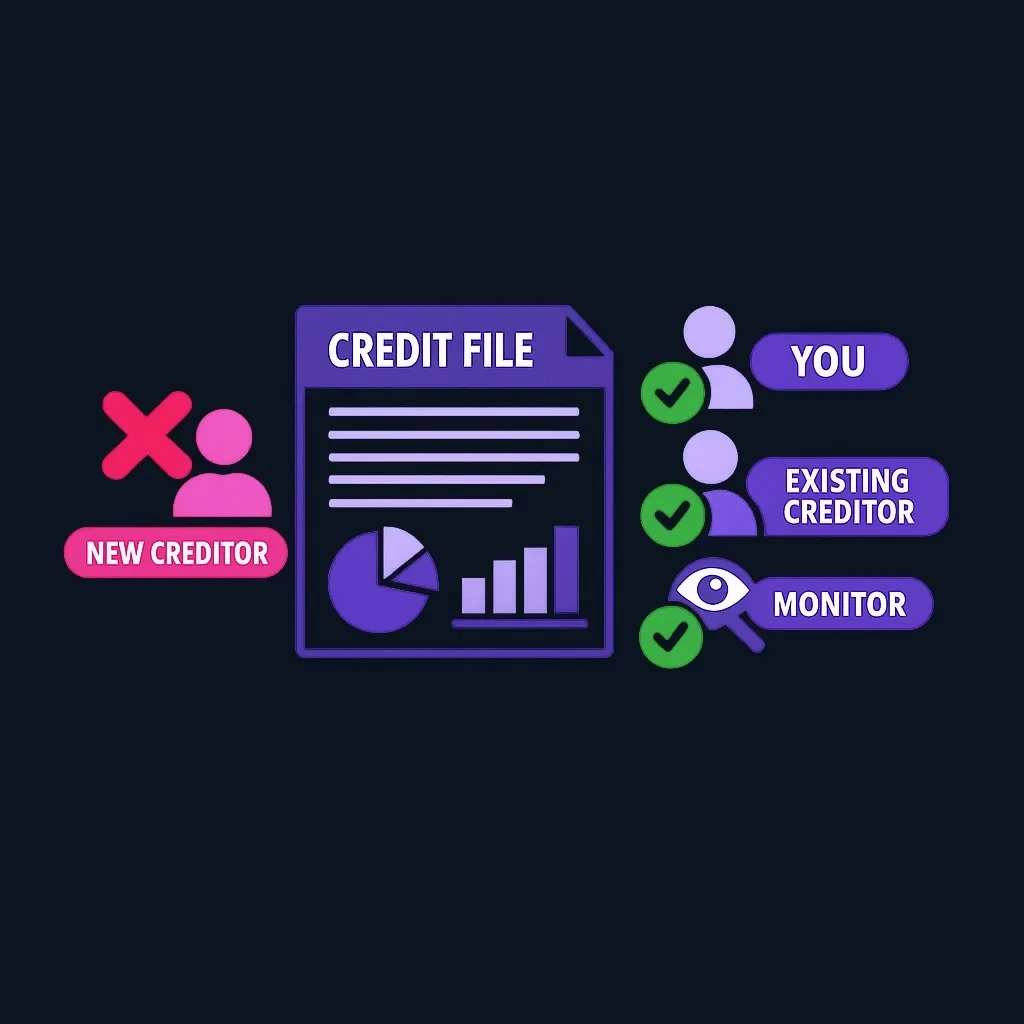
The Consumer Financial Protection Bureau's current security-freeze guidance also identifies important limits. A person can still review their own file. Existing creditors, certain government entities, and a company hired to monitor the file may retain access. Federal security-freeze requirements also do not apply in the same way to requests for employment, tenant-screening, or insurance purposes.
A freeze therefore:
- helps restrict access for most new-credit applications;
- does not erase information already in a credit report;
- does not prevent activity on an existing account;
- does not guarantee protection against every form of identity theft or fraud; and
- does not change a credit score merely because the freeze is placed.
The Federal Trade Commission's freeze and fraud-alert guide explains the separate roles of these protections. A freeze restricts access, while a fraud alert tells a business to take additional steps to verify identity.
Soft inquiries and hard inquiries are different
The CFPB defines a credit inquiry as a request to review a credit report for credit, employment, housing, insurance, or another permissible purpose. Its credit-inquiry explanation separates inquiries into two broad categories.
| Inquiry type | Common examples | Typical score treatment | Visibility |
|---|---|---|---|
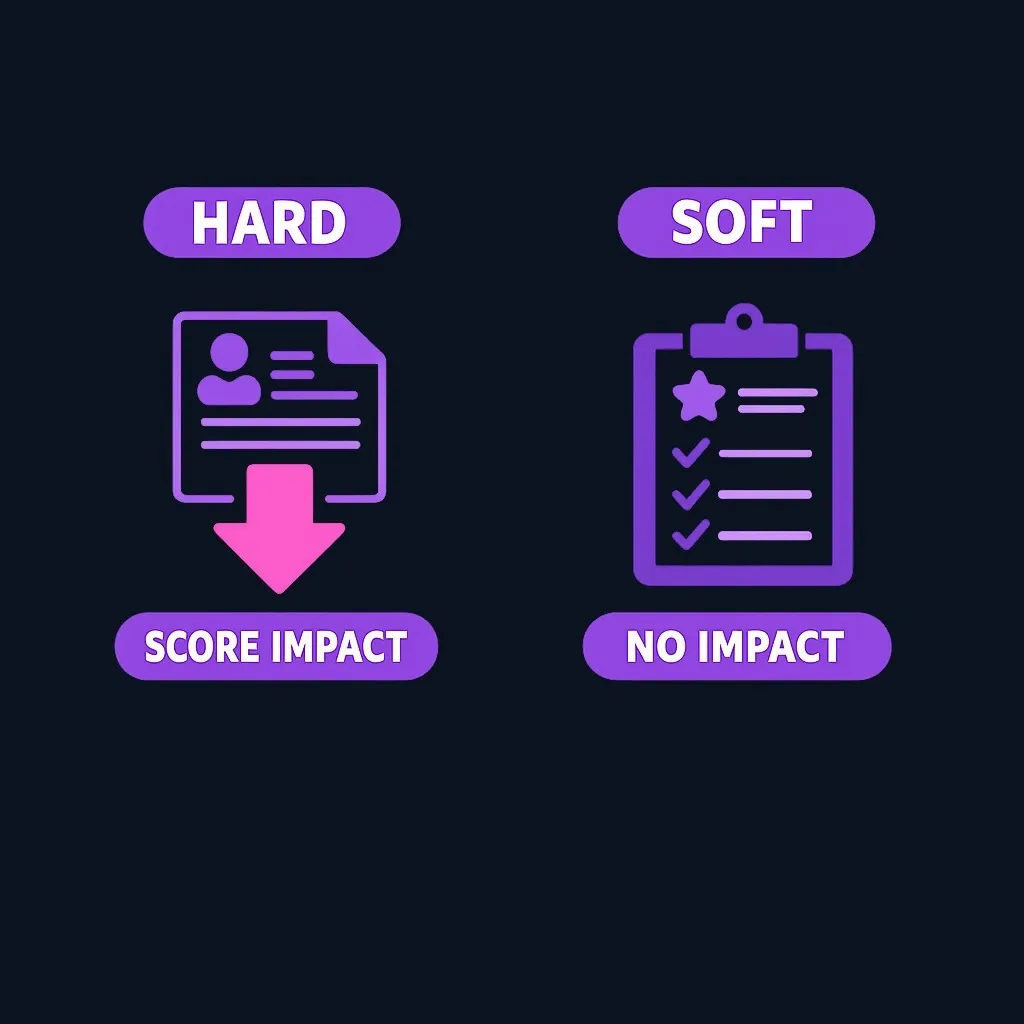
| Soft inquiry | Reviewing one's own report, an existing-creditor account review, prescreening, or certain employment and insurance checks | Does not affect credit scores | Generally shown only to the consumer on their report |
| Hard inquiry | A lender's review after a new credit application | May affect a credit score | Can be visible to other parties that obtain the report |
The word “soft” does not mean that every organization can bypass a freeze. It means the inquiry is categorized and treated differently from an application-related hard inquiry. Whether access is permitted while a freeze is active depends on the requesting party and purpose.
Which inquiries can still occur during a freeze?
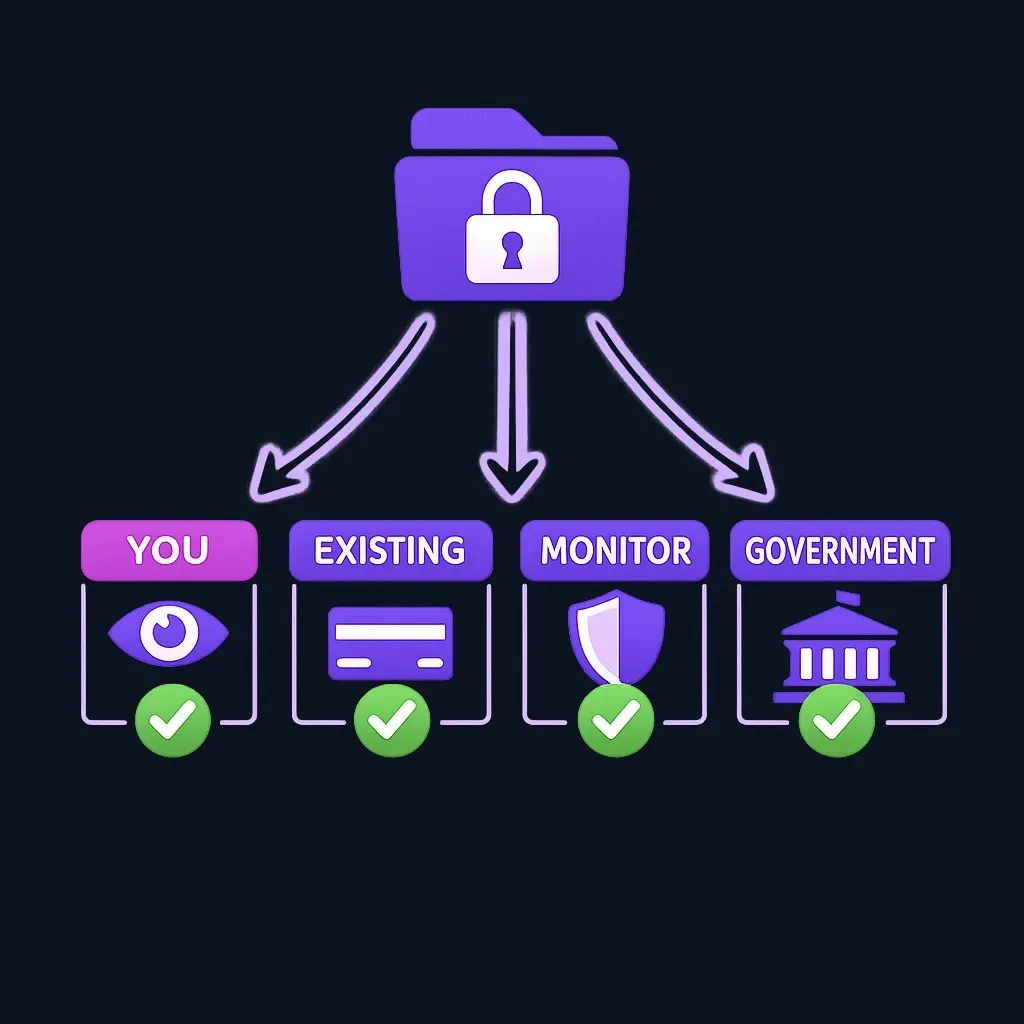
The following activities may still occur while a security freeze is in place:
- Your own review. You can request and examine your credit reports without lifting the freeze.
- Existing-account review. A creditor for an account you already hold may review the file for account-management purposes. The CFPB describes this as a soft inquiry in its guidance on when a credit-card company can review a report.
- Credit monitoring. A company you have hired to monitor the file may have access.
- Certain government access. The CFPB lists certain government entities, including child-support agencies, among the limited entities that may access a frozen file.
- Some employment, tenant-screening, or insurance requests. The federal security-freeze law does not require the same protection for these purposes. Consent and other federal or state rules may still apply.
Prescreened credit or insurance offers require separate attention. A freeze and an opt-out request are different controls. Consumers who want to stop prescreened offers can use the method described in the FTC guide; placing a freeze alone should not be treated as an opt-out instruction.
Practice trading with Finelo
Practice in a simulator, learn with bite-sized lessons, and build confidence before risking real money.
When a freeze may need to be lifted
A new lender will usually be unable to complete its normal credit review while the relevant file is frozen. Before applying, ask the lender which credit reporting company it expects to use. Then request a temporary lift from that company—or from all three if the lender cannot identify the source in advance.
Under the timing rules summarized by the CFPB, a nationwide credit reporting company generally must remove or temporarily lift a freeze within one hour after receiving a qualifying request by telephone or secure electronic means. A mailed request can take longer. Those are legal processing limits, not promises that a lender will retrieve the report immediately after the lift.
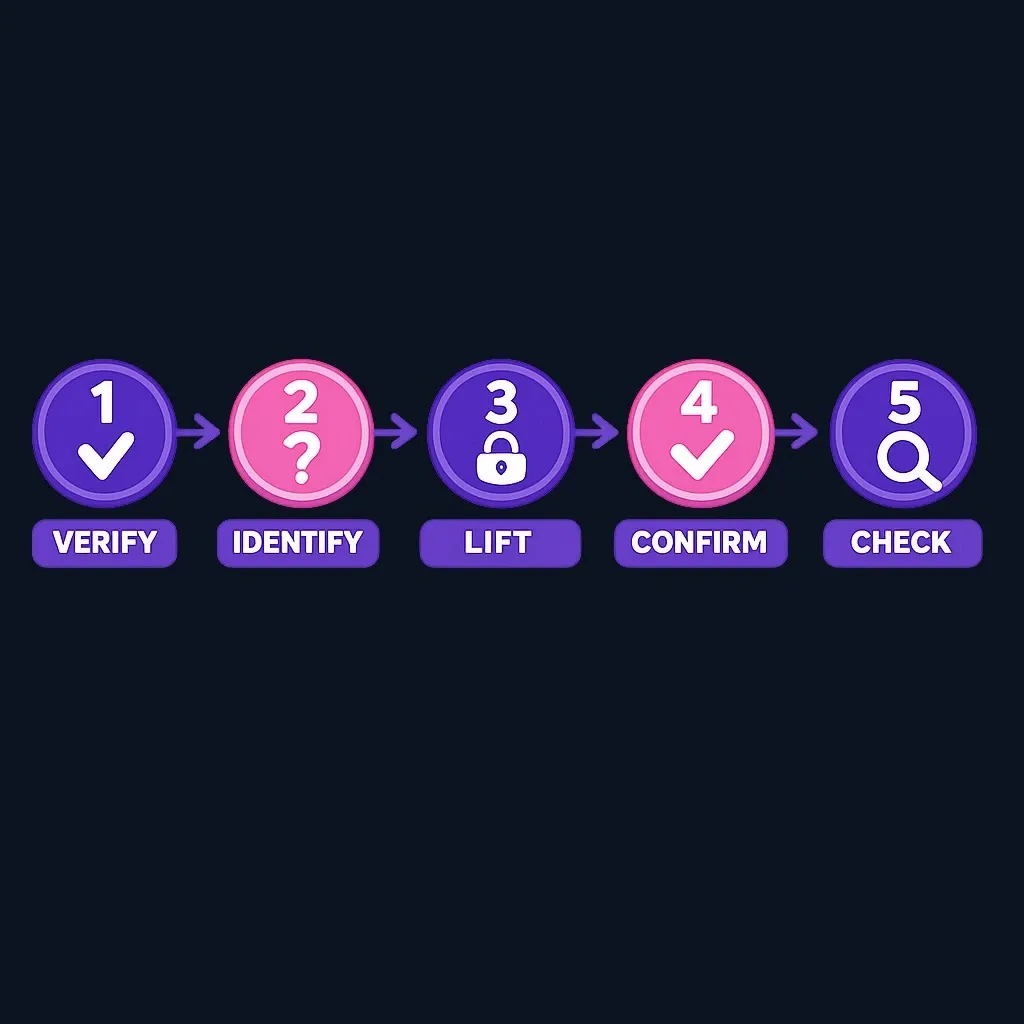
A cautious workflow is:
- Confirm that the request is legitimate and identify the organization seeking access.
- Ask which credit reporting company and date range will be used.
- Request a temporary lift for only the needed period when practical.
- Confirm that the application review is complete.
- Check the freeze status again rather than assuming that an application restored it.
Avoid sharing account credentials or a freeze PIN with a lender, broker, or caller. Submit the lift directly through the credit reporting company's official channel.
What a freeze does not solve
A freeze can reduce new-account risk, but it does not stop misuse of an existing card, bank account, tax identity, government-benefit account, or medical identity. It also does not correct an inaccurate report. If information is wrong, use the dispute process instead. The CFPB's credit-report dispute guidance explains how to contact both the credit reporting company and the information provider.
People who suspect identity theft can use IdentityTheft.gov to create a recovery plan and document reports. A fraud alert may also be useful, but it does not restrict access as strongly as a freeze.
Common mistakes to avoid
- Treating a freeze as complete identity-theft protection. It addresses access to credit files for many new-account decisions, not every form of fraud.
- Assuming every soft inquiry is blocked. Existing-account reviews and several other permitted uses can continue.
- Lifting every file for longer than necessary. Ask which report is needed and consider a time-limited lift.
- Confusing a paid credit lock with a statutory freeze. CFPB guidance notes that freezes are free and protected by law; a commercial lock may be bundled with paid services.
- Ignoring an unfamiliar inquiry. A soft inquiry does not affect the score, but an organization you do not recognize may still deserve investigation.
FAQ
Can I check my own credit report while it is frozen?
Yes. CFPB guidance states that a consumer can request, see, and review their files while a security freeze is active. Reviewing your own report is a soft inquiry and does not affect your score.
Does a freeze lower my credit score?
No. The CFPB states that a security freeze does not affect credit scores. A score may change for other reasons while the file is frozen, such as updated balances, payment history, or corrected information.
Will a current credit-card issuer still review my account?
It may. Current creditors are among the limited entities that can access a frozen file, and an account-management review is generally treated as a soft inquiry.
Does a freeze block an employment background check?
Not necessarily. The CFPB notes that the federal security-freeze requirement does not apply to requests for employment, tenant-screening, or insurance purposes. Ask the employer or screening company what authorization and report it requires, and check applicable state law.
Do I need to lift all three freezes before applying for credit?
Not always. If the lender confirms which reporting company it will use, a lift at that company may be enough. A lender can change sources or use more than one report, so obtain confirmation rather than guessing.
Bottom line
A credit freeze usually does not prevent soft inquiries. It is designed mainly to restrict prospective creditors' access for new-credit decisions, while several forms of soft access can continue. Use a freeze as one layer of protection, verify who needs access before lifting it, and use the separate dispute or identity-theft process when the problem is inaccurate information or suspected fraud.
For more educational material on credit reports and financial planning, visit the Finelo Blog.
Financial LiteracyFinancial Education
Practice trading with Finelo
Practice in a simulator, learn with bite-sized lessons, and build confidence before risking real money.
About the author
Finelo Team
The Finelo Team creates practical investing and trading education designed to help beginners learn faster with structured challenges, simulator practice, and bite-sized lessons.
Keep reading — Related articles

Financial Literacy
Mercury Books Review 2026: Is It Worth It for Startups?
Mercury Books brings double-entry accounting into Mercury. Review its $35 pricing, reports, AI features, integrations, and migration limits.
Finelo Team

Financial Literacy
Why is My FICO Score Lower Than My Credit Score?
Example takeaway: seeing a higher score in a bank app doesn’t guarantee lenders will see the same FICO number at application time; lenders often pull a specific FICO version from a specific bureau.
Finelo Team
Financial Literacy
Why Is My FICO Score Higher Than My Credit Score?
Brief educational note: this article is educational, not financial or investment advice; investing and credit decisions involve risk and possible loss.
Finelo Team