For U.S. readers: This article discusses U.S. rules and financial products. State rules and individual eligibility may differ.
Does a Living Will Need to Be Notarized?
It depends on the state and the document.
6 min read
Practice trading with Finelo
Practice in a simulator, learn with bite-sized lessons, and build confidence before risking real money.
Want to learn more?
Practice in a simulator, learn with bite-sized lessons, and build confidence before risking real money.
Explore FineloExplore Finelo's 28-day challenges
Turn learning into a daily habit with guided challenge paths.
Quick answer
It depends on the state and the document. A state may require qualified witnesses, notarization, either method, or additional formalities for certain health-care instructions. Notarization does not automatically replace required witnesses, and adding witnesses who are legally disqualified can create problems rather than cure them.
Use the official form and execution instructions for the state where the document is signed and likely to be used. The National Institute on Aging explains the role of living wills and other advance directives but correctly directs readers to state-specific forms and requirements (NIA advance-care planning guide).
Finelo provides general financial education, not legal, medical, health-care, tax, financial, or investment advice. A local attorney or health-system advance-care planning office can help with state-specific questions.
What a living will does
A living will is one type of advance directive. It records treatment preferences for a future time when a person cannot communicate or make the relevant decision. A health-care power of attorney or proxy names someone to make decisions. Many state forms combine these functions, but the terms and legal effect vary.
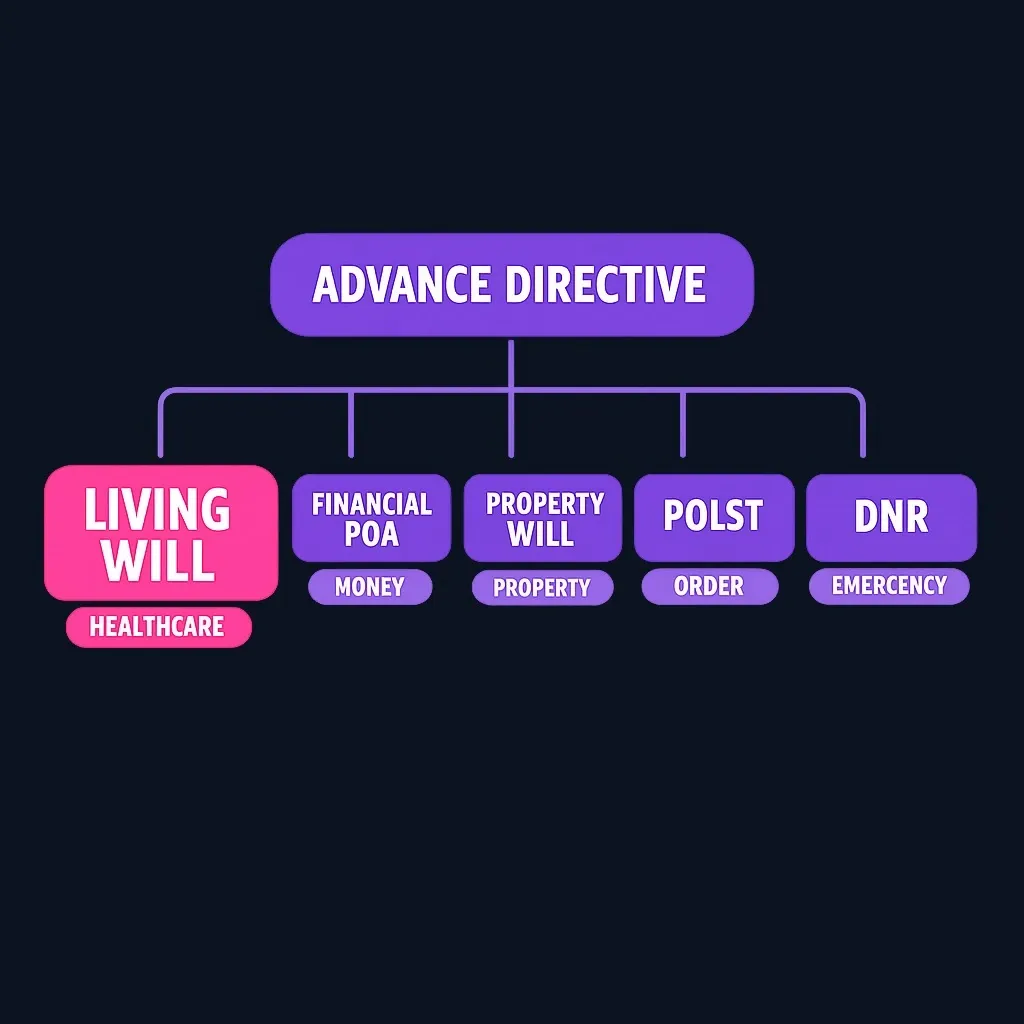
A living will is not the same as:
- a financial power of attorney;
- a will that distributes property at death;
- a portable medical order, such as a POLST or MOLST; or
- a do-not-resuscitate order entered by a clinician.
Each document has a distinct purpose and execution process.
Why there is no national notarization rule
Advance-directive law is primarily state law. The required method can depend on the document type, the signer, the place of signing, the people acting as witnesses, and the setting in which the document is executed.
Some states permit a notary instead of witnesses. Others require witnesses, restrict who may serve, or have separate rules for residents of care facilities. An online statement that “two witnesses plus a notary is safest” can therefore be wrong. The legally safest method is to follow the current official instructions exactly.
How to verify the signing requirements
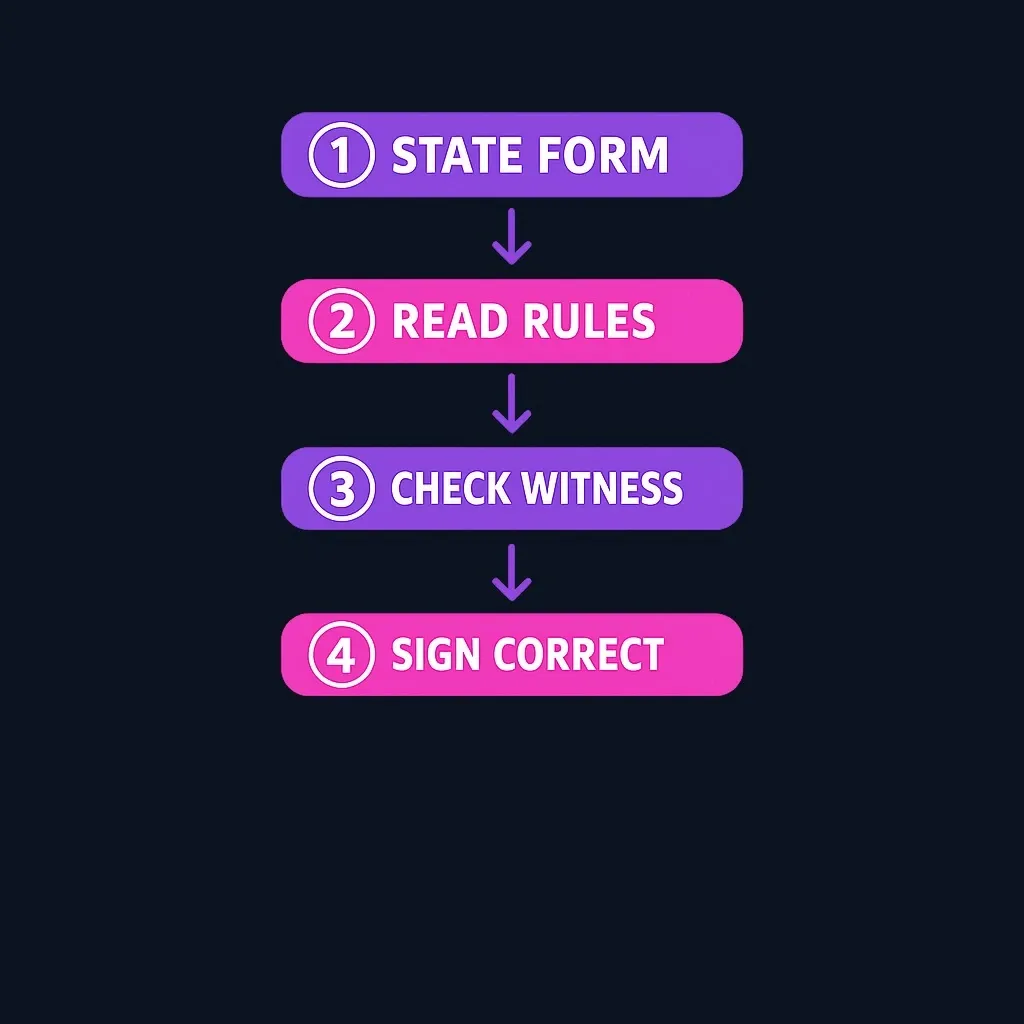
- Identify the correct state form. Start with the state health department, attorney general, legislature, judiciary, or another official state site.
- Read the form's execution page. Note the number and qualifications of witnesses, whether a notary is an alternative, and any special acknowledgments.
- Check restrictions before choosing witnesses. A named health-care agent, treating provider, facility employee, relative, or potential heir may be restricted in some states.
- Sign in the required sequence and presence. Do not pre-sign if the form requires witnesses or a notary to observe the signature.
- Complete every required field. A blank choice, missing date, or incomplete witness statement can create ambiguity.
- Distribute copies. Give the completed directive to the agent, clinicians, and appropriate health-care system, and keep an accessible copy.
- Review after material changes. Recheck the form after moving states, changing the agent, receiving a major diagnosis, marrying or divorcing, or changing treatment preferences.
Witnesses and notaries do different jobs
A witness generally attests to the signing and may be required to confirm capacity, voluntariness, or a lack of disqualifying interest. A notary verifies identity, observes or acknowledges the signature, and completes a notarial certificate.
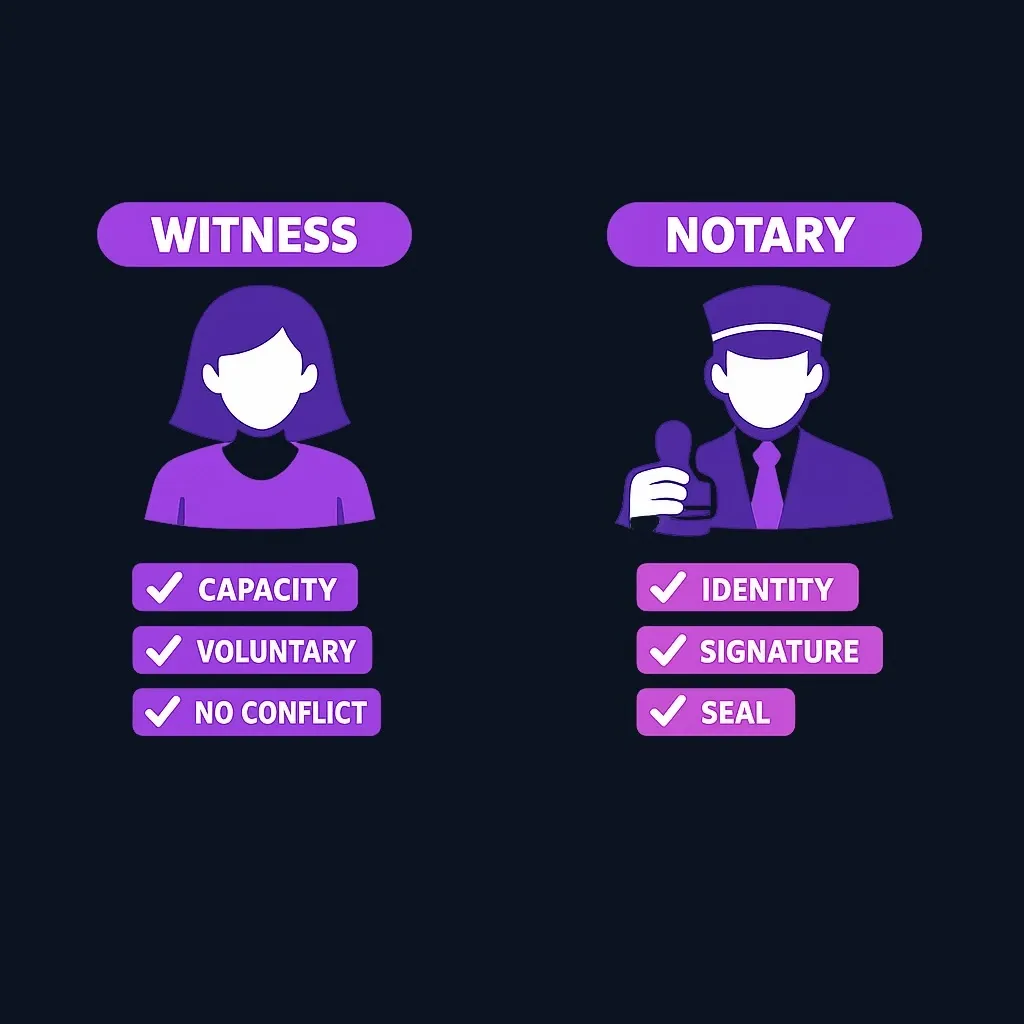
Neither role normally determines whether the medical choices are informed or clinically appropriate. Discuss the substance with the health-care agent and clinician, not only the signing formalities.
Practice trading with Finelo
Practice in a simulator, learn with bite-sized lessons, and build confidence before risking real money.
Moving or receiving care in another state
Many states have reciprocity provisions for directives validly executed elsewhere, but their scope and clinical implementation can differ. A person who moves, spends long periods in another state, or receives treatment across state lines can:
- ask counsel whether the existing directive will be recognized;
- consider completing the official form in the second state;
- keep the documents consistent; and
- tell the health-care agent and clinicians which version is current.
Do not create conflicting directives without a plan for revoking or superseding older versions.
A practical decision framework
| Question | Next step |
|---|---|
| Does the official form require witnesses? | Use the required number and confirm each witness is qualified |
| Does it permit a notary instead? | Choose the permitted method and complete the specified certificate |
| Does it require both? | Complete both exactly as instructed |
| Are the instructions unclear or the family situation disputed? | Obtain state-specific legal review before signing |
| Will the person receive care in another state? | Review reciprocity and consider a compatible local form |
| Is the person in a nursing facility or hospital? | Ask whether special witness or patient-advocate rules apply |
This framework does not replace the official form. It prevents a generic checklist from overriding state law.
Common mistakes
- Using a form from the wrong state. Confirm the governing state and revision date.
- Assuming a notary cures missing witnesses. It does not when the statute requires witnesses.
- Choosing a disqualified witness. Read relationship, agent, provider, facility, and financial-interest restrictions.
- Signing before everyone is present. Follow the form's observation and acknowledgment requirements.
- Locking away the only copy. A directive cannot guide care if clinicians and the agent cannot access it.
- Failing to discuss preferences. A form is more useful when the agent understands the person's priorities and values.
- Leaving contradictory documents active. Clearly revoke or replace superseded versions as state law permits.
FAQ
Can a bank notary prepare the living will?
A notary generally authenticates a signature; the notary does not select the form or give legal advice unless separately licensed to do so. Bring the correct unsigned form and identification, and confirm whether qualified witnesses are also required.
Do I need a lawyer?
Not always. Many states publish forms intended for individual use. Legal review can be useful when state rules are unclear, the person has capacity or communication concerns, family conflict is likely, or directives must coordinate across states.
Can I change the living will later?
Generally yes while the person has the legally required capacity, but the method of revocation or replacement varies by state. Notify the agent and providers, retrieve old copies where practical, and record the new document in the health system.
Where should the original be kept?
Keep it secure but accessible. Give copies to the health-care agent and relevant clinicians, and record where the original is stored. Do not rely solely on a safe-deposit box that may be inaccessible during an emergency.
Bottom line
A living will needs notarization only when the applicable state's law or chosen form requires it or permits it as the selected execution method. Do not add or substitute formalities based on a generic national rule. Use the current official state form, verify witness eligibility, follow the signing sequence exactly, and make the completed directive available to the people who may need it.
Financial LiteracyFinancial Education
Practice trading with Finelo
Practice in a simulator, learn with bite-sized lessons, and build confidence before risking real money.
About the author
Finelo Team
The Finelo Team creates practical investing and trading education designed to help beginners learn faster with structured challenges, simulator practice, and bite-sized lessons.
Keep reading — Related articles

Financial Literacy
Mercury Books Review 2026: Is It Worth It for Startups?
Mercury Books brings double-entry accounting into Mercury. Review its $35 pricing, reports, AI features, integrations, and migration limits.
Finelo Team

Financial Literacy
Why is My FICO Score Lower Than My Credit Score?
Example takeaway: seeing a higher score in a bank app doesn’t guarantee lenders will see the same FICO number at application time; lenders often pull a specific FICO version from a specific bureau.
Finelo Team

Financial Literacy
Why Is My FICO Score Higher Than My Credit Score?
Brief educational note: this article is educational, not financial or investment advice; investing and credit decisions involve risk and possible loss.
Finelo Team


