The ex-dividend date is the first trading day on which a buyer generally does not acquire the right to the announced distribution. The applicable date depends on settlement and distribution size. An economic price adjustment is expected when a security trades without the entitlement, but the actual opening price is set by supply and demand and need not equal the dividend.
Ex-Dividend Date: What It Is and Why It Matters
The ex-dividend date is the first trading day on which a buyer generally does not acquire the right to the announced distribution. The applicable date depends on settlement and distribution size. An economic price…
6 min read
Practice investing with Finelo
Build practical investing skills with guided lessons, simulator practice, and structured challenges.
Want to learn more?
Build practical investing skills with guided lessons, simulator practice, and structured challenges.
Explore FineloExplore Finelo's 28-day challenges
Turn learning into a daily habit with guided challenge paths.
What is an ex-dividend date?
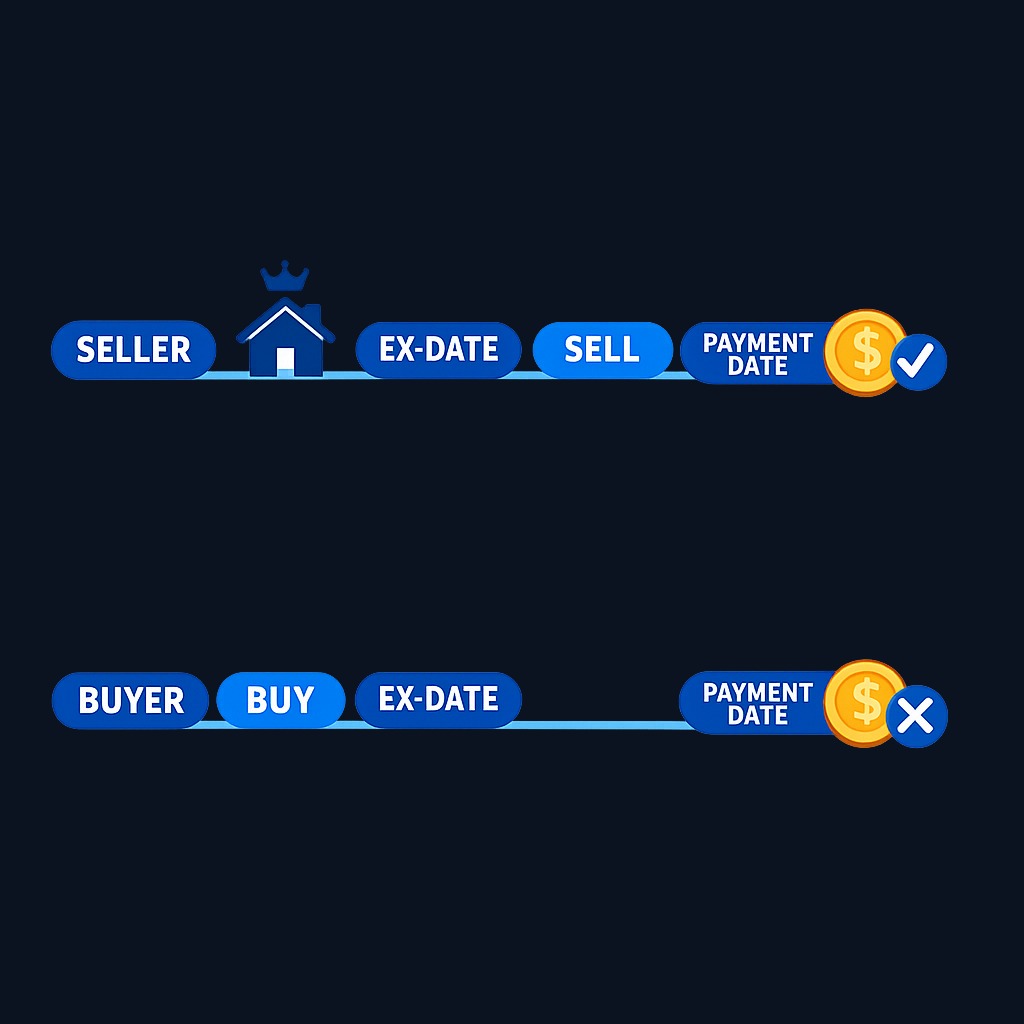
When a company declares a dividend, it must decide which shareholders receive it. Because shares change hands constantly, the market needs a bright line. The ex-dividend date is that line: ownership of the dividend is fixed by who holds the stock at the close of the trading day before the ex-date.
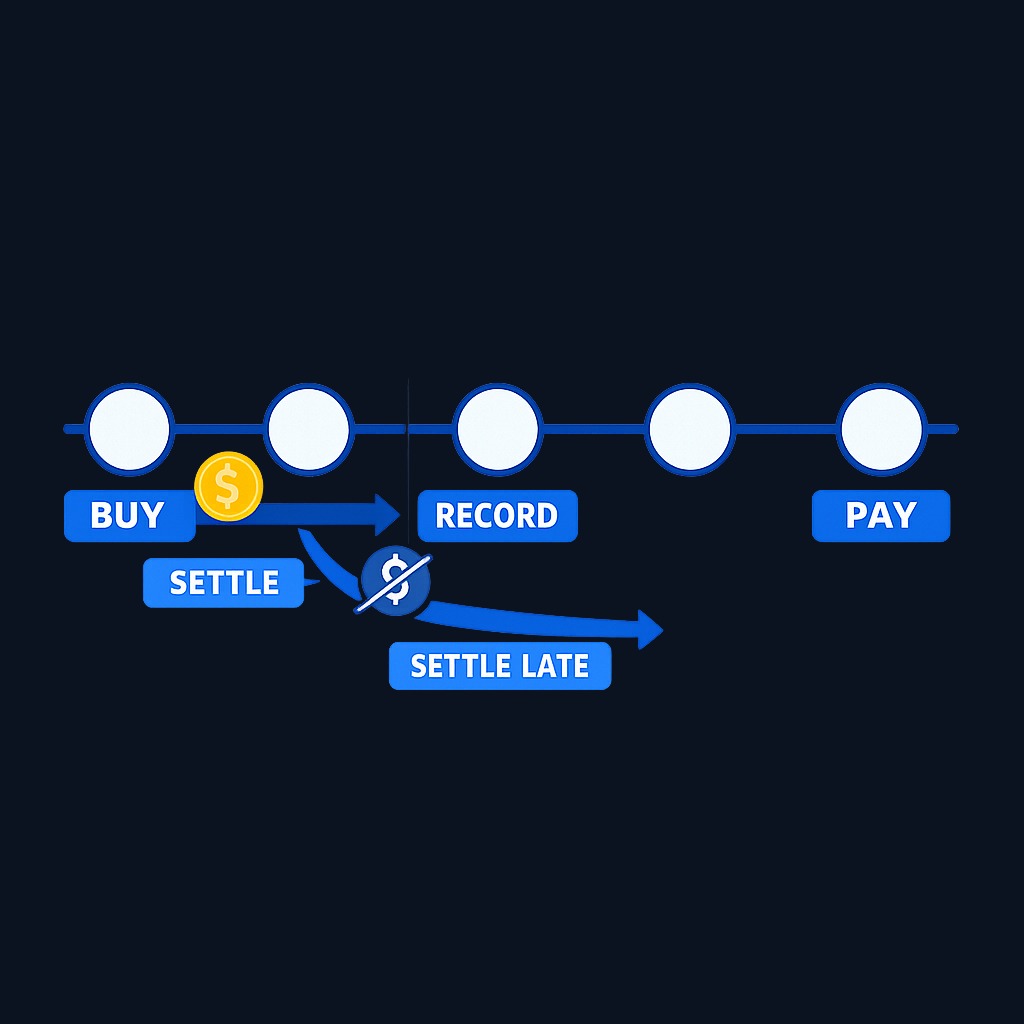
The mechanics come from settlement. Stock trades in the US settle one business day after execution, so a purchase made the day before the ex-date settles in time to put your name on the company's books by the record date. A purchase made on the ex-date settles one day too late for this payment - you own the stock, but the departing seller keeps the dividend.
The four dividend dates
| Date | What happens | Who sets it |
|---|---|---|
| Declaration date | The company announces the dividend amount and schedule | Board of directors |
| Ex-dividend date | First day the stock trades without the dividend | Exchange, based on the record date |
| Record date | The company checks its shareholder list | Company |
| Payment date | Cash lands in shareholder accounts | Company |
Investors watch the ex-date; the others are administrative. Companies publish all four dates in their dividend announcements, and you can verify them in official company filings through SEC EDGAR. The same logic applies to funds: an ETF distributing income also trades ex-dividend on a scheduled date.
How the ex-dividend date affects stock prices
When a stock begins trading without the dividend entitlement, its reference price and eligible standing orders may be adjusted under exchange and broker rules. Because cash is leaving the company, an economic adjustment is expected, but news and orders can make the actual opening trade higher or lower than a dividend-only estimate.
A quick example. A stock closes at $50.00 the day before going ex with a $0.50 dividend. Other things equal, it opens near $49.50. A shareholder who held through the cutoff has $49.50 of stock plus a $0.50 payment coming - the same $50.00 of value, now split between shares and cash. In practice, normal market movement quickly obscures the adjustment, but the principle holds: the dividend is not free money layered on top of the price.
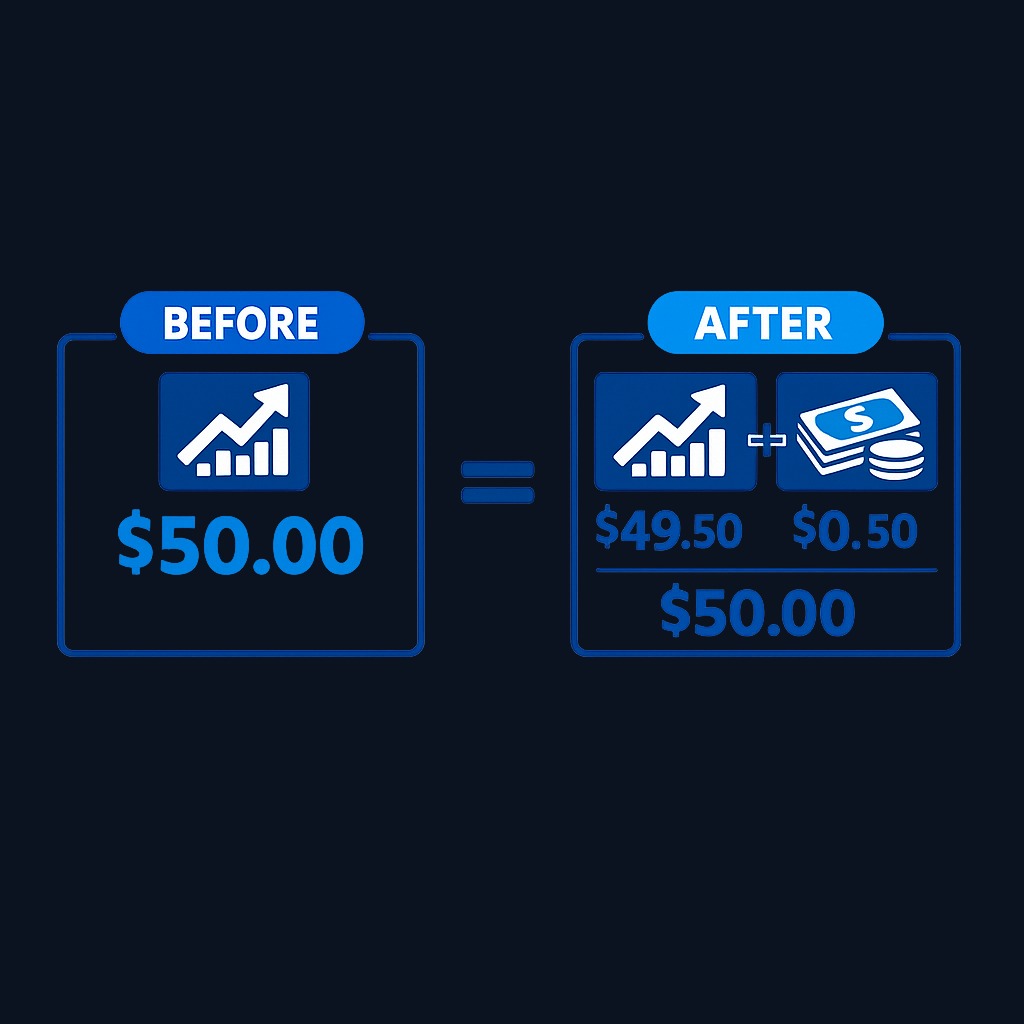
This is also why "buying the dividend" is a classic beginner mistake. Purchasing shares the day before the ex-date captures the payment but also the matching price drop, and it can create a tax bill for what amounts to receiving your own money back.
Strategies investors use around ex-dividend dates
Long-term income investing barely notices ex-dates. If you hold a dividend payer for years, each individual cutoff is routine; what matters is the company's ability to keep paying and raising the dividend.
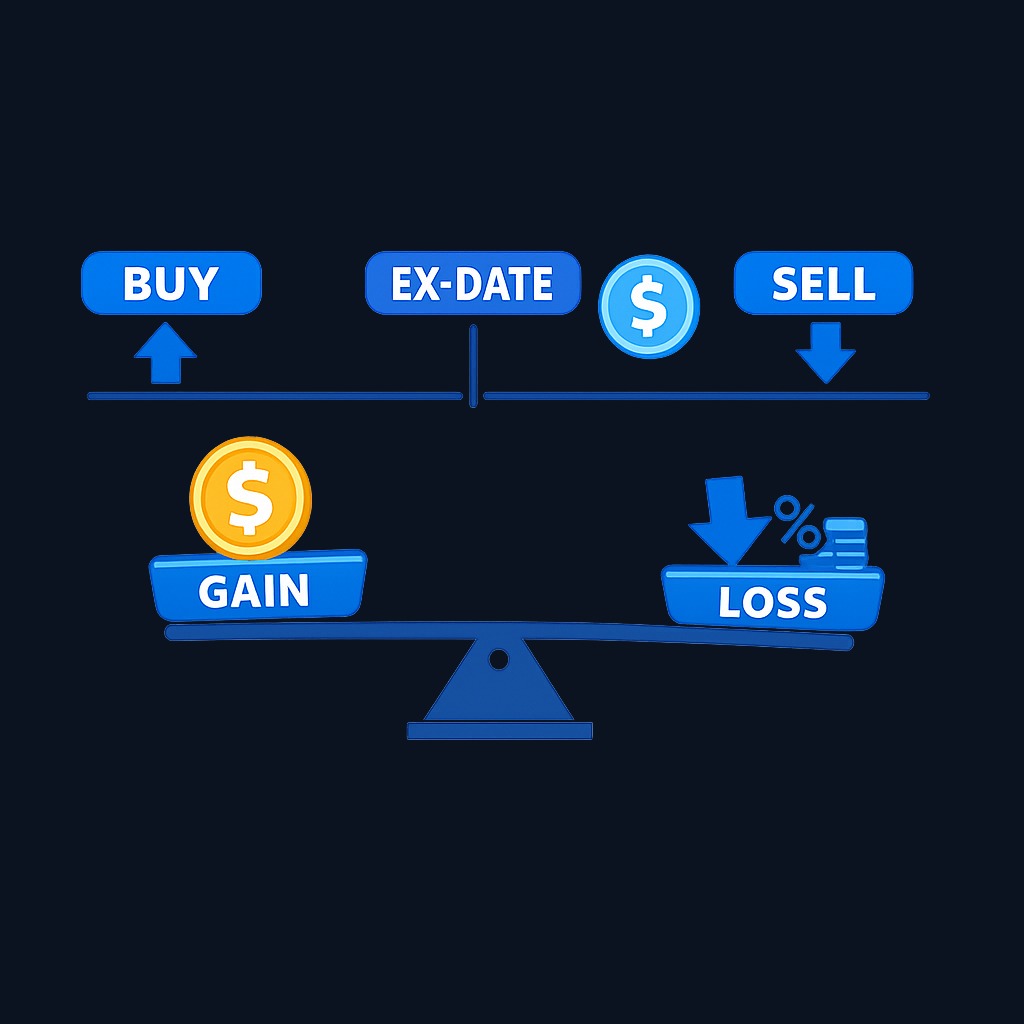
Dividend capture is a short-term approach: buy shortly before the ex-date, sell shortly after, and pocket the payment. The strategy sounds mechanical but fights against the price adjustment, trading costs, and taxes all at once. It only profits when the stock recovers its drop quickly, which is never guaranteed.
Tax-aware timing deserves more attention than it gets. U.S. qualified-dividend treatment generally requires holding the stock for more than 60 days during the 121-day period beginning 60 days before the ex-date, with additional eligibility rules and exceptions. See IRS Publication 550. For distributions of 25% or more of a security's value, FINRA Rule 11140 generally sets the ex-date as the first business day after the payable date and due bills may apply.
Practice investing with Finelo
Build practical investing skills with guided lessons, simulator practice, and structured challenges.
What to know before deciding
- The ex-dividend date, not the record or payment date, controls whether a buyer receives the payment.
- Expect market data to account for the distribution, but do not assume the actual opening trade will differ from the prior close by exactly the payout.
- Dividends are never guaranteed. A board can cut or suspend them at any time, and a high yield often signals the market doubts the payment will last.
- Special dividends and large distributions can trigger different ex-date rules, with the ex-date sometimes falling after the record date.
- Funds and ETFs publish distribution calendars; the same buy-before-the-ex-date logic applies.
Decision framework: buying before or after the ex-date
Let your goal decide. If you are buying a stock you plan to hold for years, ignore the calendar - a one-day dividend either way is noise across a multi-year holding period, and buying on the ex-date at the adjusted price is economically equivalent to buying the day before with the payment. If you are making a shorter-term trade, buying just after the ex-date avoids receiving a taxable payment you did not need. And if the entire attraction of a purchase is capturing one imminent dividend, reconsider: the price adjustment, settlement timing, and holding-period tax rules stack the odds against quick captures. Income strategies work when the underlying stock is worth owning anyway.
FAQ
If I buy a stock on the ex-dividend date, do I get the dividend?
No. You must own the shares before the market opens on the ex-dividend date - in practice, buy no later than the previous trading day. Purchases made on the ex-date entitle the seller, not you, to the upcoming payment.
Can I sell on the ex-dividend date and still get paid?
Yes. Once the stock goes ex, the payment belongs to whoever held it through the prior close. You can sell at the open of the ex-date and still receive the dividend on the payment date.
Why does the stock price drop on the ex-dividend date?
Because the company is distributing cash, a dividend-only valuation is lower by the per-share payment. Reference prices and eligible orders may be adjusted, but the market determines the actual trades.
How do I find a stock's ex-dividend date?
Check the company's investor relations announcements or its filings on SEC EDGAR, or look at your brokerage's dividend calendar. Announcements list the declaration, ex-dividend, record, and payment dates together.
Next steps
The ex-date is the key trading cutoff, but large distributions and due bills can change the normal timetable. Verify the issuer and exchange notices, account for tax and settlement rules, and evaluate the business rather than treating one payment as an opportunity by itself.
InvestingFundamental AnalysisDividendsBeginner
Practice investing with Finelo
Build practical investing skills with guided lessons, simulator practice, and structured challenges.
About the author
Finelo Team
The Finelo Team creates practical investing and trading education designed to help beginners learn faster with structured challenges, simulator practice, and bite-sized lessons.
Keep reading — Related articles
Investing
Tax-gain harvesting vs. tax-loss harvesting
Compare realizing investment gains with realizing losses, including holding periods, wash sales, offsets, and portfolio tradeoffs.
Finelo Team

Investing
Stable value fund vs. money market fund
Compare investment structure, contract protections, transfer restrictions, net yields, and access inside a retirement account.
Finelo Team
Investing
Single-life vs. joint-life annuity
Compare income for one lifetime with continued payments to a survivor, using equal premiums and matching guarantee terms.
Finelo Team