There's no single minimum. Some credit unions let you open a savings account with as little as $5. Online brokerage accounts typically have no minimum at all. Other paths cost more: some mutual funds and robo-advisors ask for $500 to $3,000 to open. The real number depends on which account and investment you pick. It doesn't depend on investing itself.
How Much Money Do You Need to Start Investing?
There's no single minimum. Some credit unions let you open a savings account with as little as $5. Online brokerage accounts typically have no minimum at all. Other paths cost more: some mutual funds and robo-advisors…
8 min read
Practice investing with Finelo
Build practical investing skills with guided lessons, simulator practice, and structured challenges.
Want to learn more?
Build practical investing skills with guided lessons, simulator practice, and structured challenges.
Explore FineloExplore Finelo's 28-day challenges
Turn learning into a daily habit with guided challenge paths.
This page is for anyone wondering if they have "enough" to start. That includes beginners with $20 to spare. It also includes people who've been waiting for a bigger paycheck before opening an account. Check the account and limit breakdown below. Confirm the two things worth doing first. Then use the strategies section to pick a starting point that fits your actual budget.
Understanding Investment Accounts
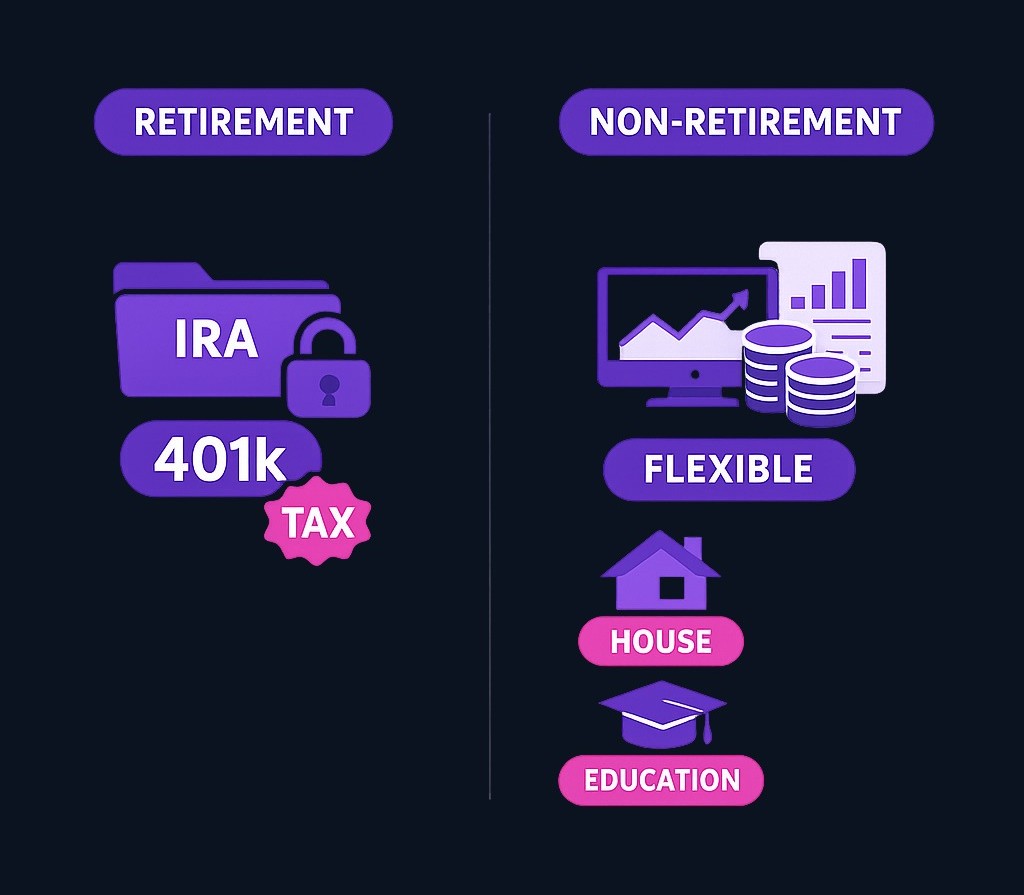
Before you compare dollar minimums, know what you're opening. Accounts split into two broad groups.
Retirement Accounts
These are tax-advantaged accounts designed for long-term saving. The group includes employer plans like 401(k)s and 403(b)s, plus IRAs you open yourself. A Roth IRA can require as little as $10 to open at some institutions. Annual contribution limits are capped by IRS rules that change over time. Check the current limit before you contribute.
Non-Retirement Accounts
This group covers standard brokerage accounts, education savings accounts, and health savings accounts for goals beyond retirement. Think of a house down payment, a child's tuition, or general wealth building. A brokerage account is usually the simplest entry point if retirement isn't your immediate goal.
Minimum Investment Amounts and Limits to Verify
Minimums vary sharply by what you're buying, not by "investing" as a category:
| Account or vehicle | Typical minimum |
|---|---|
| Savings account | As low as $5 at some credit unions |
| Online brokerage account | Typically no minimum to open |
| Roth IRA | As low as $10 at some institutions; annual contribution limits apply |
| Micro-investing apps | As little as a few dollars a month |
| Robo-advisor | Around $500 at some providers |
| Mutual funds | No minimum at some funds, $500–$3,000 at others |
| Certificate of deposit (CD) | $500 at some credit unions, often $2,500+ elsewhere |
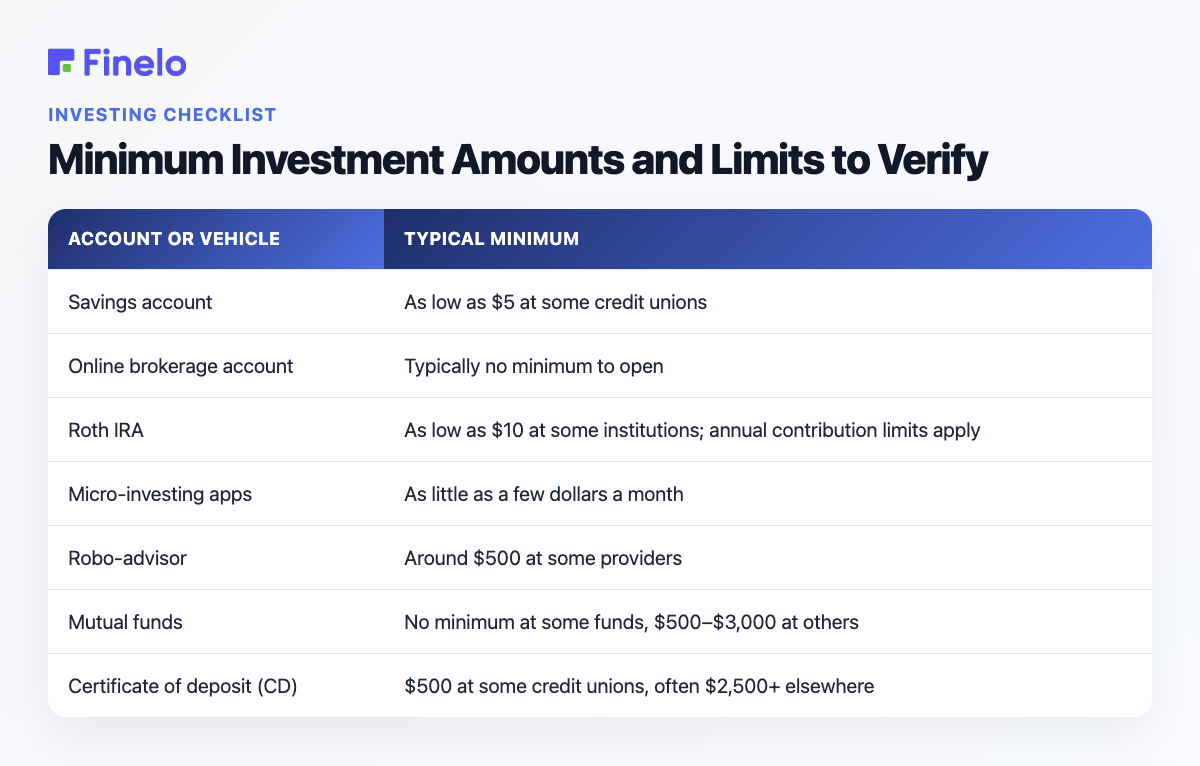
The pattern is simple. Under $20? A brokerage with no minimum, or a micro-investing app, is your realistic starting point. Have $500 or more? A robo-advisor or a mutual fund opens up. Neither path wins outright. It depends on how hands-on you want to be — the strategies section below breaks that down.
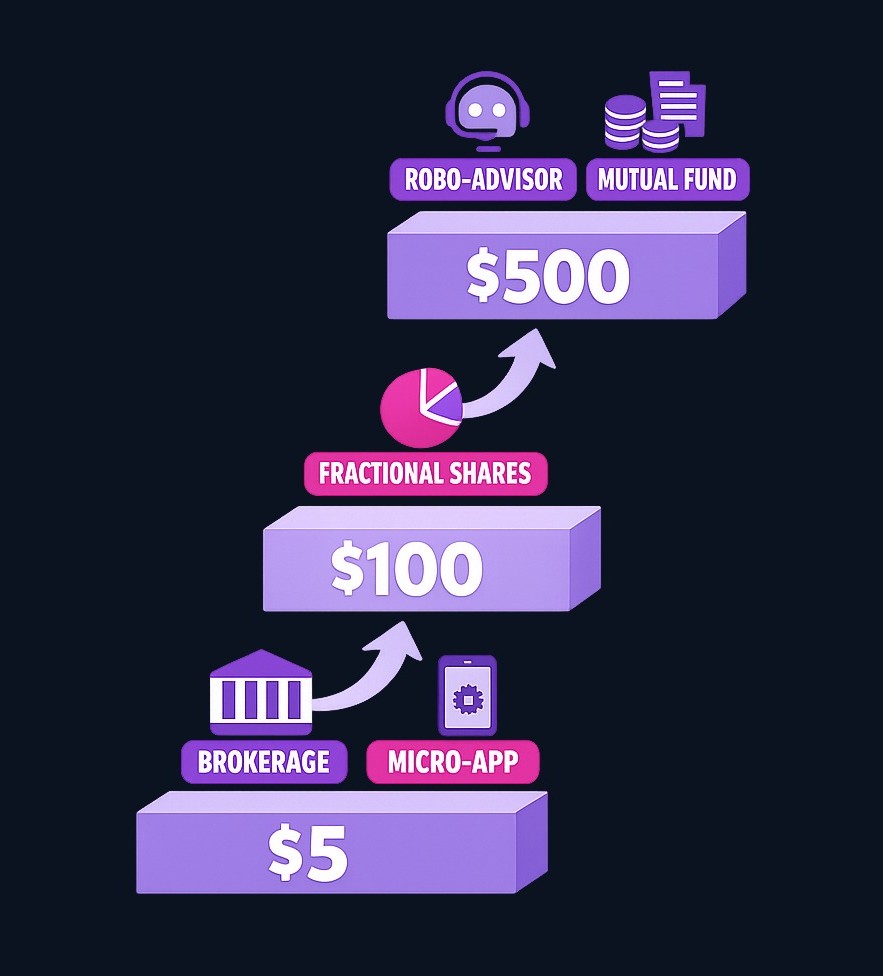
One limit worth verifying every year: retirement account contribution caps change on a schedule set by the IRS. Check the current cap before you plan a full year of contributions, since the number you remember from last year may already be out of date.
What's Included, and Where Costs Sneak In
A low minimum doesn't always mean a low-cost account. Two accounts that both open for "free" can differ sharply in what they actually give you.
What you typically get: access to buy and sell the assets that account type allows (stocks and ETFs in a brokerage account, a managed portfolio in a robo-advisor, a single fund in some retirement accounts), account statements, and — at most mainstream providers — basic educational materials.
Where costs hide: some financial institutions charge monthly service fees once your balance drops below a set threshold, even on accounts that were free to open. Some funds carry an ongoing expense ratio that never shows up as a line-item bill — it's simply deducted from your returns. And a CD or retirement account may charge a penalty if you withdraw before an agreed date.
The fix is simple: read the fee schedule before you open anything, not after. A $5 minimum is only a bargain if the account doesn't quietly charge more than that every month you're below a balance threshold.
Financial Prerequisites Before Investing
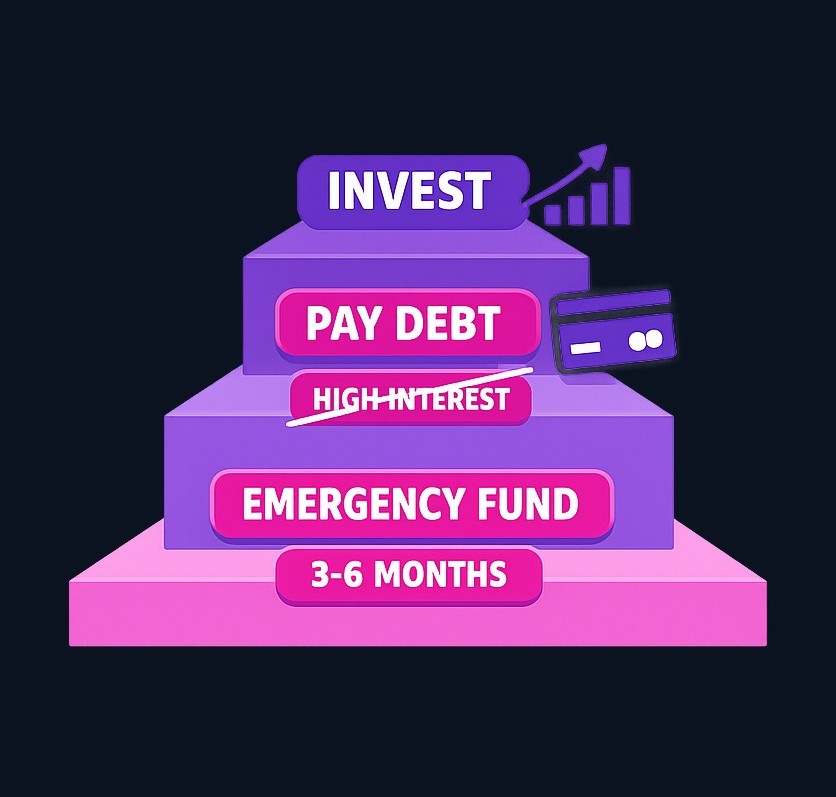
Two things matter more than your starting balance. Before you invest a dollar, confirm you have an emergency fund covering three to six months of expenses, have addressed high-interest debt, and have disposable income left after your monthly obligations.
Skip this step, and a car repair or a medical bill can force you to sell investments at the worst possible time. That defeats the point of investing for the long term in the first place. A credit card charging double-digit interest usually costs more than most investments are likely to earn, so paying it down typically comes first.
If you're not there yet, that's not a reason to wait indefinitely. Many people build the emergency fund and pay down debt at the same time they start investing a small amount. Treat the early investing as practice, not a serious commitment of capital, until your foundation catches up.
Practice investing with Finelo
Build practical investing skills with guided lessons, simulator practice, and structured challenges.
Investment Strategies for Beginners
Once your foundation is solid, define your strategy around four factors: your financial goals, your time horizon, your risk tolerance, and whether you want professional guidance or a self-directed approach. From there, diversify across account types to help meet specific goals. Also diversify across asset classes — stocks, bonds, mutual funds, ETFs, and other assets — to manage risk.
Match your strategy to your actual budget:
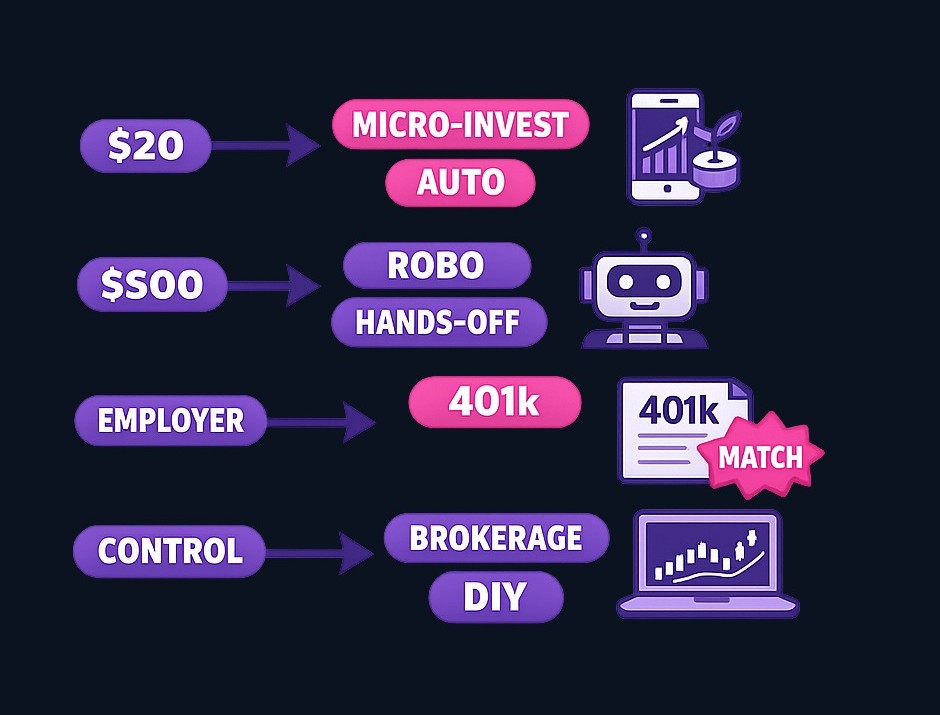
- Under $20 available. A no-minimum brokerage or a micro-investing app. Automate a small weekly or monthly transfer, so consistency does the work, not size.
- $500 or more, and you want it hands-off. A robo-advisor builds and rebalances a diversified portfolio for you.
- You have access to an employer retirement plan. If your employer matches contributions, many financial educators treat capturing that match as a priority. It's money added to your account on top of your own contribution.
- You want full control. A standard brokerage account, building your own mix one purchase at a time.
None of these fits everyone. Consistency over years matters more than which option you pick on day one. Every option here carries market risk, including the possibility of losing money, no matter how small your first deposit is.
Value and Comparison Notes: Choosing the Right Entry Point
Cheapest to open isn't always the best value. A $5 savings account teaches you almost nothing about investing — it's a savings vehicle, not an investment. A $500 robo-advisor, by contrast, gets you a diversified, professionally managed mix from day one, which is real value for a hands-off beginner.
If your goal is learning by doing, a low-minimum brokerage account with fractional shares gives you the most value per dollar: real market exposure, real gains and losses, at minimal cost. If your goal is a fully hands-off retirement account, the $500-ish entry point for a robo-advisor buys you ongoing rebalancing you'd otherwise have to do yourself.
The honest comparison: paying $0 to open an account that then charges a monthly fee below a balance threshold can cost more over a year than a slightly higher upfront minimum with no ongoing fee. Compare the total first-year cost, not just the number required to open the door.
Real-Life Examples of Starting Investments
These are illustrative scenarios, not real individuals. They reflect common starting points.
Starting with almost nothing. A 24-year-old with $25 left over each payday opens a brokerage account with no minimum. She buys $25 of a broad stock fund every payday. The amount is small. The habit — investing before the money can be spent elsewhere — is the actual strategy.
Paying down debt first. A 29-year-old carrying a high-interest credit card balance spends eight months paying it off before opening any investment account. Once the debt is gone, the money that used to go to interest payments becomes the starting contribution to a robo-advisor account.
Capturing the match, then building further. A 35-year-old with an employer retirement plan contributes enough to get the full employer match first. He treats it as the highest-priority use of investable dollars. Then he opens a separate brokerage account for money beyond retirement savings.
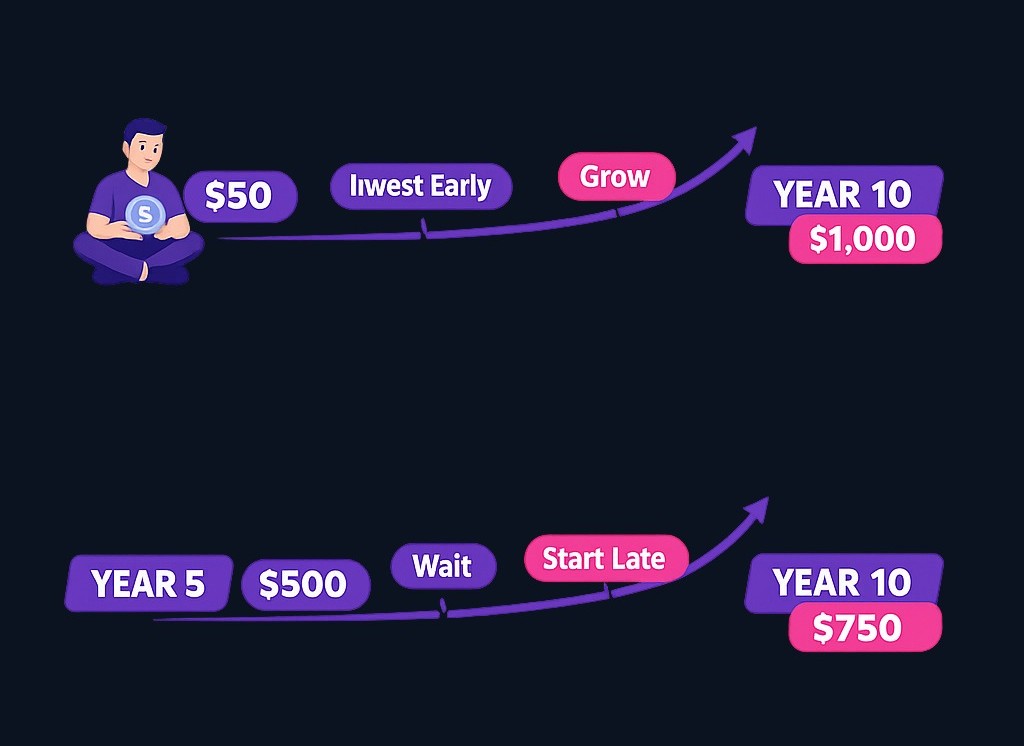
Waiting for "enough." A 40-year-old delays investing for years, assuming a few hundred dollars isn't worth the effort. She finally opens an account with $50. The real lesson isn't the dollar amount. It's how many years of consistent small contributions she'd already lost by waiting.
Conclusion and Next Steps
You don't need a large sum to start. What matters more: paying down high-interest debt, building a basic emergency fund, and picking an account that matches how much you actually have — whether that's $5, $500, or somewhere in between.
Your next step: check your own numbers against the prerequisites above. Then open one account with an amount you're comfortable starting with today, rather than waiting for a bigger one. This article is educational, not personalized financial advice. Verify current minimums, fees, and terms directly with any provider before investing. If you want a structured way to build your investing knowledge as you go, Finelo's Wealth Growth Quiz matches you with a learning path suited to your level.
Frequently asked questions
What is the minimum amount needed to start investing?
It depends on the vehicle. Some accounts open with $5 to [$10](https://www.firstalliancecu.com/blog/how-much-money-do-you-need-to-start-investing), and online brokerage accounts often have no minimum at [all](https://www.usbank.com/investing/financial-perspectives/investing-insights/how-to-start-investing.html), while some mutual funds and robo-advisors ask for $500 or [more](https://www.usbank.com/investing/financial-perspectives/investing-insights/how-to-start-investing.html).
Can I invest if I have debt?
You can, but it's generally worth eliminating high-interest debt first. Confirming your financial foundation — an emergency fund and manageable debt — is a recommended first step before [investing](https://www.usbank.com/investing/financial-perspectives/investing-insights/how-to-start-investing.html), since high-interest debt usually costs more than typical investment returns are likely to offset.
What are the risks of investing?
Every investment carries the risk of losing money, including your original deposit. Markets move up and down. Past performance never guarantees future results. Investing is not a guaranteed way to grow money, no matter how much or how little you start with.
How does compound growth work?
Returns you earn can generate their own returns over time. Consistent contributions held for longer periods tend to benefit more from this effect than the same total amount invested for a shorter stretch. Actual growth depends entirely on market performance, which is never guaranteed.
InvestingBeginnerMarkets
Practice investing with Finelo
Build practical investing skills with guided lessons, simulator practice, and structured challenges.
About the author
Finelo Team
The Finelo Team creates practical investing and trading education designed to help beginners learn faster with structured challenges, simulator practice, and bite-sized lessons.
Keep reading — Related articles
Investing
Yield to Call vs Yield to Maturity: Assumptions and Bond Risks
Yield to call (YTC) estimates a bond's yield if the issuer redeems it on an eligible call date; yield to maturity (YTM) estimates yield if it remains outstanding to final maturity.
Finelo Team
Investing
Will My Employer Know If I Take a 401(k) Loan?
Who this page is for: readers new to 401(k) loans who want a practical, privacy‑focused explanation — what your employer can see, how to limit visibility, and the financial tradeoffs to weigh.
Finelo Team
Investing
What Medical Expenses Qualify for a 401(k) Hardship Withdrawal?
Before you decide, confirm three things with your plan administrator:
Finelo Team