A brokerage account is the account you use to buy and hold investments — stocks, bonds, ETFs, and mutual funds. Choosing one comes down to five checks: the fees you'll pay, the investments offered, the account type that fits your goal, the platform's usability, and the quality of support. Many mainstream brokers now offer online account opening with no account minimums, so the barrier to entry is low — the real work is matching the broker to you.
How to Choose a Brokerage Account: A Complete Guide
A brokerage account is the account you use to buy and hold investments — stocks, bonds, ETFs, and mutual funds. Choosing one comes down to five checks: the fees you'll pay, the investments offered, the account type…
8 min read
Practice investing with Finelo
Build practical investing skills with guided lessons, simulator practice, and structured challenges.
Want to learn more?
Build practical investing skills with guided lessons, simulator practice, and structured challenges.
Explore FineloExplore Finelo's 28-day challenges
Turn learning into a daily habit with guided challenge paths.
This guide walks through the account types, the five decision factors, the actual opening process, the fee traps that quietly eat returns, and the mistakes beginners make most often. By the end, you'll have a working checklist you can apply to any broker's website.
Understanding Different Types of Brokerage Accounts
"Brokerage account" covers several distinct containers. Pick the wrong one and even great investments sit in the wrong tax or risk wrapper.
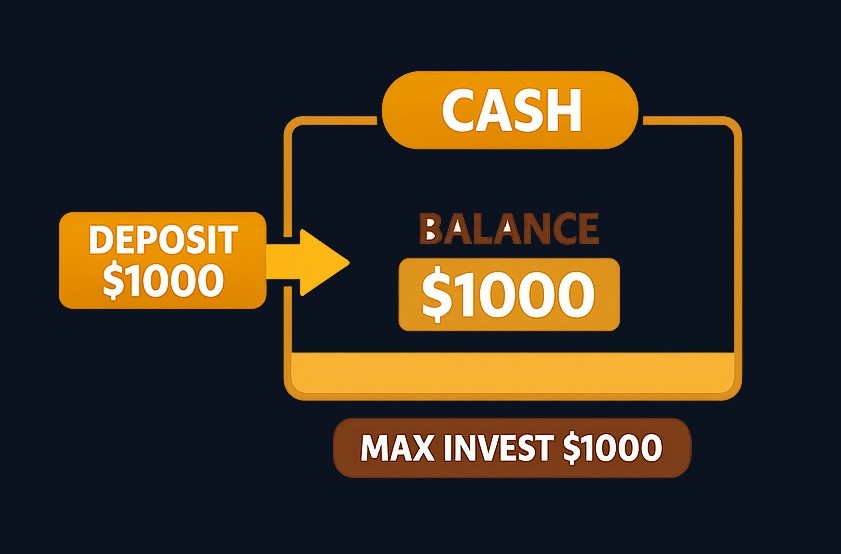
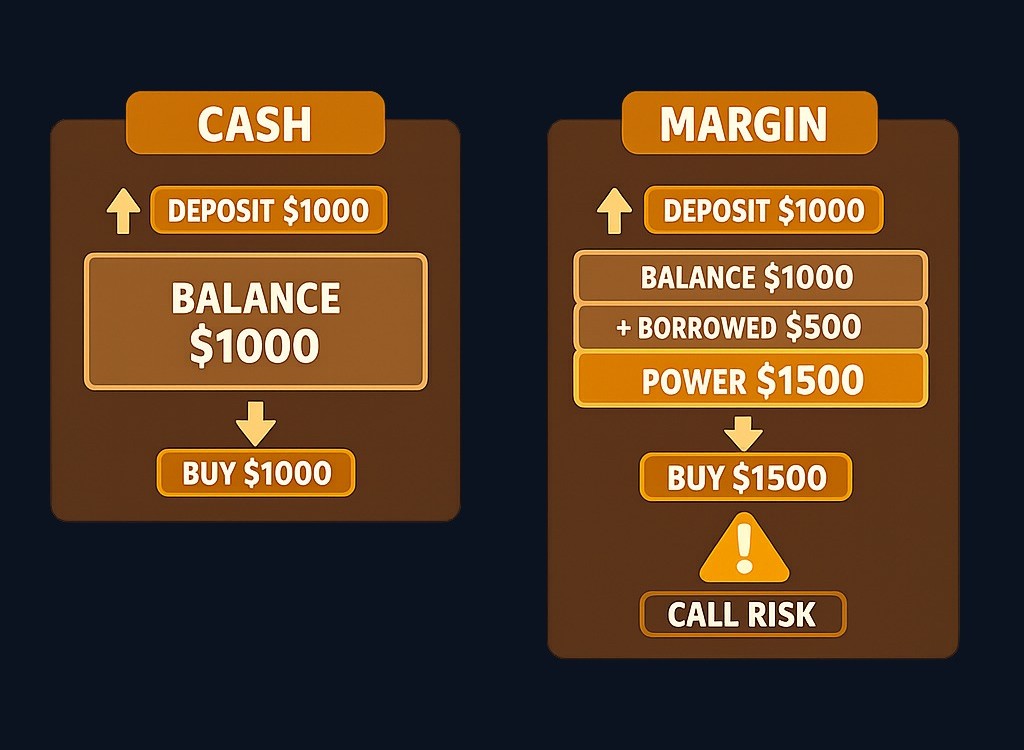
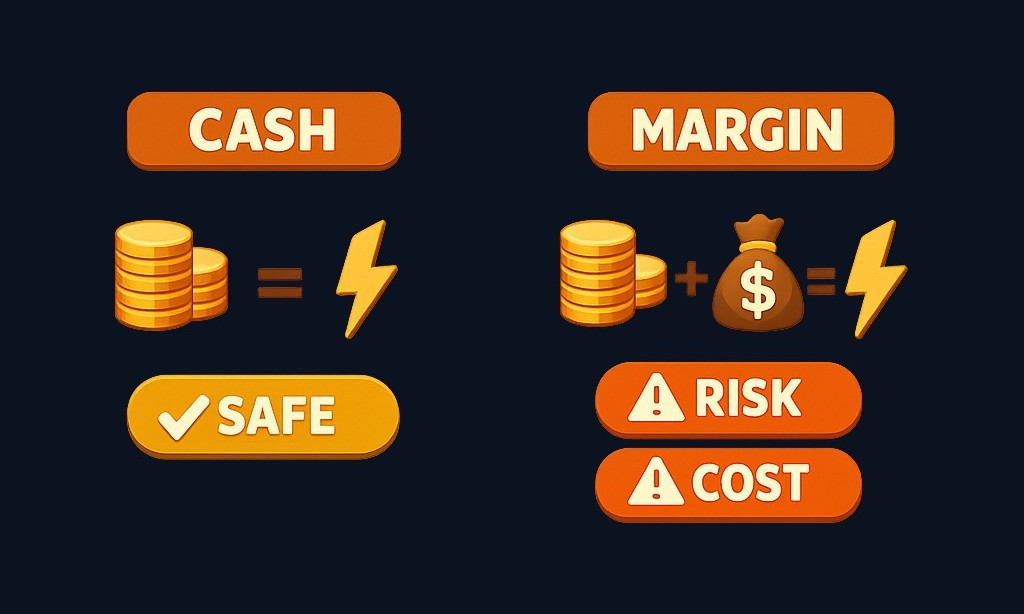
Cash account. The default. You deposit money, and you can only invest what you've deposited. Simple, contained, and the right starting point for most beginners — your maximum loss is what you put in.
Margin account. The broker lets you borrow against your holdings to buy more securities. Borrowing amplifies both gains and losses, adds interest costs, and introduces margin calls — demands to add money when your holdings fall. Powerful for experienced traders; a genuine hazard for beginners. If you're reading a "how to choose" guide, you almost certainly want a cash account first.
Individual vs. joint. An individual account belongs to you alone. A joint account has two or more owners — common for spouses. Brokers ask you to choose between individual and joint at the start of the application.
Taxable vs. retirement. A standard brokerage account has no contribution limits and no withdrawal restrictions, but you may owe taxes on dividends and realized gains each year. Retirement accounts (like IRAs) at the same brokers add tax advantages in exchange for withdrawal rules. Many investors eventually hold both: retirement accounts for the long game, a taxable account for everything else.
The decision rule: match the account type to the money's purpose before comparing brokers at all. Retirement money belongs in a retirement account; medium-term flexible money belongs in a taxable cash account.
Factors to Consider When Choosing a Brokerage Account
Run every candidate broker through these five filters:
1. Fees and costs. The advertised commission is only the start. Watch for annual fees, inactivity fees, and trading platform subscriptions — recurring charges that apply whether or not you trade. Fee structures change, so verify current pricing on each broker's official site.
2. Available investments. Confirm the broker offers what you actually plan to buy. Mainstream brokers typically provide access to stocks, ETFs, and mutual funds; if you want specific fund families, bonds, or international markets, check before opening, not after.
3. Minimums and entry requirements. Some brokers require no account minimum at all, which matters if you're starting small. Note that a fund you buy can still carry its own minimum even when the account doesn't.
4. Platform and tools. A buy-and-hold investor needs a clean interface and good research tools. An active trader needs fast execution, advanced order types, and charting. Test the platform's demo or app before committing — a confusing interface causes real, expensive mistakes.
5. Support and education. When a transfer stalls or a tax form confuses you, support quality suddenly matters. Check what channels exist (phone, chat, branches), when they're available, and whether the broker offers educational resources for beginners. A practical test: call or chat with a question before opening the account, and see how the experience feels.
Three quick investor profiles show how the weights shift:
- Maya, 26, first $1,000, monthly auto-investing into ETFs. Priorities: no minimums, zero recurring fees, simple app, good education. Advanced tools are irrelevant.
- Tom, 45, consolidating $200,000 across old accounts. Priorities: fund selection, transfer support, retirement account options, and a strong service desk for the move itself.
- Lena, 35, active trader. Priorities: platform speed, order types, charting — and she should scrutinize platform subscription costs that casual investors never encounter.
Same brokers, different rankings. That's why "best broker" lists can only shortlist candidates — the final filter is your own profile.
Steps to Open a Brokerage Account
Yes, you can open one entirely online — the standard flow at a major broker takes minutes, not days. Schwab's published sequence is representative of the industry: choose the account type, provide personal, employment, and financial information, select account features, create login credentials, verify your identity, and indicate how you'll fund the account.
In practice, here's how to prepare:
- Decide the account type first. Individual or joint, taxable or retirement — settle this before you start clicking.
- Gather your documents. Expect to provide government ID details, your tax identification number, and employment and financial information. Regulations require brokers to collect this — it's normal, not nosy.
- Answer the profile questions honestly. Brokers ask about income, experience, and goals. These answers determine which features (like options trading) you're approved for. Overstating experience to unlock features you don't understand is a classic self-inflicted wound.
- Skip extras you don't need. When selecting account features, decline margin and complex trading permissions unless you have a specific, understood reason. You can add them later.
- Fund the account. A bank transfer is the usual route. You'll indicate your funding method during setup. Start with an amount you're comfortable learning with.
- Place nothing on day one. Spend the first session exploring: find the order screen, the fee schedule, and the statements page. Buy your first investment on day two, calmly.
One more tip for switchers: if you're moving from another broker, ask the new broker about their account-transfer process before initiating anything. The receiving side usually handles the mechanics, and doing it as a formal transfer — rather than selling and re-buying — can avoid unnecessary taxable events in a taxable account.
Practice investing with Finelo
Build practical investing skills with guided lessons, simulator practice, and structured challenges.
Comparing Brokerage Fees and Services
Fees deserve their own section because they're the factor you can predict in advance — returns are uncertain, costs are contractual. The recurring ones to check on every broker's pricing page:
| Fee type | What it is | Who it hits |
|---|---|---|
| Annual account fee | A yearly charge just for holding the account | Everyone, regardless of activity |
| Inactivity fee | A charge for not trading enough | Buy-and-hold investors — the people least expecting it |
| Platform subscription | Monthly cost for advanced trading software | Active traders using premium tools |
| Trading commissions | Per-trade charges on certain products | Depends on what you trade — many brokers have cut these for stocks and ETFs, but check per product |
| Transfer-out fee | Charged when you move your account elsewhere | Anyone who later switches brokers |
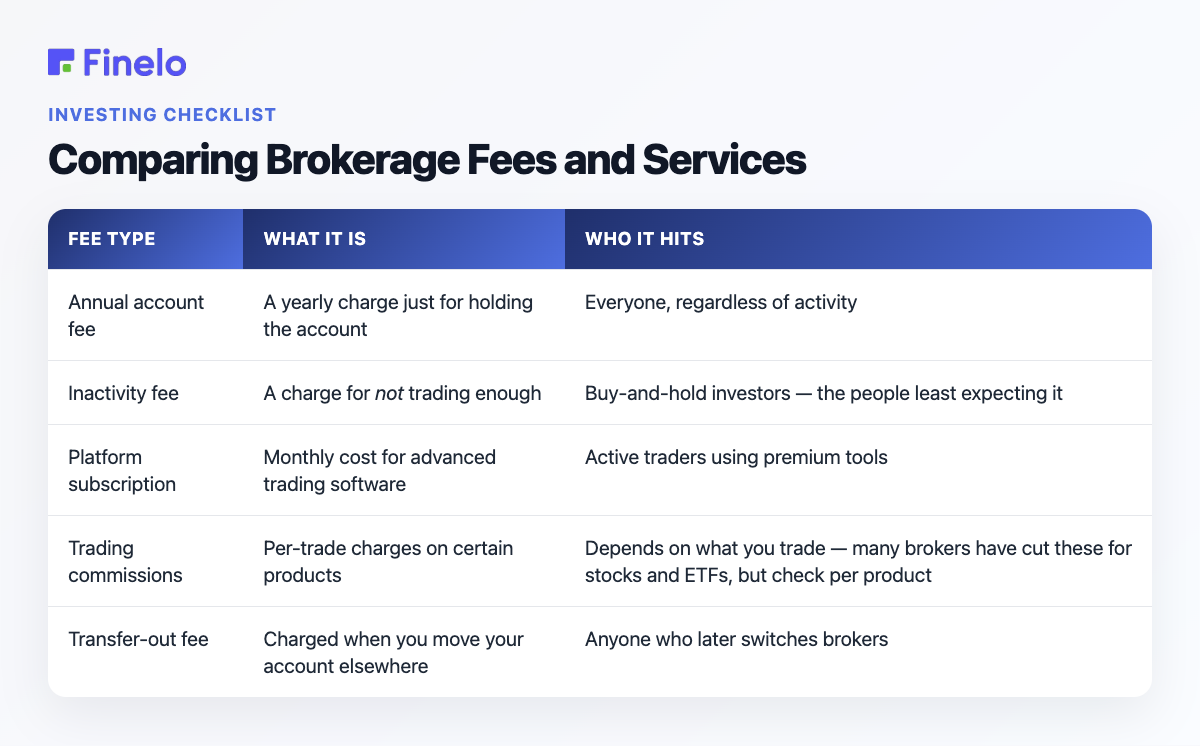
Verify each of these on the official pricing page before opening — fee schedules change, and marketing pages don't always mention the quiet ones.
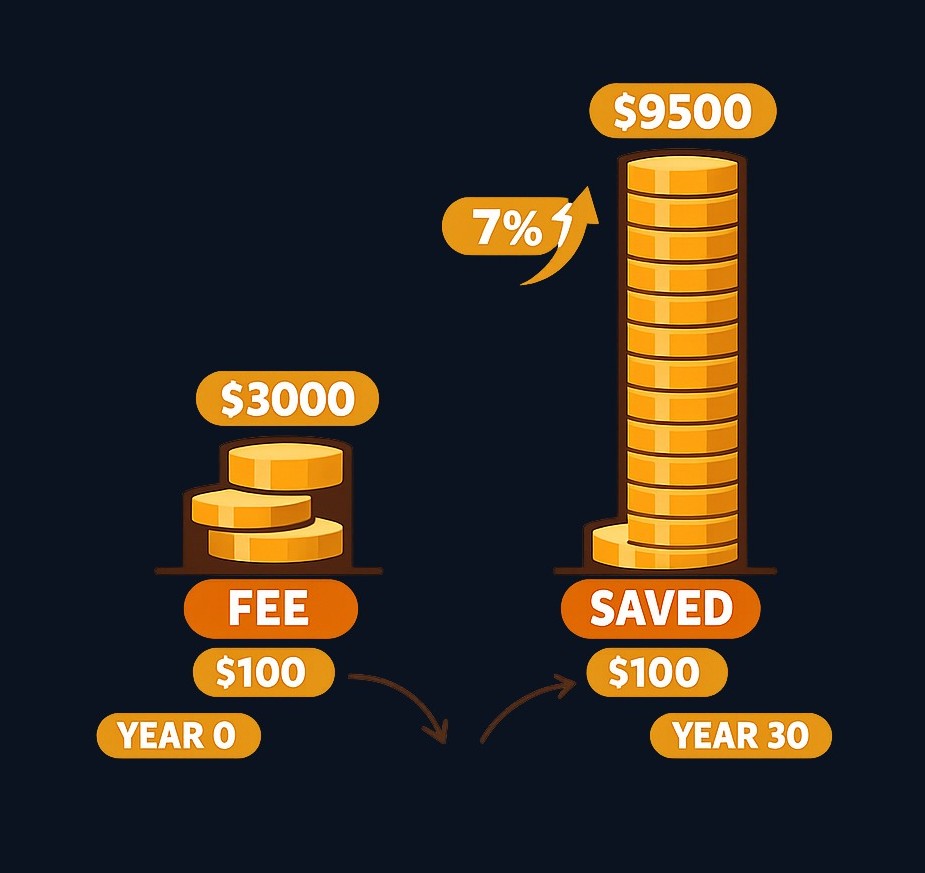
Why small fees matter more than they look: costs compound in reverse. A recurring charge removes money that would otherwise have decades to grow. A simple illustration: $100 a year in avoidable account fees, redirected into investments earning a hypothetical 7% average annual return, would grow to roughly $9,500 over 30 years. The fee doesn't just cost $3,000 over those years — it costs the growth too.
Also weigh fees against services honestly. A broker with strong research tools and educational resources may earn a modest cost if you'll genuinely use them. And treat sign-up promotions with proportion: some brokers offer cash bonuses for deposits, which is pleasant — but a one-time bonus never outweighs a recurring fee or a platform you dislike. Choose the broker you'd pick with no bonus, then take the bonus if it's there.
Common Pitfalls to Avoid
Choosing by advertisement instead of fee schedule. The broker with the loudest marketing isn't necessarily the cheapest for your usage pattern. Read the pricing page — the whole page — before the signup page.
Opening a margin account by default. Some applications nudge you toward margin approval during setup. Borrowed money magnifies losses and adds interest costs. Beginners should choose the cash account deliberately.
Ignoring the inactivity clause. Long-term investors trade rarely — which is exactly the behavior inactivity fees punish. If you plan to buy and hold, this single line in the fee schedule matters more than the commission rate.
Letting a bonus decide. Deposit bonuses are marketing, not a reason to house your life savings somewhere for years. Evaluate the broker as if the bonus were zero.
Skipping the platform test. An interface you find confusing leads to wrong order types, mistyped quantities, and panic during volatile days. Open the app, place a tiny first trade, and confirm you understand every screen before committing serious money.
Verifying nothing about legitimacy. Stick to well-known, regulated brokerages, and confirm registration through your regulator's official databases. If an unfamiliar "broker" reaches you through social media promising exceptional returns, that's a red flag — real brokers don't need to promise outcomes.
Forgetting the exit. Check the transfer-out fee before opening. It's the price of changing your mind, and knowing it keeps you free to leave a broker that deteriorates.
Conclusion and Next Steps
The right brokerage account is the one that matches your money's purpose, charges you nearly nothing to hold it, offers the investments you actually want, and feels clear enough that you'll use it confidently. The working sequence: pick the account type, shortlist two or three brokers, read each fee schedule in full — especially annual, inactivity, and platform charges — test the platforms, then open the winner with a small first deposit.
This guide is educational, not personalized financial advice. Fees, features, and terms change — verify everything on official broker pages before opening an account.
If you want to build the investing knowledge to use that new account well, Finelo's Wealth Growth Quiz matches you with a learning path for your level.
Frequently asked questions
What is a brokerage account?
It's an investment account that lets you buy and hold securities — typically stocks, ETFs, and mutual [funds](https://www.schwab.com/brokerage). The brokerage firm executes trades on your behalf; the investments belong to you.
Can I open a brokerage account online, and what do I need?
Yes — the process is fully online at major [brokers](https://www.schwab.com/brokerage). You'll need identification details, your tax number, and personal, employment, and financial [information](https://www.schwab.com/brokerage), plus a bank account for funding.
What's the difference between a cash account and a margin account?
A cash account invests only the money you deposit. A margin account lets you borrow from the broker against your holdings — amplifying gains, losses, and costs. Beginners are generally better served starting with cash.
Can I open a brokerage account as a complete beginner?
Yes. Brokers with [no minimums](https://www.schwab.com/brokerage) and [educational resources](https://www.nerdwallet.com/investing/best/online-brokers-for-stock-trading) are built for exactly this. Start small, use the learning materials, and let the account grow with your confidence.
InvestingBeginnerGetting StartedMarkets
Practice investing with Finelo
Build practical investing skills with guided lessons, simulator practice, and structured challenges.
About the author
Finelo Team
The Finelo Team creates practical investing and trading education designed to help beginners learn faster with structured challenges, simulator practice, and bite-sized lessons.
Keep reading — Related articles

Investing
Yield to Call vs Yield to Maturity: Assumptions and Bond Risks
Yield to call (YTC) estimates a bond's yield if the issuer redeems it on an eligible call date; yield to maturity (YTM) estimates yield if it remains outstanding to final maturity.
Finelo Team

Investing
Will My Employer Know If I Take a 401(k) Loan?
Who this page is for: readers new to 401(k) loans who want a practical, privacy‑focused explanation — what your employer can see, how to limit visibility, and the financial tradeoffs to weigh.
Finelo Team

Investing
What Medical Expenses Qualify for a 401(k) Hardship Withdrawal?
Before you decide, confirm three things with your plan administrator:
Finelo Team