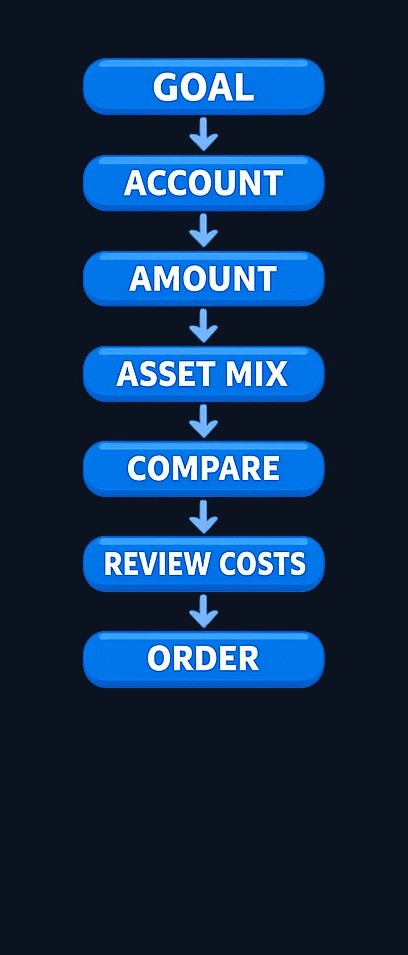
To invest in ETFs as a beginner, define your goal, choose an account, decide how much risk you can handle, compare broad and low-cost ETFs, place your first order carefully, and review the holding on a schedule. Start simple. A broad ETF that matches your timeline is usually easier to understand than a narrow theme.
How to Invest in ETFs for Beginners
To invest in ETFs as a beginner, define your goal, choose an account, decide how much risk you can handle, compare broad and low-cost ETFs, place your first order carefully, and review the holding on a schedule. Start…
10 min read
Practice investing with Finelo
Build practical investing skills with guided lessons, simulator practice, and structured challenges.
Want to learn more?
Build practical investing skills with guided lessons, simulator practice, and structured challenges.
Explore FineloExplore Finelo's 28-day challenges
Turn learning into a daily habit with guided challenge paths.
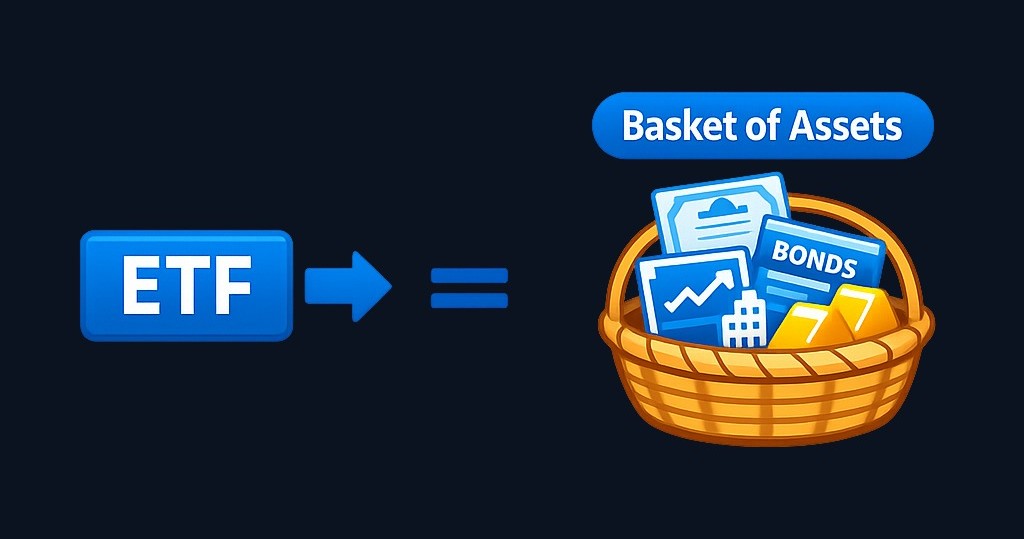
An ETF, or exchange-traded fund, is a fund that trades on an exchange like a stock. Instead of buying one company, you buy a basket of investments through one ticker. That basket may hold stocks, bonds, commodities, or a mix of assets. ETFs can be useful for beginners because they make diversification easier, but they still involve market risk.
ETF Basics for New Investors
Think of an ETF as a container. The container holds many investments, and you buy shares of the container. If the investments inside rise or fall, the ETF's value usually moves with them.
The ticker is the short code you use to find the ETF in a brokerage account. The index or strategy is what the ETF tries to follow. For example, one ETF may track a broad stock market index, while another may focus on bonds, technology companies, dividend stocks, international markets, or a specific sector.
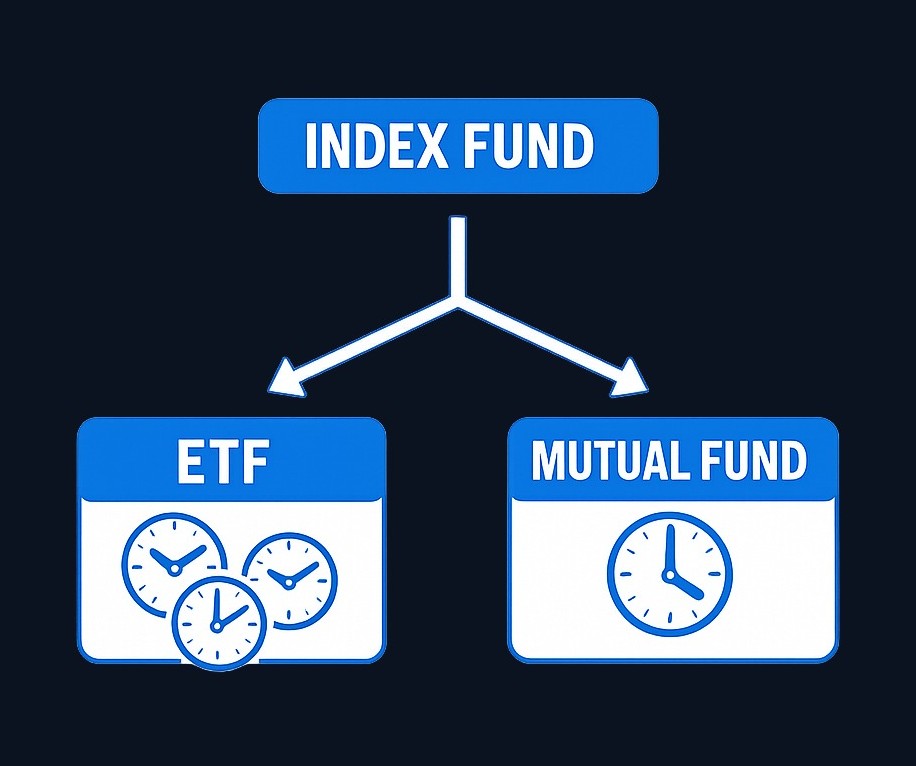
Beginners often confuse ETFs with index funds. An index fund is any fund that tracks an index. It can be structured as an ETF or as a mutual fund. So an ETF can be an index fund, but not every index fund is an ETF.
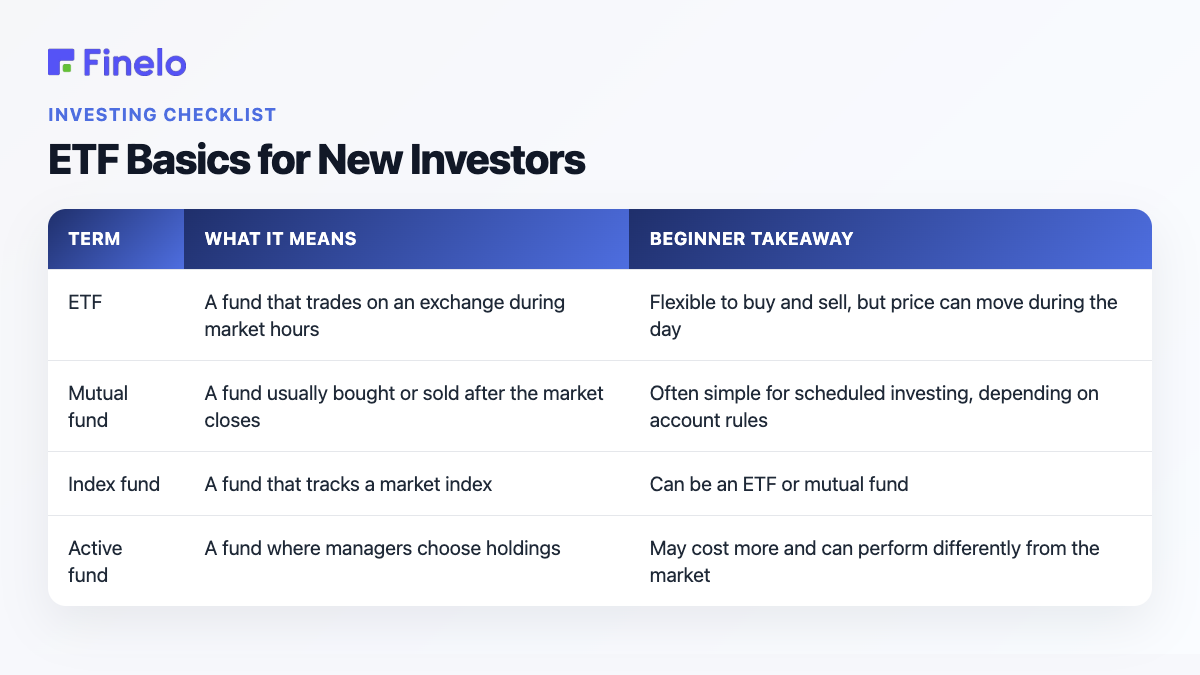
Here is the plain distinction:
| Term | What it means | Beginner takeaway |
|---|---|---|
| ETF | A fund that trades on an exchange during market hours | Flexible to buy and sell, but price can move during the day |
| Mutual fund | A fund usually bought or sold after the market closes | Often simple for scheduled investing, depending on account rules |
| Index fund | A fund that tracks a market index | Can be an ETF or mutual fund |
| Active fund | A fund where managers choose holdings | May cost more and can perform differently from the market |
The best ETF for a beginner is not the most exciting one. It is the one you can explain clearly: what it owns, why it fits your goal, what risks it carries, and when you will review it.
Benefits and Risks of Investing in ETFs
ETFs can help beginners avoid the pressure of picking individual stocks. A single broad-market ETF may spread money across many holdings. That does not remove risk, but it can reduce the damage caused by one company having a bad outcome.
Another benefit is access. ETFs can give exposure to different parts of the market through one trade. A beginner can choose a broad stock ETF, a bond ETF, an international ETF, or a balanced ETF depending on the account and available options.
ETFs can also be transparent compared with many complex products. Fund pages often show holdings, strategy, cost, and performance history. Those details still need careful reading, but the structure gives you a place to start.
The risks matter just as much:
- Market risk: If the market or asset class falls, the ETF can fall too.
- Concentration risk: A thematic ETF may depend heavily on one sector or idea.
- Tracking risk: The ETF may not perfectly match the index or strategy it follows.
- Liquidity risk: Some ETFs may be harder to buy or sell at a fair price during stress.
- Currency risk: International ETFs may be affected by exchange-rate changes.
- Behavior risk: The investor may panic-sell, chase trends, or trade too often.
The last risk is the most personal. ETFs can make investing easier, but they do not make decisions automatic. A calm plan still matters.
How to Start Investing in ETFs
Start with the goal. Are you investing for long-term growth, education, retirement, a future purchase, or general wealth building? The goal shapes the account, timeline, risk level, and ETF type.
Then choose the account. Some people use taxable brokerage accounts. Others use retirement accounts or other tax-advantaged accounts when available. Account rules vary, so verify fees, taxes, contribution rules, and withdrawal limits before you fund anything.
Next, decide how much to invest. Do not begin by asking how much other people invest. Begin with your own cash flow, emergency savings, debt obligations, and timeline. Money needed soon usually should not be exposed to high market volatility.
Use this basic workflow:
- Define the goal and timeline.
- Choose the account type.
- Decide your starting amount and ongoing contribution plan.
- Pick an asset mix, such as stocks, bonds, or a balanced approach.
- Compare ETFs that match that asset mix.
- Read the ETF factsheet and fee information.
- Place a small, careful first order.
- Review on a set schedule instead of reacting daily.
When placing an order, learn the difference between a market order and a limit order. A market order tries to execute quickly at the available price. A limit order lets you set the price you are willing to pay or accept. Beginners should understand this before clicking buy, because order type affects execution.
After buying, write down the reason for the purchase. A simple note is enough: "I bought this ETF because it gives broad exposure to the asset class I want, fits my timeline, and has costs I understand." That note helps you avoid changing the plan just because prices move next week.
Choosing the Right ETFs
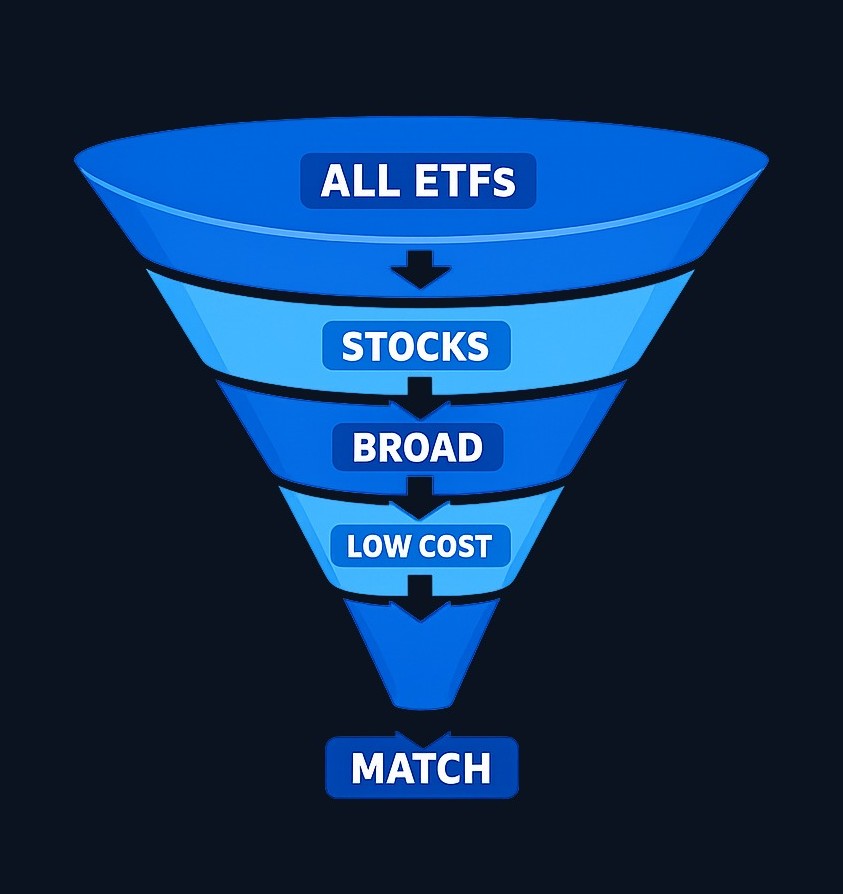
Choosing an ETF is easier when you use filters in the right order. Do not start with past performance. Start with fit.
The first filter is asset class. Does the ETF hold stocks, bonds, commodities, or a mix? A stock ETF may have higher growth potential and higher volatility. A bond ETF may be steadier, but it still carries risk. A balanced ETF may combine different asset types.
The second filter is breadth. Broad ETFs usually spread exposure across many holdings. Narrow ETFs focus on a smaller theme, country, sector, or strategy. Narrow funds can be useful, but they are easier to overuse. Beginners often do better by making broad exposure the core and treating narrow ideas as optional.
The third filter is cost. The expense ratio is the annual fund cost shown as a percentage of assets. Lower cost does not automatically make an ETF better, but high cost needs a clear reason.
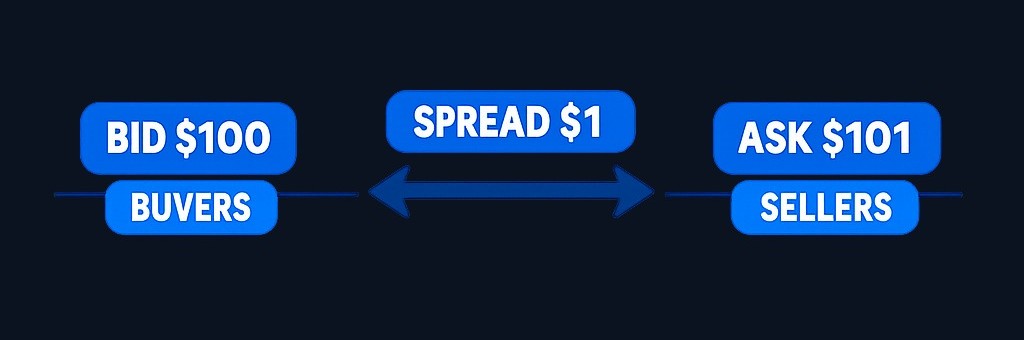
The fourth filter is liquidity. Look at how easy the ETF appears to trade and whether the bid-ask spread is reasonable. The bid is what buyers are offering. The ask is what sellers want. The spread is the gap between them. A wider spread can make trading more expensive.
The fifth filter is holdings. Two ETFs with similar names may hold different assets. Read the top holdings, sector exposure, region exposure, and strategy description before buying.
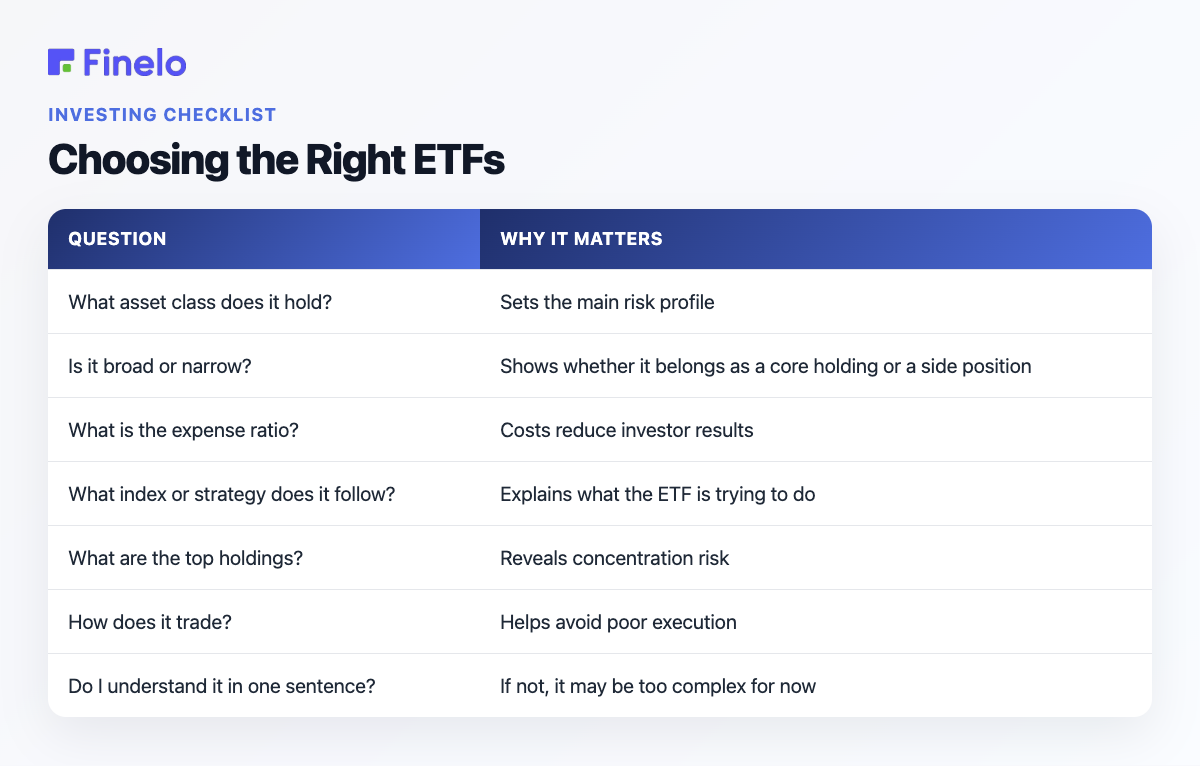
Use this checklist:
| Question | Why it matters |
|---|---|
| What asset class does it hold? | Sets the main risk profile |
| Is it broad or narrow? | Shows whether it belongs as a core holding or a side position |
| What is the expense ratio? | Costs reduce investor results |
| What index or strategy does it follow? | Explains what the ETF is trying to do |
| What are the top holdings? | Reveals concentration risk |
| How does it trade? | Helps avoid poor execution |
| Do I understand it in one sentence? | If not, it may be too complex for now |
A beginner-friendly ETF is not a specific ticker. It is a fund that matches a clear goal, has understandable holdings, reasonable costs, enough trading activity for practical buying and selling, and a risk level the investor can live with.
Practice investing with Finelo
Build practical investing skills with guided lessons, simulator practice, and structured challenges.
ETF Screeners: How to Use Them Without Getting Lost
An ETF screener is a search tool that lets you filter funds by asset class, region, sector, cost, size, strategy, issuer, and other characteristics. Screeners are useful, but they can tempt beginners into over-filtering.
Start with only a few filters:
- Asset class: stock, bond, commodity, or mixed allocation.
- Region: domestic, international, global, or specific country.
- Strategy: broad index, dividend, growth, value, bond maturity, or theme.
- Cost: expense ratio range.
- Fund size and trading activity: practical signs that the ETF is not too obscure.
Then open the ETF's official page or factsheet. The screener is only a shortlist tool. The factsheet is where you check the fund's goal, holdings, risks, and costs.
Avoid using a screener like a slot machine. Sorting by recent performance can push you toward whatever already went up. That may be the wrong reason to buy. A better workflow is: goal first, asset class second, risk third, cost fourth, performance context last.
Here is a practical example. Suppose your goal is long-term investing and you want broad stock exposure. You might filter for stock ETFs, broad market strategy, low expense ratio, and diversified holdings. If the results include narrow sector funds, remove them unless they serve a specific purpose. The point is not to find the flashiest chart. It is to find a fund that does the job you actually need.
ETFs vs. Mutual Funds, Index Funds, and Individual Stocks
ETFs are one tool, not the whole investing universe. A beginner should know how they compare with common alternatives.
| Option | Main strength | Main limitation | Better fit when |
|---|---|---|---|
| ETF | Diversified basket traded during market hours | Price moves during the day and trading behavior matters | You want flexible access to a fund structure |
| Mutual fund | Often simple for recurring contributions | Trading and minimum rules depend on the fund and account | You want a fund structure with less intraday trading focus |
| Index fund | Tracks a defined index | Still rises and falls with the index | You want broad market exposure through an ETF or mutual fund |
| Individual stock | Direct ownership of one company | Company-specific risk is higher | You understand the business and accept concentration |
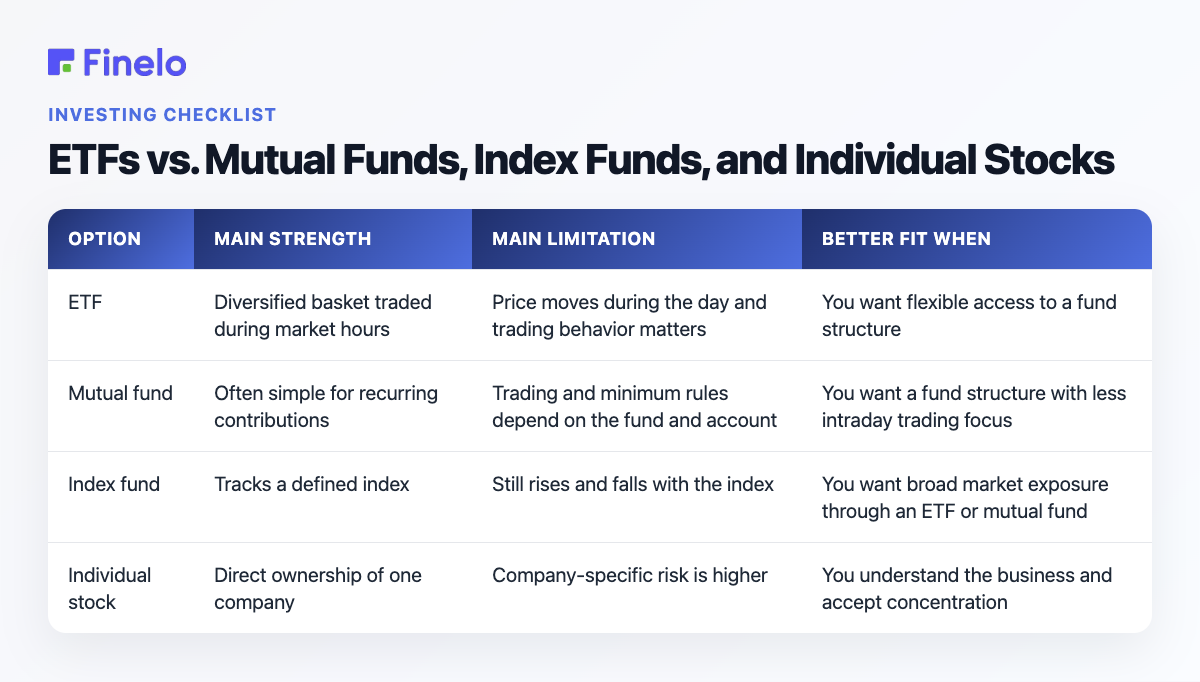
The biggest difference between an ETF and an individual stock is diversification. A stock depends on one company. An ETF depends on the basket it holds. That basket may be broad or narrow, so do not assume every ETF is diversified in a useful way.
The difference between ETFs and mutual funds is often mechanics. ETFs trade during the market day. Mutual funds often process after the close. That can make ETFs feel more flexible, but it can also tempt beginners to watch prices too closely.
The difference between ETFs and index funds is language. An index fund can be either an ETF or a mutual fund. If someone says "buy index funds," they may be talking about a strategy, not a product wrapper.
Common Mistakes to Avoid
The first mistake is buying an ETF because the name sounds familiar. Fund names can be broad, narrow, technical, or marketing-friendly. Always check holdings and strategy.
The second mistake is chasing recent performance. A fund that performed well recently may have done so because its sector, country, or strategy was in favor. That does not mean it fits your goal now.
The third mistake is owning too many overlapping ETFs. If three funds hold many of the same companies, you may not be as diversified as you think. Overlap can quietly concentrate your portfolio.
The fourth mistake is ignoring costs and spreads. Expense ratios, trading costs, and bid-ask spreads all affect results. They are not exciting, but they are part of the real experience.
The fifth mistake is using narrow ETFs as core holdings too early. A technology, energy, crypto-related, or single-country ETF may have a role for some investors, but beginners should understand the risk before making it central.
The sixth mistake is changing the plan during volatility. ETF prices move. If your timeline is long, short-term movement should not automatically force action. If your timeline is short, you may need a less volatile approach before investing.
Conclusion and Next Steps
ETF investing for beginners should be simple: define the goal, choose the account, decide risk level, compare broad and low-cost funds, understand the holdings, place the order carefully, and review on a schedule.
Do not start with the "best ETF" list. Start with your own timeline and risk tolerance. A good ETF is one you understand well enough to hold through normal market movement.
If you want to build investing knowledge before making real-money decisions, Finelo's AI Investing Challenge is positioned around long-term investing research, portfolio construction, diversification, patience, and AI-assisted thesis building. Use education as preparation, then verify costs, risks, and account rules before investing.
Frequently asked questions
What is an ETF?
An ETF is a fund that trades on an exchange like a stock. It usually holds a basket of investments, such as stocks, bonds, commodities, or a mix.
How much money do I need to start investing in ETFs?
That depends on the brokerage, account rules, ETF price, and whether fractional shares are available. Start with an amount that fits your budget and does not interfere with emergency savings or near-term needs.
Are ETFs risky?
Yes. ETFs can rise or fall based on the assets they hold. Broad ETFs may reduce single-company risk, but they still carry market risk, and narrow ETFs can be much more volatile.
Can I invest in ETFs through a retirement account?
Many retirement accounts may offer access to ETFs, but availability depends on the account provider and rules. Check the account's investment menu, fees, trading rules, and tax treatment before buying.
InvestingBeginnerETFsMarkets
Practice investing with Finelo
Build practical investing skills with guided lessons, simulator practice, and structured challenges.
About the author
Finelo Team
The Finelo Team creates practical investing and trading education designed to help beginners learn faster with structured challenges, simulator practice, and bite-sized lessons.
Keep reading — Related articles
Investing
Yield to Call vs Yield to Maturity: Assumptions and Bond Risks
Yield to call (YTC) estimates a bond's yield if the issuer redeems it on an eligible call date; yield to maturity (YTM) estimates yield if it remains outstanding to final maturity.
Finelo Team
Investing
Will My Employer Know If I Take a 401(k) Loan?
Who this page is for: readers new to 401(k) loans who want a practical, privacy‑focused explanation — what your employer can see, how to limit visibility, and the financial tradeoffs to weigh.
Finelo Team
Investing
What Medical Expenses Qualify for a 401(k) Hardship Withdrawal?
Before you decide, confirm three things with your plan administrator:
Finelo Team


