A step-by-step beginner guide to index funds: what they are, how ETFs and mutual funds differ, how to evaluate costs and risks, and how to start carefully.
•14 min read
Practice investing with Finelo
Build practical investing skills with guided lessons, simulator practice, and structured challenges.
To invest in index funds as a beginner, start by choosing a goal, opening an appropriate investment account, comparing low-cost index mutual funds or index ETFs, and investing an amount you can leave alone for the long term. A simple beginner path is: build an emergency cushion first, decide whether you are investing for retirement or another long-term goal, choose a broad-market index fund, review the fees and risks, then set up recurring contributions if that fits your budget.
Explore Finelo's 28-day challenges
Turn learning into a daily habit with guided challenge paths.
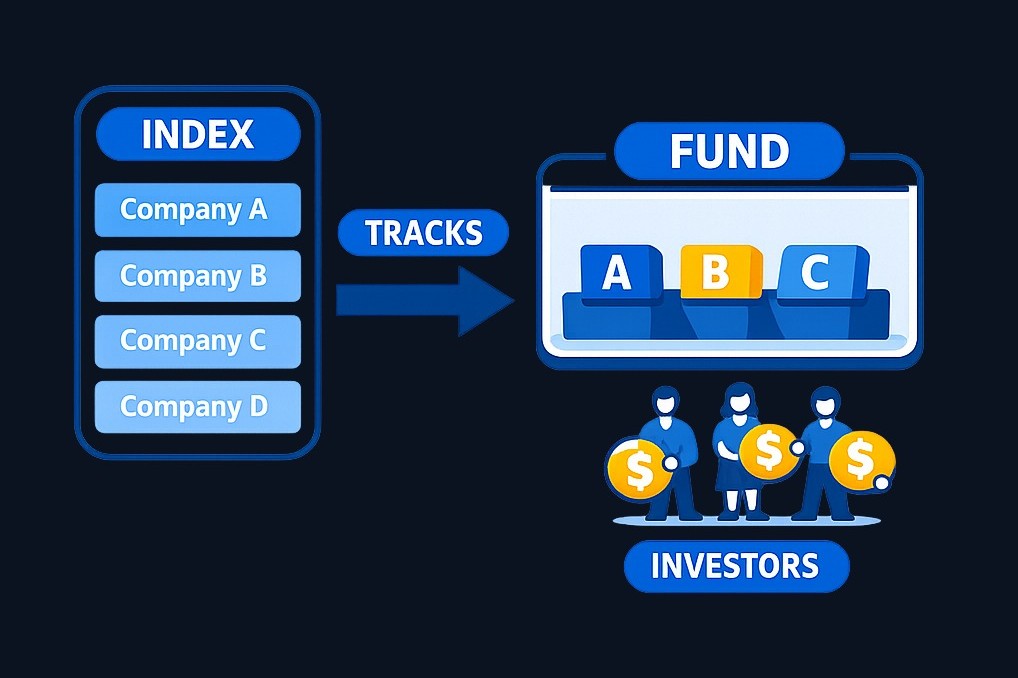
An index fund is a pooled investment that aims to track a market index, such as a broad stock market benchmark. Instead of trying to pick individual winning stocks, the fund holds many securities designed to mirror the index’s performance. You cannot invest directly in an index itself; you invest through a fund or ETF that seeks to track it.
An index fund pools investor money to hold many securities that mirror a market benchmark. You invest in the fund, which tracks the
This guide is for beginners who want to understand index funds before buying anything. It is educational, not financial advice. Before making investment decisions, verify costs, tax treatment, risk, and suitability for your situation, and consider speaking with a qualified financial professional if you need personalized guidance.
If you are still learning the basics, you can also explore Finelo’s investing education resources and practice-oriented learning tools before putting real money at risk.
What to know before deciding
Index funds are popular with many long-term investors because they can offer broad diversification, relatively low costs, and a passive investing approach. Instead of researching individual companies one by one, you can use one fund to gain exposure to a segment of the market, such as large U.S. companies, total U.S. stocks, international stocks, or bonds.
That simplicity does not mean index funds are risk-free. If the market segment tracked by the index falls, the fund can fall too. A stock index fund can lose value during recessions, rate shocks, valuation resets, or broad market selloffs. A bond index fund can also decline, especially when interest rates move sharply.
The right index fund depends on your goal, time horizon, account type, and comfort with volatility. A 25-year-old investing for retirement may approach risk differently than someone saving for a home down payment in three years. The shorter your timeline, the more careful you generally need to be about market swings.
Before you start, it helps to separate three decisions that beginners often blend together: where you invest, what you invest in, and how much you invest. The account is the “container,” such as a taxable brokerage account or retirement account. The index fund is the investment inside the account. Your contribution amount is your cash-flow decision, which should fit your budget and emergency needs.
Introduction to index funds
An index fund is designed to follow a specific benchmark rather than outperform it through active stock picking. For example, a fund might aim to track a broad U.S. stock index, an international stock index, a bond index, or a sector index. The fund manager’s job is typically to keep the fund aligned with that benchmark, not to make frequent bets on individual securities.
This is why index funds are often associated with passive investing. “Passive” does not mean you never make decisions. It means the fund’s strategy usually follows a rules-based index instead of relying on a manager to decide which securities should win. That structure can reduce trading activity and, in many cases, lower operating costs compared with actively managed funds.
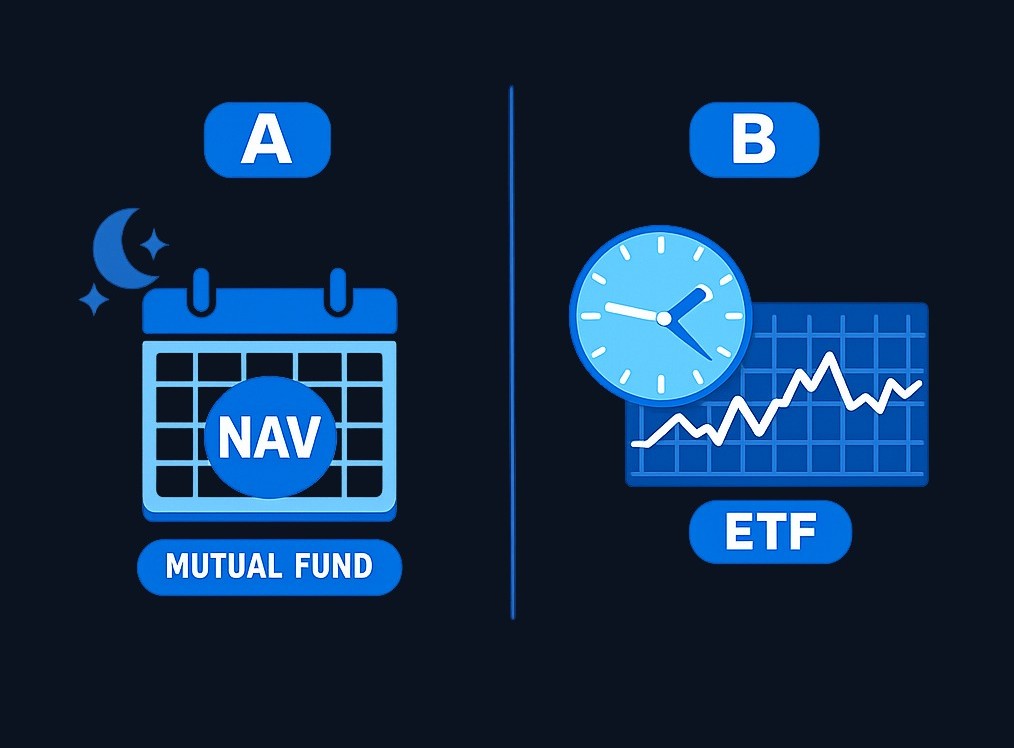
Index funds can be packaged as mutual funds or exchange-traded funds, commonly called ETFs. Index mutual funds are usually bought and sold through a fund company or brokerage at the end-of-day net asset value. Index ETFs trade on an exchange during market hours, more like stocks. Both can be reasonable for beginners, but the buying mechanics, minimum investments, trading flexibility, and tax details may differ.
Index mutual funds trade once per day at the net asset value set after market close. Index ETFs trade throughout the day on an
The core idea is straightforward: instead of trying to predict which company will outperform, you buy exposure to a basket of companies or bonds. That basket may include hundreds or thousands of holdings depending on the index. Diversification can reduce the risk tied to any single company, but it cannot eliminate market risk.
Why beginners often consider index funds
Many beginners are drawn to index funds because they reduce the number of decisions required to get started. Picking individual stocks requires researching financial statements, valuation, industry trends, competitive position, and timing. A broad index fund shifts the focus from “Which stock should I buy?” to “Which market segment fits my goal and risk tolerance?”
Costs are another major reason index funds receive attention. Expense ratios vary, but many index funds are structured to be lower-cost than comparable actively managed strategies. Lower costs do not guarantee better results, but fees are one of the few variables investors can compare before investing.
Diversification is also important. A total market index fund may hold shares across many sectors, while an S&P 500-style fund focuses on large U.S. companies. International index funds can add exposure outside the U.S., while bond index funds can change the risk profile of a portfolio. The mix matters because each type of fund behaves differently in different market conditions.
For beginners, the biggest advantage may be behavioral. A simple index fund strategy can make it easier to stay consistent, avoid overtrading, and focus on long-term goals. That said, staying invested through downturns is emotionally harder than it sounds, so your plan should be realistic before you invest.
How to start investing in index funds
The first step is to define the purpose of the money. Are you investing for retirement, a child’s future education, long-term wealth building, or a goal more than five to ten years away? Index funds are often discussed in a long-term context because stock markets can be volatile over shorter periods.
Next, decide what type of account you need. A retirement account may offer tax advantages, depending on your country and eligibility, while a taxable brokerage account may offer more flexibility. Account rules, contribution limits, withdrawals, and tax treatment vary, so verify current requirements before opening one.
Once the account is open, compare funds available on your platform. Look at the index tracked, expense ratio, holdings, asset class, fund size, trading costs, minimum investment, and whether the fund is an ETF or mutual fund. Do not choose based only on a popular ticker or a recent performance chart. Recent performance can reverse, and a fund should fit your plan rather than a trend.
After selecting a fund, choose an initial contribution amount that does not strain your budget. Many beginners prefer recurring contributions because they remove some timing pressure and turn investing into a habit. Recurring investing does not prevent losses, but it can help you avoid making every decision based on market headlines.
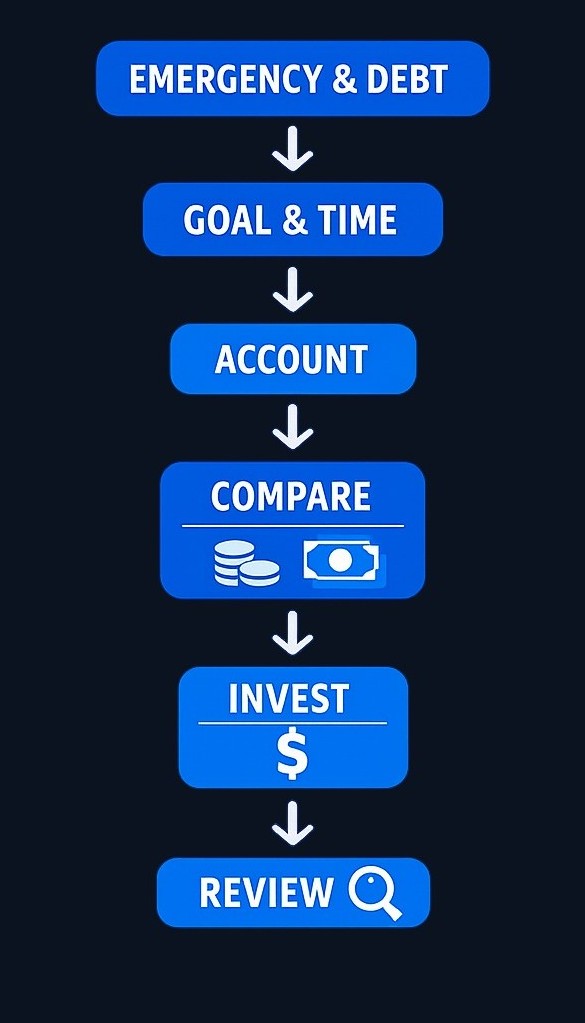
A beginner-friendly sequence might look like this:
Confirm you have handled urgent financial priorities, such as high-interest debt or emergency savings.
Pick a goal and time horizon.
Choose the account type that fits that goal.
Compare broad index funds by fees, index, holdings, and risk.
Start with an amount you can keep invested.
Review periodically, without reacting to every market move.
A practical beginner investing sequence: secure emergency savings and handle urgent debt first, define your goal and timeline, select the appropriate account type, compare low-cost broad index funds, invest an amount you can leave untouched, and review periodically without overreacting to market noise.
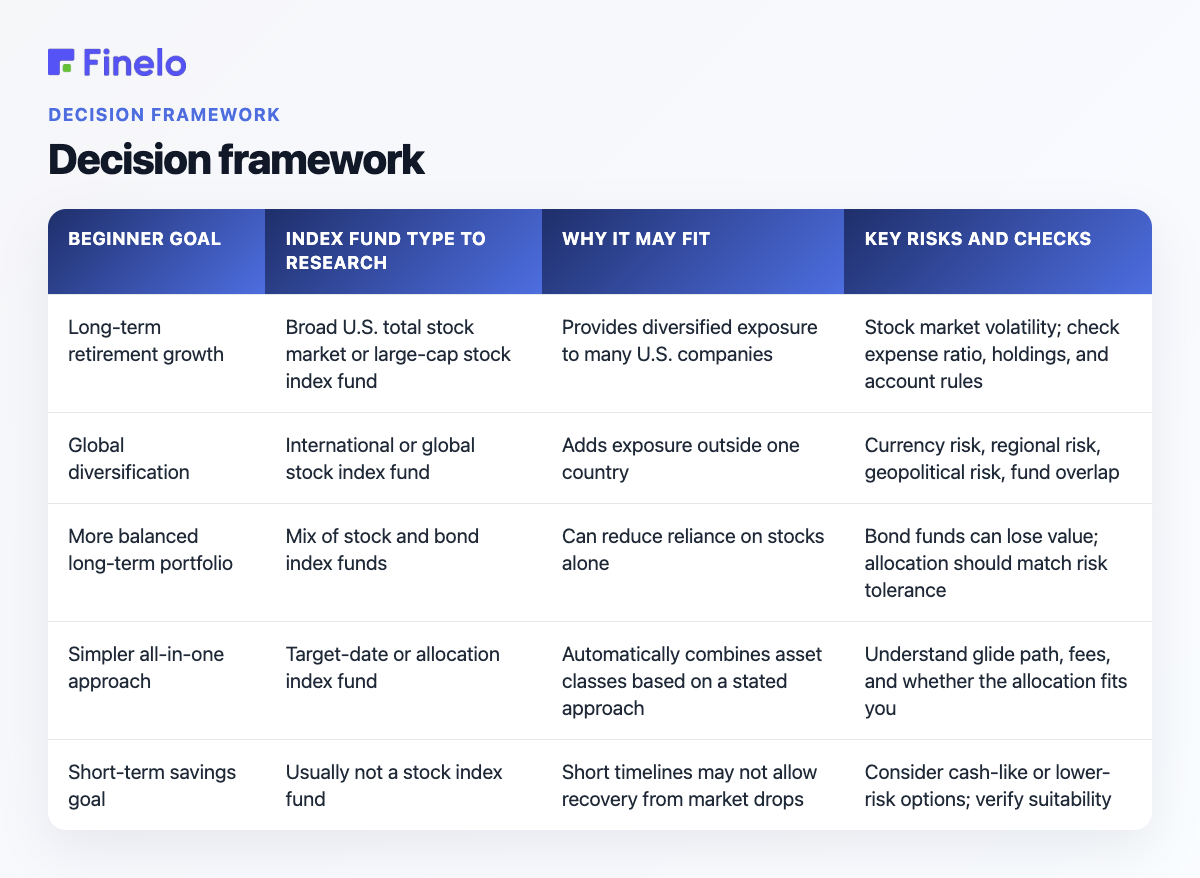
Decision framework
A good index fund for beginners is usually not the most exciting fund. It is often the one you understand, can afford, and can hold through normal market ups and downs. The table below maps common beginner goals to fund types worth researching. It is not a recommendation to buy any specific fund.
Beginner goal
Index fund type to research
Why it may fit
Key risks and checks
Long-term retirement growth
Broad U.S. total stock market or large-cap stock index fund
Provides diversified exposure to many U.S. companies
Stock market volatility; check expense ratio, holdings, and account rules
Global diversification
International or global stock index fund
Adds exposure outside one country
Currency risk, regional risk, geopolitical risk, fund overlap
More balanced long-term portfolio
Mix of stock and bond index funds
Can reduce reliance on stocks alone
Bond funds can lose value; allocation should match risk tolerance
Simpler all-in-one approach
Target-date or allocation index fund
Automatically combines asset classes based on a stated approach
Understand glide path, fees, and whether the allocation fits you
Short-term savings goal
Usually not a stock index fund
Short timelines may not allow recovery from market drops
Consider cash-like or lower-risk options; verify suitability
Reference table from this guide — Decision framework.
This framework is meant to slow the decision down. Beginners often search for “good index funds for beginners” and expect a list of tickers. A better first question is: “Good for what goal, account, timeline, and risk level?”
If you do compare specific funds, compare similar funds against each other. A U.S. large-cap stock index fund should not be judged the same way as an international small-cap fund or a bond fund. They track different markets and carry different risks.
Practice investing with Finelo
Build practical investing skills with guided lessons, simulator practice, and structured challenges.
The most useful evaluation starts with the fund’s objective. Read what index it tracks and what the index includes. A fund that tracks large U.S. companies will not behave the same as one focused on emerging markets, technology stocks, small companies, or bonds.
Then check the expense ratio. This is the annual operating cost expressed as a percentage of assets. A lower expense ratio can be helpful, but it should not be the only factor. Also look for transaction fees, bid-ask spreads for ETFs, account fees, and any platform-specific costs.
Tracking difference is another important concept. An index fund aims to follow an index, but its return may differ because of fees, cash drag, sampling methods, taxes, and trading costs. Beginners do not need to become fund analysts, but they should understand that “tracks an index” does not mean “matches perfectly every day.”
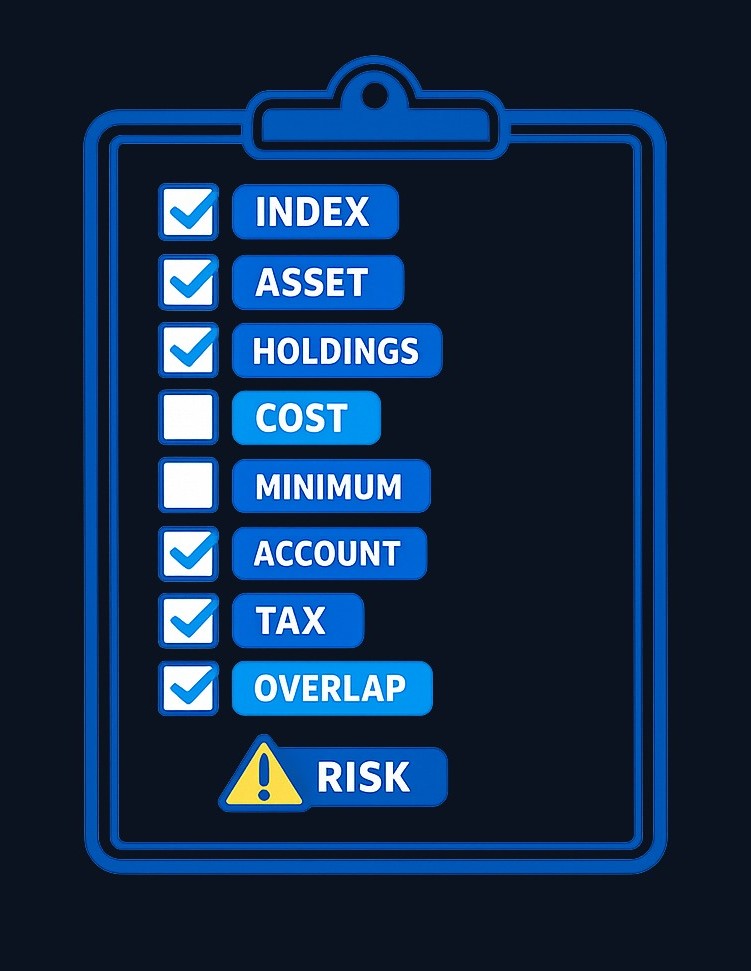
Use this checklist before investing:
Index: Do you understand what market the fund tracks?
Asset class: Is it stocks, bonds, or a mix?
Diversification: How many holdings does it have, and is it concentrated in a few companies or sectors?
Expense ratio: Are ongoing costs competitive for that fund category?
Minimum investment: Can you start with your intended amount?
Account fit: Is it available in your brokerage or retirement account?
Tax considerations: Could dividends, capital gains, or account type affect you?
Risk level: Could you stay invested if the fund dropped significantly?
Overlap: If you own multiple funds, are they duplicating the same holdings?
Before investing, evaluate the index tracked, asset class, number of holdings, expense ratio, minimum investment, account compatibility, tax implications, your ability to handle volatility, and overlap with other funds you own. Passing this checklist reduces avoidable mistakes
A fund can pass this checklist and still lose money. The checklist helps you avoid avoidable mistakes; it does not remove investment risk.
Worked example: choosing a simple starting point
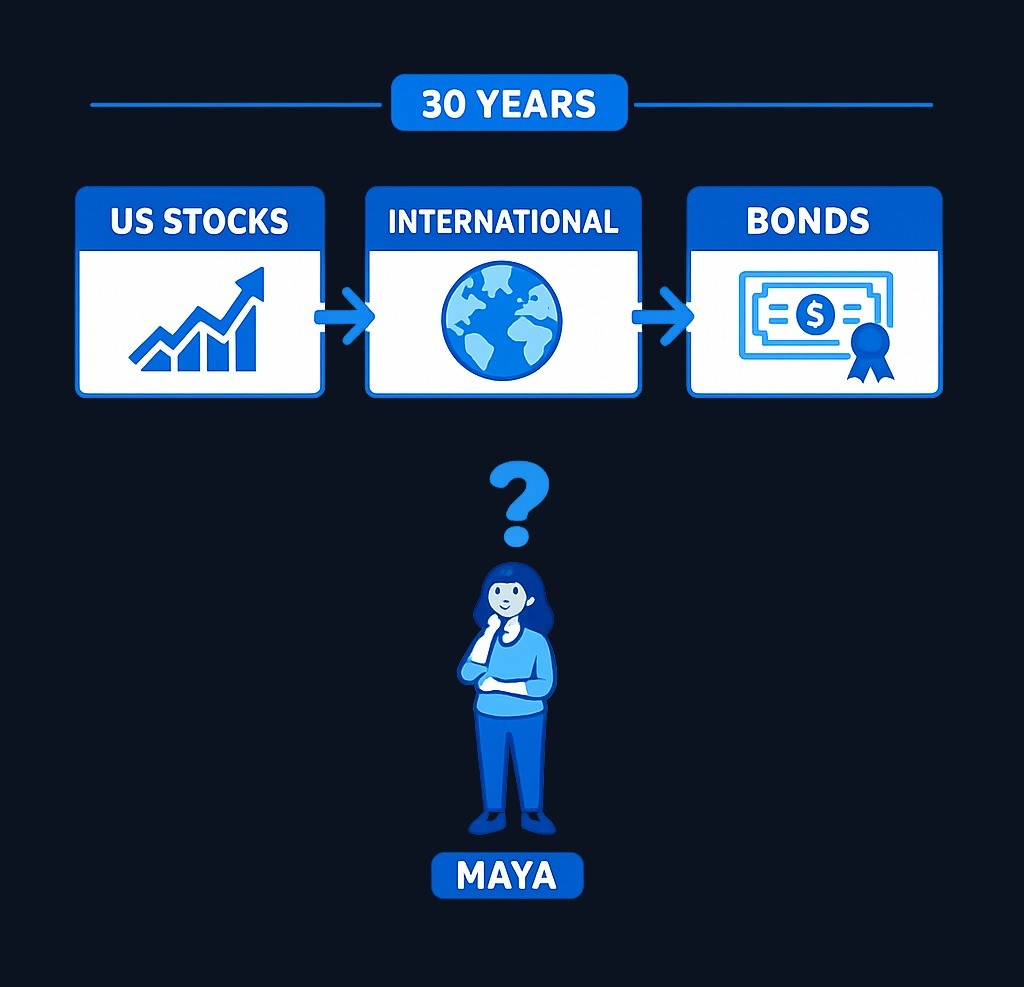
Imagine a beginner named Maya who wants to invest for retirement over the next 30 years. She has an emergency fund, no urgent high-interest debt, and a monthly amount she can invest without relying on it for near-term expenses. She is not trying to trade actively or pick individual stocks.
Maya first chooses the account type that fits her retirement goal and eligibility. She reviews the rules, contribution limits, and tax treatment before opening the account. Then she looks for broad index funds available through that account.
She compares three options: a total U.S. stock market index fund, an international stock index fund, and a bond index fund. Instead of asking which one “will do best,” she asks how each one would behave in her portfolio. The U.S. stock fund may provide domestic equity exposure, the international fund may broaden geographic exposure, and the bond fund may change volatility and income characteristics.
Maya compares three fund types for her 30-year retirement goal: a U.S. stock index fund for domestic equity exposure, an international
Maya decides to keep learning before choosing her final allocation. She uses educational resources, reviews fund prospectuses, and practices reading market information without placing trades impulsively. For readers who want a learning step before investing real money, Finelo’s app and investing education pages may be useful places to continue.
Common mistakes to avoid
One common mistake is chasing the index fund with the highest recent return. A fund that performed well last year may have benefited from a specific sector, country, or market cycle. If you buy only because a chart looks strong, you may be taking on risk you do not understand.
Another mistake is assuming all index funds are broadly diversified. Some index funds track narrow sectors, themes, factors, or slices of the market. A technology-sector index fund, for example, can be much more concentrated than a total market fund. The word “index” describes the tracking method, not the level of safety.
Beginners also sometimes buy too many funds that hold the same underlying companies. Owning five different large-cap index funds may feel diversified, but the holdings could overlap heavily. Diversification comes from exposure to different asset classes, regions, company sizes, or strategies—not just a larger number of tickers.
Finally, avoid investing money you may need soon. If a fund drops and you must sell to pay for a near-term expense, your timeline can turn temporary volatility into a permanent loss. Matching the investment to the goal is one of the most practical forms of risk management.
Related investing topics beginners should understand
Index funds sit inside a broader investing foundation. Before choosing specific funds, it helps to understand ETFs, mutual funds, passive investing, asset allocation, and the difference between stock and bond risk. These topics are connected, and learning them together can make fund selection less confusing.
ETFs for beginners are especially relevant because many index funds are offered as ETFs. ETFs can be convenient and flexible, but they trade during the day, which can tempt some investors to overtrade. Mutual funds may feel simpler for automatic investing, depending on the platform and account.
It is also worth learning how market performance differs from personal performance. A market index may rise over a long period, but an individual investor’s result depends on when they invest, when they sell, what fees they pay, and whether they stay consistent during downturns.
To keep learning, you can explore:
Finelo app for investing education and practice-oriented learning.
Finelo reviews if you want to understand user feedback and product context.
About Finelo for company and education-product background.
Finelo pricing if you are comparing plans or subscription details.
Next steps
Index funds can be a practical starting point for beginners because they combine diversification, simplicity, and a long-term investing framework. The key is not to rush into the first fund you see. Start with your goal, choose the right account, compare costs and risks, and make sure you understand what the fund actually tracks.
If you are not ready to invest real money yet, continue learning first. Explore Finelo’s investing education resources, practice reading fund information, and build confidence with the basics before making decisions.
Frequently asked questions
What is the easiest way to invest in index funds as a beginner?
The easiest general path is to open an investment account, choose a broad index mutual fund or ETF, review the costs and risks, and start with an amount that fits your budget. Many beginners prefer broad-market funds because they avoid picking individual stocks. The exact account and fund should depend on your goal, location, tax situation, and risk tolerance.
Are index funds good for beginners?
Index funds can be beginner-friendly because they are usually easier to understand than individual stock picking and can provide diversified market exposure. However, “beginner-friendly” does not mean risk-free. Stock index funds can decline significantly, and you should understand what the fund tracks before investing.
What are good index funds for beginners?
Good index funds for beginners are typically low-cost, diversified, easy to understand, and aligned with a long-term goal. Rather than starting with a ticker list, compare broad market funds, international funds, bond funds, or target-date index funds based on your timeline and risk tolerance. Always review the fund prospectus and current fees before buying.
Should I choose an index ETF or an index mutual fund?
Both can work. Index ETFs trade during the day like stocks, while index mutual funds usually trade at the end of the day at net asset value. ETFs may offer flexibility and low minimums, while mutual funds may be convenient for automatic investing depending on the platform. Compare costs, trading mechanics, minimums, and account availability.
Can I lose money in index funds?
Yes. Index funds can lose value when the market or asset class they track declines. Diversification can reduce company-specific risk, but it does not eliminate market risk. You should only invest money that matches your time horizon and ability to handle volatility.
How much money do I need to start?
The minimum depends on the brokerage, account type, and fund. Some ETFs can be purchased as whole or fractional shares on certain platforms, while some mutual funds have minimum investment requirements. Verify current minimums and fees directly with the brokerage or fund provider before opening an account.
Do index funds pay dividends?
Many stock and bond index funds may distribute dividends or interest income, depending on their holdings and structure. The amount and tax treatment can vary by fund and account type. Review the fund documents and consult a tax professional if you need guidance for your situation.
How often should I check my index funds?
Checking too often can lead to emotional decisions, especially during volatile markets. Many long-term investors review periodically, such as quarterly or annually, to confirm their allocation still fits their goals. The right cadence depends on your plan, but reacting to daily market moves is rarely a strong beginner strategy.
The Finelo Team creates practical investing and trading education designed to help beginners learn faster with structured challenges, simulator practice, and bite-sized lessons.