How to Start Investing as a Beginner: Your Essential Guide
A practical first-investing roadmap for beginners: set goals, understand investment types, choose an account, avoid common mistakes, and learn before risking money.
•14 min read
Practice investing with Finelo
Build practical investing skills with guided lessons, simulator practice, and structured challenges.
To start investing as a beginner, first make sure your basic finances are stable, then define your goal, choose an investment account, learn the main investment types, decide how much risk you can tolerate, and start with a simple, diversified approach. The best first step is not picking a “hot” stock; it is building a repeatable process you understand.
Explore Finelo's 28-day challenges
Turn learning into a daily habit with guided challenge paths.
This guide is for people who are new to investing in 2026 and want a clear, education-first roadmap before putting money into the market. It is not financial advice, and it does not recommend a specific stock, fund, account provider, or strategy for your personal situation. Before investing, verify costs, tax treatment, risk, and suitability with official sources or a qualified professional.
If you want to keep learning before using real money, you can explore Finelo’s investing education resources and app experience here: Finelo home, Finelo app, and Finelo reviews. Finelo is an investment learning and financial education product.
What to know before deciding
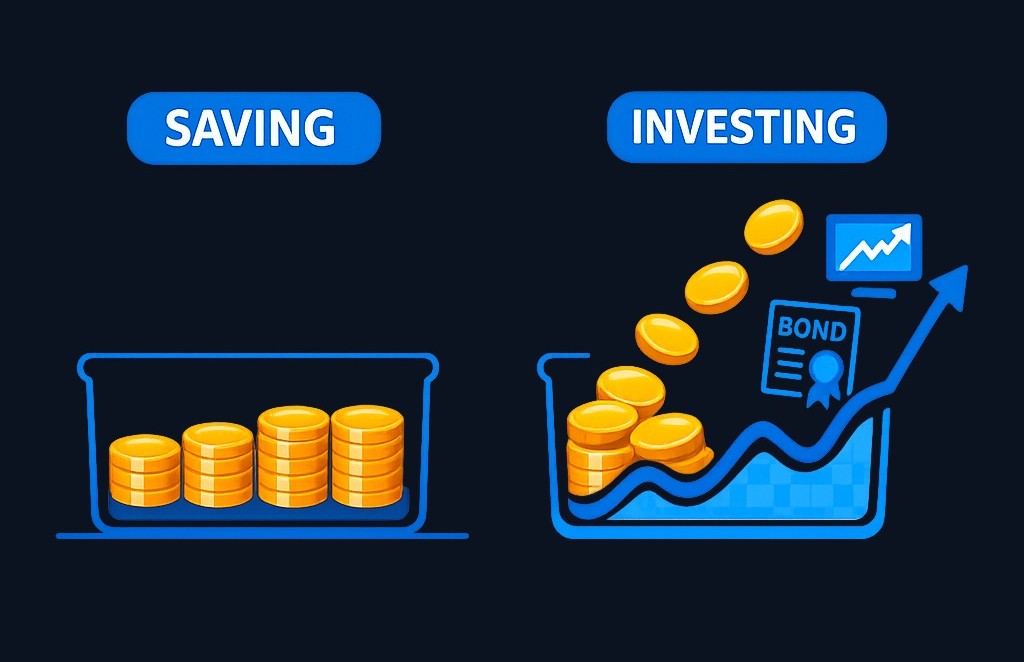
Investing means putting money into assets—such as stocks, bonds, funds, or other securities—with the goal of participating in potential long-term growth, income, or both. Unlike saving, investing involves market risk: the value of what you own can rise or fall, sometimes sharply. That is why beginners should understand the basics before deciding where to put their first dollar.
Investing connects your money to market assets like stocks, bonds, and funds, exposing it to potential growth and risk over time—unlike saving, which prioritizes stability.
A useful way to think about investing is that it connects your money to time. Short-term money, such as rent, emergency savings, or a bill due soon, usually should not be exposed to high market volatility. Longer-term money, such as retirement savings or a future wealth-building goal, may have more time to recover from downturns, though losses are still possible.
Before you open an account or buy your first investment, answer three questions: What is this money for? When might you need it? How would you react if the value dropped? These questions shape the type of account, the mix of investments, and the level of risk that may be appropriate to research further.
Here is a simple beginner checklist to complete before you invest:
Confirm your cash cushion. Keep money for near-term needs separate from investments, since market values can fluctuate.
Understand your debt picture. High-interest debt may affect whether investing now makes sense for you.
Set one clear goal. “Invest for retirement in 30 years” leads to a different plan than “save for a home in 3 years.”
Know the costs. Look for account fees, fund expense ratios, trading fees, spreads, and advisory costs.
Read the risk disclosures. Every platform and investment product should explain the main risks before you buy.
These steps may feel slower than simply choosing an investment app and buying something immediately, but they can save you from expensive mistakes later.
Understanding the main investment types
Beginners often hear words like stocks, ETFs, bonds, mutual funds, and brokerage account all at once. The terms sound technical, but the basic categories are manageable once you separate “what you buy” from “where you hold it.” An investment account is the container; the investments are the assets inside it.
No investment type is automatically “best” for every beginner. The right starting point depends on your timeline, risk tolerance, costs, tax situation, and whether you want to learn actively or keep things simple. A broad fund, for example, may offer built-in diversification, while an individual stock requires more research into one company’s business, valuation, risks, and market expectations.
The table below is a beginner-friendly overview, not a recommendation. Risk levels are general and can vary by product, market conditions, and how concentrated your portfolio is.
Investment type
What it is
Common beginner use
General risk level
What to research before buying
Stocks
Shares of ownership in individual companies
Learning how companies and markets work; long-term growth exposure
Medium to high
Company financials, valuation, industry risk, volatility
Bonds
Loans to governments, municipalities, or companies
Income, diversification, lower volatility than many stocks
Low to medium, depending on issuer and duration
Credit risk, interest-rate risk, maturity, yield
ETFs
Funds traded on exchanges, often holding many assets
Diversified exposure to stocks, bonds, sectors, or indexes
Pooled funds that may be actively or passively managed
Diversified portfolios, retirement accounts
Low to high, depending on holdings
Fees, minimums, manager strategy, turnover
Cash-like investments
Savings, money market funds, or similar options
Short-term goals and emergency reserves
Lower market risk, but inflation risk may apply
Yield, insurance/coverage, liquidity, fees
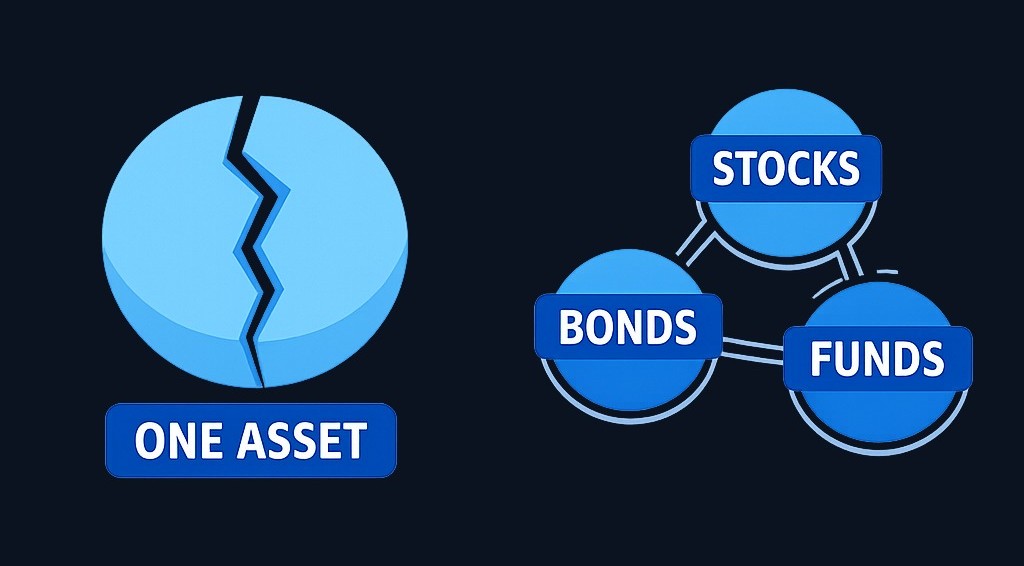
When you hear people say beginners should “start with the market,” they often mean learning about broad market exposure rather than trying to predict one stock. Broad exposure can reduce the impact of any single company performing poorly, though it does not remove market risk. Diversification is a risk-management concept, not a guarantee against losses.
Diversification spreads your investment across multiple assets, reducing the impact of any single asset's poor performance—though market-wide risk remains.
Setting your investment goals
A beginner investing plan starts with the goal, not the product. If you know why you are investing, you can make better decisions about account type, asset mix, and how much volatility you may be able to tolerate. Without a goal, every market move can feel like a signal to change course.
Your time horizon matters. Money you may need in the next year has a very different risk profile from money you do not expect to use for decades. A short timeline gives you less room to recover from a market decline, while a longer timeline may allow you to consider more growth-oriented investments after researching the risks.
Use this goal-setting checklist before opening an account:
Goal name: What is the money for—retirement, education, a home, long-term wealth building, or general learning?
Time horizon: When might you need the money?
Starting amount: How much can you invest without affecting essential expenses?
Contribution plan: Can you invest monthly, quarterly, or only occasionally?
Risk comfort: What level of temporary loss would make you panic or sell?
Learning plan: What do you need to understand before making your first investment?
A practical beginner goal might be: “I want to learn long-term investing and begin with a small monthly amount that I can afford to leave invested for several years.” That goal is more useful than “I want to make money fast,” because it encourages patience, education, and risk awareness.
How to choose an investment account
Once you know your goal, you can decide what type of investment account to research. A brokerage account is often used for general investing and may offer flexibility, while retirement accounts may offer tax advantages but come with rules, limits, and restrictions. Tax treatment varies by country and account type, so verify current rules before making decisions.
The account is important because it affects access, taxes, fees, investment choices, and sometimes withdrawal rules. A beginner should not choose an account only because an app looks simple. The better question is whether the account matches the purpose of the money.
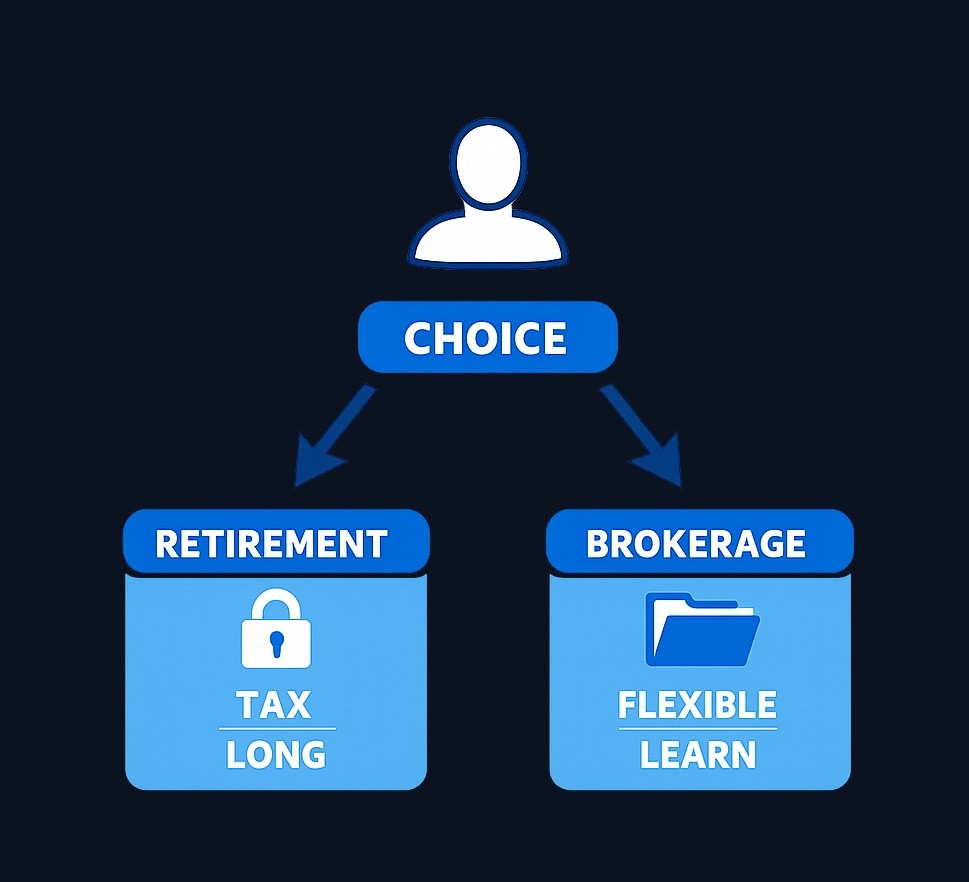
Consider this scenario. Maya is 27, has an emergency fund, and wants to invest for retirement while also learning how the stock market works. She might research a retirement account for long-term savings and a taxable brokerage account for flexible learning, comparing fees, investment choices, tax treatment, and platform education tools. If she is unsure, she can practice concepts first with educational material or a simulator-style environment before committing real money.
Maya's approach: she researches a retirement account for long-term tax-advantaged savings and a taxable brokerage account for flexible learning and shorter-term goals, comparing features before deciding.
When comparing accounts and platforms, look at:
Fees and minimums: Account fees, fund costs, transaction charges, and minimum deposits.
Investment menu: Whether the platform offers the assets you want to research, such as ETFs, mutual funds, stocks, or bonds.
Education and tools: Clear explanations, risk information, and practice features can help beginners learn.
Support and access: Make sure you can log in, get help, and understand how to manage the account.
Security basics: Review account protection, authentication options, and official platform policies.
For Finelo-specific account, pricing, or support questions, use official pages rather than third-party summaries: pricing, login, and support.
Decision framework
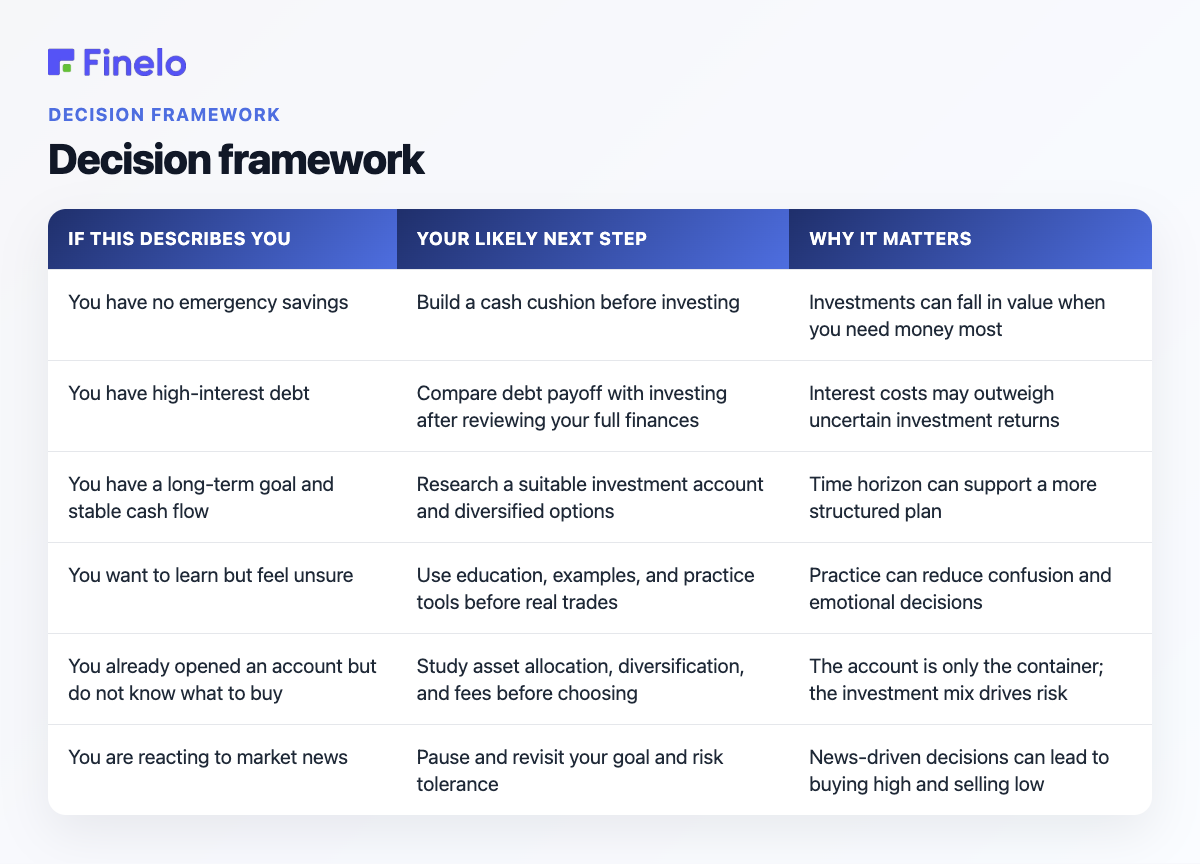
The easiest way to start investing is to match your next step to your current situation. Some beginners are ready to open an account; others need more time to save, pay down debt, or learn vocabulary. A good framework reduces pressure and helps you avoid acting on hype.
Use the table below as an educational guide, not a personalized recommendation.
If this describes you
Your likely next step
Why it matters
You have no emergency savings
Build a cash cushion before investing
Investments can fall in value when you need money most
You have high-interest debt
Compare debt payoff with investing after reviewing your full finances
Interest costs may outweigh uncertain investment returns
You have a long-term goal and stable cash flow
Research a suitable investment account and diversified options
Time horizon can support a more structured plan
You want to learn but feel unsure
Use education, examples, and practice tools before real trades
Practice can reduce confusion and emotional decisions
You already opened an account but do not know what to buy
Study asset allocation, diversification, and fees before choosing
The account is only the container; the investment mix drives risk
You are reacting to market news
Pause and revisit your goal and risk tolerance
News-driven decisions can lead to buying high and selling low
Reference table from this guide — Decision framework.
This framework also helps answer the common question, “What is the best way to start investing as a beginner?” The best way is usually the one you understand, can afford, can maintain over time, and can stick with during normal market volatility. That may look boring at first, but boring can be useful when you are building financial habits.
Practice investing with Finelo
Build practical investing skills with guided lessons, simulator practice, and structured challenges.
After you understand your goal, account type, and basic investment options, you can move from learning to action. The sequence matters because each step reduces uncertainty. You do not need to master every advanced concept before beginning, but you should know enough to understand what you are buying and why.
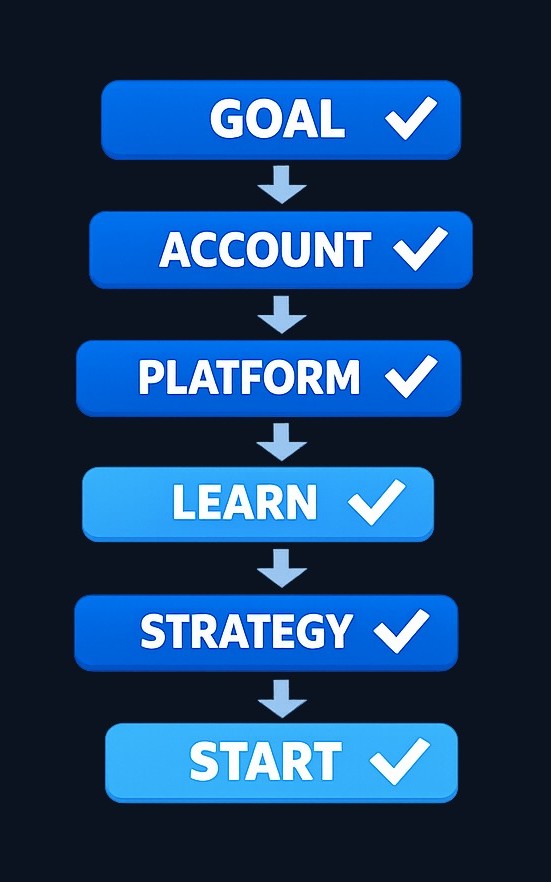
A beginner-friendly path might look like this:
Write down your goal and timeline. Make the goal specific enough to guide decisions.
Choose the account type to research. Compare brokerage, retirement, or other available accounts based on your goal.
Compare platforms. Review fees, investment choices, education resources, support, and official policies.
Learn the investment menu. Understand stocks, bonds, ETFs, mutual funds, and cash-like options.
Decide on a simple strategy. Many beginners study diversification, long-term investing, and contribution discipline before exploring complex approaches.
Start small if appropriate. A smaller first step may help you learn the process without taking on more risk than you can handle.
Review on a schedule. Avoid checking too often if it leads to emotional decisions; review your plan periodically instead.
A beginner-friendly investing path: define your goal and timeline, choose an account type, compare platforms, learn investment options, decide on a simple strategy, and start small if ready.
The goal is not to predict the market perfectly. Even experienced investors cannot know exactly what the market will do next. A beginner’s advantage is the ability to learn patiently, keep costs visible, and avoid decisions that depend on perfect timing.
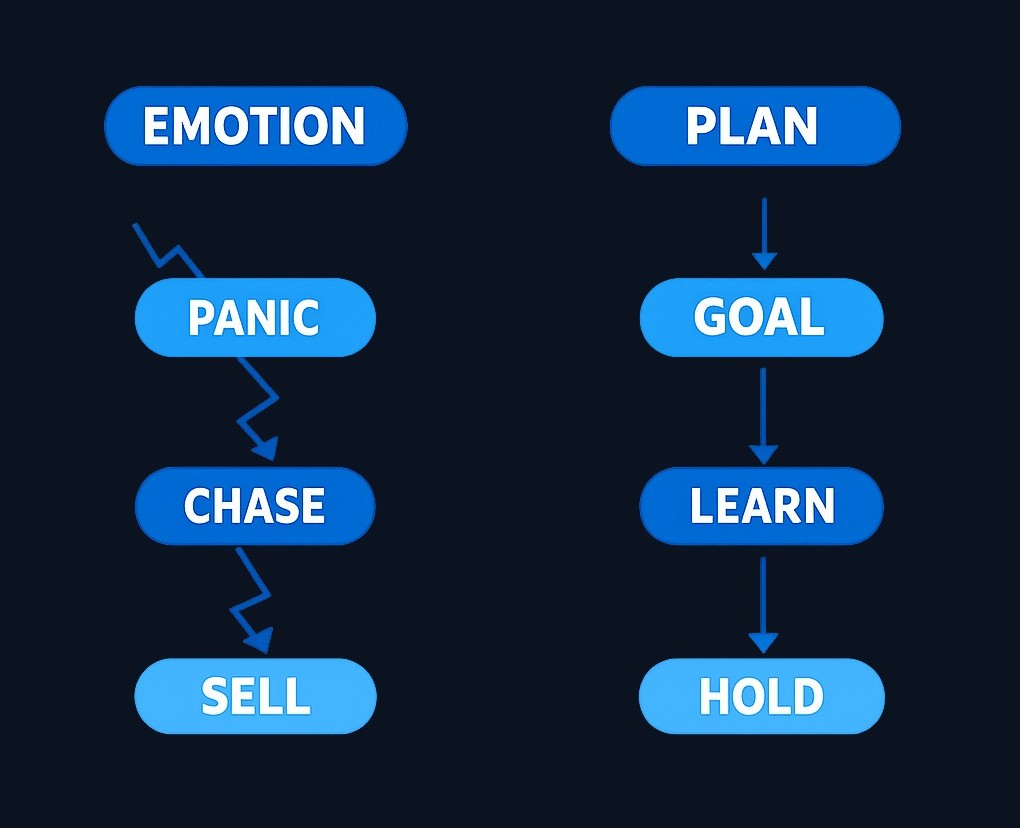
Beginner mistakes are often less about intelligence and more about emotion, speed, and unclear goals. Investing can feel exciting when prices rise and stressful when prices fall. A plan helps you avoid turning every market movement into a decision.
Watch for these common errors:
Investing money you need soon. Short-term money may not have time to recover from market declines.
Chasing recent winners. A stock or fund that performed well last year may not perform well this year.
Ignoring fees. Small fees can matter over long periods, especially inside funds or advisory services.
Confusing trading with investing. Active trading often requires different skills, time, and risk controls than long-term investing.
Putting everything into one asset. Concentration can create high downside risk if that asset falls.
Selling in panic. Emotional selling after a drop can lock in losses and disrupt a long-term plan.
Skipping tax research. Tax rules may affect account choice, withdrawals, dividends, and realized gains.
Common beginner mistakes often stem from emotional reactions and unclear goals. A written plan helps you avoid panic-selling, chasing
These mistakes are avoidable if you slow down and treat investing as a learning process. You can still make imperfect decisions—everyone does—but a clear process gives you a way to improve.
Related investing questions
Some readers arrive here looking not only for “how to start investing as a beginner,” but also for beginner investing apps, investing education, or information about investing with Finelo. Those are closely related questions because they all point to the same need: learning how investing works before taking unnecessary risk.
If you are comparing investing education platforms, focus on the learning experience rather than promises. Look for clear explanations, risk caveats, practice opportunities, transparent pricing, and accessible support. Avoid any platform or resource that implies guaranteed returns, personalized advice without proper context, or a shortcut around understanding the market.
For Finelo-specific research, start with official pages and current information: Finelo home, about Finelo, reviews, pricing, and support. If you are trying to understand subscription, billing, or cancellation details, verify the latest information directly on the relevant Finelo pages, such as cancel subscription and refund policy.
More ideas for your first year as an investor
Once you understand the basics, your next year should be about building habits rather than rushing into advanced strategies. Beginners often benefit from reading market explanations, tracking a watchlist, practicing asset allocation, and learning how fees and taxes work. This kind of education can make your first real investing decisions more deliberate.
A simple first-year learning plan could include one topic per month: market basics, account types, risk tolerance, diversification, ETFs, bonds, individual stocks, fees, taxes, rebalancing, investor psychology, and long-term planning. You do not need to finish all of this before investing, but the more you learn, the less likely you are to rely on social media tips or short-term predictions.
If you want additional educational next steps, consider exploring Finelo AI for AI-assisted learning paths, Finelo challenges for structured practice, or the Finelo app for app-based investing and trading education.
Next steps
If you are ready to move forward, do not start by asking which stock will perform best. Start by writing down your goal, choosing the account type to research, and learning how diversification, fees, taxes, and risk fit together. Then decide whether you are ready to invest real money or whether you would rather practice and learn first.
Start by checking your financial foundation, setting a goal, choosing a time horizon, and learning the main investment types. Then research the right account type and platform for your goal. Only after that should you decide what to buy.
How much money do I need to start investing?
The required amount depends on the platform, account type, and investments you choose. Some platforms and funds may have minimums, while others may allow smaller starting amounts. Always verify current minimums and fees on the official provider page before opening an account.
Should beginners buy individual stocks?
Individual stocks can be useful for learning, but they carry company-specific risk. Beginners often research diversified options such as ETFs or mutual funds because they can spread exposure across many holdings. This is not a recommendation; compare risk, costs, and suitability before deciding.
What is the difference between saving and investing?
Saving usually means keeping money in cash or cash-like accounts for stability and near-term access. Investing means accepting market risk in pursuit of potential long-term growth or income. Both can be important, but they serve different purposes.
How do I choose the right investment account?
Match the account to the goal. A retirement goal may lead you to research retirement accounts, while a flexible long-term goal may lead you to compare taxable brokerage accounts. Tax rules, fees, withdrawal restrictions, and investment choices should all be reviewed with official sources.
What common investing mistake should I avoid first?
Avoid investing without knowing why you are investing. If you do not have a goal, timeline, and risk limit, you are more likely to chase trends or sell during volatility. A written plan is a simple way to reduce emotional decisions.
Is Finelo an investing platform or an education resource?
Finelo is best described as an investing and trading education resource. Use it to learn concepts, build confidence, and practice decision-making; do not treat educational content as personalized investment advice.
The Finelo Team creates practical investing and trading education designed to help beginners learn faster with structured challenges, simulator practice, and bite-sized lessons.