For U.S. readers: This article discusses U.S. rules and financial products. State rules and individual eligibility may differ.
How to Make a Living Will Without a Lawyer: A Complete Guide

Practical step: search your state’s government or health department pages for “advance directive” or “living will” to download the correct form and read signing rules.
10 min read
Practice trading with Finelo
Practice in a simulator, learn with bite-sized lessons, and build confidence before risking real money.
Want to learn more?
Practice in a simulator, learn with bite-sized lessons, and build confidence before risking real money.
Explore FineloExplore Finelo's 28-day challenges
Turn learning into a daily habit with guided challenge paths.
Quick answer
You can create a legally valid living will yourself by choosing what medical treatments you want or refuse, completing a state-appropriate advance directive form, signing it according to your state’s rules, and sharing copies with your healthcare proxy and providers. A living will is a legal document that tells doctors how you want to be treated if you cannot make decisions yourself (National Institute on Aging). Finelo provides financial education, not financial or investment advice.
Introduction to Living Wills
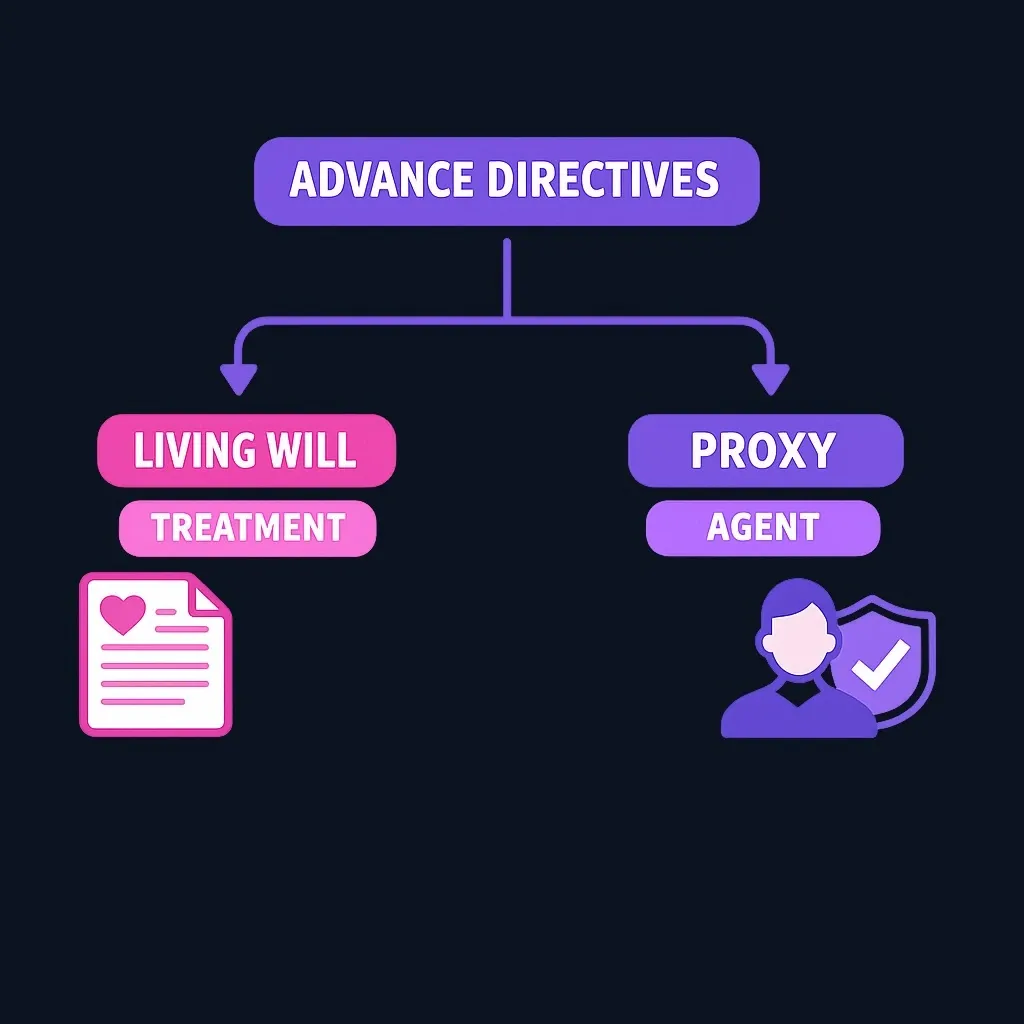
A living will is one kind of advance directive used to state your medical wishes in case you cannot speak for yourself. It focuses on treatment preferences — for example, whether to use life‑sustaining measures — rather than distributing property. The document guides doctors and loved ones when you lack capacity and complements other advance directives, such as a health care proxy or durable power of attorney for health care. Use this guide to decide whether a self‑prepared living will fits your needs and how to make, store, and communicate it.
What to know before deciding
Before you begin, know these practical points so your document will work when needed.
- Purpose: A living will records treatment preferences for situations where you cannot decide. For the basic definition, see the National Institute on Aging (NIA).
- Scope: It usually covers choices about life‑sustaining treatment, CPR, and artificial nutrition/hydration, but the exact topics vary by form and state.
- State rules vary: Witnessing, notarization, acceptable language, and whether a separate form is needed differ by state. Check your state’s official resources before signing.
- Changeability: You can generally update or revoke a living will; follow your state’s rules to make changes legally effective.
- Keep it accessible: The document is useful only if doctors and decision‑makers can find it when needed.
Understanding the Legal Requirements
Legal requirements for living wills differ across states and jurisdictions. Rather than one universal checklist, expect these variable elements:
- Form and language: Some states provide a specific statutory form; others accept any signed statement of wishes.
- Signing, witnessing, notarization: Requirements can include witnesses, notarization, or both. Confirm the rules where you live before you sign.
- Capacity and timing: You must have decision‑making capacity when you sign; a living will applies when you later lose that capacity.
- Interaction with other directives: If you name a healthcare proxy, that person typically makes decisions consistent with your living will when you lack capacity.
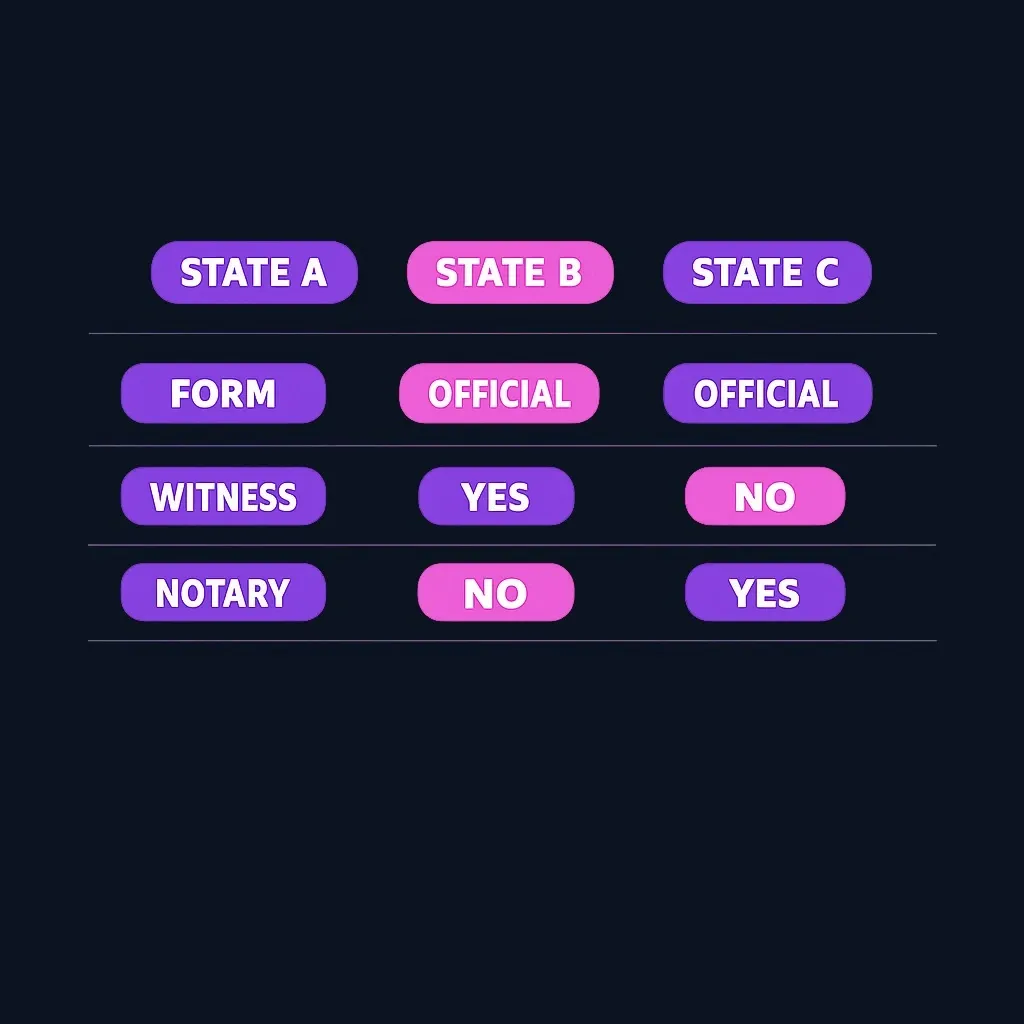
Practical step: search your state’s government or health department pages for “advance directive” or “living will” to download the correct form and read signing rules. Because state laws change, verify current requirements with the official state site or local legal‑aid resources before finalizing your document.
Step-by-Step Process to Create a Living Will
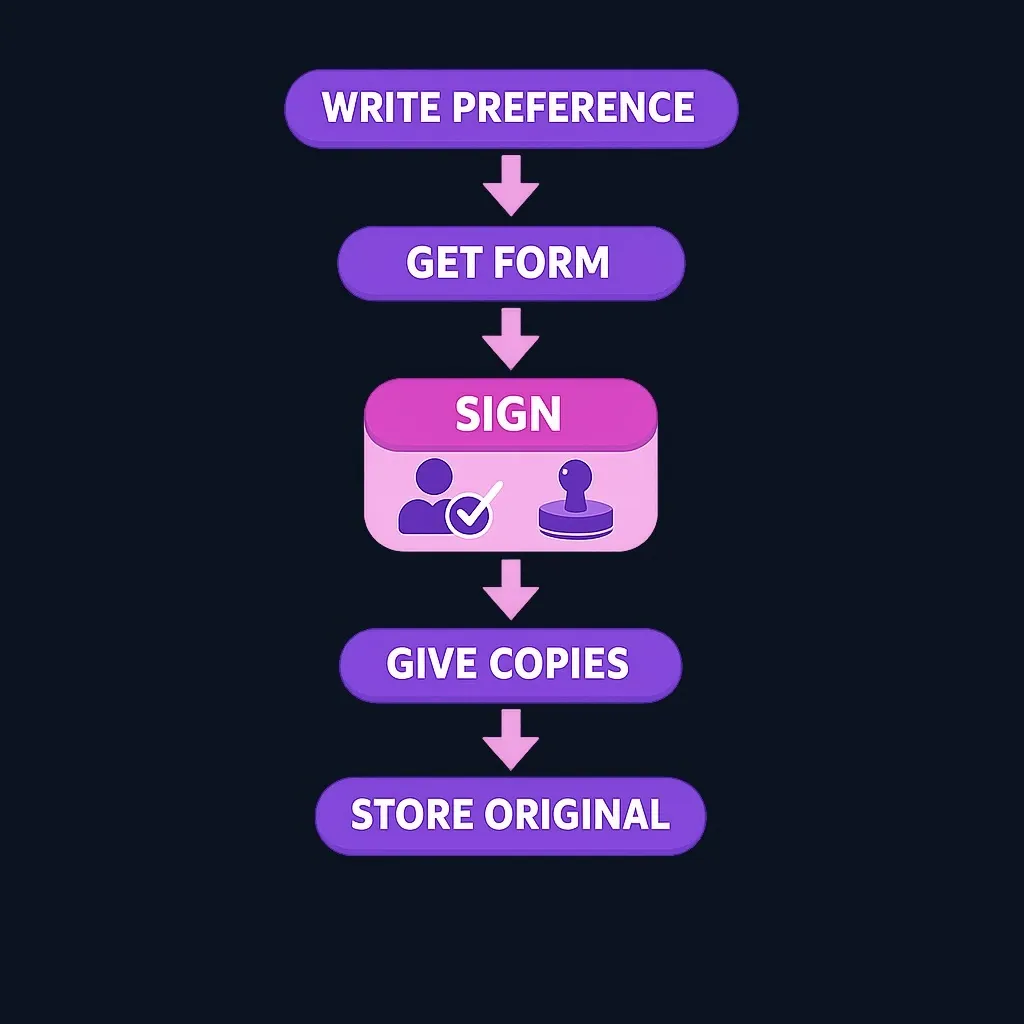
Follow these steps to make a living will without hiring an attorney. The checklist below compresses routine practice into clear actions.
Step 1 — Clarify your medical values (10–20 minutes)
Write answers to three core questions:
- What outcomes would make life unacceptable to me? (e.g., permanent unconsciousness)
- Which treatments would I accept or refuse to achieve or avoid those outcomes?
- Under what conditions do my instructions apply?
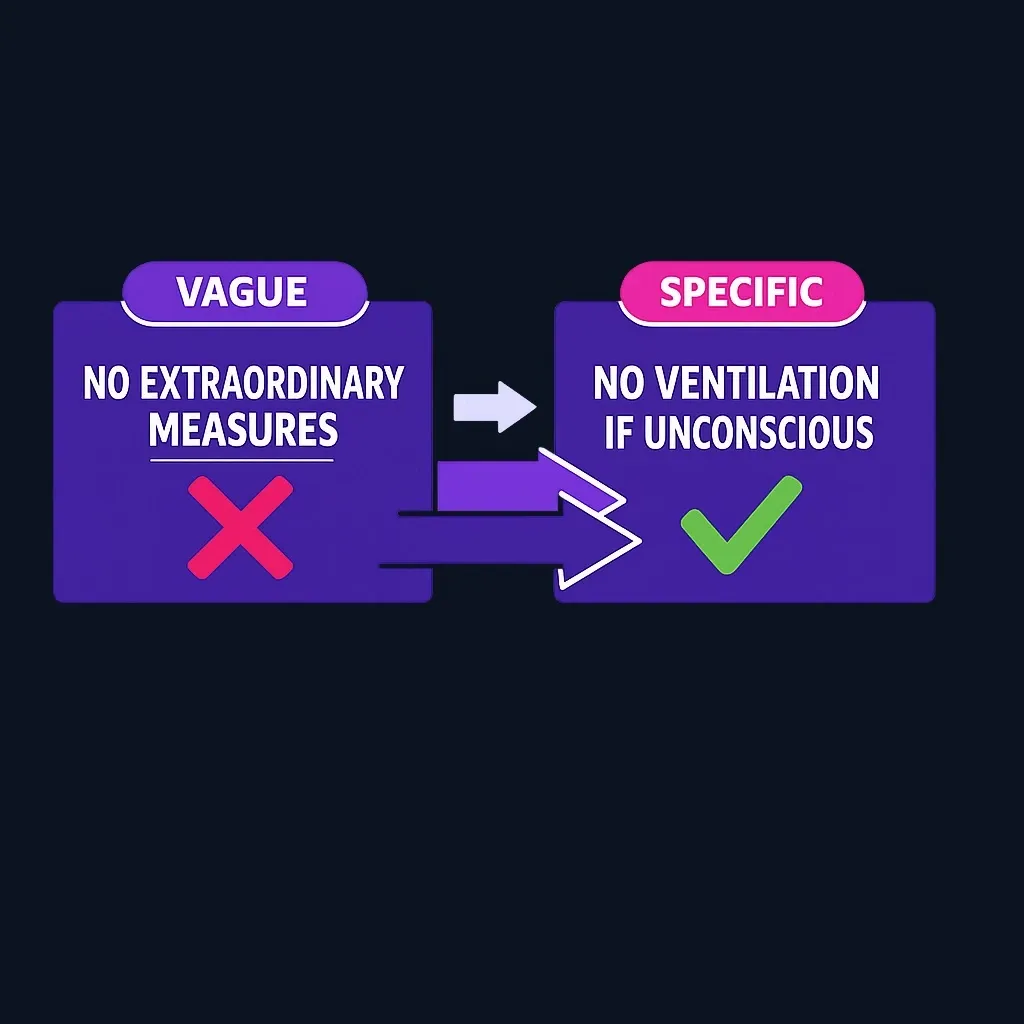
Tip: Use short, concrete statements (for example, “If permanently unconscious, I do not want mechanical ventilation to prolong life.”).
Step 2 — Obtain the correct form (5–30 minutes)
Get your state’s advance directive or living will form from the official state site or health department. If your state has a statutory form, use it to avoid technical rejections.
Step 3 — Fill out the form carefully (15–40 minutes)
- Use clear, plain language and avoid ambiguous phrases.
- Reference choices (e.g., “I do not want CPR if my heart stops”) rather than vague statements.
- If your state allows, attach a short, dated note clarifying any complex preferences.
Step 4 — Sign according to your state’s rules (5–20 minutes)
Sign and have any required witnesses or notary present. Keep a dated copy.
Step 5 — Choose and inform a healthcare proxy (see Choosing a Healthcare Proxy section) (15–60 minutes)
Even if you don’t name a proxy on the living will, tell at least one trusted person where the document is kept and what your core wishes are.
Step 6 — Distribute copies and record locations (10–30 minutes)
Give copies to:
- Your primary care physician and specialists.
- The person you chose as proxy.
- Close family members who may be involved in decisions.
Store the original in a safe but accessible place. Keep an indexed note (physical or digital) listing locations and copies.
Hypothetical example
A hypothetical 72-year-old wants to document a preference about long-term mechanical ventilation after a specified medical finding. The person:
- Writes a one‑paragraph statement of that preference.
- Obtains the current official form or instructions from the applicable state agency and checks whether added language is permitted.
- Follows the state’s signature and witness or notarization rules, then gives copies to the health-care agent and treating clinicians.
- Stores the original with other medical records and informs family of its location.
Checklist (printable)
- Clarify values and specific treatment preferences.
- Download state form or use plain‑language statement if accepted.
- Sign with required witnessing or notarization.
- Name a healthcare proxy (if desired) and discuss wishes with them.
- Give copies to doctor, proxy, and close family.
- Note where the original is stored and how to access it.
Practice trading with Finelo
Practice in a simulator, learn with bite-sized lessons, and build confidence before risking real money.
Common Mistakes to Avoid
Avoid these frequent errors that can undermine a DIY living will.
- Vague language: Saying “no extraordinary measures” can be interpreted differently. Use concrete treatment examples and conditions.
- Not checking state rules: Failing to follow witnessing or notarization requirements can make a document unusable.
- Hiding the document: If doctors and proxies can’t find the living will, your wishes may not be followed.
- Not updating: Medical situations and personal values change. Periodically review and amend the document if needed.
- Assuming a single document covers everything: A living will addresses treatment preferences but may not appoint an agent. Use both a living will and a proxy form if you want someone to decide for you.
- Poor proxy selection: Choosing someone who disagrees with your values or who is unavailable can cause conflict. Pick someone who understands and will advocate for your wishes.
How to fix common problems:
- Rewrite unclear passages into specific, time‑bound instructions.
- Confirm form validity by checking your state’s official guidance before signing.
- Store a copy with your electronic medical record if your provider supports it.
Choosing a Healthcare Proxy
A healthcare proxy (also called a medical agent or health care power of attorney in many places) is the person who makes decisions on your behalf when you lack capacity. Choosing well reduces disputes and ensures your values guide decisions.
Who makes a good proxy?
Look for these qualities:
- Understands and accepts your medical values.
- Can remain calm under stress.
- Willing to talk to medical teams and family members.
- Available geographically or able to travel if needed.
- Legally eligible in your state (some states restrict who can serve).
How to decide between candidates
- Prioritize shared values over technical knowledge. A trusted friend who shares your views on quality of life is often better than a formally trained relative who disagrees with you.
- Consider alternates and backups. If your first choice is unavailable or incapacitated, name a secondary proxy.
How to prepare and communicate with your proxy
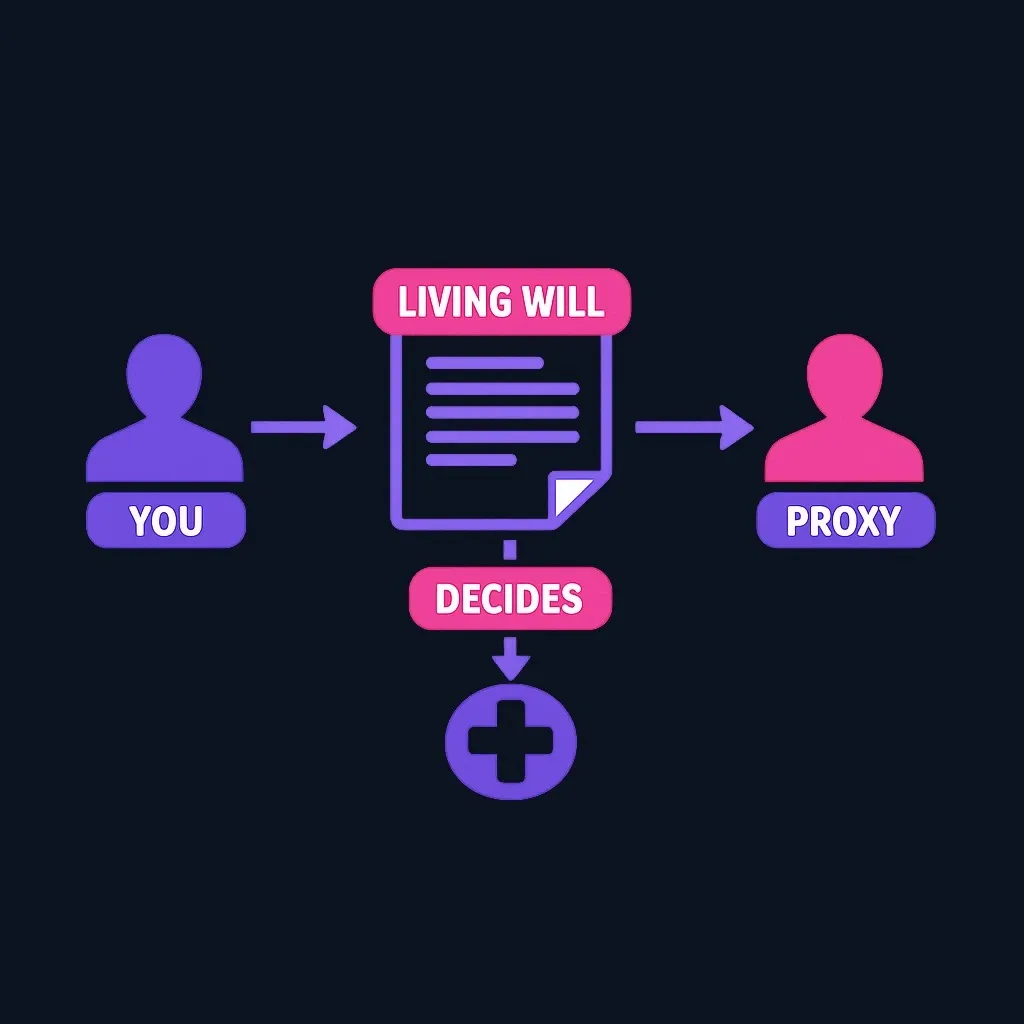
- Have a candid conversation about your values and specific treatment choices.
- Give your proxy a copy of your living will and a short summary of your priorities.
- Discuss likely scenarios they may face and how you’d want them to interpret your instructions.
- Provide practical guidance: where to find medical records, who to call, and how to access your document.
Handling potential disputes (practical tips)
- Document conversations in writing and date them. A brief, signed statement summarizing your discussion can help resolve family disagreements.
- Encourage your proxy to get second medical opinions when prognosis is unclear.
- Consider involving a neutral facilitator (e.g., a trusted physician or chaplain) during family discussions to keep focus on your wishes.
Notifying Relevant Parties
A living will only works if the right people know it exists and can access it.
- Tell your primary care physician and any specialists; ask them to place a copy in your medical record.
- Give a copy to the person you designated as your healthcare proxy.
- Inform close family members or friends who might be involved in care decisions.
- Keep the original where it can be found quickly and maintain a short access list (names, phone numbers, and copy locations).
Practical storage ideas:
- A copy in your wallet noting “Advance Directive on file at [clinic]”.
- A scanned copy in a secure personal cloud folder and instructions in an emergency contact card.
- Registration with any state or hospital advance directive registry if available.
Decision framework
Use this three‑step framework to decide whether to prepare a living will yourself, use a template, or consult a lawyer.
-
Assess complexity
- Simple, clear preferences and low risk of family conflict: a state form or plain‑language living will is often sufficient.
- Complex medical choices, unusual treatment requests, blended‑family concerns, or high risk of disputes: consider attorney review.
-
Evaluate legal risk vs. cost
- If incorrect signing formalities could invalidate your document and that risk is unacceptable, get legal help.
- If cost is the main barrier and you have straightforward wishes, using official state forms and following signing rules can be an effective route.
-
Confirm execution and communication
- Whatever route you choose, ensure the document is valid under state rules, your proxy understands and agrees, and medical providers have copies.
This framework helps match the method—DIY, guided template, or lawyer—to your personal and family circumstances.
FAQ
What is a living will?
A living will is an advance directive that records your medical treatment preferences for situations when you cannot decide for yourself (NIA).
Do I need a lawyer to create a living will?
No. Many people complete a living will without a lawyer by using an official state form or plain‑language statement and following state signing rules. For complex situations or high risk of disputes, legal advice can help.
How do I cancel or change my living will?
You can typically revoke or replace a living will by following your state’s rules—commonly by signing a new document or providing a written revocation. Keep records of the date and copies of the most recent version.
How do I ensure my wishes are followed?
Give copies to your health care proxy and medical providers, place a copy in your medical record if possible, and have candid conversations with those who may be involved in decisions.
Conclusion and Next Steps
A living will can document treatment preferences, but execution requirements vary by state. Use your state's official form and instructions, follow its signing and witnessing rules, and tell the relevant people where copies are kept. The questions in this article can help prepare a conversation; Finelo does not provide a state-specific legal form or substitute for legal advice.
Financial LiteracyFinancial Education
Practice trading with Finelo
Practice in a simulator, learn with bite-sized lessons, and build confidence before risking real money.
About the author
Finelo Team
The Finelo Team creates practical investing and trading education designed to help beginners learn faster with structured challenges, simulator practice, and bite-sized lessons.
Keep reading — Related articles

Financial Literacy
Mercury Books Review 2026: Is It Worth It for Startups?
Mercury Books brings double-entry accounting into Mercury. Review its $35 pricing, reports, AI features, integrations, and migration limits.
Finelo Team

Financial Literacy
Why is My FICO Score Lower Than My Credit Score?
Example takeaway: seeing a higher score in a bank app doesn’t guarantee lenders will see the same FICO number at application time; lenders often pull a specific FICO version from a specific bureau.
Finelo Team

Financial Literacy
Why Is My FICO Score Higher Than My Credit Score?
Brief educational note: this article is educational, not financial or investment advice; investing and credit decisions involve risk and possible loss.
Finelo Team


