For U.S. readers: This article discusses U.S. rules and financial products. State rules and individual eligibility may differ.
How to Remove an Escrow Account From Your Mortgage

Finelo provides financial education, not legal, financial, or investment advice.
7 min read
Practice trading with Finelo
Practice in a simulator, learn with bite-sized lessons, and build confidence before risking real money.
Want to learn more?
Practice in a simulator, learn with bite-sized lessons, and build confidence before risking real money.
Explore FineloExplore Finelo's 28-day challenges
Turn learning into a daily habit with guided challenge paths.
Quick answer
Ask your mortgage servicer whether your loan permits an escrow waiver and request its current eligibility criteria in writing. Approval is not automatic: the loan documents, investor or government-program rules, payment history, loan-to-value ratio, and applicable law can all affect the decision. Do not stop making escrow payments unless the servicer confirms the change and its effective date.
Finelo provides financial education, not legal, financial, or investment advice. Verify requirements directly with your servicer before acting.
What an escrow account does
A mortgage escrow account holds part of each monthly payment so the servicer can pay property taxes, homeowners insurance, and sometimes other property-related charges when due. The Consumer Financial Protection Bureau explains that escrow spreads large periodic bills across monthly mortgage payments.
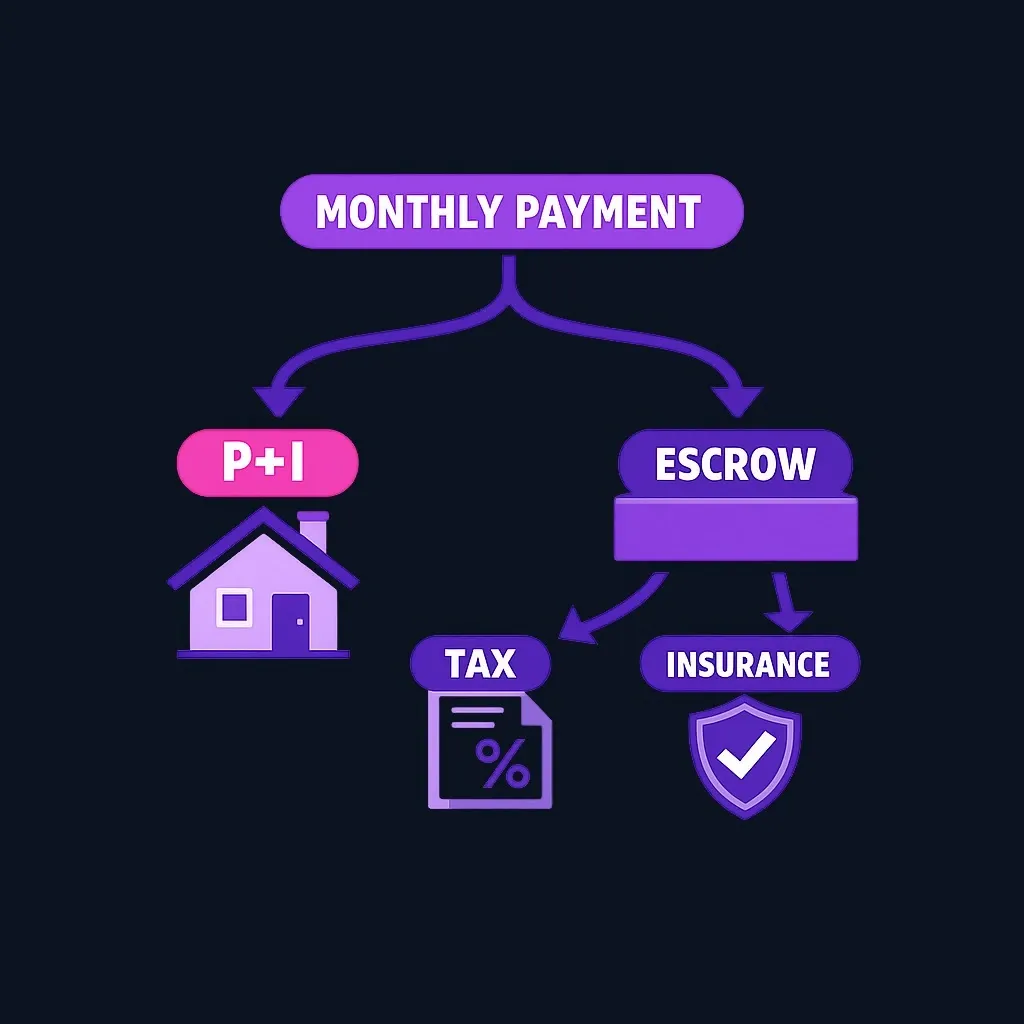
Without escrow, you pay those property costs directly. Your principal-and-interest payment does not disappear, and the total cost of taxes and insurance does not become lower simply because they are no longer collected through the servicer.
Can an existing escrow account be removed?
Sometimes. There is no universal consumer right to remove every escrow account on demand. Start with three sources:
- Your mortgage note, security instrument, and escrow-waiver provisions.
- The servicer's current written policy for your loan.
- The rules of the investor or government program backing the mortgage.
For example, Fannie Mae's servicing guide allows a servicer to evaluate a borrower's request but sets circumstances in which a waiver must be denied, including specified recent delinquencies and certain loan-to-value conditions. Those requirements apply to loans governed by that guide and should not be assumed to cover every mortgage. See Fannie Mae's current escrow-servicing guidance.
Some loan categories or legal requirements can require escrow for a minimum period or for the life of the loan. Your servicer should identify the rule that applies if it denies the request.
Step-by-step request process
1. Review your documents
Locate the mortgage note, closing disclosure, most recent escrow analysis, and current statement. Check whether the closing documents mention an escrow-waiver fee or mandatory escrow. The CFPB's Closing Disclosure explainer shows where escrow and any disclosed waiver fee appear at closing.
2. Ask the servicer for written criteria
Contact the servicer using the customer-service method shown on your statement. Ask:
- Is an escrow waiver available for this loan?
- Which investor or program rules apply?
- What payment-history and equity requirements must be met?
- Is an appraisal or valuation required?
- Does any fee apply, and where is it disclosed?
- What happens to the existing escrow balance?
- On what date would direct responsibility for taxes and insurance begin?
Avoid relying on another lender's website or a general fee estimate. The relevant terms are the ones that govern your specific mortgage.
3. Submit the requested documents
Follow the servicer's process and retain a copy of the request, attachments, and confirmation. Documents may include proof of insurance, recent tax information, or a signed waiver form. Requirements vary.
4. Read the decision carefully
If approved, confirm the effective date, revised monthly payment, treatment of the escrow balance, and the first tax and insurance bills you must pay directly. If denied, ask for the reason and whether you can reapply after meeting a stated condition.
5. Confirm the transition
Do not cancel automatic mortgage payments or change insurance billing based only on a phone conversation. Wait for written confirmation and verify that the servicer, insurer, and tax authority have the correct billing arrangements.
Budget test before removing escrow
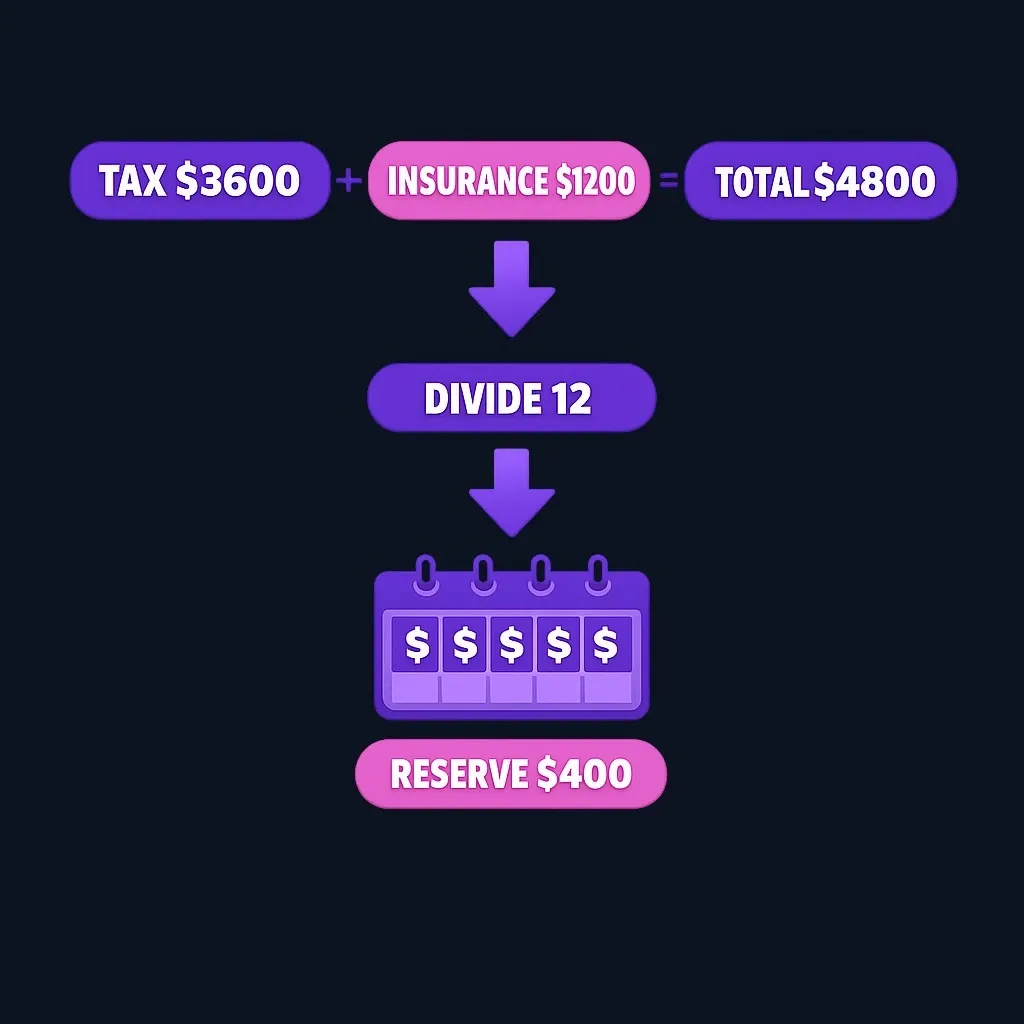
Use actual bills rather than estimates from an unrelated example.
| Item | Annual amount | Monthly amount to reserve |
|---|---|---|
| Property taxes | $_____ | Annual amount ÷ 12 |
| Homeowners insurance | $_____ | Annual amount ÷ 12 |
| Flood or other required coverage | $_____ | Annual amount ÷ 12 |
| Additional cushion for expected increases | $_____ | Chosen amount ÷ 12 |
| Total monthly reserve | $_____ |
Property taxes and insurance premiums can change. Review the reserve amount when a new tax assessment or renewal notice arrives.
Practice trading with Finelo
Practice in a simulator, learn with bite-sized lessons, and build confidence before risking real money.
Benefits and tradeoffs
| Factor | Keeping escrow | Paying directly |
|---|---|---|
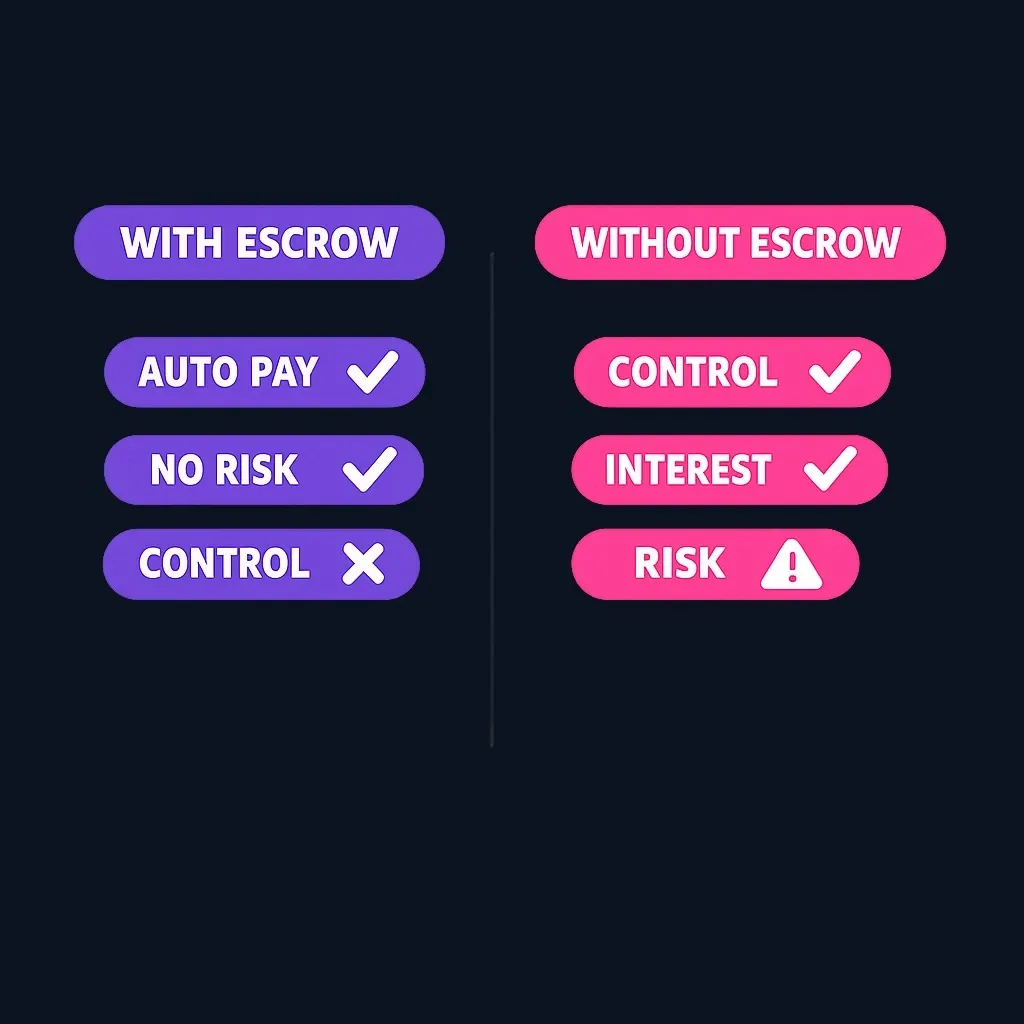
| Payment timing | Servicer schedules covered bills | You track and pay each due date |
| Cash flow | Costs are spread across mortgage payments | Bills may arrive in one or two large amounts |
| Control | Less direct control over timing | More direct control and responsibility |
| Missed-payment risk | Lower when the account is funded and serviced correctly | Higher if reserves or reminders fail |
| Monthly mortgage draft | Includes the escrow portion | Excludes escrow, but taxes and insurance remain payable |
The CFPB warns that unpaid taxes can lead to penalties or liens and that lapsed insurance can result in force-placed coverage, which is typically more expensive. See the CFPB's.
Fees and refunds
A lender may disclose a fee for not establishing escrow, particularly at origination. Do not rely on a generic percentage range: fees and legal restrictions differ. Check the closing disclosure, loan documents, and the servicer's written response.
Rules for returning an escrow balance can depend on why the account is ending. Federal Regulation X includes timing rules for returning balances after a mortgage is paid in full, but that is not necessarily the same event as an approved mid-loan waiver. See the CFPB's current escrow balance regulation.
Common mistakes
- Assuming a lower mortgage draft means taxes and insurance cost less.
- Using another lender's waiver criteria or fee schedule as if it applies to your loan.
- Stopping escrow payments before written approval takes effect.
- Failing to confirm who will receive the next insurance or tax bill.
- Keeping the reserve in an account that is easy to spend unintentionally.
- Forgetting to update the monthly reserve after taxes or premiums increase.
If the request is denied
Ask the servicer to identify the controlling loan term, investor rule, program requirement, or eligibility condition. A denial may be permanent for the loan type or temporary because of payment history, equity, or timing. If you believe the servicer made an error, use its written error-resolution or complaint process and retain your records. The CFPB provides information about mortgage servicing protections and Regulation X.
FAQ
Does removing escrow reduce the cost of my mortgage?
It changes who holds and pays money for taxes and insurance; it does not eliminate those obligations. Any fee, lost interest, budgeting benefit, or administrative cost should be evaluated separately.
Is there a standard equity requirement?
No single threshold applies to every mortgage. Some investor guides use specific loan-to-value and payment-history tests, but your servicer must confirm the rule for your loan.
Will I receive the existing escrow balance?
Ask the servicer how and when it handles the balance after an approved waiver. Do not assume that payoff-refund timing rules apply identically to a mid-loan removal.
Can the servicer restore escrow later?
Possibly. Loan terms and investor rules may permit or require escrow to be re-established if taxes or insurance are not paid, coverage lapses, or waiver conditions are breached.
Next steps
Request the servicer's waiver criteria, complete the budget table using current bills, and wait for written approval before changing any payment arrangement. Keep the approval, revised statement, insurance notices, and tax receipts together so you can document the transition.
Financial LiteracyFinancial Education
Practice trading with Finelo
Practice in a simulator, learn with bite-sized lessons, and build confidence before risking real money.
About the author
Finelo Team
The Finelo Team creates practical investing and trading education designed to help beginners learn faster with structured challenges, simulator practice, and bite-sized lessons.
Keep reading — Related articles

Financial Literacy
Mercury Books Review 2026: Is It Worth It for Startups?
Mercury Books brings double-entry accounting into Mercury. Review its $35 pricing, reports, AI features, integrations, and migration limits.
Finelo Team

Financial Literacy
Why is My FICO Score Lower Than My Credit Score?
Example takeaway: seeing a higher score in a bank app doesn’t guarantee lenders will see the same FICO number at application time; lenders often pull a specific FICO version from a specific bureau.
Finelo Team

Financial Literacy
Why Is My FICO Score Higher Than My Credit Score?
Brief educational note: this article is educational, not financial or investment advice; investing and credit decisions involve risk and possible loss.
Finelo Team