For U.S. readers: This article discusses U.S. rules and financial products. State rules and individual eligibility may differ.
How to Remove Late Payments from Your Credit Report

Caveat: a creditor’s voluntary removal (goodwill) is discretionary.
9 min read
Practice trading with Finelo
Practice in a simulator, learn with bite-sized lessons, and build confidence before risking real money.
Want to learn more?
Practice in a simulator, learn with bite-sized lessons, and build confidence before risking real money.
Explore FineloExplore Finelo's 28-day challenges
Turn learning into a daily habit with guided challenge paths.
Quick answer
If the late payment on your credit report is wrong or cannot be verified, file a dispute with the credit reporting company that lists it; if the investigation shows the furnisher provided incorrect information or can’t verify it, the furnisher must update or remove the item and notify the reporting companies How do I dispute an error on my credit report?. If the late payment is accurate, removal is harder — try a goodwill request to the creditor or focus on rebuilding recent on-time payments. Finelo provides financial education, not financial or investment advice.
What to know before deciding
Before you act, confirm whether the reported late payment is factually incorrect or simply unfavorable.
- Read the report entry exactly: record the account identifier, the date shown, and the status text used by the bureau.
- Gather focused evidence tied to that item: billing statements, payment confirmations, cleared-check images, or bank transaction records.
- Pick your goal: legally correct an error, or ask the creditor to voluntarily delete an accurate but isolated late payment.
- Keep every contact and document dated and organized. Clear, concise evidence speeds reviews.
Caveat: a creditor’s voluntary removal (goodwill) is discretionary. A successful legal correction depends on whether the furnisher can verify the reported information; if it cannot, the furnisher must correct or remove the item.
Understanding late payments and their impact
What counts as a late payment
A late payment entry records that a required payment for an account was not made on the timetable set by that account’s terms. The reporting party — the furnisher — is usually the creditor or its servicing agent. The credit report reflects the furnisher’s version of the account status.
Example: Your bank shows a payment posted on the statement date, but the credit report lists that same payment as missed. That mismatch is a factual dispute between your documentation and the furnisher’s report.
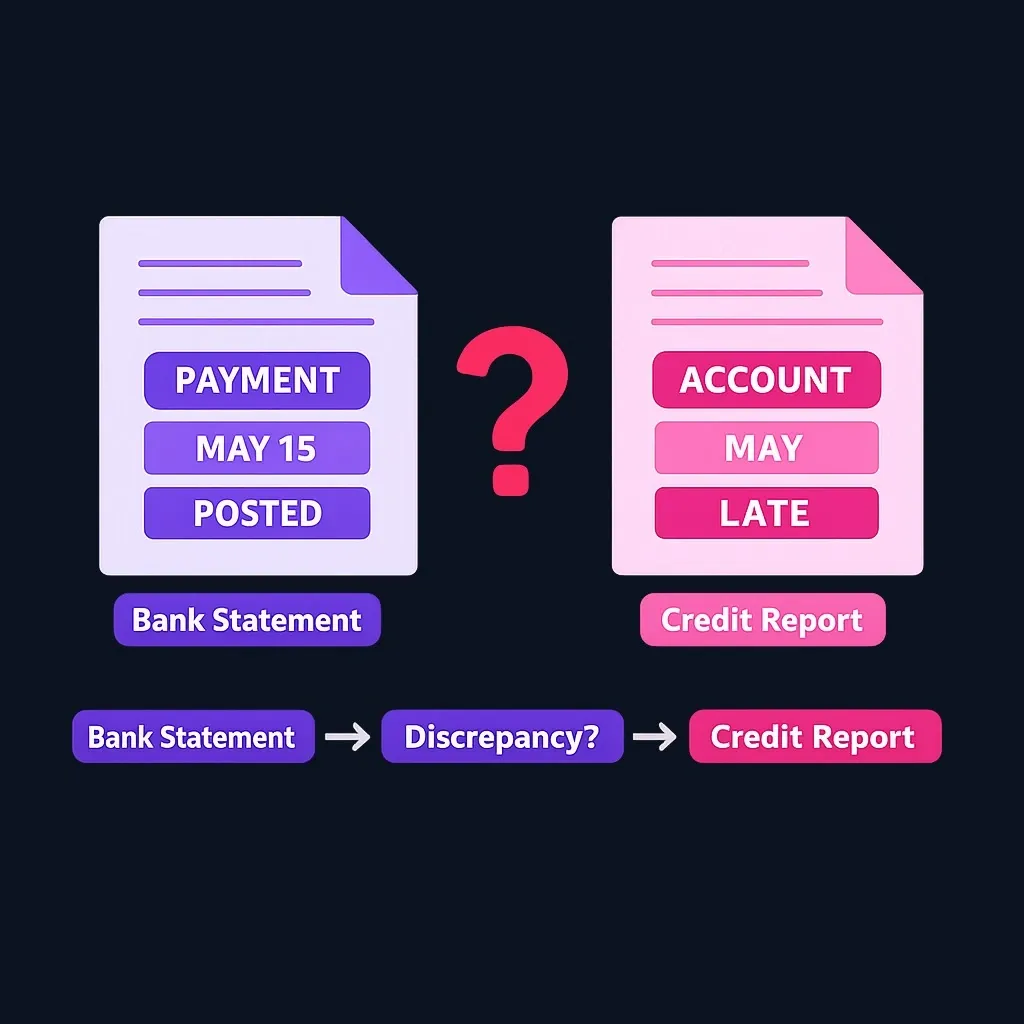
How late payments affect credit profiles
Late payments are a negative signal to future lenders because they indicate past payment difficulty. The real effect depends on recency and frequency: recent or repeated delinquencies tend to weigh more than a single, older lapse. When you cannot remove an accurate late payment, the practical response is to build a longer, current record of on-time payments to dilute the negative entry’s impact.
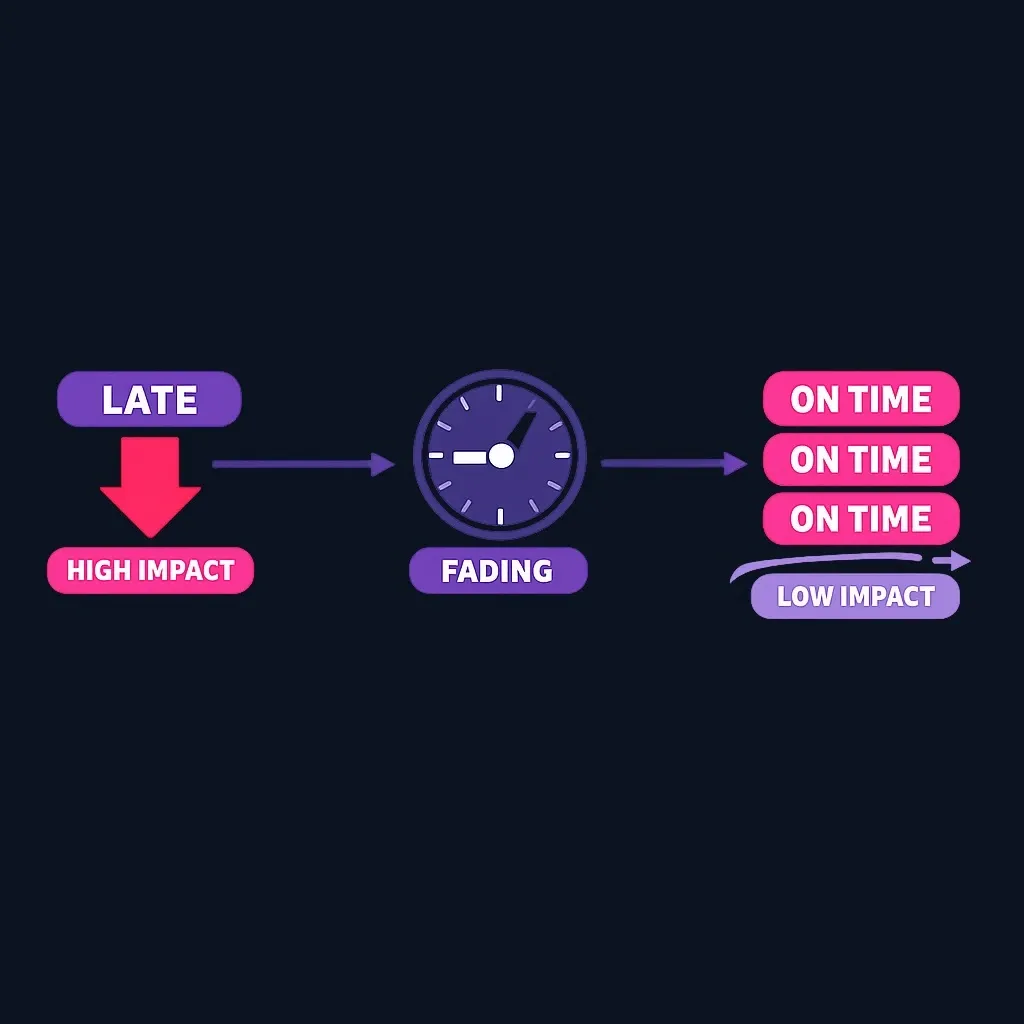
Decision caveat: if you plan to apply for credit soon, prioritize actions that most quickly correct or mitigate recent negative items. If removal isn’t feasible, focus on reliable on-time activity and communication with potential lenders about the situation.
Steps to remove late payments
Follow this ordered checklist to act efficiently and avoid wasted effort.
Checklist
- Identify the exact report entry and which bureau shows it.
- Collect direct documentation tied to the item (statements, confirmation numbers, bank records).
- Decide whether the entry looks incorrect/unverifiable or accurate but excusable.
- If incorrect/unverifiable, prepare a dispute to the reporting company with attachments.
- If accurate but isolated, draft a concise goodwill request to the creditor explaining the situation.
- Save delivery proofs, confirmation numbers, and every reply. Track dates and names.
Practical tip: make your submission tightly focused. Label documents to match the disputed entry (e.g., “Account 1234 — payment posted [date]”) so reviewers can find contradiction quickly.
The dispute process (mechanics)
What a dispute can do: if a dispute investigation shows the furnisher provided wrong information or cannot verify it, the furnisher must update or remove the information and notify the reporting companies after correcting it. That legal mechanism is the strongest path to removing incorrect late payments.
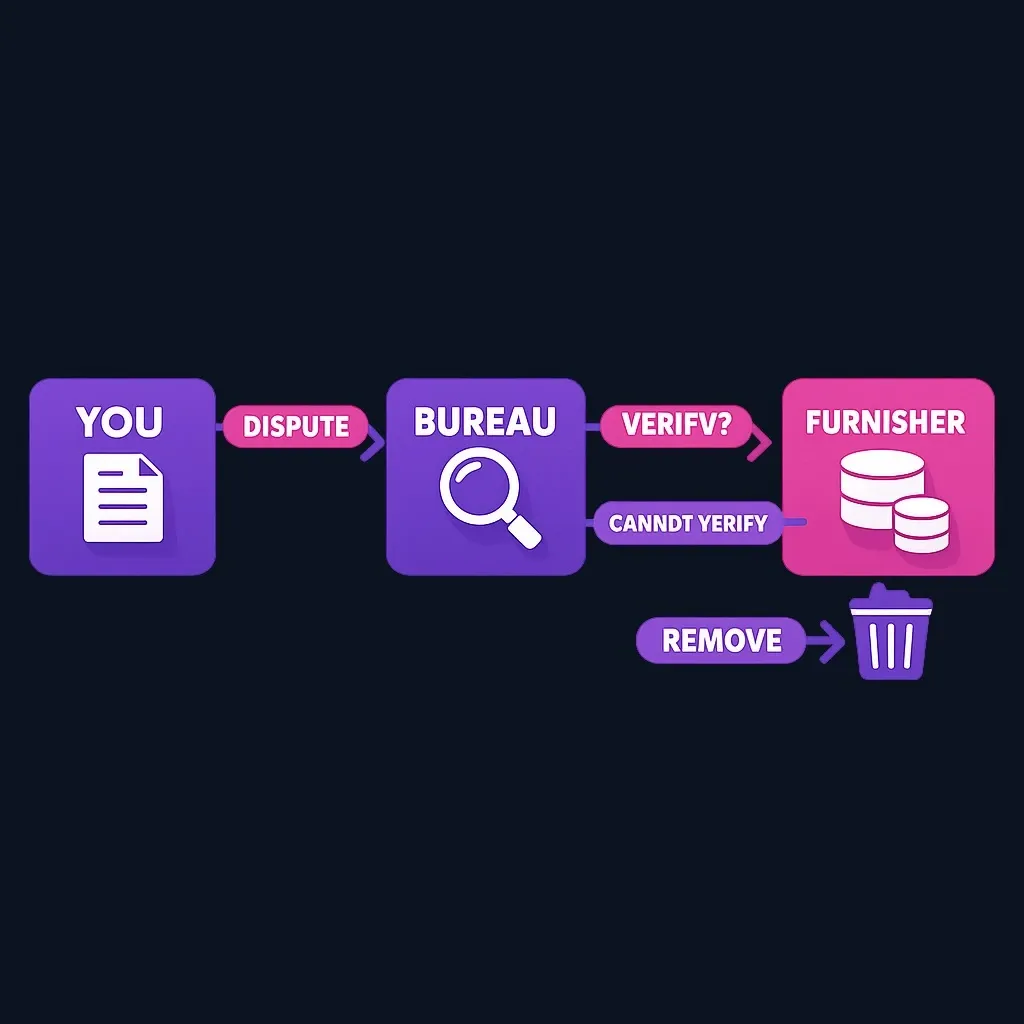
How to file a dispute (step-by-step)
- State precisely what you dispute: account number, creditor name, and the specific field (payment status, date, balance).
- Attach direct evidence that contradicts the report (payment confirmation, bank screenshot showing posted payment).
- Submit the dispute to the bureau(s) that list the item. Use their online portal, secure upload, or mail with copies.
- Save any confirmation or case number you receive. Note the date and any representative’s name.
- Review the bureau’s result letter carefully. If the bureau reports the furnisher verified the item, request the furnisher’s supporting documentation and keep a copy.
Sample dispute paragraph to paste:
- "I dispute the accuracy of the payment status for account [account number]. Enclosed are copies of my payment confirmation and bank statement showing the payment posted on [date]. Please investigate and correct or remove this item if the furnisher cannot verify it."
Caveat and next steps if a dispute is verified: ask the furnisher for the verification it supplied. If that verification is incomplete or inconsistent with your evidence, keep records and consider follow-up complaints to regulators or consumer protection agencies.
Goodwill adjustments (how to approach creditors)
What it is: a goodwill adjustment is a voluntary correction a creditor may grant to remove or update an accurate late payment, usually when the lateness was a one-time hardship and you have a history of paying on time. It is discretionary, not a legal right.
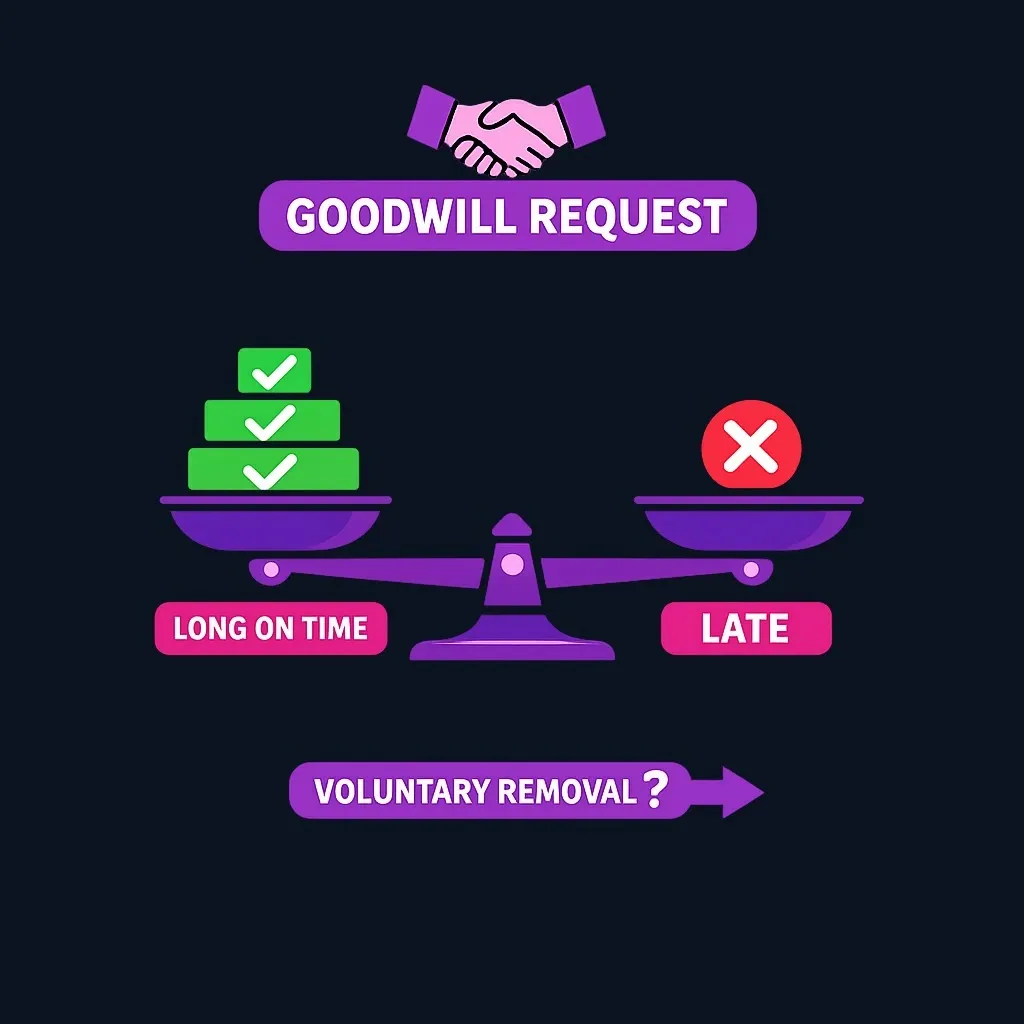
How to write a successful goodwill letter
- Keep it brief and factual. Identify the account and the specific late payment date.
- Explain the reason in one short sentence (e.g., unexpected hardship), then state the account is current.
- Describe corrective steps (e.g., set up autopay) and cite your prior on-time record.
- Request a goodwill removal as a courtesy and offer to provide supporting documents.
- Provide your contact info and a polite close.
Worked one-paragraph example to adapt: "I am writing about account #1234. In [month/year] I missed a payment because of [brief reason]. I have since brought the account current and set up automatic payments. Because I have been a long-standing customer and generally paid on time, I respectfully request a goodwill removal of the late payment reported for [month/year]. I have attached supporting documents and appreciate your consideration."
Practical tips
- Send via the creditor’s secure messaging or certified mail so you have delivery evidence.
- Follow up politely about two weeks after sending. Request written confirmation of any agreement.
- Stay concise and factual — avoid long personal narratives that dilute the ask.
Practice trading with Finelo
Practice in a simulator, learn with bite-sized lessons, and build confidence before risking real money.
Maintaining a good relationship with creditors
- Communicate early if you expect trouble: ask about hardship programs or temporary arrangements before the account becomes delinquent.
- Use automation: set reminders, enroll in autopay, or schedule payments several days before the due date to avoid processing delays.
- Document conversations: record dates, representative names, and any promises. Request written confirmation of plans or concessions.
- Prefer written, dated agreements for payment plans or forbearance and confirm whether the creditor will report the arrangement to credit reporting companies.
- After resolving an issue, verify your credit file to ensure any agreed reporting changes actually appear.
Common mistake and fix: many people wait until collection activity grows before contacting the creditor. Fix this by reaching out at the first sign of difficulty — early contact preserves options.
Decision framework
Use this compact table and the follow-up guidance to choose your first action.
| Situation | Best first action | Why |
|---|---|---|
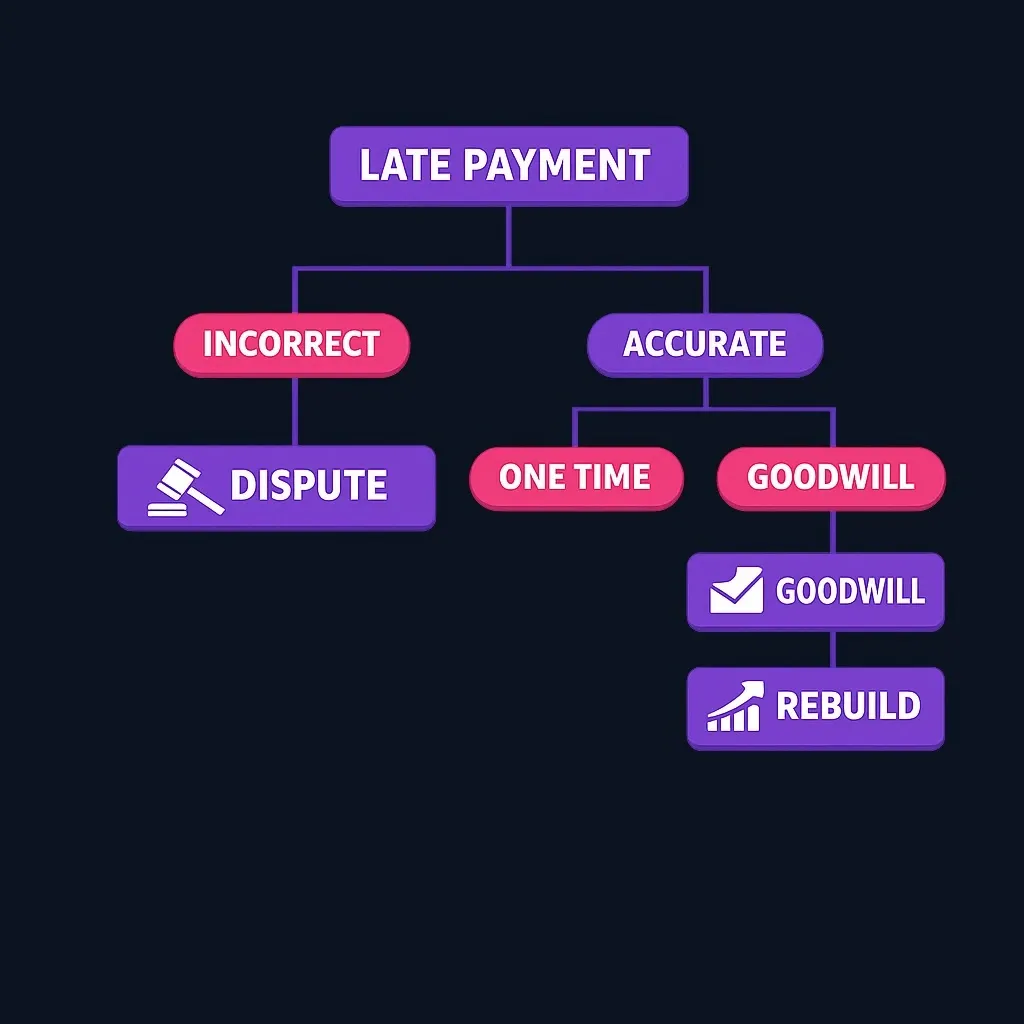
| The entry appears factually incorrect or mismatched to your records | File a dispute with the reporting company and attach proof | A successful dispute forces correction or removal if the furnisher cannot verify the information |
| Entry is accurate but a one-time lapse and you have good prior history | Send a concise goodwill request to the creditor | Creditors may voluntarily remove an isolated late payment as a courtesy |
| Entry is accurate and part of repeated or severe delinquency | Bring accounts current and build recent on-time activity | Removal is unlikely; consistent payments reduce the relative impact over time |
How to choose: verify accuracy first. If you can document an error, dispute it. If the record is accurate and you have a credible one-off reason, try goodwill. Otherwise, prioritize reliable on-time payments and clear records.
Conclusion and next steps
Start by pulling the report entry you want to fix, gather direct evidence, and choose dispute or goodwill based on whether the item is incorrect or simply unfavorable. If the furnisher cannot verify incorrect reporting, it must correct or remove the item and notify the reporting companies. Keep dated copies of every communication and follow up until you receive written confirmation.
Next step: use the dispute steps and evidence checklist in this article, then follow the submission instructions of the credit reporting company that displays the error. Finelo does not currently provide a separate downloadable dispute-letter template with this page.
FAQ
What is a late payment?
A late payment is a reported record that a required payment for an account was not made on time according to that account’s terms. The furnisher (creditor or servicer) supplies this status to credit reports.
How do I file a dispute with a credit reporting company?
Identify the disputed item, attach documents that contradict the report, and submit the dispute through the reporting company’s accepted channels. If the investigation shows the furnisher provided wrong information or cannot verify it, the furnisher must update or remove the item and notify the reporting companies.
Can a creditor voluntarily remove a correct late payment?
Yes, but only at the creditor’s discretion. A concise goodwill request that explains a one-time hardship, shows corrective steps, and highlights your prior record can persuade some creditors to grant a removal as a courtesy.
How can I prevent late payments in the future?
Use automation (autopay or scheduled payments), set calendar reminders a few days before due dates, and contact creditors early when you foresee difficulty. Keep written records of any arrangements you negotiate.
Financial LiteracyFinancial Education
Practice trading with Finelo
Practice in a simulator, learn with bite-sized lessons, and build confidence before risking real money.
About the author
Finelo Team
The Finelo Team creates practical investing and trading education designed to help beginners learn faster with structured challenges, simulator practice, and bite-sized lessons.
Keep reading — Related articles

Financial Literacy
Mercury Books Review 2026: Is It Worth It for Startups?
Mercury Books brings double-entry accounting into Mercury. Review its $35 pricing, reports, AI features, integrations, and migration limits.
Finelo Team

Financial Literacy
Why is My FICO Score Lower Than My Credit Score?
Example takeaway: seeing a higher score in a bank app doesn’t guarantee lenders will see the same FICO number at application time; lenders often pull a specific FICO version from a specific bureau.
Finelo Team

Financial Literacy
Why Is My FICO Score Higher Than My Credit Score?
Brief educational note: this article is educational, not financial or investment advice; investing and credit decisions involve risk and possible loss.
Finelo Team


