Learning how to read a 10-K comes down to knowing which sections answer your question and following them into the footnotes. Form 10-K is the annual filing required of SEC reporting companies subject to the rule, and it offers a detailed picture of the business, risks, management's analysis, audited statements, and controls. The SEC's guide to reading a 10-K provides the official section map.
How to Read a 10-K: A Practical Walkthrough for Investors
Learning how to read a 10-K comes down to knowing which sections answer your question and following them into the footnotes. Form 10-K is the annual filing required of SEC reporting companies subject to the rule, and it…
7 min read
Practice investing with Finelo
Build practical investing skills with guided lessons, simulator practice, and structured challenges.
Want to learn more?
Build practical investing skills with guided lessons, simulator practice, and structured challenges.
Explore FineloExplore Finelo's 28-day challenges
Turn learning into a daily habit with guided challenge paths.
What a 10-K is and where to find it
A Form 10-K is the audited annual filing required of US public companies. Unlike the glossy annual report mailed to shareholders, the 10-K is a regulatory document with mandated sections, which makes it consistent across companies and years. That consistency is your advantage: once you learn the map for one filing, you can navigate every filing.
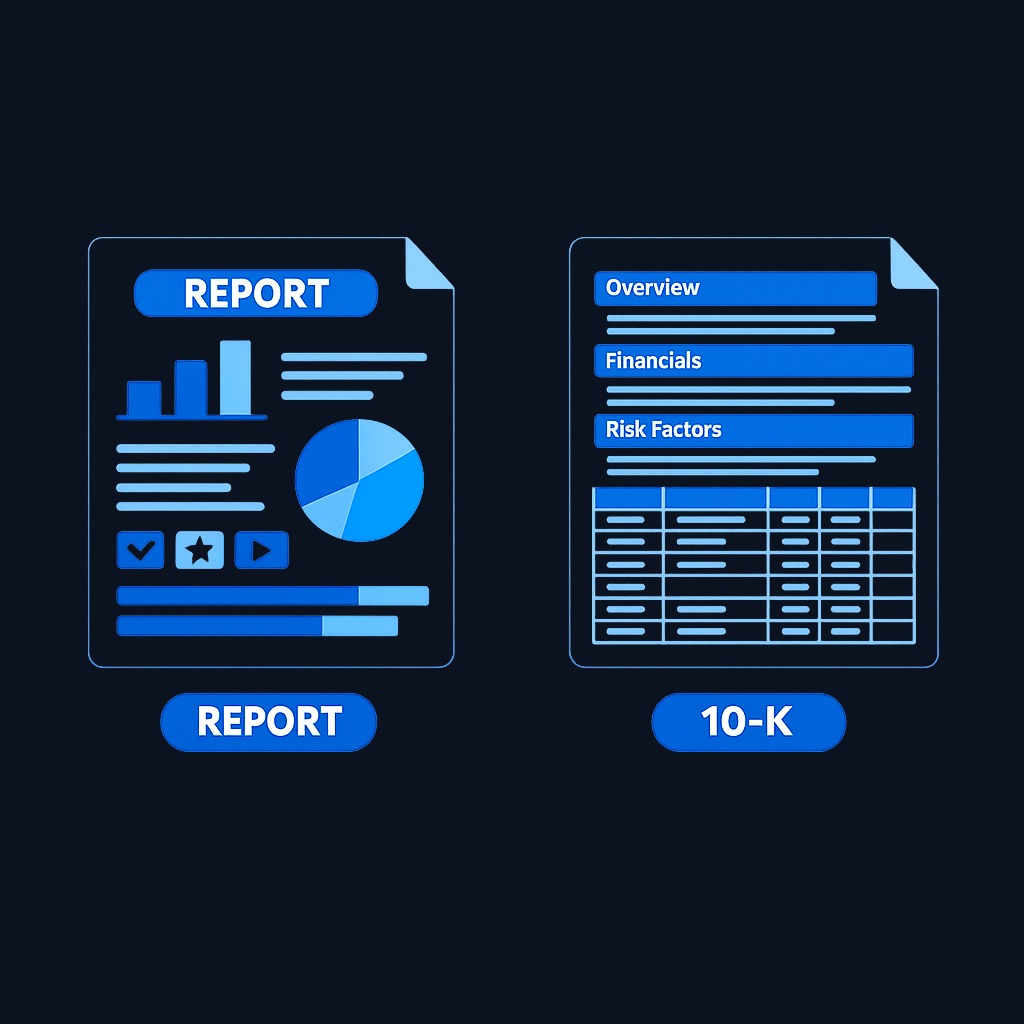
Filed 10-Ks are free through the SEC's EDGAR search. Large accelerated filers generally file within 60 days of fiscal year-end; accelerated filers have 75 days and other filers 90 days under the official Form 10-K instructions.
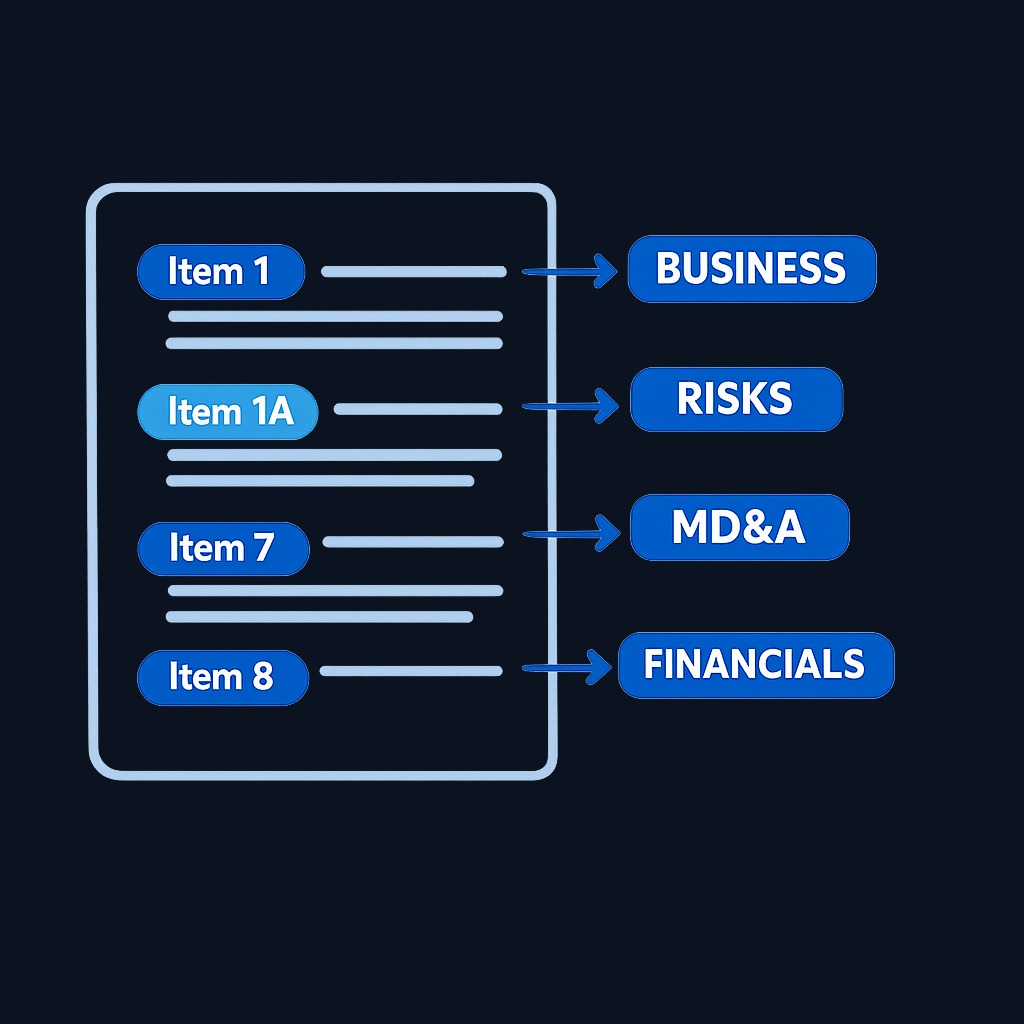
The four parts of a 10-K at a glance
| Part | Key items | What you learn |
|---|---|---|
| Part I | Item 1 Business; Item 1A Risk Factors; Item 3 Legal Proceedings | What the company does and what could hurt it |
| Part II | Item 5 Market for Stock; Item 7 MD&A; Item 8 Financial Statements | How the business performed, in management's words and in audited numbers |
| Part III | Items 10-14: governance, executive compensation, ownership | Who runs the company and how they are paid (often incorporated from the proxy) |
| Part IV | Item 15 Exhibits and schedules | Contracts, subsidiaries, and supporting documents |
Most of the investment substance lives in Items 1, 1A, 7, and 8. The rest is context you can skim on a first pass.
The sections that deserve most of your time
Item 1: Business
This is the company explaining itself: segments, products, customers, competition, and how it actually makes money. If you cannot restate the business model in two sentences after reading Item 1, stop and reread it before touching a single number.
Item 1A: Risk factors
Companies list everything that could plausibly go wrong. Much of it is boilerplate, so read for specificity. A generic warning about competition means little; a disclosure that one customer represents 30% of revenue is a genuine analytical gift. Compare this section year over year: newly added risks tell you what management has started worrying about.
Item 7: Management's discussion and analysis
MD&A is management narrating the year: why revenue moved, why margins changed, what liquidity looks like, and what trends they expect to continue. Read it skeptically but read it fully, because it links causes to numbers. The best MD&A sections quantify their explanations; vague ones that blame "macro headwinds" for everything are themselves a data point.
Item 8: Financial statements and notes
The audited income statement, balance sheet, and cash flow statement, plus footnotes. The footnotes are not optional extras: revenue recognition policies, debt maturities, lease obligations, and legal contingencies all hide there. Experienced readers often say the notes are the first thing they read, precisely because that is where uncomfortable details are placed.
How to analyze the financial statements
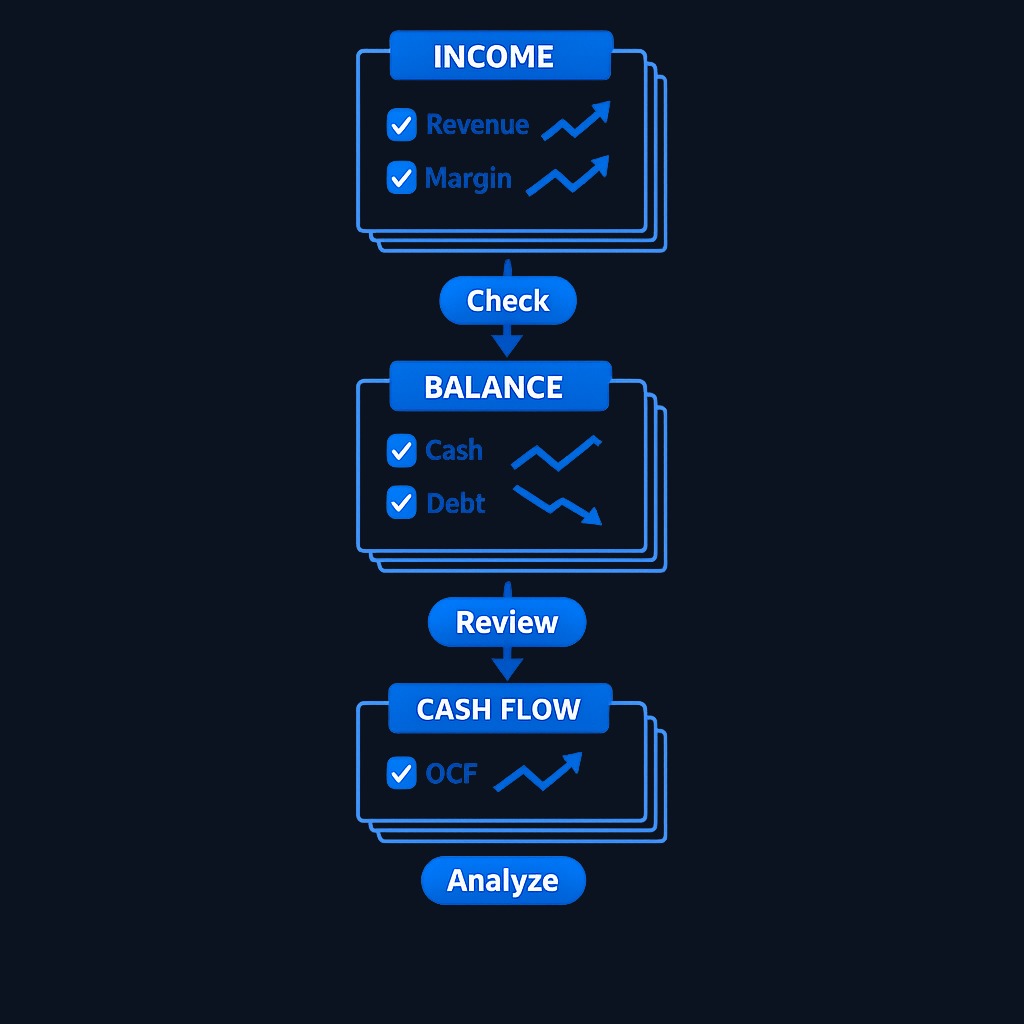
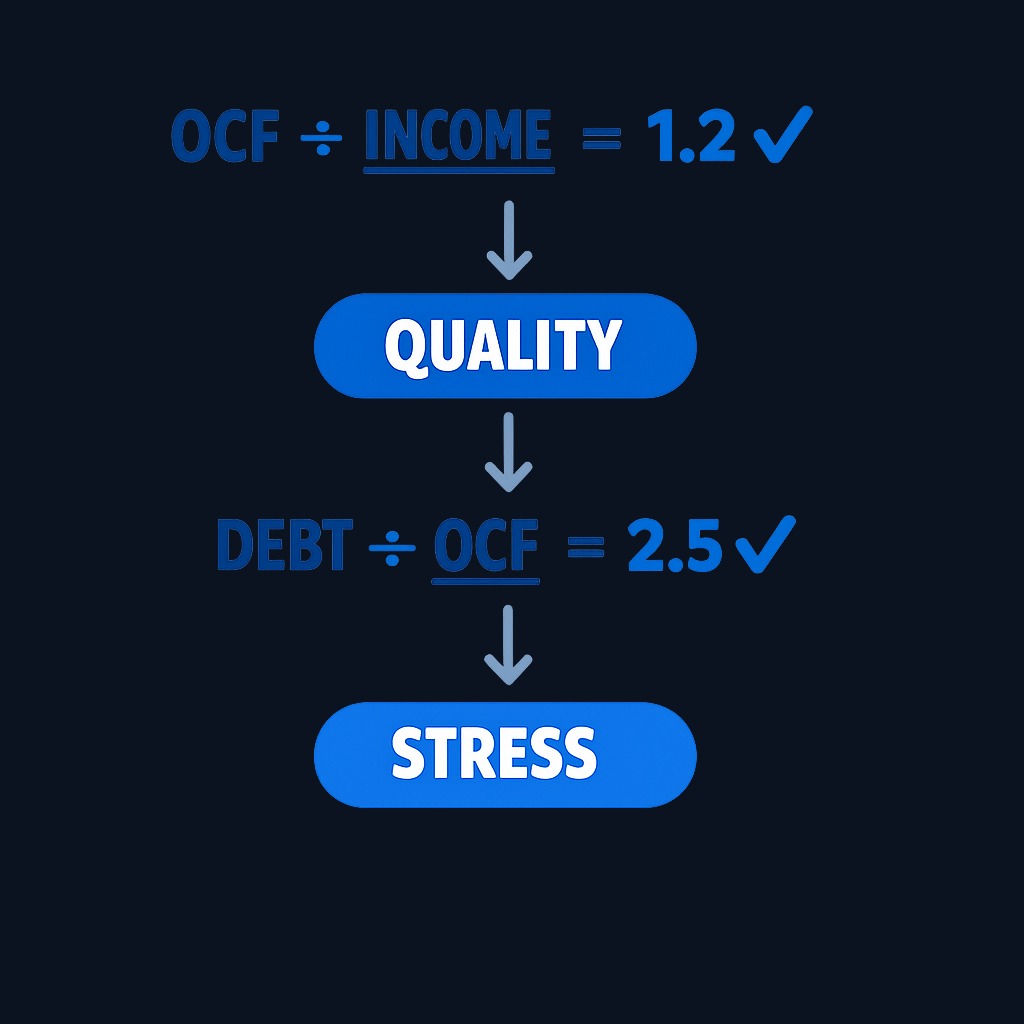
Work the three statements as a system. From the income statement, track revenue growth and operating margin across at least three years to see trajectory rather than a snapshot. From the balance sheet, check cash against debt and note when that debt matures, using the footnotes for the schedule. From the cash flow statement, compare operating cash flow with reported net income; persistent gaps where earnings grow but cash does not are one of the oldest warning signs in accounting.
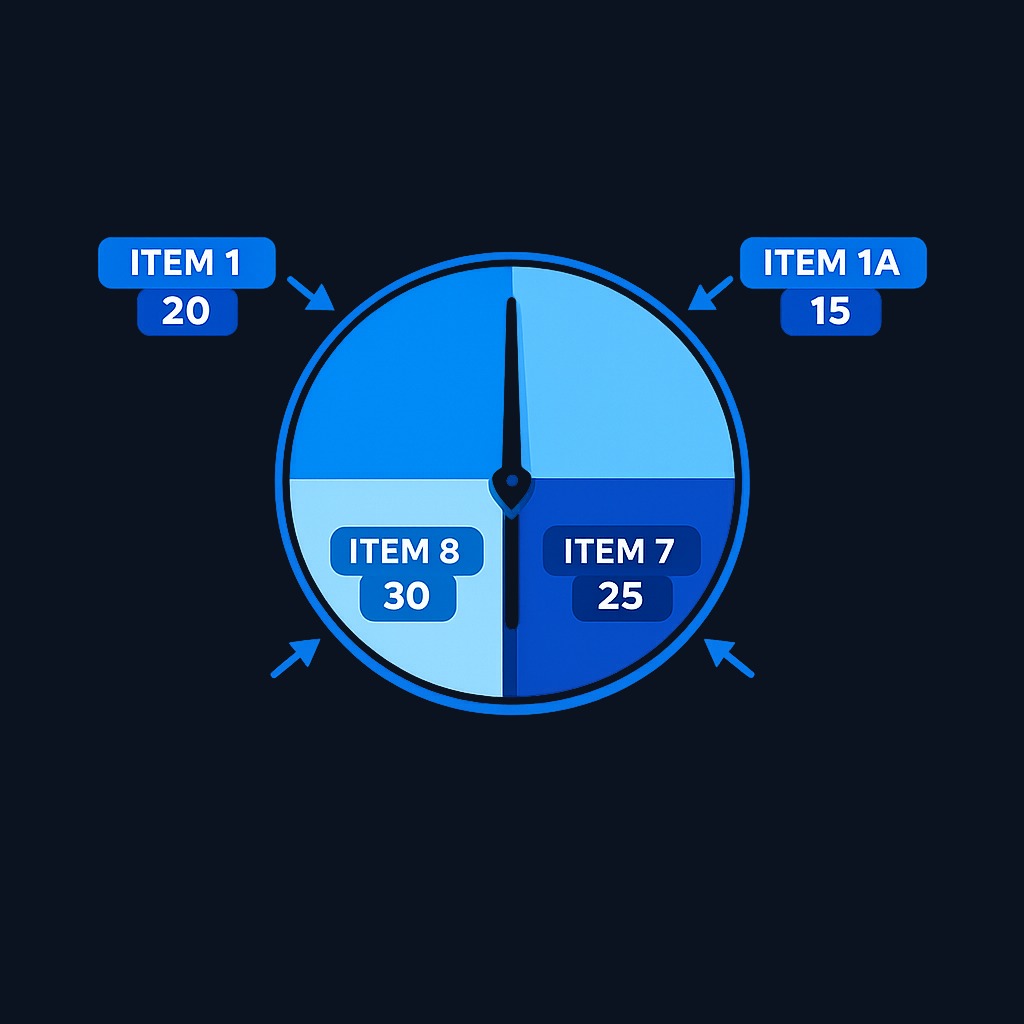
A practical 90-minute routine for a first read: spend 20 minutes on Item 1, 15 on Item 1A hunting for specific disclosures, 25 on MD&A, and 30 on the statements and notes. Take three notes per section, no more. The goal of a first pass is a decision about whether the company deserves a second pass, not mastery.
Two ratios earn their place in a beginner's toolkit here: operating cash flow versus net income for earnings quality, and total debt versus operating cash flow for balance-sheet stress. Both come straight from Item 8 with no adjustments needed.
Practice investing with Finelo
Build practical investing skills with guided lessons, simulator practice, and structured challenges.
Common pitfalls when reading a 10-K
- Starting with the financials. Numbers without the business context of Item 1 invite misreading; a collapsing margin means something different in a growth phase than in decline.
- Skipping the footnotes. Off-balance-sheet obligations, unusual revenue policies, and litigation exposure live in the notes, not the headlines.
- Reading one year in isolation. The signal is in the deltas: risk factors added, segments reorganized, margin trends, language that shifted from confident to cautious.
- Treating boilerplate risk as real risk. Every filer warns about the economy. Focus on risks unique to this company: customer concentration, key suppliers, regulatory dependencies.
- Confusing the annual report with the 10-K. The marketing document and the regulatory filing overlap but are not the same; the 10-K is the one with mandated completeness.
What to know before deciding
A 10-K rewards effort unevenly. The first hour on a filing yields most of the insight; the tenth hour serves professionals with specific questions. Match your depth to your purpose. If you own index funds and are curious, reading Items 1 and 7 of a few holdings is plenty. If you buy individual stocks, a full pass through the four key items plus footnotes should be your minimum bar before purchase, repeated annually to track changes. And if a filing resists comprehension after honest effort, treat that as information: businesses you cannot understand from their own disclosure are businesses you cannot monitor as an owner.
Decision framework: how deep should you go?
| Your situation | Recommended depth |
|---|---|
| Index investor, curious about holdings | Items 1 and 7 of your largest positions, once a year |
| Buying an individual stock | Full pass: Items 1, 1A, 7, 8 with footnotes, before purchase |
| Monitoring an existing position | Year-over-year comparison of risk factors, MD&A tone, and cash flow |
| Analyzing a complex financial or insurer | Add the accounting-policy notes and consider whether the complexity exceeds your circle of competence |
FAQ
What is the most important section of a 10-K?
For most readers, Item 7 (MD&A) and Item 8 (financial statements with footnotes) carry the most weight, but they only make sense after Item 1 establishes what the business actually does.
How long does it take to read a 10-K?
A focused first pass on the key items takes about 90 minutes. Full professional-grade analysis of a complex filer can take many hours, which is why matching depth to purpose matters.
Where can I get 10-K filings for free?
Every 10-K is available at no cost through the SEC's EDGAR system, and most companies also post filings on their investor relations pages.
How is a 10-K different from a 10-Q?
The 10-K is annual, audited, and comprehensive. The 10-Q is quarterly, unaudited, and condensed. The 10-K sets the baseline; 10-Qs update it between annual filings.
Conclusion and next steps
Reading a 10-K is a learnable routine, not a talent: map the four parts, spend your time on Items 1, 1A, 7, and 8, read the footnotes, and compare each year against the last. The filing is where a company speaks under legal obligation rather than through marketing, which makes it the single best primary source an ordinary investor has. Your next step is practice: pick one company whose products you use, pull its latest 10-K from EDGAR, and run the 90-minute routine this week. The second filing you read will take half the time of the first.
InvestingFundamental AnalysisFinancial StatementsBeginner
Practice investing with Finelo
Build practical investing skills with guided lessons, simulator practice, and structured challenges.
About the author
Finelo Team
The Finelo Team creates practical investing and trading education designed to help beginners learn faster with structured challenges, simulator practice, and bite-sized lessons.
Keep reading — Related articles
Investing
Tax-gain harvesting vs. tax-loss harvesting
Compare realizing investment gains with realizing losses, including holding periods, wash sales, offsets, and portfolio tradeoffs.
Finelo Team

Investing
Stable value fund vs. money market fund
Compare investment structure, contract protections, transfer restrictions, net yields, and access inside a retirement account.
Finelo Team

Investing
Single-life vs. joint-life annuity
Compare income for one lifetime with continued payments to a survivor, using equal premiums and matching guarantee terms.
Finelo Team