To rebalance a portfolio, compare your current asset mix with your target allocation, identify what is overweight or underweight, then use new contributions, withdrawals, or trades to bring the mix back toward target. The point is not to chase performance. It is to keep your portfolio's risk aligned with your plan.
How to Rebalance Your Portfolio: Strategies for Success
To rebalance a portfolio, compare your current asset mix with your target allocation, identify what is overweight or underweight, then use new contributions, withdrawals, or trades to bring the mix back toward target…
6 min read
Practice investing with Finelo
Build practical investing skills with guided lessons, simulator practice, and structured challenges.
Want to learn more?
Build practical investing skills with guided lessons, simulator practice, and structured challenges.
Explore FineloExplore Finelo's 28-day challenges
Turn learning into a daily habit with guided challenge paths.
Portfolio rebalancing is the maintenance step after asset allocation. Asset allocation is your chosen mix of investments, such as stocks, bonds, cash, or other asset classes. Over time, market movement can push that mix away from your original plan. Rebalancing brings it back into line.
Portfolio Rebalancing at a Glance
Rebalancing means adjusting your holdings so your actual portfolio matches, or moves closer to, your target allocation. If your target is 80% stocks and 20% bonds, but market movement changes the portfolio to 85% stocks and 15% bonds, Investor.gov gives the example of considering a move back toward the original 80/20 allocation by trimming stocks or adding to bonds (Investor.gov).
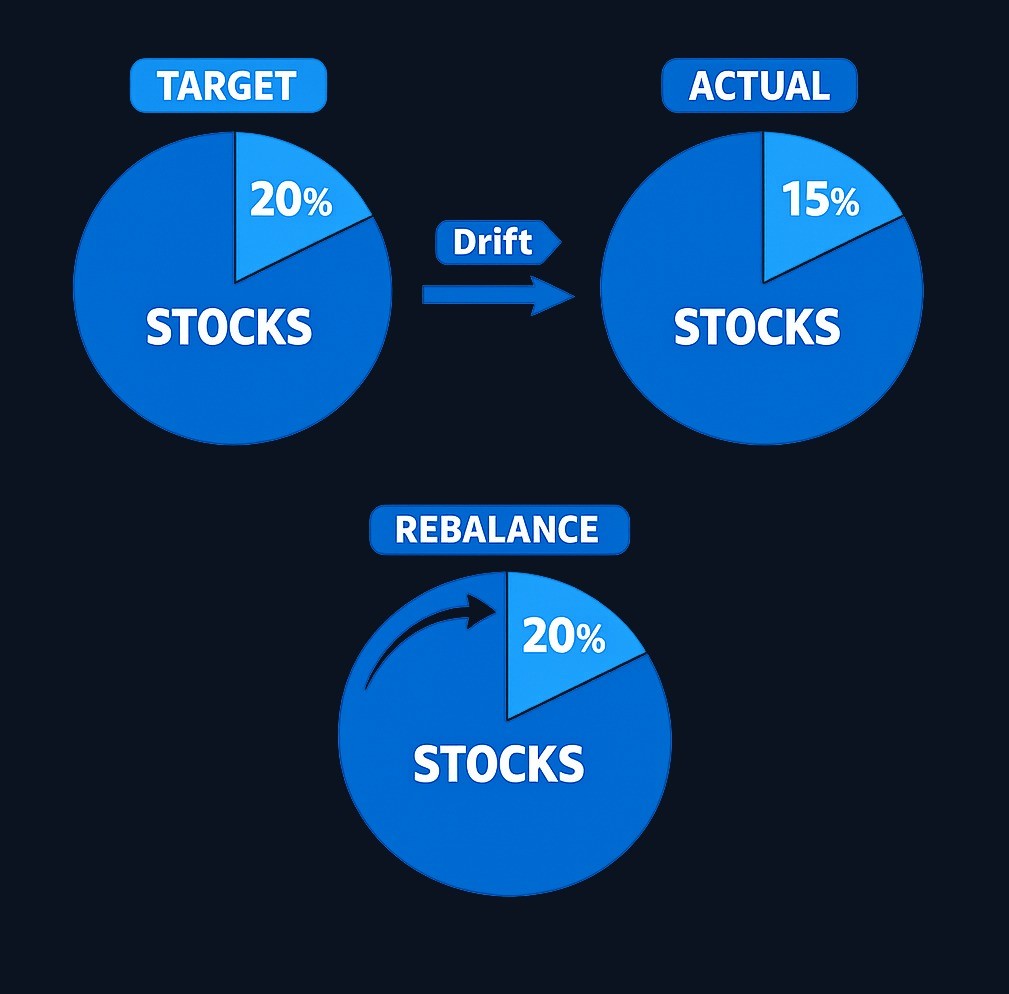
That example shows the core idea: winners can become too large, and lagging assets can become too small. Without rebalancing, a portfolio may quietly become more aggressive or more conservative than intended.
This guide is for beginners who already have, or are planning, a simple portfolio and want a repeatable process for keeping it aligned. It is educational, not personalized investment advice.
Why Rebalancing Matters
Rebalancing is mainly about risk control. Suppose you chose a portfolio because the balance felt appropriate for your timeline, goals, and comfort with volatility. If stocks rise sharply, they may become a larger share of the portfolio. That may feel good while markets rise, but it also means more of your money is exposed to stock-market swings.
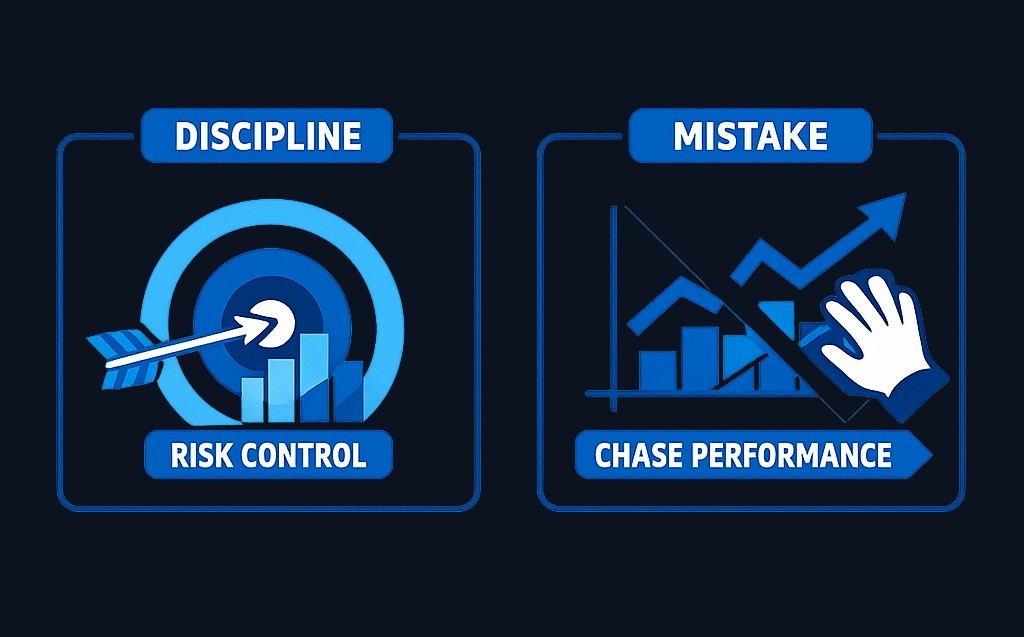
Rebalancing also gives you a rule when emotions are loud. Many people want to buy what recently went up and avoid what recently went down. A rebalancing rule does the opposite: it asks you to check whether your allocation still matches the plan.
It can also prevent neglect. A portfolio that looked balanced years ago may no longer reflect your life. A new job, approaching retirement, a shorter time horizon, or a major expense can change how much risk is appropriate.
The important caveat: rebalancing does not make outcomes certain. It simply keeps the portfolio closer to the risk profile you chose.
Rebalancing Methods and Timing
There are three common ways to decide when to rebalance: calendar-based, threshold-based, and hybrid.
| Method | How it works | Best fit | Watch out for |
|---|---|---|---|
| Calendar-based | Review on a set schedule | People who want a simple routine | May trade even when drift is small |
| Threshold-based | Act when an asset class drifts beyond a chosen band | People who want fewer unnecessary trades | Requires monitoring |
| Hybrid | Review on a schedule, trade only if drift is meaningful | People who want discipline plus flexibility | Needs clear rules before markets move |
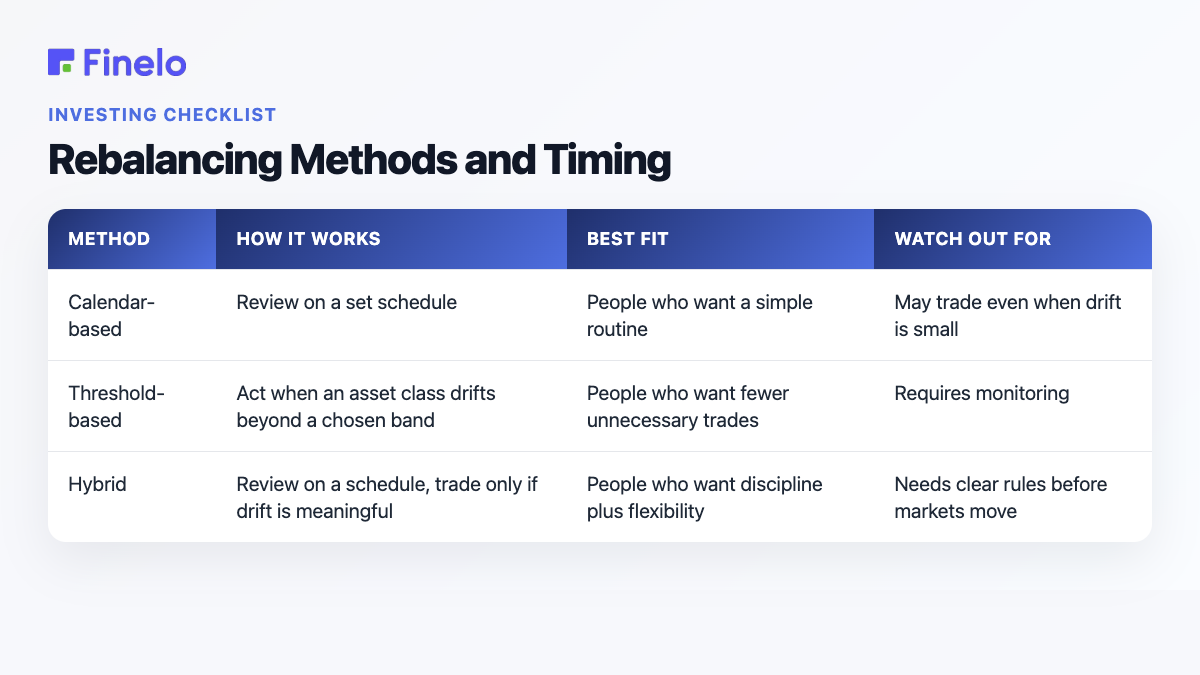
Calendar-based rebalancing is easy to follow. You might review your portfolio on the same month each year or each quarter. The benefit is consistency. The drawback is that the calendar may tell you to trade when the portfolio is already close to target.
Threshold-based rebalancing reacts to drift. For example, you might review when an asset class moves several percentage points away from target. The benefit is that you avoid small adjustments. The drawback is that you need to track the portfolio.
A hybrid rule often feels practical for beginners: check on a schedule, but only rebalance when the difference is large enough to matter. Whatever rule you choose, write it down before markets move.
Practice investing with Finelo
Build practical investing skills with guided lessons, simulator practice, and structured challenges.
Steps to Rebalance Your Portfolio
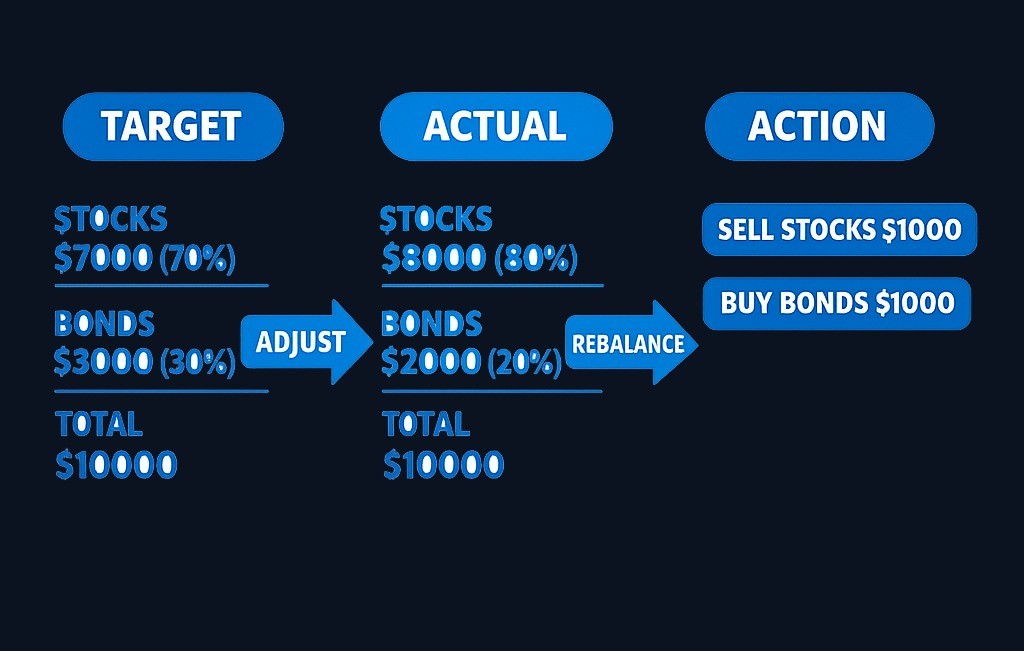
Start with your target allocation. A target allocation is the mix you want, such as 70% stocks and 30% bonds. Then calculate your current allocation. You need the current value of each asset class and the total portfolio value.
Here is a simple example with round numbers:
| Asset class | Target | Current value | Current weight | Target value on $10,000 |
|---|---|---|---|---|
| Stocks | 70% | $8,000 | 80% | $7,000 |
| Bonds | 30% | $2,000 | 20% | $3,000 |
| Total | 100% | $10,000 | 100% | $10,000 |
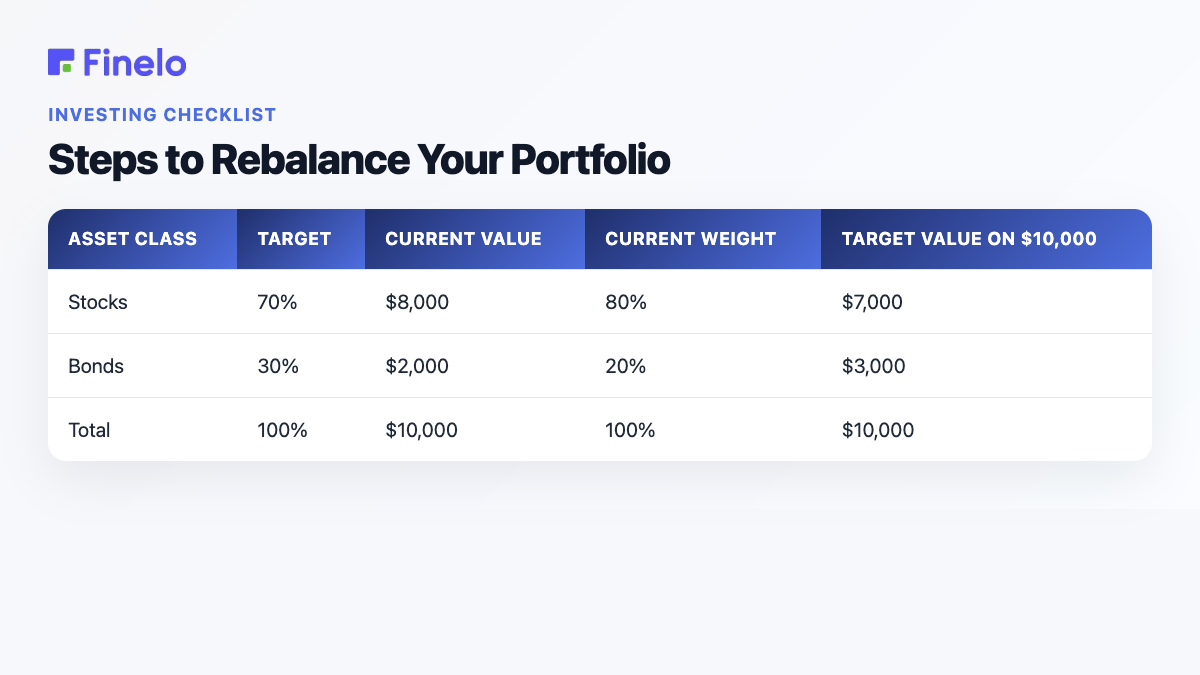
In this example, stocks are $1,000 above target and bonds are $1,000 below target. One way to rebalance is to sell $1,000 of stocks and buy $1,000 of bonds. Another way is to direct new contributions toward bonds until the portfolio moves closer to target.
Use this step-by-step process:
- List your target allocation.
- Add up current values by asset class.
- Divide each asset class by the total portfolio value.
- Compare current weights with target weights.
- Decide whether the drift is large enough to act.
- Use new cash first when possible.
- If trades are needed, review taxes, fees, and account rules first.
- Record what you changed and why.
The math is simple. The judgment is deciding whether the trade is worth the cost, tax impact, and effort.
Taxes, Costs, and Account Type
Rebalancing can create taxes or transaction costs, especially in taxable accounts. Selling an investment that has gained value may create a taxable event. Selling in a retirement account may have different rules. The exact impact depends on the account, investment, country, and personal situation.
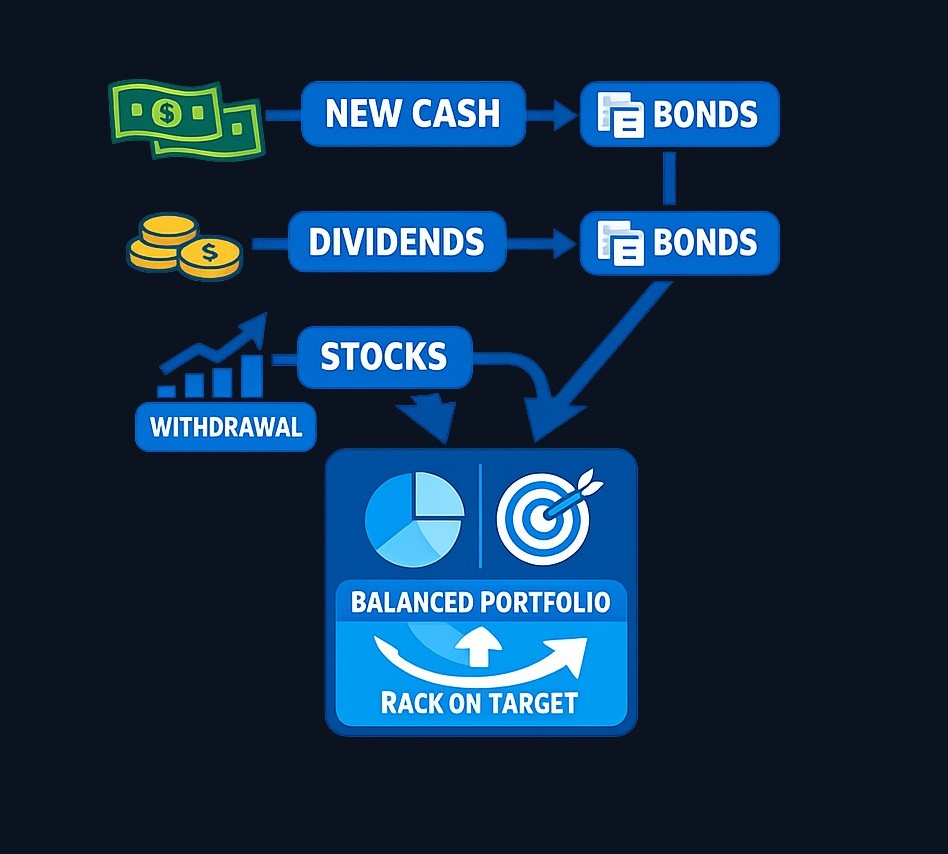
That is why many investors look for lower-friction ways to rebalance before selling. You may be able to direct new contributions to underweight assets, reinvest dividends toward the asset class that needs more weight, or use withdrawals from overweight assets when you are already taking money out.
Costs matter too. Some investments have spreads, trading costs, fund expenses, or account fees. A tiny allocation drift may not be worth fixing if the trade creates more friction than benefit.
The safe habit is to check account rules and tax consequences before placing trades. If the portfolio is large, complex, or taxable, qualified tax or financial guidance can be useful.
Common Mistakes and Behavioral Traps
The first mistake is rebalancing too often. Constant small trades can turn a long-term plan into a reaction habit. If your target allocation is still close, doing nothing may be a valid decision.
The second mistake is waiting too long. If one asset class grows far beyond the target, your risk may no longer match your plan. This often happens quietly during strong markets.
The third mistake is changing the target instead of rebalancing. If your target was 60% stocks and stocks rise to 75%, it can be tempting to declare that 75% is the new plan. Maybe your situation truly changed, but do not let recent performance rewrite the strategy by accident.
The fourth mistake is ignoring account location. Rebalancing inside one account may have different tax effects than rebalancing in another. Look at the whole portfolio before trading.
The fifth mistake is treating rebalancing as a return booster. Rebalancing is a discipline tool. Sometimes it may help results. Sometimes it may reduce exposure to assets that continue rising. Its main job is keeping risk intentional.
Before every rebalance, ask:
- Has my target allocation changed for a real life reason?
- Is the drift large enough to matter?
- Can new contributions fix the imbalance?
- Will selling create taxes or costs?
- Am I following a written rule or reacting emotionally?
Conclusion and Next Steps
Rebalancing keeps your portfolio from drifting away from the risk level you intended. The basic process is simple: set a target, measure the current allocation, calculate the gap, and decide whether to use contributions, withdrawals, or trades to close it.
Your next step is to write a one-page rebalancing rule: target allocation, review schedule, drift threshold, preferred method, and tax-cost checklist. If you want to build stronger investing habits before making real-money decisions, Finelo's AI Investing Challenge is positioned around long-term investing research, portfolio construction, diversification, patience, and AI-assisted thesis building. Use education as preparation, then verify costs, taxes, and account rules before trading.
Frequently asked questions
What is portfolio rebalancing?
Portfolio rebalancing is the process of adjusting holdings so the portfolio moves back toward its target allocation. It helps keep risk aligned with the plan you originally chose.
How often should I rebalance my portfolio?
There is no single schedule for everyone. Some investors review on a calendar, some use drift thresholds, and some combine both. The best schedule is one you can follow without overreacting to normal market movement.
Can I rebalance without selling investments?
Often, yes. You may be able to direct new contributions, dividends, or withdrawals toward underweight or overweight asset classes. This can reduce trading, though it may not fully fix large drift.
Are there tax consequences when rebalancing?
There can be, especially when selling appreciated investments in taxable accounts. Account type and local rules matter, so review tax effects before trading and consult a qualified professional when needed.
InvestingBeginnerPortfolio ManagementMarkets
Practice investing with Finelo
Build practical investing skills with guided lessons, simulator practice, and structured challenges.
About the author
Finelo Team
The Finelo Team creates practical investing and trading education designed to help beginners learn faster with structured challenges, simulator practice, and bite-sized lessons.
Keep reading — Related articles

Investing
Yield to Call vs Yield to Maturity: Assumptions and Bond Risks
Yield to call (YTC) estimates a bond's yield if the issuer redeems it on an eligible call date; yield to maturity (YTM) estimates yield if it remains outstanding to final maturity.
Finelo Team

Investing
Will My Employer Know If I Take a 401(k) Loan?
Who this page is for: readers new to 401(k) loans who want a practical, privacy‑focused explanation — what your employer can see, how to limit visibility, and the financial tradeoffs to weigh.
Finelo Team

Investing
What Medical Expenses Qualify for a 401(k) Hardship Withdrawal?
Before you decide, confirm three things with your plan administrator:
Finelo Team


