Researching a stock means answering four questions before you buy: What does the company do and how does it make money? Is it financially healthy? Is the price reasonable relative to its earnings? And does it fit your goals and risk tolerance? You can answer all four using free sources — company reports, your broker's research tools, and financial news.
How to Research Stocks for Beginners
Researching a stock means answering four questions before you buy: What does the company do and how does it make money? Is it financially healthy? Is the price reasonable relative to its earnings? And does it fit your…
6 min read
Practice investing with Finelo
Build practical investing skills with guided lessons, simulator practice, and structured challenges.
Want to learn more?
Build practical investing skills with guided lessons, simulator practice, and structured challenges.
Explore FineloExplore Finelo's 28-day challenges
Turn learning into a daily habit with guided challenge paths.
What this page is: a repeatable research routine for first-time stock investors, not tips or picks. Who it's for: beginners who want a checklist instead of hunches. Your next step: read the sections in order, then practice the closing checklist on one real company. The stakes are real — investors who skip research tend to either overpay for whatever is popular or mistake a struggling business for a bargain.
Understanding Your Investment Goals
Research starts with you, not the stock. As interactive investor's beginner guide puts it, the starting point is thinking about your own risk tolerance and income requirements. Your goals decide what "good" even means:
- Income-focused or cautious? Beginners and income-seekers often prefer large multinational companies with generous dividend payouts — established businesses that are easier to research and less volatile.
- Growth-focused with decades ahead? Smaller companies are inherently riskier but offer more opportunities for strong growth — suitable as part of a diversified portfolio, never as the whole thing.
Also decide your time horizon (when will you need this money?) and your honest risk tolerance (how much temporary loss can you watch without panic-selling?). A stock that suits a 25-year-old saving for retirement can be wrong for someone buying a house in three years. Write your answers down — they become the filter for everything that follows.
Key Financial Metrics to Analyze
Three metrics cover most beginner needs. All appear on any stock's quote page.
Earnings per share (EPS). The company's profit divided by its number of shares. It answers: how much profit stands behind each share I'd own? Rising EPS over several years signals a growing business.
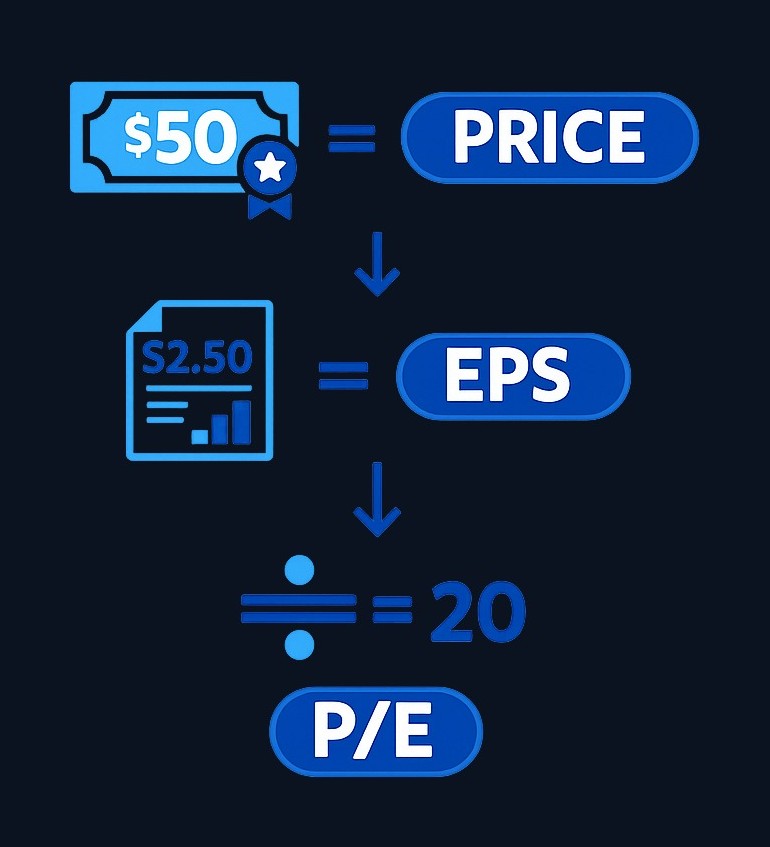
Price-to-earnings ratio (P/E). Share price ÷ EPS. A worked example: a stock at $50 with EPS of $2.50 has a P/E of 20 — you're paying $20 for each $1 of annual profit. Compare P/E against similar companies, not across industries; fast-growers normally carry higher P/Es than mature businesses.
Debt levels. Check the balance sheet for how much the company owes versus what it owns. Heavy debt makes a business fragile in downturns, whatever its profits look like today.
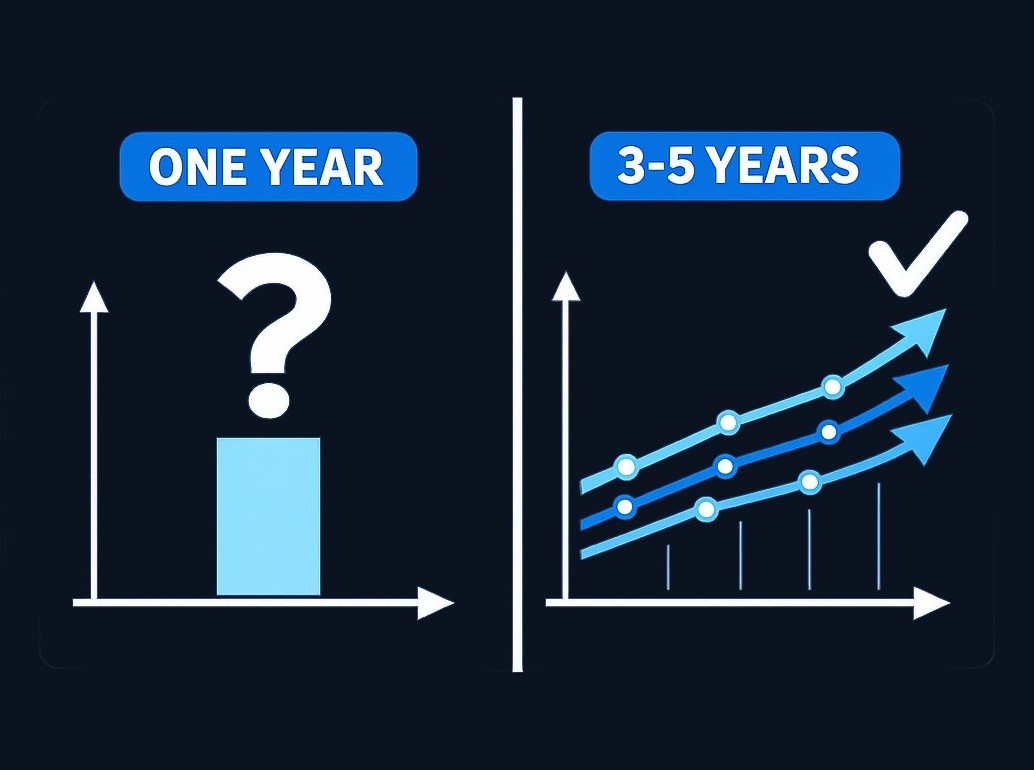
The habit that matters: never read one metric alone, and never read one year alone. Trends across three to five years tell the story a single number can't.
Utilizing Analyst Reports and Research Platforms
You don't have to research from scratch. Professional analysts publish reports on major companies, and a standard self-research sequence runs: review analyst reports, analyze the financial statements, evaluate the business model, assess management, study the industry, and only then form a view on the price.
How to use reports without being led by them:
- Read the reasoning, not the rating. A "buy" or "sell" label teaches nothing; the analyst's argument about revenue, competition, and risks teaches a lot.
- Read more than one. Where analysts disagree is exactly where the interesting uncertainty lives.
- Note the assumptions. Every target price rests on growth assumptions. Ask whether they seem reasonable, not whether the number looks exciting.
Your main free sources: your brokerage's research tab, the company's own investor relations page (annual reports live there), official regulatory filings, and reputable financial news sites. Between them, everything in this article is findable at no cost.
Practice investing with Finelo
Build practical investing skills with guided lessons, simulator practice, and structured challenges.
Evaluating Company Fundamentals
Numbers describe the past; fundamentals hint at the future. The questions worth asking mirror the ones experienced investors run through: is the company well run, does it operate in an area with a promising long-term future, do the financial ratios look healthy, and is the stock fairly priced? Three checks turn those into a routine:
The business model. Explain, in two sentences, how the company makes money and why customers choose it. If you can't, don't buy it — you won't hold it calmly through a bad quarter either. "It sells subscription software that businesses depend on daily" passes. "Everyone's talking about it" doesn't.

The management. Read the CEO's letter in the annual report from two or three years ago, then check what actually happened. Leaders who did what they said deserve more trust than leaders with beautiful plans and missing follow-through.
The market position. Does the company have something durable — a strong brand, high switching costs, cost advantages — that keeps competitors out? A profitable business with no defenses invites rivals to eat its margins. A well-run company in a shrinking industry is rowing against the current.

Market Trends and Their Impact on Stocks
Even a well-chosen stock moves with the tide. Interest rates, inflation, and the economic cycle push whole markets up and down, and sector fashions swing hard — an industry can be beloved one year and abandoned the next, with every stock in it repriced.
Two practical lessons for beginners. First, don't confuse a rising market with your own skill, or a falling one with your own failure — check whether the sector moved before judging your stock. Second, use trends as context, not as a timing tool. Predicting short-term market direction reliably is beyond professionals, let alone beginners. Research picks what to own; consistency — not timing — usually decides how well it works out.
Common Pitfalls in Stock Research
- Buying the story, skipping the numbers. Exciting narratives are how expensive mistakes are marketed. Force every idea through the metrics.
- Confirmation bias. Once you like a stock, you'll unconsciously hunt for agreeing opinions. Deliberately search for the bear case — "reasons not to buy X" — before purchasing.
- Treating cheap as safe. A low price or low P/E can mean opportunity — or a business on its last legs dressed up as a bargain. Find out which before celebrating the discount.
- Overconcentrating. Even great research is sometimes wrong. Keep any single stock a modest slice of a diversified portfolio, so one miss can't sink you.
- Researching once, then never again. Companies change. Re-check your holdings against your original reasoning at least yearly.
- Ignoring your own psychology. Fear sells at bottoms; greed buys at tops. A written checklist, applied identically every time, is the cheapest defense against your own emotions.
Practical Next Steps for New Investors
Your beginner research checklist, in order:
- Write down your goal, horizon, and risk tolerance.
- Pick one company you already understand as a practice case.
- Explain its business model in two sentences.
- Check EPS trend, P/E versus peers, and debt.
- Read one analyst report and one bear case.
- Decide — and record why, so you can review your reasoning later.
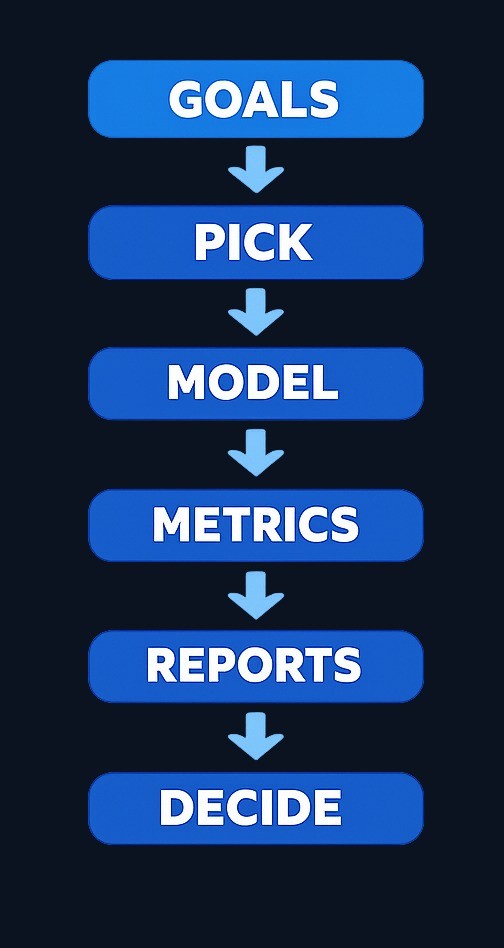
Repeat the loop on a few companies before committing real money. The checklist is the skill.
Frequently asked questions
What is the first step in researching stocks?
Define your goals and risk tolerance and income [needs](https://www.ii.co.uk/learn/investing-for-beginners/how-to-research-stocks-and-shares) first. The same stock can be right for one investor and wrong for another, so knowing what you need comes before analyzing anything.
How do I know if a stock is fairly priced?
Start with the P/E ratio compared against similar companies and the stock's own history. No single number settles it — expensive-looking stocks can deserve it, and cheap ones can be cheap for a reason.
How do I analyze a company's financial health?
Read three things: the income statement (is it profitable, and growing?), the balance sheet (how much debt?), and several years of trend rather than one snapshot.
How can I stay updated on my stocks?
Follow quarterly results and annual reports for the companies you own, and re-test your original reasons for buying. Daily price-watching adds anxiety, not insight. Investing involves risk, and no research method guarantees results — this guide is educational, not personalized financial advice. Verify suitability for your own situation before buying any stock. Want a structured path from research basics to confident investing? Finelo's Wealth Growth [Quiz](https://finelo.com/) matches you with a learning track that fits your starting level.
InvestingBeginnerStock ResearchMarkets
Practice investing with Finelo
Build practical investing skills with guided lessons, simulator practice, and structured challenges.
About the author
Finelo Team
The Finelo Team creates practical investing and trading education designed to help beginners learn faster with structured challenges, simulator practice, and bite-sized lessons.
Keep reading — Related articles

Investing
Yield to Call vs Yield to Maturity: Assumptions and Bond Risks
Yield to call (YTC) estimates a bond's yield if the issuer redeems it on an eligible call date; yield to maturity (YTM) estimates yield if it remains outstanding to final maturity.
Finelo Team

Investing
Will My Employer Know If I Take a 401(k) Loan?
Who this page is for: readers new to 401(k) loans who want a practical, privacy‑focused explanation — what your employer can see, how to limit visibility, and the financial tradeoffs to weigh.
Finelo Team

Investing
What Medical Expenses Qualify for a 401(k) Hardship Withdrawal?
Before you decide, confirm three things with your plan administrator:
Finelo Team