For U.S. readers: This article discusses U.S. rules and financial products. State rules and individual eligibility may differ.
How to Handle a 401(k) Loan After Leaving a Job
Leaving a job does not create one universal 401(k)-loan deadline.
8 min read
Practice investing with Finelo
Build practical investing skills with guided lessons, simulator practice, and structured challenges.
Want to learn more?
Build practical investing skills with guided lessons, simulator practice, and structured challenges.
Explore FineloExplore Finelo's 28-day challenges
Turn learning into a daily habit with guided challenge paths.
Quick answer
Leaving a job does not create one universal 401(k)-loan deadline. The plan document controls whether payments may continue or the outstanding balance becomes due. If the plan reduces the retirement account to satisfy the unpaid loan, that reduction is a plan loan offset and is generally reported as a distribution.
The loan itself cannot be transferred to an IRA. However, when a separation from employment creates a qualified plan loan offset, the participant may be able to replace some or all of the offset amount with outside money contributed to an IRA or another eligible retirement plan by the federal tax-return due date, including extensions, for the year of the offset.
Finelo provides general financial education, not tax, legal, investment, or individualized financial advice. Plan terms and personal tax consequences differ.
Start with the plan, not a generic deadline
Some employer plans require repayment after employment ends. Others allow former employees to continue scheduled payments. A plan may also offset the participant’s account after a default or when a distribution is requested.
Ask the plan administrator for:
- the current loan balance and payoff amount;
- the plan’s loan policy for separated employees;
- whether periodic payments can continue and how to make them;
- the date on which the loan would default or be offset;
- a copy of the Summary Plan Description and loan agreement; and
- the expected Form 1099-R reporting if an offset occurs.
The IRS explains that plans may require full repayment when employment ends, but the plan—not a universal 60-day rule—determines the immediate payment requirement. See Retirement Topics — Loans.
Four outcomes to distinguish
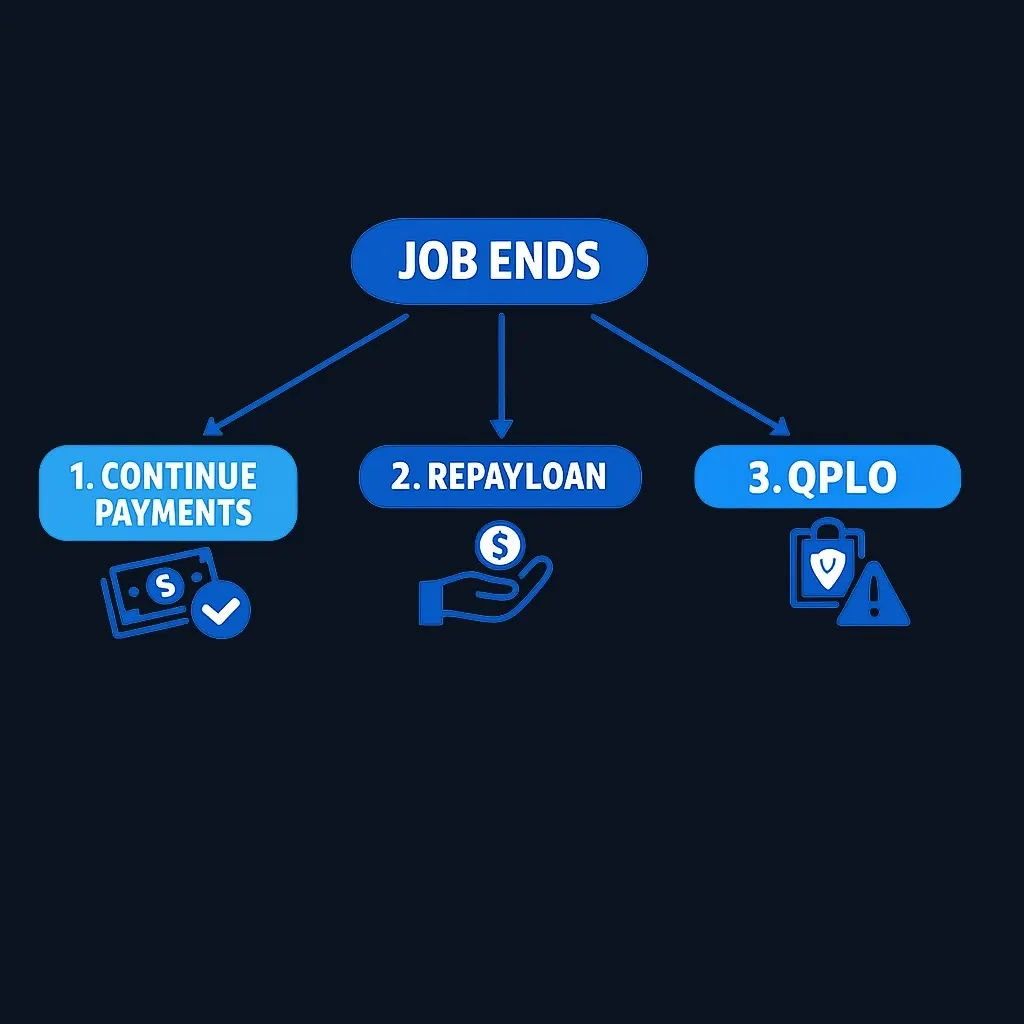
1. Continue scheduled payments
If the plan permits continued repayment after separation, the former employee may be able to keep paying under the existing schedule. Obtain written payment instructions because payroll deductions have stopped.
2. Repay the loan directly
If the plan accepts a payoff, paying the outstanding balance prevents that amount from being offset from the account. Verify the payoff amount and the date funds must arrive.
3. A qualified plan loan offset occurs
A plan loan offset happens when the plan reduces the participant’s account balance to repay the loan. A qualified plan loan offset, or QPLO, generally occurs when a loan in good standing is offset because the employer plan terminates or the participant separates from employment.
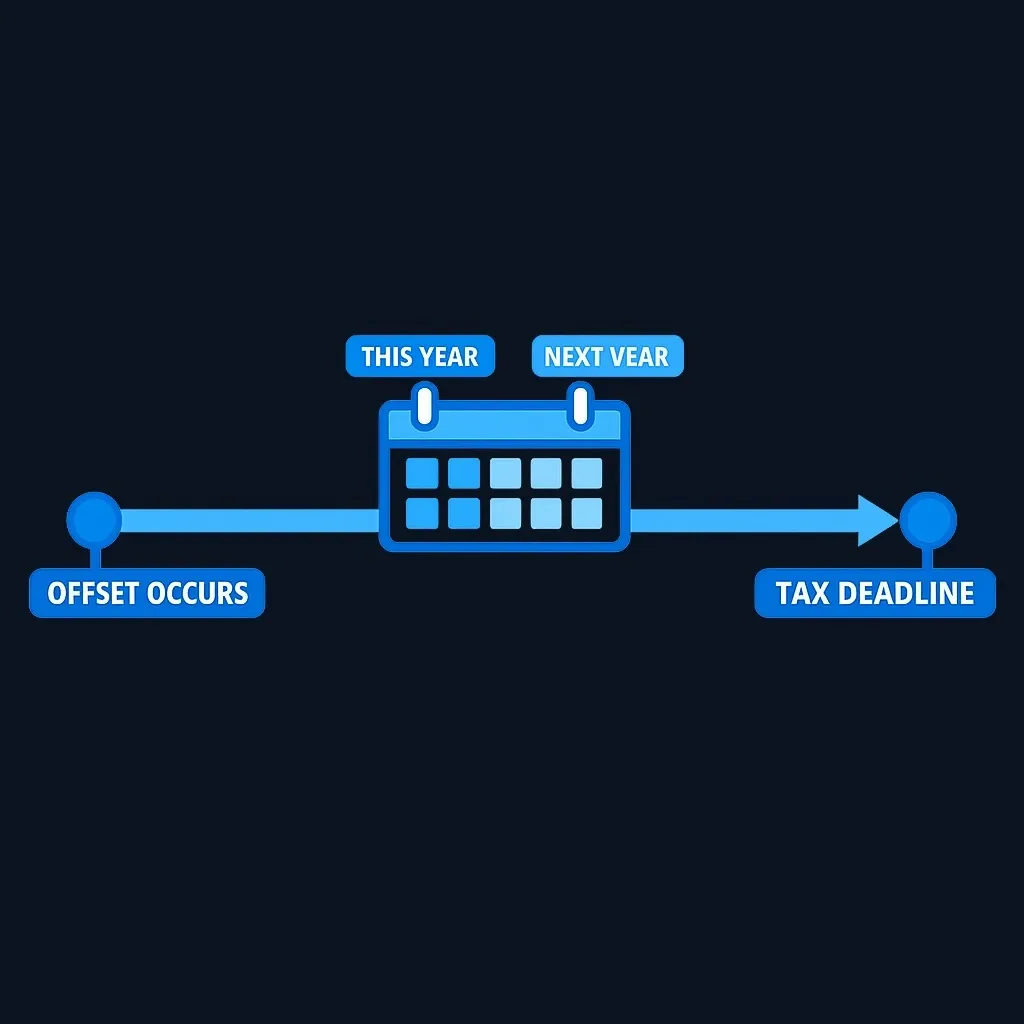
The offset is an actual distribution for federal tax purposes. The participant may avoid current taxation on an eligible amount by contributing replacement money—not the loan itself—to an IRA or eligible employer plan by the applicable deadline.
For a QPLO, the deadline is generally the due date, including extensions, for the federal income-tax return for the year in which the offset occurs. See IRS Publication 575 and IRS Plan Loan Offsets.
4. A nonqualified offset or deemed distribution occurs
Not every loan problem after employment is a QPLO. A default for another reason may create a deemed distribution or a nonqualified plan loan offset, with different rollover treatment and timing. For example, IRS Publication 575 states that a plan loan offset that is not qualified generally has the normal 60-day rollover period.
The Form 1099-R code and plan records matter. An offset is not the same as receiving cash, and a deemed distribution is not necessarily eligible for rollover.
Can a 401(k) loan be rolled into an IRA?
No. IRAs cannot offer participant loans, and the outstanding loan obligation cannot move into an IRA. The IRS addresses this directly in its Retirement Plans FAQs Regarding Loans.
What may be rolled over is an eligible offset amount. Because the account was reduced rather than cash being paid to the participant, completing that rollover usually requires money from another source equal to the amount the participant wants to replace.
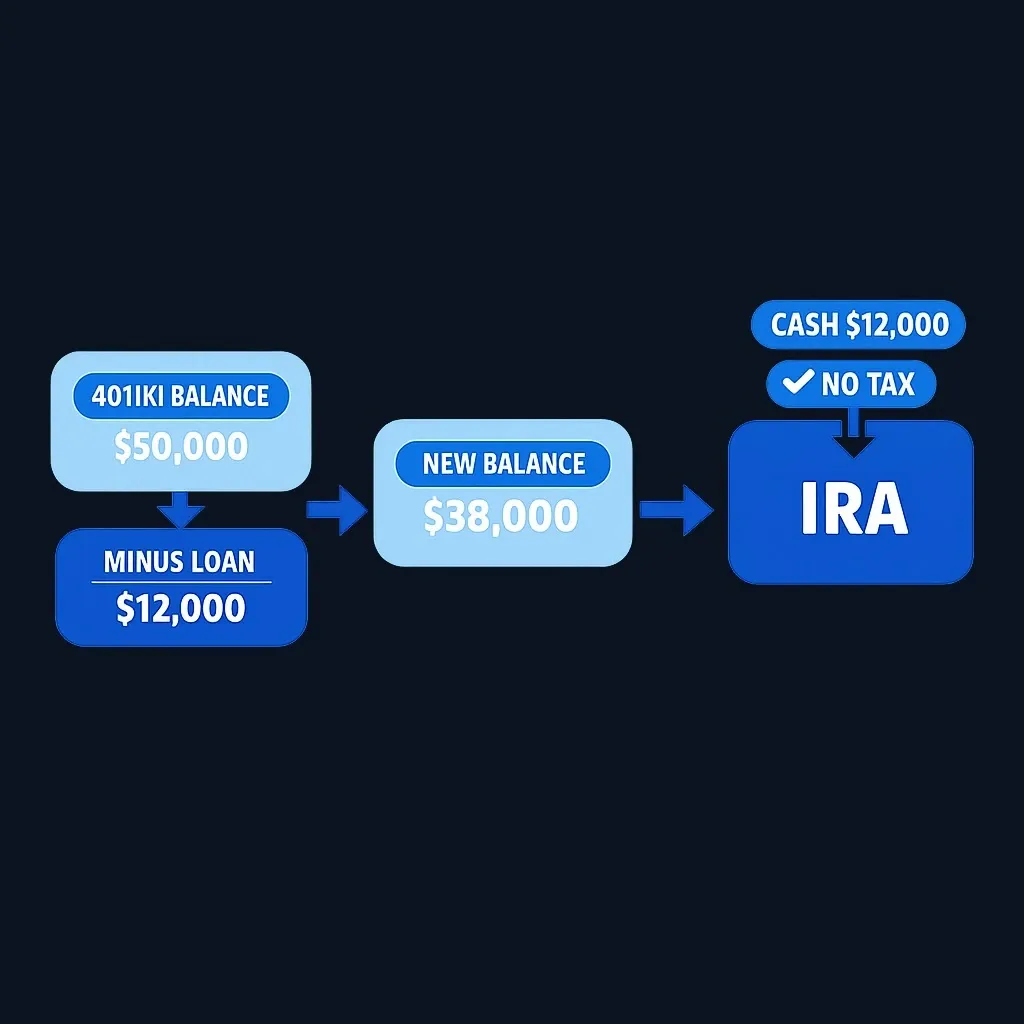
Example: assume a former employee has a $12,000 qualified plan loan offset and contributes $12,000 of outside cash to a traditional IRA by the applicable deadline. If all rollover requirements are met, the rollover may prevent that $12,000 from being included in current taxable income. The example is hypothetical; basis, Roth amounts, withholding, and other facts can change the result.
Practice investing with Finelo
Build practical investing skills with guided lessons, simulator practice, and structured challenges.
Potential tax consequences
The taxable portion of an offset that is not validly rolled over is generally included in gross income. A 10% additional tax on early distributions may also apply if the participant is under age 59½ and no exception applies.
Important details include:
- whether the offset is qualified;
- whether any part represents after-tax or Roth amounts;
- the participant’s age and eligibility for an exception;
- the calendar year in which the offset occurred;
- the Form 1099-R distribution code; and
- the amount, if any, validly rolled over by the deadline.
An estimate based only on the participant’s marginal tax rate can be incomplete. State income tax and the additional tax may also matter.
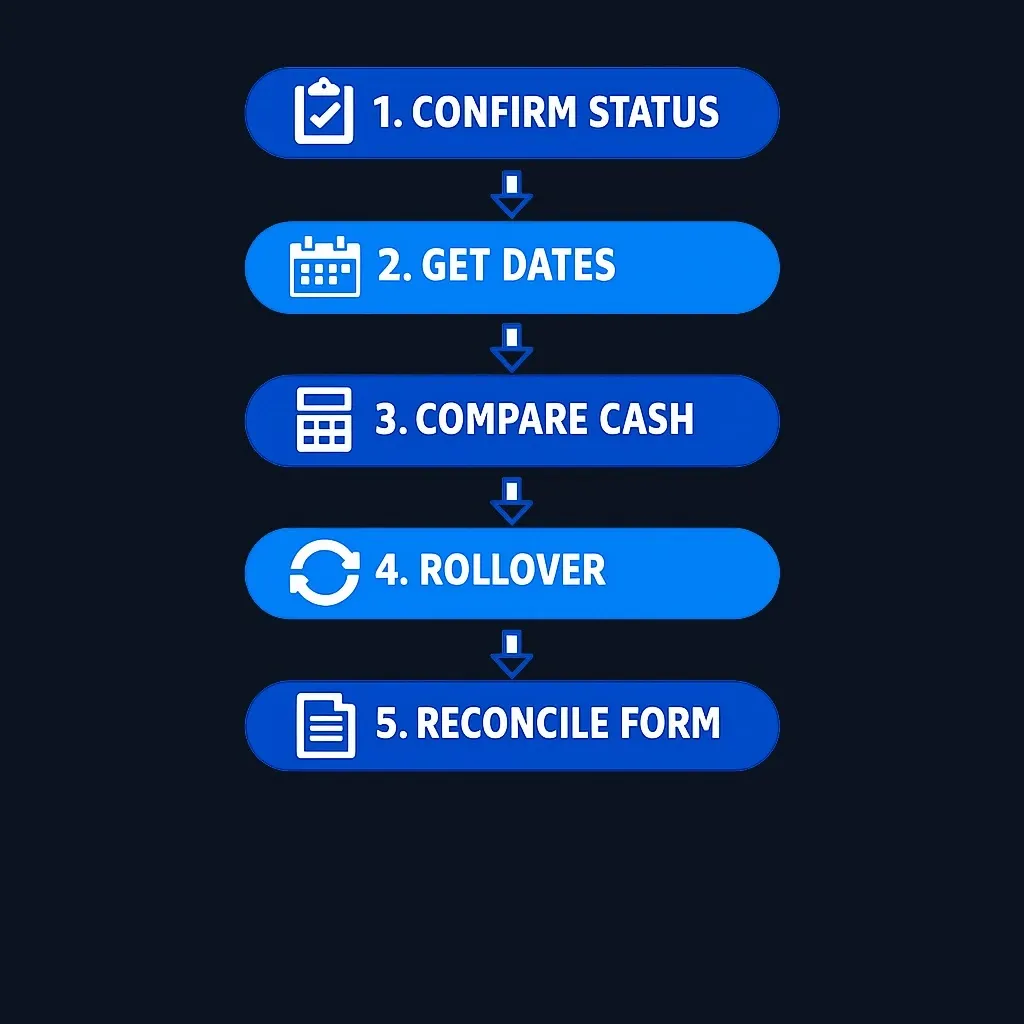
A practical review process
Step 1: confirm the loan status
Do not assume that leaving the job automatically created a taxable distribution. Ask whether the loan remains active, is in a cure period, or has already been offset.
Step 2: request written dates and amounts
Obtain the payoff amount, offset date, repayment deadline, and expected tax form. Preserve statements showing the loan was in good standing at separation if QPLO treatment may matter.
Step 3: compare available cash with the potential tax result
Possible uses of outside cash include paying the plan before an offset or replacing an eligible offset through a rollover. These are different transactions with different documentation.
Step 4: coordinate any account rollover
The unencumbered retirement balance may often be rolled directly to an IRA or eligible employer plan. That does not transfer the loan. Ask the receiving plan whether it accepts rollovers and whether it can separately accept a rollover contribution representing an offset amount.
Step 5: reconcile Form 1099-R with the tax return
Check whether the form reports a loan offset and whether any rollover contribution was completed. Keep the plan’s notice, proof of the contribution, and account statements with the tax records.
Common mistakes
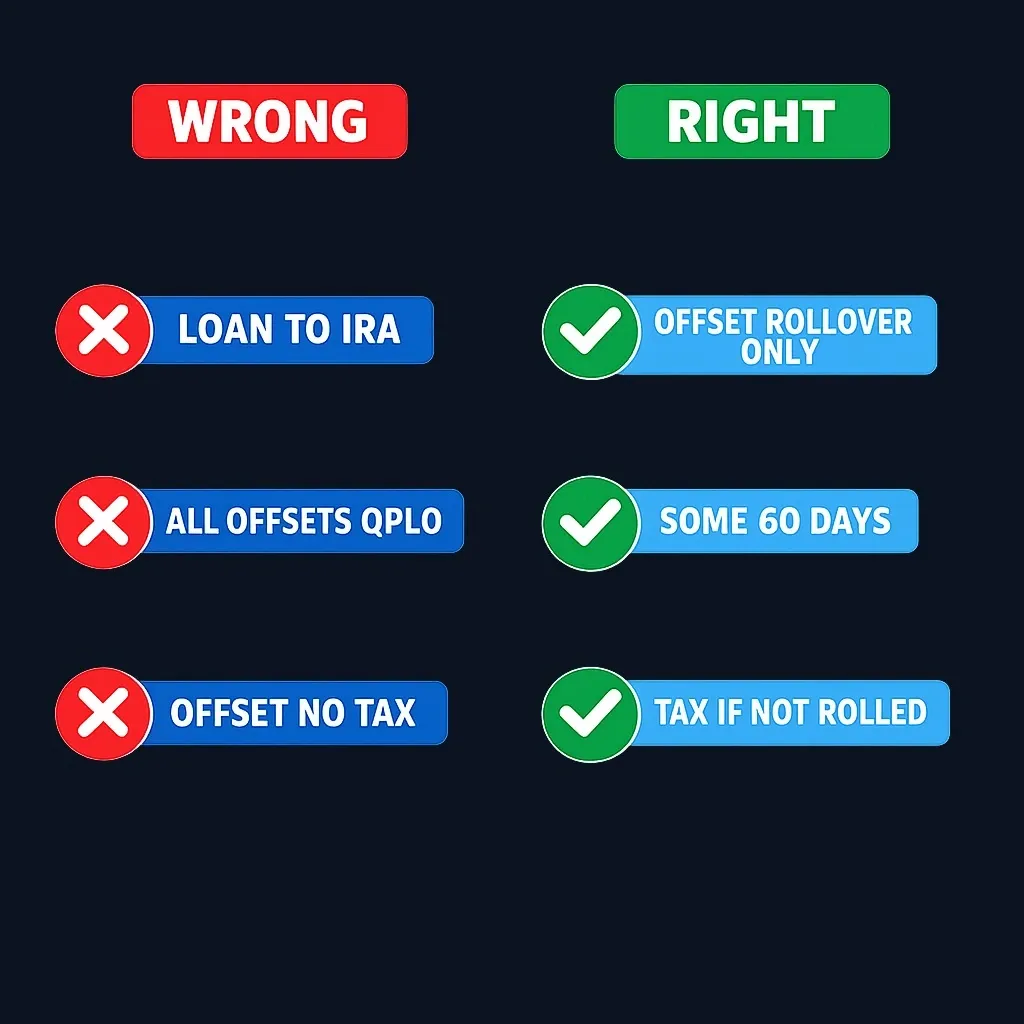
Saying the loan can move to an IRA
It cannot. An IRA cannot hold a participant loan. Only an eligible distribution or offset amount may be rolled over.
Treating every offset as a QPLO
The extended tax-return deadline applies only when the statutory requirements are met. An offset caused by another kind of default may have a 60-day period instead.
Waiting for a tax form before contacting the plan
By the time Form 1099-R arrives, a payoff opportunity may have passed. Ask the plan about the loan immediately after separation.
Rolling over the account balance and ignoring the loan
A direct rollover of the remaining account does not erase the offset. Confirm how the loan was treated and whether a separate rollover contribution is needed.
Assuming an offset is penalty-free
The extended QPLO rollover period does not itself waive income tax or the potential 10% additional tax. Those consequences depend on the portion not rolled over and whether an exception applies.
Frequently asked questions
Must a 401(k) loan be repaid immediately after leaving a job?
Not under one universal rule. A plan may demand full repayment, permit continued payments, provide a cure period, or offset the account under its terms. The administrator can provide the controlling documents and dates.
Can a new employer take over the old loan?
Usually the old loan does not simply transfer to the new employer’s plan. A plan-to-plan transfer in a business transaction can present different facts, but an ordinary job change should not be treated as an automatic loan transfer. Confirm with both administrators.
How long is the QPLO rollover period?
For a qualified plan loan offset, the IRS generally permits rollover through the federal tax-return due date, including extensions, for the tax year of the offset. A nonqualified offset may have only 60 days.
What if there is not enough cash to replace the full offset?
A participant may be able to roll over only part of an eligible offset. The portion not rolled over may be taxable and may face the additional tax on early distributions. Confirm the allocation and reporting with a tax professional.
Which IRS sources explain the rule?
Useful starting points are:
- IRS Publication 575
- IRS Plan Loan Offsets
- IRS Retirement Topics — Loans
- IRS Retirement Plans FAQs Regarding Loans
Bottom line
After a job ends, first determine whether the plan allows continued payments, requires payoff, or has already offset the loan. The loan itself cannot be rolled into an IRA. If separation produces a qualified plan loan offset, replacing the eligible offset amount with outside funds by the tax-return deadline may preserve tax deferral.
For more plain-language retirement education, visit the Finelo Blog.
InvestingFinancial Education
Practice investing with Finelo
Build practical investing skills with guided lessons, simulator practice, and structured challenges.
About the author
Finelo Team
The Finelo Team creates practical investing and trading education designed to help beginners learn faster with structured challenges, simulator practice, and bite-sized lessons.
Keep reading — Related articles

Investing
Yield to Call vs Yield to Maturity: Assumptions and Bond Risks
Yield to call (YTC) estimates a bond's yield if the issuer redeems it on an eligible call date; yield to maturity (YTM) estimates yield if it remains outstanding to final maturity.
Finelo Team
Investing
Will My Employer Know If I Take a 401(k) Loan?
Who this page is for: readers new to 401(k) loans who want a practical, privacy‑focused explanation — what your employer can see, how to limit visibility, and the financial tradeoffs to weigh.
Finelo Team

Investing
What Medical Expenses Qualify for a 401(k) Hardship Withdrawal?
Before you decide, confirm three things with your plan administrator:
Finelo Team