For U.S. readers: This article discusses U.S. rules and financial products. State rules and individual eligibility may differ.
Is Retirement a Life-Changing Event for IRMAA?

Brief educational note: this article explains how the SSA treats life‑changing events and shows practical next steps.
6 min read
Practice investing with Finelo
Build practical investing skills with guided lessons, simulator practice, and structured challenges.
Want to learn more?
Build practical investing skills with guided lessons, simulator practice, and structured challenges.
Explore FineloExplore Finelo's 28-day challenges
Turn learning into a daily habit with guided challenge paths.
Quick answer
Yes — retirement can be a qualifying life‑changing event that lets you ask the Social Security Administration to lower your Income‑Related Monthly Adjustment Amount (IRMAA) for Medicare Part B and Part D, but it does not automatically change your premiums; you must request a review from SSA using the appropriate form and documentation (SSA: Request to lower an IRmaA). Finelo provides financial education, not financial or investment advice.
Brief educational note: this article explains how the SSA treats life‑changing events and shows practical next steps. Confirm current rules and deadlines on the SSA page linked above.
What to know before deciding
IRMAA is an extra charge added to Medicare Part B and Part D premiums for people whose reported household income exceeds SSA thresholds. If a life change — such as retirement — reduces your household income, SSA allows you to request relief from IRMAA by submitting a review request and supporting evidence (SSA: Request to lower an Income‑Related Monthly Adjustment Amount (IRMAA)).
Who this is for: readers who are retiring or have recently retired and suspect their Medicare surcharges are based on past, higher income. After reading, you should be able to (1) decide whether to request an IRMAA review, (2) gather the likely supporting records, and (3) follow SSA’s process for filing a request.
The Two-Year Lookback Rule: Implications for Your Premiums
Many beneficiaries see higher IRMAA charges after retirement because SSA bases surcharge decisions on previously reported tax information. That timing means your most recent lower income may not yet be reflected in the system, so premiums can remain elevated until SSA re‑evaluates your situation or you file for a life‑change review (SSA: Request to lower an Income‑Related Monthly Adjustment Amount (IRMAA)).
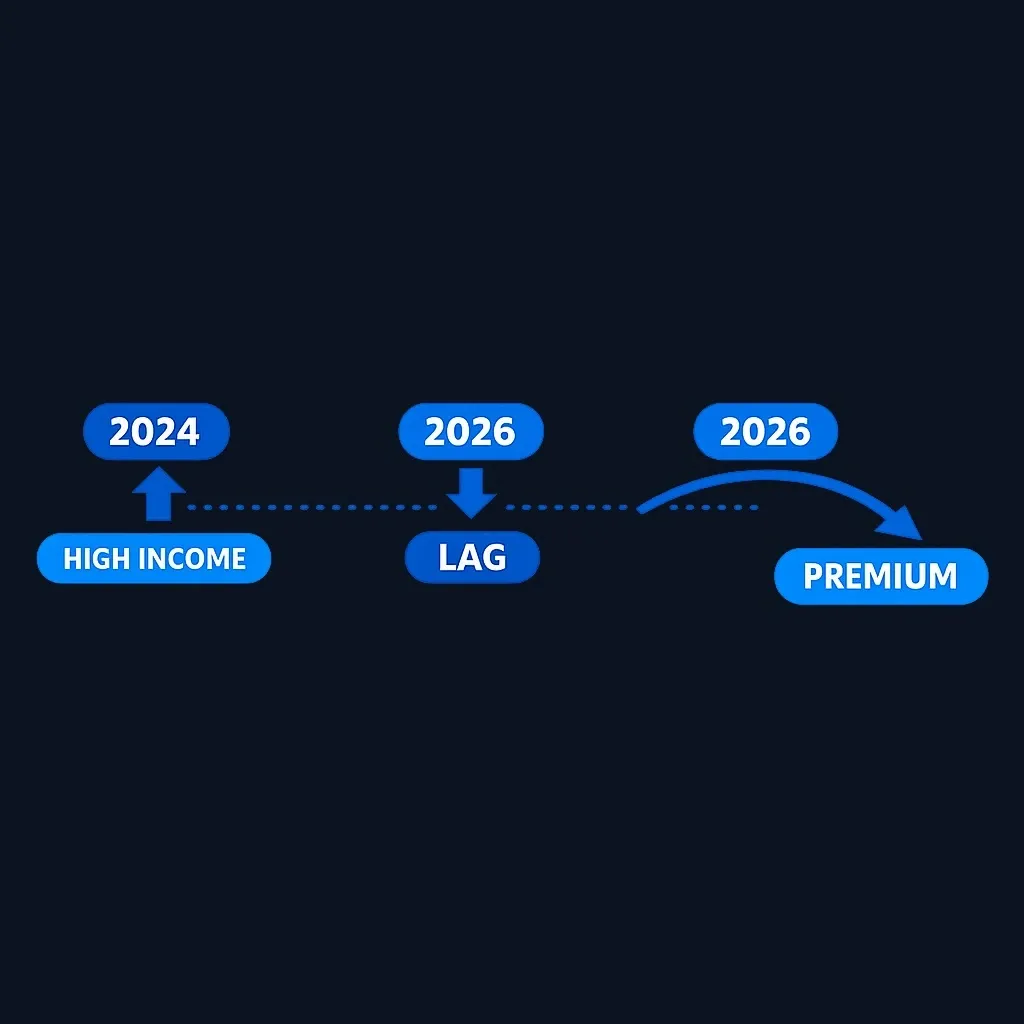
Practical effect: if you retire this year, your Medicare premium billing may still rely on earlier tax data. Filing a request to SSA starts the administrative review that can bring premiums in line with your current income sooner. Always check SSA’s guidance and timelines before assuming a change is automatic.
Practice investing with Finelo
Build practical investing skills with guided lessons, simulator practice, and structured challenges.
Decision framework
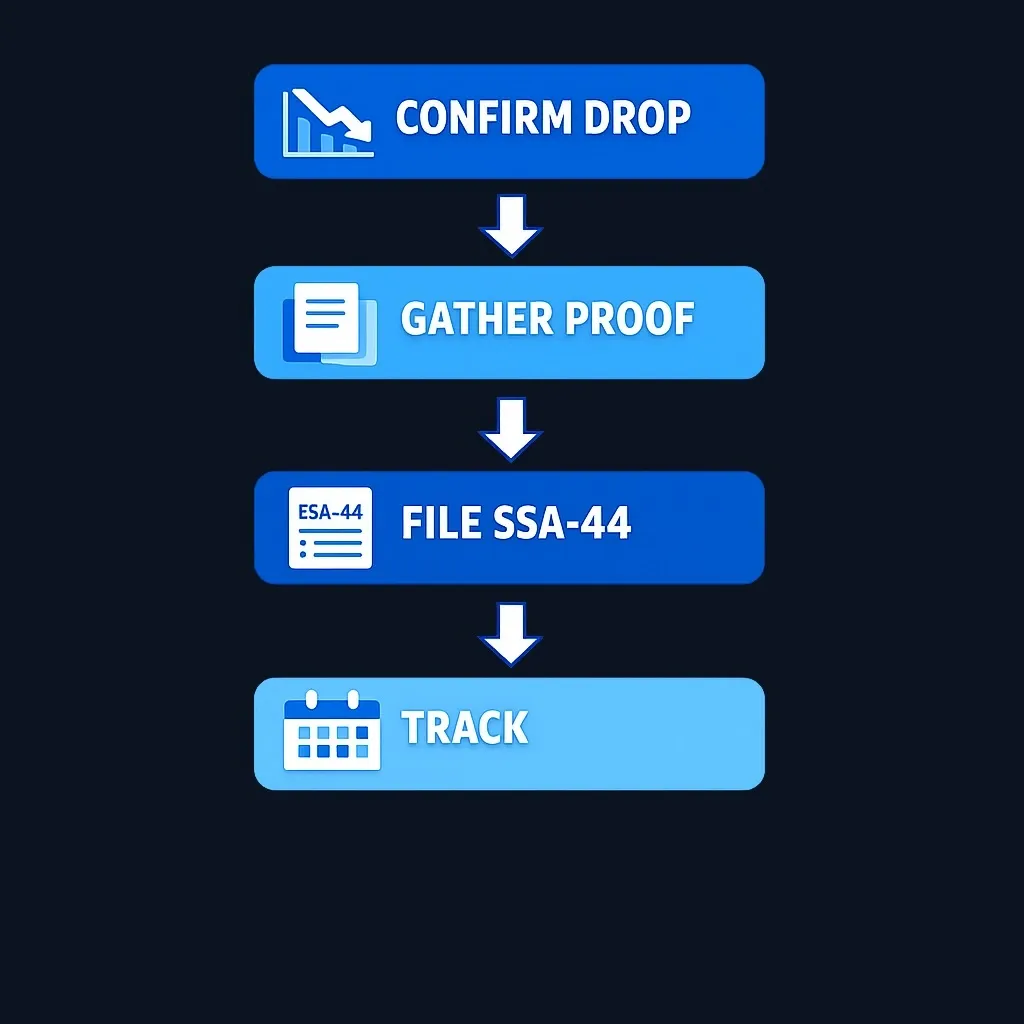
Use this short framework to decide whether to file an IRMAA review after retirement.
- Confirm a material income drop. If your household income has fallen meaningfully compared with the income SSA used for your IRMAA determination, proceed to step 2.
- Gather proof of the income change (see checklist below).
- File Form SSA‑44 (Request for Reconsideration of Income‑Related Monthly Adjustment Amount) with SSA and include supporting documents (SSA: Request to lower an Income‑Related Monthly Adjustment Amount (IRMAA)).
- Track the review and be ready to supply additional records if SSA asks.
Checklist — what to assemble before you file
| Step | What to include (illustrative examples) |
|---|---|
| Proof you retired or income stopped | Retirement or separation letter; final pay stub; written notice from former employer |
| Proof of new income sources | Pension or annuity statements, Social Security award letter |
| Recent tax information | Copies of recent tax returns or transcripts showing reduced income |
| Completed form | SSA‑44 properly filled out and signed |
Note: The checklist lists typical supporting records people submit; SSA’s page explains the review request process and what to send (SSA: Request to lower an Income‑Related Monthly Adjustment Amount (IRMAA)). Always include clear, dated documentation that shows the change in household income.
Filing for IRMAA adjustments — step‑by‑step
- Get Form SSA‑44 (Request for Reconsideration). Complete the form and describe the life‑changing event and how it reduced your income (SSA: Request to lower an Income‑Related Monthly Adjustment Amount (IRMAA)).
- Attach documents from the checklist that prove the retirement or income reduction. Use originals or clear copies.
- Send the form and documents to SSA following the instructions on the SSA page; keep copies for your records.
- Wait for SSA’s decision and respond promptly if they ask for more information.
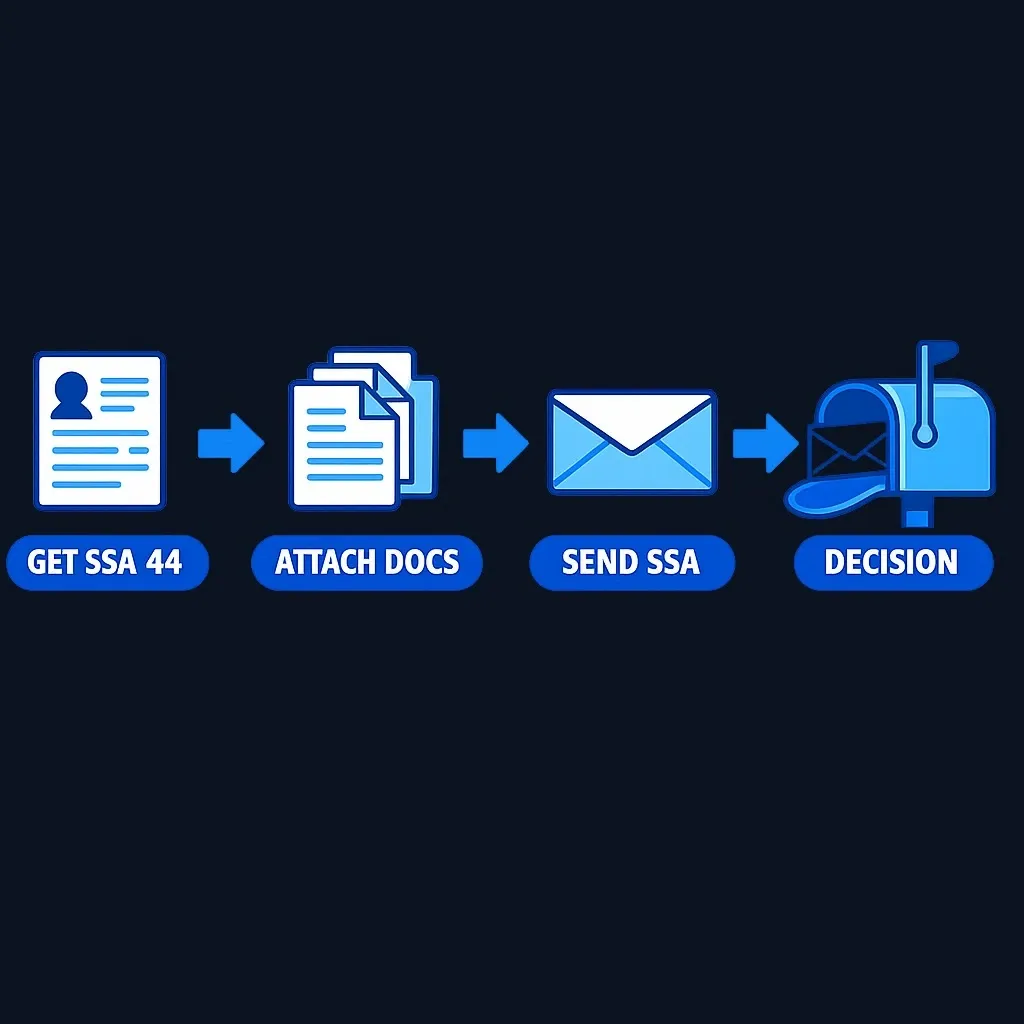
Timing and follow‑up: SSA reviews submissions and may contact you for clarification. Keep a record of dates you mailed or delivered materials and any SSA case or reference numbers.
Common mistakes to avoid when appealing IRMAA
- Waiting for an automatic adjustment. Retirement does not automatically change IRMAA; you must request a review (SSA: Request to lower an Income‑Related Monthly Adjustment Amount (IRMAA)).
- Sending incomplete evidence. Provide dated, clearly labeled documents that directly connect to the income change.
- Missing deadlines. File as soon as feasible after the life change and keep proof of submission.
- Confusing temporary income dips with permanent changes. SSA reviews focus on lasting reductions in household income.
- Not tracking correspondence. Note dates and retain copies of everything SSA receives and sends.
Practical tip: organize documents in a single packet with a concise cover letter that summarizes the life change and lists attached evidence. That makes it easier for SSA staff to find the key facts.
FAQ
What qualifies as a life‑changing event for IRMAA?
A life‑changing event is one that reduces household income and may include retirement; SSA allows you to request an IRMAA review when your income drops due to such an event (SSA: Request to lower an Income‑Related Monthly Adjustment Amount (IRMAA)). Provide documentation that demonstrates the reduction.
How do I file for IRMAA adjustments after retirement?
File Form SSA‑44 (Request for Reconsideration) with SSA and include documentation showing your retirement and the resulting income decrease. See SSA’s instructions for the review process (SSA: Request to lower an Income‑Related Monthly Adjustment Amount (IRMAA)).
What documentation should I include with SSA‑44?
Include documents that show the timing and size of the income change (for example, retirement letters, final pay stubs, pension or Social Security statements, and recent tax returns). SSA’s guidance explains that supporting evidence should demonstrate the income reduction (SSA: Request to lower an Income‑Related Monthly Adjustment Amount (IRMAA)).
Can I appeal more than once if my income changes again?
You may request a new review if your circumstances change again. Keep SSA informed and submit updated documentation when that happens; follow SSA’s procedures linked on their page (SSA: Request to lower an Income‑Related Monthly Adjustment Amount (IRMAA)).
Conclusion: Next Steps for Managing Your IRMAA
If you recently retired and expect lower income, file Form SSA‑44 with supporting documents so SSA can review your IRMAA. Keep copies of everything you send, track response dates, and be prepared to follow up. For the official instructions and to start the process, consult the SSA’s IRMAA review page (SSA: Request to lower an Income‑Related Monthly Adjustment Amount (IRMAA)).
Use the document list above, then verify the current request procedure and form directly with Social Security. Finelo does not prepare or submit the request for you.
InvestingFinancial Education
Practice investing with Finelo
Build practical investing skills with guided lessons, simulator practice, and structured challenges.
About the author
Finelo Team
The Finelo Team creates practical investing and trading education designed to help beginners learn faster with structured challenges, simulator practice, and bite-sized lessons.
Keep reading — Related articles

Investing
Yield to Call vs Yield to Maturity: Assumptions and Bond Risks
Yield to call (YTC) estimates a bond's yield if the issuer redeems it on an eligible call date; yield to maturity (YTM) estimates yield if it remains outstanding to final maturity.
Finelo Team

Investing
Will My Employer Know If I Take a 401(k) Loan?
Who this page is for: readers new to 401(k) loans who want a practical, privacy‑focused explanation — what your employer can see, how to limit visibility, and the financial tradeoffs to weigh.
Finelo Team
Investing
What Medical Expenses Qualify for a 401(k) Hardship Withdrawal?
Before you decide, confirm three things with your plan administrator:
Finelo Team


