For 2026, you can contribute up to $4,400 to a health savings account (HSA) with self-only coverage, or $8,750 with family coverage. Age 55 or older and not on Medicare? Add a $1,000 catch-up contribution on top of either limit.
HSA Contribution Limits for 2026: Essential Information and Strategies
For 2026, you can contribute up to $4,400 to a health savings account (HSA) with self-only coverage, or $8,750 with family coverage. Age 55 or older and not on Medicare? Add a $1,000 catch-up contribution on top of…
6 min read
Practice trading with Finelo
Practice in a simulator, learn with bite-sized lessons, and build confidence before risking real money.
Want to learn more?
Practice in a simulator, learn with bite-sized lessons, and build confidence before risking real money.
Explore FineloExplore Finelo's 28-day challenges
Turn learning into a daily habit with guided challenge paths.
An HSA is a tax-advantaged account for medical expenses. Only people covered by a qualifying high-deductible health plan (HDHP) can contribute. The IRS resets the caps every year, so start with the new numbers — then check the eligibility rules behind them. Here's what applies in 2026 and how to use it well.
2026 HSA Contribution Limits
The full picture for 2026:
| 2026 limit | Self-only coverage | Family coverage |
|---|---|---|
| Maximum contribution | $4,400 | $8,750 |
| Catch-up (55+) | +$1,000 | +$1,000 |
| Minimum HDHP deductible | $1,700 | $3,400 |
| Maximum out-of-pocket | $8,500 | $17,000 |
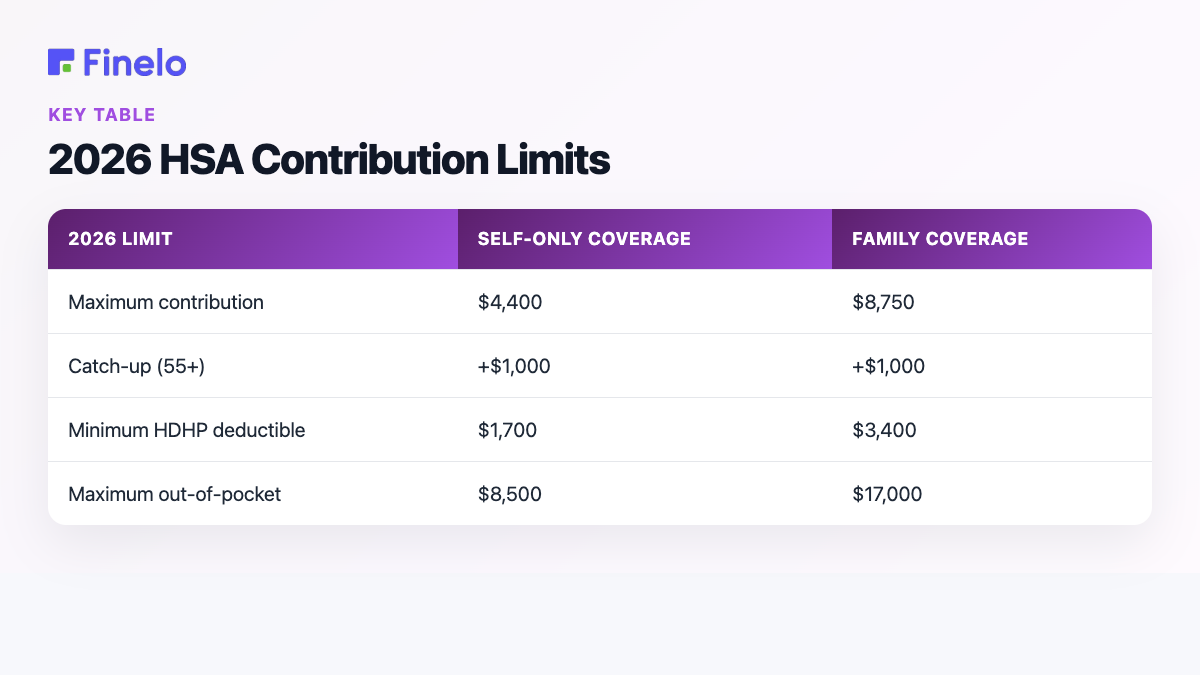
The caps rose modestly this year: self-only is up $100 from 2025; family is up $200.
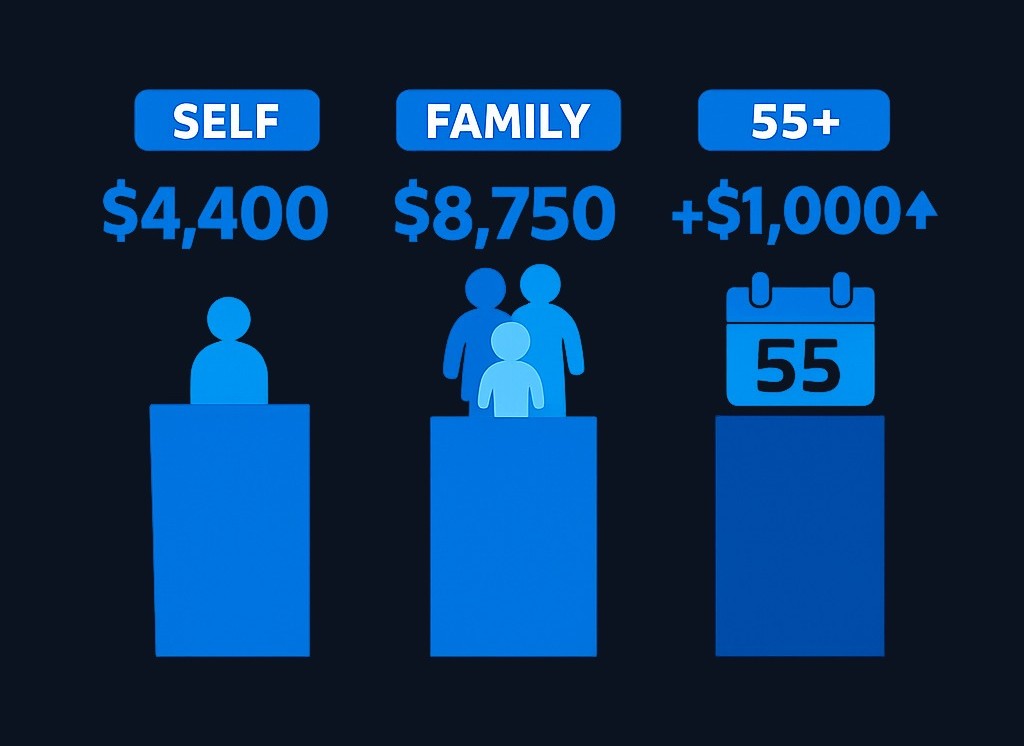
Two details trip people up:
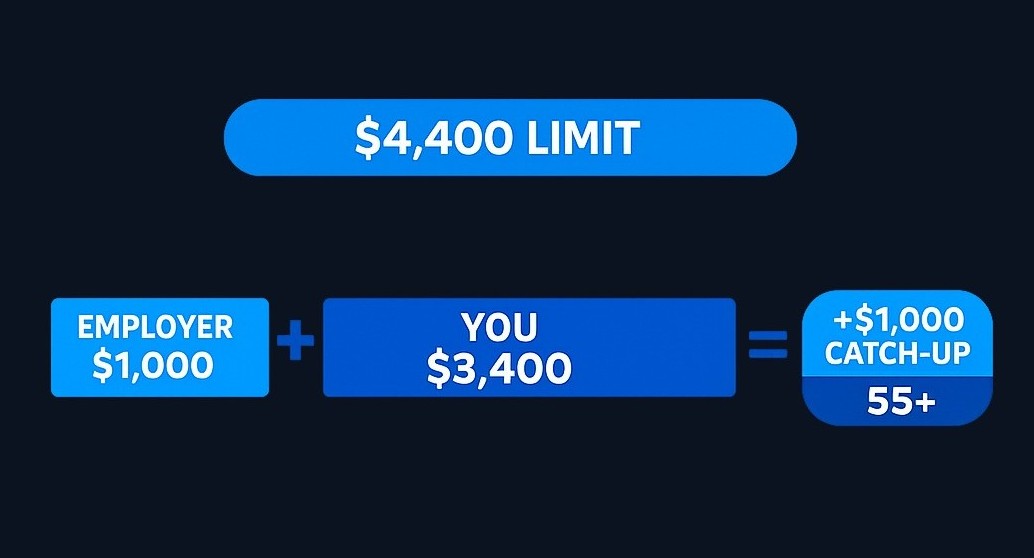
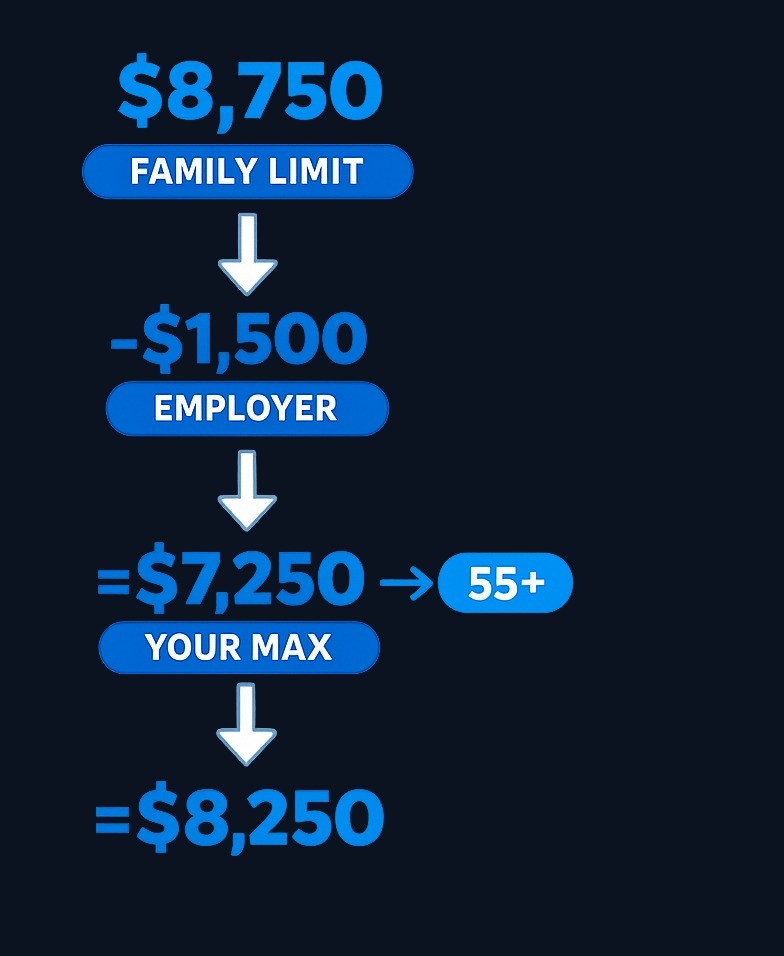
- The limit counts all deposits — yours and your employer's. Fidelity's example: with a $4,400 limit and $1,000 from your employer, you can only add $3,400 yourself, plus the catch-up if you qualify.
- Catch-ups can't share one account. A spouse who is also 55+ can open a separate HSA and make their own $1,000 catch-up.
Planning ahead? Limits rise again in 2027, to $4,500 self-only and $9,000 family.
Eligibility Requirements for HSA Contributions
You can't contribute just because you opened an account. Your health plan must pass two IRS tests for 2026:
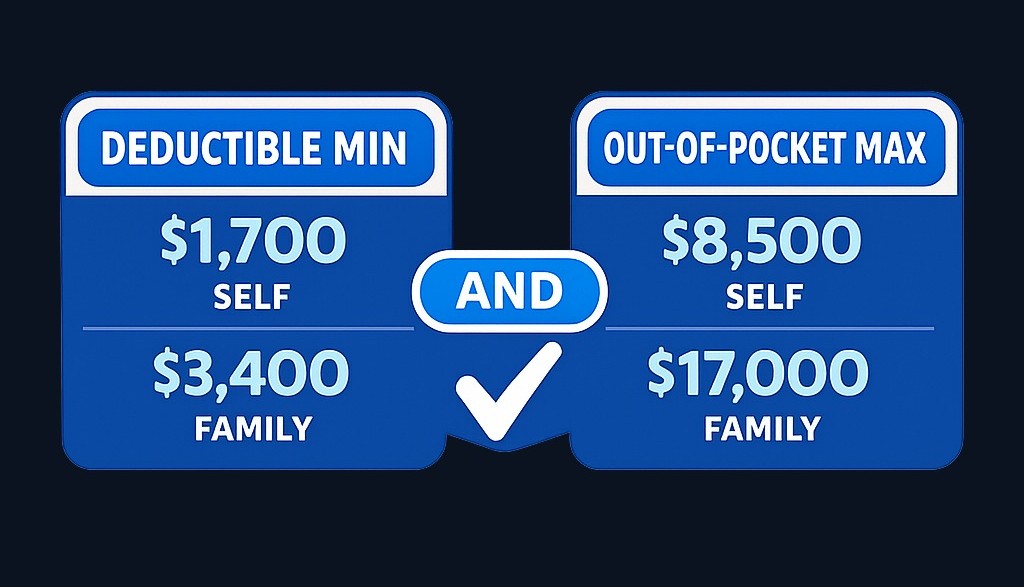
- Deductible test: the deductible — what you pay before insurance kicks in — must be at least $1,700 (self-only) or $3,400 (family).
- Out-of-pocket test: your maximum yearly costs must stay within $8,500 (self-only) or $17,000 (family).
Both tests must pass. A plan can have a huge deductible and still fail on out-of-pocket costs. Ask your insurer or HR whether the plan is "HSA-eligible" — don't guess from the deductible alone.
You also must not be enrolled in Medicare. This catches many people at 65. Once Medicare starts, new contributions must stop — but the money already saved stays yours.
Joined an HDHP mid-year? Prorate by month. Eligible for 7 of 12 months on self-only coverage means roughly 7/12 of $4,400 — about $2,567. One shortcut exists: enroll by December 1 and you can contribute the full annual maximum, but you must stay in an HSA-eligible plan for a one-year testing period. Fail that period and the extra becomes taxable. Use the shortcut only if your coverage is certain to continue.
Practice trading with Finelo
Practice in a simulator, learn with bite-sized lessons, and build confidence before risking real money.
Tax Implications of HSA Contributions
The HSA earns its reputation with three layers of tax benefit. Contributions go in pre-tax, cutting your taxable income now. The balance grows without annual tax. Withdrawals for qualified medical expenses come out tax-free. No other mainstream account does all three — a 401(k) or IRA taxes you at one end.
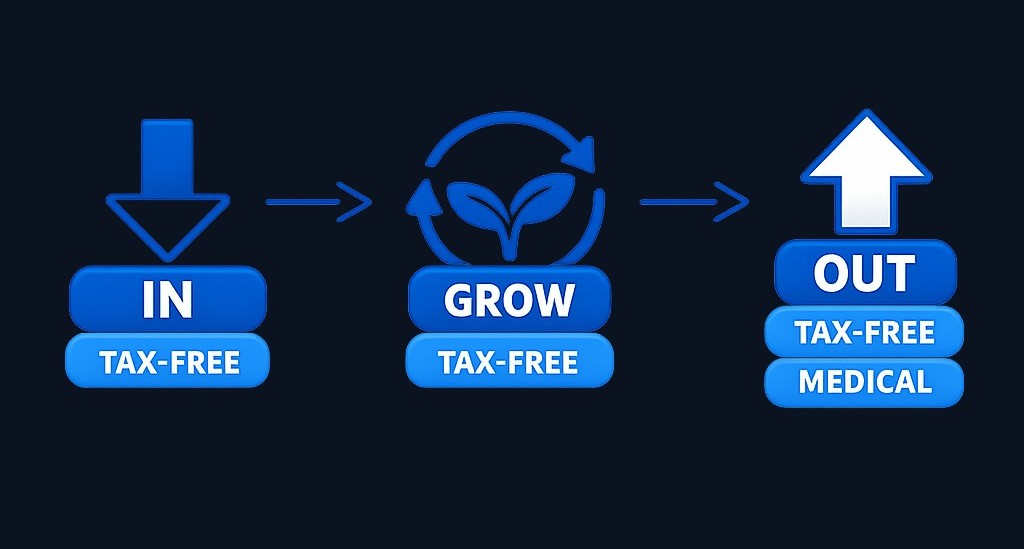
The front-end benefit in numbers: contribute the full $4,400 in the 22% federal bracket, and you cut your federal tax by roughly $968 that year. Pay the same medical bills from checking, and you get no tax break at all.
The rules bite on the way out, though:
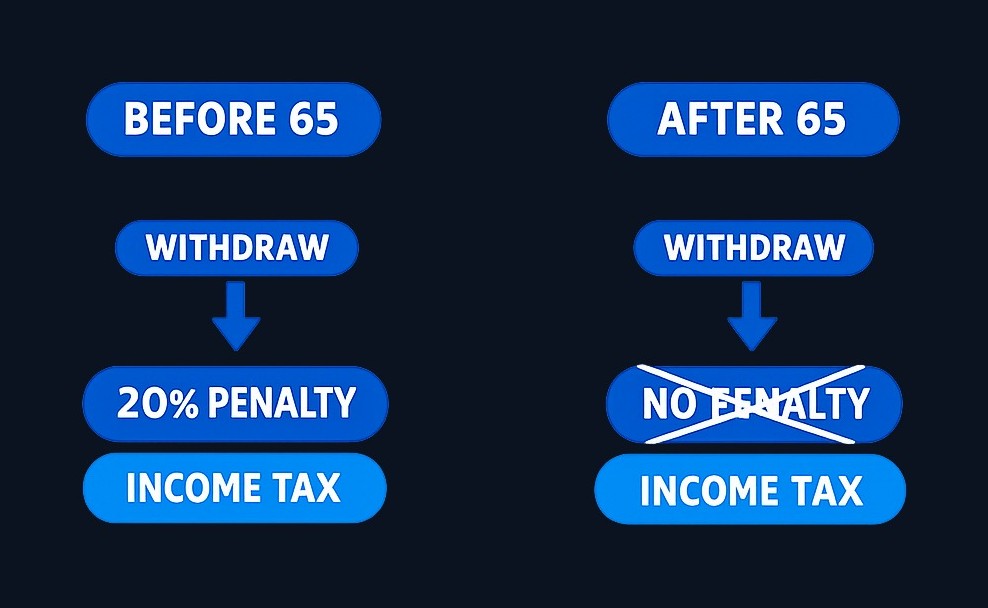
- Non-medical spending before 65 costs a 20% penalty plus income taxes.
- After 65, the penalty disappears — non-medical withdrawals are taxed as ordinary income, so an old HSA works like a bonus retirement account.
- Overshooting the cap triggers a 6% excise tax — an IRS penalty tax that repeats every year the excess stays put. Fix it by withdrawing the excess and its earnings before your filing deadline; your HSA provider handles this routinely.
Strategies to Maximize Your HSA Contributions
Count employer money first. Employer deposits eat into your cap. Set your payroll deferral to the limit minus their share. On 2026 family coverage, an employer adding $1,500 leaves you $7,250 — or $8,250 with the 55+ catch-up.
Spread it across paychecks. $7,250 over 26 biweekly paychecks is about $279 each. That beats a year-end scramble, and payroll deposits capture the pre-tax benefit automatically.
Use the deadline as a second chance. You can contribute for 2026 until the federal tax filing deadline — usually around April 15. Found unused room while doing your taxes? Top up and claim the deduction.
Double the catch-up as a couple. Both spouses 55+? Each can capture $1,000 — but only with separate HSAs. Couples using one account routinely leave the second $1,000 behind.
Recheck eligibility before your last deposit. Switching plans, joining a spouse's regular coverage, or starting Medicare mid-year shrinks your prorated limit. Recount your eligible months before December — it's the cheapest way to dodge the 6% excise tax.
Conclusion and Next Steps
The 2026 numbers: $4,400 self-only, $8,750 family, plus $1,000 catch-up at 55+. Before you set your contribution, confirm three things: your plan passes the 2026 HDHP tests, how much your employer adds, and how many months you'll be eligible.
This article is educational, not personalized tax or financial advice. Limits and rules change — verify current figures with your plan documents or a tax professional before acting.
If building broader money skills is on your list this year, Finelo's Wealth Growth Quiz can point you toward a learning path that matches where you're starting from.
Frequently asked questions
What happens if I exceed the 2026 limit?
The excess draws a 6% excise [tax](https://www.fidelity.com/learning-center/smart-money/hsa-contribution-limits), charged again each year it stays in the account. Withdraw the excess and its earnings before your filing deadline to avoid it.
Can I use HSA funds for non-medical expenses?
Yes — at a price. Before 65, you pay a 20% penalty plus income [taxes](https://www.fidelity.com/learning-center/smart-money/hsa-contribution-limits). After 65, only ordinary income tax [applies](https://www.fidelity.com/learning-center/smart-money/hsa-contribution-limits).
Can I still contribute for 2026 after the year ends?
Yes. Contributions count for 2026 until the tax deadline, typically on or around April 15, [2027](https://www.fidelity.com/learning-center/smart-money/hsa-contribution-limits). Tell your provider which tax year the deposit is for.
Can I change my contribution amount during the year?
Generally yes. Employers typically let you adjust HSA payroll elections during the year, and direct deposits to your own HSA are flexible anytime. Check your employer's process.
Financial LiteracyBeginnerPersonal Finance
Practice trading with Finelo
Practice in a simulator, learn with bite-sized lessons, and build confidence before risking real money.
About the author
Finelo Team
The Finelo Team creates practical investing and trading education designed to help beginners learn faster with structured challenges, simulator practice, and bite-sized lessons.
Keep reading — Related articles

Financial Literacy
Mercury Books Review 2026: Is It Worth It for Startups?
Mercury Books brings double-entry accounting into Mercury. Review its $35 pricing, reports, AI features, integrations, and migration limits.
Finelo Team

Financial Literacy
Why is My FICO Score Lower Than My Credit Score?
Example takeaway: seeing a higher score in a bank app doesn’t guarantee lenders will see the same FICO number at application time; lenders often pull a specific FICO version from a specific bureau.
Finelo Team

Financial Literacy
Why Is My FICO Score Higher Than My Credit Score?
Brief educational note: this article is educational, not financial or investment advice; investing and credit decisions involve risk and possible loss.
Finelo Team