For U.S. readers: This article discusses U.S. rules and financial products. State rules and individual eligibility may differ.
Is Financial Infidelity Abuse? How to Distinguish Secrecy From Financial Control
Financial infidelity—hiding debt, accounts, purchases, income, or other important money information from a partner—is a breach of trust.
7 min read
Practice trading with Finelo
Practice in a simulator, learn with bite-sized lessons, and build confidence before risking real money.
Want to learn more?
Practice in a simulator, learn with bite-sized lessons, and build confidence before risking real money.
Explore FineloExplore Finelo's 28-day challenges
Turn learning into a daily habit with guided challenge paths.
Quick answer
Financial infidelity—hiding debt, accounts, purchases, income, or other important money information from a partner—is a breach of trust. It may also be part of financial abuse when money is used to control, isolate, coerce, threaten, or prevent a partner from leaving.
The label depends on the pattern and impact, not only the existence of one secret purchase. Warning signs of abuse include denying access to money, preventing work, forcing someone to incur debt, stealing identity information, withholding necessities, or using housing and money as leverage.
Finelo provides general financial education, not legal, mental-health, safety, credit, or individualized financial advice. If there is immediate danger in the United States, call 911. For confidential safety planning, the National Domestic Violence Hotline is available at 800-799-SAFE (7233), by text at 88788, and at TheHotline.org.
Financial infidelity and financial abuse are related but different
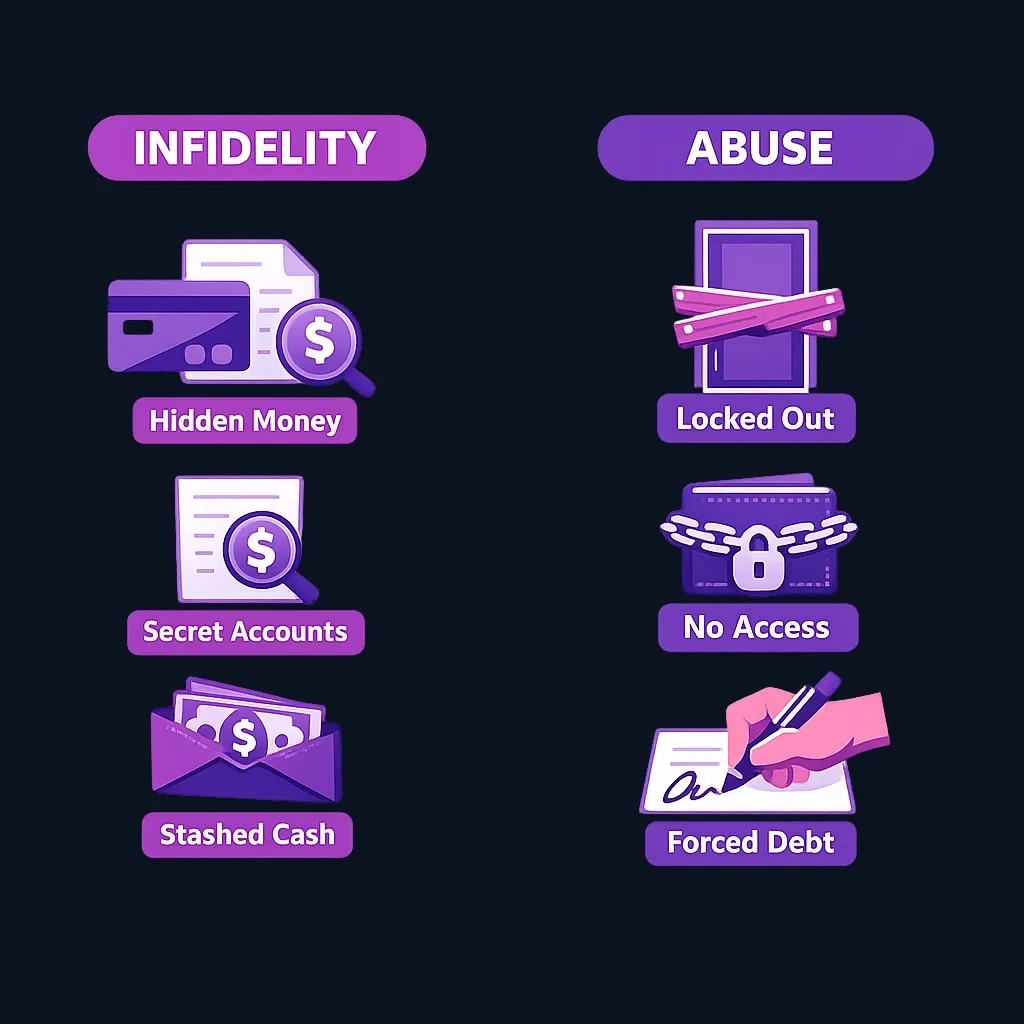
Financial infidelity generally describes deception that violates the couple’s expectations about money. Examples may include:
- hiding a credit card or bank account;
- understating debt;
- concealing purchases;
- lying about income or losses; or
- moving shared money without disclosure.
Financial abuse centers on power and control. The U.S. Office on Women’s Health describes it as taking control of finances to prevent a partner from leaving and to maintain power in the relationship.
Examples can include:
- preventing or pressuring a partner to stop working;
- refusing access to bank accounts;
- forcing a partner to open credit;
- stealing identity information;
- monitoring every purchase as a form of control;
- hiding or taking assets;
- failing to pay essentials deliberately; or
- threatening homelessness, loss of children, or other harm through money.
Official source: Financial abuse — Office on Women’s Health.
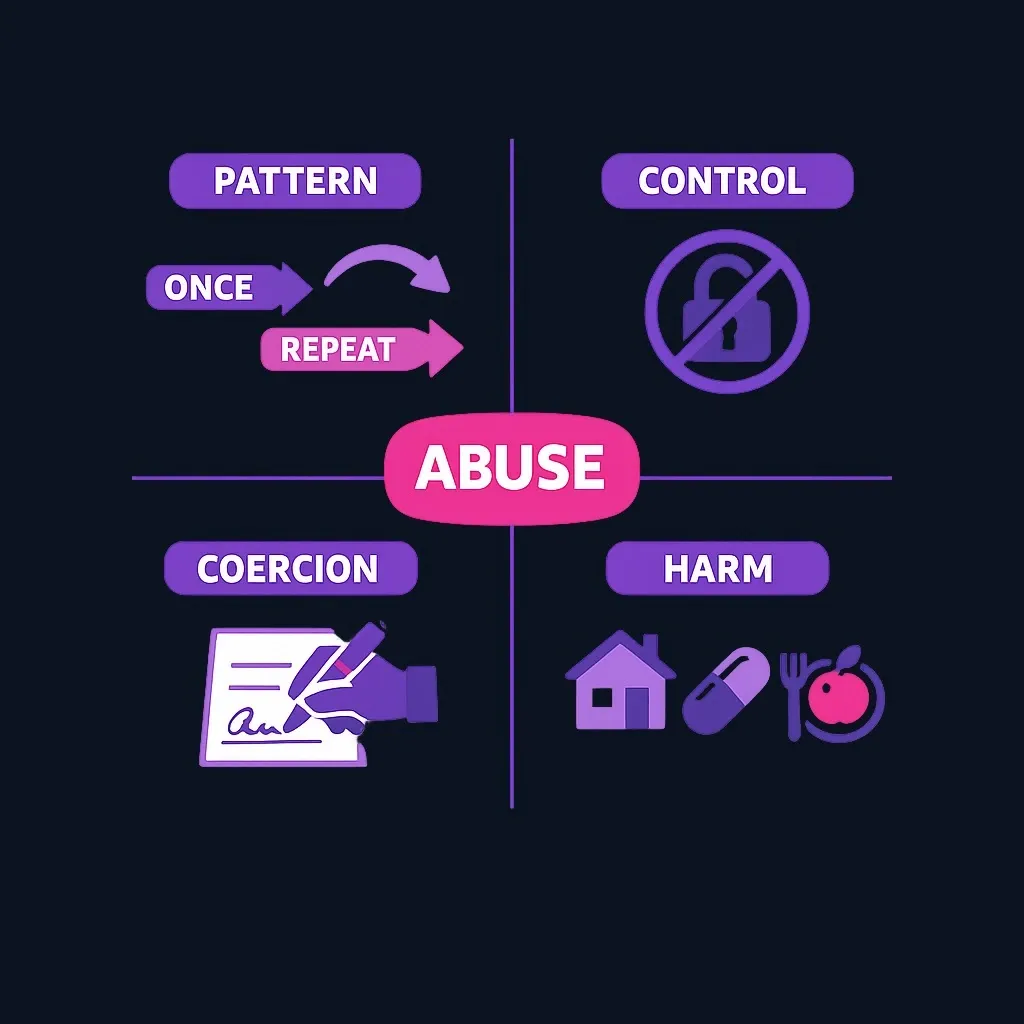
A pattern-and-impact assessment
No checklist can make a legal or clinical diagnosis, but these questions can help identify urgency.
Pattern
- Was the behavior isolated, or has it happened repeatedly?
- Is the secrecy increasing?
- Does the partner deny documented facts or retaliate when asked about them?
Control
- Can each person access basic money and financial information safely?
- Is one partner prevented from working, studying, or maintaining independent communication?
- Is money used to dictate movement, health care, food, or contact with others?
Coercion
- Was anyone pressured or threatened into signing a loan, tax return, deed, account form, or other contract?
- Were accounts opened or debts created without informed permission?
Material harm
- Are rent, mortgage, utilities, food, medicine, insurance, or child-related expenses at risk?
- Has the conduct damaged credit or created legal liability?
- Would raising the issue create a safety risk?
A repeated combination of control, coercion, and material harm is more concerning than a one-time undisclosed purchase, though both can require attention.
Safety comes before confrontation
Generic advice to confront a partner, change passwords, withdraw joint funds, or open a secret account can be unsafe or legally complicated. In a controlling or violent relationship, sudden financial changes may trigger monitoring or escalation.
The Office on Women’s Health recommends safety planning and emphasizes that the priority is personal and child safety. A trained advocate can help tailor steps to the person’s technology, accounts, housing, immigration situation, and local law.
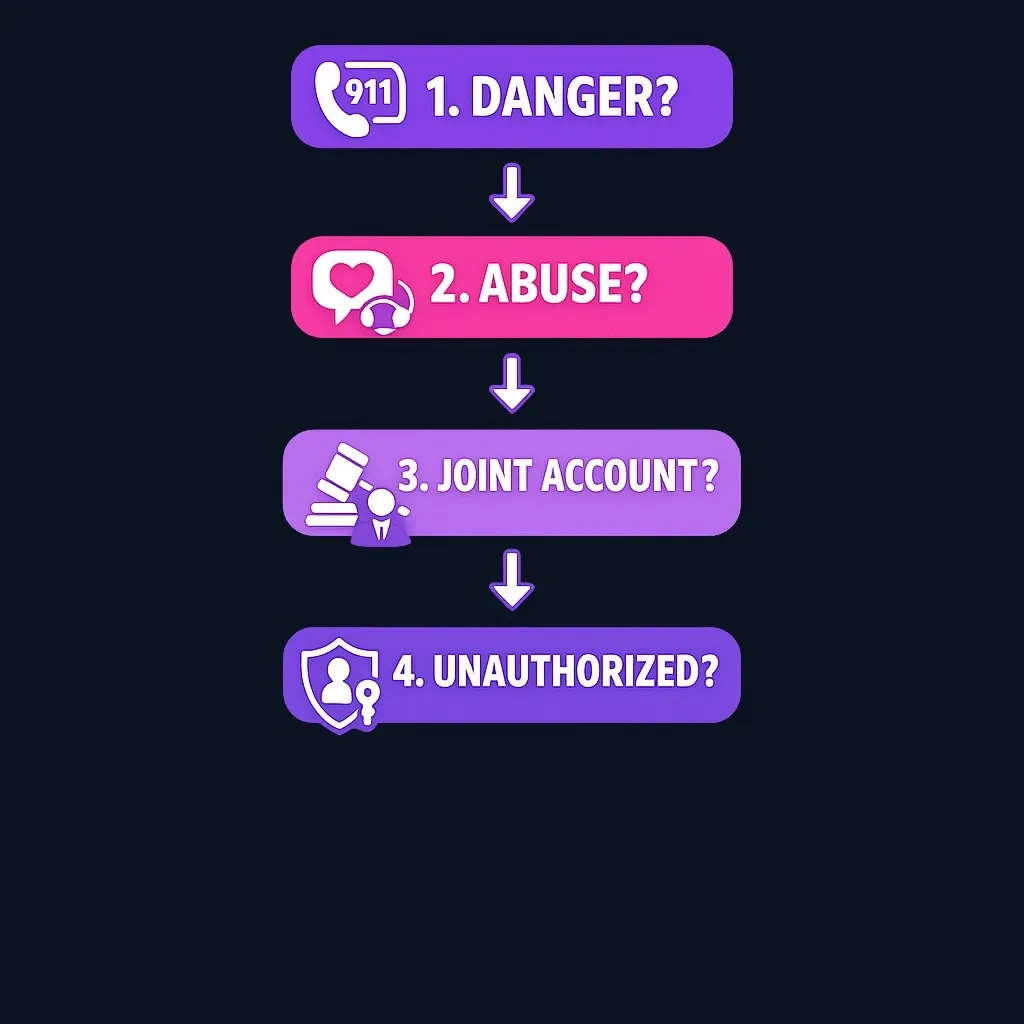
Use a safer sequence:
- If there is immediate danger, contact emergency services.
- If abuse may be present, speak with a trained domestic-violence advocate from a safer device or location before changing shared accounts.
- Ask a family-law or legal-aid professional about ownership, debt, evidence, and account access before moving jointly owned money.
- Use official identity-theft and credit-report procedures if an account was opened without permission.
The Office on Women’s Health provides additional information on signs of domestic violence and leaving an abusive relationship.
Checking for unauthorized credit activity
If identity misuse is suspected, review credit reports through AnnualCreditReport.com, the federally authorized source.
For an account or transaction that was not authorized:
- preserve the relevant statement or notice when it is safe to do so;
- contact the financial institution using the number on an official statement or website;
- use IdentityTheft.gov for an FTC recovery plan; and
- consider a fraud alert or credit freeze after reviewing how it will affect legitimate applications.
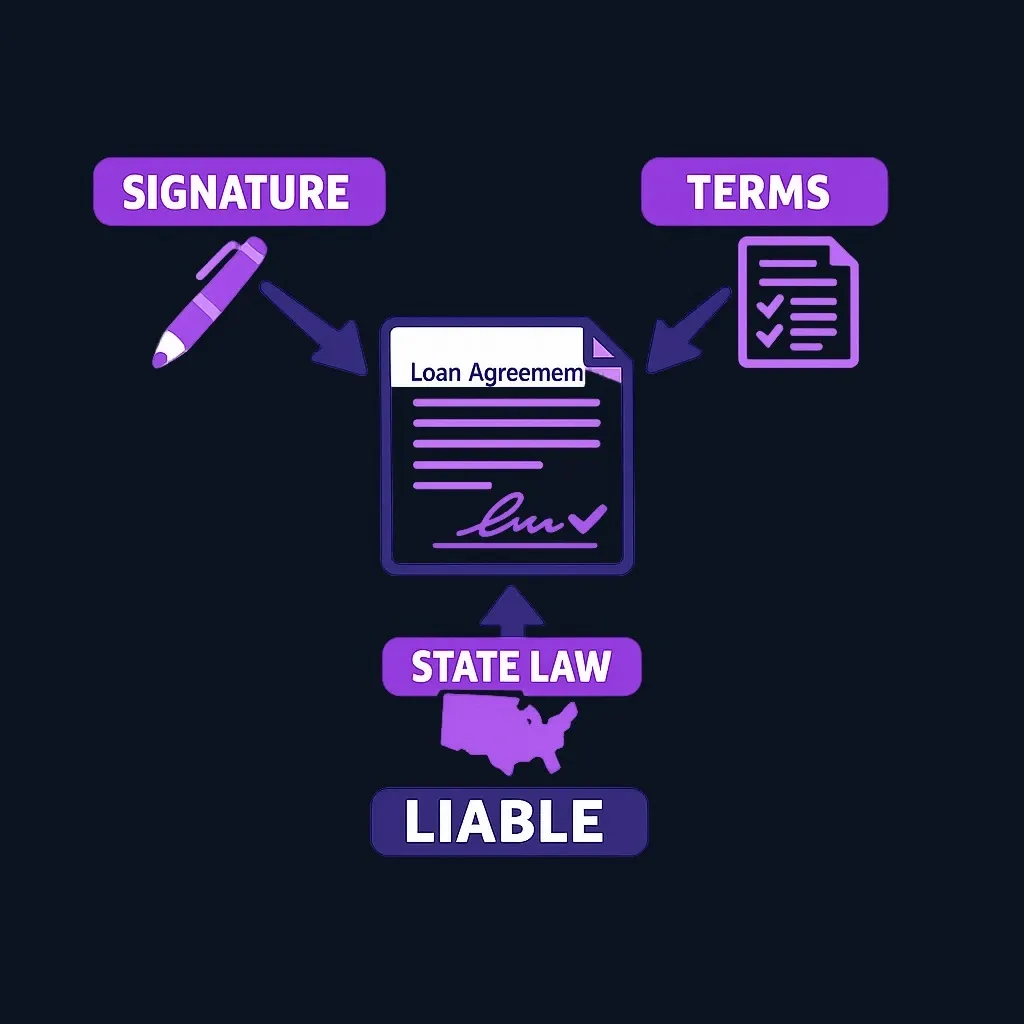
Do not dispute accurate joint debt merely because a partner hid it. Legal responsibility for an account depends on who signed, account terms, state marital-property law, and the nature of any coercion or identity theft.
Practice trading with Finelo
Practice in a simulator, learn with bite-sized lessons, and build confidence before risking real money.
When the issue appears to be deception without coercive control
When both partners feel safe and retain independent access to essentials, the response may focus on disclosure and repair rather than emergency protection.
Possible topics for a structured discussion include:
- a complete list of accounts and debts;
- which money decisions require mutual notice or consent;
- access to statements;
- spending thresholds;
- tax-filing responsibilities;
- a plan for missed bills or debt repayment; and
- whether a licensed therapist, accredited financial counselor, or attorney should participate.
Reconciliation is not measured by an apology alone. It requires accurate disclosure, an agreed process, and sustained behavior. Either partner may decide that the breach cannot be repaired.
Joint accounts, individual accounts, and legal ownership
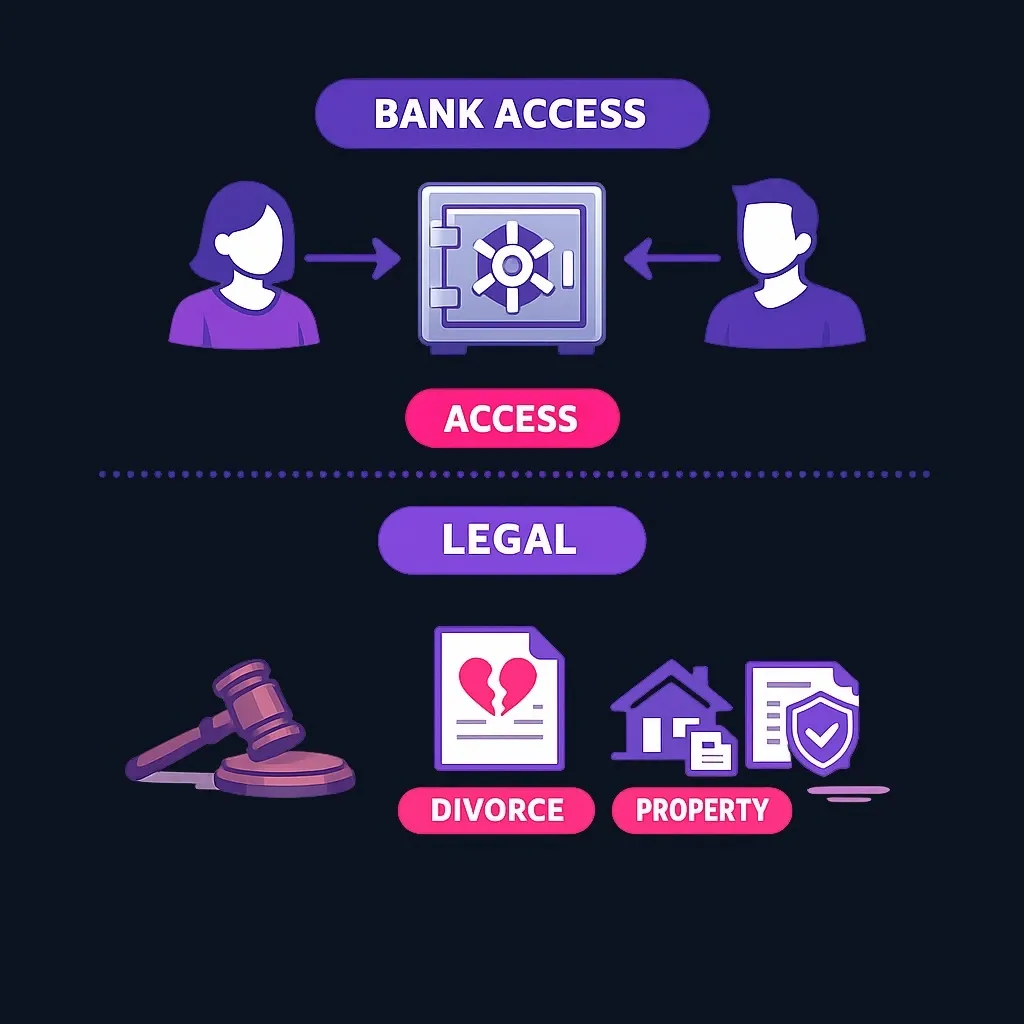
Account access and legal ownership are not identical. A joint account holder may have broad withdrawal rights under the deposit agreement, while divorce, community-property, fiduciary, protective-order, or criminal law can affect what a person is legally entitled to do.
Before closing, freezing, emptying, or redirecting a shared account, obtain legal advice when:
- separation or divorce is possible;
- business or trust assets are involved;
- one partner is financially dependent;
- there are pending automatic payments for housing or insurance;
- the account contains inherited or separately owned funds; or
- safety planning requires confidentiality.
An advocate or attorney can help balance immediate access to essentials with preservation of records and legal obligations.
Common misconceptions
“Any secret spending is abuse”
Not necessarily. It may be financial infidelity or another serious relationship problem without being a pattern of coercive control. Context and impact matter.
“If both names are on the account, either person can do anything without consequence”
Bank access rules do not resolve family-law, ownership, fiduciary, or abuse issues.
“Confronting the person immediately is always best”
No. If coercion, monitoring, stalking, or violence may be present, confrontation can increase risk. Safety planning should come first.
“A credit freeze removes fraudulent debt”
No. A freeze restricts access to the credit file for new applications; it does not delete an existing account. Unauthorized accounts require a separate identity-theft and dispute process.
“Couples counseling is appropriate in every abusive relationship”
Joint counseling may be unsafe or inappropriate when one partner uses coercive control. A domestic-violence advocate or qualified clinician can help assess safer support options.
Frequently asked questions
What is financial infidelity?
It is material deception about money within a relationship, such as hidden debt, accounts, spending, assets, or income. The couple’s agreed expectations and the importance of the concealed information affect how the behavior is understood.
What makes it financial abuse?
Financial abuse involves power and control, such as restricting access to money, preventing work, forcing debt, stealing identity, withholding essentials, or using finances to trap or threaten a partner.
Should someone secretly collect financial records?
Records can be useful, but access methods, device safety, bank terms, privacy law, and the risk of escalation matter. A trained advocate or attorney can help plan safe and lawful documentation.
What if a partner opened credit in the other person’s name?
That may be identity theft or coerced debt. Review reports at AnnualCreditReport.com, contact the creditor, use IdentityTheft.gov, and seek legal assistance if coercion or marital-property issues are involved.
Can trust be rebuilt?
Sometimes, when there is safety, complete disclosure, accountability, and sustained change. Abuse requires a safety-centered response; the person experiencing control does not owe reconciliation.
Bottom line
Financial infidelity becomes especially concerning when secrecy is used to control, coerce, isolate, or endanger a partner. The safest response depends on whether the situation is a trust breach, unauthorized credit activity, coercive control, or an immediate safety emergency.
Use official credit and identity-theft channels for unauthorized accounts, and seek confidential safety or legal support before making changes that could increase risk.
For more plain-language financial education, visit the Finelo Blog.
Financial LiteracyFinancial Education
Practice trading with Finelo
Practice in a simulator, learn with bite-sized lessons, and build confidence before risking real money.
About the author
Finelo Team
The Finelo Team creates practical investing and trading education designed to help beginners learn faster with structured challenges, simulator practice, and bite-sized lessons.
Keep reading — Related articles

Financial Literacy
Mercury Books Review 2026: Is It Worth It for Startups?
Mercury Books brings double-entry accounting into Mercury. Review its $35 pricing, reports, AI features, integrations, and migration limits.
Finelo Team

Financial Literacy
Why is My FICO Score Lower Than My Credit Score?
Example takeaway: seeing a higher score in a bank app doesn’t guarantee lenders will see the same FICO number at application time; lenders often pull a specific FICO version from a specific bureau.
Finelo Team
Financial Literacy
Why Is My FICO Score Higher Than My Credit Score?
Brief educational note: this article is educational, not financial or investment advice; investing and credit decisions involve risk and possible loss.
Finelo Team